
Welcome to the first edition of the Bloom and Buzz, the newsletter of the Ottawa Wildflower Seed Library! With this newsletter, we want to bring news from the Seed Library directly to your inbox once a month. Get updates about what we’re working on, upcoming events, information about native gardening, and hear stories from our community.
We’ve got lots of exciting work underway at the Seed Library. Currently, a team of volunteers are developing an online catalogue to present to you information about the plants in the Seed Library’s inventory, and how to harvest them. This will be a five-year project, and we will launch a little bit at a time, starting this fall. We hope that once fully developed, our catalogue will be the most comprehensive source of information on native plants in Canada.
We are also working on developing a program to save endangered and special species. Stay tuned for more information about this program in our next newsletter!
And of course, our summer plant and seedling giveaways are back for another year starting on June 28! Find more information below, and we hope to see you there!
OWSL Virtual Doors Open
When: Wednesday, June 4, 2025, from 8:00-9:00pm EST
Where: Online
About: The Ottawa Wildflower Seed Library warmly welcomes you to a Virtual Doors Open event, where our board will share about who we are, what we're doing and how you can support the work to build interconnected native plant habitats, one person, one plant at a time!
OWSL Plant Exchange and Giveaway
When: Saturday, June 28, 2025 from 1:00-3:00pm EST
Where: Springhurst Park (Corner of Brunswick St. & Springhurst Ave.)
About: The OWSL is organizing a FREE native plant exchange. For more information please visit our website https://wildflowerseedlibrary.ca/events-plant-exchanges-giveaways/
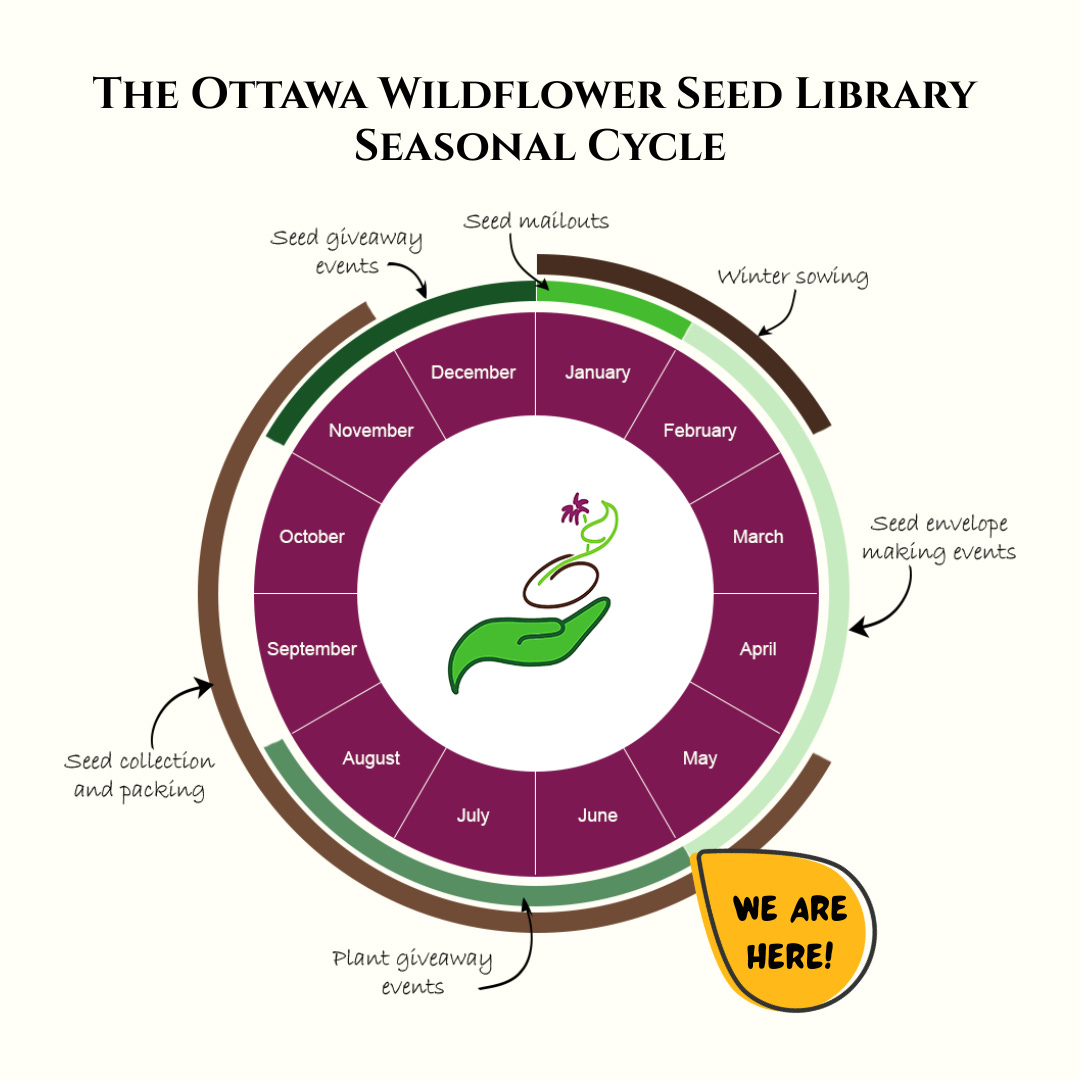
Full Moon Date: June 11, 2025
Summer Solstice: June 20, 2025
June is the month of the summer solstice, a time of longer days and shorter nights as well as the beginning of summer. The word “solstice” comes from the Latin words sol (meaning “sun”) and sistere (meaning “to stand still”) as the progress of the sun appears to stand still during the solstices. As the increase of sun starts to warm the garden, you’ll notice some plants will begin to mature while others, such as spring ephemerals (plants that bloom for a short period of time), will finish their display for the year and go to seed. This can be a great time to collect seeds from these spring bloomers!
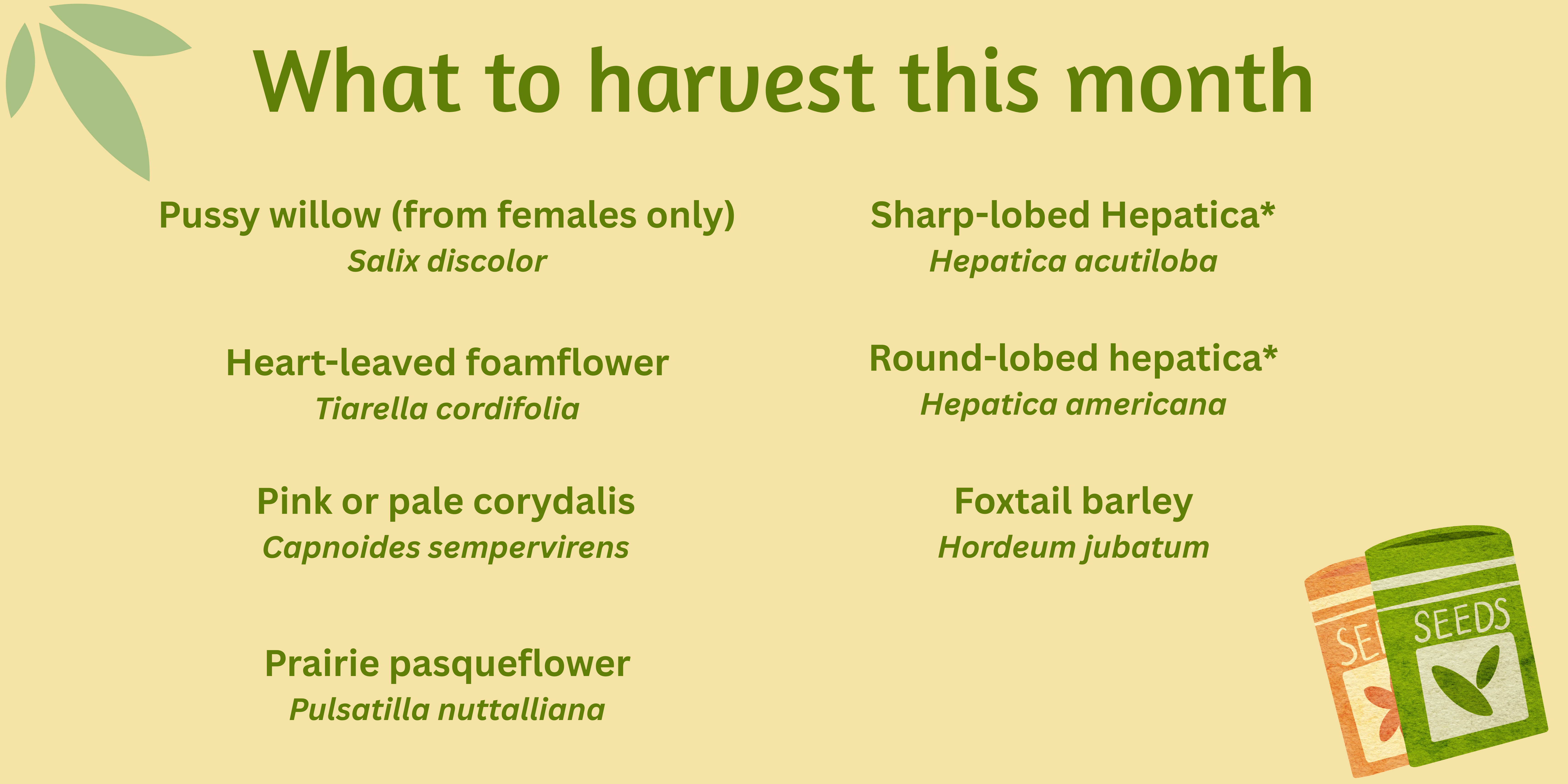
Seed saving tip: Remember to give seeds time to dry and store them in a cool, dry location.
Plants with an * are stored differently, these seeds must be kept cold and moist in the fridge prior to sowing.
Contact us at wildflowerseedlibrary@gmail.com to drop your seeds off to one of our locations in Alta Vista, Barrhaven, Nepean, and Orléans.
Wild Columbine (aquilegia canadensis)
The Wild Columbine, also known as Canada Columbine, Wild Red Columbine and Eastern Red Columbine is native to Eastern North America. This spring blooming plant has a graceful bell-shaped flower with red outer petals, yellow inner petals and a bundle of golden stamens and anthers.
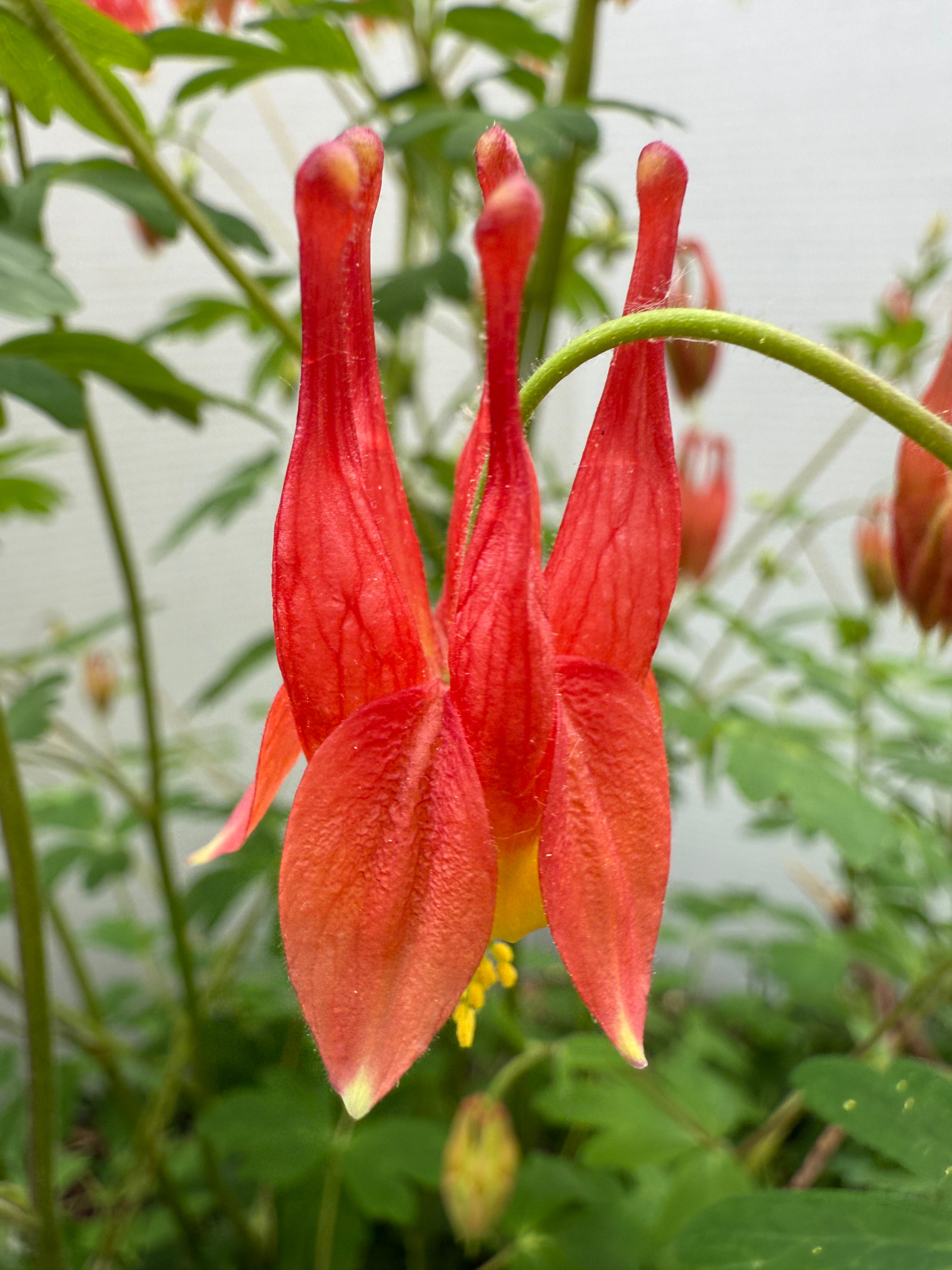
These flowers offer an early season source of food to many species such as bees, butterflies, sphinx moths and hummingbirds. The scarlet hue of the Wild Columbine is particularly attractive to hummingbirds who are more sensitive to the colours in the red to yellow range and associate these colours with high sources of nectar.
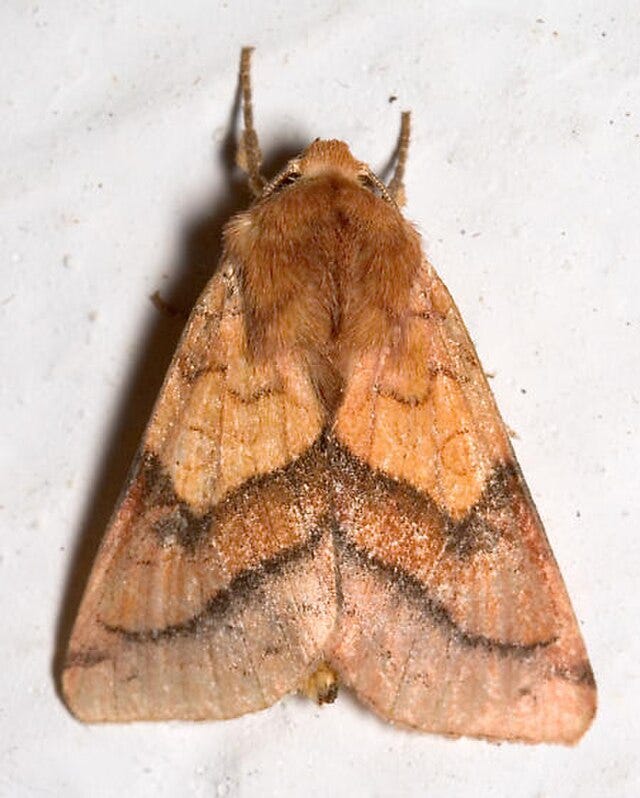
In addition to being a nectar and pollen source, the Wild Columbine is also a host plant to butterflies (columbine duskywing) and moths (pink-patched looper, columbine borer moth, and purple-lined sallow).
The Wild Columbine is not the only native columbine species in Canada, there is also the Western Columbine (aquilegia formosa) which is native to Western North America.
Sources:
Rick Gray and Shaun Booth, The Gardener’s Guide to Native Plants of the Southern Great Lakes Region (Ontario: Firefly Books, 2024)
National Audubon Society, “Hummingbirds See Red”, Audubon, 2025. https://www.audubon.org/news/hummingbirds-see-red
A host plant is a plant that provides nutrition to specific insects during their larval stage. Many insects, especially butterflies and moths, have evolved alongside specific plants and as such their young (larva) only eat the plant matter of these particular host plants. This results in the plant becoming the “host” for that insect. Adult insects will often only lay their eggs on these host plants to ensure their young will have an abundant source of food available to them when they hatch. Without the host plant available, larva will have a lack of consumable food available and will likely not survive.
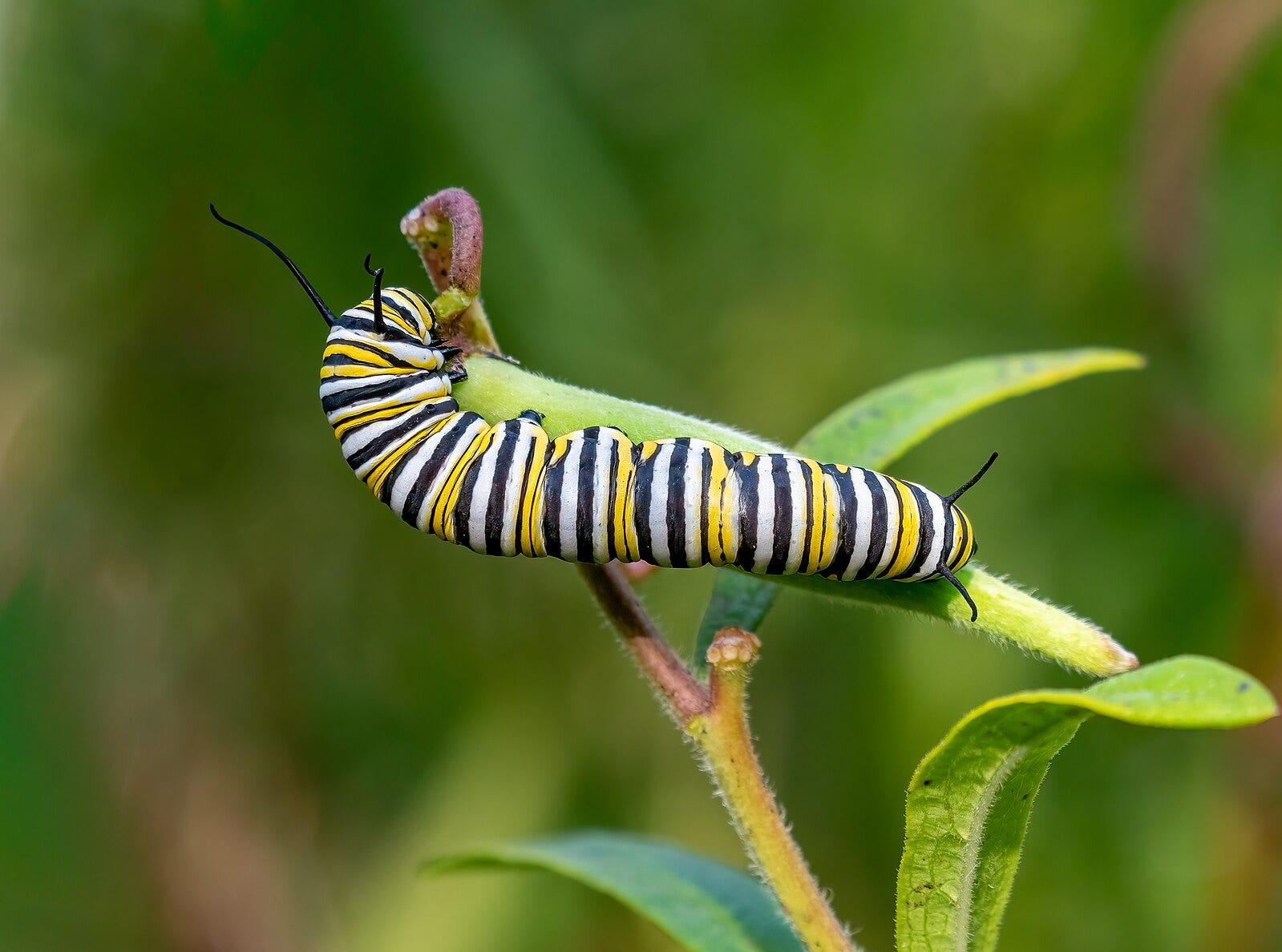
A common example of the “insect-host plant” relationship is between monarch butterflies and milkweed. While the monarch butterfly can feed on nectar from many different flowers, they will only lay their eggs on plants in the milkweed family as their caterpillars can only eat the leaves of these plants. This results in milkweed being the host plant for monarch butterflies.
Many native plants not only provide nectar and pollen for pollinators, but also play the role of host plant for many native insect species.
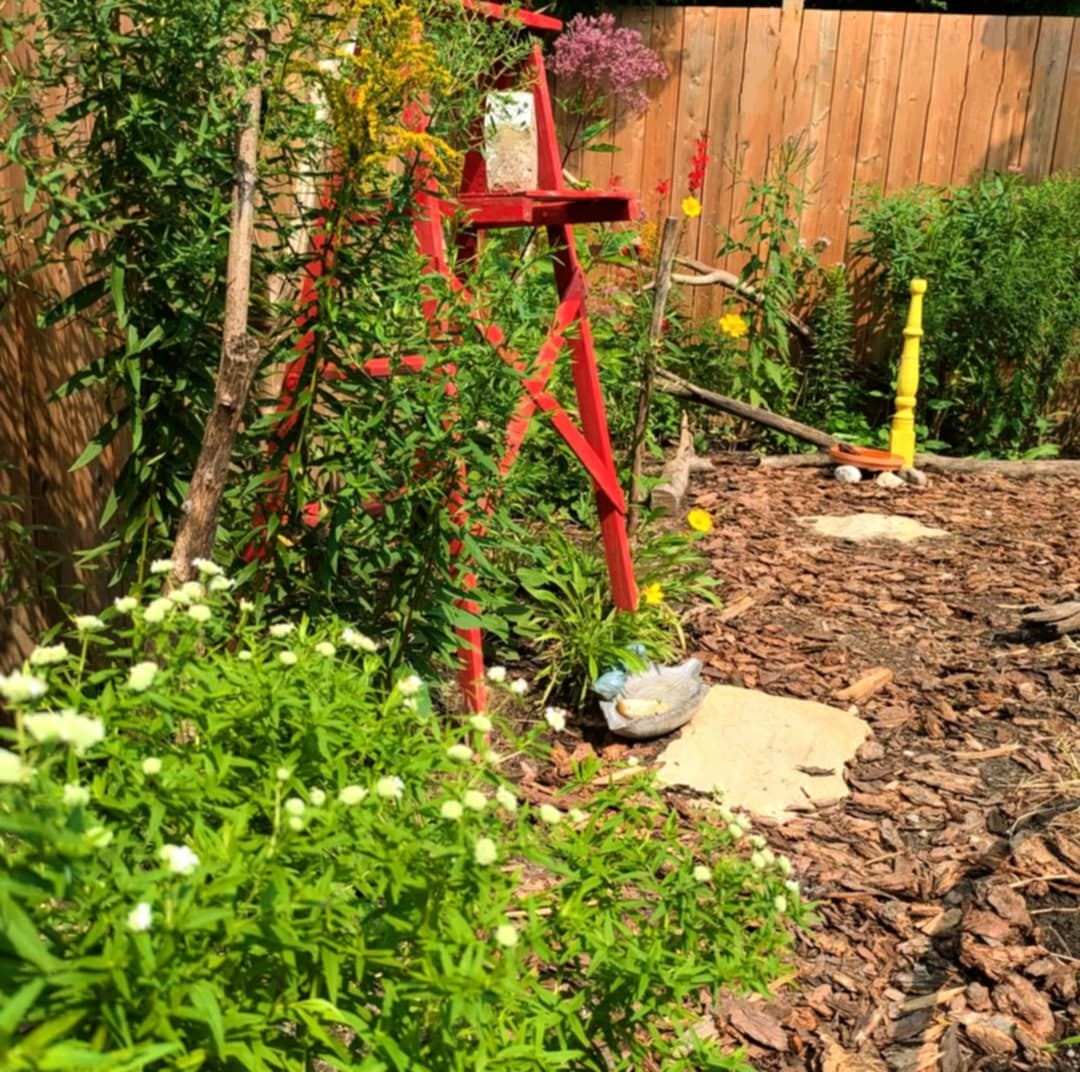
This month’s volunteer spotlight highlights the work of Heidi Mumford:

Heidi is one of the many volunteers who support the tremendous work of the OWSL. Her journey to native plant gardening began four years ago when she noted the sore lack of pollinators visiting her edible garden. After adding some native plants into the vegetable beds she saw an immediate impact as countless bees, butterflies and insects began to visit her garden. From here she was hooked, and began her journey to reconciliation and embraced the notion of decolonizing her gardens.
Seeking knowledge and community, she began to participate in OWSL events and eventually started to volunteer. Her first volunteer event was a plant giveaway where she greeted participants and took inventory of available plants. The energy of the environment was tremendous and inspired her to become more involved with the Seed Library! Since then, she has volunteered at seed-giveaways and, over the winter months, made 15,000 seed envelopes.
While it’s hard to choose a favourite native plant, Heidi finds that the showy colours of autumn bring her the most joy. The beauty of asters and goldenrod, humming with life, are truly breathtaking!
No posts
Comments
Nothing yet. Say the first thing.
Sign in to join the conversation.