
To support the evolving Star Allocation System in the Sky Ecosystem, we’ve deployed the first version of the Star Monitoring page to the Sky Risk & Analytics Dashboard. Below, we explain how to access the page, followed by an overview of new terms and metrics.
Accessing the Star Monitoring Page
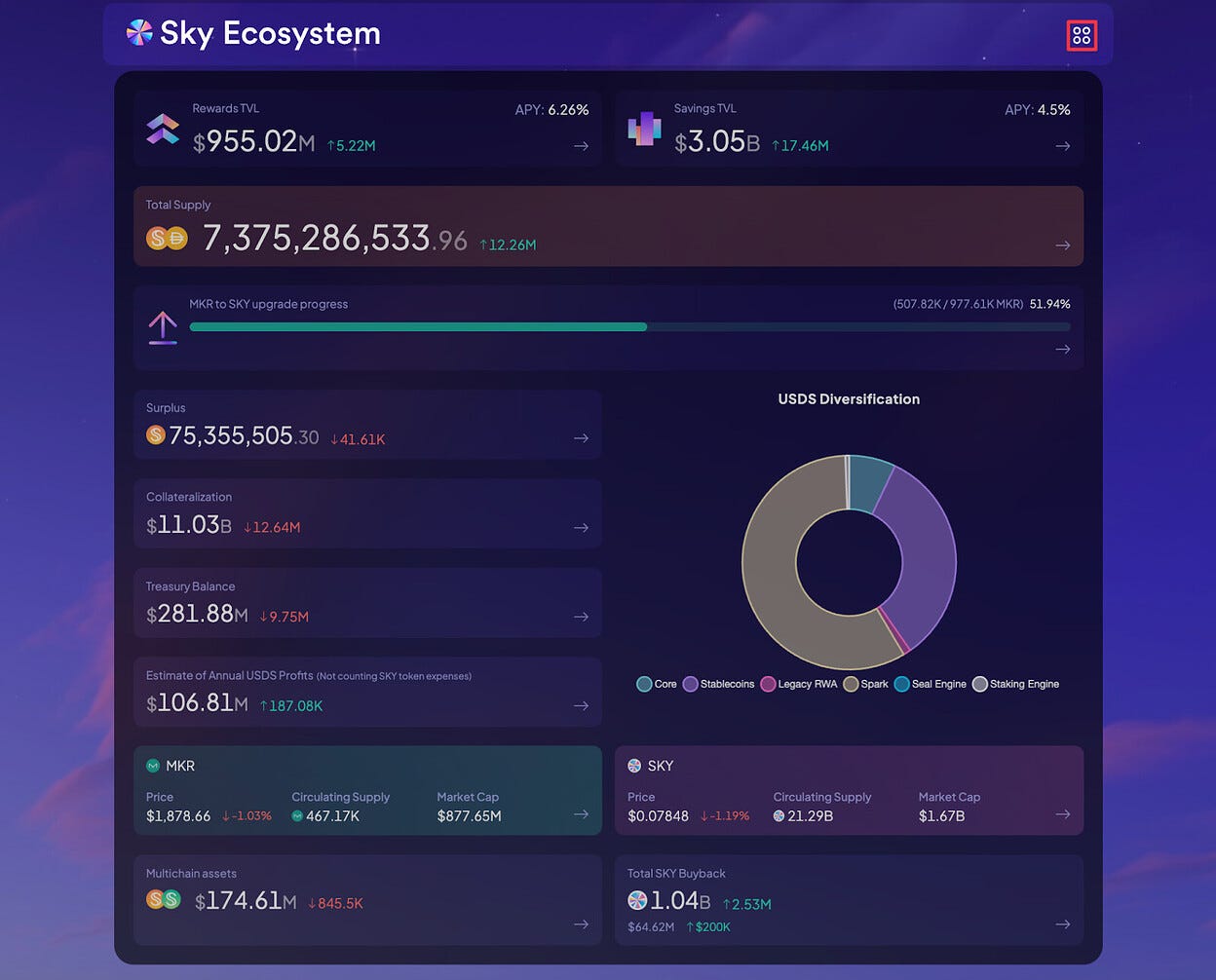
To access the Star Monitoring page, first open the dashboard menu.
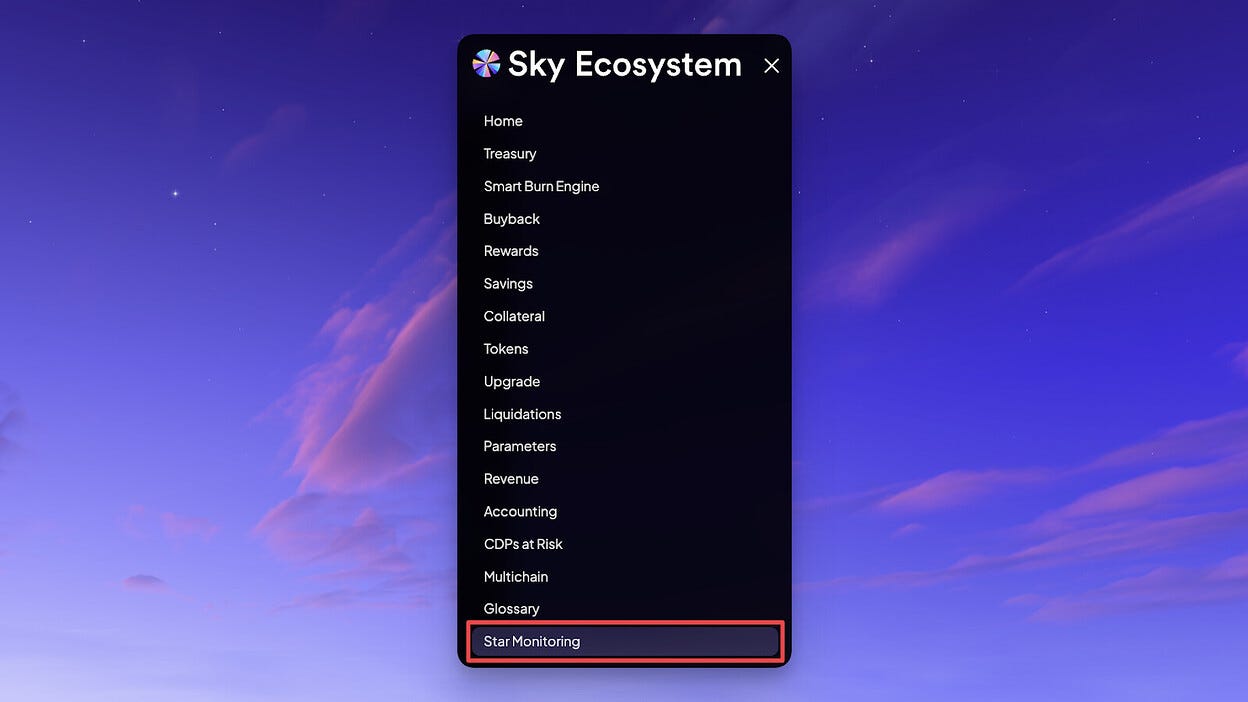
In the dashboard menu, select “Star Monitoring”.
Overview of the Star Monitoring Page
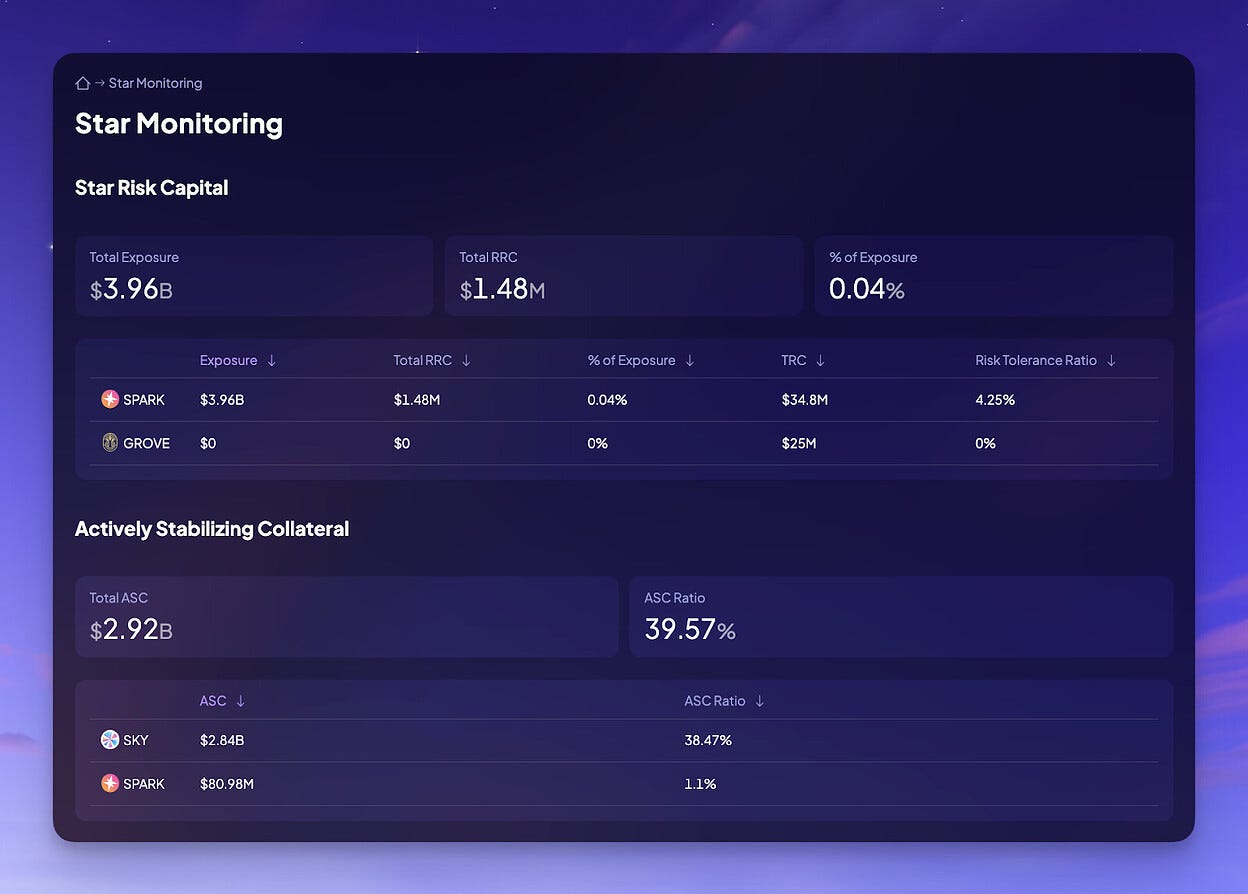
At the top of the Star Monitoring page you’ll find three key metrics that summarise Star Risk Capital. Total Exposure shows the amount of debt currently lent to Stars, exposed to risks which are subject to the Atlas defined Risk Framework. Total RRC (Required Risk Capital) measures the combined capital requirement for all Stars in the Sky Ecosystem. The % of Exposure shows total RRC as a percentage of Total Exposure.
Further down, there is a table listing every active Star in Sky. For each Star, the table reports (i) Exposure, (ii) Total RRC, (iii) % of Exposure, (iv) TRC (Total Risk Capital), and (v) the Risk Tolerance Ratio, calculated as the Star’s aggregate RRC divided by its TRC.
The bottom section of the Star Monitoring page focuses on Actively Stabilizing Collateral (ASC). According to the Atlas, ASC includes cash stablecoins (e.g. USDC, USDT) in PSMs or decentralized exchanges (e.g. Curve), other stablecoins, cryptoassets, or offchain RWA loans to market makers, provided they meet the specified redemption price and transparency requirements.
Total ASC measures the combined ASC across the entire Sky Ecosystem. The ASC Ratio measures ASC as a share of total outstanding USDS+DAI debt.
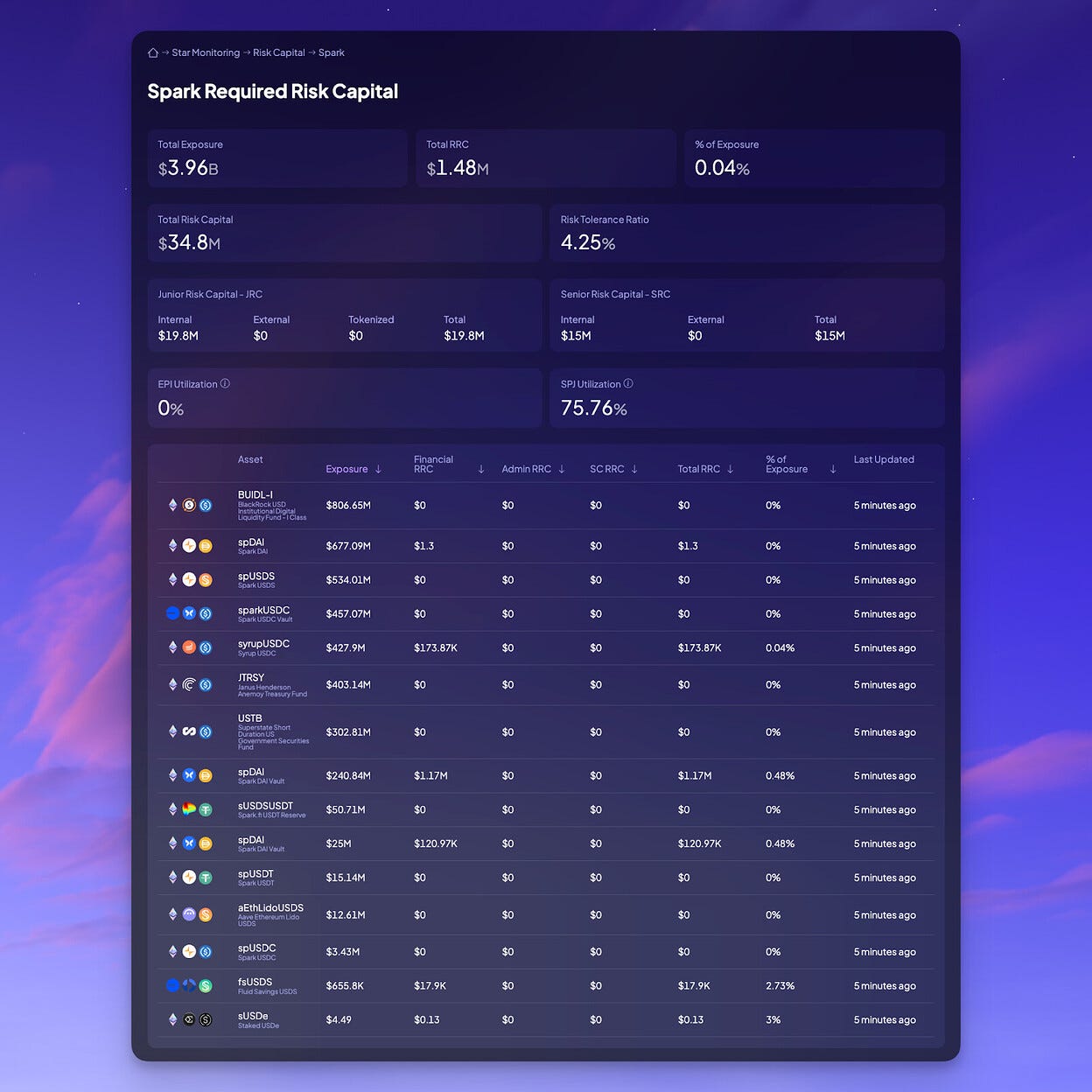
Selecting the Spark row in the Star Risk Capital table on the Star Monitoring page takes you to an in-depth breakdown of Spark’s Required Risk Capital metrics.
Junior Risk Capital - JRC: The first capital to absorb losses on investments under the Allocation System. Learn more in the Atlas.
Internal Junior Risk Capital (IJRC): Capital owned by the Star Agent itself.
Star-External Junior Risk Capital (SEJRC): Junior Risk Capital rented from another Star Agent via the Junior Risk Capital Rental Primitive.
Tokenized External Junior Risk Capital (TEJRC): Capital provided by external capital providers depositing sUSDS into a Tokenized External Junior Risk Capital smart contract, from which Stars can encumber funds.
Senior Risk Capital - SRC: Begins to absorb losses after Junior Risk Capital has experienced 100% losses. Learn more in the Atlas.
Internal Senior Risk Capital: Capital provided from Sky Core’s Surplus Buffer.
External Senior Risk Capital: Capital provided from the srUSDS smart contract, which will allow users to provide USDS to Sky Core to serve as senior risk capital.
EPI Utilization: External Per Internal (EPI) ratio. Determines the maximum amount of External Junior Risk Capital that a Star Agent can source directly based on its held Internal Junior Risk Capital (IJRC). Learn more in the Atlas.
SPJ Utilization: Quantifies how many units of Senior Risk Capital (whether Originated or Rented) can be activated or “enabled” per unit of a given Junior Risk Capital type. Learn more in the Atlas.
At the bottom of the Spark Required Risk Capital page, there is a table summarizing all Spark’s current allocation strategies across DeFi. For a more in-depth view of Spark Liquidity Layer (SLL) activities, visit the Spark Data Hub.
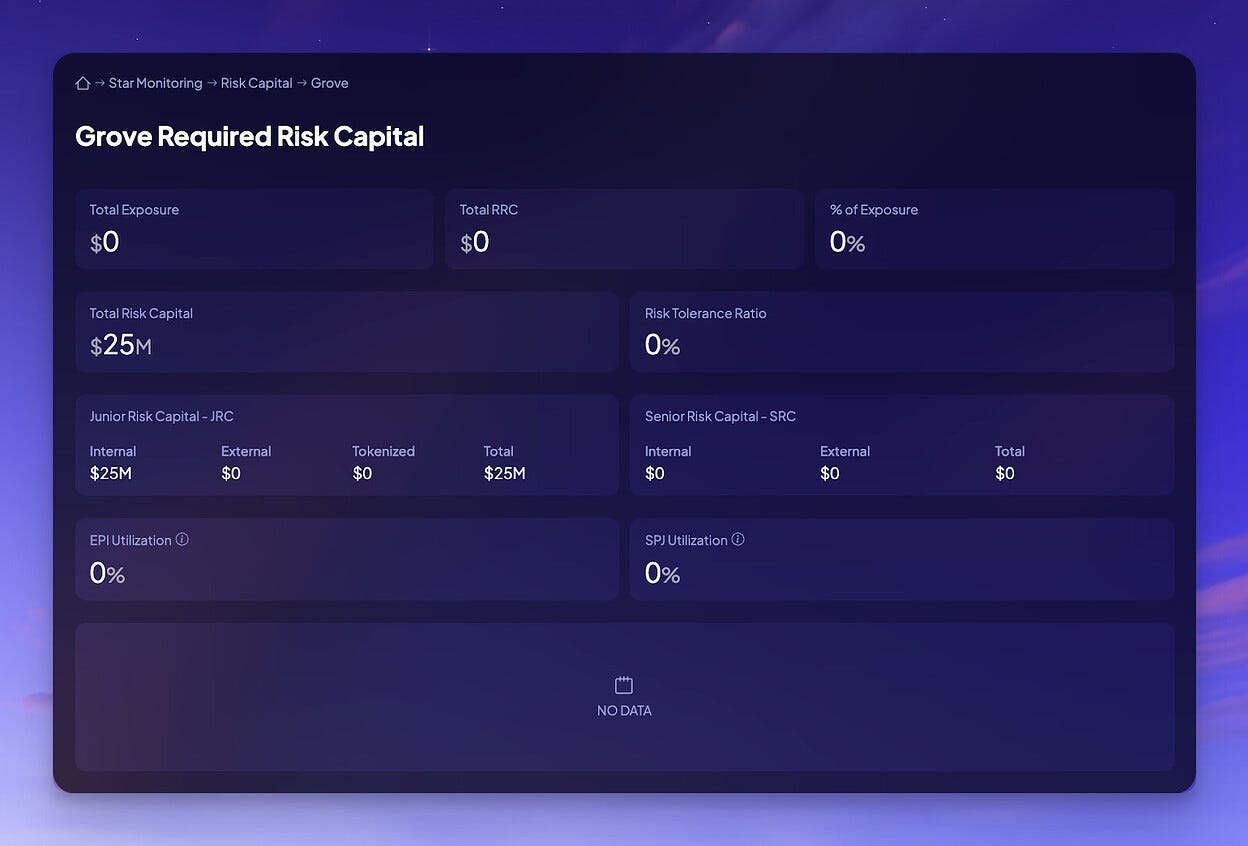
Selecting the Grove row in the Star Risk Capital table on the Star Monitoring page opens a dedicated page that will track Grove’s Required Risk Capital in greater detail. For now, most values show 0. Once Grove start allocating, the dashboard will refresh automatically with live Grove RRC metrics.
Thanks for reading Block Analitica Research! Subscribe to receive new posts.
Comments
Nothing yet. Say the first thing.
Sign in to join the conversation.