
0:00
-14:01
. . . about the total cost of ownership including war for oil? And, what about the total cost to our environment?
Making the case to cut EVs
“Most experts have been waiting for automakers to start scrapping EVs in their lineup now that the federal tax incentive is gone. EV sales in October fell off a cliff across the industry, with no big discount to entice buyers. For the entire industry, sales of EVs in the United States dropped to 74,897 units in October compared with 98,289 units sold in September, according to Reuters.”
It’s all bad news every day when it comes to electric vehicles. Even when we are clearly at war for oil and the cost of gas in America soars.
Last weekend I was in Fresno for a funeral. Three people joined me at the table for breakfast at the hotel where I was staying. We had a nice conversation that eventually turned to the fact that I drive electric vehicles.
One of them asked me what happens when I don’t drive one of my cars. I said “Nothing.” She kept insisting something must go wrong. I said no. Finally she asked if I was sure it didn’t fail to start after a few days of not driving my car. Not really understanding why she didn’t hear my first three answers to that question, I repeated my answer once again.
She couldn’t believe me that I didn’t have problems with my batteries and my car starting up.
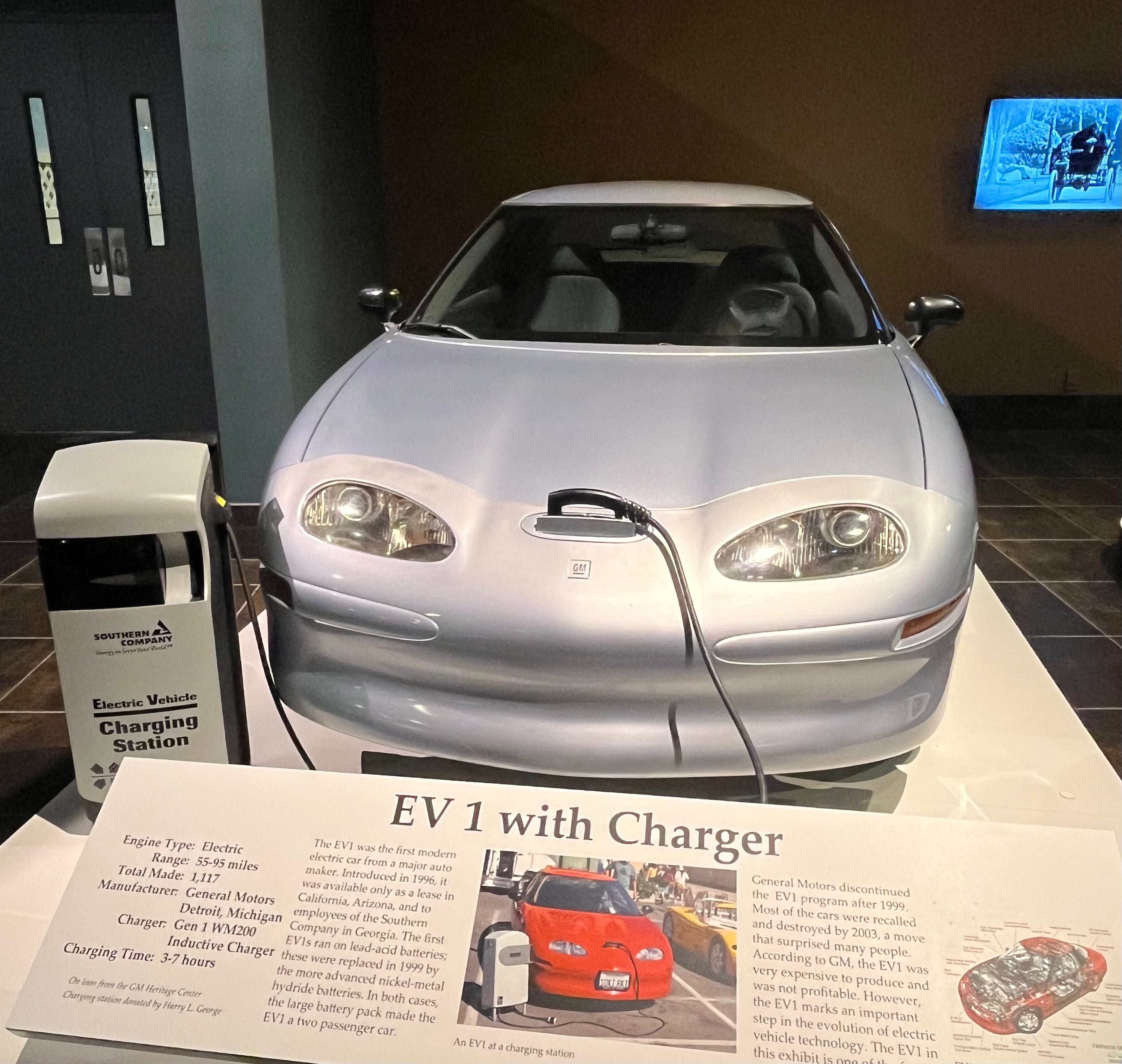
Probably because she heard there were problems with the batteries on electric vehicles. Probably someone told her there were problems like the problems General Motors had with their EV1 back in 1996.
The concept of the vehicle was simple and very similar to most of today’s models, including the idea of a mobile charging unit one could use at home.
The problem was the batteries leaked.
After producing less than 1200 of these electric vehicles GM scrapped the whole program.
More below on this GM fiasco they tried to hide for decades but are now championing once again.
I thought about it later and two things made me laugh about the misunderstanding this person had about electric vehicles.
One is the number of 12-volt batteries I’ve had to change over the nearly 50 years I’ve driven cars. Sometimes I had to change the battery two or three times depending on how long I owned the car.
My 2018 Nissan Leaf has almost 91,000 miles now and it still has the original 12-volt battery after 8 years.
My F-150 did have a failure of the 12-volt battery at about one year. It was replaced under warranty. Now I know about that issue and can be aware of the possible problem just like I would with a gasoline powered vehicle.
In fact, automobile 12-volt batteries fail over time. It’s part of the cost of driving a car.
We all know that, don’t we?
The second thing that came to mind when thinking about false battery problems with electric vehicles is the experience I have in my own neighborhood each week with people who don’t drive there vehicles very often. They worry about the engine oil pooling and the 12-volt battery failing to remain charged so they just turn the vehicle on and idle their trucks and cars to keep that from happening the next time they actually need to use it and drive somewhere.
Sometimes they do this for a half an hour or more.
Sometimes the exhaust is diesel.
After I posted a link on Facebook to my article about electric vehicles last week, one friend commented about the fuel battery “problems.” She said she had a friend who had to replace her fuel batteries to the tune of $4,000.00 and that some cost as much as $10,000.00.
This is all true. Fuel batteries fail just like the 12-volt batteries fail, just like brakes fail, just like internal combustion engines fail.
That’s why we buy vehicles with warranties and add automobile insurance. Although, increasingly insurance does not cover the true cost of vehicle problems when they occur.
I had a Honda Odyssey with a transmission that failed three times.
People didn’t stop buying those Odysseys even though there was a known “transmission problem” with the vehicle. They were willing to pay top dollar for the vehicle because of its reputation and the fact that Honda stood up for the product for at least five years and 100,000 miles.
Somehow, too many people believe that the batteries and other issues are still too big of a problem with electric vehicles. Lack of trust in the product makes it unable to thrive in a tainted business market and political world of heavy negative reputation bashing.
Maybe it’s because they’ve been told by someone else electric vehicles are still a problem—like windmills are a problem.

Shortly after the war with Iran erupted airline companies started advertising the concept of “fuel efficient” jumbo jets. Hmmmmmm. Sounds fishy to me.
The cost of fuel for airline travel is very high (including American military subsidies) and getting higher very quickly. Just last year we saw this data presentation of the carbon cost of types of transportation.
The graph states the carbon footprint and not the fuel cost of a type of transportation. Typically the type of fuel is the defining ingredient that determines the overall carbon footprint and cost of fuel, although the materials used to build any mode of transportation factor into the total carbon footprint as well.
For example, according to the UK data set used for this graph, electric vehicles have about two thirds of the carbon footprint of a gasoline powered vehicle. But they do have a footprint.
With airplanes, the data also show that longer flights have a lower overall carbon footprint.
This is true of all methods of transportation including electric vehicle transportation.
Therefore, the overall carbon footprint of my 2018 Nissan Leaf and 2024 Ford F-150 Lightning becomes cheaper by the minute, day, week, month, and year.
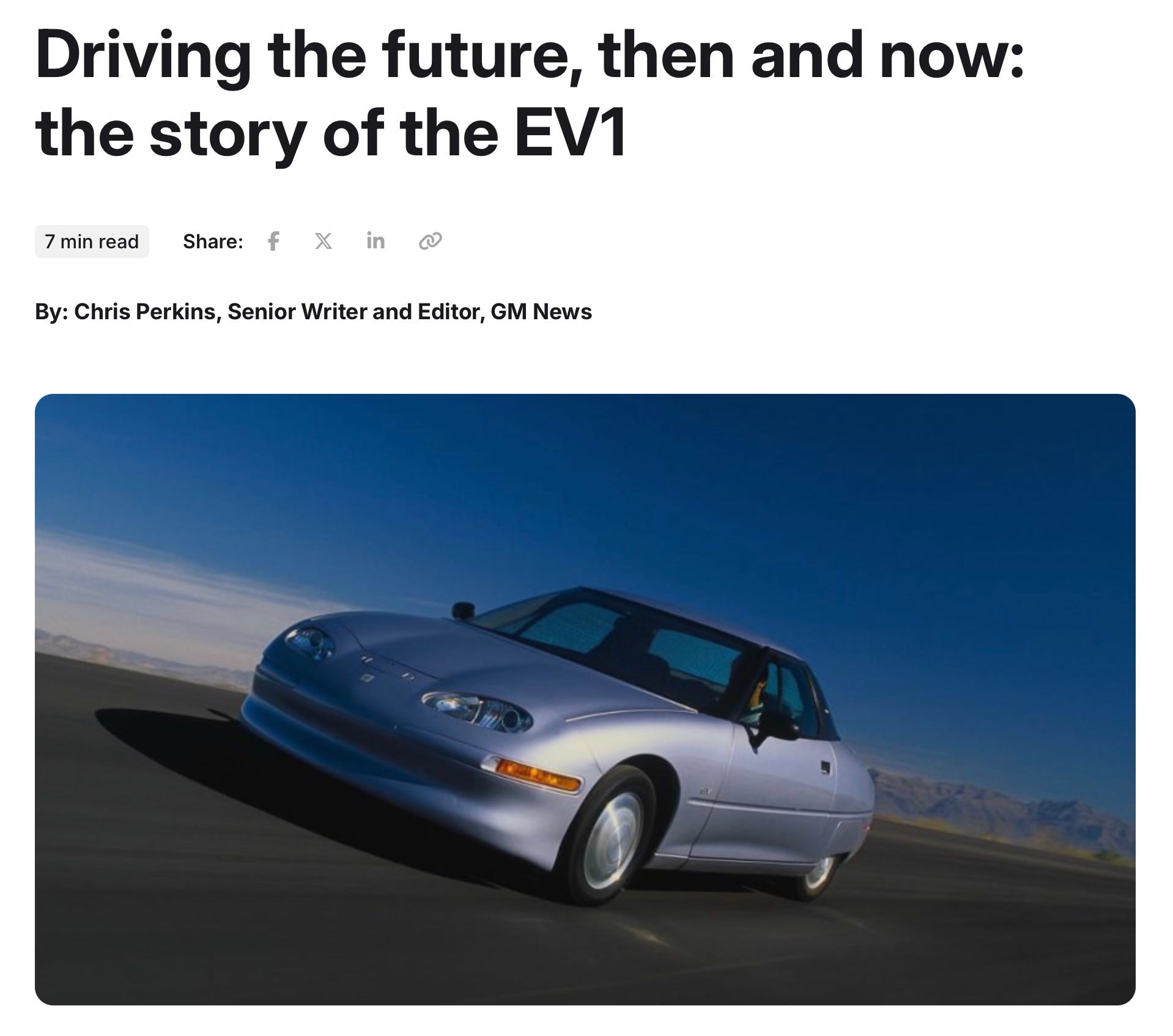
To counter the same issues of batteries and reliability and cost of fuel that the airlines are facing, a company like GM (that creates mostly gasoline-powered vehicles today) is promoting its own failed EV1 from the 1990s.
Somehow it has become the symbol of GM’s history of innovative electric vehicle products and designs as if they were the ones who built America’s electric vehicle automobile industry.
To its credit, GM has successfully used millions of dollars of government subsidies to partner with companies like EVGO and Pilot to build electric vehicle charging stations for travelers. I’ve used them and had the greatest success with this product as compared to any other public charging company.
Still, let’s face it, the electric vehicle industry in America isn’t built yet and we can point directly to the people who give electric vehicles all their bad publicity.
As a result, today too many people don’t believe electric vehicles are viable even though their knowledge of them is minimal and mostly tainted with fake information.
You can tell them straight facts and they won’t get it. Their knowledge and understanding cannot be swayed because they’ve been indoctrinated by a seemingly unending series of outrageous lies about electric vehicles.
What else do they need to know?
Turns out they need to know a lot more.
“Anyone looking closely can see the cracks in the electric truck market, with heavy incentives and steep depreciation largely the norm. So why aren’t consumers biting on the Lightning? According to one expert, it’s certainly not for lack of interest.
“First and foremost, this is not a Ford exclusive thing,” Brent Gruber, who leads the EV practice at the market research firm J.D. Power, told me. “I think most manufacturers who made EV products felt that the product underperformed.”
“What was different for Ford and the F-150 Lightning versus other manufacturers was the interest in the Ford F-150 Lightning is so much higher than most other vehicles. So Ford had a real opportunity to capture a lot of that consumer interest.”
—Inside EVs Nov. 13, 2025
Sadly, just one week after the USA Today article was published, Inside EVs declared that it was Ford that failed America’s electric vehicle industry by not recognizing their opportunity to capture consumer interest.
As is typical in today’s political, business, and social climate it is easy for people to blame the victim rather than blame the perpetrator-in-chief. He is the one who actually causes most of our failures in America, and attacks electric vehicles the most, simply by lying.
Even electric vehicle evangelists don’t see these very real problems holding back the electric vehicle industry in America . . . or they may be too afraid of retribution if they list the reasons electric vehicles are failing to capture consumer interest:
1- Federal government public preference and actions for war to support oil-based transportation industry
2- Federal government elimination of all environmental restrictions on production of gasoline powered vehicles
3- American public uninformed about the true costs of gasoline powered vehicles
4- Real lies and suppression of electric vehicle technology, industry, infrastructure, and related consumer information
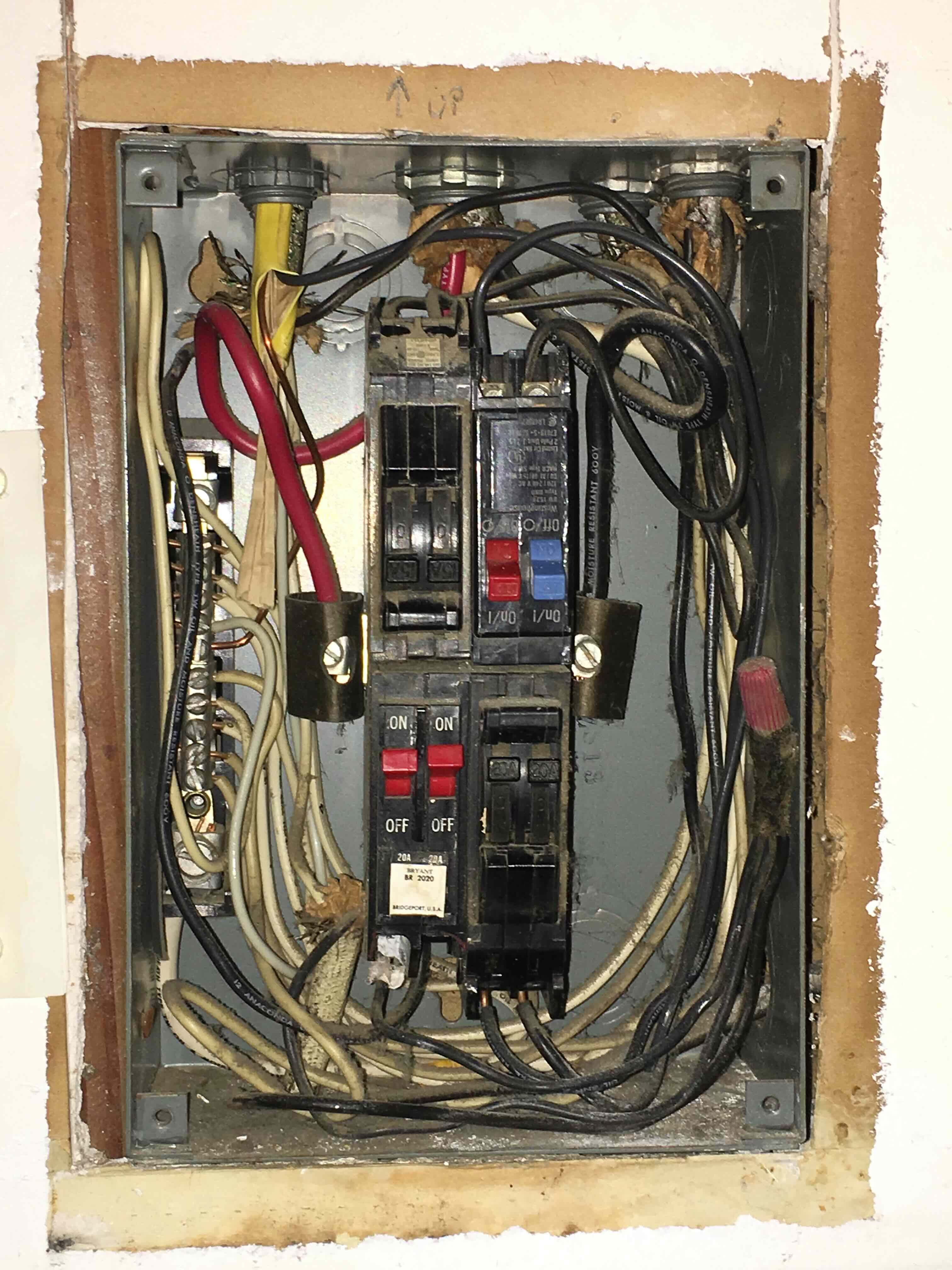
This is a photograph of the secondary “main” electric panel in my old home. It was original to the home built around 1960. The panel was so old, when one of the breakers failed I had to go South San Francisco to find a replacement.
Needless to say, this was one of the first things I needed to upgrade once I started charging electric vehicles at home.
It isn’t necessary to go into all the details about how and why the electric vehicle industry is so far behind where it should be today.
It’s enough to think about this one electric panel, in one building in America, where someone upgraded the equipment to support electric vehicle usage.
It is a metaphor of where we are right now in America with regard to electric vehicles.
There are literally millions more decisions about infrastructure left to be made, and millions more actions left to be taken, before we can say the electric vehicle industry is actually an industry.
Given how far backward we’ve gone in the past few years I am not very hopeful we will even be moving forward again anytime soon.
But I do think it’s a reasonable to ask oneself, one’s friends and family, and one’s political and social leaders one question.
Do we want to live in a world of 1960s electric panels, or would we rather upgrade to something better?
Either way we pay a price. In this case, upgrading is better and cheaper. All we have to do is give it a try.
Thanks for reading and listening today.
Comments
Nothing yet. Say the first thing.
Sign in to join the conversation.