
0:00
-19:16
This tracks with what I hear over and over again: People are interested in electric trucks, but unwilling to pay a premium for them. Many F-150 Lightning shoppers are returning truck or F-150 customers looking into whether an electric version makes financial sense. For many of those people, the answer will be no. Even with considerably lower fueling costs, you may never make up the difference in MSRP between a gas truck and a Lightning.
— Mack Hogan, Insideevs.com, November 13, 2025
Mack Hogan, like all the MAGites in favor of Putting America’s electric vehicle program on a pile of trash, is part of the war for oil American culture that wants to keep us all doing what we’ve been doing because somehow they believe gasoline powered vehicles are cheaper.
It least that’s the argument they make.
Mack, and all the rest of them, are wrong. I’ve done the math.
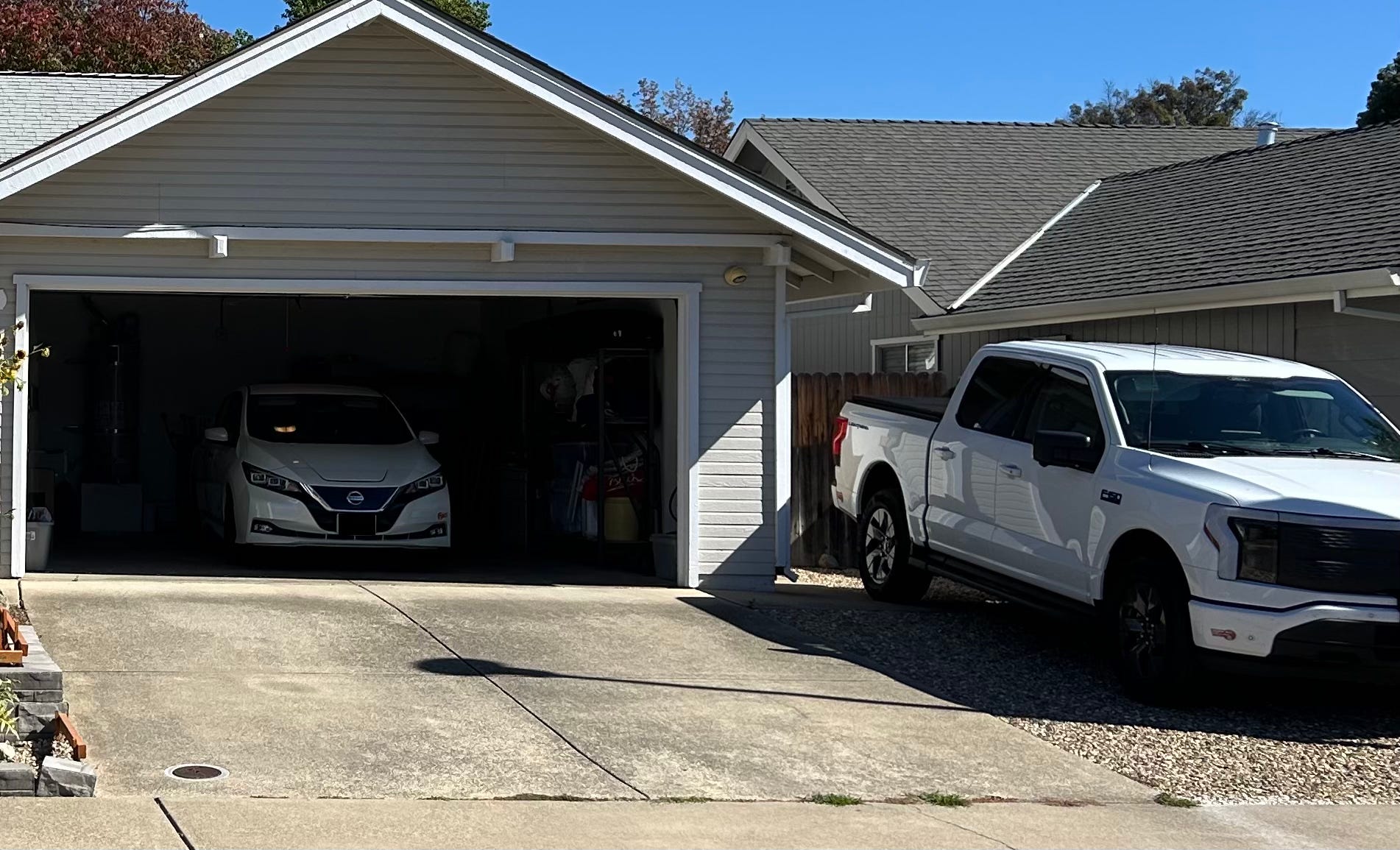
The price of gasoline per gallon is an entitlement in America.
Our entire government, economy, and society are built around the ideas and systems needed to support it.
Our cities are built around a transportation structure that supports the greatest possible use of personal gasoline powered vehicles.
Our family life is built around driving in cars.
The Constitution requires and supports the Federal government’s management of the economy of our society. Therefore, along with many other important systems, the government manages the way in which we power the economy and our daily lives in America.
Federal government expenses to manage the power systems that run industry and transportation in America includes trillions of dollars to pay for the voluntary use of military force over decades of time in order to ensure the lowest price and greatest availability of the source for that power.
America fired President Jimmy Carter during the 1970’s “oil crisis” and Iran US hostage situation. He asked us to use solar on our roofs and drive our cars less. He asked us to conserve and buy new cars that got better gas mileage.
Not enough people wanted to change then. Not enough people want to change now.
In addition to Federal management expenses, each of the United States of America have their own Department of Transportation to support the use of personal gasoline powered vehicles. Add the untold hundreds of billions of dollars per year for that to the true cost of a gallon of gas.
The price of a gallon of gas, whether it be $2.00, $3.00, $4.00, or $10.00 today, is subsidized in America by trillions of dollars over more than 50 years of wars for oil.
The government decides to go to war, the price of oil skyrockets.
That money comes out of our other pockets.
To give you an historical American corollary to understand how this works, consider the US government support for the importation of humans for slavery to America for 89 years. Many US laws and Supreme Court decisions, regulated the ownership of humans and their rights between 1776 and 1865. Similar government management of slavery existed during the years of British control of America going back 246 years.
If you think this analogy is a stretch, I ask you to simply consider agriculture. Until mechanized farming techniques, slavery in America is what drove our economy. Once we began to industrialized factories and farm systems using fuel other than human energy, it made more sense to some to switch to gas powered engines that would do the work enslaved people previously did.
It was the same thing—until we changed.
And that is the important part of the story.
We proved we can change.
We can change if the government is managed by people who want to build for today and the future and not by people who want to simply blow up everything in another war.
1 - Oil is not sustainable to find and refine into gasoline because of the human and financial costs of production plus the military costs for control over supplies.
2 - Our use of oil is not sustainable because of the impact of that use on the Earth and its environment which we live in.
Those who have read my archive writing about Electric Vehicles know I have shared this chart from the US Department of Energy.
People who drive personal gasoline powered vehicles in America (not including motorcycle riders) drive cars that average below 25 miles per gallon. Ridesharing vehicles are a bit higher than 25 mpg on the chart but there are hybrid vehicles which raises the overall mpg in that category.
The vast majority of hybrid electric vehicle miles are fueled by gasoline.
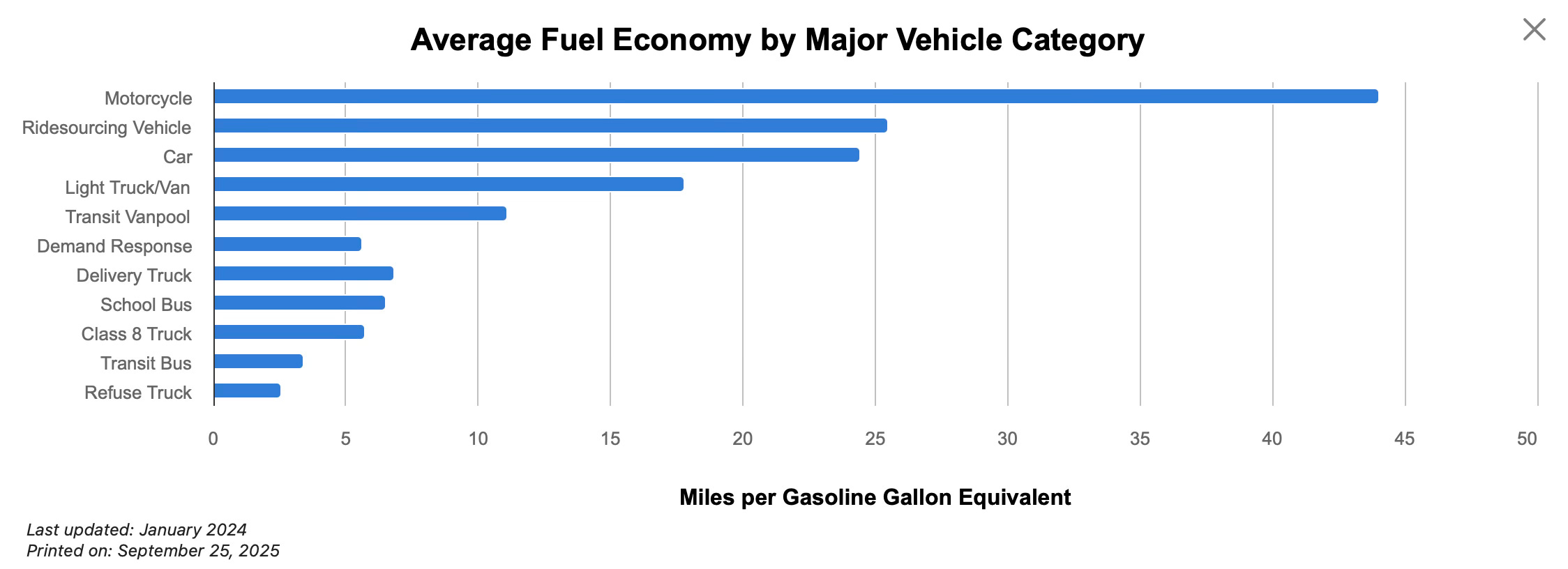
To use this data properly for this discussion it has to be converted from miles per gallon to dollars per mile. In other words, how much does it cost per mile to fuel the vehicle?
I just hit 24,000 miles on my 2024 Ford F-150 Lightning. That puts me at 163,000 miles of 100% electric vehicle driving with three different vehicles over the past 12 years.
No gas, no oil, no need for wars, just new tires every once in a while.
Driving a vehicle getting 4.2 miles per kWh for 163,000 miles requires 38,809 kW of electricity that would cost $4,657 at $0.12 per kWh.
4.2 miles per kWh at $.012 per kWh, equals $0.03 cents per mile.
A gasoline powered vehicle getting 36 miles per gallon (at $4 per gallon) would have a dollars per mile price comparison to a car using electricity for fuel that looks like this:
Gas = $.11/mile to fuel the vehicle
EV = $.03/mile to fuel the vehicle
The chart below summarizes fuel usage and costs for two electric and two gasoline powered vehicles.

Let’s look closely at the chart where I extended the mileage comparison for each vehicle out to 24k, 90k, and 200k miles. I’ve driven two vehicles past the 200,000 mile mark so I know that is a good and reasonable goal for any vehicle. I also have one electric vehicle currently at 90,000 miles with no problems ever.
The fuel costs get cheaper and cheaper the longer you drive an electric vehicle.
The fuel costs for the 2018 Nissan Leaf are $26,000 less for 200,000 miles compared to a gasoline powered vehicle getting 25 miles per gallon.
Comparing the “affordability” of the electric Leaf to a gasoline car is pretty simple without taking into account repairs and damage from accidents. Although, if you add repair costs it makes electric vehicles even cheaper.
Comments
Nothing yet. Say the first thing.
Sign in to join the conversation.