
I want to preface this newsletter by saying, I don’t consider myself an authority on this topic. I don’t think anyone really can be as there is so much nuance to art and creativity and business that there is no one-size-fits-all system. And yet, I get asked by a lot of people for advice on how to make games and I must know something as I’ve made dozens of the buggers (well, 10 or so if you don’t count expansions. Probably back into the dozens if we include the one page games I made for Tabletop Gaming Magazine back in the day though.) So here’s my best effort at explaining how I go about making a game and what advice I would give you as a blossoming designer.
Step One - The Idea
Everything starts with an idea, see my previous newsletter for more on that. Whether that be the incredibly common “I wish D&D did X better” or something more personal to you. An idea can be a game mechanic, a setting, a vibe, a joke, whatever but it is the idea that the game coalesces around.
Let’s take my game Spirit Tea as our example as it’s what I’ve been working on the most recently.
The idea for that was “I want to make something that helps our kung fu school but I don’t want to make a martial arts game. Hmmm, glances down at cup of tea… if only there was another type of kung fu that could be made into a game… Tea! An Apothecaria hack about making tea!”
That core idea then spun out into making teas for spirits in order to fulfil requests for customers who come to your teahouse for help.
My Advice — Get into the habit of jotting your ideas down in one big document. I tend to have one on my Notes app and another on Google Drive. The ones that interest me enough to get tinkered with end up on the Drive which is how games like Death Road Services ended up getting made.
I like to go for long walks and let my brain wander. It’s like a housecat and will often come back with little presents. Sometimes they’re duds, other times they’re the seeds of something.
Step Two - Getting Started
This is the hardest step for a lot of people and it’s usually because they’re skipping right to Step 10 - Become Rich and Famous and imagining all manner of hurdles that might get in their way. Usually they fear people stealing their Idea. You need to kill that fear and just get making it. No-one can make your game exactly the same way as you can and even if your game is incredibly niche and personal to you, chances are there are a million people out there who are looking for that exact combination of things.
I recommend creating a skeleton of what you think you’ll need to do. Work out what your most important mechanics are and build those. Usually that will show you what else you need to do and so on and so forth.
For Spirit Tea I started by making a list of all the mechanics I though I might want:
Requests - The reskinned versions of Apothecaria’s Ailments. These drive the core gameplay loop.
Ingredients - The stuff you need to find to make the teas.
Locales - The places you need to go to find the Ingredients.
Challenges - Okay, I wanted a little bit of martial arts in here. Sue me.
Spirits - I wanted specific spirits that you could call upon.
Sifu - Talking to your teacher seemed like a fun way of recapping the adventures you’ve been on.
Tools and Upgrades - I wanted a way to improve yourself and the tea house without resorting to a levelling system.
More mechanics appeared along the way like the Brewing minigame and Tea Pets. The same thing happened with the original Apothecaria with the whole missing witch mechanic which was originally put in to give the joker cards something to do.
If your game has a lot of lore that you want to give the player then getting started might involve zooming in on one point and fleshing that out, filling in holes as you go and making connections with other parts of your setting OR you might prefer to start zoomed out and do the broadstrokes before diving in deeper as you go. There are loads of worldbuilding podcasts, articles, and videos that can be helpful for this sort of approach.
My Advice - At this stage, it’s more important that you are excited and actually work on your game but it is useful to have a little business person on your shoulder making sure that you aren’t biting off more than you can chew.
Your first game shouldn’t be your magnum opus.
If you don’t have loads of money to burn, start small.
Crowdfunding isn’t always reliable. For every mega success there are a hundred campaigns that fail to fund. (numbers made up but probably true).
Step Three - In The Weeds
All projects start with the exciting honeymoon phase which is replaced with the daunting task of actually making the thing real. This doesn’t have to be scary though. Tackle one thing at a time. That might be “playtest the combat mechanics” or “layout the kingdom management pages”.
Creating some sort of checklist is very useful here but I am wildly inconsistent with them and fail to do that every time.
This is the great filter of game designers though and it takes some determination to get through it. There will be a lot of frustration here unless you get very lucky.
Depending on your game the weeds are most likely to appear around:
Playtesting — Getting people to play your game can be hard. I make solo RPGS so I can test it myself first then give it to my partner and then to my audience/ Patrons. I’m very lucky to have that. Thankfully there are a lot of friendly communities and a lot of indie RPG designers have sections on their Discords for budding designers to seek playtesters. We’ve got a whole Designer’s Corner section on our Discord if you ever need it.
Layout — There’s no easy way around this unless you’re willing to pay someone else to do it. It’s like decorating. If you do it yourself, expect to spend a lot of time moving things back and forward and ultimately deciding to make it a circle instead. Learn from my mistakes and proofread before doing layout. Save yourself!
Art — Artists are great and having someone match your vision with handcrafted art that shows exactly what you had in mind is the best. However, not everyone can afford to pay an artist and not everyone can draw to a level they’d feel comfortable putting in a book. Thankfully there is a wide world of stock art and public domain art you can use to create beautiful games on the cheap.
My Advice - When you reach the stage where you start to want to quit, remind yourself why you wanted to make a game in the first place. I like making things so my motivation is usually just getting to hold the book in my hands.
For a lot of my games I’ve gone to Kickstarter at the idea stage thanks to the annual Zinequest event and ended up having to make good on my promises. Crowdfunding guilt is not a good motivation in an emotional sense. It works wonders for actually getting the game made but I do not recommend it!
Step Four - Getting It Out The Door
If you listened to your little business person back in step two, you should hopefully have a game that won’t bankrupt you to produce. If not, you’ll have to throw yourself at the mercy of crowdfunding or go rob a bank (in Minecraft).
Like I said at the start, there is no one-size-fits-all solution. My tactic since DELVE has always been to print 1000 copies as that gives a decent per unit cost compared to a smaller print run. That means I get a better profit off of each unit sold.
I tend to print with Mixam UK though I don’t recommend it as their quality is inconsistent and some will come out fine while others will have weird mistakes. They’ve also recently started requesting that stock that arrives damaged be destroyed before they’ll send out replacements which is wasteful and is the biggest reason I’m looking for a new printing partner.
A thousand books is a lot to house though. I was lucky that we had a family member who had an external garage that she didn’t use so we could store books there while we lived in a 0 bedroom flat.
If money is tight, then you have the option of:
Crowdfunding — Keep an eye out for events that might help improve your reach. Things like Zine Quest or Zine Month are great for small form RPGs (which is how I got my start) but there are others around too. Unfortunately this requires you to be active on social media and to build an online presence and promote your game relentlessly if you want to succeed.
Print On Demand — Rather than coughing up a few hundred to a few thousand pounds on a print run, you can set up your game to be available P.O.D through DrivethruRPG and other websites. This makes your game more expensive to the customer but mitigates some of the risk to you.
Digital Only — I’ve seen quite a few games that are digital only at first until they build up a bit of a following/ funding to make a print run. Of course, there’s nothing wrong with a completely digital only game!
My Advice - Make your game before you even start thinking about this stage as it is the most likely to put you off. A lot of this seems daunting but in reality it’s more straightforward than you think.
Don’t be afraid to ask other designers for advice or help.
Breakdown
Making a game is easier than you think but it requires determination to push through the inevitable hurdles you’ll be faced with. Whether that be tricky layout, crowdfunding, art woes, or the dreaded editing pass, every project has its ups and downs. But if you can stick it through and get it made then I guarantee you that it will at least be one person’s favourite game.
You just have to find them.
Media of The Week
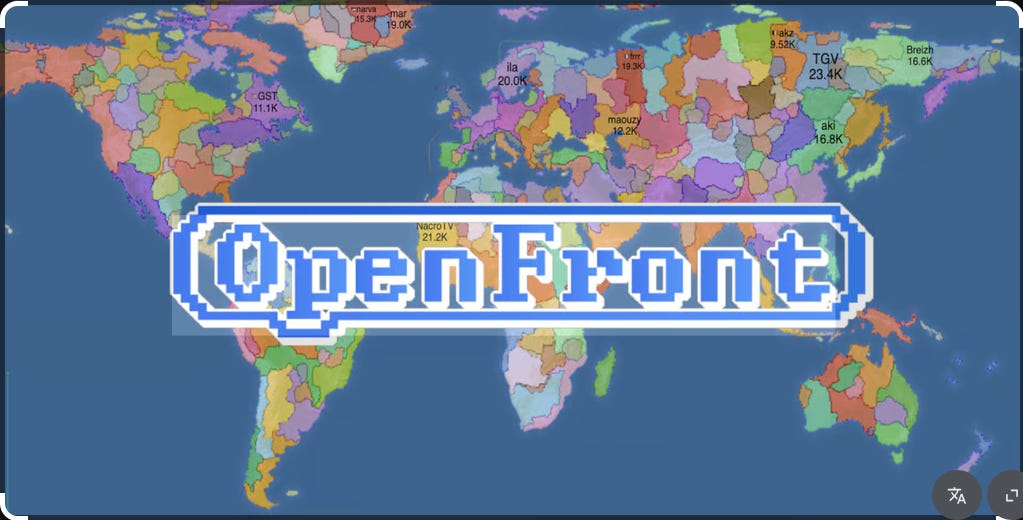
My computer is currently spread across three rooms while we redecorate so I’m writing this on my crappy laptop and have become obsessed with openfront.io. It’s a sort of 4X distilled to its barest bones. It’s like agar.io meets Civilisation and I suck so much at it and yet I’m going to go play it again the second I stop writing this. It’s free and browser based so give it a look.
Upcoming Conventions
I’m going to be at Sequential Scotland on the 8th of August. It’s based in Glasgow which is so handy :D
After that we’ll be at Tabletop Scotland from the 4th to the 6th of September.
Hopefully we’ll see some of you there!
Comments
Nothing yet. Say the first thing.
Sign in to join the conversation.