
Like many products of the Great Migration, my father is a cultural hybrid. He tasted enough of Savannah each year to feel a part of it; he moves and acts like what he is: a dredhead lightskin from Philly. To look at me is to see him—same septum ring, same haircut, same gravel in the voice, same rock-and-rollish vibe—so I won’t elaborate further.
Even he didn’t know my mother was of half Afro-Dutch stock. He saw her father’s South Carolina, likely looking for his own self in her face, and his own family history in her own.
It’s pretty likely that the majority of my maternal grandmother’s ancestors were enslaved above North Carolina. Both her mother’s and father’s people were enslaved in New Jersey: my great-great grandmother Lilian’s people in South Brunswick; my great-grandfather’s people in Newark. They would have spoken low dutch, not English.
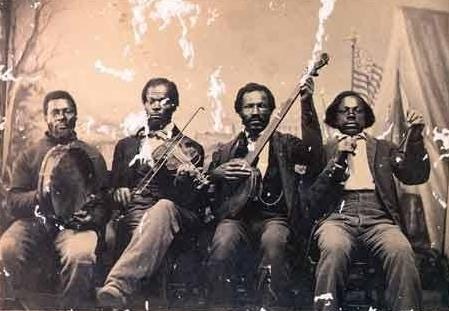
On its face, Pinkster was a celebration of Pentecost, and the one week of the year enslaved people in New England, New York, and New Jersey had off to socialize with one another. Yet underneath that were creolized African religious retentions—but those roots go deeper than Pinkster.
The twenty-three heroes of 1712 roused each other to action using their religious beliefs, though there was likely distance between what that meant individually. The twenty-three came from Senegal, Mali, and Ghana, they came from The Gambia, they were dragged from Angola, they were Kongos. Armed with guns, axes, and knives, they declared war on the Christians who enslaved them.
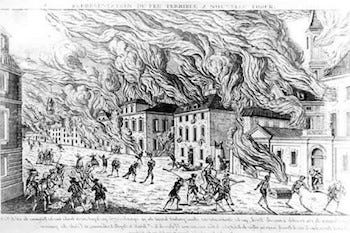
We don’t know who set fire to Peter Van Tilborough’s house that night. What we know is that the fire was a sign—the revolt had commenced; ten white people were laid low by first light of morning. Forty Africans were trapped and captured near Canal Street.
They were also said to have exchanged blood from one another’s hands in an agreement to secrecy amongst comrades.
Peter the Doctor was, as his name implies, a New York City conjure doctor. He was likely Akan or Bakongo. He was free. Though many were killed once captured, Peter the Doctor’s powder did as he said it would. None were shot during the rebellion. Peter the Doctor died a free man. This is no doubt due, in whole or in part, to the powder he rubbed on his body and the bodies of his comrades before their rebellion.
We will likely never know who Hoodooed first, because our ancestors were not allowed to write their own stories. It’s totally possible that we’ll find older archeological evidence of Hoodoo, my guess is in Virginia since that’s where the first enslaved people were brought in the US.
I’m already bracing myself to be torn up for even citing this history, because I understand that it challenges core ideas about where Hoodoo should be found. It does not, however, deviate from what anyone who understands Hoodoo knows it to be——a pact, an alchemization of many people into one for the purpose of liberating themselves and surviving the terrible situation they found themselves in across the waters.
It also challenges a history of enslavement as “the Southern issue.” Every Ivy League school save one held humans in bond. The mines that made New York and the hands that fed it were Black hands in chains. We must be honest about our history if we are to understand the present.
I will always cite and celebrate the fact that the majority of Hoodoo, like the majority of enslavement itself, happened in the South. We can do this without acting like there is no Northern Hoodoo. In fact, I originally learned about Peter the Doctor from my (very Southern) teacher, the late Ms. Lisa Kay Brown-Jones of Memphis Conjure.
This is likely true of various religious retentions throughout Atlantic Creole communities. These societies are among the reasons for and results of that creolization process in the first place.
Mind you, the “creole” part of Atlantic Creole is not primarily that of racial admixture. That came later. The Atlantic Creoles are cultural creoles: born of an Africa still weighing the benefits and consequences of European alliance. We are the primary victims of this process, but only white people were the ultimate victors.
Thanks for reading black medicine // black magic ! This post is public so feel free to share it.
Starting in the 1480s, the Kingdom of Kongo’s rulers converted to Catholicism to strengthen alliances with the Portuguese. It worked. By the 1500s, the Catholic church was well established in the Kingdom of Kongo, and many Bakongos joined primarily Black versions of the Iberian Brotherhood’s secret societies. This is the creolization process, not just what followed in the United States.
This mass conversion to Catholicism for political and religious reasons (similar to the ones that led our ancestors to convert in name or in body on these shores,) spurred and solidified the traffic in Africans to the Americas.
So they trafficked the witches, warriors, and heretics; later they scrambled to trade whomever they could find. It got so bad that leaders eventually saw their own family members sold—this is, of course, when they started to see what was to come. Probably would have been easier if they hadn’t removed so many essential roles within their communities in the name of European modernity, but hey! I’m here because they sold and trafficked a previous version of me, so….!
The Pinkster King was elected as a “mediator between two racial worlds.” He, along with the members of the brotherhood and other mutual aid societies among the enslaved, helped Africans survive their new lives. Similar formations sprung up among Atlantic Creoles in Trinidad, the Dominican Republic, and elsewhere in the Americas.
Comments
Nothing yet. Say the first thing.
Sign in to join the conversation.