
While I can't pinpoint exactly what makes city pop so alluring, it has slowly become my go-to late-night work soundtrack. Perhaps it's the upbeat sound, my fondness for nostalgia, or simply my laziness in finding other things to listen to. Whatever the reason, it has proven to be a reliable partner in fueling my midnight productivity.
Inevitably, a song you'll find on my playlist is Mariya Takeuchi's “Plastic Love,” a track that has been at the center to city pop's internet-fueled comeback. I mention Takeuchi's track not to draw more attention to it (it already has plenty) but to highlight the Chinese language covers of the song that I've included alongside the original. The existence of these covers, especially Anita Mui’s (梅艷芳) 1985/1991 Cantonese / Mandarin versions “Searching for Love” (尋愛) and “Looking for Love” (找愛的人), has curiously led me down a rabbit hole searching for city pop-inspired music within the realm of Chinese pop.
But before I tell you how that went, let me first provide a quick primer on the city pop phenomenon for those unfamiliar with it. City pop first emerged in the 1970s as part of Japan’s “new music” movement, kick-started in part by acts such as Happy End and Sugar Babe. This movement saw Japanese musicians increasingly dabbling in Western pop genres, with city pop being a part of the development of Western-influenced Japanese pop music from the mid-1970s onward. Due to the time period of its popularity, city pop is often associated with the vibrant and affluent Japanese urban lifestyle of the late 1970s and 1980s, resulting from the country's post-war economic success.
In musical terms, city pop mirrored popular styles of Western music from the same period, encompassing everything from funk, disco, soul, boogie, to AOR. Popular artists like Eiichi Ohtaki and Tatsuro Yamashita were brilliant in capturing the essence of these genres while developing their own unique styles. Alongside the music, city pop’s stylistic aesthetics were perhaps another defining feature, with many albums from this era featuring vibrant artwork depicting sunshine-dipped oceans, palm trees, beaches, storefronts, evoking idealized depictions of foreign locales like California or Hawaii.
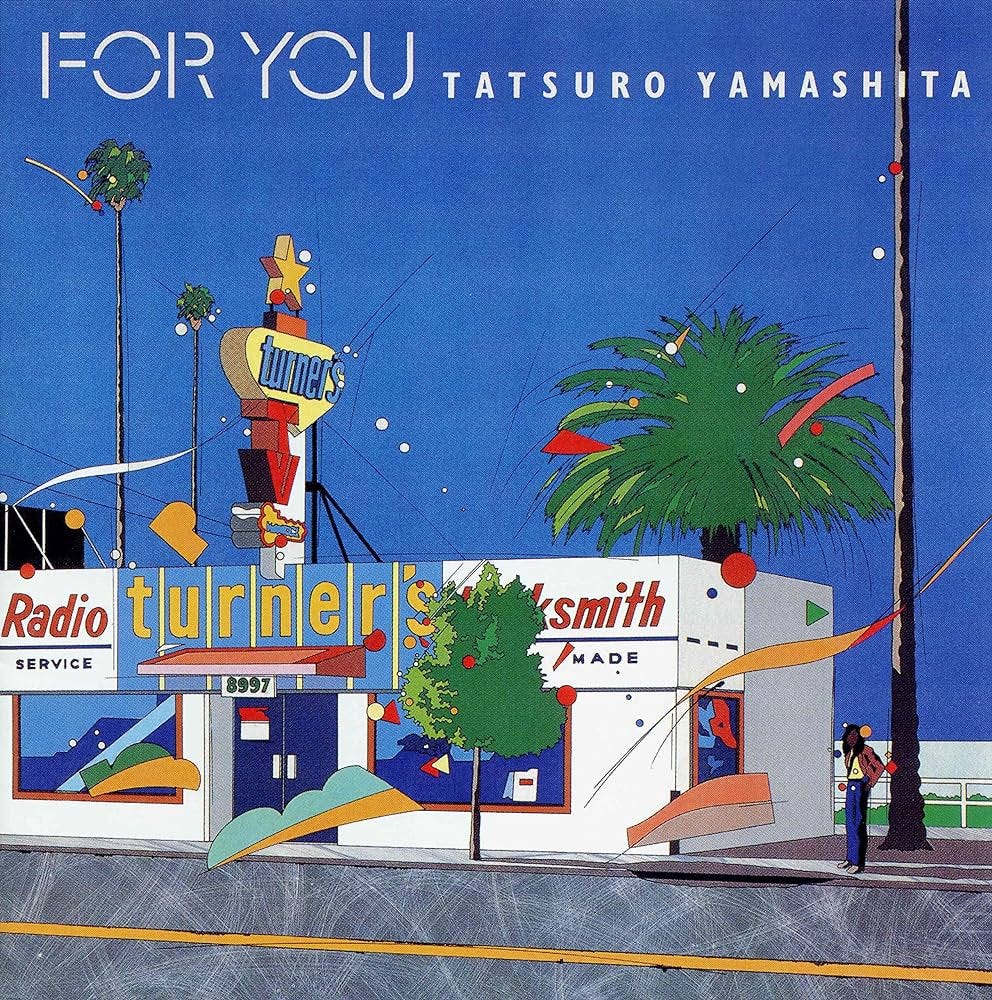
City pop peaked in popularity in the mid-1980s. However, a shift in consumer interests and the rise of other music trends led to its decline by the time Japan's bubble economy burst. This could have been the end of city pop's story, but thanks to internet-driven phenomena in the past decade like vaporwave and future funk, along with algorithm-driven nostalgia, city pop has experienced renewed interest.
Now returning to our discussion on Chinese city pop, it's evident that exposure to Western music, especially American pop music, played a key role in the development of city pop in Japan. But what about similar Asian economic powerhouses like Hong Kong and Taiwan? Did a comparable influence contribute to a city pop-like genre in these places? Like many things in life, it’s complicated.
While Western pop music gained traction in Hong Kong and Taiwan from the 1950s onwards, how its influence spread was different. In Taiwan, factors such as the transition from Japanese rule to Nationalist Army (KMT) governance and the imposition of martial law in 1949 led to stringent regulations regarding music releases. Popular songs had to be sung in Mandarin, with singing in Taiwanese Hokkien (the topolect spoken by most Taiwanese) or Japanese forbidden. This limitation also affected the types of Western music that could be introduced to the island, thereby restricting its exposure.
In contrast, Hong Kong saw the rising popularity of Western pop music in the 1960s, nurturing musicians and bands focused on writing English songs and doing rendition and covers. This band culture at this time would have a profound impact on what later became Cantopop, as many significant Cantopop songwriters/artists emerged from this movement, such as Sam Hui (許冠傑) from the band Lotus, or Roman Tam (羅文) from the group Roman and the Foursteps. Later, original Cantonese pop songs emerged in the early 1970s, spurred by the growth of television show theme songs and Western-influenced city folk movements. A similar trend occurred in Taiwan, where the Taiwanese film industry was increasingly gaining traction and comparable campus folk song movements began.
This music trajectory is similar to Japan’s aforementioned “new music” movement, albeit occurring later—perhaps with a close to decade-long gap—for Hong Kong and Taiwan. Consequently, when examining tracks from this era, covers are unavoidable. The natural development of local musical talent may not have had time to meet the increasing demand for new pop music, leading to licensed covers with Chinese lyrics as a convenient solution. Thus, many Chinese city pop-esque tracks were direct covers of Western tracks but with Chinese lyrics. Or even direct cover versions of popular city pop tracks from Japan, such as the case with the aforementioned “Searching for Love'' by Anita Mui.
We also need to consider the significant influence of Japan in these regions. While the West's exposure to pop culture of the Far East is a relatively recent phenomenon, Hong Kong and Taiwan have long been influenced by neighboring East Asian countries like Japan and Korea. Japan, in particular, being one of the earliest developed music markets in the East, had a significant impact on pop culture in Hong Kong and Taiwan. This makes it challenging to isolate the development of city pop-style music in these regions from the influence of Japan. Therefore, defining what constitutes Chinese city pop music is far from clear-cut, or perhaps not all that meaningful.
Although these findings weren’t quite the answers I had initially expected, they did help resolve much of the confusion surrounding my lingering thoughts on Chinese city pop. Now with that out of the way, we move onto the good part—the music. So what are some good starting points for artists that fit that style and era? Don’t worry, I got you covered, but before I turn this into a dumping ground of C-pop artist name dropping, I think it’s important to set some ground rules first. The Chinese city pop I’m considering here mainly falls into two categories: first, artists influenced by the ’70s-’80s Western pop sounds inherent in Japanese city pop; and second, music or lyrics that evoke the same urban-driven motifs of the genre. For the sake of brevity, I am going to keep things short and highlight a handful of Cantopop and Mandopop artists that I think you should know. If any of these artists pique your curiosity, definitely check out the accompanying Spotify playlist below for more recommendations.
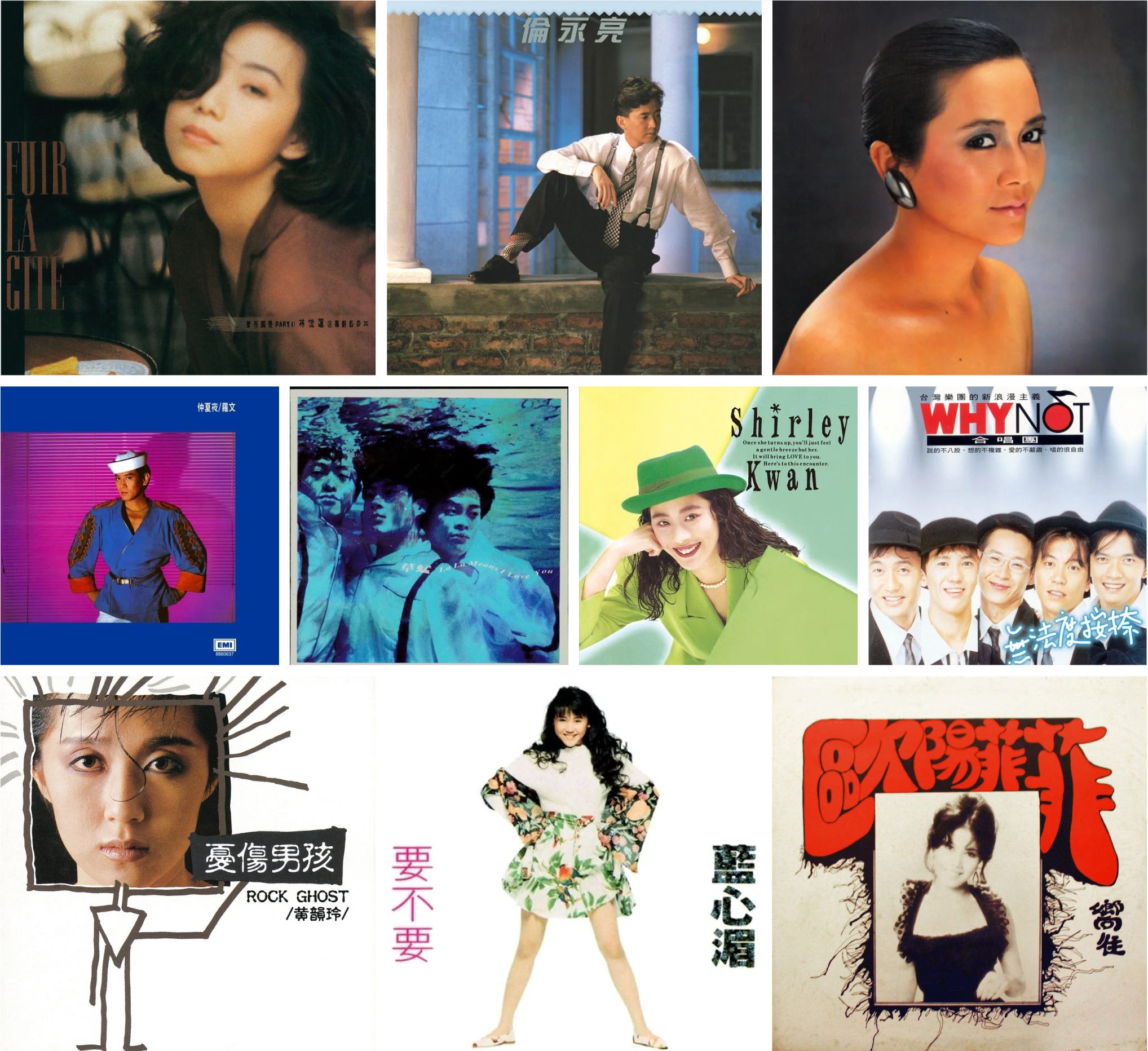
Please note, the list is presented in no particular order.
Sandy Lam (林憶蓮): One of the most recognizable names in Cantopop, Sandy Lam’s prolific career has seen her dabble in a multitude of genres and styles. While most of her work would not necessarily be categorized as city pop, her City Rhythm Trilogy (都市觸覺三部曲) is an exception. Released between 1988 and 1990, these three albums contain many covers of popular Western tracks. Musically, they lean more towards dance pop and new jack swing rather than the soul funk of traditional city pop. However, the lyrics definitely explore the concept of urban and city life, tackling the range of complex emotions associated with being a modern-day woman living in the big city.
Anthony Lun (倫永亮): Anthony Lun is one of the mastermind behind Sandy Lam’s City Rhythm Trilogy and one of the most renowned songwriters and producers from the Golden Age of Cantopop. Educated at the University of Michigan, Lun worked with some of the biggest names in Cantopop, including Anita Mui and Andy Lau. While his second album is mostly filled with ballads and doesn't quite have a city pop sound, his Western-influenced production style shines through. Notable tracks that evoke a city pop vibe include “Lyrics” (歌詞) and “Rustles in the Rain” (沙沙的雨), a cover of Neil Sedaka’s “Laughter in the Rain.”
Deanie Ip (葉德嫻): Perhaps more well known for her film career, Deanie Ip had a pretty spectacular music stint in the 80s. While it’s hard to find a full on album from Deanie that dabbles solely in what would consider city pop. There are some good covers she did that fit into that familiar city pop sound—some choice tracks include “Sigh With Ease” (輕鬆嘆), a cover of Dr. Hook’s “Sexy Eyes,” and “A Thousand Disgusts” (一千個討厭), a cover of The Manhattan Transfer’s “Mystery.”
Roman Tam (羅文): The undisputed king of Cantonese disco, Roman Tam’s 1981 release A Midsummer’s Night (仲夏夜) definitely fits the bill in terms of capturing a Western pop sound—the whole album is filled to the brim with 70s disco and funk. Tell me, how are you going to get the hook from “Don’t Be Cruel” (莫負有心人) out of your head?
Grasshoppers (草蜢): Starting their careers as backup dancers for Anita Mui, The Grasshoppers became a famous dance group. While they are probably best known for their dance pop tracks, they covered a bevy of Japanese city pop mainstays such as Minako Yoshida, Omega Tribe, Mariya Takeuchi, and more throughout their multi-decade music career. As a side note, singer Remus Choy (蔡一傑) also has his own cover version of “Plastic Love” in the form of the track “Onederful” (獨行派對).
Shirley Kwan (關淑怡): Most of Shirley's music may not immediately come to mind as city pop, but her debut in both Hong Kong and Japan alone justifies her inclusion here. In 1988, she won the Grand Prix at the 5th Marine Blue Music Festival in Japan, signed with the Japanese label Apollon, and later with PolyGram Records, entering the pop scene in both regions. Her Japanese debut albums, Say Goodbye and Borderless, lean more toward idol kayō but still carry a strong nostalgic appeal. Plus, with her cover (“Best to Say Goodbye” (再會)) of Anri's “Olivia wo Kikinagara” (even though it's more of a ballad), I'm going to go out on a limb and say she deserves a spot in this conversation.
WHYNOT: Despite releasing only one album, What Can We Do (無法度按奈), during their short-lived career, Taiwanese group WHYNOT's influence can still be felt today. The group's members, such as keyboardist Eric Chen (陳建良) and drummer Kuan-Yu Liu (劉冠佑), continue to be major players in the Mandopop scene. Eric co-founded the record label Wonder Music (彎的音樂), which has spawned famous Mandopop bands such as Tizzy Bac and Wonfu. Meanwhile, Kuan-Yu joined the popular Taiwanese rock band Mayday. The album’s title track, “What Can We Do,” is practically legendary now, but other cuts from the album are great too.
Kay Huang (黃韻玲): One of Taiwan's most respected singer-songwriters, Kay Huang is known for her exploration of various music genres. Her debut album Melancholy Boy (憂傷男孩), released in 1986, is a perfect showcase of Chinese city pop sounds with tracks like “Love Liar” (愛情騙子), “A Moment” (一瞬間), and the yacht rock-inspired “Only One” (你是唯一).
Pauline Lam (藍心湄): With a career spanning singing, acting, hosting, fashion, and business, Pauline Lam has undoubtedly left her mark on the Taiwanese entertainment industry. She started in the 80s with her first album, Makeup Rock (濃粧搖滾) on Feiling Records. The title song from the album perfectly captured the essence of urban city life for the modern woman and resonated with many. Other tracks of hers that evoke this urban feeling include “Twenty-Year-Old Romance” (二十歲的浪漫) and “First Love Is Quite Nice” (初戀其實蠻好). And of course, who can forget “Kiss My Tears Away” (用你的吻接我的淚), her cover of Mariya Takeuchi's "Tell Me, Tell Me."
Ouyang Fei Fei (歐陽菲菲): The indisputable dancing queen of Taiwan, Ouyang Fei Fei gained fame in Japan during the 70s and early 80s, with two songs reaching number 1 on the Oricon Charts. Some notable tracks include “嘿嘿! Taxi” (Moonlight Taxi), a cover of Yuko Asano's track, “Longing For” (嚮往) and “Disco Queen,” released in 1975 and 1979 original, I particularly enjoy the re-recording of these tracks on her 1999 best of album Departure Arrival (出境入境).
I hope this entry serves as a good starting point for exploring Chinese city pop-esque music from the pre-2000s. It was definitely interesting to take a hard look at city pop from a Chinese pop music perspective, albeit a much bigger topic than I initially anticipated. (I didn’t even get to talk about the neo-city pop movement led by acts such as Sunset Rollercoaster (落日飛車) and 9m88.) Nevertheless, it was super fun rediscovering old-new music (is that what they call it now?). And if anyone wants a part two focusing on newer acts, please let me know! I’ve already taken the liberty of sneaking some into the playlist, and believe me, I have room for more.
No posts
Comments
Nothing yet. Say the first thing.
Sign in to join the conversation.