

Bitcoin Market Brief here - your go-to crypto source.
What’s on the menu today:
Why Bitcoin Is Falling (And It Has Nothing to Do With Crypto)
The UK Wants to Build a $44 Billion Tokenized Economy
US government moves $297M in seized Bitcoin, Ether to Coinbase Prime
A crypto trader says:
“My risk management has improved a lot.”
Friend:
“How can you tell?”
Trader:
“Now I lose smaller amounts... more consistently.” 📉😂

Bitcoin is feeling the pressure again.
And this time...
It’s not really about crypto.
It’s about geopolitics.
BTC slipped closer to $62,000 as markets reacted to the latest escalation between the US and Iran.
The biggest concern?
The Strait of Hormuz.
It’s one of the world’s most important shipping routes for oil.
Any threat to traffic through that corridor tends to make investors nervous because higher oil prices can ripple through the entire global economy.
That’s exactly what happened.
Oil climbed higher.
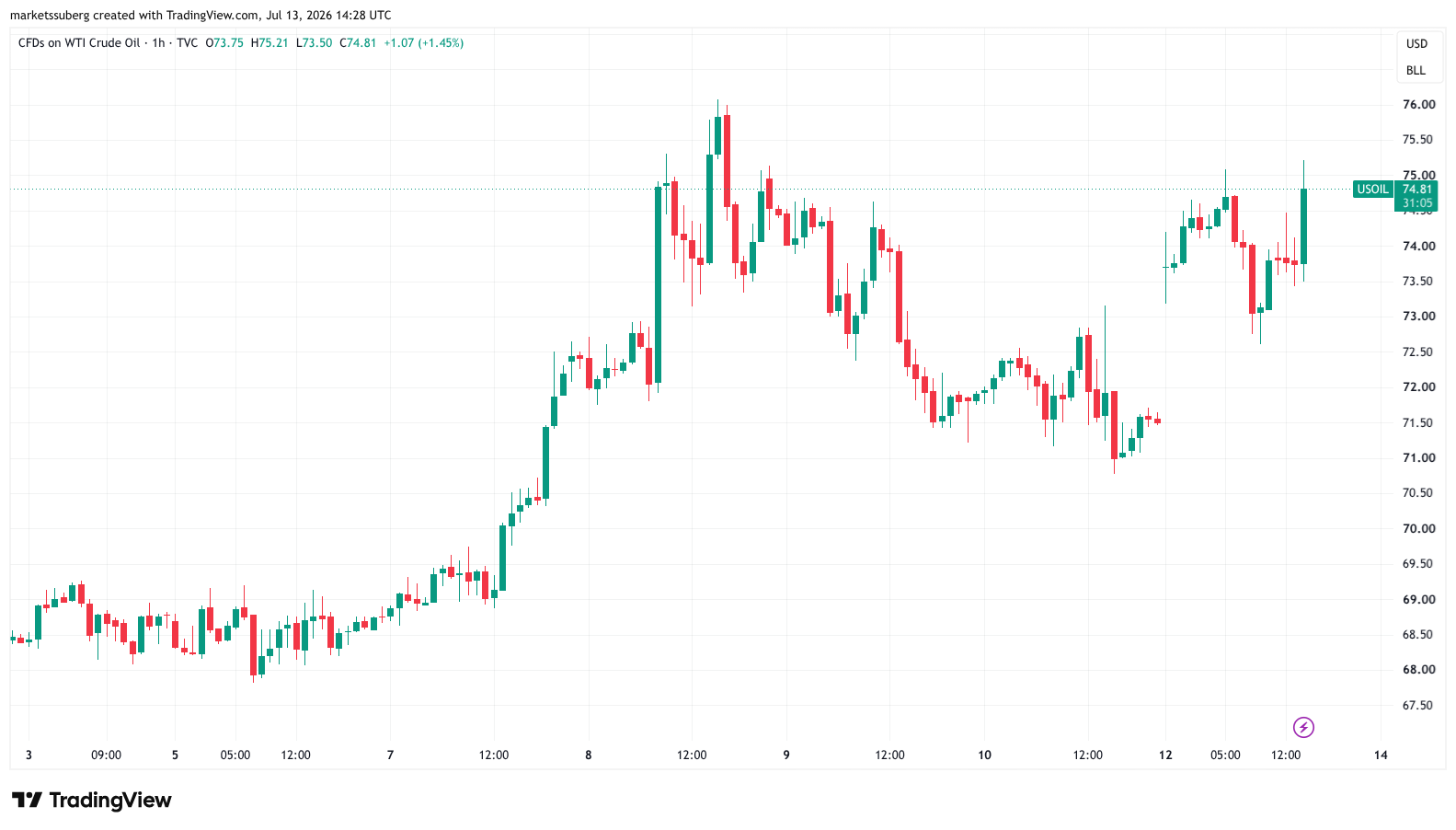
Stocks opened lower.
And Bitcoin got caught in the risk-off mood.
At the same time, a wave of short positions hit the market, adding even more selling pressure.
So you’ve got two things happening at once.
Macro uncertainty...
And traders betting on lower prices.
That’s rarely a great combination in the short term.
But here’s the interesting part.
Even with all the selling, there are still signs that buyers haven’t completely disappeared.
Spot demand has remained relatively steady, which suggests long-term investors aren’t rushing for the exits.
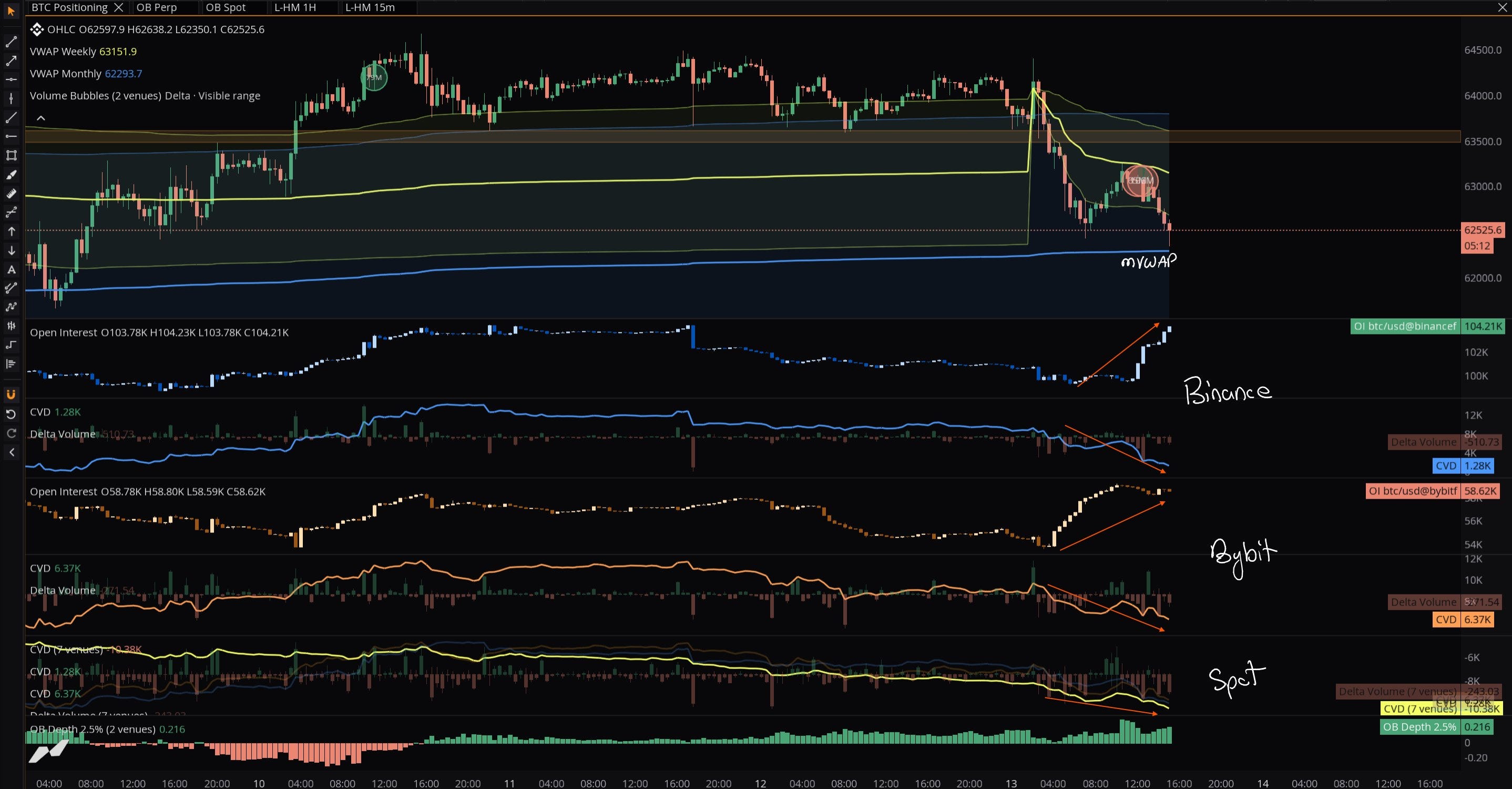
That’s an important difference.
Panic selling usually looks a lot worse than this.
The market also has a habit of overreacting to geopolitical headlines before eventually finding its footing once the uncertainty starts fading.
We’ve seen that happen more than once over the past few years.
The takeaway:
Right now, Bitcoin isn’t trading on crypto news.
It’s trading on global risk.
As long as headlines around the Middle East continue dominating the conversation, expect volatility to stay elevated.
But once those fears begin to settle...
Crypto will likely go back to focusing on its own fundamentals instead of reacting to every geopolitical headline.
The UK isn’t just talking about tokenization anymore.
It’s putting a timeline behind it.
A government-backed industry group says the UK could add £33 billion to its economy by 2035 if it becomes a global leader in tokenized financial markets.
That’s roughly $44 billion.
And the plan is a lot more ambitious than another blockchain pilot.
The roadmap calls for the UK to issue its first tokenized government bond by early 2027.
It also wants blockchain-based financial markets where assets can actually be traded, settled, and used as collateral in real transactions.
In other words...
The goal isn’t to prove the technology works.
The goal is to start using it.
What’s interesting is who’s involved.
The task force includes some of the biggest names in traditional finance alongside major crypto companies.
BlackRock.
Goldman Sachs.
JPMorgan.
HSBC.
Coinbase.
Circle.
Ripple.
Kraken.
And several other financial heavyweights.
That tells you this isn’t just a crypto initiative.
It’s becoming a traditional finance initiative too.
The UK has already been laying the groundwork.
It announced plans for a digital government bond back in 2024 and has been building blockchain-based payment infrastructure that could support tokenized assets.
Now it’s trying to connect all those pieces into a functioning market.
The report also argues that tokenized government bonds shouldn’t just exist...
They should be accepted as collateral by the Bank of England.
That’s an important distinction.
Because tokenization becomes a lot more useful when those assets can actually be used throughout the financial system.
The takeaway:
For years, tokenization has mostly lived in pilot programs and proof-of-concept projects.
Now governments are starting to ask a different question.
Not “Can we tokenize assets?”
But “How quickly can we build financial markets around them?”
That’s a very different conversation.
And it’s another sign that blockchain is gradually becoming part of mainstream financial infrastructure.
US government moves $297M in seized Bitcoin, Ether to Coinbase Prime
Binance Futures Surge 80% in June as Spot Markets Hit Two-Year Low
Ripple CASP Approval Exposes the Compliance Gap Splitting Europe’s Crypto Market
Bolivia mulls recognizing USDT as payment currency amid dollar shortage
DISCLAIMER: None of this is financial advice. This newsletter is strictly educational and is not investment advice or a solicitation to buy or sell any assets or to make any financial decisions. Please be careful and do your own research.
No posts
Comments
Nothing yet. Say the first thing.
Sign in to join the conversation.