

Money didn’t arrive fully formed.
It evolved.
Slowly at first, then all at once.
What we use today is the result of thousands of years of iteration.
Each step solved a problem. Each step introduced new tradeoffs.
The simplest way to see that progression:
Commodity Money
Gold, silver, livestock
Coinage
Standardized, issued metal coins
Banknotes
Paper claims on gold or silver
Fiat Currency
Government-issued money by decree
Checks
Instructions to transfer bank deposits
Credit & Debit Cards
Easy access to bank balances & credit
Electronic Transfers (ACH/Wire)
Digital transfer between institutions
Online Banking
Internet-based access to banking
Contactless Payments
Tap-to-pay using NFC technology
P2P Payment Apps
Platforms like PayPal & Cash App
Bitcoin
Native digital money and network
And now, for the first time in history, we may have something that doesn’t just improve money… but redefines it.
The earliest forms of money weren’t abstract.
They were physical, tangible, and scarce.
Gold. Silver. Commodity money.
These worked because they were:
Durable
Verifiable
Scarce
But they weren’t perfect.
They were hard to transport, difficult to divide, and inefficient for a growing global economy.
So we evolved.
Coinage standardized value.
Banknotes abstracted it.
Paper money (redeemable at first) made transactions easier. Eventually, redemption disappeared altogether. That’s when money changed fundamentally.
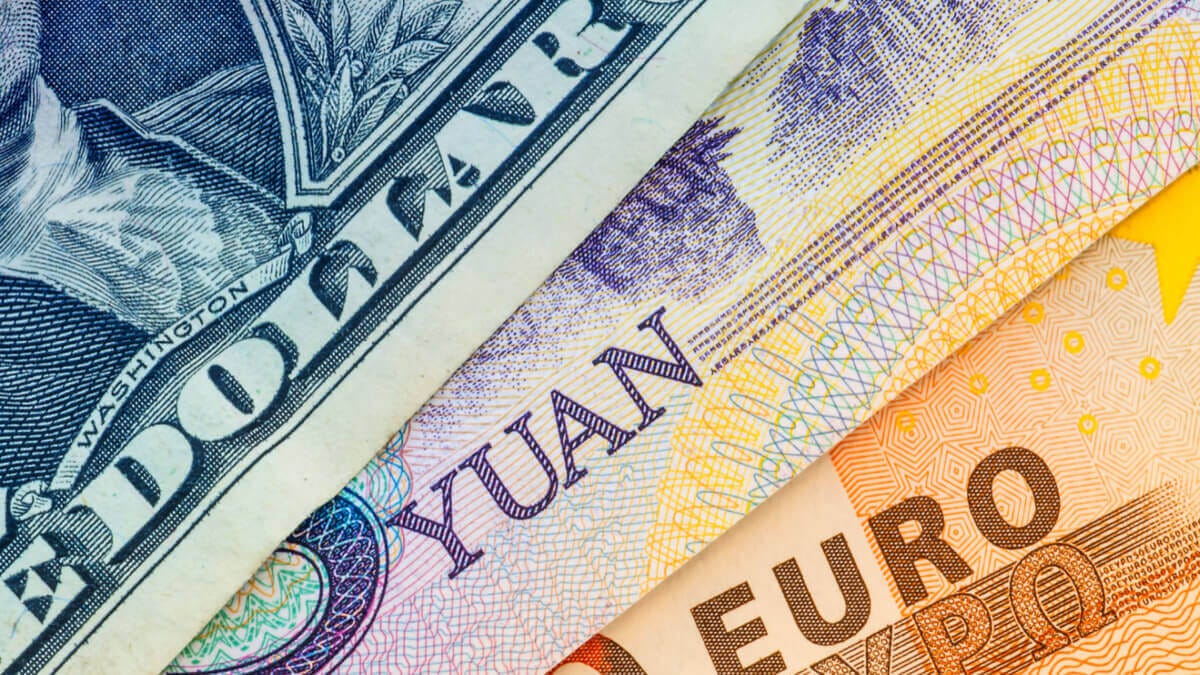
With the rise of fiat currencies, like the U.S. dollar, money became:
Policy-driven
Centrally issued
Backed by trust, not substance
It worked. In many ways, it still does.
But fiat didn’t just change money.
It enabled an entirely new financial architecture.
Checks.
Credit cards.
Debit cards.
ACH transfers.
Online banking.
Contactless payments.
P2P apps.
Each innovation made money faster, more convenient, more invisible.
But here’s what’s often missed:
None of these are actually money.
They are layers.
Layers? …of money? 🤔
Modern financial systems are built on fiat. And fiat itself is constructed through policy, legislation, and credit creation.
It isn’t mined.
It isn’t discovered.
It’s issued.
From there, everything else builds upward:
Bank deposits → liabilities
Loans → newly created money
Payment systems → claims on claims
It’s a stack.
A system of IOUs settling other IOUs.
Debt on top of debt.
That doesn’t make it bad.
Debt is necessary.
It finances growth. It pulls the future into the present. But when the base layer itself is elastic, when it can expand without hard constraints, the system becomes fragile.
Not immediately.
But inevitably.
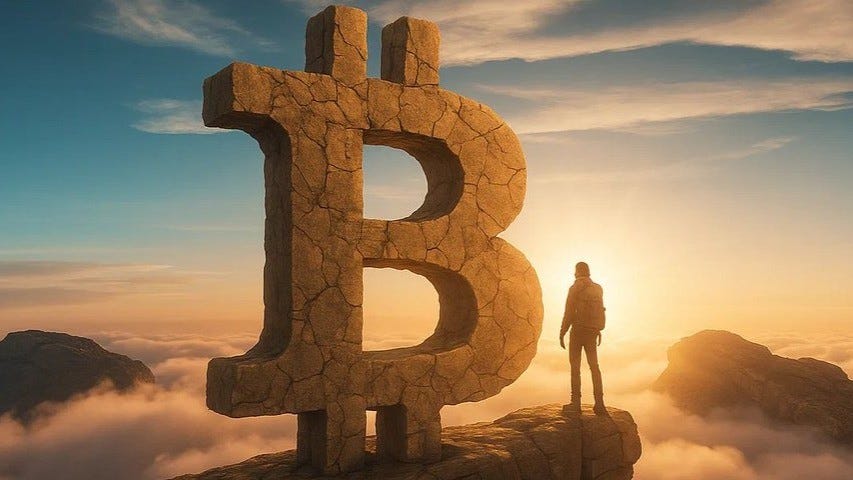
Bitcoin didn’t emerge as just another payment app. It didn’t try to optimize the existing stack. It rebuilt the foundation.
For the first time since gold…
We have a monetary asset that is:
Scarce
Verifiable
Transferable
And native to the digital world
But Bitcoin goes further.
It collapses layers.
Bitcoin is:
The asset
The network
The settlement layer
All in one.
You don’t need a bank to hold it.
You don’t need an intermediary to send it.
You don’t need a separate system to settle it.
It is money—and the rails that move it.
With the exception of gold and commodity money, every monetary system we’ve used has required trust in an issuer.
Bitcoin doesn’t.
It exists independently of any government, institution, or policy decision.
It’s secured by:
Hardware
Energy
A global network
It is grounded in the real world, expressed digitally.
In that sense, Bitcoin is both:
Digital gold (a store of value)
Digital cash (a medium of exchange)
And over time, potentially, a unit of account.
That combination is unprecedented.
Bitcoin.
A new unit of account?
It’s tempting to frame this as a battle:
Bitcoin vs. fiat.
Hard money vs. debt-based systems.
But that framing misses the point.
A modern global economy can’t function on hard money alone.
And it cannot remain stable on unconstrained debt forever.
We need both.
Debt to build
Sound money to anchor
Bitcoin doesn’t eliminate fiat.
It balances it.
It gives individuals an exit.
A choice.
A way to store value outside the system…
While still participating in it.
Each evolution of money increased abstraction.
Bitcoin reverses that trend.
Not by going backward.
But by anchoring digital money to something real:
Time
Energy
Computation
Consensus
For the first time, we have a money that is:
Global
Neutral
Finite
And self-sovereign
That’s not just an upgrade.
That’s a reset.
Money has always been a tool.
A way to store value.
A way to move value.
A way to measure value.
Bitcoin is the first system that does all three—natively, digitally, and without permission. And in a world built on layers of promises…
That matters more than ever.
Thx for reading!
Bitcoin Binge now hits your inbox every Tuesday morning! Start your day with me and the world’s largest cryptocurrency.
Your mission…
Should you choose to accept it...
Is to…

This message will NOT self-destruct.
Bitcoin is forever. This post can be too.
Share it or revisit anytime!
Something else to read:
Bitcoin 101: Your Quick-Start Guide
Both AI and Bitcoin are among the most important long-duration technologies of the 21st century. Learn more about why that is.
Why Price, Hashrate, and Dominance matter more than anything else.
Is Bitcoin a hedge against inflation? What is a hedge? Find out more.
Is Bitcoin a new unit of account?
Hashrate is the true north of the Bitcoin network. Read this to learn about its role in Bitcoin’s health, security, and future.
I am not an investment or financial advisor. All opinions expressed are mine alone. Read the full DISCLAIMER on the About page.
HODL on Garth.
No posts
Comments
Nothing yet. Say the first thing.
Sign in to join the conversation.