
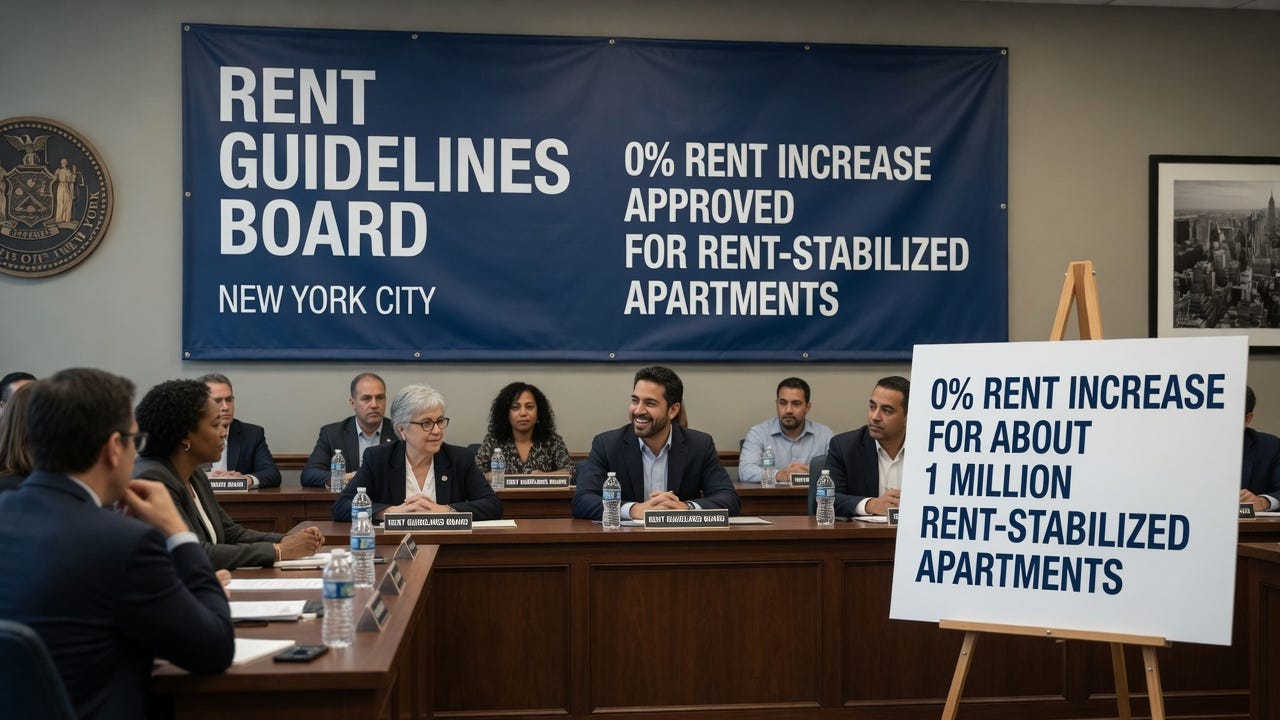
On June 25, the Rent Guidelines Board voted to freeze rents on every one of New York City’s roughly one million stabilized apartments at zero percent. The vote was not contested by chance. It was Mayor Zohran Mamdani’s proposal, adopted over the dissent of the board’s own public member, an NYU finance professor who had crunched the city’s numbers before the vote and didn’t like what they showed. Credit to Arpit Gupta, writing for City Journal and the Manhattan Institute, whose June 25 column laid out the figures this piece works from.
This is not a tenant protection measure. It is a balance sheet transfer, and the board’s own data names who absorbs it.
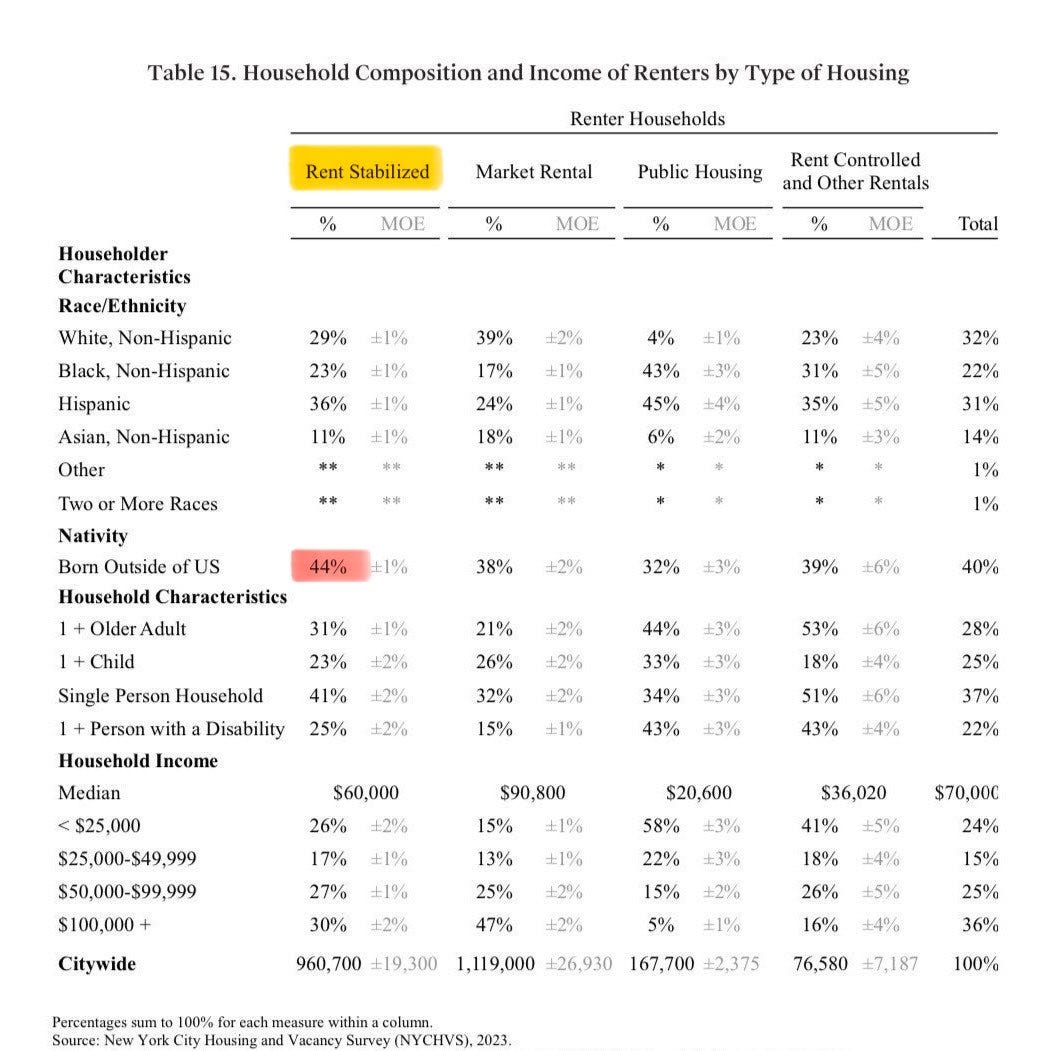
Start with the document the city already produces. New York’s rent stabilization system has run since the 2019 Housing Stability and Tenant Protection Act as what economists call a second-generation system: rents track operating costs through an annual formula, capped but not frozen, with some room to rise on vacancy or improvement. That room has shrunk every year since 2019. The June 25 vote eliminates it entirely for both one and two year leases.
Thanks for reading! Subscribe for free to receive new posts and support my work.
The numbers the city already has:
Stabilized apartments frozen: roughly 1,000,000
Buildings with negative operating income: roughly 10 percent
Community Preservation Corporation financed mortgages not covering debt service: roughly a third
Stabilized units sitting vacant, per the state Division of Housing and Community Renewal: 57,000
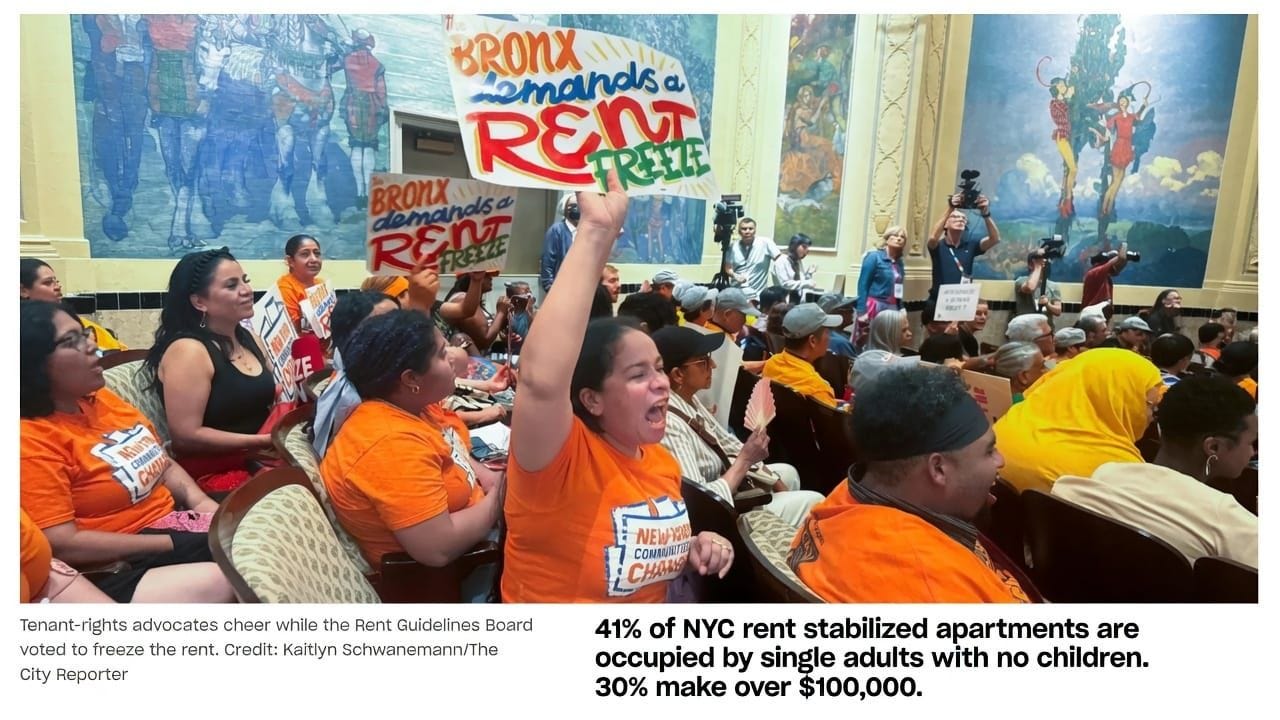
Stabilized households earning six-figure incomes: roughly 30 percent
Translate the line items. A third of the buildings the Community Preservation Corporation financed in this program do not generate enough rent to cover their own mortgage payments. That is not a future risk. That is the present condition of the housing stock the city just froze. The mayor’s own former apartment, a stabilized one bedroom in Astoria he held for seven years at roughly $2,300 a month, sits inside a program that does not check income or need before handing out the benefit. Three in ten stabilized households already earn six figures. The freeze does not target the poor. It targets the lease.
This is not a subsidy. It is an off balance sheet mandate, and the agenda behind it is visible in what the city chose not to do. Two existing programs, the Senior Citizen Rent Increase Exemption and the Disability Rent Increase Exemption, already freeze rents for specific households while the city pays owners the difference. Those are budgeted.

The June 25 vote is not. It applies the freeze universally and sends the invoice to roughly one million private leaseholders, the bulk of them small and mid-size landlords with no comparable mechanism to recover the gap.
The city has run this experiment before and kept the receipts. The nickel subway fare held flat from 1904 to 1948 until the private operators that built the system went bankrupt and the city absorbed it. Large tranches of rent-regulated housing went into foreclosure and city takeover across the 1960s, 70s, and 80s for the same reason: revenue capped, costs not. The Rent Guidelines Board’s own vacancy figure, 57,000 stabilized units sitting empty, is the early stage version of that cycle.
The professional consensus on the mechanism is not contested. Research published by Diamond, McQuade, and Qian in the American Economic Review found that extending San Francisco’s rent control cut rental housing supply by 15 percent as owners converted or redeveloped out from under the cap, and cut tenant mobility by 20 percent. New York’s own 485-x tax abatement, which trades property tax relief for newly built stabilized units, gets less financeable every time the board freezes the rent those new units are allowed to charge.
This is not rent relief. It is a one million unit liability the city has placed on private balance sheets without budgeting a dollar to cover it.
The RGB has the operating cost data. It has the negative income figures. It has the vacancy count. The board does not need another year of testimony to know what its own spreadsheet says. The fix is the one New York already has on the shelf and chose not to use here: route relief for income-qualified tenants through SCRIE and DRIE style programs the city actually funds, restore the cost-indexed formula for everyone else, and put the 57,000 vacant units back into the only column that matters, occupied. Anything short of that is not a freeze. It is a foreclosure notice with a longer fuse.
Freeze the rent’ is really about outrage and revolt
Comments
Nothing yet. Say the first thing.
Sign in to join the conversation.