
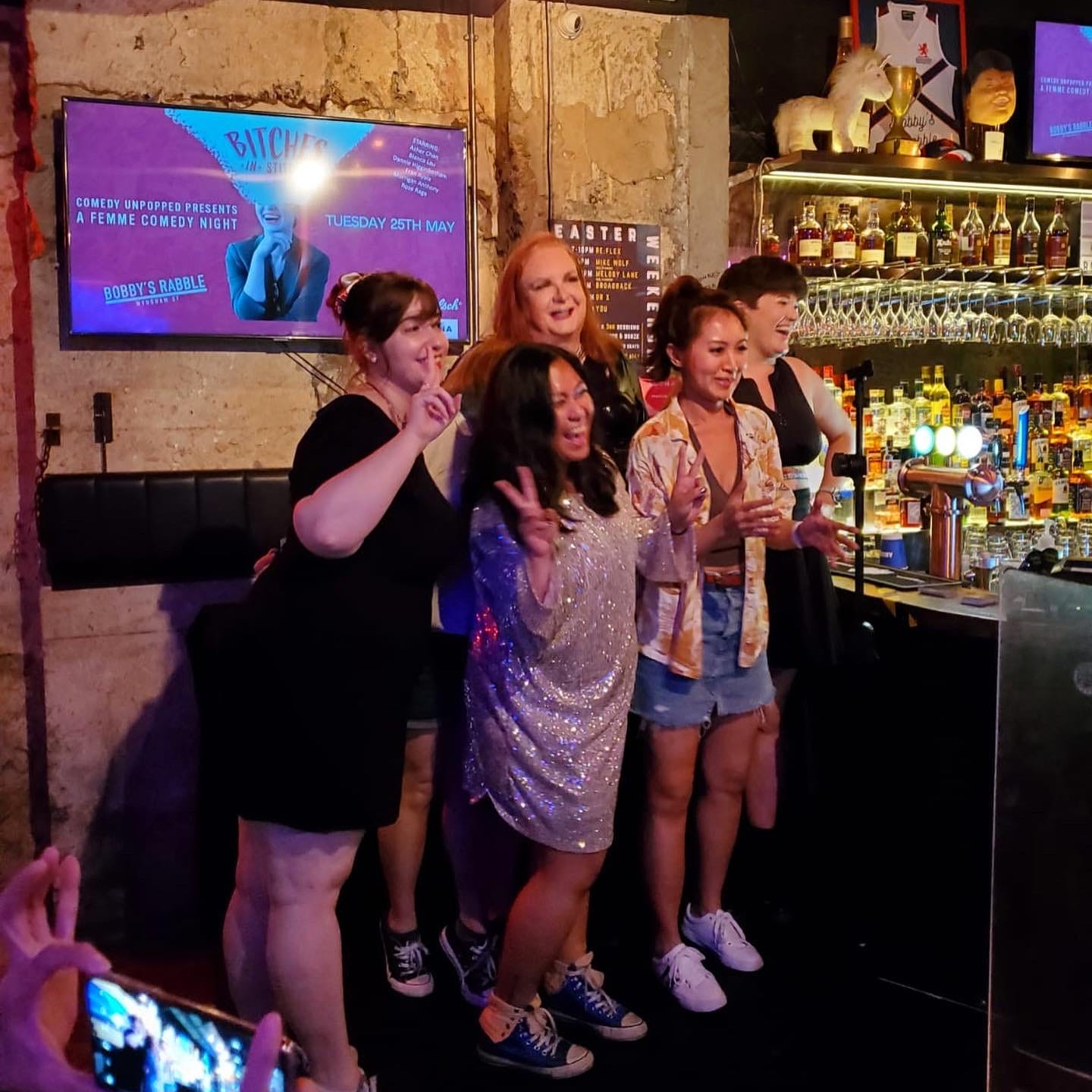
Five years ago, we were crammed into a tiny bar in Hong Kong, about to put on our first-ever show.
The venue — Bobby’s Rabble — could squeeze in just over 30 people.
And every single seat had sold out in under six hours.
Which meant one thing: We had nowhere to hide.
The show was called Bitches in Stitches — a name that felt slightly unhinged, mildly confrontational, and exactly right.
We had a lineup of six women, one microphone, and a room full of people who had already decided we were worth showing up for.
Now we just had to prove them right.
Because we’d all heard it before.
Women aren’t funny.
Women don’t sell tickets.
Women can’t carry a full lineup.
And yet, here we were — standing backstage, about to test that theory.
When the show started, the laughter came fast.
Not polite. Not cautious.
The kind that builds — from surprise, from recognition, from the slightly electric feeling of watching something shift in the room.
We thought we were putting on a one-off show.
We didn’t know we were starting something.
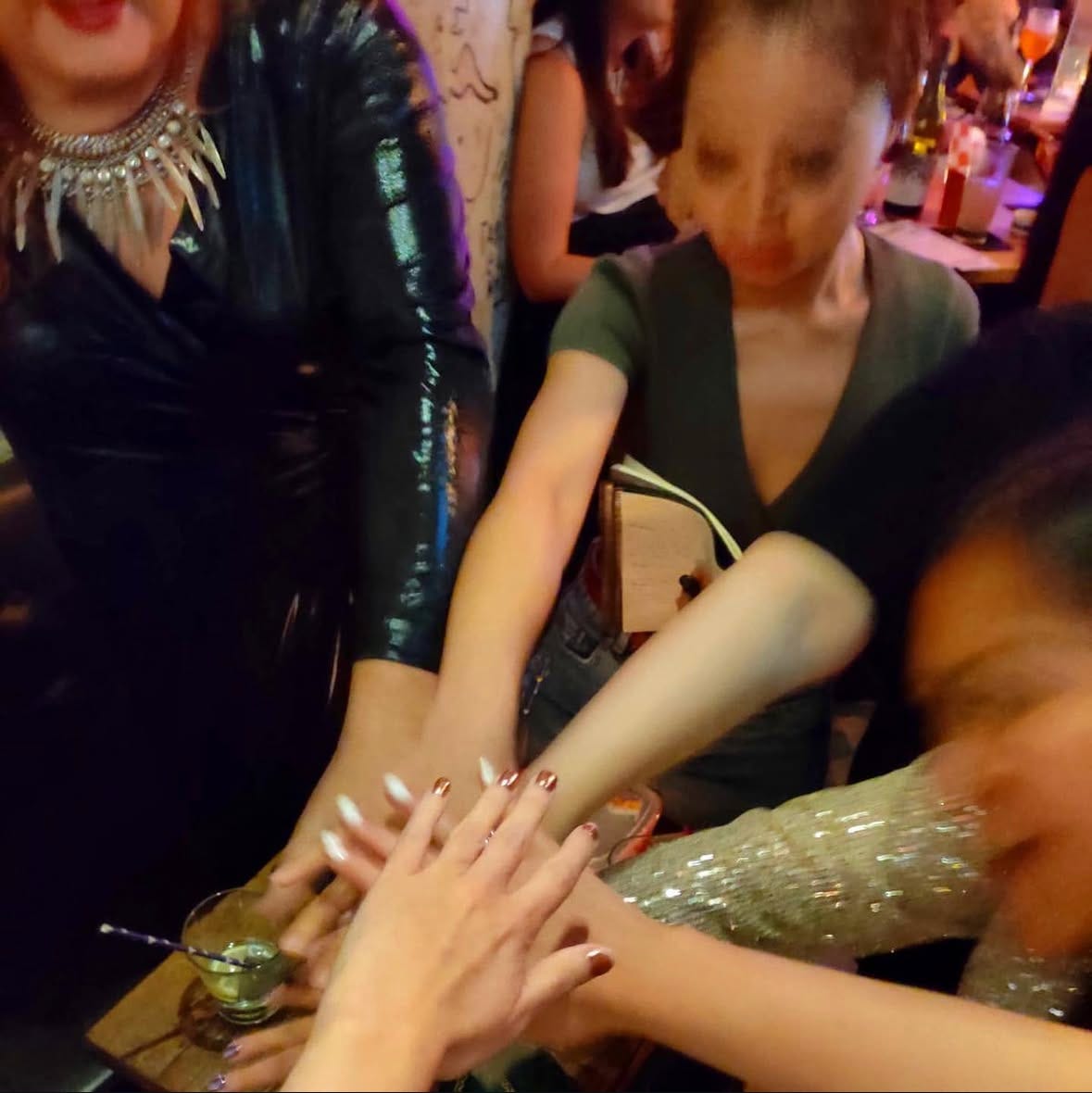
I can’t take credit for the idea — not entirely.
The seed was planted in a Messenger group chat for local comics. Several of the women asked why we weren’t being booked.
“There’s nothing stopping you from producing your own show,” one of the male comedians replied.
I didn’t participate in the discussion. We already had our answer.
It’s not always what people want to hear in an interview.
But it’s the only honest answer.
I went back to a conversation I recorded with Rose Rage, a founding member who now leads Bitches in Stitches Hong Kong. We were sitting on the wine-stained IKEA couch in my Kennedy Town flat, while Bianca quietly hung around, when she talked about being asked to headline our very first show.
“It brought tears to my eyes,” she said. “There’s this deeply underestimated frustration — the guys don’t understand how frustrated we are at being denied opportunities, and it’s not that hard to slot two or three women on a lineup.”
I spoke with Bianca next. She said she felt more comfortable performing on shows with more women, rather than carrying the pressure and scrutiny of being the token “female.”
“If you’re the only woman, you’re representing all of us.”
“You’re like an arrow,” a friend once told me. It was a poetic way to comment on my tendency to fixate on things.
She wasn’t wrong.
I locked in to Bitches in Stitches with more ferocity than any of my previous obsessions.
Maybe I’d reached a breaking point — after a lifetime of other people deciding what I was worth.
Or maybe it was mania.
Most likely, it was both.
My determination to manifest a reality that didn’t exist yet was dizzying. Borderline (or slightly) delulu, even. The intensity scared some people.
But it also made shit happen.
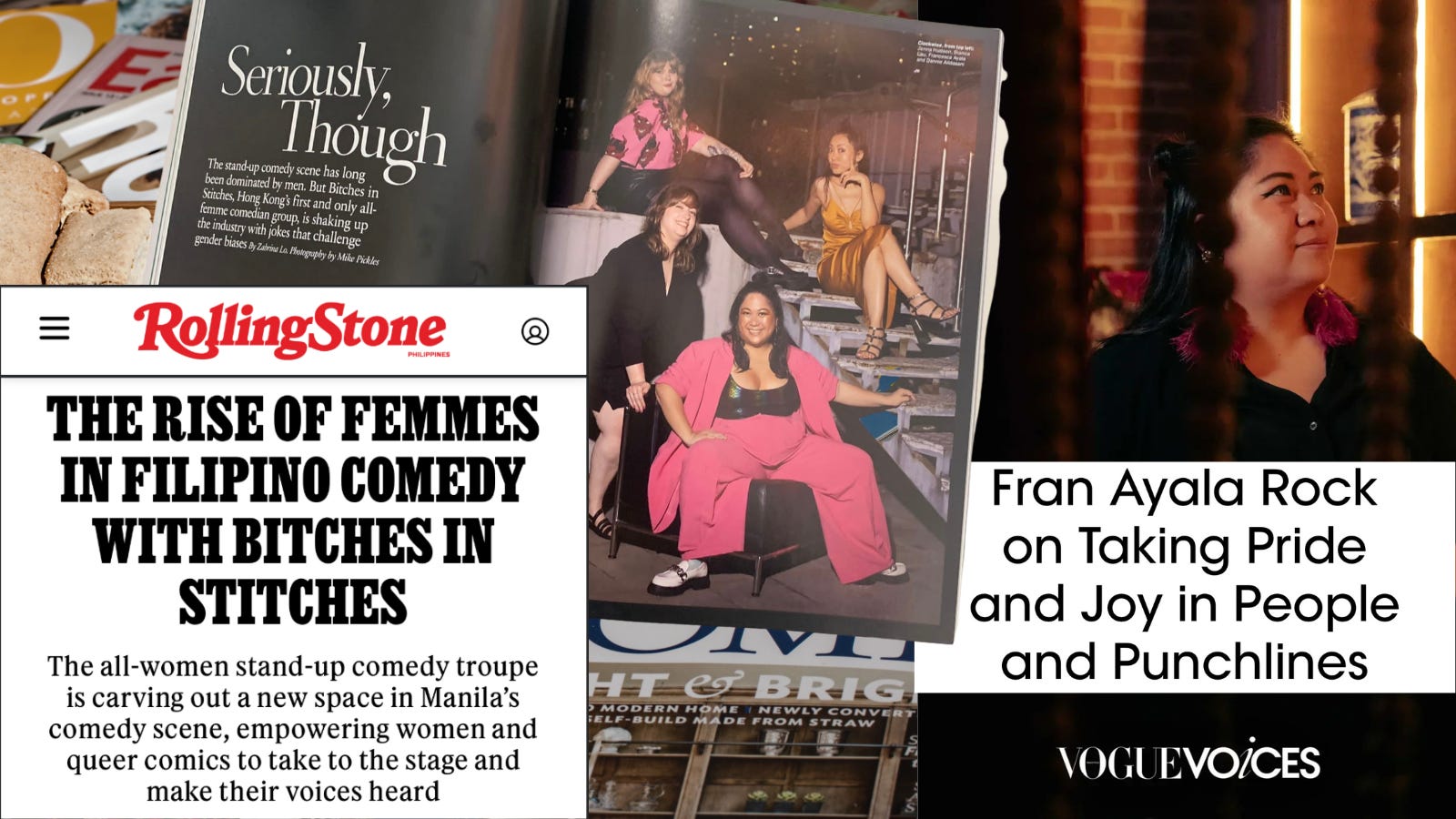
In our first two years, we sold out every single one of our 30 shows and doubled the number of paid female comics in the city. Some were audience members who later became our headliners.
Many loved us for it. So did the press.
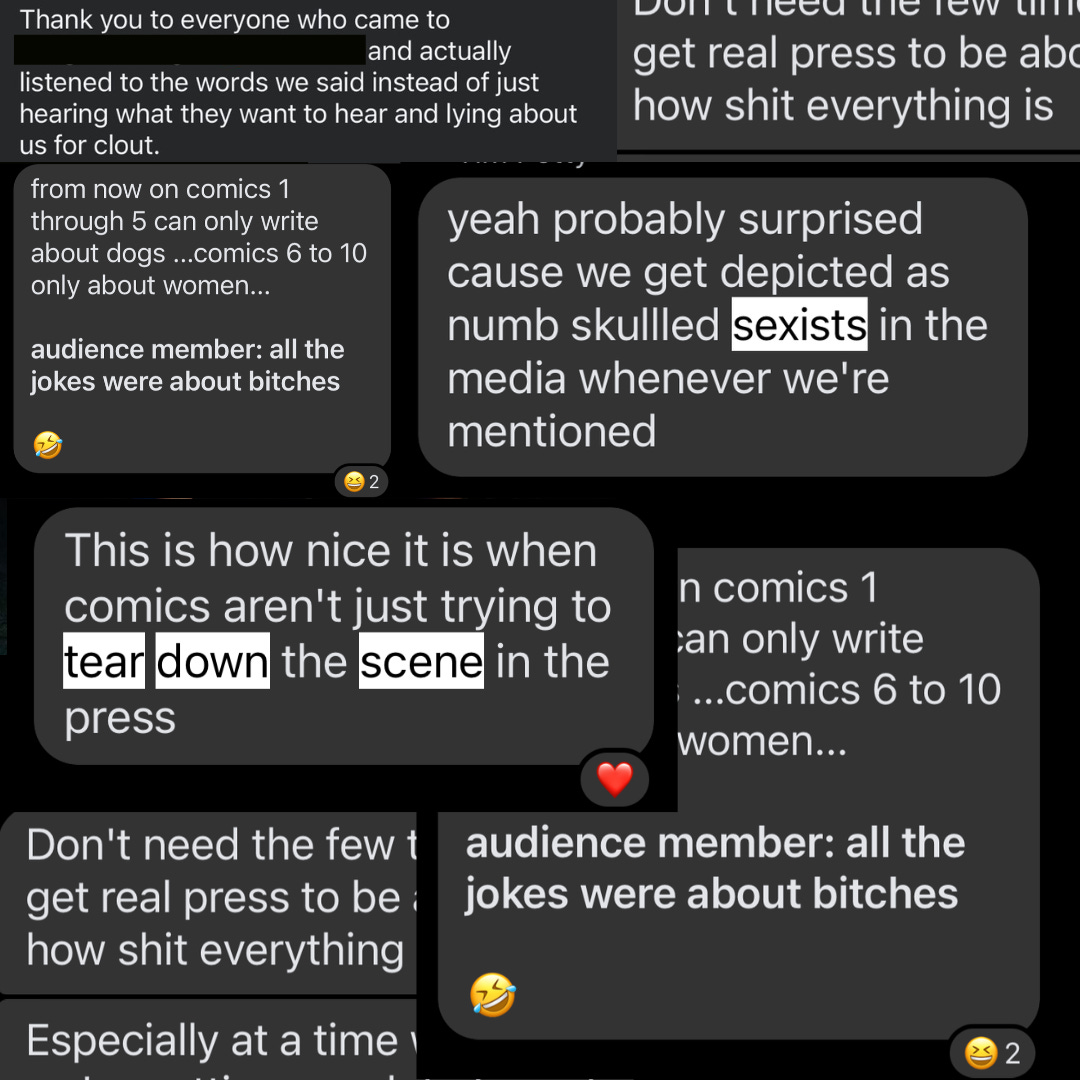
Others were less enthusiastic.
But our mission to change things was bigger than the egos it threatened. And it was too important to happen in just one place.
Five years, three countries, 78 shows and 90 members later, I’m so proud of the community we’ve built.
But growth doesn’t happen without losses.
And some of them still sting.
Honestly, I’d be lying if I said I handled it all with grace.
Some people came to benefit from the group, not to help build it.
And some moments forced me to learn, quickly and painfully, that not everyone who enters a community is meant to grow with it.
That part doesn’t make it into the highlight reels.
— Why I’ll Always Choose Community Over Competition (Even When It’s Hard)
The delulu-coded determination I brought into Bitches in Stitches is still as intense as when we started.
But it didn’t always move me forward.
Sometimes, it made things harder.
I felt resentful.
But mostly, I felt lonely.
Here’s the most insane part, though:
I’d still choose this. Every. Fucking. Time.
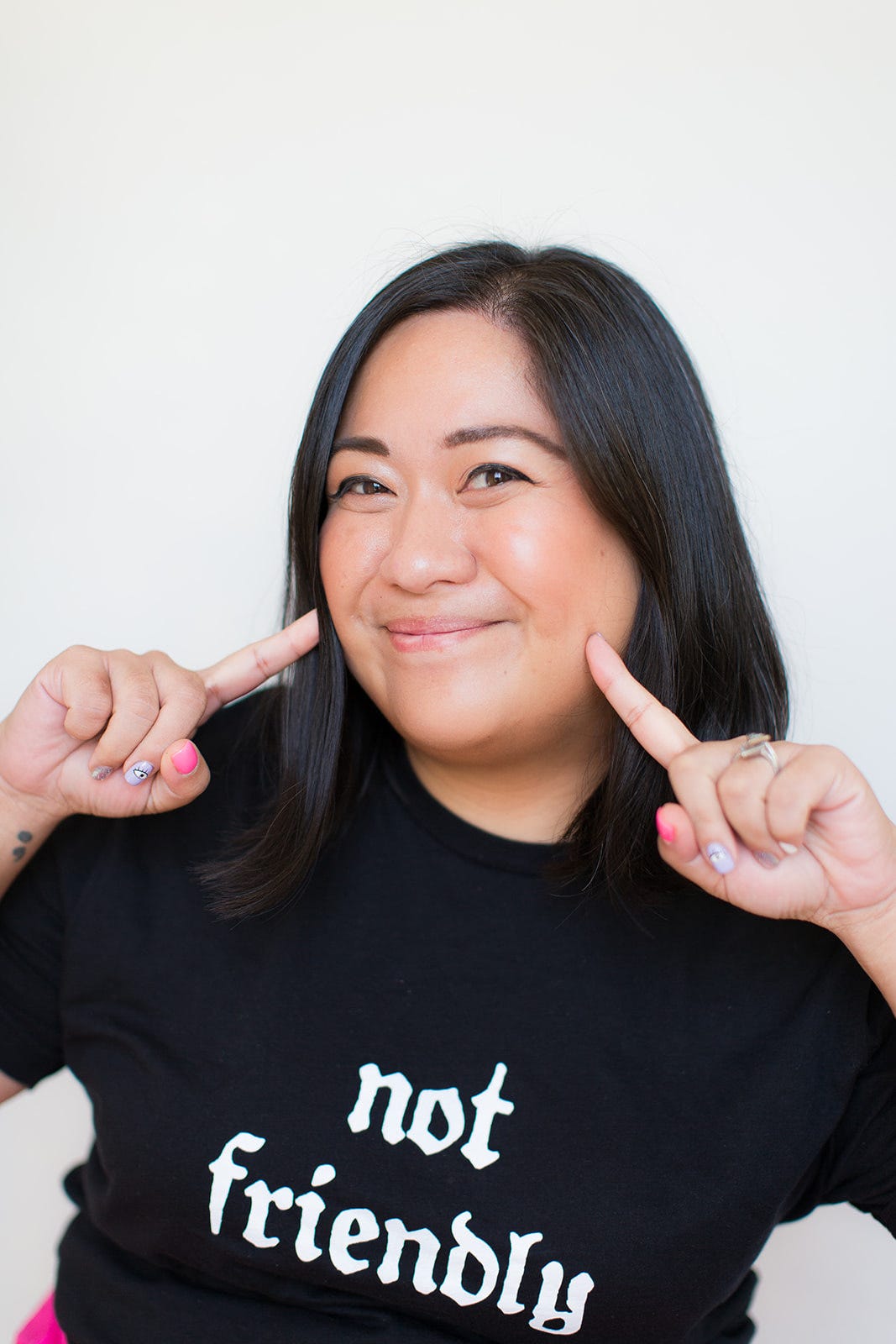
The last five years of hard-earned lessons haven’t made me bitter.
But I am still angry.
Because the numbers haven’t caught up to the progress we’ve felt in our rooms:
UK comedy clubs still book six times as many men as women.
Nearly half of Hong Kong comedy lineups in 2026 feature no women at all.
And in Manila, women are outnumbered 10 to 1.
So we’re not done.
Communities that last are shaped by the choices you keep making, even when the work gets hard.
I didn’t stop trying to build a bigger table, but I did break parts of it down. And then I started rebuilding. This time, with discernment. With boundaries. And the quiet, repeated choice to keep offering seats generously but not gullibly.
— Why I’ll Always Choose Community Over Competition (Even When It’s Hard)
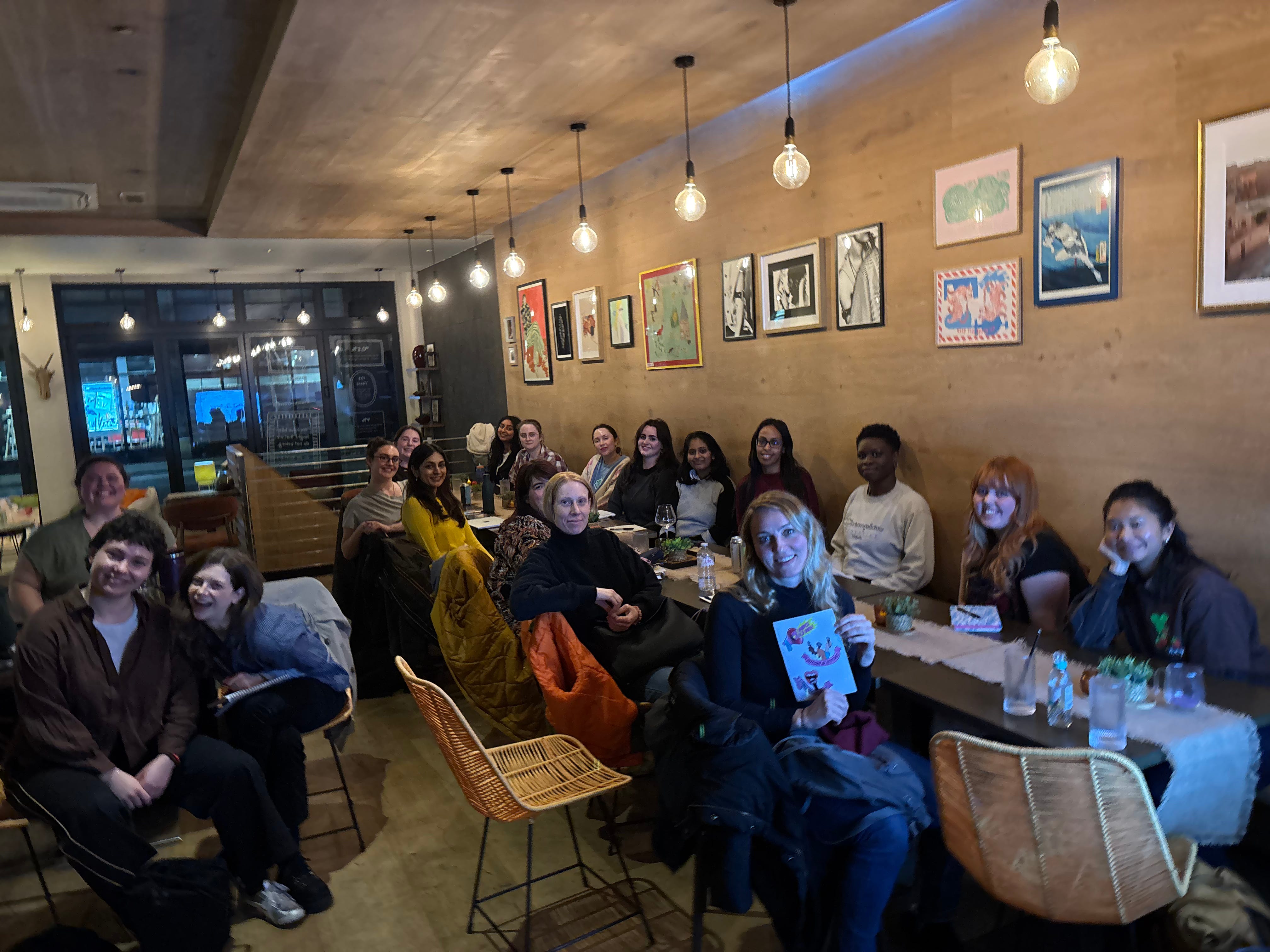
These days, a Bitches in Stitches show can look like a lot of different things.
Sometimes it’s a sold-out room in London, with a lineup that spans three countries.
Sometimes it’s a first-timer at an open mic, gripping the microphone a little too tightly and laughing nervously before her first punchline.
And sometimes, it’s the moment after the set — when someone who thought they “weren’t funny” realises they just made a room full of strangers laugh.
What we’ve built isn’t just a show. It’s a room where people are allowed to try.
To bomb without being written off.
To take up space without being the exception.
To come back again, a little sharper each time.
We’ve seen this happen across cities — in Hong Kong, Manila, London, Manchester.
Different rooms. Different audiences.
Same moment, over and over again:
Someone stepping up to the mic or sitting in the front, unsure if they belong — and leaving knowing they do.
Creating those connections — by packing a room with strangers and filling it with laughter — there’s nothing in the world like it. That’s why we keep going.
Because building something that allows more people to show up fully — louder, messier, more themselves — it changes more than just the stage.
It changes who feels allowed to take it.
If you’ve ever felt like there wasn’t space for you in rooms like this — our door is open.
And you’ll be in very good company here.
Comments
Nothing yet. Say the first thing.
Sign in to join the conversation.