
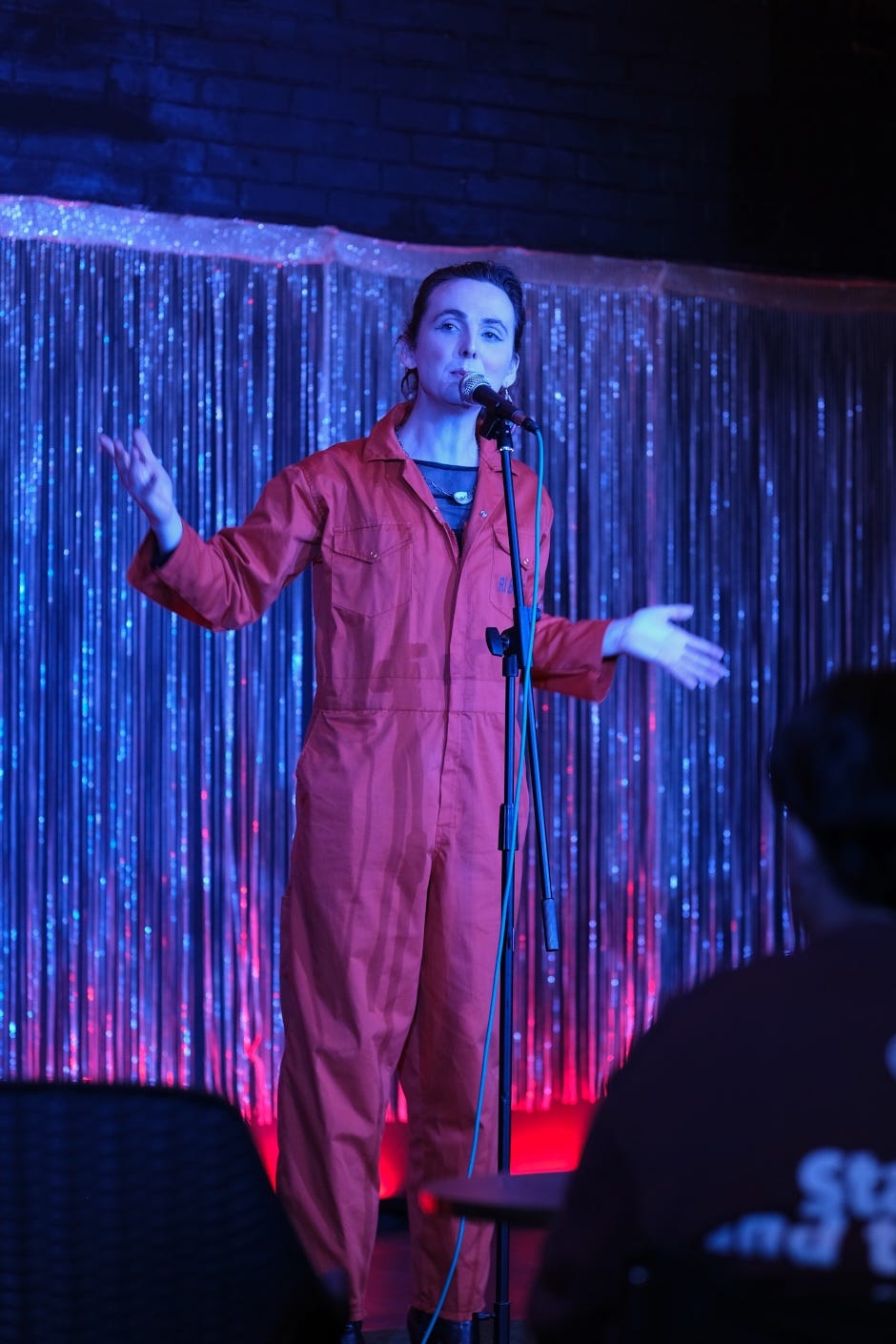
By Ri Baroche
Comedy’s been an important thing to me from an early age. Coming from a big family, where everyone was competing for attention, the first time I made my parents and older siblings laugh at the dinner table was a big moment. Before that, I’d somehow at the age of 7 or 8 ended up stood with the teacher at the front of the class, doing an improv exercise about why I was late for school, and had the rest of the class in hysterics.
As my life progressed into teenage years and young adulthood, I came to lose a sense of the reasons why I’d been able to make people laugh so freely - because I wasn’t afraid to be weird or vulnerable. This is why children are so naturally funny and entertaining, and why adults are so painfully awkward and risk-averse.
For comedy to work, there needs to be tension: the sense that everything could fall apart at any second. There also needs to be the presence of the unexpected, the bizarre, the out-of-the ordinary occurrence or observation that elevates the situation from normal happening into comedic potential.
These are my 4 tips (plus a bonus stowaway) for finding your groove and confidence in comedy.
If something goes wrong, make it right
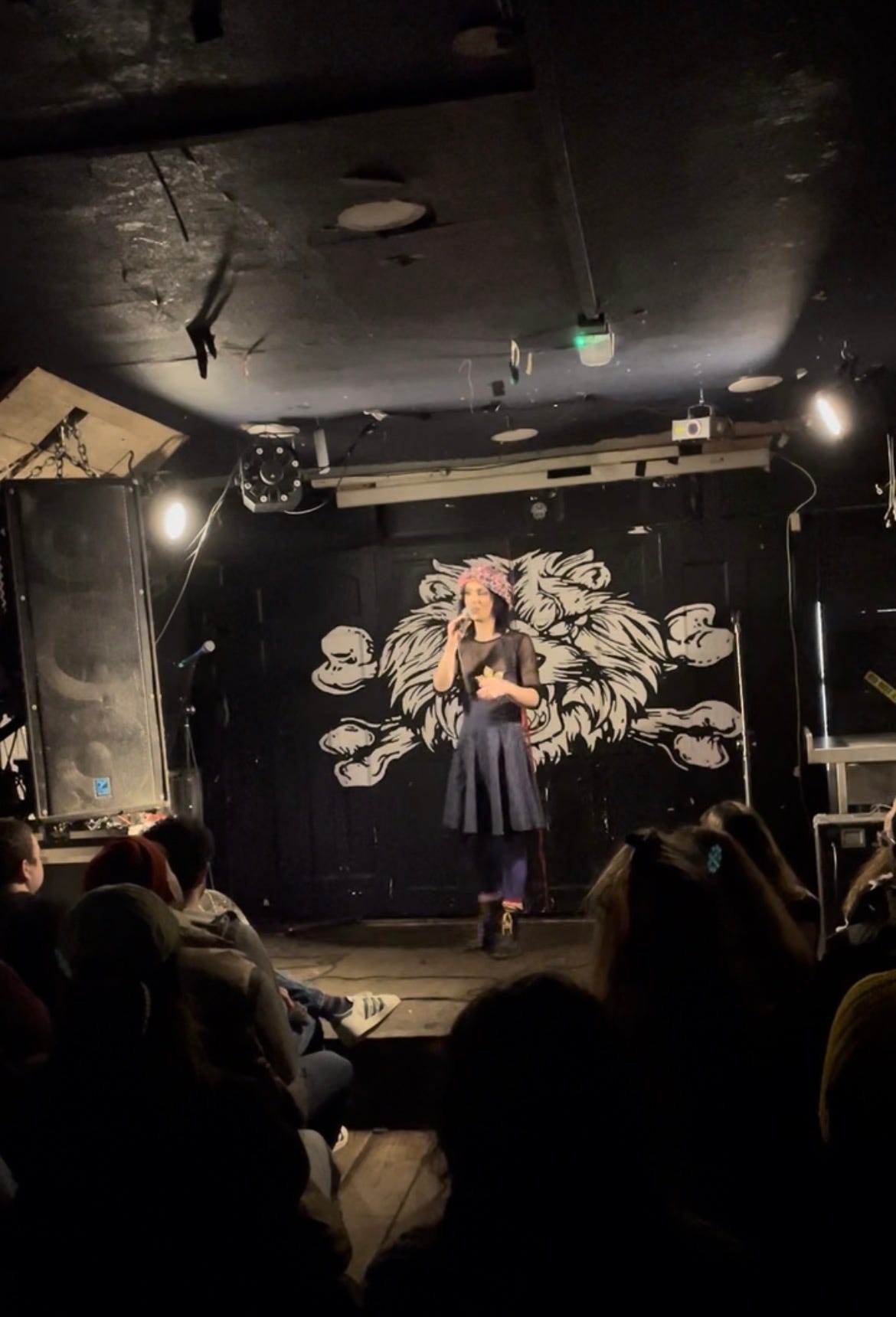
One of my early gigs being on stage trying to make people laugh, I was doing a set at a small festival in Somerset. I knew the organisers, and they in their second year running the event were looking for acts to fill out the programme, so I volunteered to do something towards the end of the Saturday night.
About 100 people packed in to see my weird little set. I was terrified.
I’d always wanted to bring a more comedic styling to my live performing, and had plenty of experience on stage as a musician and poet, just not as someone purposefully trying to be funny. I cobbled together a few ideas that I thought were amusing, such as a re-working of the Three Lions On A Shirt song so that it became a coming out song: “It’s coming out, it’s coming out, it’s coming… Football’s coming out!”
To warm up the crowd, I decided to go with some safe ground from my personal life, ‘The Pronouns Conversation’. I was identifying as non-binary at the time, and knew that there would be at least one person in this mixed-age crowd who would be unfamiliar with the phrase. What came next, I wasn’t prepared for.
“Does everyone know what I mean by the term non-binary?’ I asked. Some nods and approving sounds from the younger crowd. A few shrugs and confused looks from the older members.
Then a small hand shot up, and a high voice shouted, “No!”
It was an 8 year-old child, the son of a woman I’d been chatting to earlier in the day. My heart deflated like a punctured balloon at a birthday party. I was being heckled by a child - this would only end badly. I could picture the headline in the local paper:
“Failed gender-diverse comedian DESTROYED by small child.”
Maybe comedy wasn’t such a good idea.
I don’t remember how I continued towards the joke I had planned — adrenaline does a really good deep clean on the memory — but I know that I managed to somehow manoeuvre through this weird unexpected stand-off, and make it to the next joke.
Then, throughout the rest of the set, the small child was now periodically heckling me.
And this is where this section becomes a two-for one:
The rules of polite conversation don’t apply on stage.
What would in everyday life be appalling and inexcusable is somehow elevated to a different state when you’re performing, as if you’re floating in a comedy tax haven. And if I didn’t know that already, I certainly discovered it that evening, when I turned to the prepubescent heckler, and shouted:
“Oh shut the fuck up!”
I could picture the follow-up headline in the Somerset Gazette:
“Disgraced trans comedian hanged for verbally abusing a minor.”
But what I didn’t expect was the raucous laughter that followed inside the tent. Not only that, but I could also see the mother I’d been chatting to earlier that day, not grimacing or pointing, but laughing hysterically herself.
What had seemed to be a career-ending move before my career had even started was turning into a bizarre gift. And so I doubled down, and added:
“And if you don’t like it, you can just leave!”
It was almost as if my mischievous younger self had disguised herself in the audience, egging me on to do the weird and unthinkable.
Swearing at a minor was certainly not on my bingo card for stand-up success, but sometimes your worst nightmare is the greatest gift, if you’re ready to take it.
Thanks for reading Jokes Before Blokes! This post is public so feel free to share it.
Comedy is therapy — but you know, you could also go to therapy, where the therapist won’t laugh at you and might actually help you
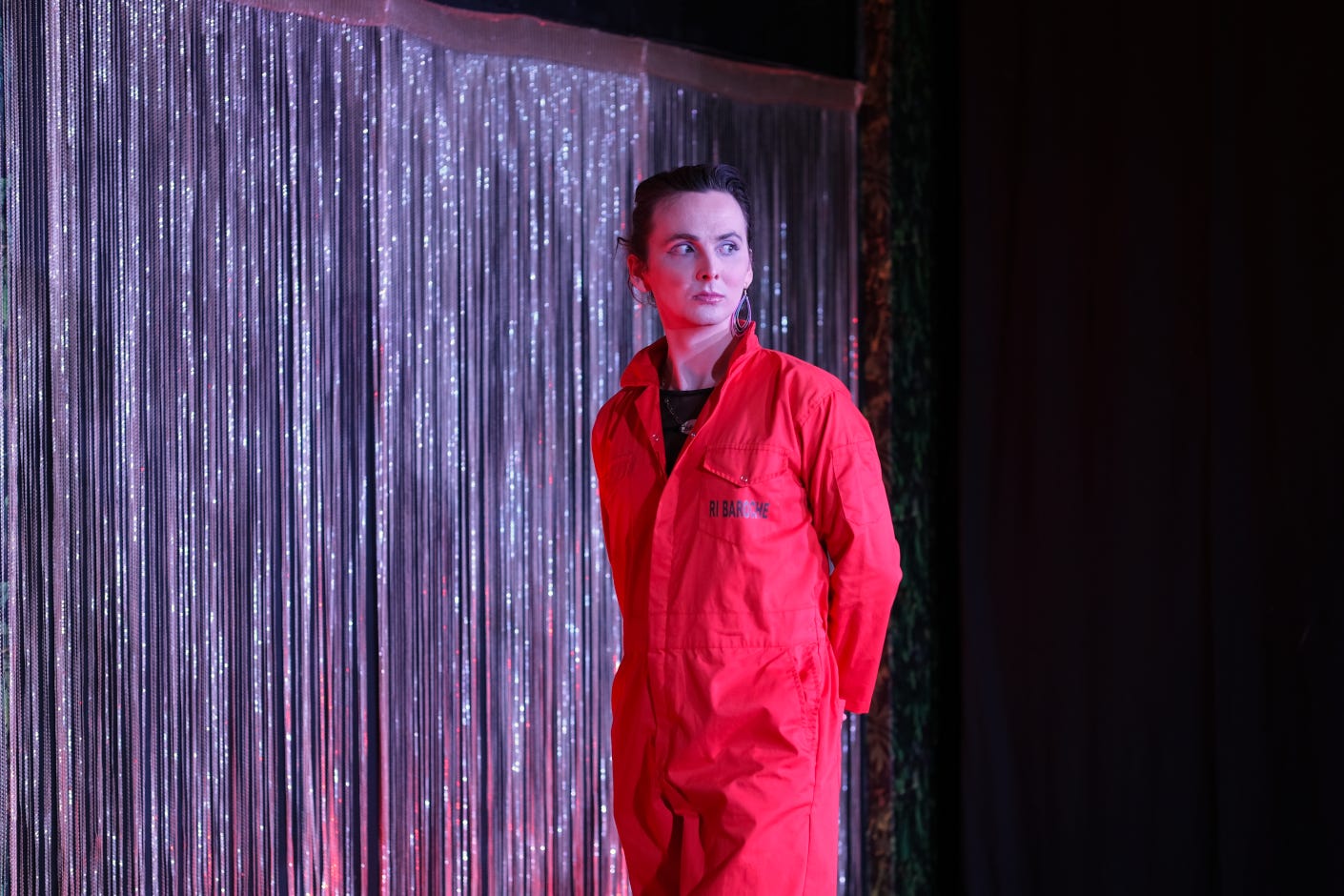
Talking about what you know, what irritates you, bothers you, annoys the fuck out of you is a great, if not essential place to start when writing comedy.
Not only does an audience not want to hear someone talk about something they know nothing about, but it will also make your life harder drawing from an empty vessel. You might be able to get around this by pretending to be a straight white cis man — apparently they can talk about anything with zero qualifications and nothing bad ever happens to them — but you might as well embrace what makes you unique, and make yourself instantly more memorable too.
For me, I know that for most comedy and performance lineups I join, I will be the only trans woman, likely the only queer person on the bill as well. This in itself offers a couple of easy wins: “Yes, I know what you’re thinking, so I might as well come out and say it — I’m a pisces” or “Quick pronoun check, my pronouns are ‘Me, me, me.’”
But this demographic fact could pressure me to mine my own trauma and marginalised place in society for a few laughs.
And for what?
Five minutes performing to 20 people in a sweaty basement, for no money, not even a drink token, and half the audience are bemused American tourists.
These are the spoils of comedy, but they need not spoil my mental health and sense of self.
With this in mind, I’ve made myself a rule — I am allowed to joke about myself and my particular place in the world, but only if I’ve either talked about it in the safety of therapy, or explored it at length with supportive friends, or I have fully discovered and processed the emotional crux of the issue. I’ve been stung and burned out too many times at this point by using the stage as my own personal therapy suite.
And yes, comedy is therapy — how could it not be affirming and comforting to go on-stage and laugh at your own problems, your frustrations at the state of the world, and have people join in and laugh along with you?
We all need that release, comedian and audience member alike. But it should not be your default to finding peace.
Build a community that can build you up
Stand-up is a pretty hellish thing to do to yourself, going on-stage and trying to prove to everybody that you’re the funniest person in the room — a room likely also full of comics also trying to do the same thing, and a room likely also full of people who are on the verge of having had too much to drink (and that’s not just the comics).
The only thing truly more daunting than that is doing it on your own.
Find a comedy buddy, whether they’re taking it seriously or just testing the waters, who you can share ideas with.
Or, find a comedy bubble. Are there comedy writing labs near you, or meet-ups, where you can go along for a few hours and meet some new people?
Is there someone you went to school with who you’ve seen sharing comedy reels on Instagram who you can reconnect with? Only if they’re not a prick, obviously.
There’s no such thing as “too late” — only “when I’m ready”
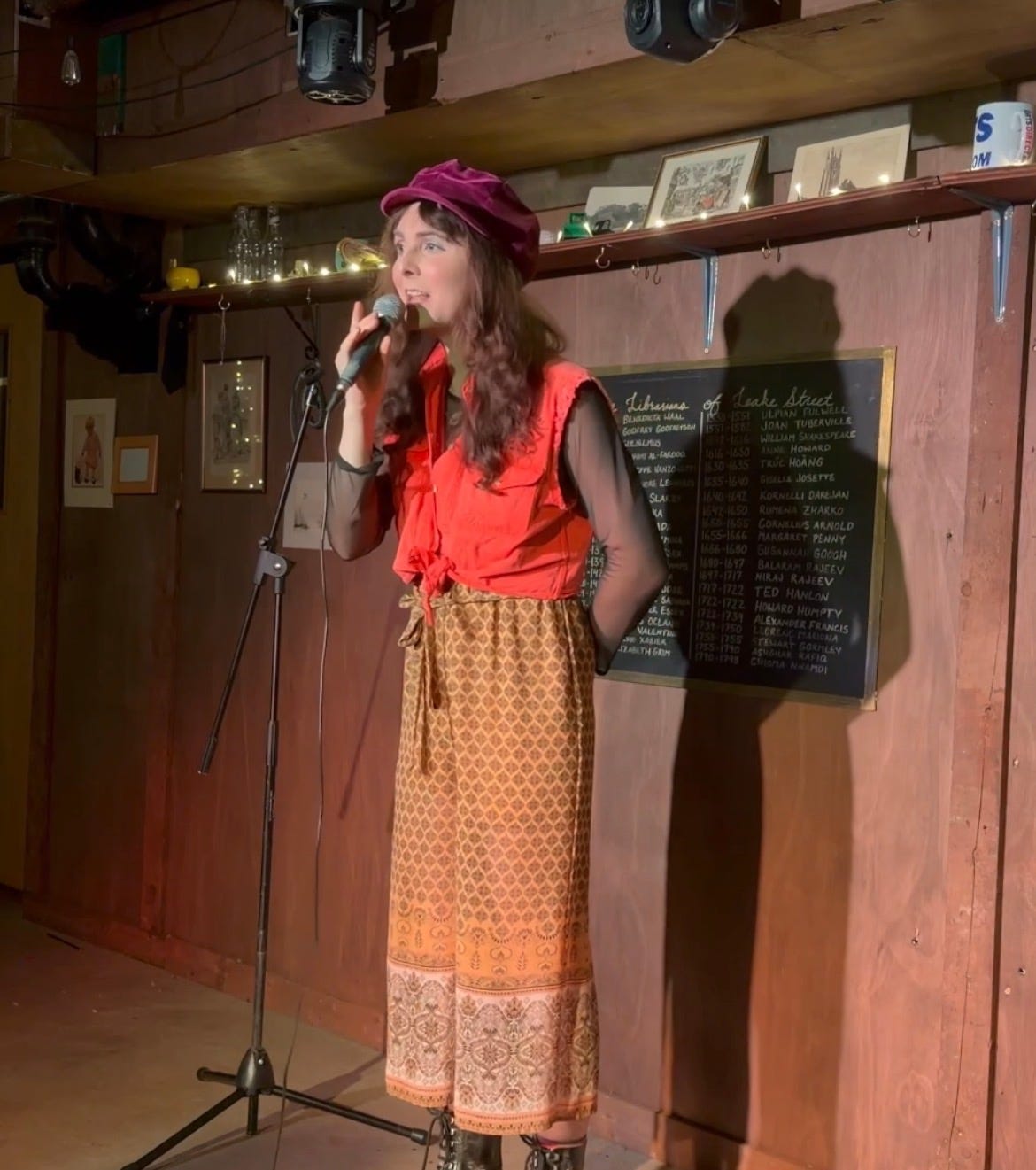
I tend to come to things quite late.
I would often miss important elements growing up, whether the start of a lesson, the infrequent rural buses, or a social cue, flying past my head like a fighter jet.
I only found the awareness and confidence to come out in my late 20s, and didn’t clock how supremely neurodivergent I am until last year. And I 100% blame my Mum (not really, love you Mum). But she did help build up a bit of a construct in my mind, repeatedly telling me during my childhood how I was born 3 weeks late. This suggested that my lateness to arrive in every sense was something of an inevitability.
The truth is, there’s no “too late” in terms of your entrance to the comedy tent.
The success stories of comedians and creatives alike are littered with late arrivals. The only thing that matters is whether it’s the right time for you.
For me, that time was my late 20s/early 30s, only a few years ago: a time where I was finally coming into myself as a person, at last able to face and embrace all of the weird and difficult things that had shaped me growing up.
I’d loved comedy from an early age — even as an avid student in my English classes, I guarantee that my vocabulary and thinking was shaped more by Suzy Eddie Izzard, Monty Python and Black Books than anything I’d learned in school. And in school, I was always the class clown, to the bemusement and frustration of my teachers, and dreamed of being on-stage, going to the Fringe, mimicking my heroes. Then, I had the extreme misfortune as a trans femme person to end up in an all-boys boarding school, and my confidence, sense of humour and lust for life were viciously bullied out of me.
Because of everything I’ve personally been through, and I’m sure you have stories and setbacks of your own that might deter you from landing confidently on-stage, it was necessary for me to arrive late.
To extend and risk mixing the metaphor, being birthed is a messy, traumatic experience, and can only come when you are ready for it. If you’re not yet out there doing comedy, or are doing it but feel that something’s not quite clicking, it’s likely a note passed to you from yourself that you need a bit more time.
And ultimately, that “right time” need only concern you, and only you.
You’ll be all the better for it if you’re going out on-stage, and you’ll know you’ve got your back — whatever happens.
Thanks for reading Jokes Before Blokes! Subscribe for free to receive new posts and support Bitches in Stitches.
Ri Baroche is a comedian, writer, performer, musician, poet, theatremaker and drag artist based in Hampshire.
She’s performed everywhere from Boomtown Festival to the London Science Museum to the top deck of the Isle of Wight Ferry, and her work focuses on subjects like AI, politics, identity, cats and impressions, as well as unexpected combinations, from quantum physics and gender, to Britney and Beethoven.
It’s no wonder Baroche loosely translates from the French as “bizarre, weird, unexpected.”
Comments
Nothing yet. Say the first thing.
Sign in to join the conversation.