
This is a fairly long read and it is more personal than scientific. But I wanted to put it out there because while I wouldn’t recommend traumatic brain injury to anyone, the cognitive neuroscientist in me found interesting lessons in it.
One year ago I had an accident with my horse. I was riding and it was fun, she felt strong and sprightly, young, even (she’s 25 now, 24 at the time - that’s old for a horse). I remember that I felt we had done enough but she was still going. Then I’m missing a few seconds and then I have this image and this feeling of her neck and shoulders disappearing underneath me. I remember thinking that she was just having a little buck - and realising that her shoulders weren’t reappearing and that we were slipping. Falling. I have a vague memory of my head hitting the ground and thinking that I will need help. I think I went unconscious for a very short amount of time and then managed to call my husband. In that short space of time I had a whole lifetime of memories enter my brain - of a life that I never lived - and when I tried to make sense of my surroundings afterwards I had to somehow reconcile what I thought I remembered with what I could see around me. That’s what made me realise that it might be a good idea to go to a hospital. I stood in my stable, a space I spend a lot of time in, and I couldn’t work out why it looked the way it did. The brain constructs our experience. And, apparently, it can construct a whole alternative self and set of memories in a few seconds and make them feel more real than what we know about our real history.
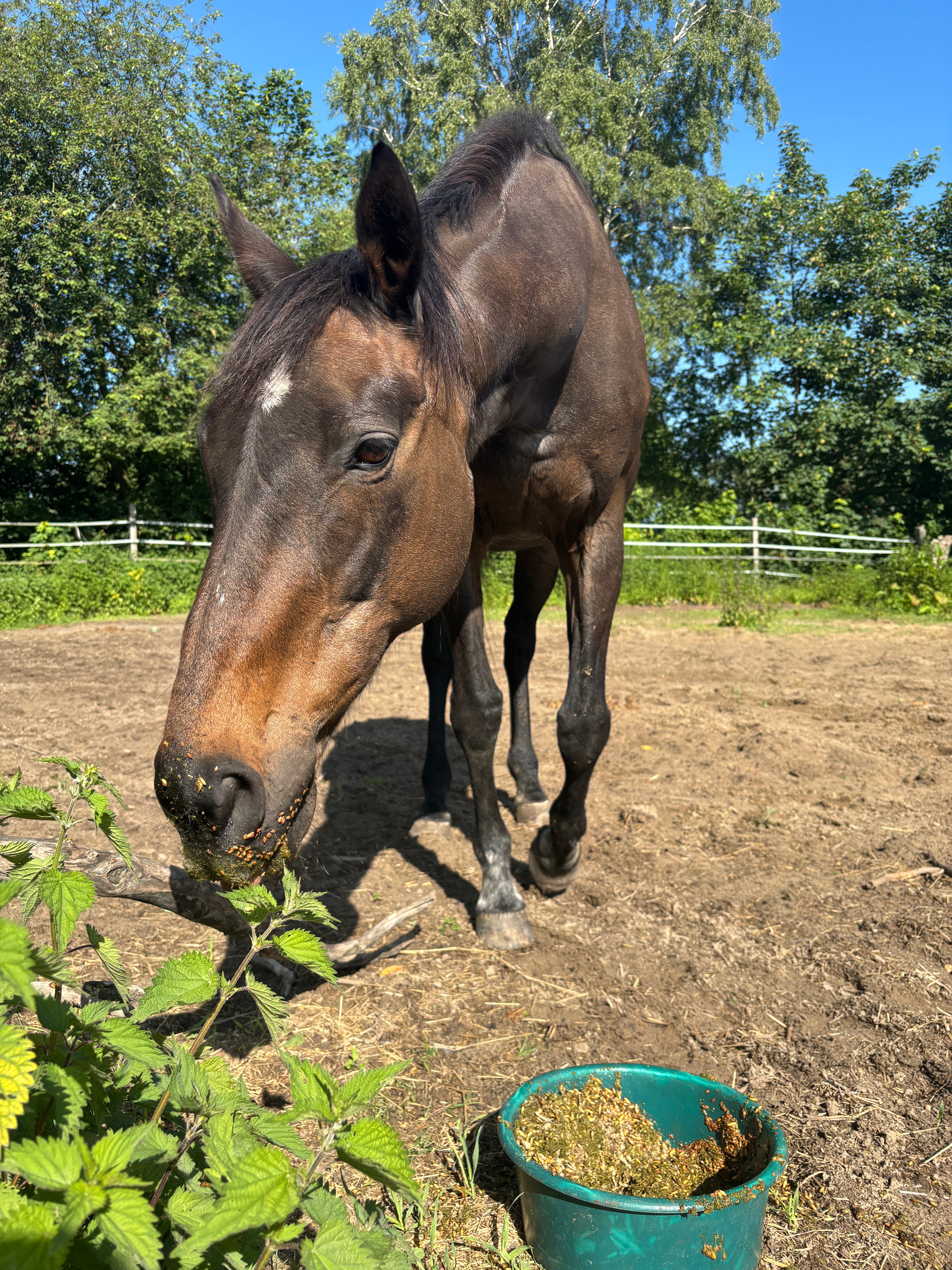
My horse was fine, btw, not a scratch on her.
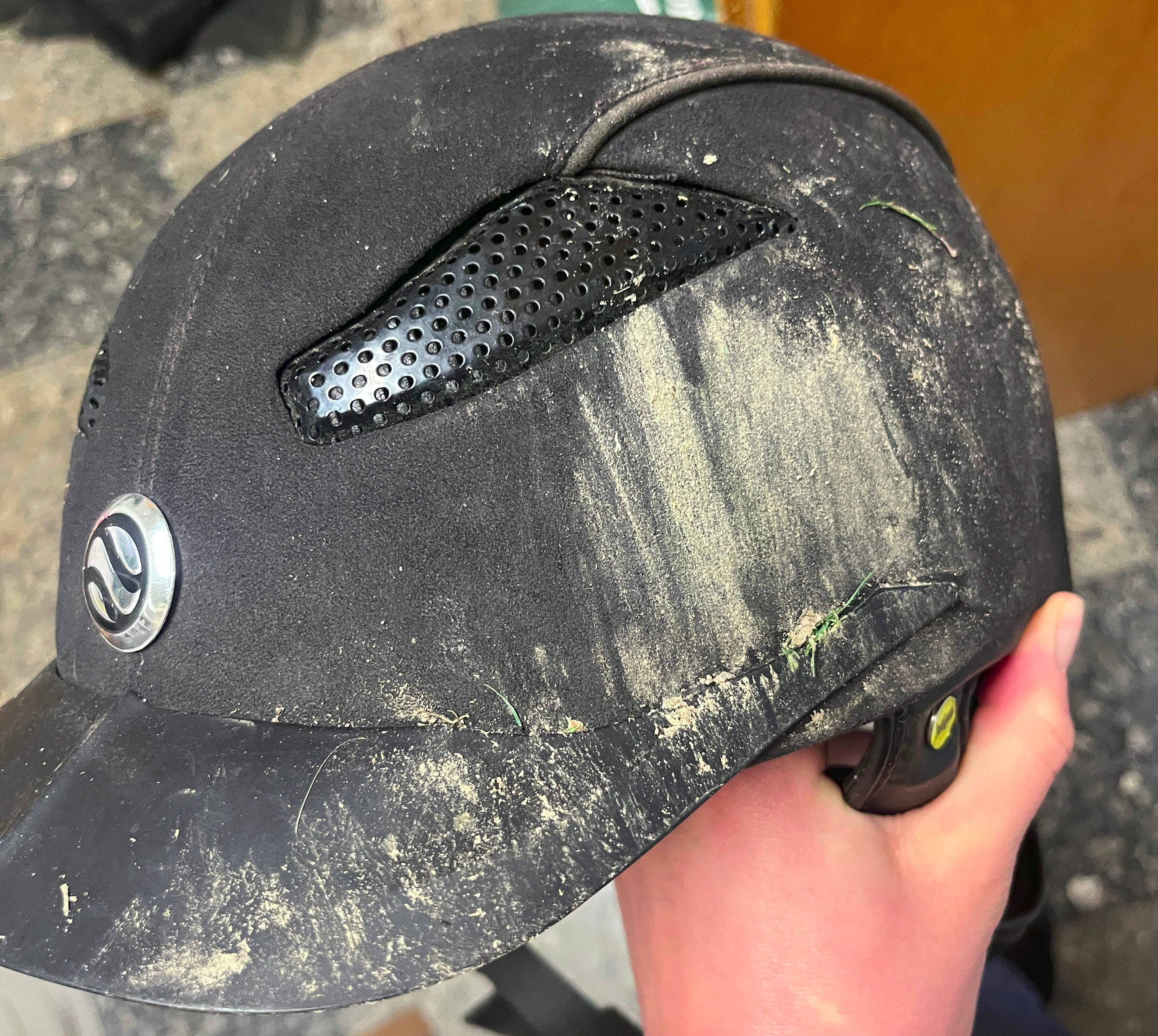
So my husband took me to the hospital (turns out, we totally could have called an ambulance for that kind of thing but who am I to bother someone with my diddy little head trauma, eh? Please don’t try that at home!). By the time we got there I felt basically restored, cognitively, the puzzle of my life had put itself back together in my brain, and discarded the spare pieces that didn’t belong to me. Still, upon hearing what had happened, the ER doctor was concerned and ordered a bunch of tests - including blood tests which I found fascinating. Did you know that you can detect things relevant to a traumatic brain injury in the blood? How amazing.
I had a CT scan (much more comfortable than an MRI) and when the results were in, the doctor sat down to talk to me. She told me that there was an area on my left frontal lobe that looked irregular, which could indicate bleeding. And even though this was a complete mis-match to what I was experiencing at the time (I felt that my thinking and processing was back to normal and I could speak coherently), that moment was when I first got scared. The doctor said I would be transferred to a different hospital, one with a specialised neurosurgery department. Just in case they had to operate. And what a terrifying thought - maybe not despite but because it didn’t match how I was feeling.
So I got to go on my first ambulance ride. So disorienting, let me tell you. The paramedic kept chatting to me (partly for diagnostic reasons, I’m sure), and told me all about some of the traffic accidents they saw. Cheery.
We arrived at the other hospital and I spent the night attached to machines. Again, bizarre experience. Everyone was treating me as if my life was in danger - and I felt totally fine (remaining in a prone position, mind you). I felt like I didn’t deserve to be there (I did).
I had another scan and more tests - until I was finally taken off the machines and moved to a normal ward. I was told I should stay for three days (!). Imagine my reaction. I felt fine (lying down!) so I thought I didn’t really need to be there, I felt like a burden or like I was taking up space and resources that others who might have had worse things happen to them, needed more (I wasn’t and I didn’t).
When I did eventually get out of bed to do more than just visit the bathroom, I quickly realised that, even though it was invisible from the outside, I was very much injured. I couldn’t stand for more than a couple of minutes, let alone walk for more than a few metres. I was so slow, it was like moving through custard. And my thinking was equally slow. I couldn’t read a book, all I could do was watch really simple (and terrible) shows on TV. And my emotional resilience was shot, too. Everything overstimulated and overwhelmed me. Too much noise, too much light, too much movement. Which is a problem when you have twins. And animals.
Here’s what happens to the brain during a traumatic brain injury (in rough terms, you can find out more here, and for a more digestible version, here). Of course there might be injury and/or bruising at the site of the impact. For me, this is probably what showed up in the first CT I had. The other thing that happened, and that, I believe, had the longer term impact on me, is this: the brain kind of wobbles around in the skull, so when an accident like this one happens and there is impact, the brain twists and rotates before everything calms down, which can result in different types of damage, including to the connections between neurons (diffuse axonal injury, DAI), but also in immune responses and changes to the internal make-up of the brain. This is not something I am an expert in so please refer to the article linked above and the resources in the references for more information. But when I learned about DAI, I felt like it explained what I was experiencing: During DAI, the myelin that surrounds the axon and speeds up signal transmission along it gets damaged, so it would follow that this would result in overall slowness of information processing.
Here are a few ways I felt I was experiencing this:
General slowness
I was moving more slowly, speaking way more slowly, even thinking more slowly. My system adapted to me changing position (e.g. from lying down to sitting to standing) more slowly, my eyes were slower to respond to changes in brightness. Everything required more effort. Things that previously felt automatic were no longer effortless.
Reduced filtering
One process that is pretty automatic in a healthy brain is the filtering of relevant and non-relevant information. Normally, our brains filter out information that, based on our previous experience, is not relevant and doesn’t need to be attended to. For this process to be automatic, it needs to be fast and for it to be fast, it probably depends on intact myelination of axons. If that myelination is damaged, I suppose it makes sense that filtering and subconscious processing is impacted (and if anyone reading this knows more, please do educate us!).
This is how it showed up for me. Example - I live on a farm with horses whom I usually look after myself. Obviously I couldn’t do any of the manual labour for a while but in the beginning I couldn’t even walk the 25m or so from our house to the stable in one go. I had to stop and take a break along the way.
I am normally in charge of making lunch and of course my children still had to eat and my husband had to work. But I couldn’t stand up long enough to cook a whole lunch (not even the simplest meal), I had to sit down to chop the veg. In fact, I had to be horizontal most of the time, anything else was instantly exhausting.
I couldn’t drive for a good few weeks (a problem when you live in the middle of nowhere) but whenever we went anywhere in the car, I felt like any tree or streetlight we passed by the side of the road hit me around the head, the experience was so intense. I had to close my eyes during car trips to get through them.
I am sensitive to heat at the best of times but the summer that followed my accident was particularly difficult - the high temperatures really took it out of me. I spent a lot of time in a reclining chair in the garden, feeling very sorry for myself (I don’t like doing nothing).
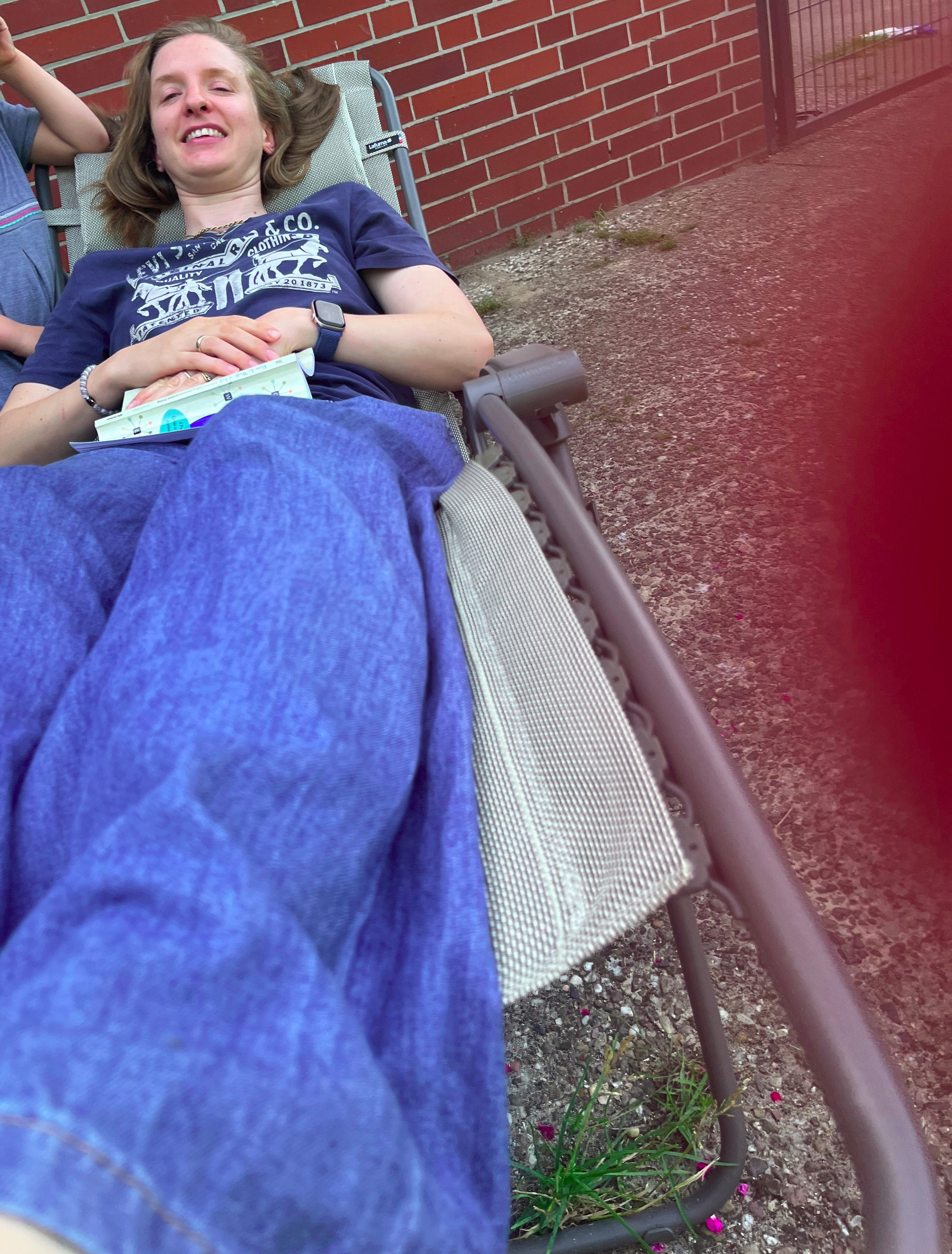
I want to preface this next part by saying - this experience was horrible. It was the weirdest thing to not just be able to overcome this slowness with pure willpower. I hated not having enough capacity for my life that is normally so full of action and joy. So when I say I was fascinated, that doesn’t mean I would recommend it or want to do that again. But I was really fascinated by what was happening to me. As a cognitive neuroscientist, I have some idea about how the brain works and everything it does without us even being aware. And this slowing down of almost every function of my brain gave me so much insight into what happens “under the hood”. Because everything was so slow, I became aware of processes that I had never witnessed - the viscerality of driving past trees at any speed faster than 30 kilometres per hour. The work involved in switching attention from one stimulus to another and making decisions on what is and isn’t relevant. The effort it takes to not get overwhelmed by what’s going on and choosing how to respond. Emotion regulation is HARD WORK (ok, I was quite familiar with that one but I didn’t know how much effort I must have already been putting into that previously). Orienting in space - knowing how far I needed to extend my arm to pick something up, and later how to navigate the wheelbarrow or, even later, the car, around obstacles. I felt like I had to actively re-build and strengthen these connections in my brain over the next months and that was hard work. And some connections definitely didn’t grow back the way they were before.
I came out of this experience very very grateful. Both for what my brain does for me and for how lucky I was. It so easily could have been worse. This accident was “bad enough” to do lasting damage and I came out of it, eventually, pretty much back to my own baseline of “normal”.
The other big lesson that I started having through this is that I had to start listening to myself. I had to pay attention to the signals my brain and body were sending me and actually adjust my behaviour accordingly. In this mindfulness economy I’m almost embarrassed to admit that I had never really done that before - and if I did it was in a begrudging, not an accepting way. To be honest, even a year later, I’m still figuring out how to tell what I actually need when my brain or body is telling me something is off. But you know, at least, these days, I try.
So how long did this last? To be honest, it’s hard to say. I don’t know what it’s like for others but with this injury I instantly forgot what “normal” feels like. I suppose that illustrates the old saying that we don’t appreciate our health when we have it. I definitely felt very slow for the rest of last summer, probably for three months or so. I just wasn’t at full capacity. My thinking still felt slow for longer, I often had trouble finding the right words and speaking or writing them down. Thankfully, I regained a lot of emotional resilience very quickly. And interestingly, I never once got worried about getting back on a horse (I started my younger horse under saddle just a couple of months later).
There’s one thing I feel I’m still left with. I’m still not confident with my spatial orientation. I avoid parking between two cars in a car park or navigating tight spaces. I suppose that’s a task that requires a lot of processes that work much better when they are automatic rather than actively attended to. The other day I had to tackle a crammed garage forecourt and I am not exaggerating when I say I was a bundle of nerves. I caught myself sweating profusely and hyperventilating and if my kids hadn’t been in the car, I might have lost it completely (instead I limited myself to a lot of expletives instead - I am happy for my kids to learn the magical properties of swearing). Going to a supermarket car park when it’s busy sends me straight into a stress response and I will park at the far end of the car park instead of taking a space next to the entrance if that means I have more room to park the car. And I have even been known to leave again because I couldn’t see a space that felt big enough. The way to get over that would probably be to just practice and do it anyway - maybe that will feel possible again one day but for the moment I’m quite happy avoiding the challenge. Interestingly, I can still reverse a bulky trailer without breaking a sweat. The brain works in mysterious ways.
So let’s recap - my accident was a big shock and despite feeling pretty well again pretty quickly (while horizontal), real recovery took a lot longer. While I was unconscious, my brain constructed memories that felt more real than my real memories which tells us something about how our brain constructs our experience and makes it feel real and true. The difficulties took a lot out of me but admitting to myself that I was really injured and learning to listen to myself took almost as much. What do I want to leave you with? Wear a helmet. For horse riding but also for riding your bike. Thinking about what my head might have looked like if I hadn’t worn one, still makes me shudder.
No posts
Comments
Nothing yet. Say the first thing.
Sign in to join the conversation.