Along with lots of yellow blooms in my garden are the ever-present sounds and views of the American Goldfinches. These cheerful birds keep summer going by being busy gathering the recently ripened native seeds for themselves and their fledglings.
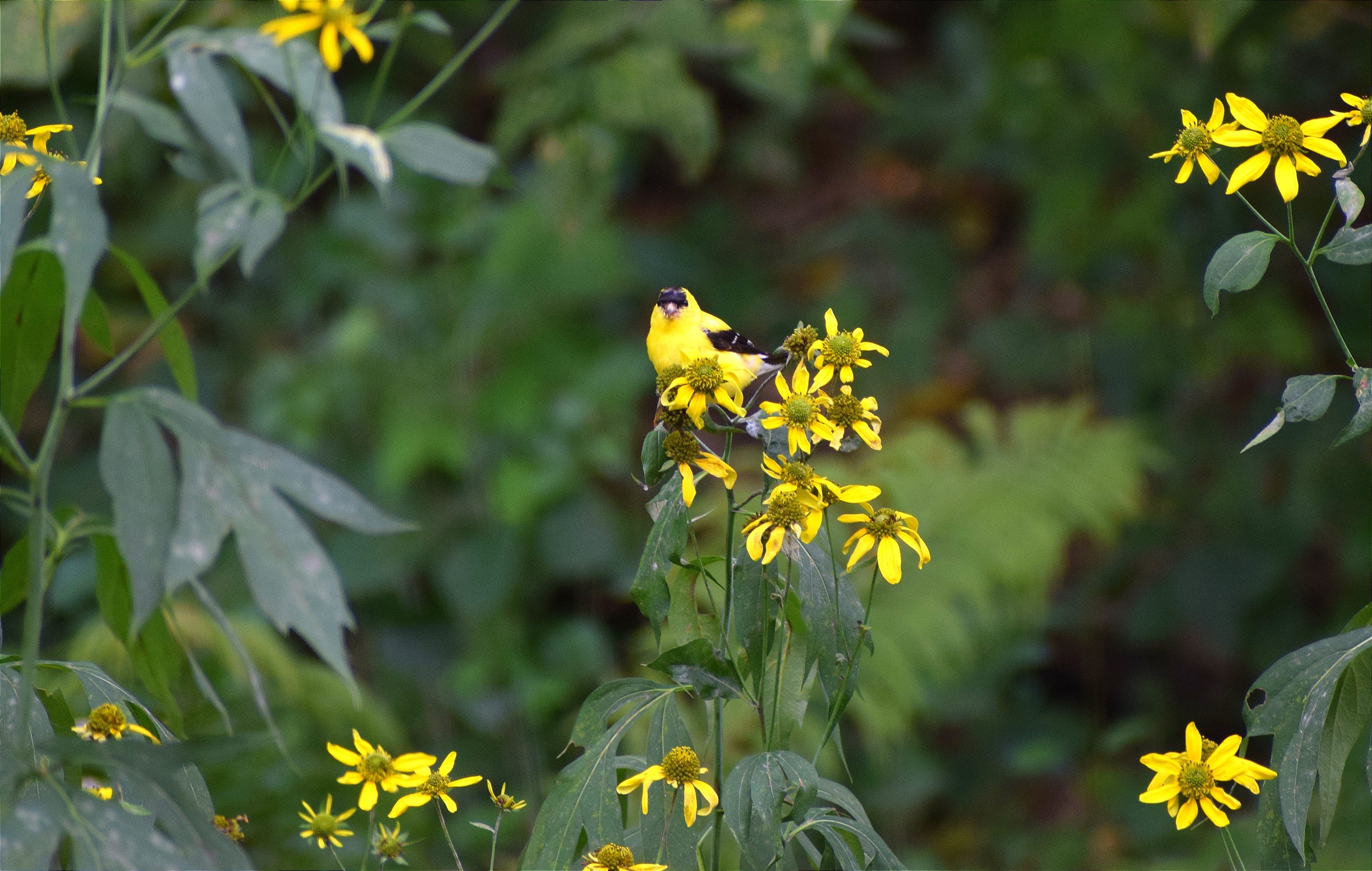
Male Goldfinch on a Green-headed Coneflower.
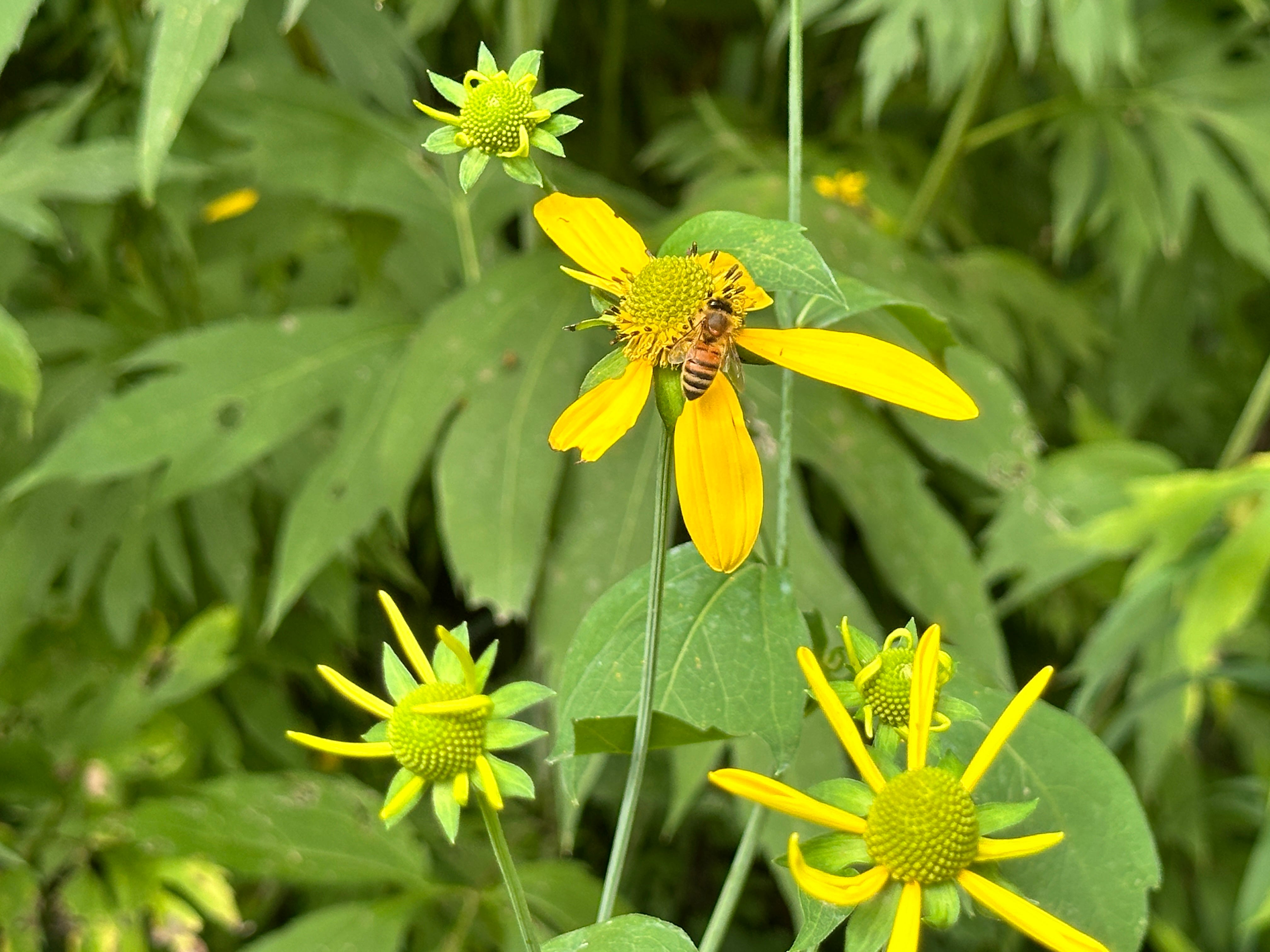
Green-headed or Cutleaf Coneflower is also a big attractor of bees both native and honey bees like the one above.
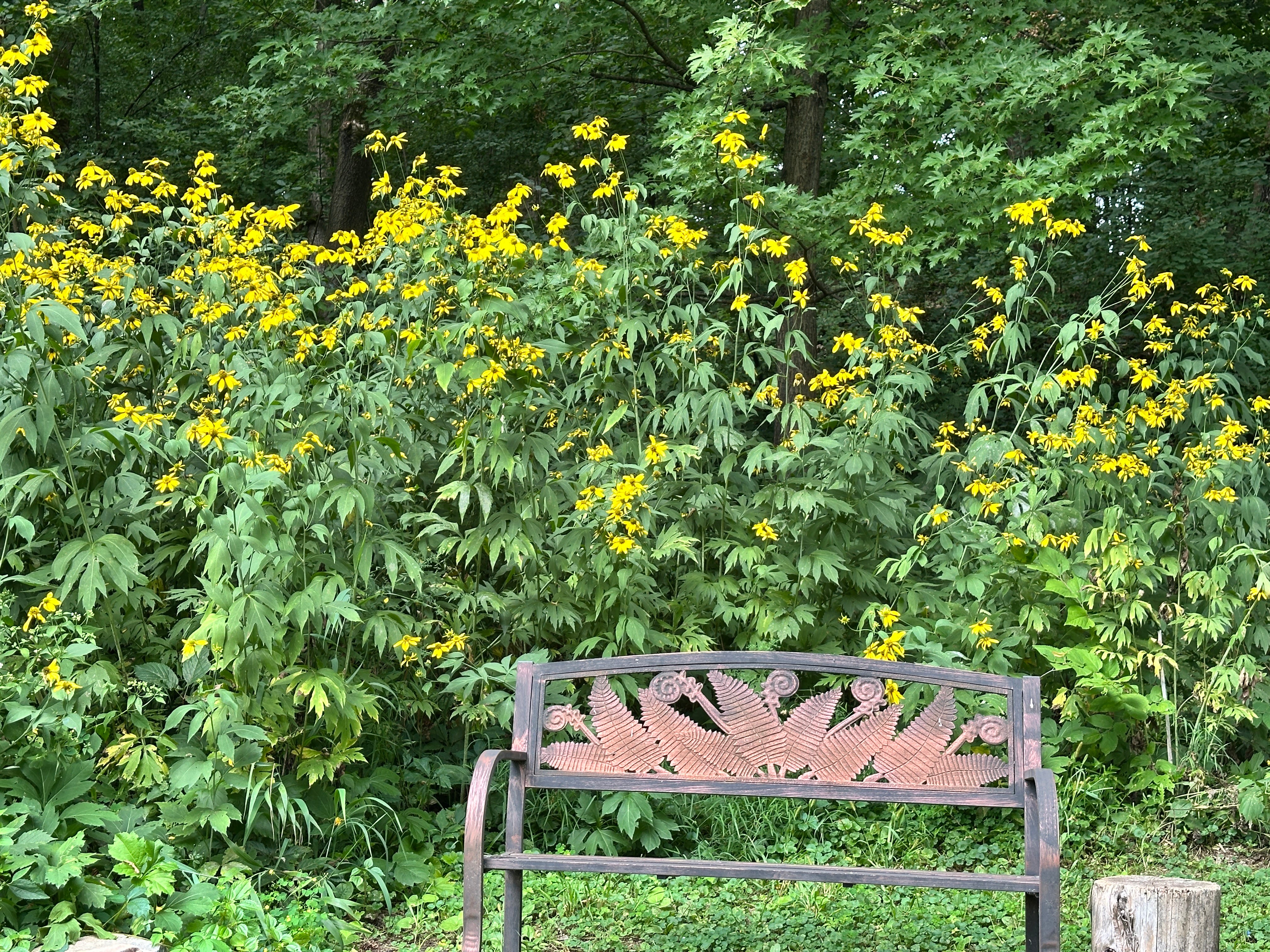
Not for the delicate garden, the Green-headed species can grow very tall and spread in the right conditions. Although it is a great native plant, it should be planted in sites where it can get a bit unruly without consequences.
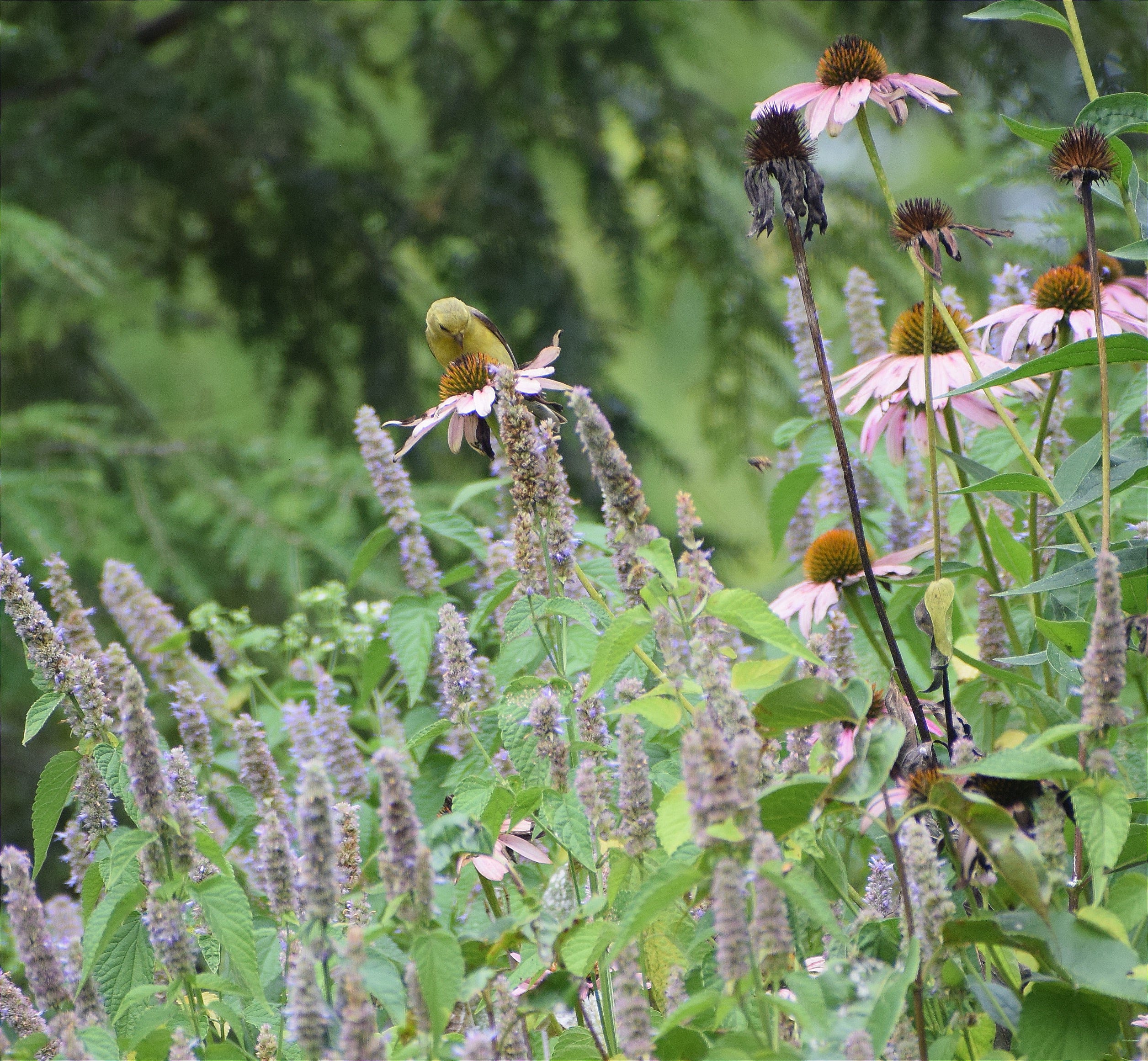
A female Goldfinch eating seeds from a Purple Coneflower.
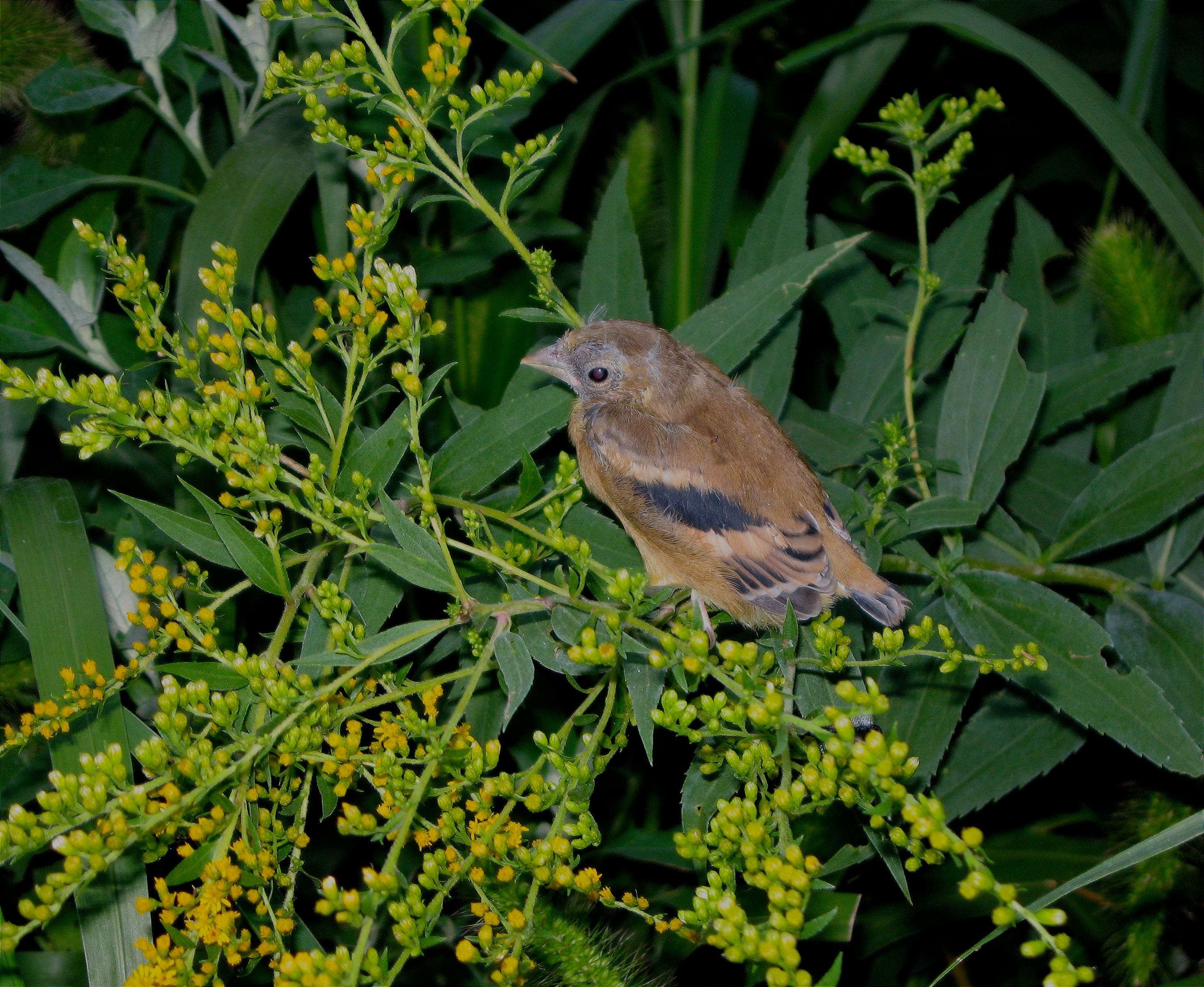
Here a fledgling Goldfinch is waiting safely in tall plants for its parents to feed it.
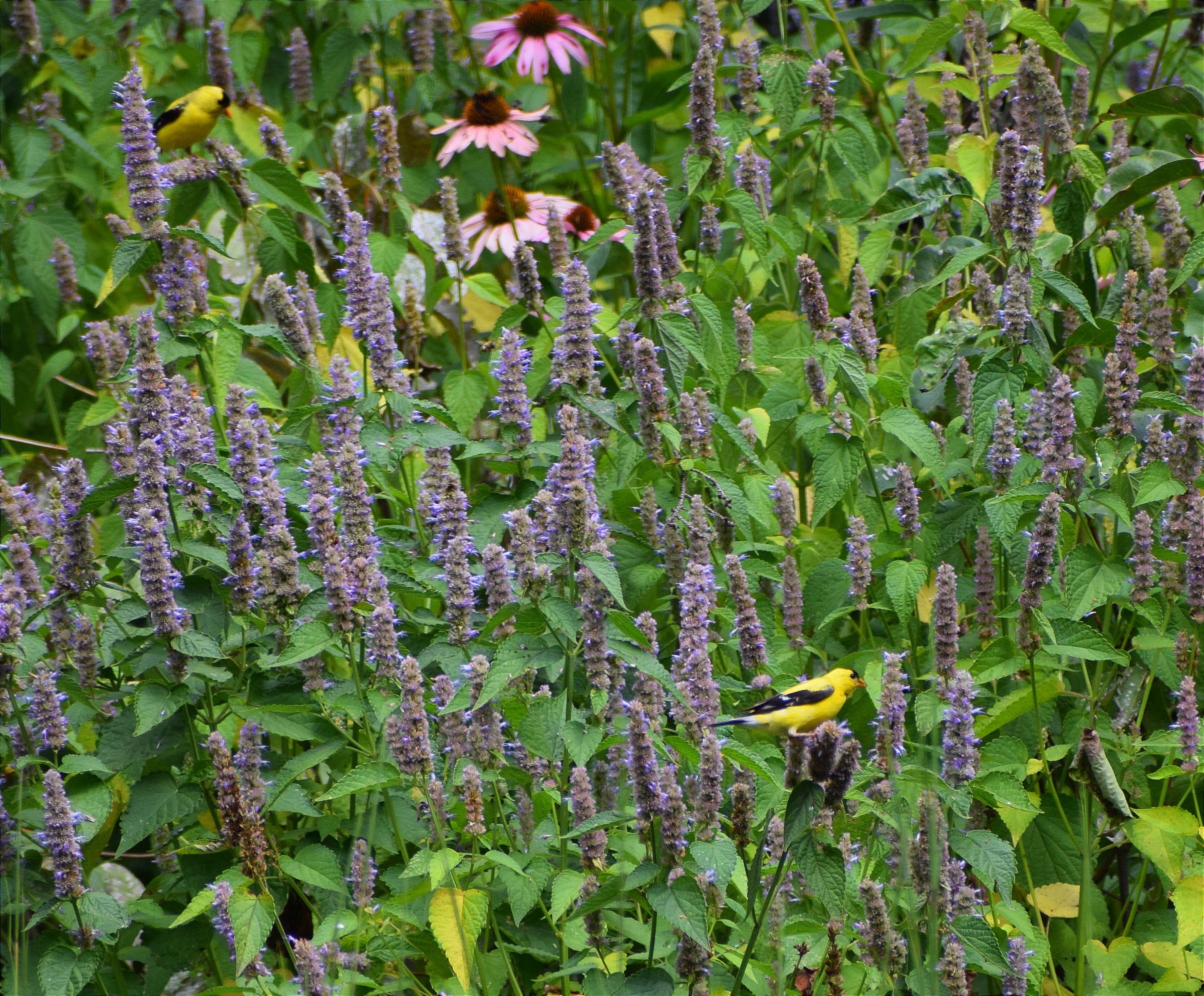
Two male Goldfinches attracted to the Giant Blue Hyssop that is quickly producing seeds.
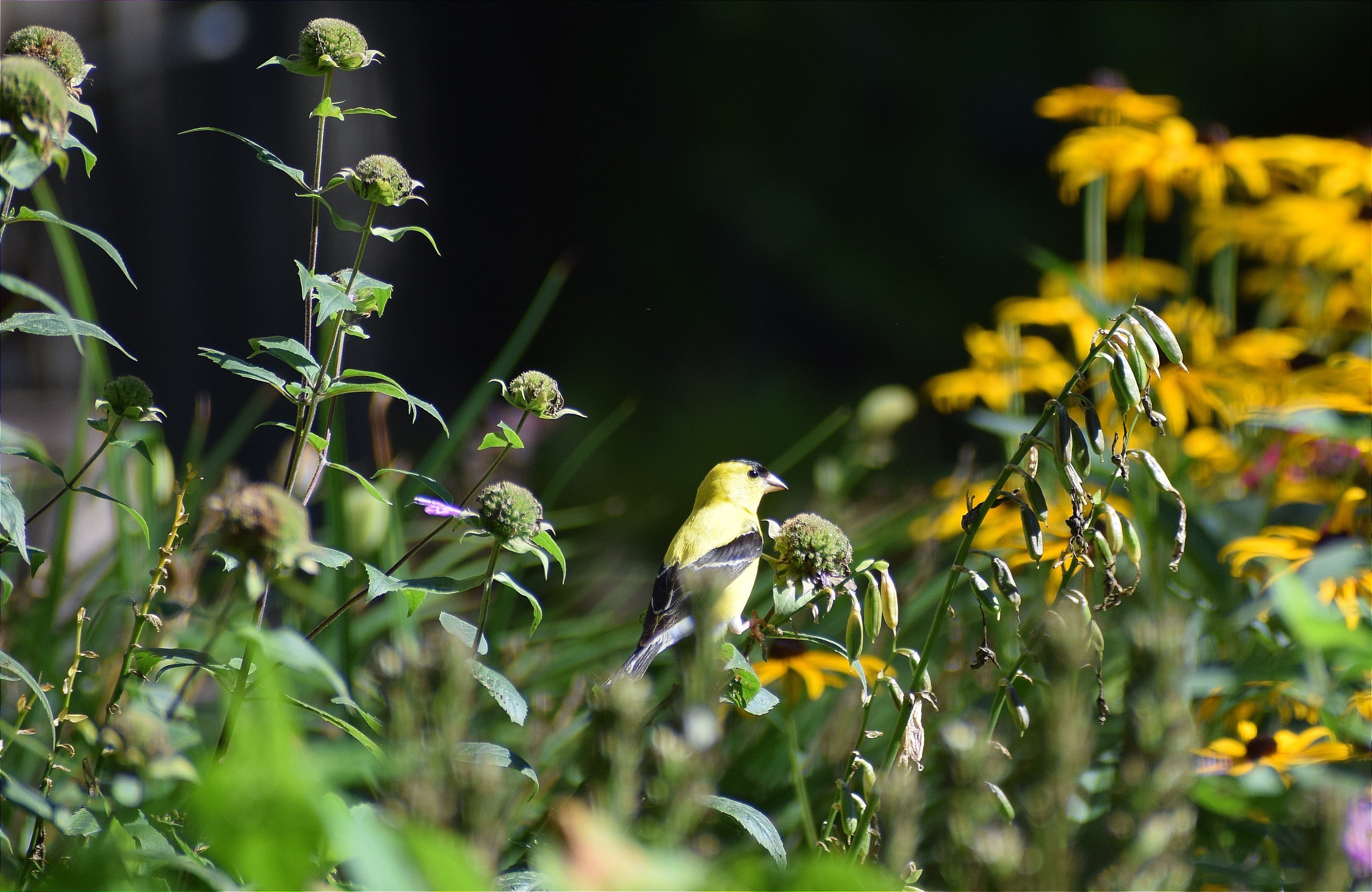
Resist the temptation to dead-head the earlier blooming plants as they began to produce food that the Goldfinches seek in August such as this Monarda (bee balm) plant.
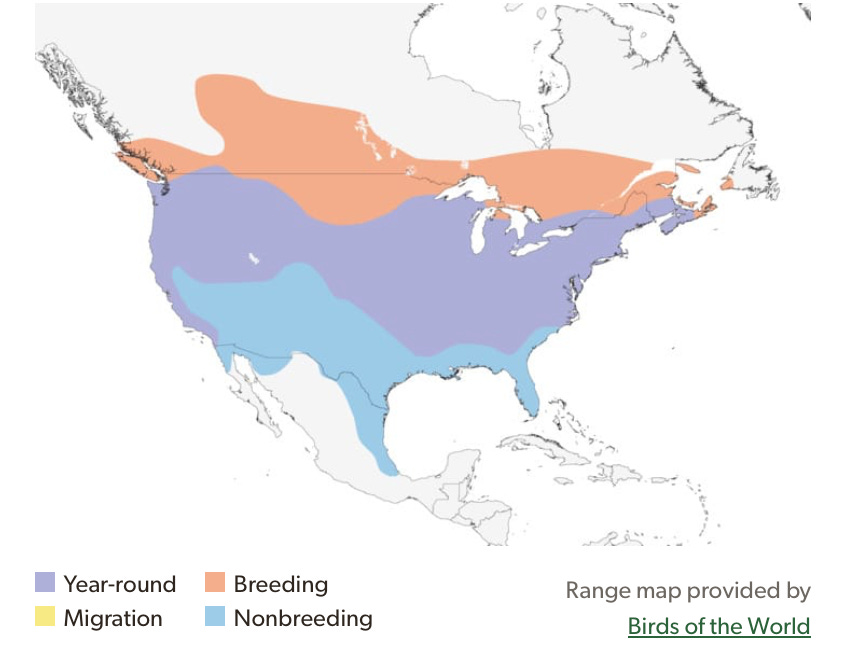
The American Goldfinch lives to its name by being found throughout much of the USA. In Minnesota they are year-round residents surviving sub-zero temperatures each winter and are a fixture at northern bird feeders that contain sunflowers or Nyjer seed.

Comments
Nothing yet. Say the first thing.
Sign in to join the conversation.