
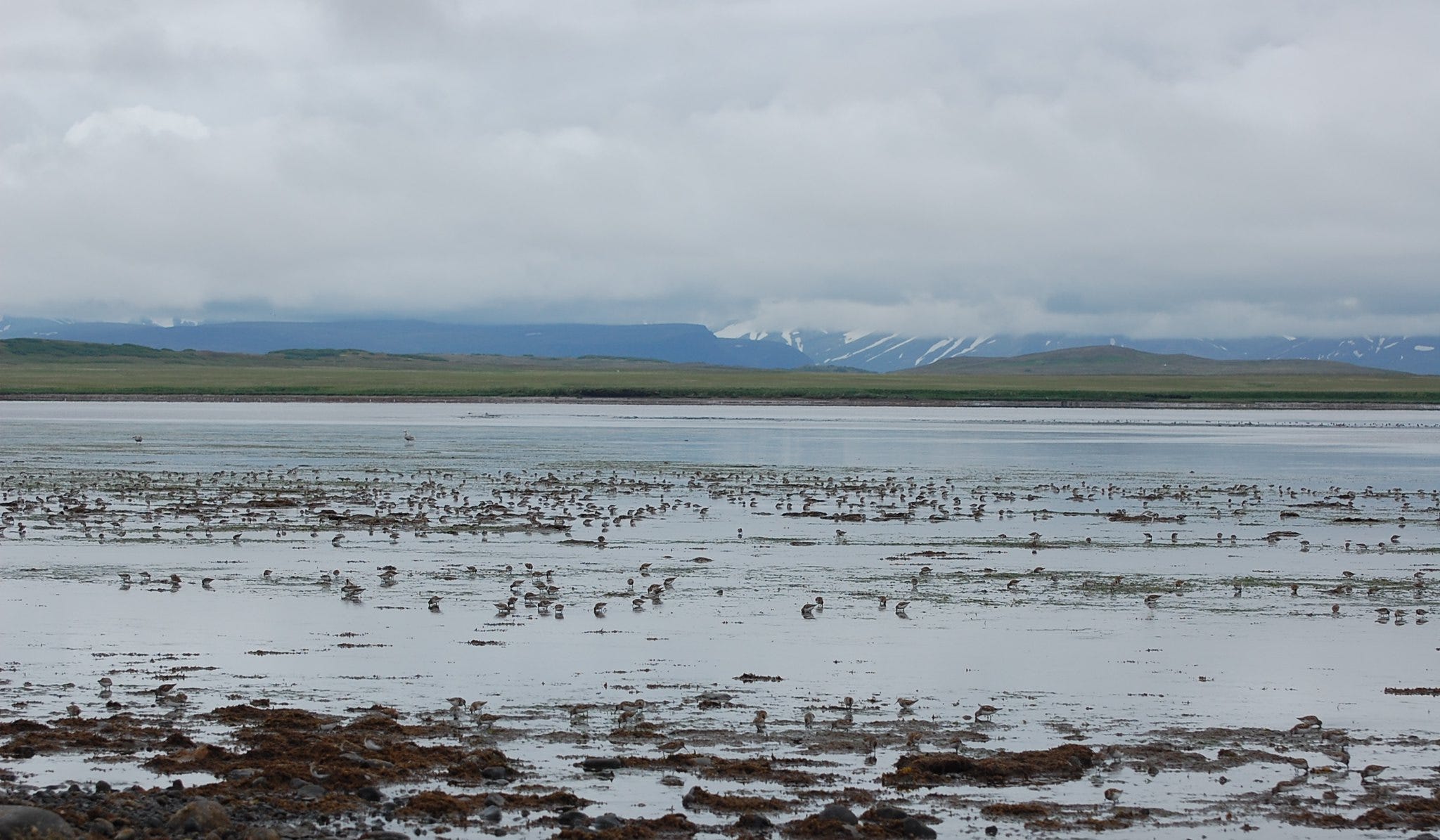
There are many environmental factors that influence how shorebirds arrive at different locations. In Shorebirds 201b, we discussed how habitat and weather drive many of these movements. With the information provided at the 201 level, you should be able to confidently find reliable sites where shorebirds will congregate. How you manage your birding once you’ve found that flock is an entirely different skill.
Shorebirding, if you will, relies heavily on understanding flock dynamics, habitat variability, and how these aspects change your approach while you are out in the field. Shorebirds can make for some of the most complicated identifications in the birding world. For that reason, learning to parse the subtleties of habitat, behavior, and flock dynamics will allow you to focus your full effort on the intricacies of identification.
Finding shorebirds starts with narrowing in on a specific site. We laid the groundwork for this in Shorebirds 201b. Now that we’ve established that foundation, we can build on it by approaching these sites holistically. A lake whose water level has been let down for dam reconstruction will naturally develop muddy sections that draw shorebirds. However, once you arrive, it will be clear that the lakebed will not be evenly coated with birds. Microhabitat features can make certain sections of a habitat far more productive than others.
The core idea that will help you navigate shorebird habitat while in the field is that habitat can be as dynamic as birds are. Just because a site is suitable for shorebirds does not mean it will be productive at all times of the day and under all conditions. One simple example that illustrates the concept of a dynamic habitat is the different places within a habitat that certain species occupy. Firmer and slightly drier soil is more likely to host a Semipalmated Plover than a deeper part of a drawn-down lake. The short legs and stout bill of many plovers help them sift through slightly drier substrate and prevent them from strolling into deeper waters. Plovers are very robin-like in their foraging actions, and it is easy to visualize a robin staying out of standing water. This also suggests that if you’re searching for plovers while birding a tidal habitat, it’s prudent to check higher tide zones, especially as the tide falls from high tide.
This concept stays true in the reverse as well. Long-legged shorebirds like an American Avocet or a Short-billed Dowitcher will be foraging in deeper water and lower tidal zones to find food. This stratification is natural in the animal kingdom and helps reduce interspecies competition for resources. Using this knowledge, a little research on a bird’s ecological niche and some extrapolation based on its size and structure can help you find it in the field.
Once you understand how species use different microhabitats, you can begin to learn about the microhabitats within your go-to patch. If you typically bird a reservoir that dries up through the summer, there are many things you can note even during the off-season that will aid your predictive birding. In many parts of the continental United States, shorebird season comes in the fall when birds are migrating to wintering grounds. While you wait for these birds to return, take note of how your patch dries up. The sections that are last to dry will also likely be first to fill following a heavy rain. There may be sections that were previously muddy that begin to sprout abundant vegetation. These sections will not hold water as substantially as a section that is devoid of root systems to absorb that moisture. The patterns that exist within the habitat will help you predict the presence of birds and which species will be found where.
While these habitat features shift, recognize that your impression of that space is always based on a snapshot in time. The way this patch looks on a morning walk following a week of rain will be drastically different from how it will look in the heat of midday during a drought. Tidal areas also have this same variability. As tides fall, new exposed substrate will likely be the focus of many birds’ attention. As these tides begin to rise again, birds will be funneled back into specific areas. Use tide charts and time of day in tandem to inform the most productive way to approach birding these habitats.
When you learn about the microhabitats that exist in your patch and the ways birds adjust to those, the patterns and presence of birds become far more predictable.
Comments
Nothing yet. Say the first thing.
Sign in to join the conversation.