
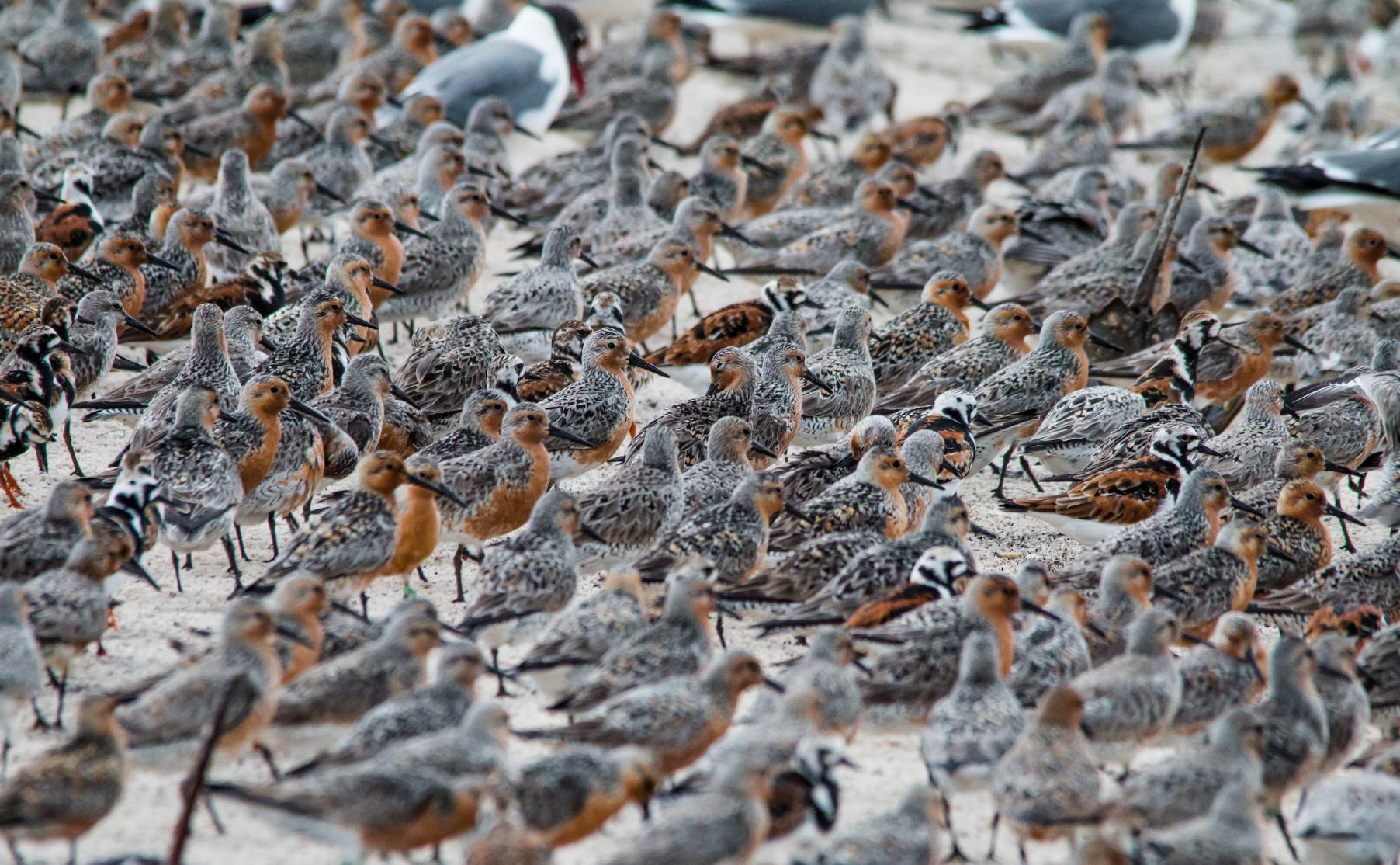
In the first half of the 201-level of the Shorebirds Study Series, we focused on the foundations of shorebird identification, exploring how you can evaluate anatomical features like body structure, bill shape, leg length, behavior, habitat, and vocalizations to arrive at confident identifications.
Of course, identifying shorebirds is only half the challenge and half the fun. The other half is finding them.
Unlike songbirds, shorebirds typically aren’t ever present in most of our lives. Certainly, if you live near the coast, this may be an entirely different story. Or perhaps you have a resident pair of Killdeer at your local farm. But, for most of us, shorebirds aren’t something we experience day in and day out.
This is largely due to their underlying biology. Most shorebird species we experience in North America, for example, breed at high northern latitudes, nesting in the Arctic tundra or across the great Boreal Forest. It is only in their migrations that we encounter them as they move from the breeding grounds to the other side of the globe for the non-breeding season.
But it isn’t just their large migrations that make them less present in our lives. Even when they are “around,” shorebirds are constantly on the move. An estuary or river delta bustling with activity today may be nearly empty tomorrow. Similarly, a flooded field that appeared unremarkable yesterday may suddenly host dozens or even hundreds of newly arrived migrants or birds knocked down by heavy storms.
Learning to predict both the annual and daily movements is one of the most rewarding aspects of shorebirding. It is also the first lever we can pull to transform what feels like a game of chance into something much more intentional and successful.
Remarkably, consistent ecological patterns shape shorebird movements. Everything from broad annual movements and migration timing to daily rhythms of roosting and foraging is shaped by food availability, which is in turn shaped by water levels, tides, weather, and climate. Where birds stop, how long they remain, and when they continue their journeys are relatively predictable once you learn the influencing factors.
By understanding these patterns, you’ll spend less time searching empty wetlands and more time visiting places where shorebirds are genuinely likely to occur.
As with identification itself, finding shorebirds is ultimately about stacking probabilities. No single factor guarantees success, but when several favorable conditions align, the odds improve dramatically. The good news is, we can stack the odds in your favor
Sometimes finding a large flock of shorebirds is pure chance. You’re driving down the road and notice the local field is flooded after the recent rain, and there’s a nice group of yellowlegs and peeps. Perfect! Or you know there’s an estuary close to a river mouth by that Airbnb you rent, and you try your luck.
But for the best birders, finding shorebirds begins long before heading into the field.
Comments
Nothing yet. Say the first thing.
Sign in to join the conversation.