
Welcome to the birdy side of the internet! This week’s newsletter pairs an unexpected shorebird record from the Pacific Northwest with a timely look at one of late summer’s most important birding patterns. In This Week in Birding History, we revisit a sandpiper surprise in Washington’s Samish Flats. In Birding Tip, we explore post-breeding dispersal and how the weeks after nesting can send birds into new places, unexpected habitats, and the paths of observant birders.
This Substack is reader-supported. To receive new posts and support our work, consider becoming a free or paid subscriber.
This Week in Birding History: A Sandpiper Surprise in Samish Flats
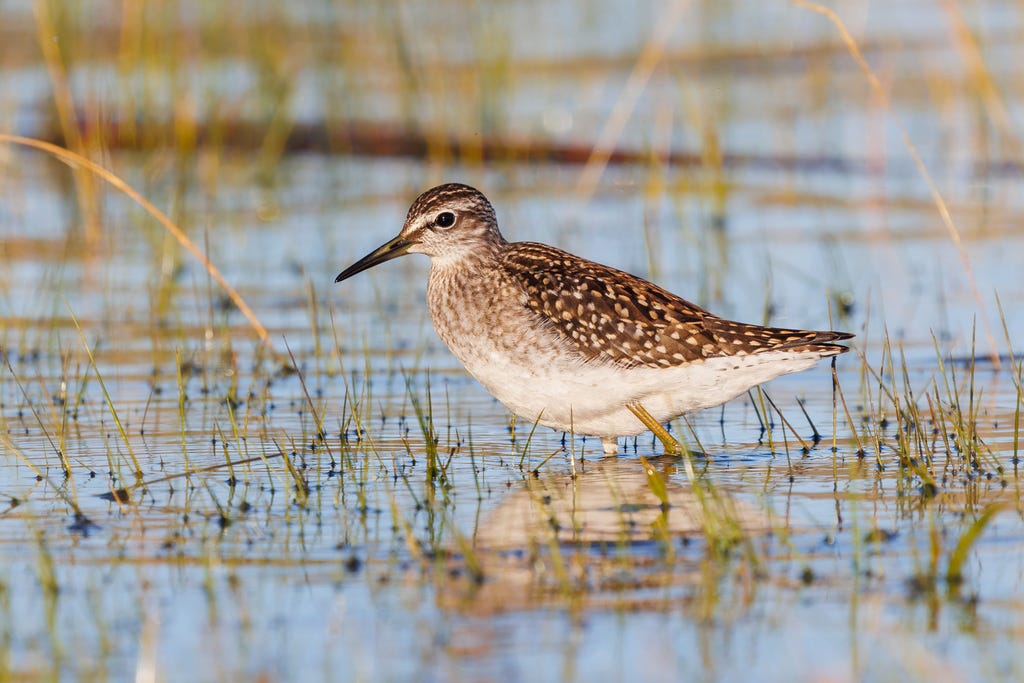
August 5, 2011 — Fifteen years ago this week, accomplished birder Ryan Merrill—a member of the Washington Bird Records Committee—was conducting a shorebird survey in the Samish Flats region of coastal Skagit County, Washington, when he encountered an unexpected visitor: a Wood Sandpiper. Abundant in the Eastern Hemisphere, this species breeds in swampy boreal forests of Europe and Asia before migrating to wintering grounds in sub-Saharan Africa, India, and Australasia. In the Western Hemisphere, however, Wood Sandpipers rarely appear outside of Alaska. The Samish Flats bird became just the sixth record for the Lower 48 states and the first ever documented in Washington.
Compared to North America’s familiar shorebirds, Wood Sandpipers combine the size and pattern of a Solitary Sandpiper with an overall body structure resembling a small Lesser Yellowlegs. Unlike yellowlegs, Wood Sandpipers occasionally bob their tails, or teeter, much like the recognizable motion of a Spotted Sandpiper. Together, these field marks, among other finer points, make this Old World wanderer surprisingly distinctive once seen well.
The Samish Flats comprise a large agricultural area bounded by forest to the south and east, Padilla Bay to the west, and Samish Bay to the north. Once the former estuary of the Skagit River, this 200-square-mile (518 km²) landscape where freshwater met saltwater was drained and converted for agricultural uses starting in the late 1800s. Over a century later, wetlands are being reintroduced to parts of Samish Flats, restoring natural ecosystems and exceptional wildlife habitat. This effort, a collaboration between government agencies, non-profit organizations, and private landowners, has made the Samish Flats a true birding hotspot. Today, more than 230 bird species have been recorded here, making the Samish Flats one of Washington’s premier birding destinations, particularly for wintering waterfowl and raptors.
Birding Tip: Post-Breeding Wanderers
By late summer, migration is beginning—but not every bird moving across the landscape is traveling toward its wintering grounds. Once nesting responsibilities end, many birds disperse away from their breeding territories, sometimes traveling in directions that seem to contradict the seasonal flow of migration. These movements can quietly reshape local birdlife and occasionally deliver spectacular rarities far beyond their expected ranges.
Why Birds Wander After Breeding
Post-breeding dispersal begins when adults and newly independent juveniles are no longer tied to a nest or breeding territory. The movements may cover only a few miles, or they may carry birds hundreds of miles from where they were raised. Unlike migration, dispersal does not necessarily follow an intuitive route or lead toward a specific wintering destination.
Post-breeding dispersal can serve several biological functions. Leaving crowded breeding areas reduces competition within ecosystems, generally meaning resources are more abundant. Birds may also move toward safer molting habitat or seek areas offering better cover from predators. Young birds also gain opportunities to practice finding food and navigating unfamiliar landscapes before facing their first migration.
Dispersal may also help birds gather information for the future. Juveniles exploring beyond their natal territories can discover suitable locations to establish territories of their own. Adults may similarly visit other breeding areas and assess habitat quality in search of a more successful site to rear their young.
A Local Bird Community in Motion
Post-breeding dispersal helps explain why certain birds seem to disappear from their usual locations during midsummer. Once territorial behavior ends, adults and juveniles may leave nesting sites for habitats that provide more abundant food or thicker cover. Birds that were conspicuous singers only weeks earlier can become quiet, mobile, and concentrated in entirely different parts of the landscape.
At the same time, dispersers from surrounding areas begin arriving. A wetland may suddenly play host to a wading bird that does not breed anywhere nearby. Mixed-species flocks may also begin forming as passerines abandon the boundaries that structured their breeding season in preparation for their migratory push.
This creates a period when local bird abundance and diversity can change almost daily. Juveniles can make the local bird community appear less familiar: their subdued colors, incomplete markings, and unusual calls and behavior can make even common species challenging to recognize. Post-fledging birds often shift habitats as their mobility and foraging abilities improve. These shifts reflect those birds attempting to balance access to food with protection from predators.
When Wandering Produces Rarities
Most dispersing birds remain relatively close to their established breeding ranges. A small number, however, travel much farther than expected. These long-distance wanderers can create some of late summer’s most memorable rarity sightings. The likelihood of an unusual appearance may increase after a productive nesting season, when large numbers of inexperienced juveniles enter the population, or when changing water levels or food supplies push birds beyond their usual feeding areas.
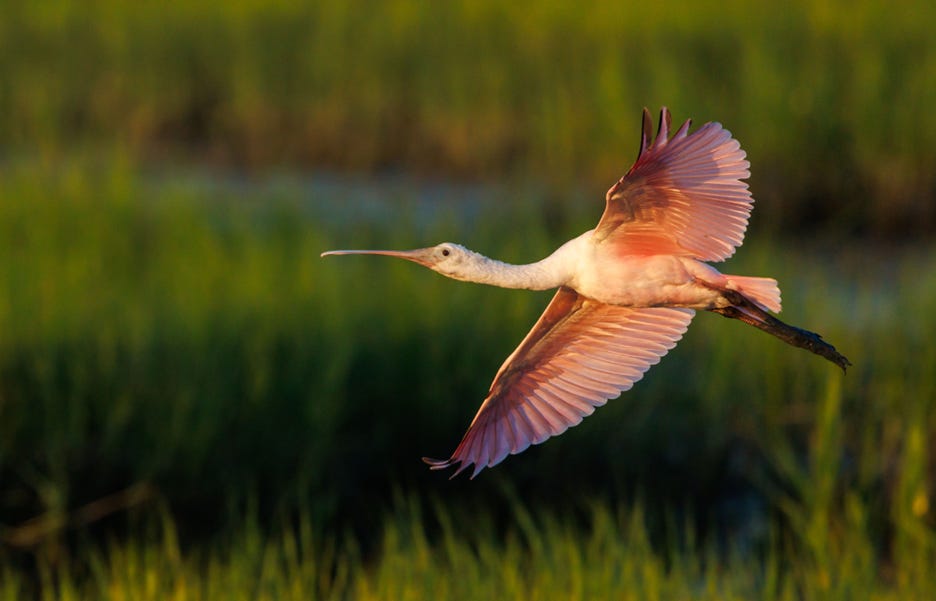
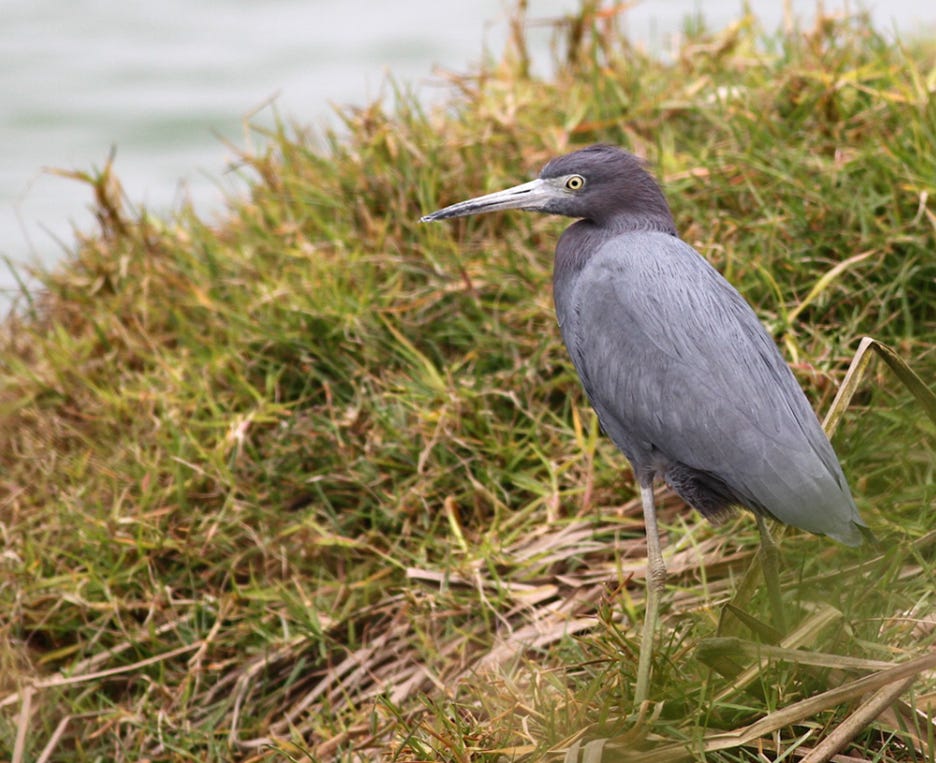
Many wading birds are especially well known for these movements. Little Blue Herons regularly wander north of their breeding range after nesting, with white-plumaged juveniles accounting for many late-summer records. Wood Storks breeding in Florida and the Southeast disperse northward along the coastal plain and major river systems, sometimes appearing far from any nesting colony. Roseate Spoonbills and Limpkins can also become irregular late-summer visitors at inland wetlands and locations north of their usual ranges. The Limpkin has seen dramatic expansion of their vagrant range in response to the expansion of one of their main food sources, the Island Apple Snail.
On the Pacific Coast, Heermann’s Gulls provide a particularly dramatic example. Nearly the entire population breeds around the Gulf of California before moving north to spend late summer and fall along the coasts of California and the Pacific Northwest. This is a regular seasonal movement rather than accidental vagrancy, but individuals reaching its outer limits—or appearing inland—can still generate considerable attention.
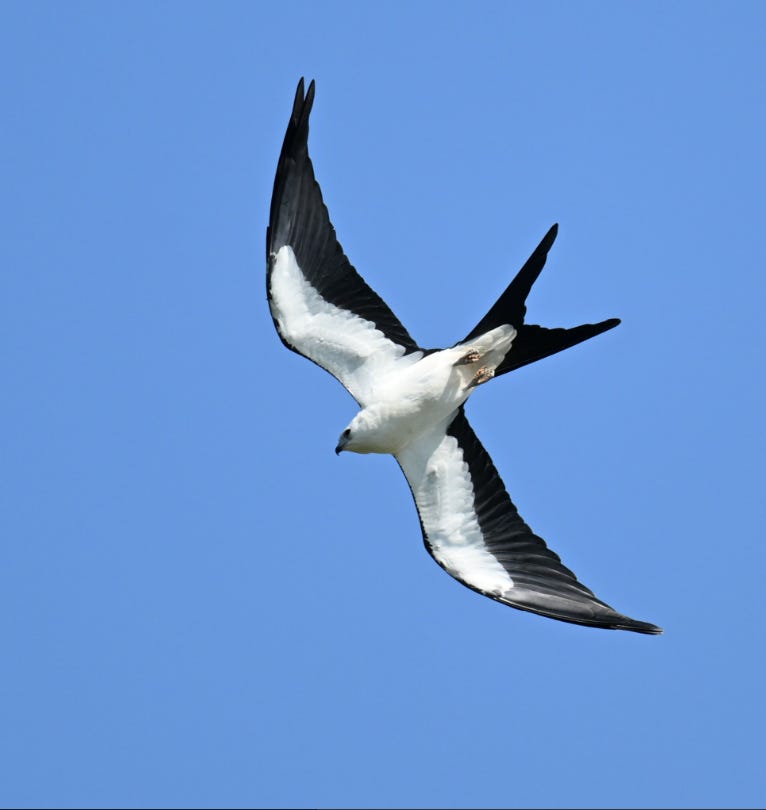
Post-breeding dispersal makes late summer a season of possibility. While much of the birding can begin to feel redundant in light of the upcoming fall migration, a persistent birder may be rewarded with a truly spectacular find. An unexpected Swallow-tailed Kite soaring overhead may grace those birders who remain alert and in tune with the changing dynamics of a bird’s yearly cycle.
Thanks for Reading
Post-breeding dispersal is a reminder that bird movement doesn’t wait for classic migration windows. Once nesting winds down, birds of all ages begin to shift across the landscape in ways that can be subtle, irregular, and surprising. By paying attention to these movements, birders can better understand seasonal change—and stay ready for the unexpected birds that late summer often delivers.
Support Birding University
If you enjoy our work, you can show your appreciation with a one-time tip by buying us a “bird-friendly coffee.” Every contribution helps us keep creating content you love!
Comments
Nothing yet. Say the first thing.
Sign in to join the conversation.