
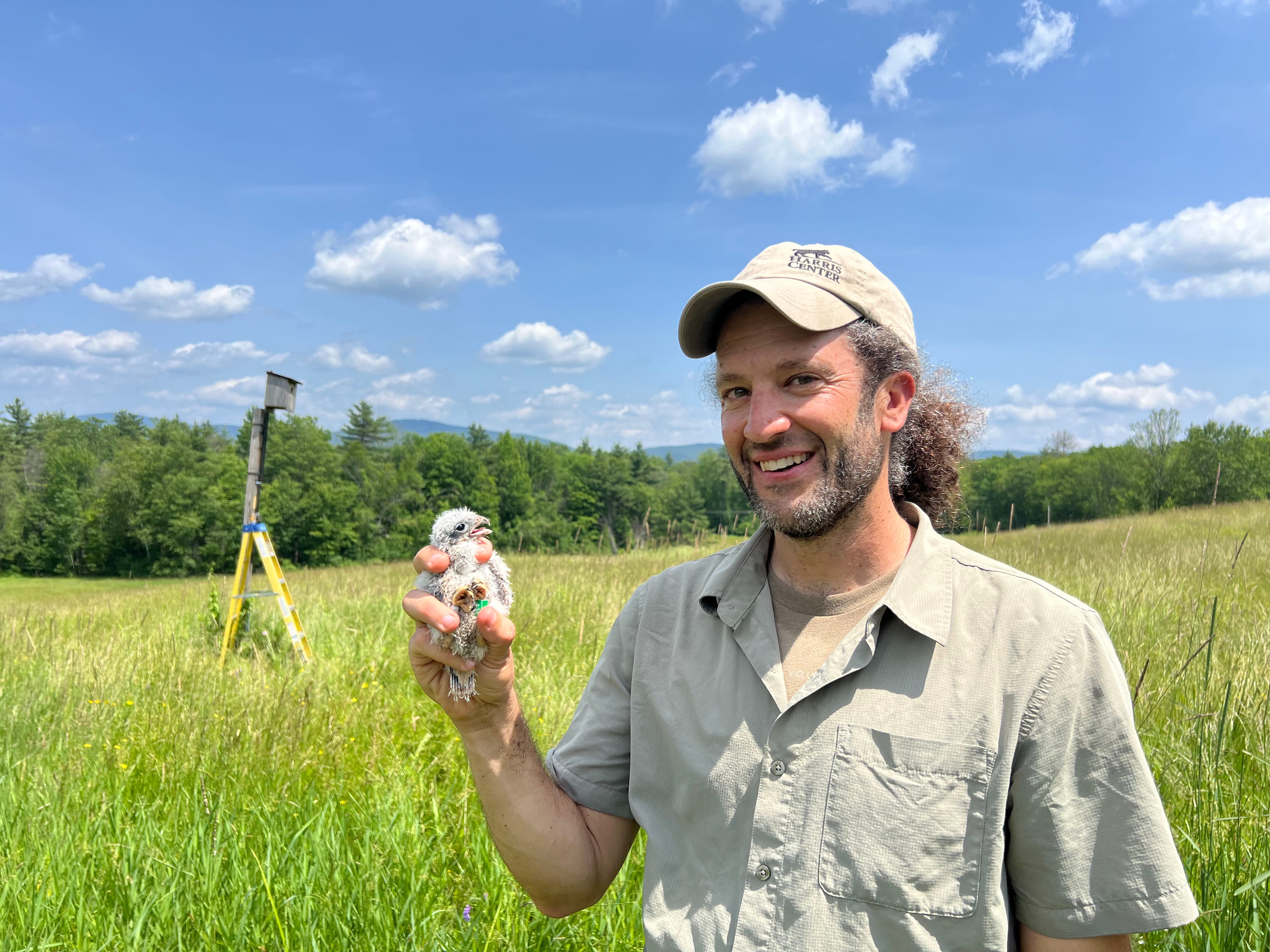
Phil Brown (he/him) is a seasoned naturalist and bird conservationist whose life has been devoted to connecting people with the avian world. Raised in Staten Island, New York, where pockets of green space ignited his passion for nature, Phil pursued degrees in natural resource management at Rutgers University and environmental studies at Antioch University New England. His career spans over two decades, including 17 years as Director of Land Management at New Hampshire Audubon and his current role as Bird Conservation Director at the Harris Center for Conservation Education in Hancock, NH.
Find out more about Phil and his work at The Dreamcatchers and the Harris Center for Conservation Education.
You’ve spent decades helping people experience nature, whether through bird conservation, leading tours, or now through MicroExploring the SuperSanctuary, your first book. Looking back, what transformed you from someone who enjoyed nature into someone who truly began seeing it? Was there a particular experience that changed how you observe the world?
For me, finding deeper observation was only possible by slowing down my pace of observation. It’s been a gradual progression with several notable experiences and mentors who’ve helped me grow and continue to evolve as a naturalist. Becoming a parent was one very important moment that opened up my eyes to nature in a new way. It led to lots of small discoveries, first because I needed to wait more and physically slow down. Learning to see through my children's eyes, being a little more childlike and playful myself, I developed a renewed way of experiencing the natural world.
This is the essence of my new book MicroExploring the SuperSanctuary. When you slow down, look closely, and listen, you can begin to receive nature’s gifts. Parenting young children through the pandemic only amplified this, and we all began to make discoveries right outside the back door. From birds as a primary interest, I made room for plants and moths, and I developed a more spiritual relationship with the outdoors that still drives me every day. Time in nature became as essential as the air we breathe and water we drink.
This chapter of my life dovetailed nicely with my hiring as the first Bird Conservation Director at the Harris Center for Conservation Education, a land trust and environmental organization based in the town where I live in southwest NH. This meant developing impactful bird research and monitoring projects in my very own community.
One of my first tasks was finding and monitoring nesting Broad-winged Hawks through a partnership with Hawk Mountain Sanctuary, which hoped to expand its research on the full life-cycle ecology of this species. We had little idea what results this project would yield during the 2020 pilot season, but finding a single Broad-winged nest in my backyard that summer was transformative for me—and for the project. Six years later, this research project remains strong, and I’ve spent countless hours monitoring dozens of nests, some of which have led to affixing transmitters on nesting female hawks.
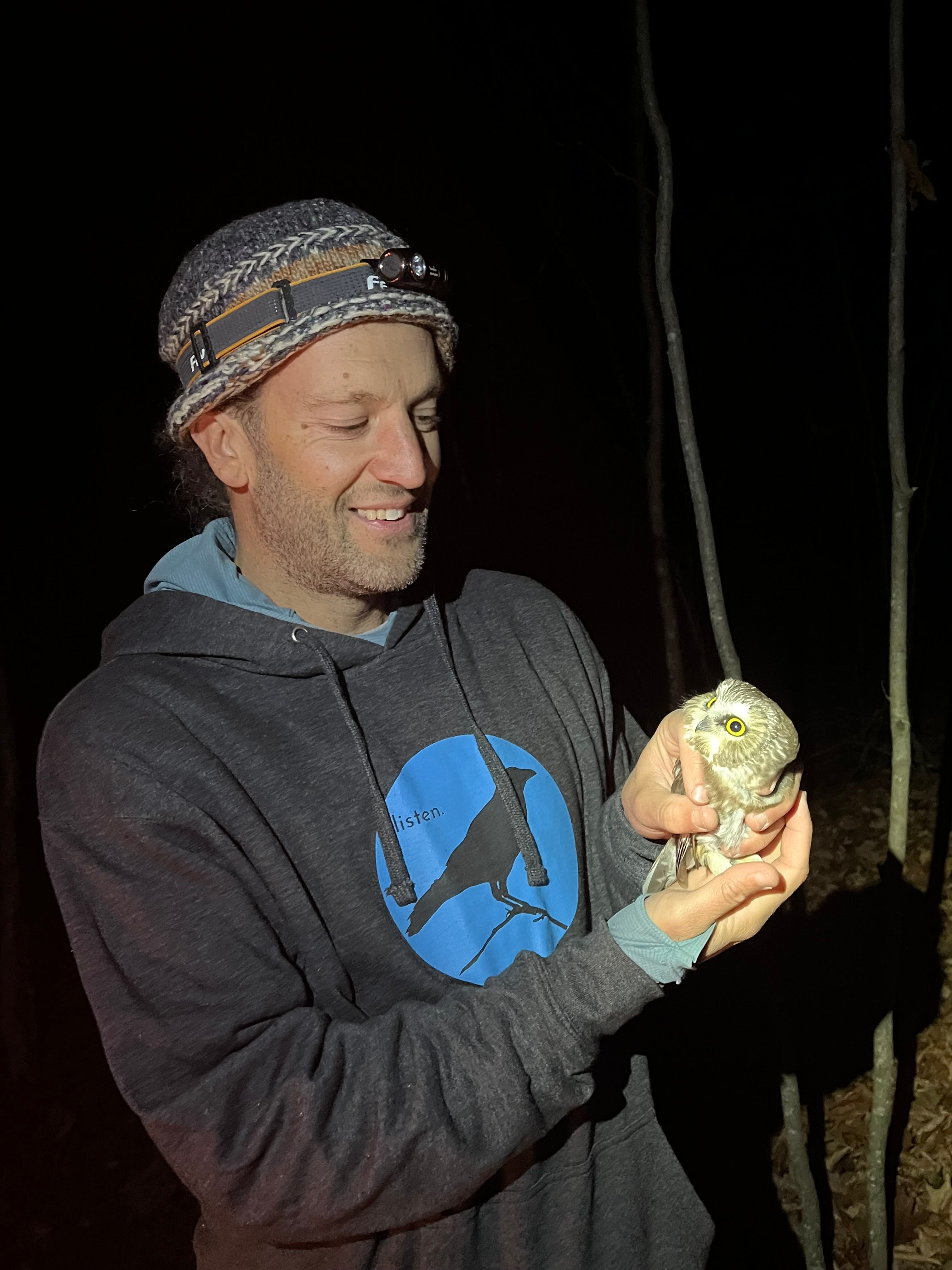
Birders often talk about life lists, rarity chases, and identifying every species they encounter. Your work seems to emphasize something different. What do you think birding can teach us when we stop treating birds as boxes to check and start treating them as teachers?
I used to play that game, too, so I know how compelling—and equally fun—the thrill of the chase can be. And I recognize that it’s an approach to nature and birds that works for some. Heck, I still participate in the Superbowl of Birding most years, and I love doing a Big Day every spring. But this kind of manic birding on a regular basis wasn’t for me, as something was missing from this game.
At a fairly young age, I entered a kind of ‘Jedi training’ as a birder, apprenticing with an expert and being pushed to learn the tricks of the trade quickly and effectively. I developed a keen sense of identification and a well-tuned ear, and began to immerse myself in a lifelong pursuit of a better understanding of bird habitats. It was thrilling to grow more proficient as a birder. This was an exciting time for an adrenaline-seeking youngster, and I competed in (and often placed well) in local Big Days and in the World Series of Birding.
Soon, every day of birding became about listing, and at some point I stopped seeing bird species as the beautiful and amazing creatures they were. But through exposure to conservation work during my undergrad schooling and through working field jobs in wildlife conservation, I gained valuable perspective and my horizons broadened. My passion for birds grew to have a bigger purpose, and I began to see the role it could play in advancing my interests in truly doing something for birds and their habitats. Through a deeper understanding of birds and truly watching them, we learn to love them and discover ways to better protect them. In turn, they bring us tremendous joy and connection.
You’ve devoted countless hours to conservation and volunteer work in your local community. Why is local stewardship so important to you, and what do you hope people gain when they move beyond simply enjoying nature to actively caring for it?
Conservation and stewardship of nature have been my passion since this path solidified during my time as an undergraduate student. Though I don’t have one particular ‘a-ha’ moment that put me on this path, I do believe it was my interactions with birds in wild places when I was younger that directed me. Whether watching for migrating warblers in a maple tree outside my childhood home in Staten Island or searching for new species on family trips to Florida’s Everglades, I understood that birds represented a wildness that connected places and people, and they certainly helped me connect to something bigger. And I grew up at a time when more attention was shifting to bird populations being in trouble.
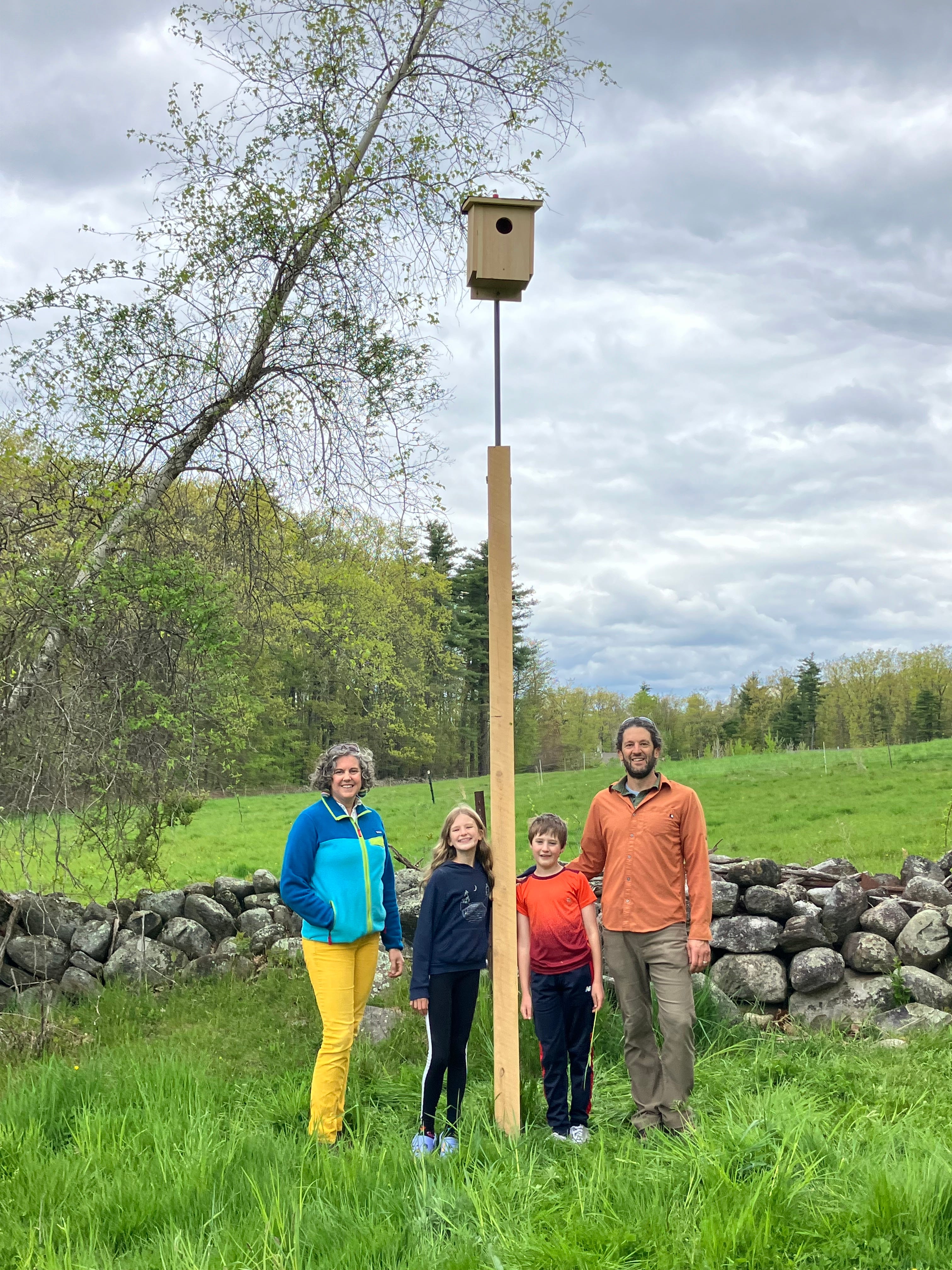
Though there have been many bright spots for conservation since my childhood, the picture for bird populations is decidedly alarming today. There’s lots of negative news about their declines, and it can be overwhelming. But we can all work on solutions at whatever scale to make a positive difference. My own career path—over half my life now—has included working on a mix of habitat stewardship at various scales, a diverse array of bird monitoring and research projects, and education surrounding these initiatives through a mix of teaching, guiding, and writing. A regional American Kestrel conservation project I launched through the Harris Center four years ago is an example of a solutions-oriented initiative that incorporates many of these elements. It has grown to not only provide nest boxes for this declining species, but to engage landowners in habitat management compatible with kestrel conservation and that of other grassland bird species.
Through my conservation and guiding work, I have come to believe that if birds are thriving, I would be, too. In this way, I came to see personally what Robin Wall Kimmerer describes as “all flourishing is mutual,” and I feel fortunate to have the opportunity to spread the wonder of birds with others to advance a shared cause with positive impacts for all. If we take care of nature, it will take care of us, too.
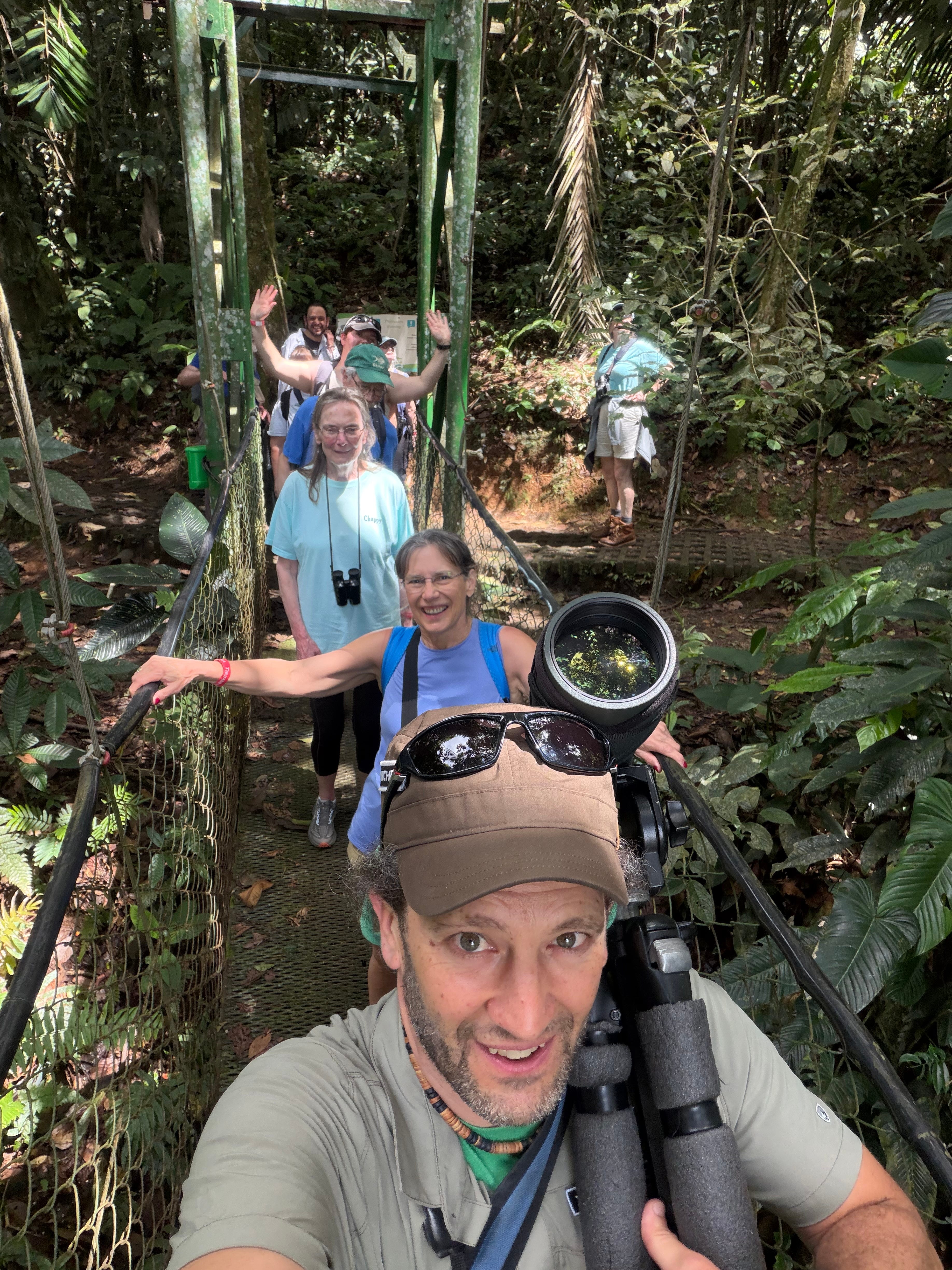
Whether you’re leading someone through the forests of New Hampshire or the rainforests of Costa Rica with The Dreamcatchers, you’re not simply pointing out birds—you’re creating an experience. What have years of guiding taught you about how people learn to notice the natural world, and what makes your tours different from a typical birding trip?
Birding tours are about more than just birds. Maybe one gets into guiding for the reason of wanting to see more lifers—and, even as a part-time birding/naturalist guide, I’ve been fortunate enough to travel a fair bit and see my share of bird species. But, for me, succeeding in this field and finding fulfillment isn’t a measure of the biggest bird list. Similar to habitat stewardship for birds, nature tourism is about creating a diverse and multifaceted environment in which people can thrive—and come to reciprocate by giving back in positive ways. It’s about catering to clients’ comfort and individual needs, listening carefully, and rolling with changes and anticipating the unexpected. It’s a challenge I deeply enjoy. When safety and comfort are established on a tour, participants can turn their attention to letting go and opening up to receiving, learning, contributing, sharing.
Tours that I lead with The Dreamcatchers—both short offerings locally in southwest NH and longer trips further afield in Costa Rica—feature something very different from most birding/nature tours: a hidden itinerary. Only my co-guide, Ignacio, our driver, and I know where we are going next. It removes expectations, keeps participants present, and allows them to open up quickly with each other. Quite literally, surprises lie around every corner! And no two trips are ever the same.
The gift of presence is an unexpected find that many don’t even know they need until they receive it, and people come away from these trips not only satisfied—but changed. So many of our participants have become friends—with each other and with us. Though I’ve had tremendous opportunities to see amazing places and fantastic birds, it’s the human element that has been the most fulfilling aspect of these tours, something my former teenage birder self would have never guessed. Shared experiences are so powerful, and a community of birder friends helps keep the rich memories of these exciting trips alive year-round.
One of the central ideas behind MicroExploring the SuperSanctuary is that we don’t have to travel far to experience awe. That almost feels countercultural today, when so many people equate adventure with exotic destinations. How would you explain MicroExploring to someone who has never heard the term before?
MicroExploring is the intentional exploration of the nature and geography immediately surrounding us, often no more than 15 minutes from home. It’s about finding deeper meaning and making small discoveries in the overlooked. It’s guided by wonder and not agenda, and it’s something anyone can practice anywhere, anytime—even when time is short. It’s about noticing what’s right in front of us, engaging the senses, and being open to joy, wonder, and awe. Beyond this, MicroExploring is practical, green, and an investment in local that inspires love of where you live. And when you love something, you want to protect it, and conservation and stewardship are important underlying themes of this guidebook.
We wrote MicroExploring the SuperSanctuary partly as a tribute to the incredible conserved landscape of southwestern NH that I call home. Sure, not everyone lives within an ecologically-rich ‘SuperSanctuary’ of conserved summits, picturesque ponds, and connected wetland landscapes. But we intend—and firmly believe—that these concepts can be applied everywhere, even in rural settings. I practiced MicroExploring decades before I knew this term’s meaning in heavily suburban NY, and I bet this definition resonates with many BU readers.
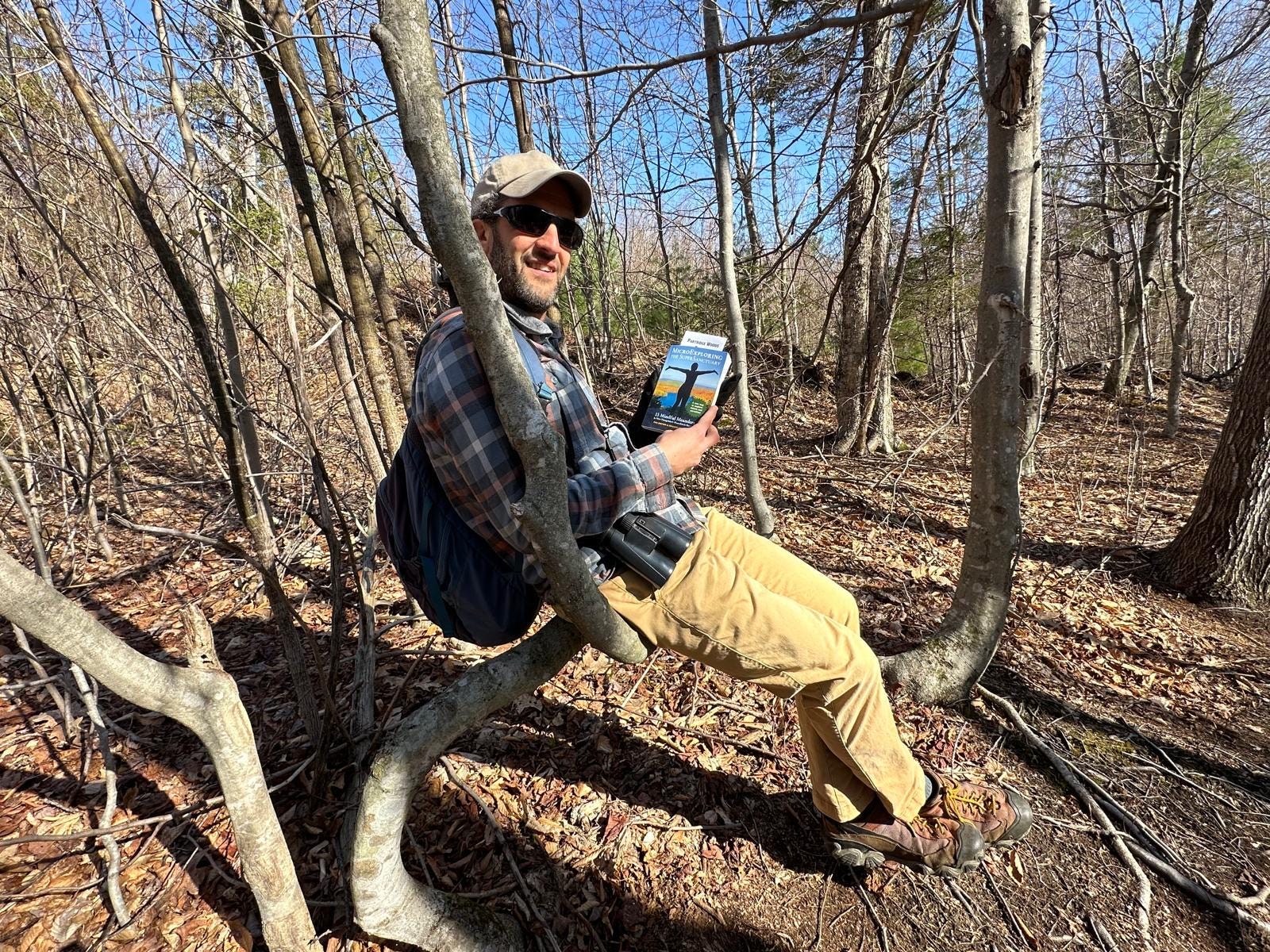
Many people assume they’ll discover more by walking farther or moving faster. Your philosophy almost argues the opposite—that slowing down often reveals more. What are we missing when we’re always trying to get to the next hotspot?
Let’s face it; people are busy, and oftentimes we’re forced to choose: breadth or depth? There are times for each approach, but they’re often mutually exclusive. It depends upon how you define ‘more’. To me, more isn’t necessarily a bigger bird list, and even if using this metric, sometimes stillness is the right solution. To me, ‘more’ is a richer experience through birding: seeing birds better, watching them longer, and understanding how they connect us to other aspects of the natural world. And that’s often best achieved through slowing down the pace or being still altogether. Spend a little more time watching that female Scarlet Tanager, and see what she’s finding to eat, or get to know some behaviors by doing a ‘Big Sit’ bird count and letting birds approach closer while you’re still.
Specifically, how does MicroExploring change the way someone approaches birding? Does it alter what they see, how they observe, or even what they consider a successful day in the field?
MicroExploring and birding are highly compatible approaches. Looking for birds forces your mind to shift from your inner self to your environment, enhancing the senses. Through MicroExploring, one can take a mindful approach to birding. These ‘slow birding’ practices allow you to form a deeper connection to birds, as individuals and as a species connected to their environments. You’ll notice more about the birds you observe, which in turn will improve your ability to identify them, but also to understand them. Perhaps strip away the need to assign an individual bird to a species, but see it as a living art form or hear it as music. Redefine the traditional measure of success of a day of birding from a species list to an experience list. Add some qualifications to the quantifications that many birders traditionally keep.
If every Birding University reader decided to spend one hour this week practicing MicroExploring close to home, what would you encourage them to do for their very first experience?
Turn your binoculars upside down and use them as a hand lens. Or go birding without your binoculars. You’ll be forced to observe more closely, quietly, and intentionally to find birds, and you’ll notice the other things, too. Take a familiar path, but walk it in different ways. Maybe bring a journal to document what you’re seeing, or give yourself little challenges such as finding as many colors in nature as you can. Walk alone, or share the experience with a friend. New perspectives may open your senses to new possibilities and learning. Move slowly and with purpose. Let wonder be your guide.
Finally, we always like to ask: who would you most enjoy seeing featured in a future Birding University interview?
Everyone who loves birds has a worthwhile story to tell. One such story I’ve come to know is that of a man named Alex Martinez, a Costa Rican conservationist who has become a friend through our collaborations on Dreamcatchers journeys. Now an older man, Alex has dedicated many decades of his life to protecting forests—and macaws—in the Caribbean lowlands of Sarapiqui.
By preventing illegal poaching and logging, he has put his life on the line, and he continues to advocate for the protection of the critically endangered Great Green Macacw | Lapa Verde. His current conservation initiative involves purchasing giant almendro (almond) trees where the macaws feed and nest. A single tree can grow to nearly 200 feet in height and may yield multiple families of macaws. Our Coffee & Birds in Paradise trips to Costa Rica often feature Alex and support this initiative. This audience would enjoy hearing his inspiring, passionate message about conservation.
Show your love for Birding University and brighten up your gear with our official sticker. Grab yours today—every purchase helps support our work!
Comments
Nothing yet. Say the first thing.
Sign in to join the conversation.