
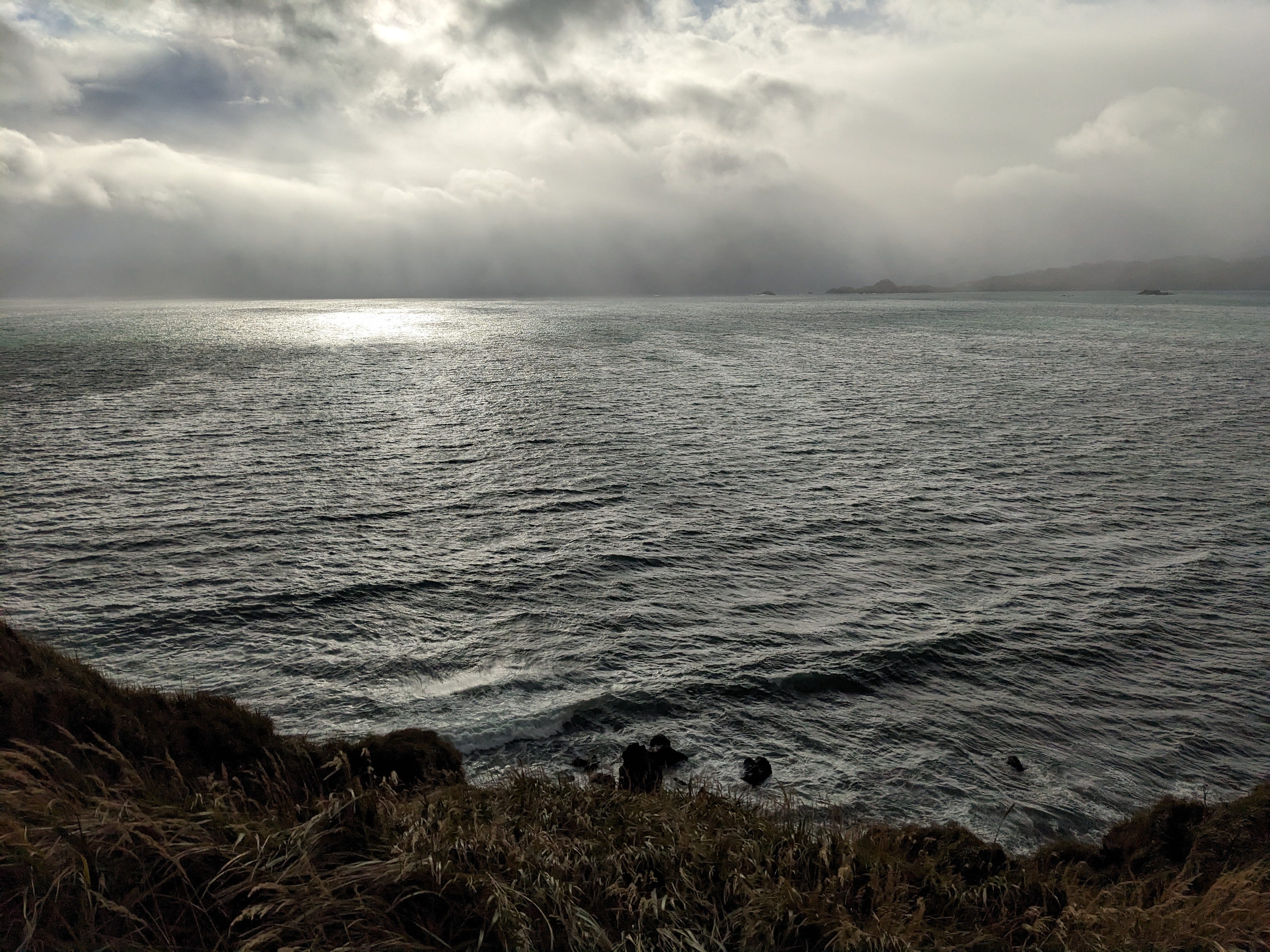
Last October, I was thrilled to receive an invitation to join an eclectic group of Chattanooga birders on a trip to Adak Island, in the Andreanof chain of the western Aleutians. John and Lizzie Diener, seasoned field techs who’d fallen for Adak after spotting mega-rarities like the 2023 Red-backed Shrike, invited me and rising star birder Luke Thompson to join them. Having visited the island decades earlier—albeit at a less-than-ideal time for spotting Asiatic rarities—I eagerly seized the chance to return. As I researched the birds we might encounter in October, a nagging concern emerged: what if one of us had to stay behind while the rest of the group witnessed a mega-rarity? Adak has no cell service, and I couldn’t shake the thought of missing a once-in-a-lifetime bird—a moment that, anywhere else, would be just a quick text message away. That’s when it hit me: BirdingApp was built to connect birders. Could we find a way to make it work even there, off the grid?
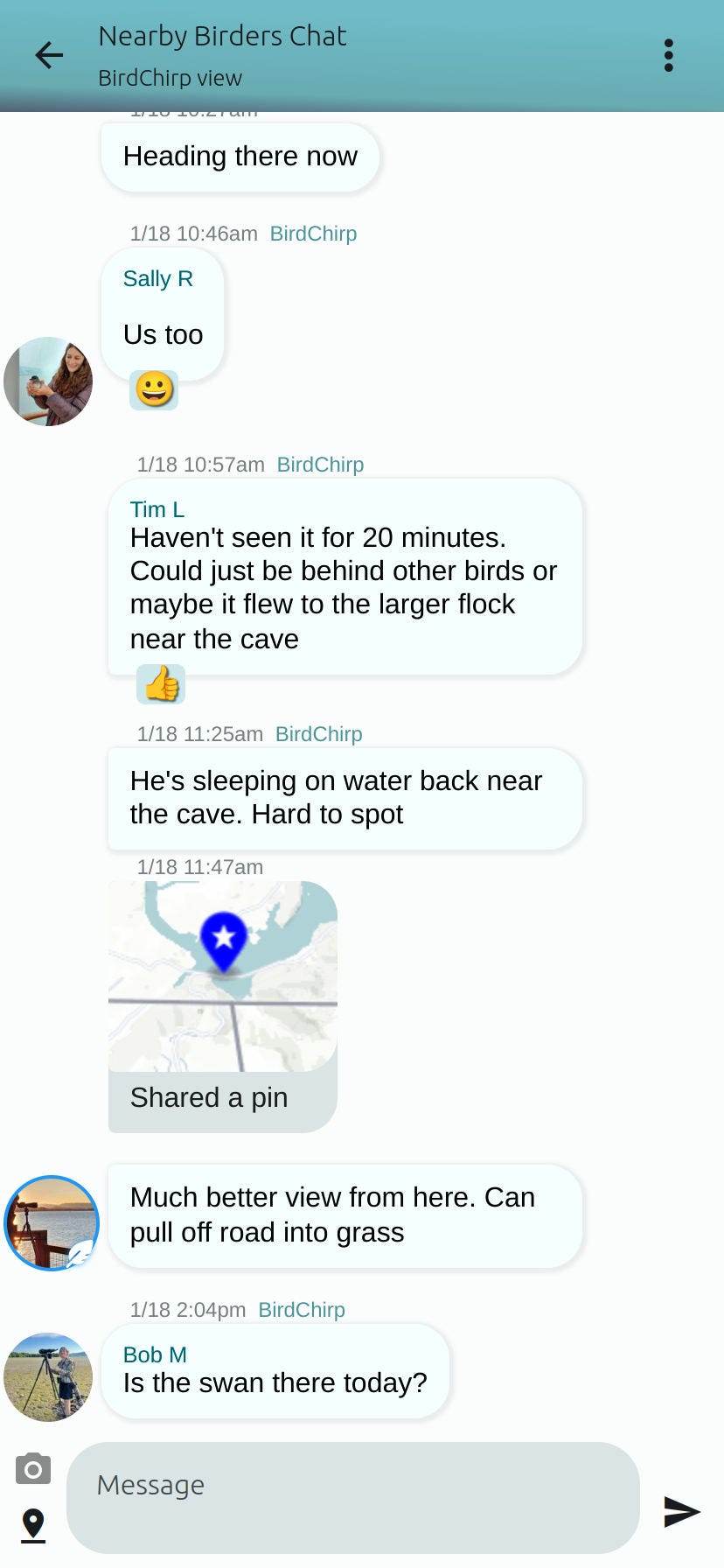
That’s where BirdChirp comes in—a new, experimental feature we’re building into BirdingApp to keep birders connected, even in the most unforgiving of places like Adak. BirdChirp lets your messages travel off-grid via a compatible radio. It’s powered by Meshtastic®*, an open-source project that turns small LoRa radios—some as tiny as a credit card—into a long-range, decentralized communication network. Connect one to your phone with Bluetooth, and you’re sending encrypted messages or location pins to nearby birders, no cell towers required. Depending on terrain and hardware, you usually get a couple miles of range—or even dozens with line-of-sight or if other Meshtastic nodes are around to relay the signal.
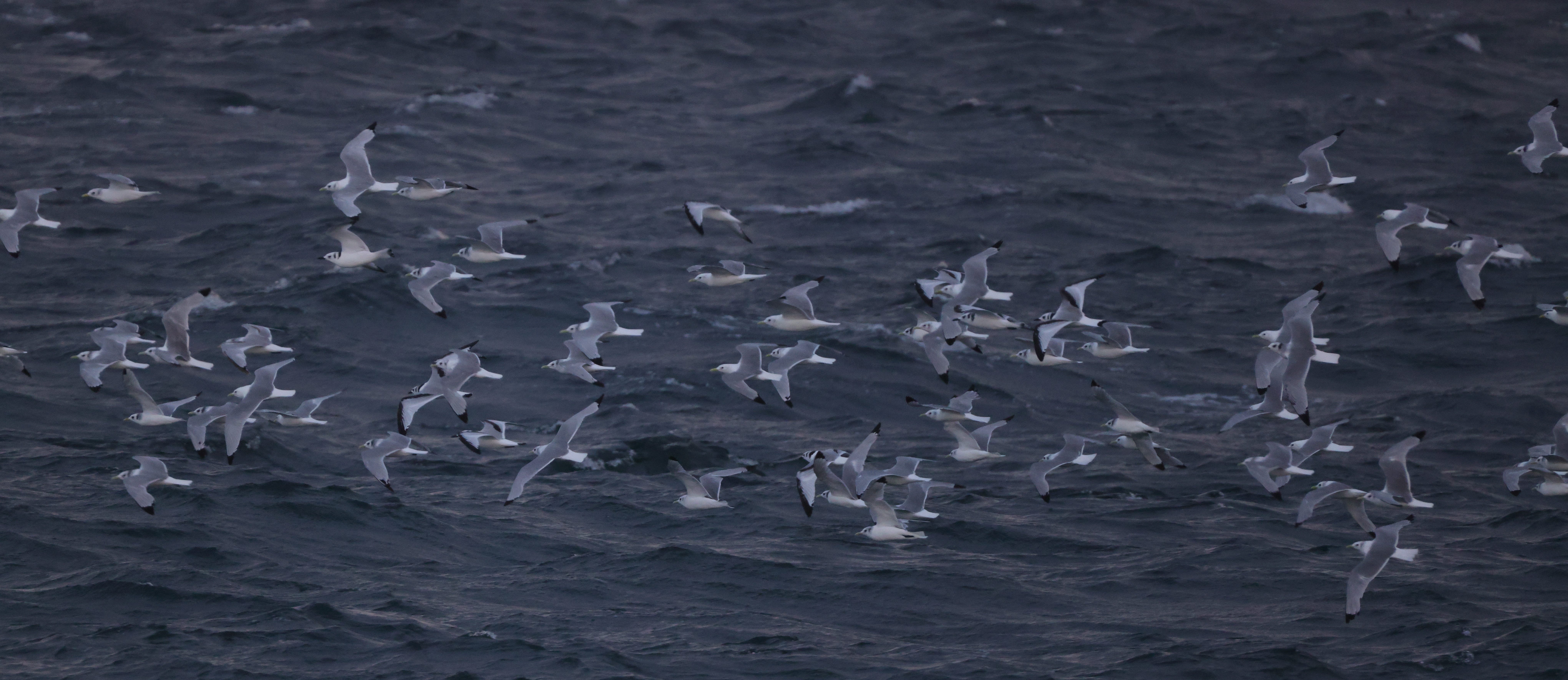
After weeks of hard work—mostly Alex’s wizardry—we had a beta version of BirdChirp ready just in time for the trip. I packed several radios, and to my delight, discovered some locals already running Meshtastic nodes, boosting our odds of message relay. The winds on the first few days seawatching brought us some great birds in addition to allergies and colds, which worsened as the week progressed.
Two afternoons later, it was just Lizzie and me. We each grabbed radios and split up—she trekked the rarity-rich shores of Clam Lagoon, that she lovingly names “the awesome walk”, while I perched at a sheltered, elevated seawatch on the dunes above Candlestick Bridge. An hour in, BirdingApp chirped: Lizzie had a Garganey mingling with the Green-winged Teal! She dropped a pickup spot, and I hustled over across the dune down the gravel road. We relocated the bird and pulled out a few documentation shots at frighteningly low shutter speeds before it got too dark. That moment made every ounce of effort worth it—proof BirdChirp worked. Without it, Lizzie (camera-less) and I would’ve missed documenting it, and my Alaska list would be one Garganey short!
To get started, you’ll need a Meshtastic-compatible radio with Bluetooth. You can connect and pair it from BirdingApp’s convos menu. We’re still smoothing out a few kinks in the initial setup, so you may need to reconnect a few times at first. BirdingApp stands alone as the only birding app offering fully offline location-sharing on a map. Imagine that you’ve trekked into the wilderness and just found a Naumann’s Thrush, but now you have to radio home, trying to explain your whereabouts. With BirdChirp, you can simply drop a pin in the chat and you’re done. To support the offline maps, we incorporated offline Google Maps, so make sure you first download the data for where you’re traveling to before heading out.
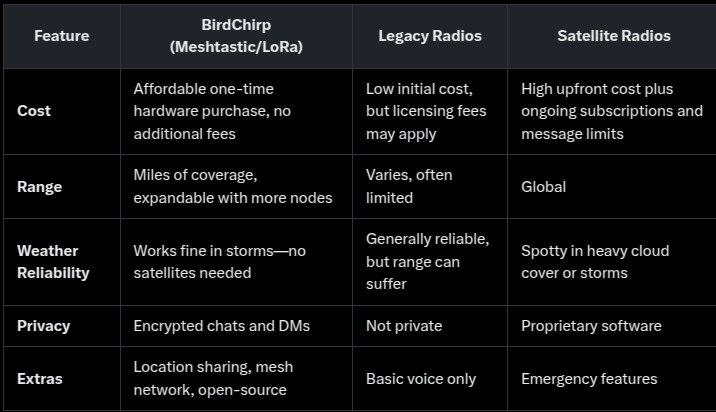
Compared to other radio solutions, BirdChirp’s LoRa backbone offers some serious advantages. Traditional voice radios are more annoying to carry around, and often come with shorter ranges, cumbersome licensing headaches, and no privacy—your chatter’s out in the open for anyone to hear. Satellite radios, while great for emergencies, hit you with steep upfront costs, ongoing subscription fees, and spotty reliability when clouds roll in. Meshtastic-compatible radios, on the other hand, are often a fraction of the price with no recurring charges, and it shrugs off bad weather since it doesn’t rely on orbiting tech. If you go with a waterproof model like the sleek SenseCAP Card Tracker T1000-E from Seeed Studio, you don’t even have to worry about the weather.
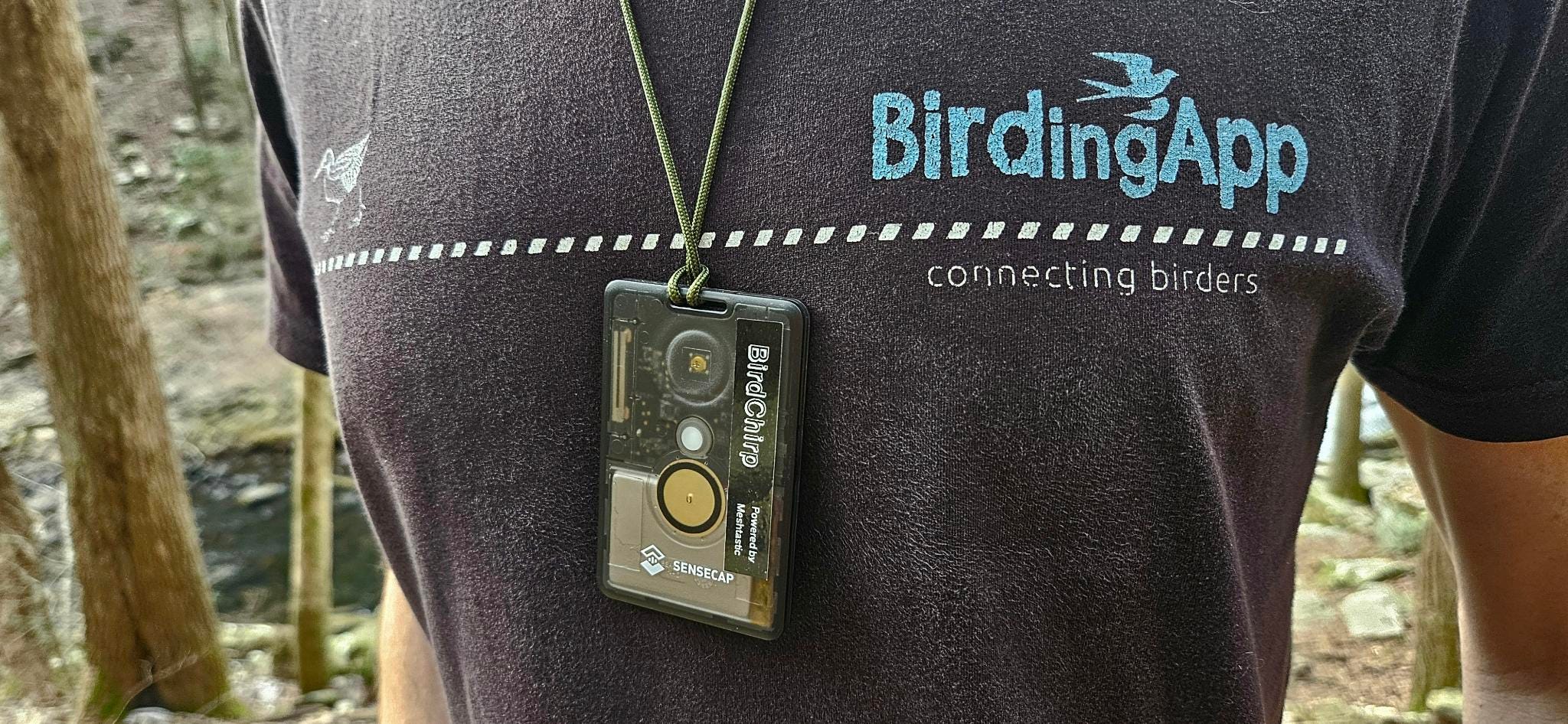
We’re excited to get these radios into more birders’ hands. For a more detailed overview, visit our FAQ page. If you’d like to purchase pre-configured BirdChirp radio(s) for your next off-grid outing, just reach out to us directly on the app. Or, if you know any tour leaders travelling to remote areas who might want to test these out, we’d love an intro.
Happy Birding, wherever you happen to travel!
* Meshtastic® is a registered trademark of Meshtastic LLC. BirdingApp is not affiliated with or endorsed by Meshtastic.
No posts
Comments
Nothing yet. Say the first thing.
Sign in to join the conversation.