
There is a plant that most people walk past without a second thought. The dandelion.
Without waiting for ideal conditions, it arrives in the most compacted, overlooked ground (the crack in a pavement, or the edge of a neglected field), and begins its quiet, purposeful work. Its taproot drives down, sometimes thirty centimeters deep, breaking open hardened soil and drawing up minerals from layers that other plants cannot reach. As it does, it loosens and aerates the ground, makes nutrients available, and creates the conditions in which other life can take hold. It simply puts down roots, and the land around it, slowly, becomes more alive.
Donella Meadows, the systems thinker, wrote that a system’s paradigm (the shared set of beliefs from which it arises) is the most powerful place to intervene, well above its rules or incentives. Change the story a community tells about what is possible, and everything else can shift. It was Meadows and her Balaton Group who first envisioned a planetary network of Bioregional Learning Centers and it was writer and co-founder of the Design School for Regenerating Earth Joe Brewer who later gave that vision its now-familiar shape: the Dandelion Strategy, a way of seeding regenerative efforts widely rather than planning them centrally, trusting that some will take root in places no one could have predicted. Bioregional Weaving Labs and Bioregional Learning Centers resource and connect change-makers working at the landscape and bioregional scales, and operate like dandelions in exactly this sense. They take root in places. They work with what is there. They break open ground that has grown too hard for new growth. And, like the dandelion, they are pioneers: the ones who nourish the conditions from which a wider ecosystem of plants can emerge and thrive.
Scan Europe today, and you will spot them: in Portugal’s dehesa, Scotland’s uplands, Switzerland’s alpine-lacustrine ecosystem, and all stretching across the continent even in the foothills of the Southern Carpathians. In overlooked rural villages and landscapes drained of both biodiversity and hope, landscape practitioners and weavers are taking root. They nurture networks of community-led experiments, helping both the land and people grow more resilient.
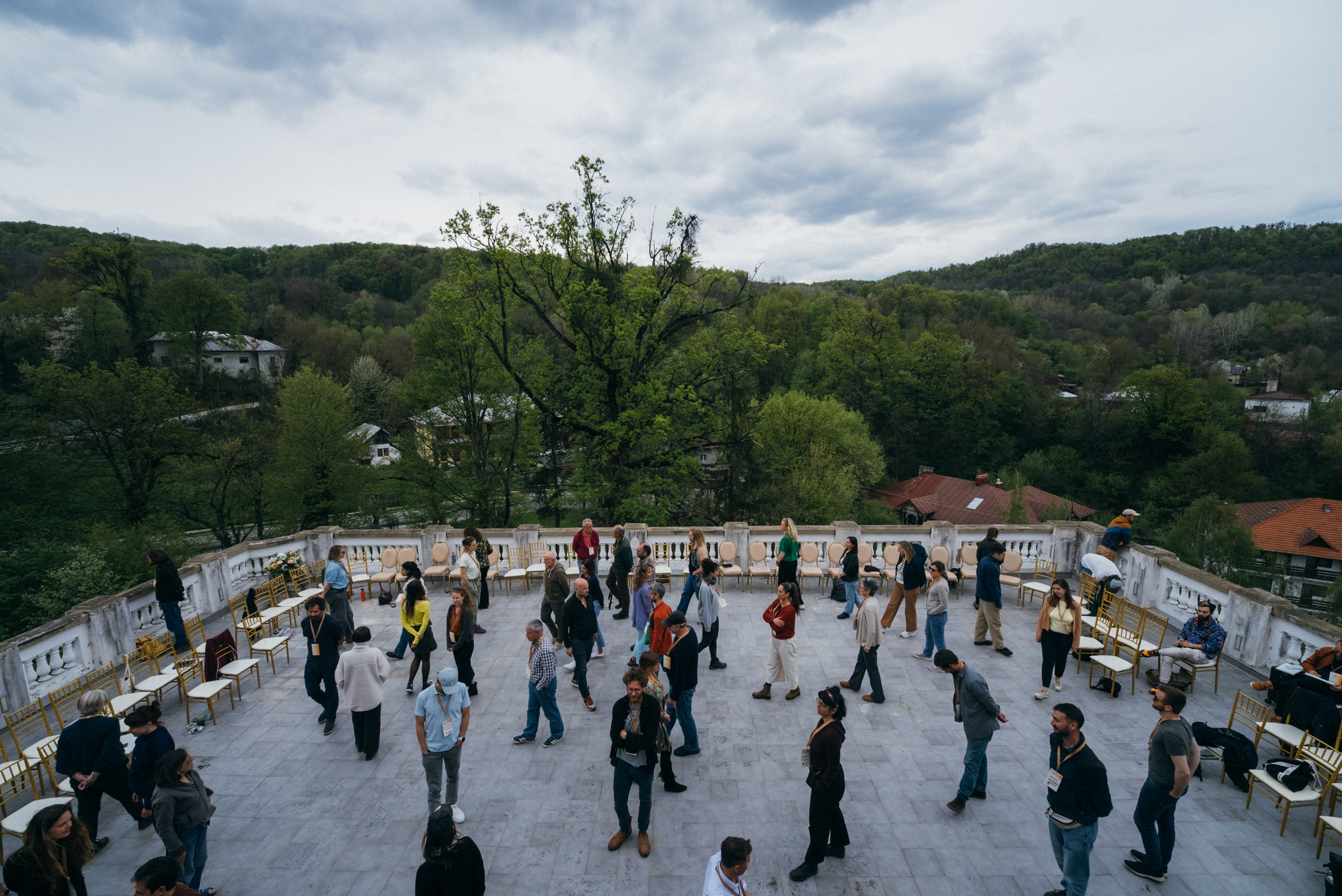
Though each navigates a different landscape and socio-economic terrain, their purpose is shared: to make their home a better place. For neighbors, for the more-than-human species they share it with, and for those yet to come. Alongside their communities, these weavers are rediscovering how to live in harmony with the natural world.
The journey from intention to real visible change is rarely a straight line. It is full of cooperating with different actors, negotiations, and moments of tension. These practitioners move forward without a map, discovering the path by walking it, guided by care, and making do with imperfect tools and insufficient resources.
You know the feeling of venturing down an unfamiliar path. The way forward is uncertain, but you sense your direction and hope to meet someone else traveling the same road. Not to be guided, but simply to share a stretch together. To pause, exchange observations, ask questions, and feel (even for a moment) that you are not making this journey alone.
Regenerative practitioners and community weavers need such companions. Perhaps more than most.
A Different Kind of Summit
Bioregional Weaving Labs and Commonland brought 80+ landscape practitioners and weavers together in the green hills of Romania for a European Learning Summit.
The invitation was a simple one: bring your questions, your uncertainties, and the lessons you have learned. The aim was to create a space where this expanding, scattered, quietly remarkable field of practitioners could finally see itself and, in that reflection, sense the scale and vitality of what is already unfolding.
The joint BWL and Commonland team understood this required care. Attendees arrived carrying the desires of their communities, the ambition of funders, and the needs of the landscapes: the kind of responsibility and weight that builds when you’re pushing for change in resistant systems, often without recognition, and sometimes feeling like you’re the only one holding it. This is precisely why gatherings like the Summit matter: they remind weavers that the weight of the responsibility was never meant to be carried alone.
The design team spent months co-planning, considering not just what participants could learn from each other, but also how they should arrive and what state of being would let them set that weight down, and join with open minds, hearts, and courage. The Summit took place in a setting that did its own quiet work: nestled among lush hills, open to the sky, wrapped in a beauty that silences the noise and invites you simply to be present.
The learning summit, the journey of connection and exchange began with a traditional Romanian wedding dance. Before any slides or agenda items, 80 people moved together, sharing smiles and laughter. It was a ceremonial statement, intentional and heartfelt: we are not just here to exchange information. We are here to step into something deeper, together.
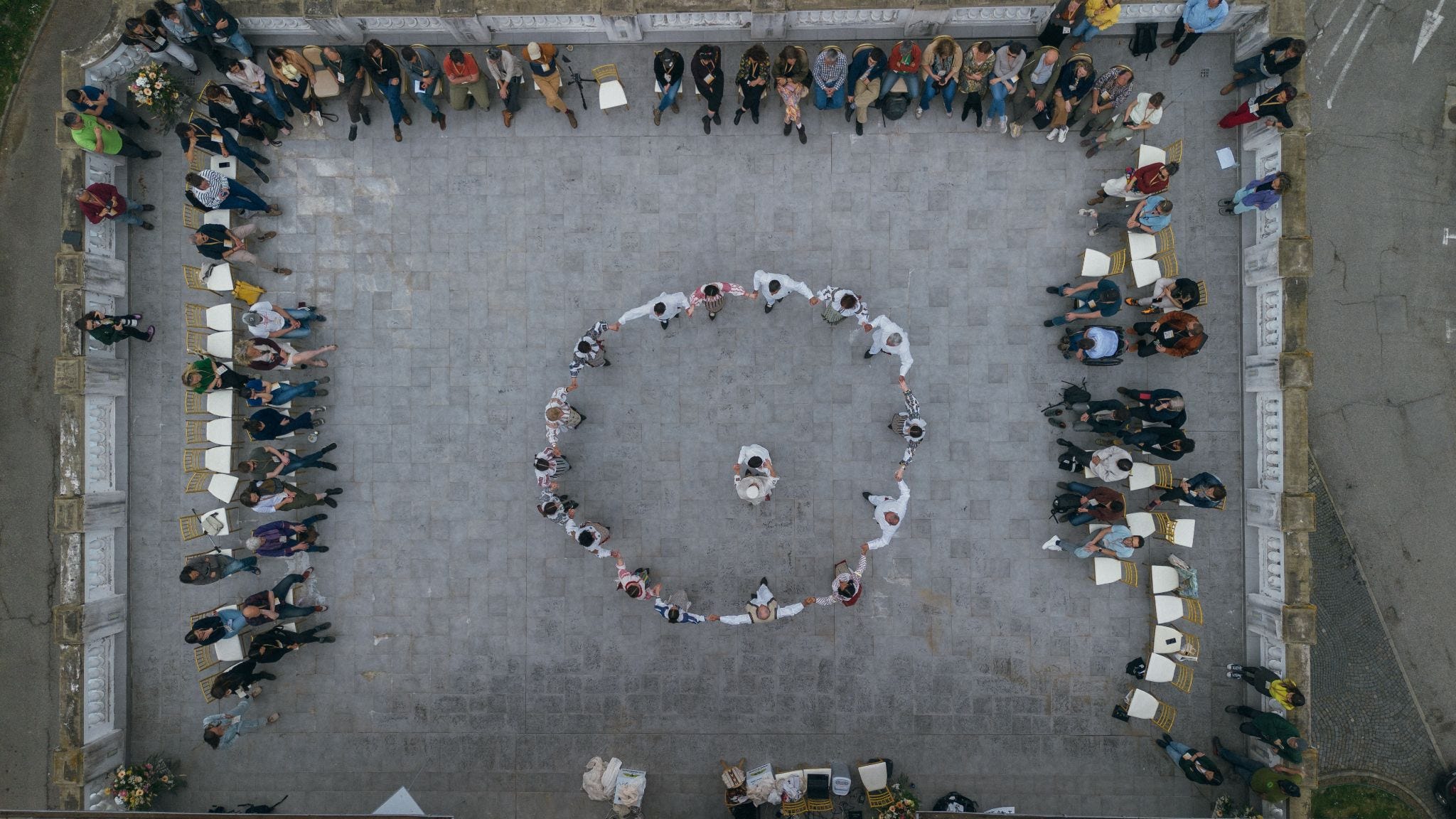
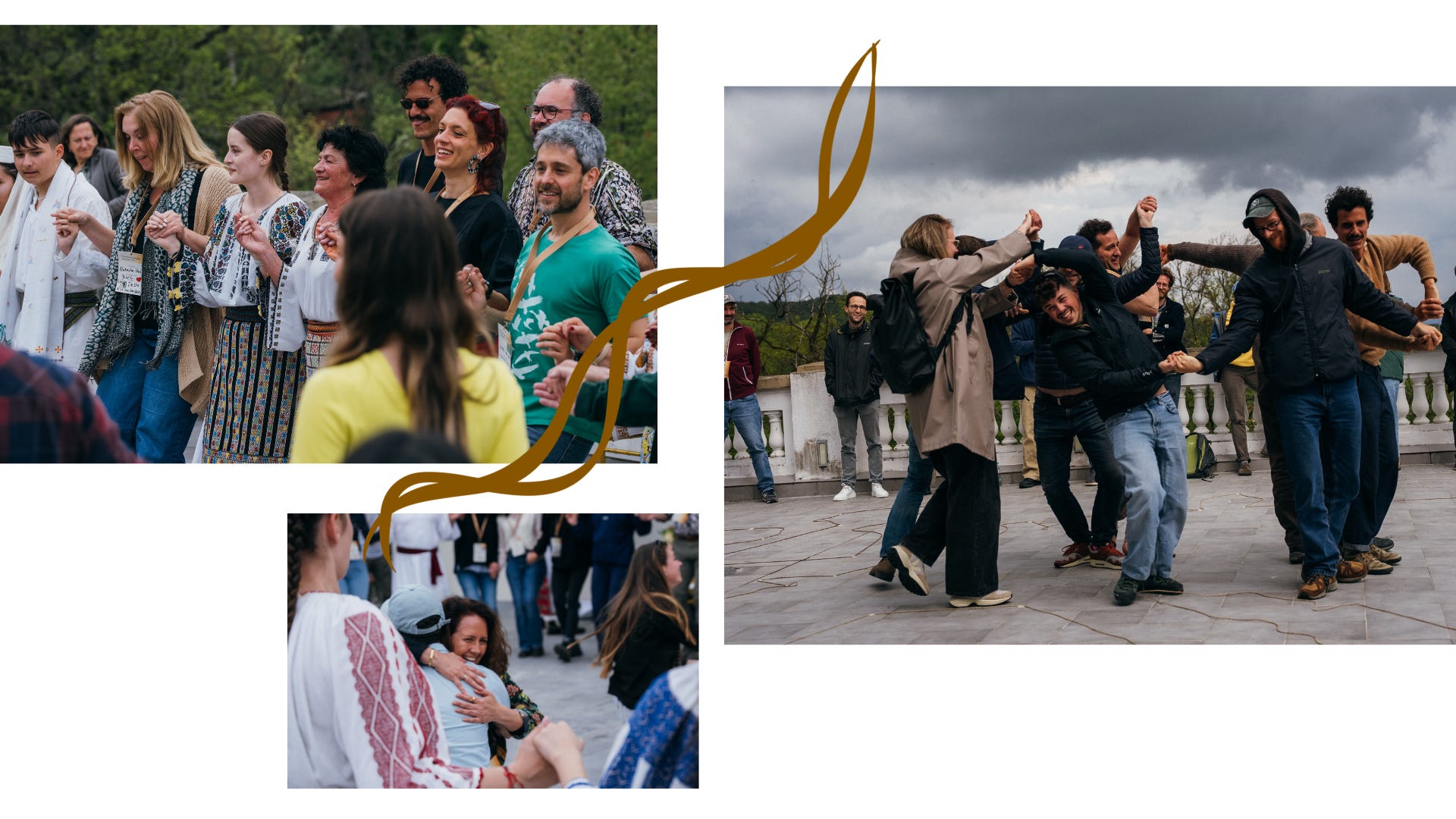
As landscape developer Pieter Ploeg reminds us, do not underestimate the importance of joy. For the leaders, changemakers, and weavers building Communities of Action for systemic transformation at the bioregional scale, the epic Balkan dance party reminded everyone such experiences are not a distraction from the work: it is part of the work.
As systemic thinker Indy Johar says, a good host does not try to control what emerges. A good host creates the conditions: emotional safety, physical beauty, temporal rhythm, and ceremonial markers that allow a group to access its collective intelligence. It is, in his words, “the careful construction of a context in which a group can think beyond the limits of individual minds.”
When the conditions are right, something changes. It is hard to put into words, because it is not mainly a matter of intellect. It is about synergies and emerging relationships. It is something you feel.
Shared stories create opportunities for shared sensemaking. Through various formats, landscape practitioners and bioregional weavers shared stories and experiences: honest accounts of struggle, failure, new experiments, and the change created over time. In hearing another’s story, you recognise your own. The challenges from the different landscapes and bioregions reveal patterns: some are shared, some are systemic, and some point to areas the whole field must address, not just one territory, landscape or bioregion. This creates opportunities for those stewarding community-led, place-based restoration work to learn directly from others’ journeys, or to join hands and step into shared inquiry together
Slower, embodied learning opens different kinds of knowing. Learning here takes many shapes, and as lab designer & facilitator Zlatina Tsvetkova observes, there is a deep hunger for slower, more embodied ways of learning: walking the land together, feeling the soil, sharing late-night conversations after dinner. This kind of exchange goes beyond emails, agenda items, corporate responses, managed conversations, or tidy action points. It makes space for thought that is relational, embodied, unfinished, contradictory, and alive.
Intentional structure enables building dynamics and relationships across scales. The summit allowed participants to shift between different scales through intentional groupings: large plenary sessions to sense the full scope of work, small groups of about 15 for deeper dives into specific themes where participants chose conversations that felt most relevant to the work they are currently navigating, and intimate daily “home groups” of 4-6 to foster the time and depth needed for vulnerability and real conversation.
Shared knowledge, inspiration and a sense of possibility expand collective ambition. What emerged from this time together was more than a set of concrete actions for each landscape to take forward in response to the questions they had arrived with.
It was something far more valuable: a shared recognition that challenges each practitioner had been carrying, around topics like governance and power imbalance, equitable access to capital, and cultivating forms of leadership that do not reproduce entrenched hierarchies, were not individual problems anymore. Instead, they could be discussed and addressed collectively among peers.
This realisation demonstrates the need for infrastructures beyond the transactional: cultivating the relational fabric that builds trust and collaboration, financial systems that support long-term resilience, and knowledge-sharing networks that foster learning across various contexts. Just as crucial, it underscored the need to grow the inner capacities, mindsets, facilitation practices, and ways of relating - required to navigate complexity and guide lasting systems change.
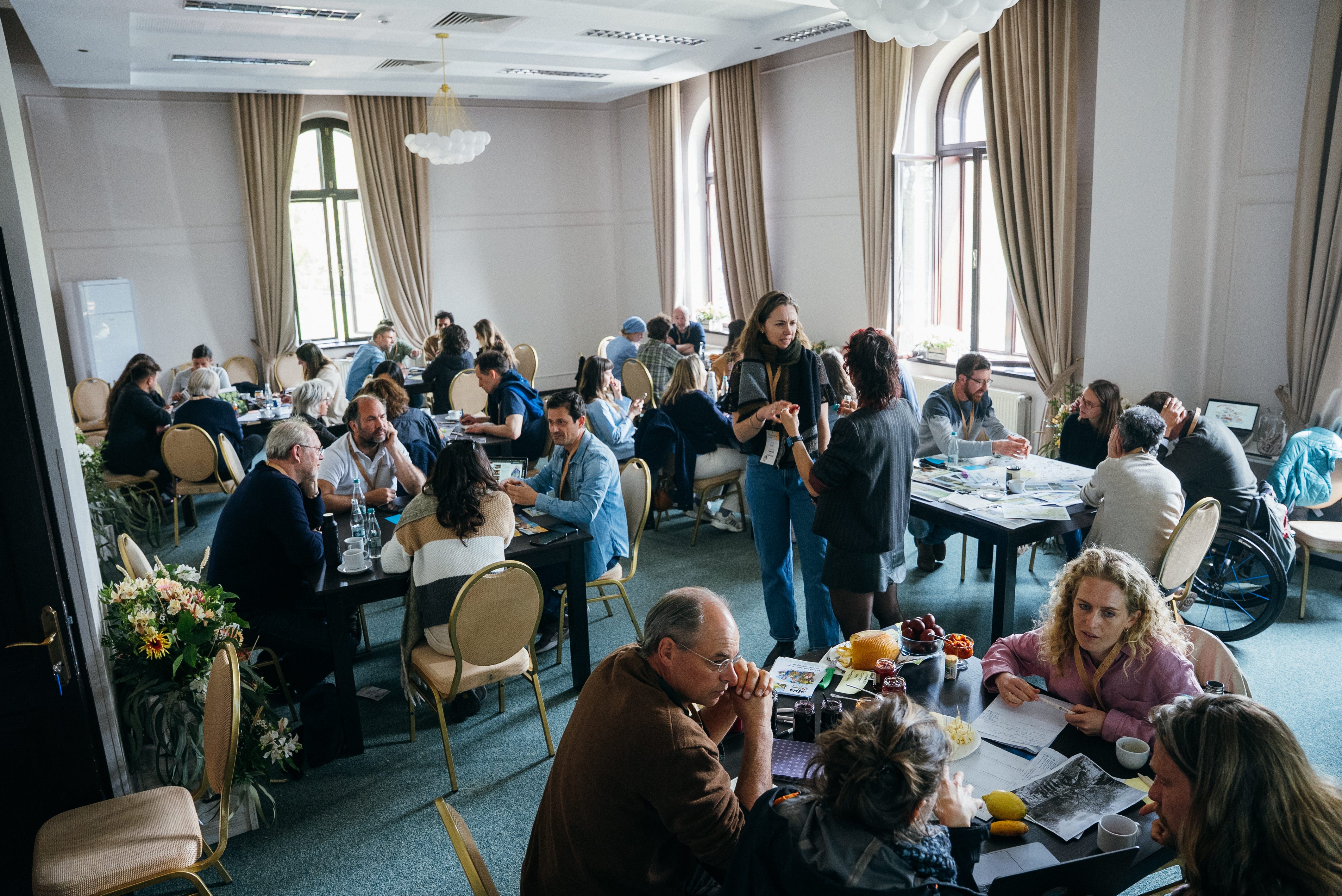
As Jeanne, weaver, reflected afterward: “We didn’t crack the subject. But the mere fact of putting it into words, asking questions together, making things visible… that means we will all carry more into our practical realities than we had before.”
At its heart, the Bioregional Weaving Labs exists to do what its name suggests: to weave. Creating conditions for the field to recognise itself. To grow more connected, more coherent, and more able to learn together across differences and distances.
Since 2022 BWL and Commonland have organised three of these European learning summits; in The Netherlands (2022), in Germany (2024, and in Romania (2026). They have the intention to keep organising these events every other year, in another bioregion.
After such learning summits we still hear from practitioners connecting with those they met in The Netherlands, Germany or Romania. They are the natural blossoming of relationships sown in four days of exchange, resonance and connection.
And the experience does not end with a learning summit. The events are embedded in the pan-European learning network BWL has established and will keep facilitating together with partners like Commonland. Frequent online sessions are being prepared, a chat group is being activated and opportunities for deeper collaboration are being explored. ,
This is the model we believe in: shaping the conditions for bioregional weavers and landscape practitioners to find one another, build trust, relationships, and carry each other’s work forward. Each remains rooted in their own place, yet all are part of a larger, living whole.
Comments
Nothing yet. Say the first thing.
Sign in to join the conversation.