
As the seasons turn, this edition brings together new stories, insights, and field reflections from across the Bioregional Weaving Labs.
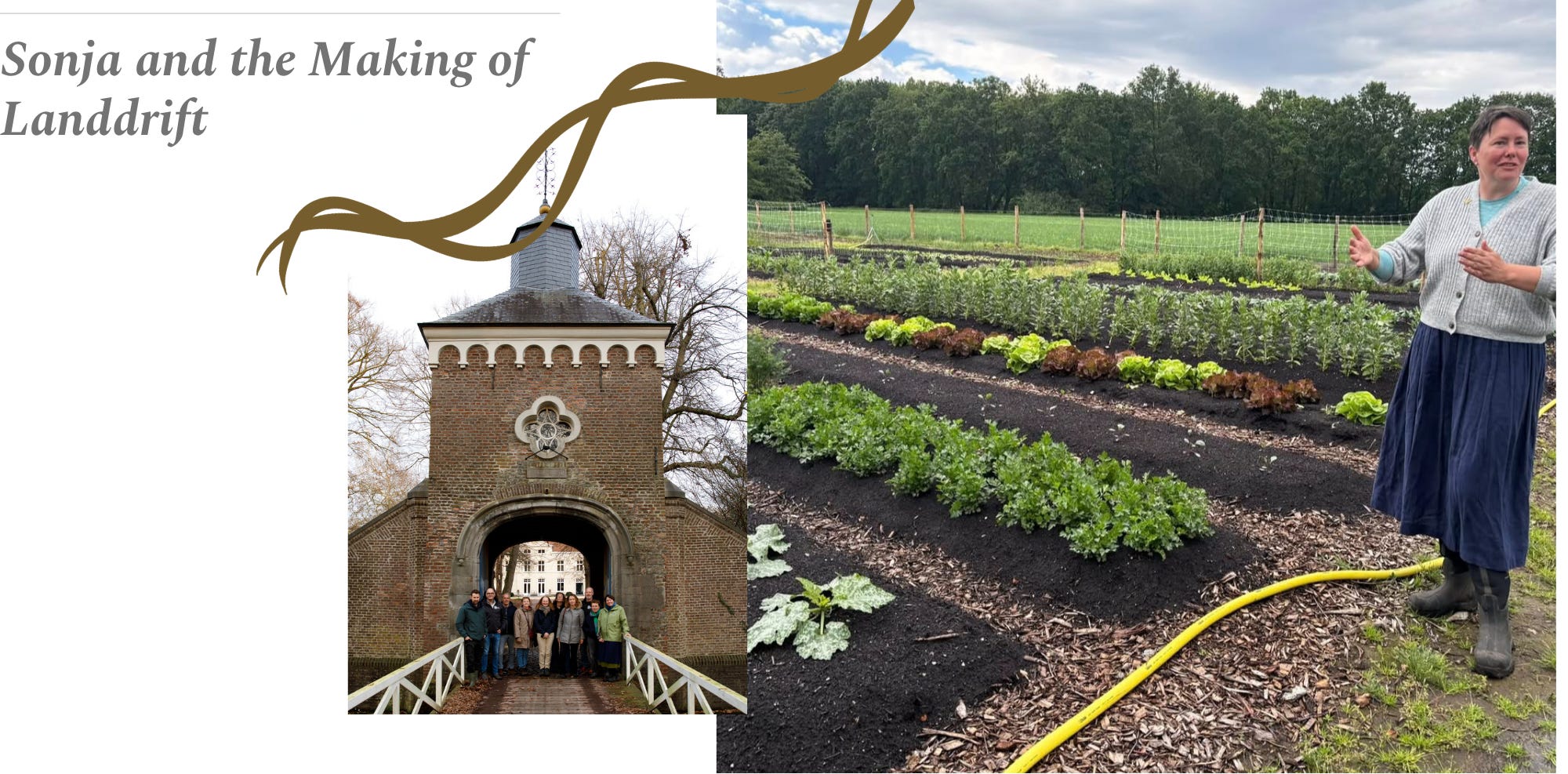
Sonja (Founder of Landdrift, Netherlands) spent a decade in Norway’s wilderness, learning to live without running water or wifi, before a strange twist of fate. Lost books and an accidental conference appearance sent her back to the Netherlands with a question that wouldn’t let her go: What does it actually mean to belong to a place?
The answer was rooted in sandy soil, practical, and dirt-under-your-nails real, far from the spiritual-retreat, ayahuasca-ceremony version many might picture.
That question became Landdrift, a radical experiment in the Dutch countryside combining tiny houses, food forests, and active nature restoration on land once used for intensive farming. But building it means confronting a much bigger tension: the story we’ve all inherited that humans are fundamentally the planet’s problem. Sonja rejects that story entirely. She believes we’re a keystone species: capable of regenerating ecosystems, not just damaging them (if we’re willing to show up differently).
Between planning law that hasn’t caught up with reality, investors who can’t stop sorting her project into tidy boxes, and years of self-funding out of her own savings, Sonja is living out the hardest version of her own philosophy.
This is the story of what it costs and what it might unlock, when someone decides to stop waiting for permission to build a different relationship with the land.
How the European Learning Summit in Romania revealed a regenerative movement hiding in plain sight
There’s a plant most of us walk past without a second thought. The dandelion. It doesn’t wait for perfect conditions. It pushes through cracked pavement and hardened ground, sending roots thirty centimeters deep to loosen soil and draw up nutrients that other plants can’t reach. Wherever it lands, the ground around it slowly comes alive.
In the spring of 2026, 80 of these dandelions found each other in the green hills of Romania.
They were landscape practitioners and bioregional weavers from across Europe, from Portugal’s forests to Scotland’s uplands, brought together for the European Learning Summit. A traditional Romanian wedding dance inaugurated the exchange between all those present before a single slide was shown or formal introductions were made.
Intimate “home groups” of four to six were built for real vulnerability. Slower, embodied ways of learning made room for the kind of exchange emails and tidy action points rarely allow.
What emerged went well beyond a list of next steps for each landscape to take home. Practitioners surfaced a shared recognition: questions of power, capital, and leadership are ground the whole field needs to tend together, not challenges any one person carries alone.
Curious what happens when context is carefully curated in which a group can think beyond the limits of individual minds?
Dive into the details of the European Learning Summit here. The dandelion metaphor draws on the
Water quenches human thirst, and the same water feeds every root, builds every forest, gathers into rain, and stitches the oceans into one body. It also reshapes life and land: the floods that swallow streets, the droughts that empty riverbeds, the rains that arrive all at once instead of in season. We have long treated water as a resource for us. It is life-giving, life-shaping, and life-threatening.
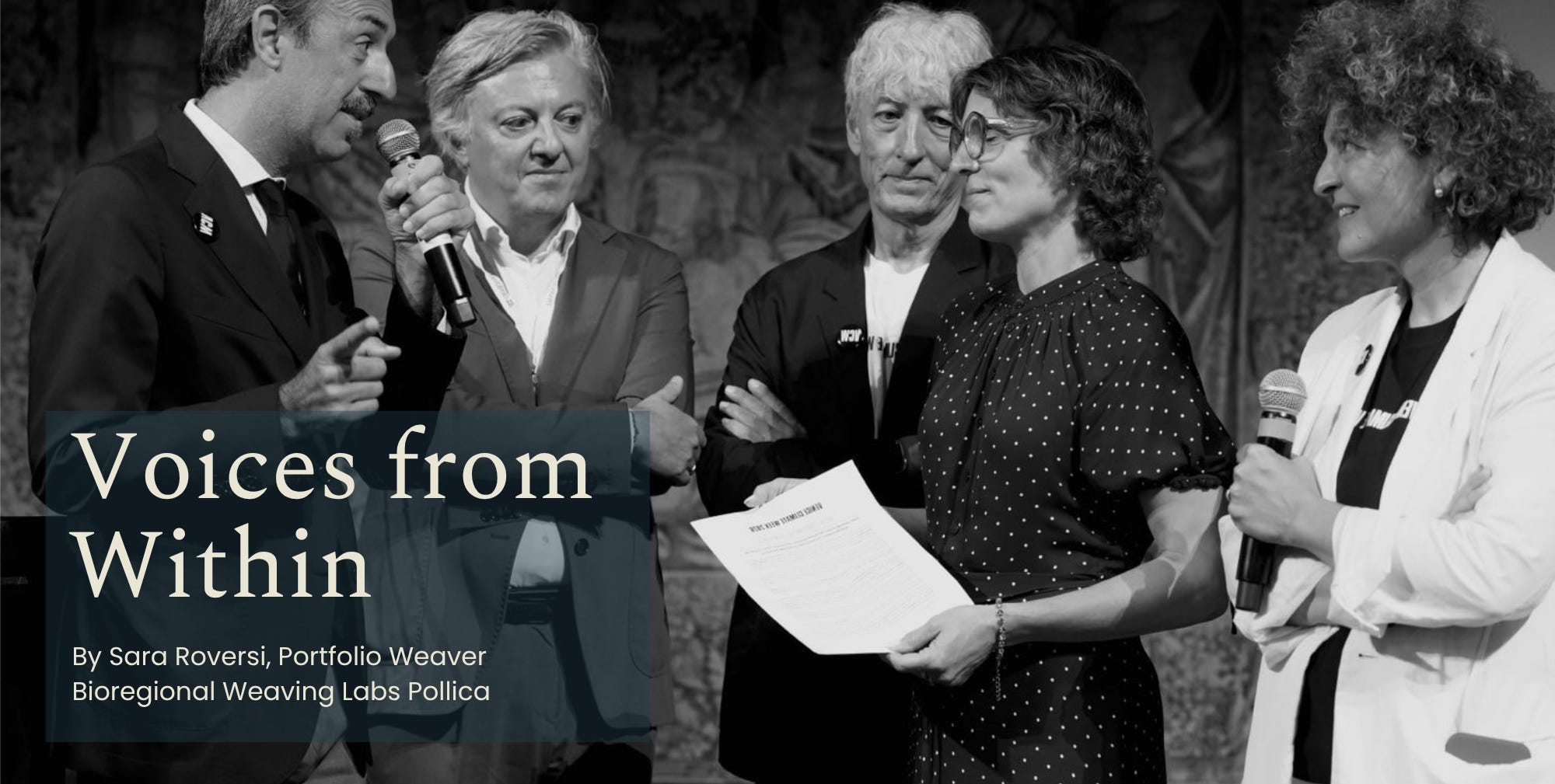
This duality is not new. Our failure to respond to it adequately is what feels new. It is also why bioregions have always organised themselves around watersheds, rather than around the borders we draw on maps.Venice: A Living Tension I can think of no better place to sit with that tension than Venice, a city that lives in a permanent The signals are getting harder to ignore. For a week, I watched scientists, mayors, commissioners, entrepreneurs and teenagers sit around the same tables and reach the same conclusion: water is no longer an ‘environmental issue’. It is the operating system of everything else. For decades we have called it a ‘water crisis’. In financial terms, the implication is unavoidable: a global restructuring of water debt is overdue. Madani’s message cuts through with clarity. It no longer makes sense to invest in restoring an outdated hydrological balance. The task ahead is harder and more honest: managing decline where needed, protecting what remains, reallocating demand, redesigning agriculture and industry, and making sure communities are not left to bear the cost of systemic overuse. Venice Climate Week became a live laboratory for this shift. It staged something rare: water democracy in action. The Beyond policy and frameworks, I saw powerful signals of action rooted in place. The The question that remains is implementation. How do we turn this new vocabulary and these high-level strategies into something that matters on the ground? One answer emerging from Venice is the idea of The vision is to pilot a small cluster of these communities, linked across regions, so they can exchange knowledge and align investment with real-world needs. In a world that constantly pushes us to stand out, differentiate, and compete, the real revolution is learning to build together. To take care of one another. To generate value that endures. To leave the world, our communities, and our institutions a little better than we found them.
Sara Roversi
Weaver, BWL Pollica
Follow me on LinkedIn · Read Sara’s Voice on Substack · Explore the work across BWL Pollica
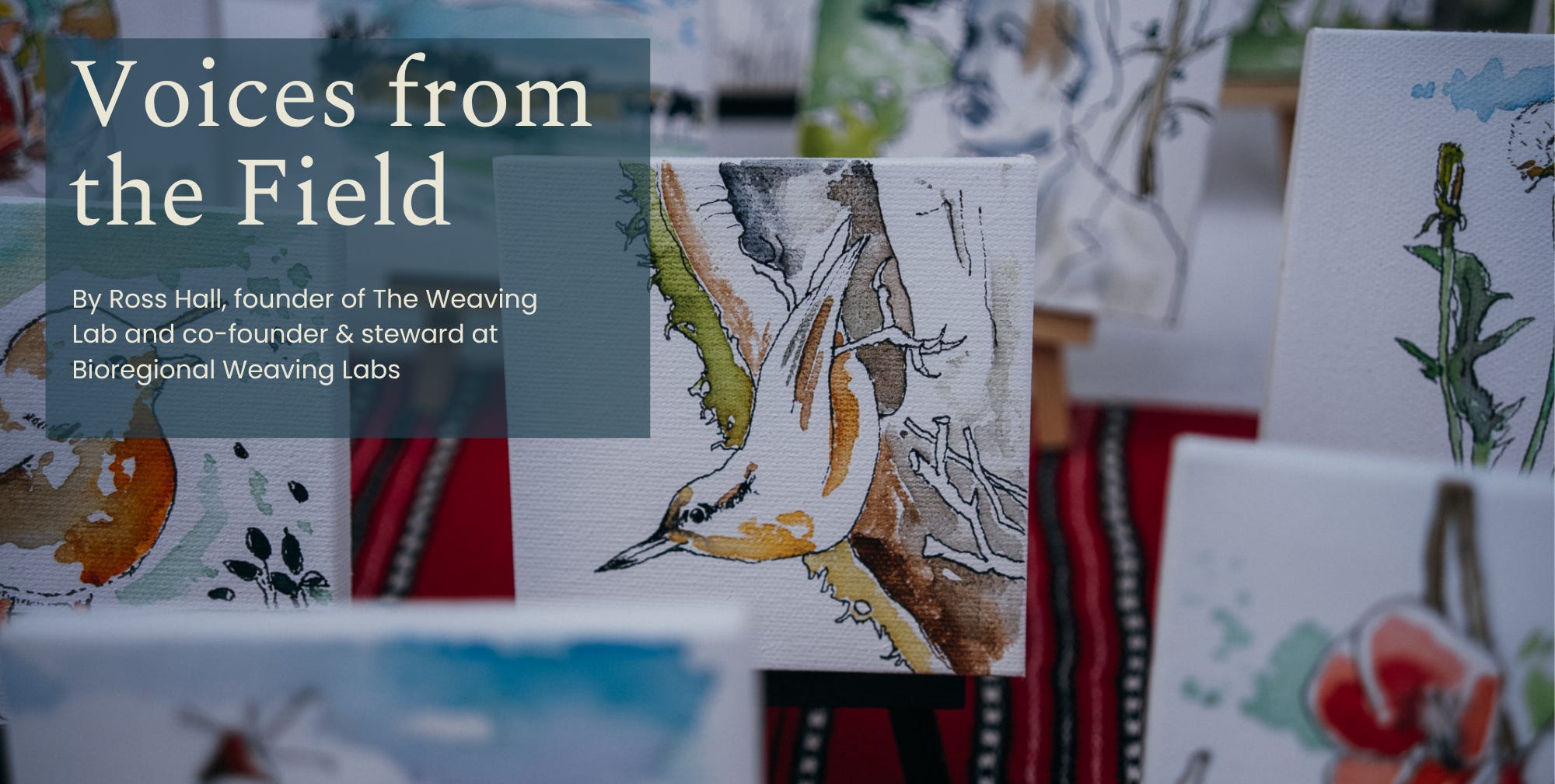
I had the pleasure of introducing Jeremy Lent’s Weaving Session recently and thought it might be interesting to share some of my reflections here.
Jeremy is author of The Patterning Instinct (2017), The Web of Meaning (2021), and Ecocivilization (2026). Through these books, Jeremy synthesises modern science and ancient wisdom to reveal our deep interconnectedness with each other and with the more-than-human world.
To me, this realisation is a profound gift because it expands our awareness from isolated things to include the relationships between things. In other words, it allows us to think ecologically. And beyond only thinking, it allows us to experience the world as the world.
This awareness practice is core to weaving (the practice of connecting people and projects in coherent and synergistic ways). Through the practice, weavers see fragmentation, atomisation and isolation in systems and understand that no single person, organisation, or solution can effect meaningful systemic change. Instead of asking “how might this solution scale?”, they ask “How can we strengthen the social fabric from which many, mutually reinforcing solutions can arise?” Weavers nurture trustful relationships among diverse actors and activities so that resources and learnings flow and coherence emerges across the system.
Take BWL Colina in Normandy’s Orne Watershed. What began in 2019 as conversations with farmers, cooperative leaders, and local entrepreneurs has grown into a cooperation hub of numerous organisations working across food, energy, carbon, reuse, and entrepreneurship. Each strengthens the conditions the others depend on, and together they make visible a portfolio of change that no single organisation could hold alone. That is weaving in practice: strengthening the fabric from which many mutually reinforcing solutions arise.
A second reflection from Jeremy’s session is that, while it may be easier to imagine apocalyptic futures, we do have it in our power to imagine positive (and realistic) futures. And imagining regenerative futures together is surely a prerequisite to moving together in that direction.
An essential weaving practice is therefore helping groups imagine regenerative futures and create shared narratives of how those futures can be realised. This is not to dwell in fantasy. Rather, these narratives become stories of change that allow groups to connect and coordinate real world portfolios of projects that are coherent and that, together, model better ways of living.
I believe that seeing our interconnectedness and activating our collective imagination are prerequisites to creating regenerative futures. Weavers therefore play an essential role, not because they hold the answers, but because they help create the conditions through which shared intelligence and coordinated action can emerge. In a time of fragmentation and apocalyptic thinking, weaving is the practice of embodying today a relational way of living that can lead us to a better tomorrow. Thank you, Jeremy, for helping us see that more clearly.
Jeremy Lent on weaving Eco-civilizations | Weaving Lab
Capital for regeneration is not as scarce as we often assume. Around the world, philanthropic foundations, public institutions, banks, and impact investors are committing billions towards climate action, and resilient futures. Yet less than 1% of international climate finance reaches the communities doing the work on the ground. Across Europe’s bioregions, the people restoring landscapes, strengthening local food systems, and stewarding ecosystems keep running into the same question: if the capital exists, why is it so hard to reach?
The answer has less to do with how much money exists than with the architecture it flows through. Conventional finance is built to fund single organisations, discrete projects, and measurable returns. Regeneration works differently. It emerges through relationships, long-term stewardship, shared governance, and the slow weaving together of people, landscapes, and enterprises into living systems; work that stays invisible to traditional funding models.
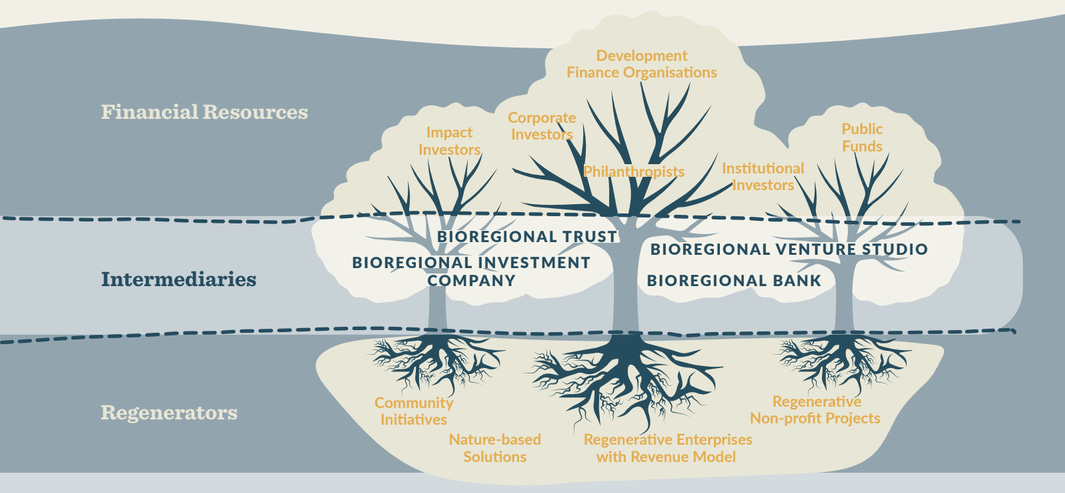
So what would it take to build finance that fits? Drawing on insights from Natasha Hulst and the development of a Bioregional Financing Facility in the Living Delta in the Netherlands, we explore why so many regenerative initiatives struggle even as investments in sustainability grows, and what becomes possible when we stop financing isolated projects and start cultivating the conditions for a whole bioregion to thrive.
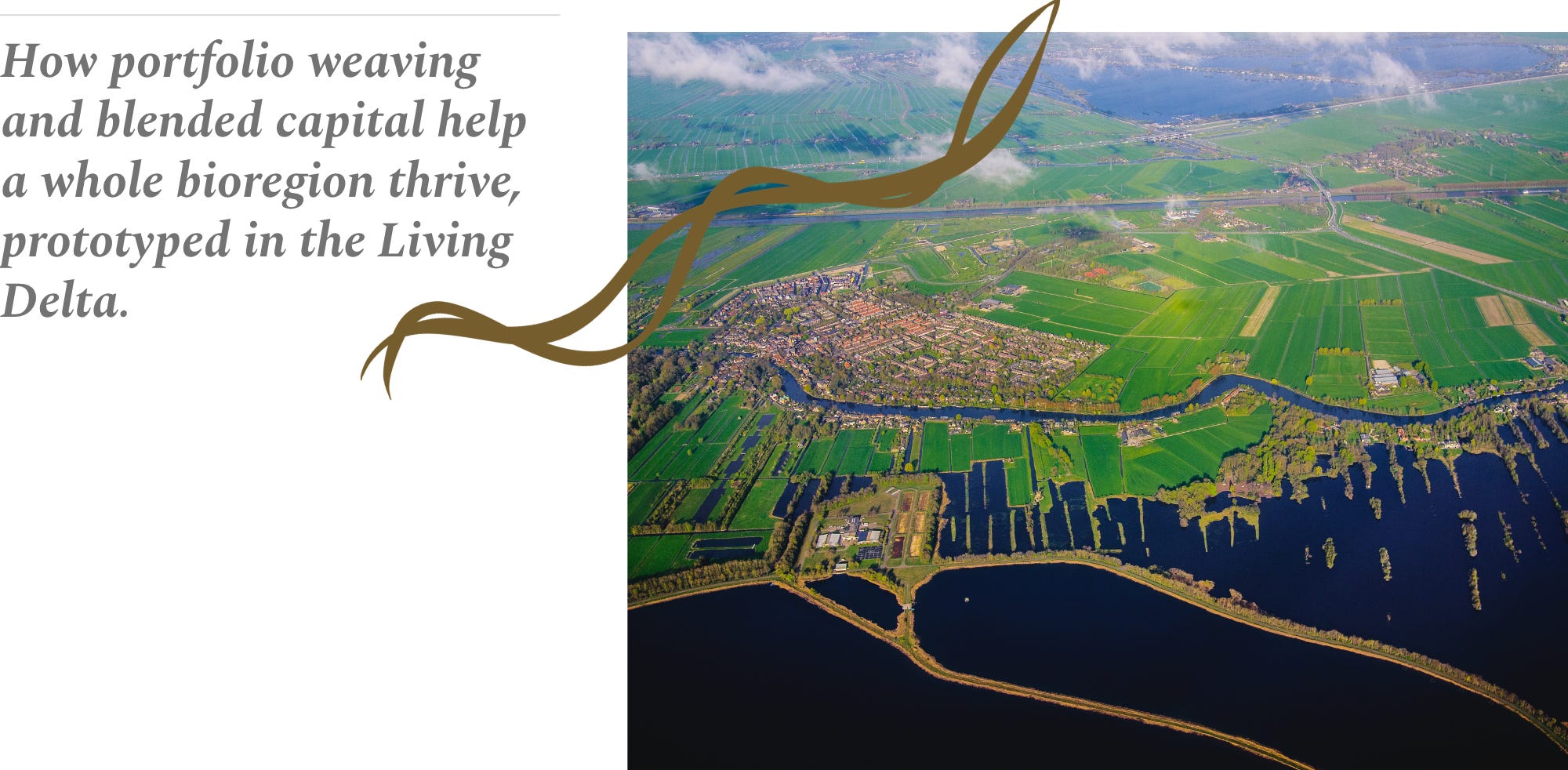
Most bioregions already have plenty of good initiatives at work. People restoring soil, rebuilding local food systems, looking after water systems, setting up community-owned energy projects. There are plenty of good ideas and ambition. The problem often is that capital has no way of seeing these efforts as one connected whole, so each initiative ends up competing on its own for funding.
This comes down to how conventional finance is built. It evaluates single organisations and individual projects, each judged separately on risk and expected return. But regeneration rarely works project by project. Instead, it grows out of people and initiatives working a landscape together, often over many years. The relationship building, the knowledge sharing, and the coordination that keeps all of this connected are usually the parts that matter most, and they are also the parts that funding models tend to overlook entirely.
Natasha Hulst and the Bioregional Weaving Labs, working through the ResiliAnce Partnership with Commonland and WireGroup,have been prototyping a different approach: a Bioregional Financing Facility (BFF), being tested in the Living Delta (the Netherlands). The full article looks at how portfolio weaving brings scattered local initiatives together into something genuinely investable, how landscape-level and Delta-level portfolios support each other, and how blended capital (philanthropic, public, and investment) can be channelled through that structure so a whole bioregion can thrive, rather than just its most visible projects.
What happens when the seeds of transformation are already growing in a place, but the systems designed to nurture them are missing?
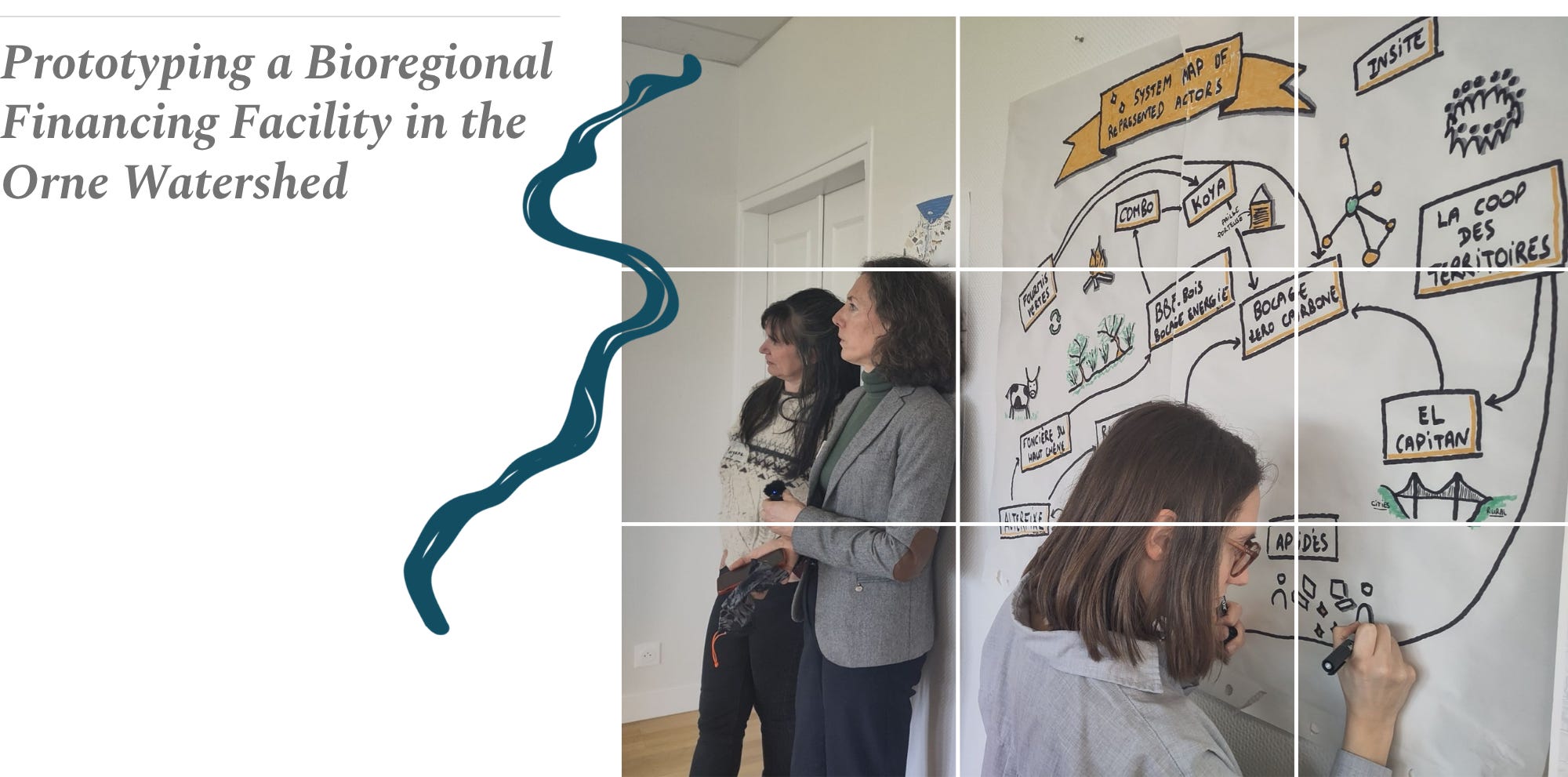
For seven years, a small team in Normandy’s Orne Watershed has been weaving together something rarely captured in conventional development models: trust, collaboration, and a shared commitment to place. What began in 2019 as conversations with farmers, entrepreneurs, and local organisations has grown into BWL Colina: a cooperation hub connecting initiatives across food, energy, reuse, carbon, and entrepreneurship.
Yet their journey reveals a deeper tension at the heart of regeneration: while communities are building the foundations for systemic change, existing financial systems are often unable to recognise or support the very work that makes transformation possible. The relationships, coordination, and collective infrastructure that hold a regenerative ecosystem together remain difficult to fund.
Through the ResiliAnce Partnership, BWL Colina is now prototyping a Bioregional Financing Facility: an experiment in designing finance around the needs of a living territory rather than forcing territories to fit existing financial models.
This story explores what happens when finance meets a community already in motion, and asks whether new forms of capital can help unlock the potential that places like the Orne Watershed have been quietly cultivating for years.
Across the field, people and organisations are advancing work that strengthens bioregions and the broader regenerative movement. Here are a few signals worth spotlighting.
Turtle Island Bioregional Congress
The 2026 Turtle Island Bioregional Congress (TIBC11) takes place 15-19 September at Camp Cedar Ridge in Vernonia, Oregon, within the Cascadia Bioregion. It marks the 11th continental gathering in a lineage of bioregional organising that stretches back more than four decades. Convened with leaders including Bill Baue of r3.0 (Redesign for Resilience & Regeneration), it brings together 300 place-based practitioners from across the continent. Rooted in ceremony, connection, and collective learning, the Congress aims to grow the movement, build capacity, and align on shared strategy. Together, participants co-create a Bioregional Action Toolkit. You are invited to register, join as a delegation, and help shape this collective moment.
A day of activation, with Joe Brewer and Penny Heiple
This autumn, Joe Brewer and Penny Heiple bring their European tour to the Netherlands, and Bioregional Weaving Labs (BWL) joins the programme at the Eemlandhoeve on 12 October, hosted by Proeftuin voor Transitieversnelling (Bioregional Learning Center) with DSRE.
In the morning, we share how BWL’s theory of change and six Strategic Pathways come to life on the ground. In the afternoon, we lead two workshops: one on portfolio weaving, one on bioregional financing. Together they open a practical view of how a bioregion builds regenerative economies from the roots up. BWL weaves across bioregions, and days like this are where that practice meets others doing the work.
The day gathers changemakers from across the wider field. If that is your work too, we would love to weave with you.
Read the full programme and register: Bioregional Activation Day
BWL Colina is looking for a Finance Weaver
BWL Colina is introducing a new role into the ecosystem: the Finance Weaver. Someone who helps connect local entrepreneurial realities with the often complex world of finance. Based in the Bocage Ornais, this role is all about weaving together trust-based, place-rooted financing solutions that truly serve the needs of the territory. From supporting members in navigating funding pathways to co-creating a collective financial tool, this is a unique opportunity to shape how capital flows in a regenerative, cooperative economy: a crucial step forward in strengthening local sovereignty and collaboration.
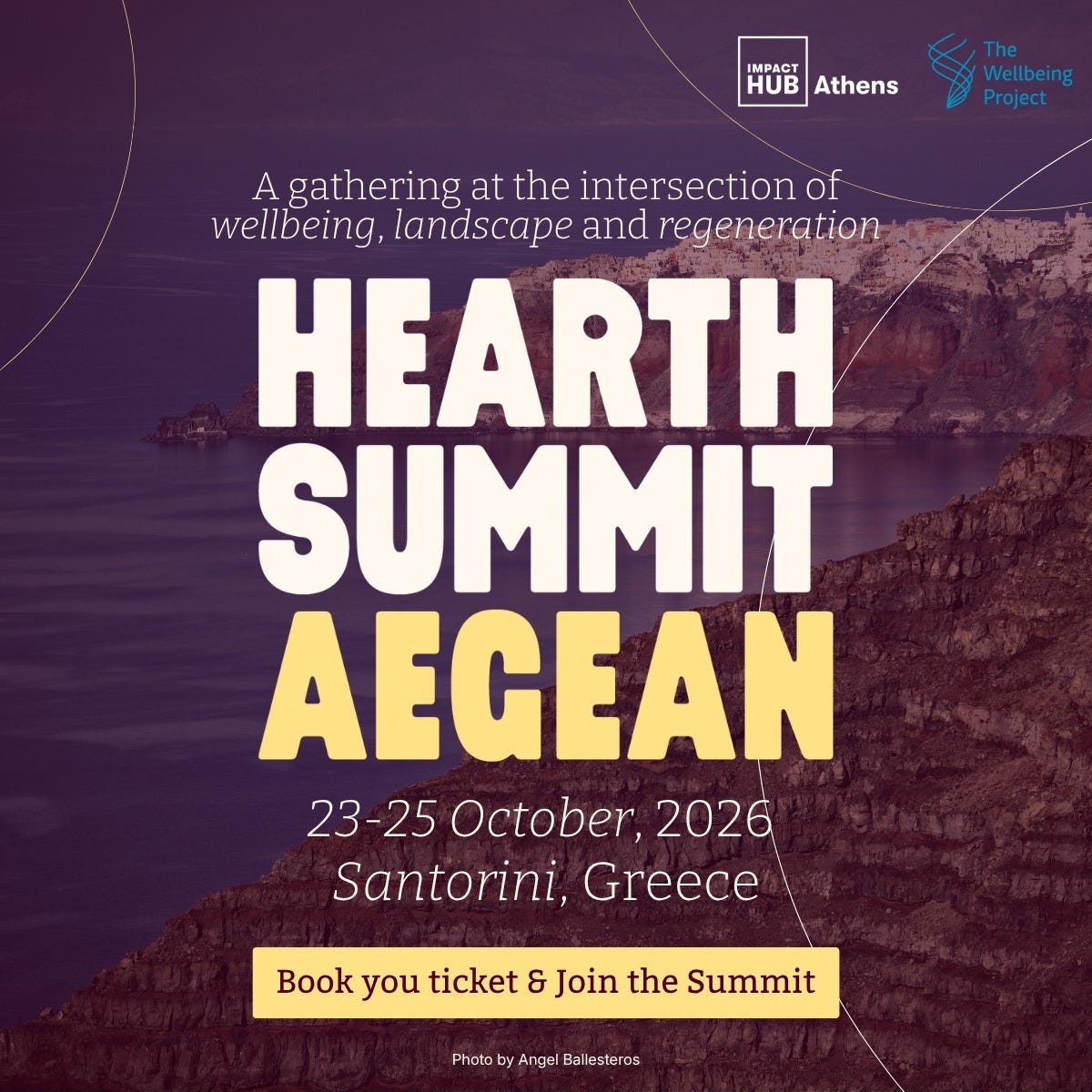
Hearth Summit Aegean 2026 | Santorini | 23-25 October
This October, Santorini becomes a place to reconnect with people, place and possibility; the place to ignite bioregional regeneration for the Aegean.
Hosted by Impact Hub Athens with co-creators including Sheila Darmos (The Southern Lights), Melina Dunham (ZYMOSI), Coco Francavilla (Music For the Sea), and Fabio Volkmann (Climate Farmers), the Hearth Summit Aegean gathers an international community of practitioners, researchers, creatives and systems changemakers. Across three days of co-creation, immersive experiences and collective learning they explore wellbeing, ecological regeneration and community resilience, inspired by the communities of the Aegean.
If you’re working at the intersection of wellbeing, regeneration, community and systems change in your territory or bioregion, this is a unique gathering rooted in place and shaped by collective learning.
Discover the programme & register.
At the Ecological Folk High School in the Mid Vistula River Valley, Ewa’s agroecology course offers more than practical skills: it invites students into a deeper process of reconnecting with themselves, others, and the living world. Rooted in experiential learning, the programme supports young people to “learn by doing,” engaging with ecology, community, and personal development as intertwined processes .
Rather than training farmers alone, the course nurtures individuals as active contributors to society, cultivating responsibility, cooperation, and a sense of agency through shared work and reflection.
The school is currently seeking support to keep this transformative experience accessible to youth in Poland and learners from around the world.
→ Read more about the course and student journey (pages 96-142)
→ Explore the pedagogy
→ Reach out to support and sustain this work
Looking back over these past months, it feels a little like watching seeds long held beneath the soil begin to surface. What was once quiet, patient work, often unseen, is now gently finding its way into the light, becoming visible in ways that invite others to notice, to connect, and to join.
This season, we opened a more visible home for the movement. Our brand new website offers a place where the wider field can begin to sense the whole: what we are part of, where we are working, and the Strategic Pathways that are gradually taking shape. Alongside it, our Substack has given the work a living voice, carrying stories, reflections, and learning directly from those inside the Labs.
At the same time, the work has begun to meet the world in new ways. Together with Commonland, we co-held the second European Learning Summit: an invitation into shared learning and a growing sense of momentum for regeneration across landscapes and bioregions. We also brought bioregional weaving into wider conversations at WEF (Davos), ChangeNOW (Paris), Katapult Future Fest (Amsterdam), and Venice Climate Week, opening new relationships and possibilities with partners and funders.
Beneath what is visible, something steady is strengthening. Partnerships are deepening in ways that feel more rooted and enduring. The work around financing is beginning to gather real momentum, with the Bioregional Financing Facilities and the Headwater Flow Fund starting to take clearer form. Across Europe, the map of Systemic Innovations continues to grow, revealing how much is already alive and in motion. We are beginning to share this through the Portfolios of Systemic Innovations on the website, with the Colina Portfolio as an early, living expression. There is a growing sense that we are part of something much larger than any one place.
And throughout it all, across each bioregion, Weaving Teams and Communities of Action continue to hold the daily work, thus creating the conditions that make all of this possible.
Looking ahead, the next season carries a sense of openness and intention. In early September, the Cilento bioregion will host a threefold gathering, bringing Cohorts, Partners, and Funders together to listen for what wants to emerge next. The work on Developing Financing Mechanisms and the Annual Cohort Program continues, supporting more places to access both the resources and the relationships they need.
And on the horizon, there is a shared orientation: toward 2030, where a growing movement of Labs is nurturing regenerative economies, held and supported by a network of Bioregional Financing Facilities. It feels less like a distant goal, and more like something we are already, slowly, stepping into.
Thank you for weaving with us.
We invite you to explore our new website.
- On behalf of the Bioregional Weaving Labs
If something in this edition stirred a thought or a feeling, we’d love to hear from you — and feel free to pass it on to someone who would resonate.
A New Cycle Begins
Subscribe to receive our upcoming Seasonal Weaving: From Spring into Summer newsletter, and learnings on our work on prototyping Bioregional Financing Facilities
Bioregional Weaving Labs
Weaving Communities of Action, Rooted in Place
Comments
Nothing yet. Say the first thing.
Sign in to join the conversation.