
Let me ask you something.
When was the last time your doctor tested your iodine or selenium levels?
If the answer is never — you are not alone. These two minerals are almost never included in a standard blood panel. Most people have no idea where their levels stand. And yet a deficiency in either one can quietly disrupt your thyroid, wreck your hormones, slow your metabolism, and leave you feeling like a completely different version of yourself.
I know this firsthand. I have been deficient in one or the other at different times — and I only found out because I pushed to get tested. Once I addressed it, the difference was significant.
Here is everything you need to know.
Your thyroid is one of the most important glands in your entire body. It produces the hormones that regulate your metabolism, body temperature, energy production, cognitive function, mood, weight, hair growth, heart rate, and hormonal balance. When the thyroid is not working optimally — everything downstream suffers.
And the two nutrients your thyroid depends on most are iodine and selenium.
Iodine is the primary raw material your thyroid uses to manufacture T4 and T3 — the two main thyroid hormones. Without adequate iodine, your thyroid literally cannot build these hormones. Production slows. Levels drop. And because thyroid hormone governs so much of your body’s function, the effects ripple outward into every system.
Selenium plays a different but equally critical role. It is the cofactor required to convert inactive T4 into active T3 — the form your body actually uses at the cellular level. Think of T4 as the raw material and T3 as the finished product. Selenium is the enzyme that does the conversion. Without enough selenium, you can have decent T4 levels and still feel terrible — because your body cannot activate them.
Selenium also directly protects the thyroid gland from oxidative damage, and research shows it significantly reduces TPO antibodies in people with Hashimoto’s thyroiditis — the most common cause of hypothyroidism in the developed world.
These two minerals work as a pair. Supplementing one without the other — or without knowing your levels — can actually make things worse. High iodine intake when selenium is inadequate increases oxidative stress in the thyroid. This is exactly why testing both before supplementing is non-negotiable.
Here is what deficiency in iodine or selenium can look like — and why it almost never gets connected to these minerals:
Chronic fatigue that sleep does not fix
Brain fog, mental slowing, difficulty concentrating
Unexplained weight gain or inability to lose weight despite eating well
Hair thinning or excessive hair loss
Always feeling cold — low body temperature
Depression, mood instability, low motivation
Muscle weakness and difficulty building or maintaining muscle
Irregular menstrual cycles and hormonal imbalance
Dry skin and brittle nails
Infertility or recurrent miscarriage
Elevated TSH on thyroid labs with no clear explanation
Every single one of these symptoms gets dismissed, misdiagnosed, or medicated without anyone ever checking the nutritional root cause. Women especially are told their labs are “normal” — when the problem is sitting right there in an untested mineral panel.
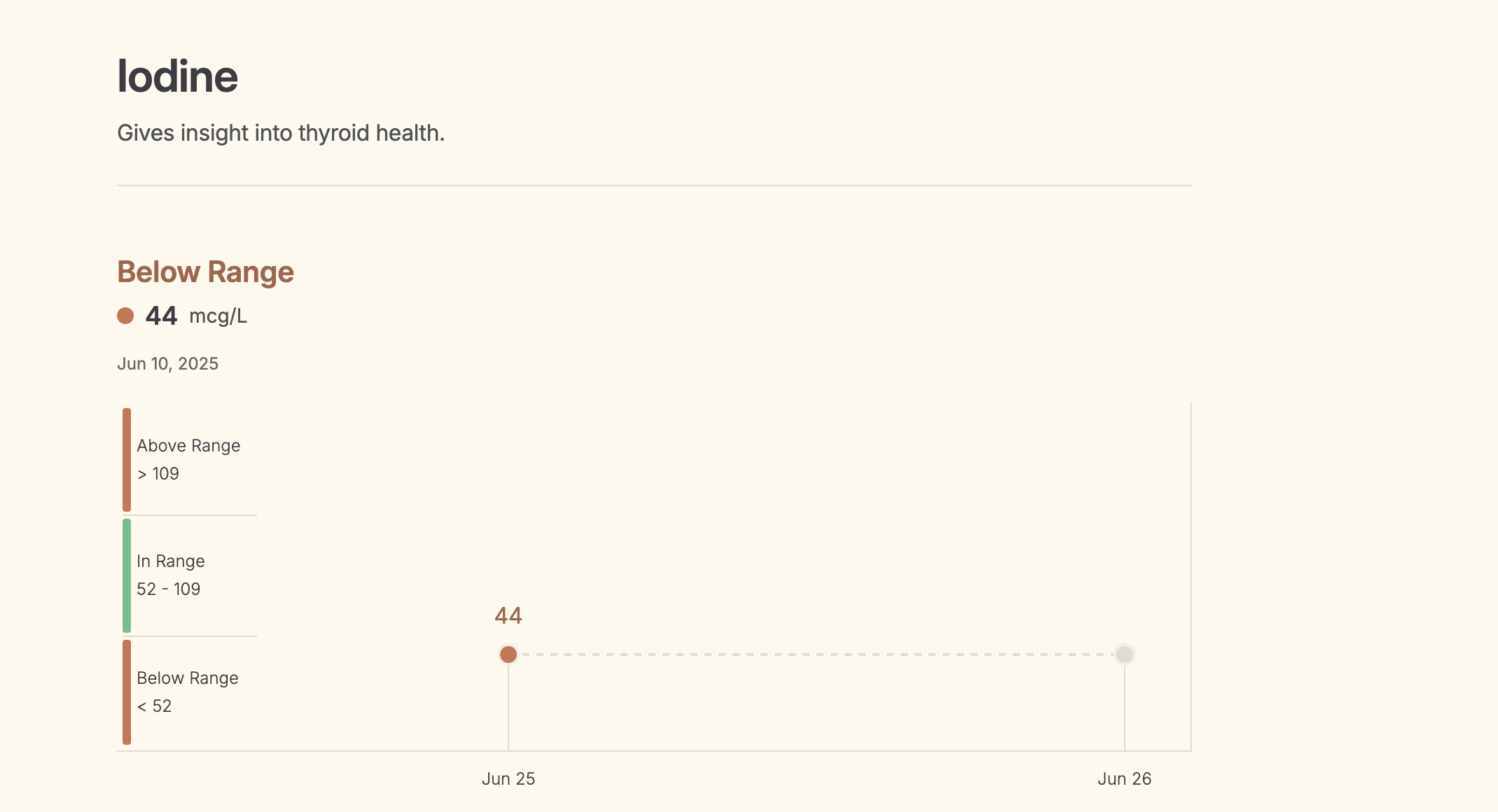
Iodine deficiency has been rising in the US for decades. After iodized salt programs largely eliminated it in the mid-20th century, iodine intake has been quietly declining again — for several reasons:
Most people are eating far less iodized salt and far more processed food, which uses non-iodized salt
Restaurants almost never use iodized salt
Sea salt, Himalayan salt, kosher salt, and specialty salts — including the high quality ones we use for health reasons — do not contain iodine
Vegans and vegetarians who avoid seafood and dairy are at particular risk
Pregnant women need 50% more iodine than non-pregnant women — and most prenatal vitamins still do not contain adequate amounts
A 2024 study found that 35% of women of reproductive age in the US have inadequate iodine intake. Another analysis showed iodine inadequacy has been continuously increasing from 2001 to 2018. This is not a developing world problem. It is happening right here.
Selenium deficiency is a different story in the US — it is less common domestically but far more prevalent globally, affecting over one billion people worldwide. However, because selenium content in food depends entirely on the selenium concentration in the soil where food was grown, and because climate change and industrial agriculture are depleting soil selenium concentrations across the world including parts of the US — this is expected to worsen over time.
People eating diets low in seafood, organ meats, and animal products are at higher risk. And those with compromised gut absorption — leaky gut, Crohn’s disease, or a history of gastrointestinal surgery — may not be absorbing what they eat regardless.
Here is the honest reality about testing that I want to be upfront about.
Function Health — which I love and recommend for comprehensive testing — does test over 100 biomarkers as part of their standard panel. But iodine and selenium are not included. They are part of an add-on nutrient panel that costs an additional $350. Which for many people is not accessible.
This is exactly why I went through my own doctor and used my insurance to get these tested. If you have insurance, this is absolutely worth requesting at your next appointment. Ask specifically for:
Serum selenium
Urinary iodine (24-hour urine is the most accurate measure for iodine)
Or a spot urinary iodine if 24-hour is not available
Also ask for a full thyroid panel — not just TSH. A full panel includes:
TSH
Free T3
Free T4
Reverse T3
TPO antibodies
Most standard thyroid tests only check TSH. But TSH alone can look normal even when free T3, free T4, and antibody levels tell a completely different story. Push for the full picture.
If your doctor will not order these, consider going through a functional medicine physician, a naturopathic doctor, or a service like Marek Health or Ulta Lab Tests which allow you to order your own blood work without a prescription.
Before reaching for supplements, food first — always. Here is where to find these minerals in your diet:
Iodine-rich foods:
Seaweed — nori, kelp, and wakame are the highest food sources of iodine that exist. The amount varies significantly by type and origin
Wild-caught fish and shellfish — cod, tuna, shrimp, oysters
Organic grass-fed dairy — milk, yogurt, and cheese contribute meaningfully to iodine intake
Eggs from organic pasture-raised hens
Selenium-rich foods:
Brazil nuts — a single nut exceeds the daily RDA for selenium. They are extraordinary sources but must be sourced carefully — Brazil nuts have a known mold contamination risk, so quality matters
Wild-caught seafood — tuna, sardines, halibut, and shrimp
Grass-fed beef and organ meats — liver is especially rich
Organic eggs
Garlic and cruciferous vegetables grown in selenium-rich soil
The challenge with food sources is that the selenium content of plant foods depends entirely on the soil they were grown in — and with soil depletion increasing globally, even a clean diet may not reliably deliver adequate amounts.
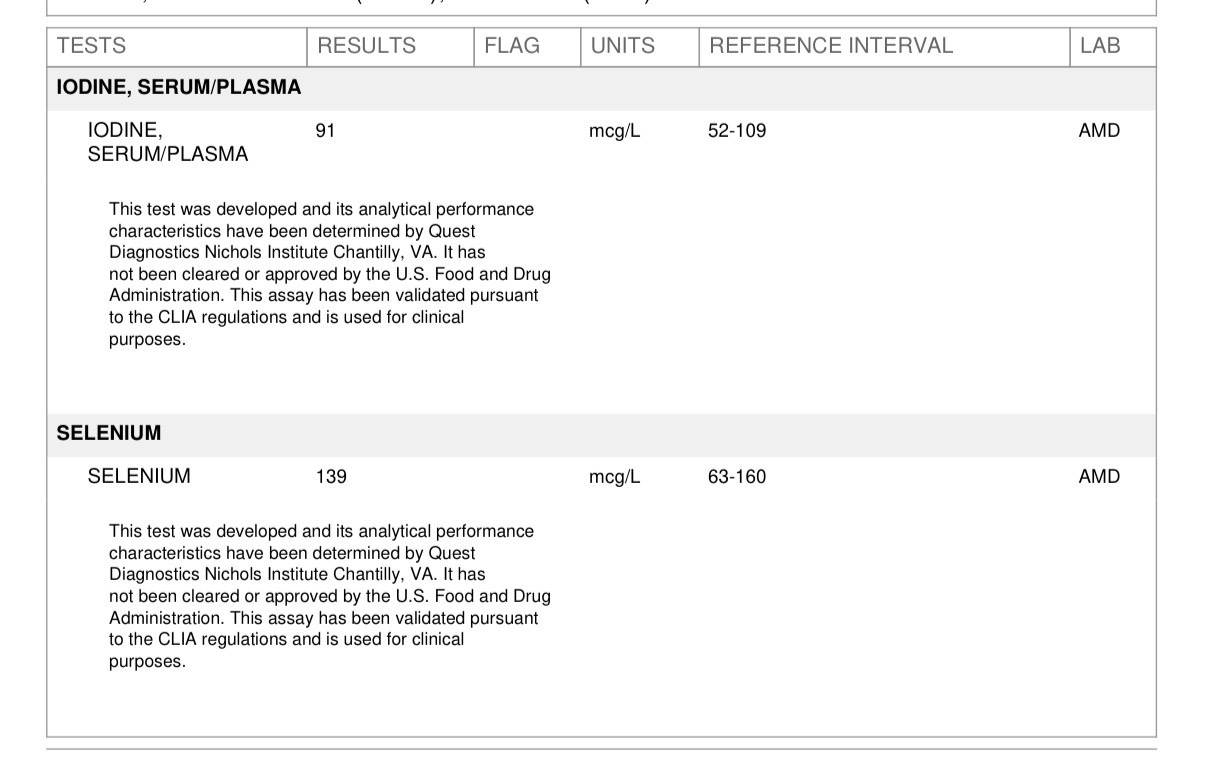
If testing confirms you are deficient, supplementation can genuinely be life-changing. I have personally experienced the difference — particularly with iodine — and seen it move markers significantly within weeks.
But please do this thoughtfully:
Iodine: Iodine drops is one of the most common supplemental forms — a liquid iodine supplement available in various concentrations. A few drops daily is a common starting point. Start very low and increase slowly. The goal is to bring levels into an optimal range — not to over supplement. Excess iodine can paradoxically suppress thyroid function and trigger or worsen autoimmune thyroid conditions, especially if selenium is not adequate simultaneously.
Selenium: Selenomethionine is the preferred supplemental form — it has approximately 90% bioavailability. A typical therapeutic dose ranges from 100 to 200mcg daily. Do not exceed 400mcg per day under any circumstances — selenosis (selenium toxicity) is real and causes hair loss, nail brittleness, nausea, nerve damage, and in severe cases, cardiovascular and respiratory problems.
The order matters: If you are deficient in both, many functional medicine practitioners recommend addressing selenium first or concurrently with iodine — because selenium provides the antioxidant protection the thyroid needs to handle higher iodine intake safely.
Retest: Give supplementation 3 to 6 months and retest to confirm your levels are moving in the right direction. Do not just keep supplementing indefinitely without monitoring.
What frustrates me most about iodine and selenium deficiency is how common it is and how rarely it gets identified. People spend years — sometimes decades — struggling with fatigue, weight gain, hair loss, and hormonal chaos, trying every diet and supplement protocol, and never getting to the root cause because nobody ran two simple tests.
We live in a world where standard medicine tests a very limited set of markers. If those markers come back in the “normal” range, you are told you are fine. But normal and optimal are not the same thing. And some of the most impactful markers — the ones that actually explain how you feel — are sitting outside the standard panel entirely.
This is why I believe in testing comprehensively, advocating for yourself with your doctor, going through insurance when you can, and not accepting “your labs look fine” as a complete answer.
Your thyroid is trying to tell you something. Test your iodine. Test your selenium. Get the full picture.
It might be the simplest thing you do this year — and one of the most important.
📋 Ask your doctor for serum selenium, urinary iodine, and a full thyroid panel at your next appointment — and use your insurance
🧪 Function Health — 100+ biomarker panel (iodine and selenium are available as a $350 add-on nutrient panel)
🌿 Add seaweed, wild-caught fish, and grass-fed animal products to your diet consistently
💊 If deficient — consider iodine drops and selenomethionine under provider guidance
🔄 Retest in 3 to 6 months to confirm your markers are improving
This post is for informational and educational purposes only and does not constitute medical advice. Always consult a qualified healthcare provider before beginning any new supplement protocol. Test before you supplement.
Jenny Jones is the host of the BiohackerBlondie Podcast and a functional medicine health coach. Follow on Instagram @biohackerblondie.
No posts
Comments
Nothing yet. Say the first thing.
Sign in to join the conversation.