
Last week I watched an intriguing video from 6th Gen Farmer titled: “I made my own fertilizer for my farm.” Carson, the farmer, described his experience with a machine called Green Lightning that produces fertilizer from thin air (which is 78% nitrogen) and a lot of electricity.
By passing air and water through an electrical plasma chamber, the Green Lighting machine simulates a lightning storm. Lightning energy in a storm breaks the strong triple bond that nitrogen (N2) has with itself. Once broken, it can recombine with oxygen and hydrogen to form nitric acid (HNO3) and further transforms into nitrate (NO3-) or ammonia (NH3) as the rain from the storm carries it down to earth. Lightning storms produce about 250,000 tons of nitrogen across the globe each year, and the Green Lightning machine aims to mimic that process for farmers.
Here’s Carson’s intro to his subject:
“As a young farmer starting my farming journey, I’m quickly realizing that there are certain things that I have to look at differently than a lot of other farmers do. And one of those is the increased prices in fertilizer and other inputs that are coming on our farming operation today. Fertilizer has really never been cheap. It’s always been a balancing game of trying to put enough on and not spending too much money. And especially now with the war going on in Iran, fertilizer prices are really high, especially nitrogen, and they don’t seem to be coming down anytime soon. And luckily, last year I took an initial investment and decided to start making my own nitrogen here at home. I’m going to show you guys today all about it and how I plan to utilize it on my farm.”
It makes total sense that farmers would want to try brewing their own. It’s a great American tradition, after all. If moonshiners made White Lightning back in the hills and hollers of Tennessee to free themselves from a federal tax on liquor, then why wouldn’t an Iowa farmer make a little Green Lightning to free himself from a geopolitical tax on fertilizer?
The question is, will it work?
I read some of the comments on Carson’s video and they ranged from: “it’s a total scam” to insights like this one from @zietsfarm:
As far as my research went on it, after speaking to farmers using it: 1) Best applied as a foliar from V8 onwards. Best and most efficient way to get nitrate into the plant is through the stomata. 2) Heard that in furrow results are poor because the bacteria will consume it immediately. 3) Storage in an air tight container is also very important as the nitrate can become NO2 again. Are you farming cattle as well? Apparently it works well as a foliar N source on pasture and cattle preferred the Green Lightning test strips of forage against other N sources. 4) Do brix readings if you can. 5) It is only a partial replacement. 6) use rainwater or 50 TDS water for best results.
Here are some hints for interpreting this info:
V8 refers to the vegetative growth stage of a corn plant where the eighth leaf collar is visible. It is a critical developmental milestone when the plant enters a rapid growth phase that determines its potential ear length — a good time to add some additional fertilizer.
TDS is Total Dissolved Solids, a measure of the combined concentration of all minerals, salts, and organic compounds dissolved in the water. Clean water is important for good results with the Green Lightning machine.
Other commenters said it would be more effective to piss in a tank and water the field with that.
Apparently the actual amount of nitrogen is difficult to measure, and there is confusion about whether it is in the form of nitrate, nitrite, or nitric acid.
Some commenters said that low pH means it is nitric acid. Others said that it is effective because unlike most forms of nitrogen that farmers use it is not a salt. Plants don’t generally care for salt. It inhibits their uptake of water, for one thing. Plants need nitrogen, but the form it comes in matters.
Nitrogen salts like ammonium nitrate are soluble and can easily leach from soil. One commenter on Carson’s video noted that tons of nitrogen can be found several feet down in the clay layer under many farm fields where it has leached from fertilizer applications over the years. One way to recover that nitrogen would be to use a plant like comfrey that has a deep taproot that can pull the nitrogen up to the surface. But that would mean fallowing the field for a year and economic pressures don’t allow that today.
Carson went over several field trials using the Green Lighting fertilizer and concluded that when and how it is applied makes a big difference. Applying it as a 50-50 mixture with UAN (urea ammonium nitrate) seemed to work pretty well and result in a similar ROI (return on investment) to using 100% UAN. That was in 2024 and 2025. With today’s higher prices (and rising), his Green Lightning investment could start making a difference.
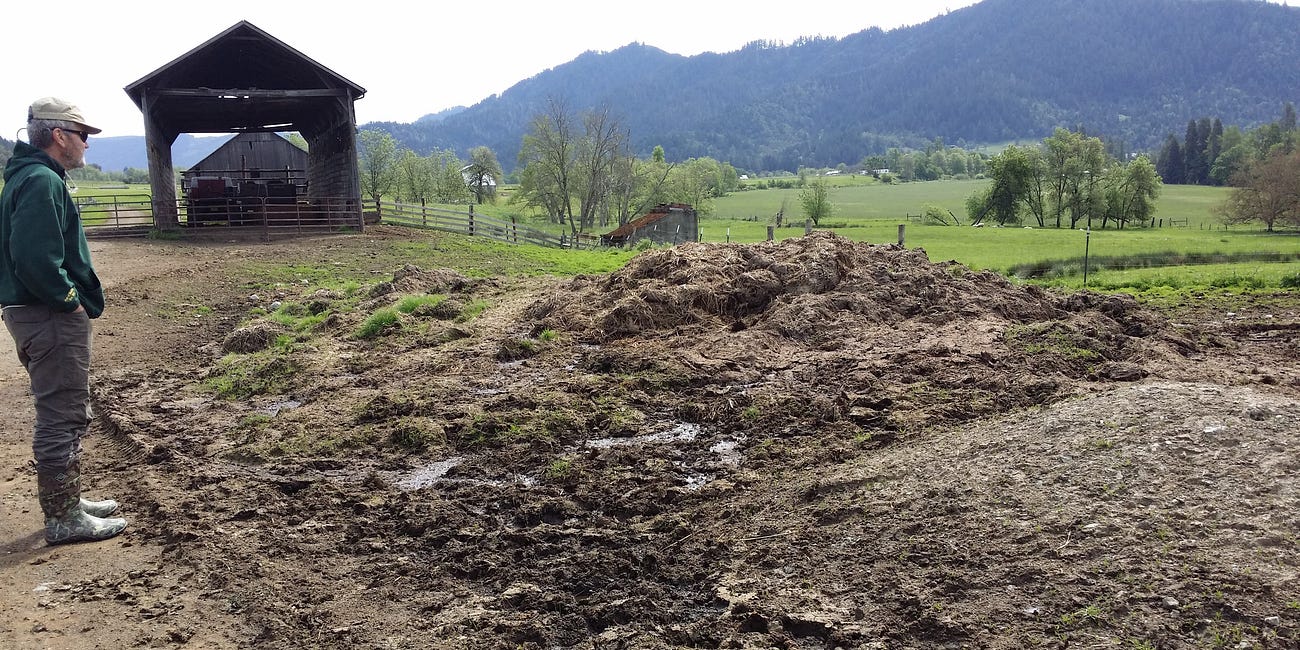
One thing he noted was that the field trials showed significantly better results where soils were higher in organic matter. I have to wonder how biochar might influence the results. We know that biochar works very well to stabilize nitrogen in soils so that less is lost to leaching and volatilization. See my previous post on my experiment with biochar and manure:
Save the Nitrogen
·
Apr 22
In my last post, I called the war on Iran a “wakeup call” for the world about our dependence on oil for fertilizers to grow our food.
I will be watching 6th Gen Farmer to see how his Green Lightning machine works out this summer. Maybe I will be able to convince him to try biochar on a strip in his field to see if that helps.
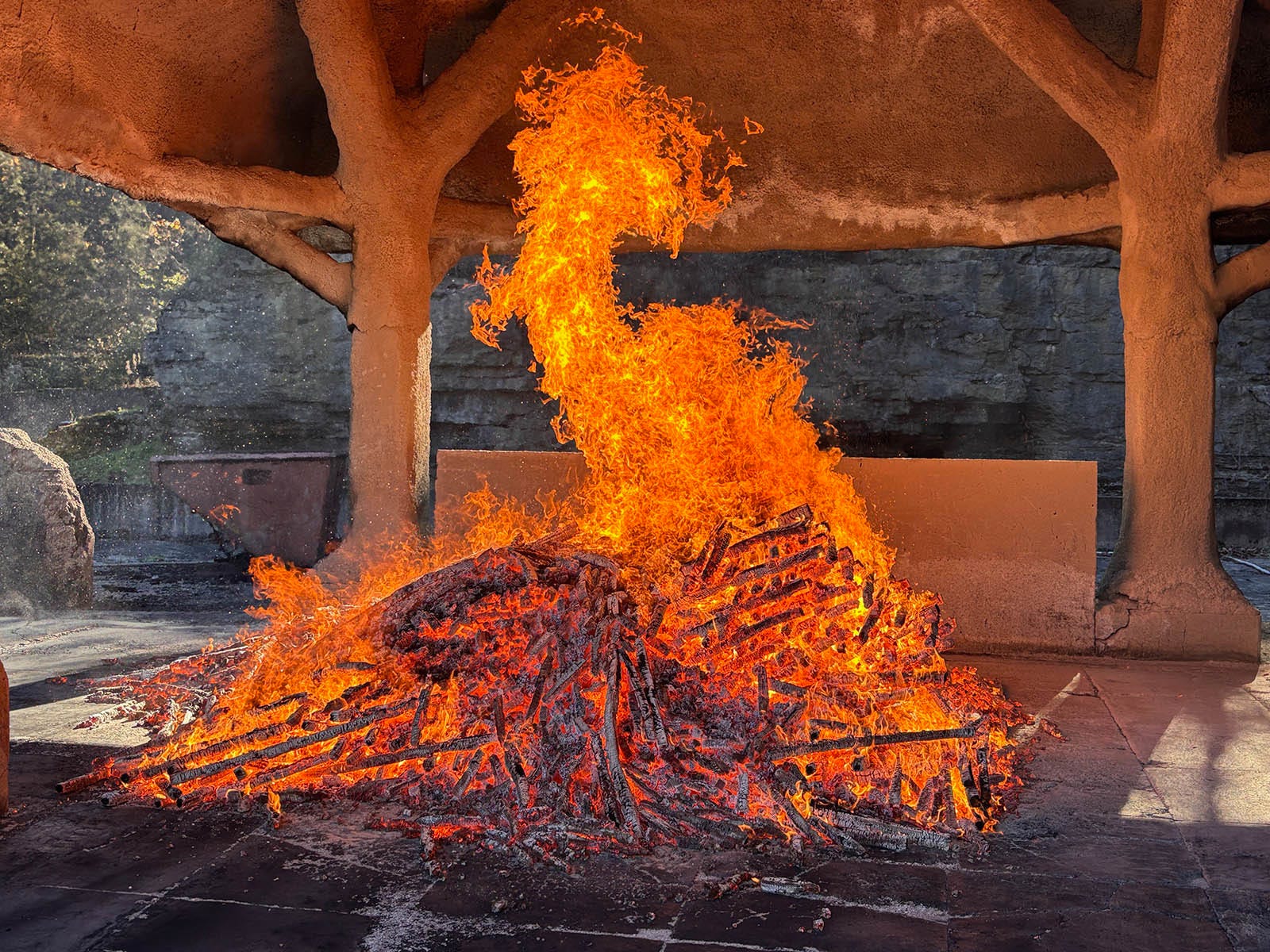
Biochar is another legacy from the Tennessee distillers. A lot of us biochar early adopters learned how to make our own from the example of the Jack Daniels Rickyard.
For over a hundred years, Jack Daniels has been filtering their whiskey with charcoal made from maple boards stacked in a rick and burned in the open air until the charcoal is formed. It collapses in a heap and then they water it till it cools and they make a good high temperature filter charcoal.
We took this example as our inspiration to make biochar in top-down burn piles and flame cap kilns.
Hey, 6th Gen Farmer — as long as you are experimenting, give biochar a go in your field.
While you are sipping your whiskey or other beverage of choice this evening, you might enjoy my latest interview with Leighton Morrison and Ken Somerville on The Soil Matters podcast. These two are always fun to chat with and we covered a wide range of soil and biochar topics.
Please, if you want to learn more about practical biochar tips and tricks for growing your own food, or you are interested in stewardship biochar for restoring natural ecosystems and biodiversity, check out some of my links below:
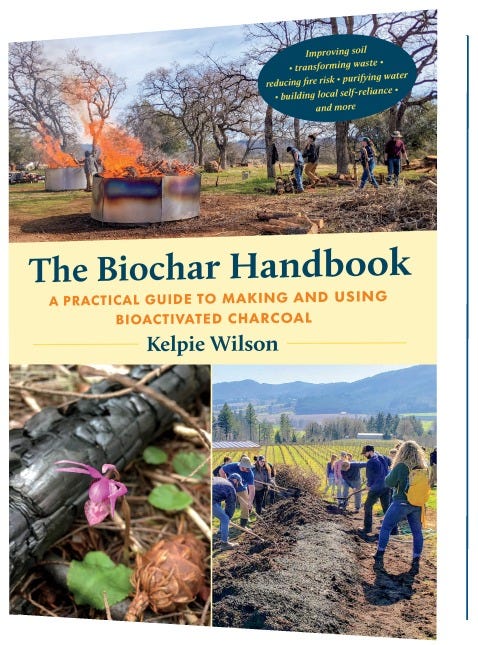
The Biochar Handbook at Amazon.com
The Biochar Handbook at Bookshop.org
Purchase Kelpie’s Practical Biochar Course
Order your Ring of Fire Biochar Kiln®: RingofFire.earth
Check out my YouTube channel: www.youtube.com/@KelpieWilson
Biochar On Site network for practitioners of stewardship biochar
No posts
Comments
Nothing yet. Say the first thing.
Sign in to join the conversation.