
March has been madder than usual this year for several reasons. The warm dry weather is depressing as I contemplate what summer could look like. Will we have enough water to grow our food? Will megafires once again threaten our homes and habitats? I found that I needed to accelerate my seed-starting schedule this month as everything started budding and blooming much earlier than usual. It’s a race to get it all going before we start drying up and baking in the heat.
Then there is the destruction in the Middle East and all the humanitarian horrors of bombs and missiles destroying schools, hospitals, homes, and the people inside of them. It can be hard to keep your spirits up when everything looks so dire at home and abroad.
The issue of fertilizer looms. With the Strait of Hormuz closed, will there be enough natural gas to make fertilizer? Will there be enough diesel fuel to run all the tractors and farm machinery? Friends in Australia are already seeing shortages and worried that fewer crops will be planted. We likely won’t starve here in the US, but food prices will rise, and those in other lands more dependent on Gulf oil and gas may see food shortages before the year is out.
All this makes me more determined than ever to pursue food security in my own little patch.
Looking at my dependencies, winter is the time I order seeds and stock up on the fertilizers that I use. While none of it comes directly from petrochemicals, all are delivered to me by diesel-powered shipping and all are products of oil-dependent agriculture, fishing, and mining. From agriculture, I use wheat and rice bran, feather meal, molasses, and alfalfa meal. From the sea, I use crustacean meal, kelp meal, and fish hydrolysate. From mines, I use azomite, gypsum, and basalt rock dust. The only inputs I produce myself are biochar, compost, and my own urine!
I also use metal, concrete, and plastic for the garden infrastructure including fencing, raised beds, and irrigation.
Is this sustainable? Probably not. But it’s a start and I can improve a bit more every year. It will be a process to return to sustainable agriculture and I can feel good about making even small improvements every year.
Seeds are one place to start. We save seeds every year and I have steadily reduced the amount I need to buy. Seeds that you propagate every year can come to adapt better to your local climate variations where they not only survive and thrive better than commercial varieties, but also give you a secure source of seed. These locally adapted seeds are know as landraces.
I got pretty excited about the broccoli I grew last year. The variety is called Umpqua - named for the watershed just north of the Rogue River watershed where I live, so it is undoubtedly already well-adapted to our climate. What impressed me most about this variety was the tremendous number of fat, juicy side shoots it started making back in the summer after the main stem was harvested. These six plants have giving me almost a pound of broccoli shoots every week since the summer and I am still nibbling on them now as I wait for all the flowers to go to seed.
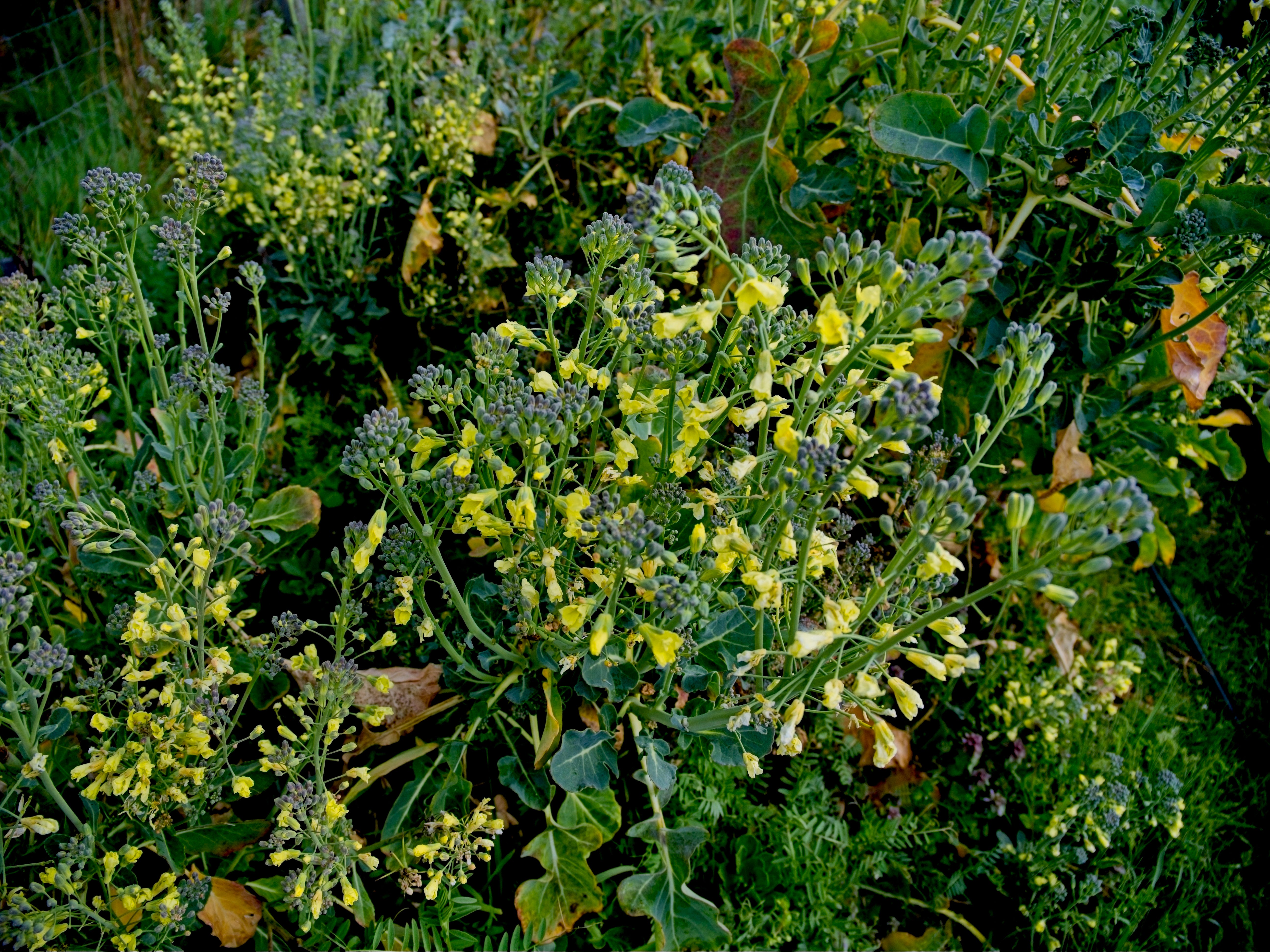
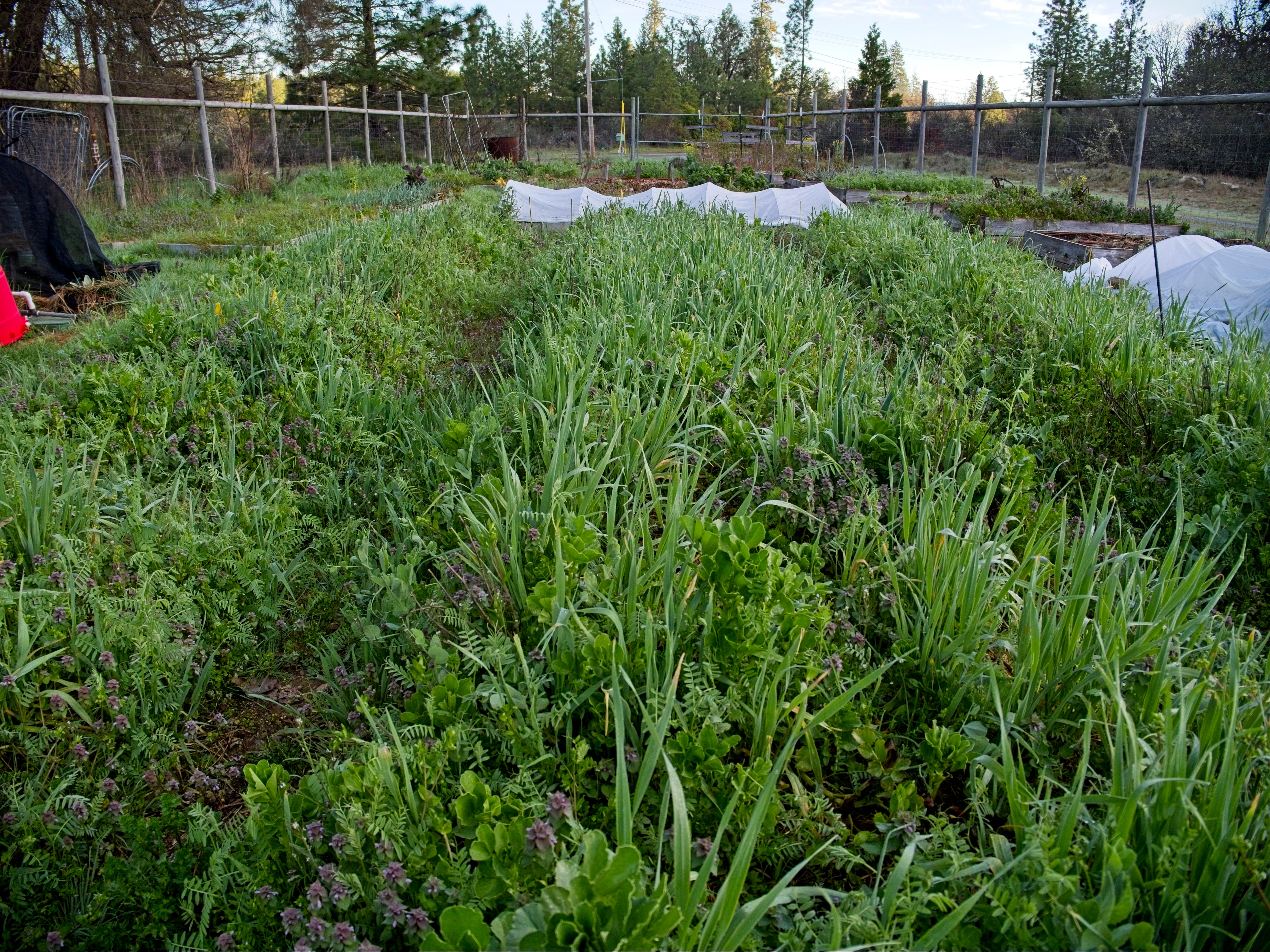
Another source of fertility for the garden is the cover crop. I did pretty well getting most of the beds planted in a mix of rye grass, vetch, faba beans, and field peas last fall that have been fixing nitrogen all winter. Biochar in the soil helps with that because it supports the rhizobia bacteria that do the job. But, cover crop seed is another thing I have to buy so let’s see how long I can wait before I need to clear the bed for the next crop. Ideally, I would harvest some seed for next year. These beds will be squash and melons, so they can can wait awhile.
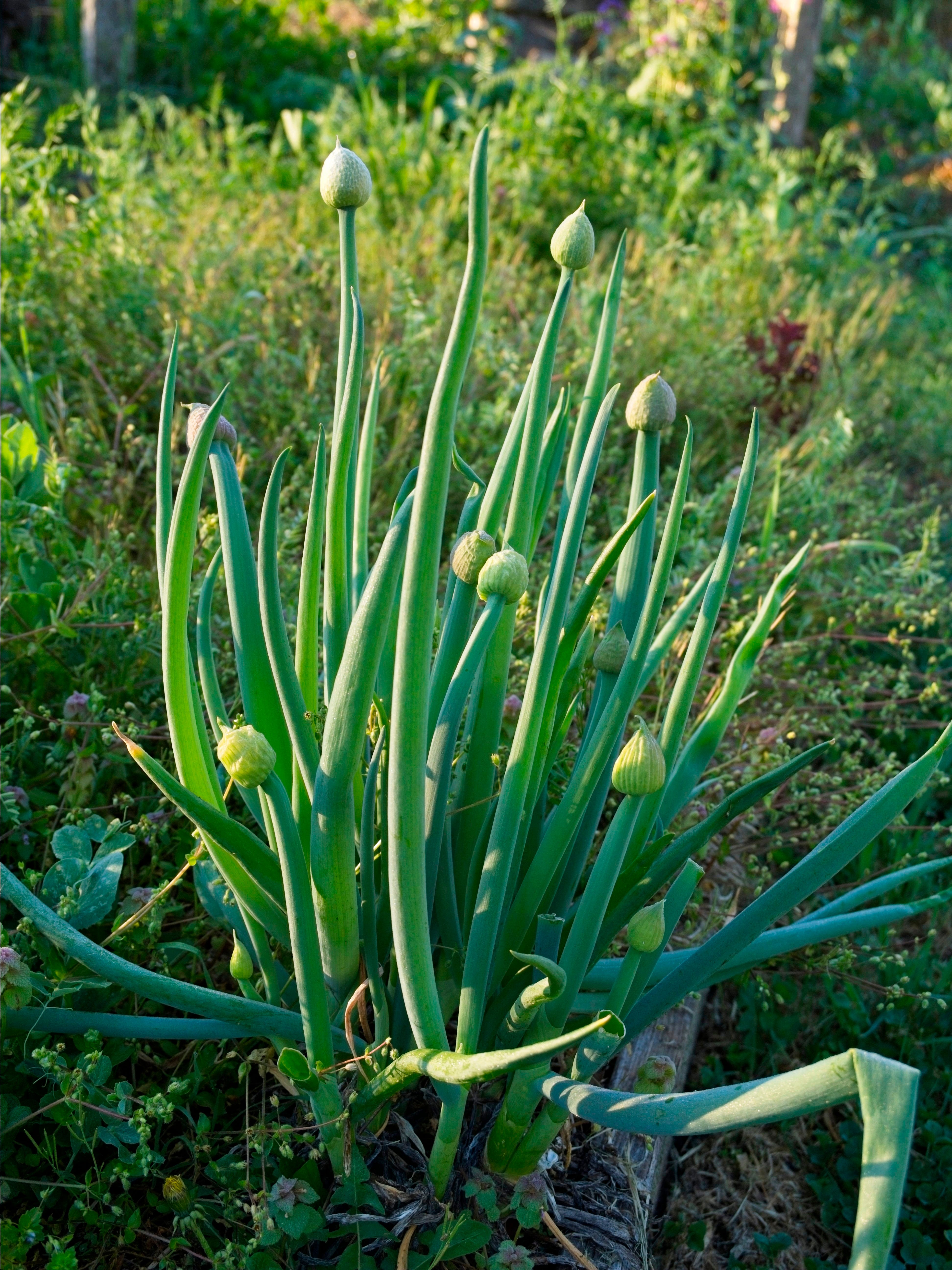
Onion seed is another landrace I am after. I really like the Patterson variety as it yields nice big yellow onions that are tremendous long-keepers. It’s an F1 hybrid, so it might not breed true to type, but I am going to try saving the seed and see if it can become a landrace here.
We live in interesting and challenging times. As the world resets to a new reality of less fossil fuels, we will all have to adapt. It is horrifying that our leaders are deploying weapons of war in the scramble for control of the final stores of energy, but the truth is that sooner or later we will have to do without fossil fuels and return to living a lot more like our ancestors did. Think of the current situation as a very loud wake-up call.
Here is how I put it in the concluding chapter of The Biochar Handbook:
Masanobu Fukuoka, author of the beloved book One-Straw Revolution, mourns the passing of the “one-acre farmers” of Japan, who only a few decades ago made up 70 to 80 percent of the Japanese people. He said:
Farmers at the time were said to grow a hundred crops. In the paddy field and vegetable gardens, they raised rice, barley, and other grains, as well as sweet potato and many different vegetables. Fruits ripened on trees next to the farmhouse, which was surrounded by a shelterbelt. A cow was kept under the same roof and chickens ran about loose in the farmyard, protected by a dog. A beehive hung from the eaves.
All peasants were totally self-supporting and enjoyed the richest and safest possible diet. That they are seen as poor and hungry may well reflect the envy of modern man more than anything else. People today have never had the experience of living independently by their own devices, so they [understand] neither spiritual nor material poverty and abundance.
Hold this vision in mind and do not despair for the future. We can return to the Garden of Eatin’ and we can start with what is right under our feet, wherever we are.
Please, if you want to learn more about practical biochar tips and tricks for growing your own food, or you are interested in stewardship biochar for restoring natural ecosystems and biodiversity, check out some of my links below:
The Biochar Handbook at Amazon.com
The Biochar Handbook at Bookshop.org
Purchase Kelpie’s Practical Biochar Course
Order your Ring of Fire Biochar Kiln®: RingofFire.earth
Check out my YouTube channel: www.youtube.com/@KelpieWilson
Biochar On Site network for practitioners of stewardship biochar
No posts
Comments
Nothing yet. Say the first thing.
Sign in to join the conversation.