
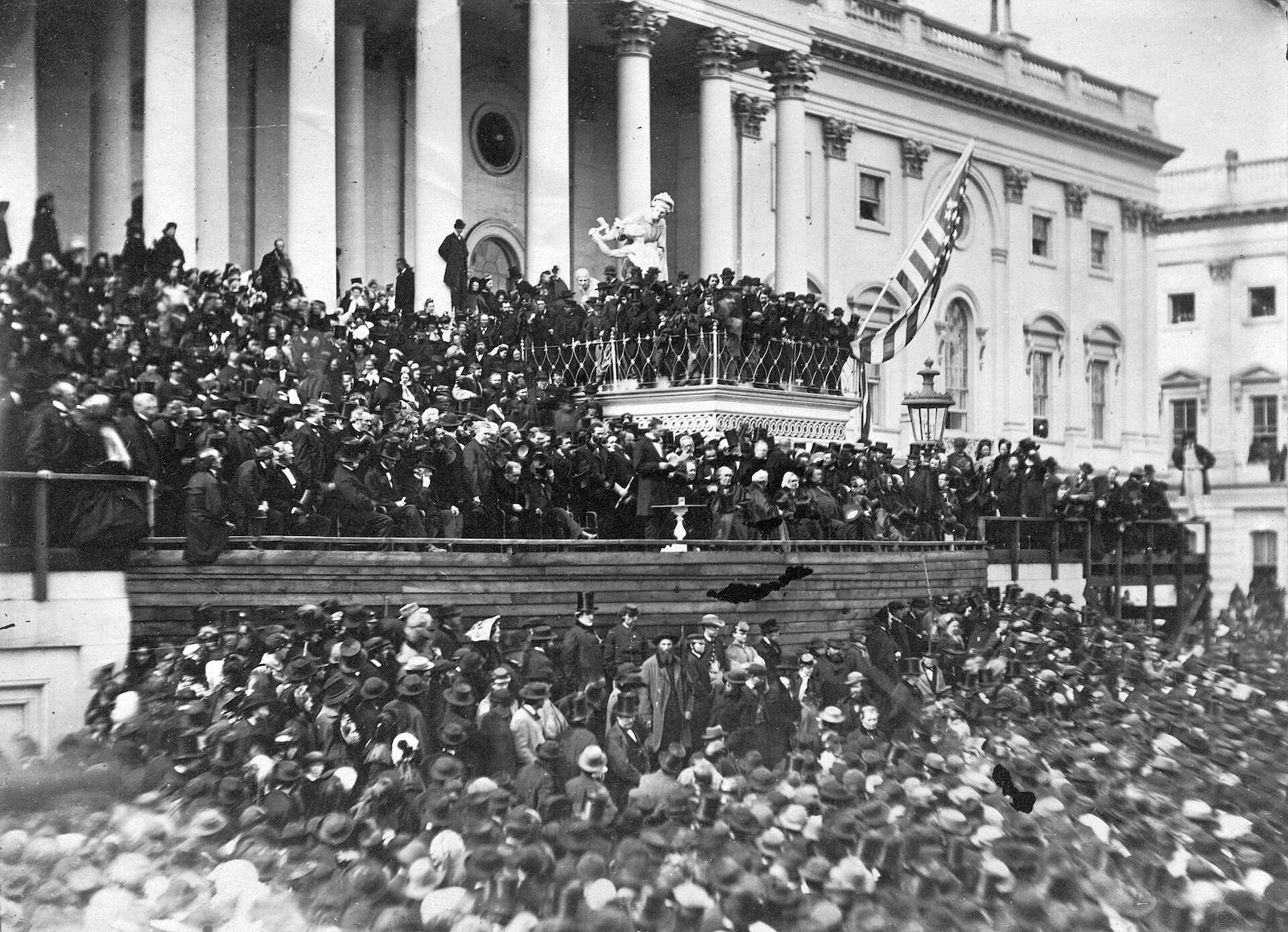
Today the United States turns 250. I am looking forward to the parade later this morning, the cookout this afternoon, and the fireworks tonight. And, as I reflect on what I love best about America, I’m thinking about an idea expressed not at our founding, but near the end of the cataclysmic Civil War we endured nearly a century later.
These are my favorite American words — the close of Abraham Lincoln’s Second Inaugural Address:
“Fondly do we hope, fervently do we pray, that this mighty scourge of war may speedily pass away. Yet, if God wills that it continue until all the wealth piled by the bondsman’s two hundred and fifty years of unrequited toil shall be sunk, and until every drop of blood drawn with the lash shall be paid by another drawn with the sword, as was said three thousand years ago, so still it must be said, ‘the judgments of the Lord are true and righteous altogether.’”
Consider when Lincoln said this. The North was near total victory. He could have claimed the high ground — we are righteous and they are guilty — but he does the opposite. Speaking to the whole country, he calls slavery not the South’s sin but America’s, an offense for which the entire nation is being made to pay in blood and treasure. Earlier in the same address he had said that both sides “read the same Bible and pray to the same God,” that “the prayers of both could not be answered,” and — most startling of all — “let us judge not, that we be not judged.”
He is speaking not as a conqueror standing over the defeated, but rather as a fellow sinner kneeling beside them.
And notice the severity underneath the mercy. Lincoln does not soften the evil of slavery to make peace easier. He submits to the possibility that a just God might require every drop of blood drawn by the lash to be repaid by the sword. He holds together two things that lesser men keep apart: an unflinching judgment about the wrong, and a refusal to exempt his own side from the reckoning.
Then comes the turn — the most famous sentence, and the one I love most:
“With malice toward none, with charity for all, with firmness in the right as God gives us to see the right, let us strive on to finish the work we are in, to bind up the nation’s wounds, to care for him who shall have borne the battle and for his widow and his orphan, to do all which may achieve and cherish a just and lasting peace among ourselves and with all nations.”
Malice toward none. After four years and more than 600,000 dead — malice toward none. Charity for all. At the height of his power, when retribution was his for the taking, Lincoln laid down the Christian ethic as the standard to which a broken nation should aspire: not domination but mercy, not revenge but the binding up of wounds and the care of widows and orphans on both sides.
It is the middle clause that resonates most deeply with me: “with firmness in the right as God gives us to see the right.” Lincoln does not pretend the war was a misunderstanding, or that right and wrong are matters of taste. Yet he adds a phrase of deep humility: as God gives us to see the right. He does not claim to see perfectly. He claims only to act, faithfully, on as much of the right as he has so far been given to see.
That, I believe, is the truest description of what it means to be American. We are not the people who already possess the right and impose it on others. We are the people who engage in constant self-examination — who keep straining to see the right more clearly, and to act on it more faithfully, than we did the year before. Our founding documents did not describe a finished country; they set down a standard we have spent 250 years struggling, and failing, and struggling again to live up to.
We have not always managed it. Reconstruction collapsed and left the freedmen to generations of injustice. And yet the impulse keeps resurfacing in our better moments. It is there, I think, in the way America, at the summit of its power after the Second World War, chose to rebuild Germany and Japan rather than exact retribution — charity for all, again, offered by the victor.
And did you spot this convergence? Lincoln spoke of “two hundred and fifty years of unrequited toil.” Today, we are celebrating the nation’s two hundred and fiftieth birthday. That echo reminds us that the American story has always held both things at once — the wealth and the wound, the pride and the penance — and that our greatness has never been in pretending otherwise, but in reckoning honestly and then choosing, anyway, to bind up the wounds.
So tonight let’s watch the fireworks with a full heart. And tomorrow, let’s strive on to finish the work we are in, “with firmness in the right as God gives us to see the right” — which is only ever a little at a time, and always, we hope, a little more than the day before.
Happy birthday, America. Here’s to the next 250 years of learning to see.
No posts
Comments
Nothing yet. Say the first thing.
Sign in to join the conversation.