
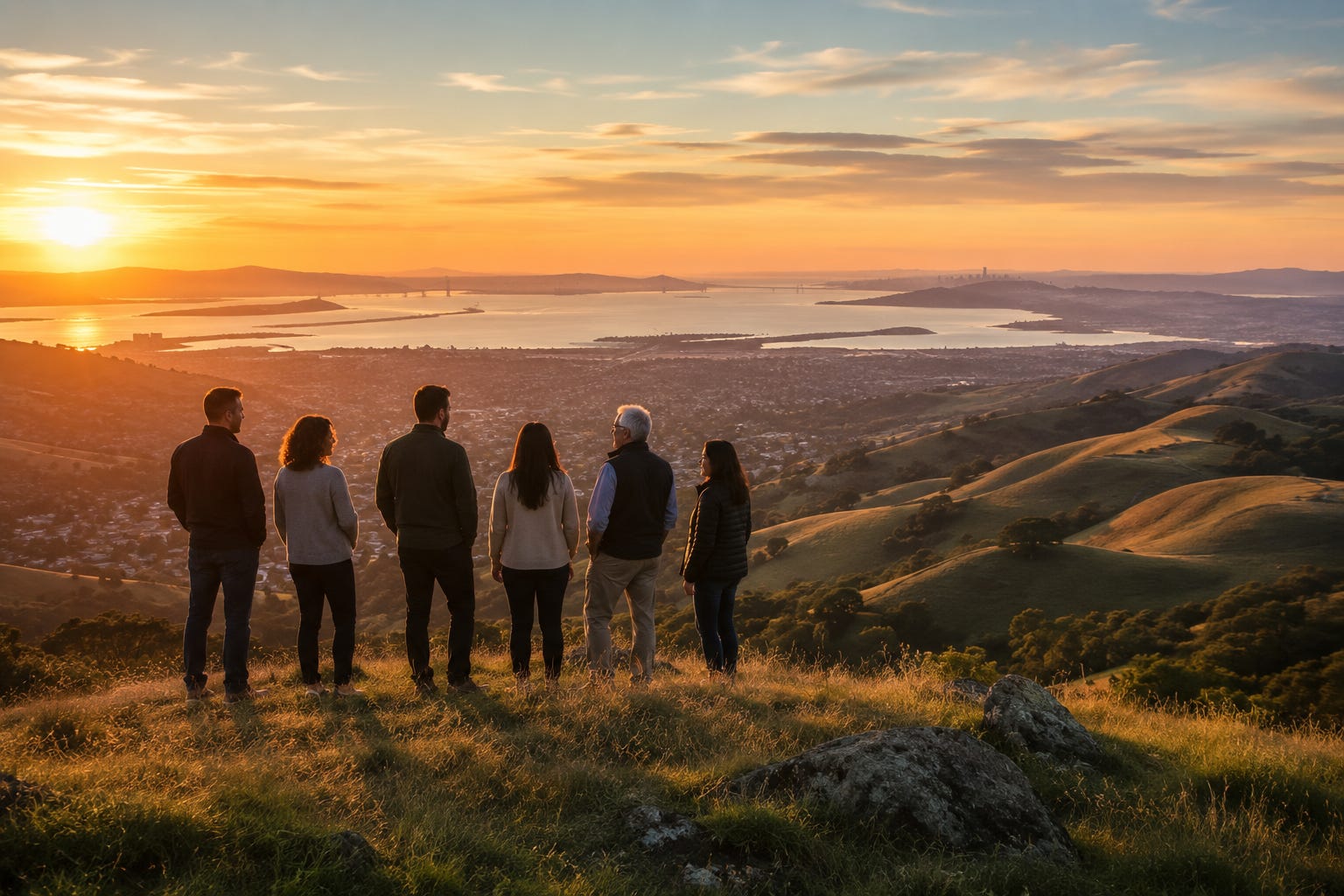
Over the past several months, I’ve hosted 18 dinners with more than 125 Republicans, No Party Preference (NPP) voters, and disaffected Democrats from across the Bay Area. Those conversations have demonstrated strong demand for a center-right movement that can broaden the range of policy solutions under consideration, restore healthy political competition, and improve local governance. To help advance that vision, I am launching a new organization: Frontier Republicans & Friends (“Frontier”).
The name is intentional. Each word reflects an important part of the vision: the spirit of the movement we hope to build, the political tradition we hope to strengthen, and the broader coalition it will take to succeed.
The word Frontier reflects the spirit of the project. Too much of modern politics encourages people to think of themselves as spectators, victims, or defenders of a shrinking territory. In contrast, Frontier reflects the belief that people are — and should be — the architects of their own lives. Frontier evokes optimism, experimentation, and a willingness to build. It reflects a belief that the center-right’s task is not to restore some imagined past but to help shape a better future.
If Frontier evokes the spirit of the project, Republicans explains how we intend to translate that spirit into political influence and better governance.
Many in the Bay Area who share Frontier’s concerns about housing affordability, public safety, educational quality, fiscal discipline, and government performance are reluctant to identify as Republicans. Many are NPPs. Some are Democrats who feel politically homeless. And some are Republicans who have significant reservations about aspects of the national party.
Given that reality, why make this a Republican project?
The answer begins with a practical reality: politics is still conducted largely through political parties in the United States. Candidates come and go, but parties are the institutions through which governing philosophies, policy innovations, and political coalitions are developed and sustained. We remember Reconstruction, the New Deal, and Reaganism not because of any single election, but because they represented broader movements that reshaped American politics.
The same principle applies in California today, where improving governance requires developing new ideas, building new coalitions, and refining them over time. If successful, those ideas and coalitions can gradually move from city councils, school boards, and county governments to statewide office. Given the entrenched ideas and coalitions that sustain one-party rule in California, political renewal will need to be built from the ground up.
While the Republican Party is a tarnished brand in the eyes of some, there isn’t actually a realistic alternative vehicle for building a center-right movement in California. New political parties rarely gain traction in the American system, and organizations that avoid party politics struggle to translate ideas into electoral success. Whatever its flaws, the Republican Party already possesses the institutional infrastructure, ballot access, volunteer networks, donor relationships, and local organizations needed to compete in elections.
The path toward greater relevance for the center-right lies not in abandoning this venerable institution, but in strengthening it by injecting new ideas, developing new leaders, and building new coalitions better suited to the Bay Area and California. That is why this must be a Republican project.
If Republicans explains the political vehicle, Friends explains the coalition-building strategy.
One of the most surprising findings from the Bay Area Republican Reset Project is that many of the people most enthusiastic about its goals are not Republicans.
Some are No Party Preference (NPP) voters. Some are Democrats who have become frustrated with Bay Area governance and political culture. Some are former Republicans who no longer feel at home in the party as it exists today. Regardless, they share a belief that the Bay Area would benefit from more political competition and a broader range of ideas represented in public life.
Many of these individuals will support the mission before they will join the party.
The Bay Area is home to millions of people who are concerned about public safety, housing affordability, educational quality, fiscal discipline, and government performance but who are not ready to become Republicans. Some may never register as Republicans at all. Others eventually will — if they see that the party is operating effectively and consistently with their values. All are potential allies in the effort to restore healthy political competition and improve governance.
The phrase and Friends reflects that reality. It signals that Frontier is building a coalition of people who share values and a vision for the future — not a tribal identity. It reflects a belief that people can work together without agreeing on every issue and that political movements become stronger when they are confident enough to build on-ramps for people who have not recently felt welcome.
Furthermore, if successful, Frontier Republicans & Friends will gradually influence the California Republican Party. As Frontier develops compelling policy ideas, hosts thoughtful debates, and supports strong candidates, members and voters will gain confidence in the party’s future. As Frontier-backed candidates become more competitive and win elections, volunteers and donors will see that their efforts are paying off. Success tends to attract talent, energy, and optimism. Over time, more people will see the Republican Party as a place where they can contribute and belong.
In summary: Frontier provides the spirit; Republicans provides the vehicle; and Friends provides the coalition.
Together, they describe the movement we intend to build.
No posts
Comments
Nothing yet. Say the first thing.
Sign in to join the conversation.