
Today, on World Ocean Day, I’m sharing a reflection I wrote about the profound connection between ocean health and human health—and why protecting our oceans matters to every one of us.
June is the month when the global community honors the crucial services the ocean provides. From World Ocean Day (June 8 this year) to the United Nations Ocean Conference [next scheduled for June 2028 in South Korea], we celebrate that the ocean sustains all life on the planet and call attention to the threats to its future.
Many don’t realize the diverse ways in which our daily life is impacted and sustained by Earth’s marine ecosystems. First, more than half the oxygen in our atmosphere comes from the ocean (primarily from phytoplankton), regardless of where we live and breathe. The ocean also regulates the global climate and influences weather patterns, driving storms that often move far inland. Third, it feeds a lot of us: at least 3.3 billion people, including the world’s poorest, rely significantly on marine products for sustenance, according to the U.N.’s Food and Agriculture Organization. And the seas contribute considerably to the global economy, with about 600 million livelihoods depending on fisheries and aquaculture.
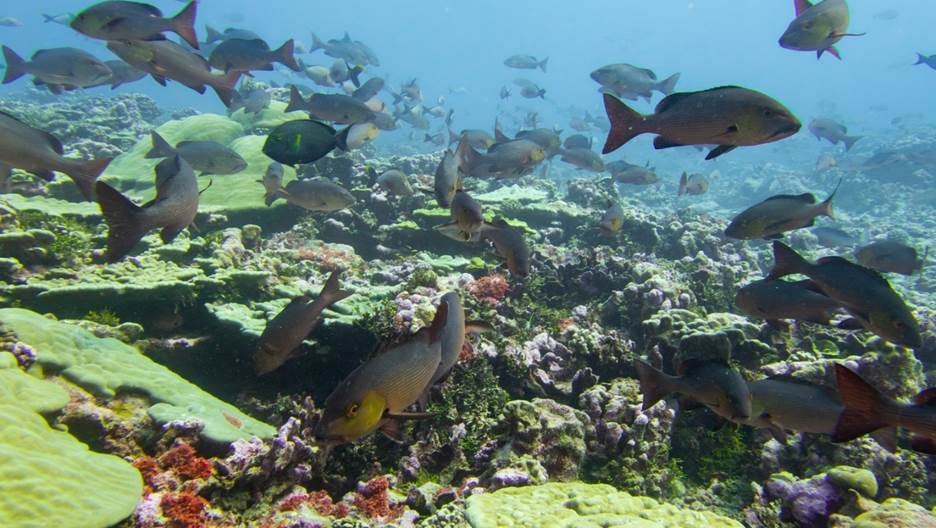
That includes the U.S. economy. More than three-quarters of all U.S. trade relies, at least in part, on maritime transportation routes. In 2019, the U.S. “blue economy” supported 2.4 million jobs and contributed approximately $397 billion to the nation’s gross domestic product.
And as Chair of the Global Board of Directors for The Nature Conservancy, I’d be remiss if I didn’t also mention the importance of the ocean in fighting the interconnected threats of climate change and biodiversity loss. Up to 80 percent of the life on the planet is found in the ocean, and 10 percent of its species are thought to be at risk of extinction. Among those threatened species are those that make up coastal wetlands—tidal marshes, seagrass meadows and mangrove forests—that turn out to be far more efficient than terrestrial forests at protecting us from climate change, by trapping and storing greenhouse gases and creating natural barriers to storms and flooding.
A new United Nations Treaty for the High Seas
You might think that with all this at stake, the nations of the world would have reached agreement long ago on how to manage this resource in the most sustainable way possible. Instead, despite how important the ocean is to the wealth and health of nations around the world, it has been misused and faces mounting threats from overfishing, pollution, rising temperatures, and increased acidification.
About a third of the world’s monitored fisheries are overfished. We have already lost a third of our mangroves and half of all coral reefs. Marine species including some sharks, whales and turtles could face extinction.
Still, recent events have given me cause for hope, including meaningful new investments in U.S. coastal restoration and a recent landmark U.N. agreement that could lead to improved stewardship of the ocean.
Notably, in March [2023], after five years of negotiations the world’s governments finalized a new United Nations Treaty for the High Seas. Covering almost half of the planet’s surface, the high seas are those areas that lie outside territorial waters and so are open to fishing, shipping, and research by all countries. [The treaty entered into force in January 2026 after reaching 60 member nation ratifications.]
The new treaty includes important measures to conserve and sustainably use biodiversity in the open ocean, including new environmental impact assessment requirements that will bring greater consistency to the way countries measure and manage the impact of human activities. In addition, the new treaty provides a way for countries to establish new conservation areas on the high seas. These areas, already common in territorial waters, are designed to for example conserve important marine habitat, fish spawning zones, archeological treasures, or other resources.
As one might expect from any major international agreement, this pact is imperfect and there are loopholes, but the high seas treaty represents a turning point in how humanity relates to the ocean. [Of note, the U.S. has yet to ratify this treaty; it was signed by the President in 2023 but has not been put to a vote in the Senate for approval].
Learnings from Katrina and additional opportunities for U.S. leadership
Our nation should also double down on efforts to conserve and restore its coastlines, because protecting the place where the land meets the sea is absolutely critical to protecting our coastal communities and the health and livelihoods of the people who live there.
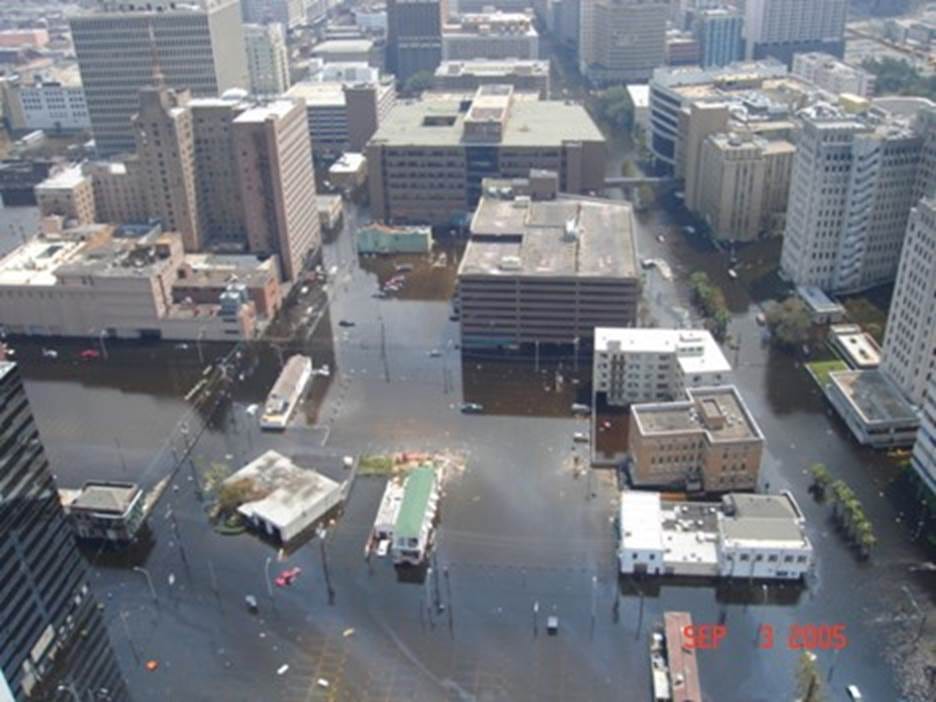
I witnessed the value of these natural ecosystems firsthand. In 2005, I was part of the medical relief team that flew to Louisiana to aid those affected by Hurricane Katrina, the costliest natural disaster in U.S. history. The devastation caused by that Category 5 hurricane, one of seven major hurricanes in that especially destructive season, was terrible to witness.
Yet Katrina helped change the way disaster planners view how natural infrastructure—such as reefs, tidal marshes and mangrove forests—protects coastal communities. In the decades leading up to the storm, Louisiana had lost coastal lands, mainly marshes, totaling around 4,900 square kilometers. However, what remained played an important role in moderating the damage. Nearly a week after the storm, NASA satellites were able to capture how the coastal wetlands soak up and retain storm water. If the wetlands had not been there, the storm surge could have penetrated much farther inland.
That point was reinforced in 2012, with Superstorm Sandy. Although it was also tremendously destructive, a 2017 study by The Nature Conservancy and risk modelers for the insurance industry showed that coastal wetlands prevented more than $625 million in property damages to coastal communities in the U.S. ….
These are just a few examples that demonstrate nature as part of the solution to the twin crises of climate change and species loss. We need commitment from Congress and the administration to ensure continued support for these life-sustaining investments in our oceans.
Our policies—both domestic and global—must do everything possible to conserve and restore this priceless resource.
___________________________________________________________________________________
Adapted from my 2023 article in Forbes on World Ocean Day.
Author’s Note:
As a physician, I have spent much of my career studying human health. Increasingly, I have come to believe that understanding, and protecting, the health of the planet is inseparable from protecting our own.
Comments
Nothing yet. Say the first thing.
Sign in to join the conversation.