
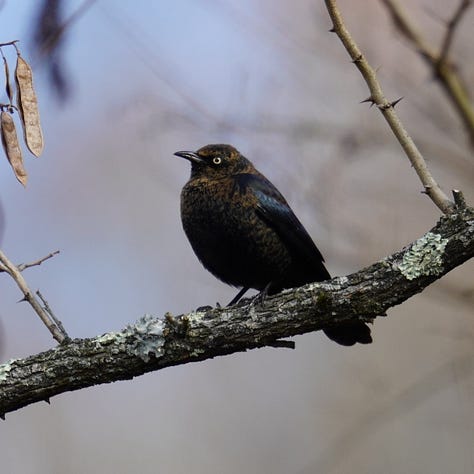
Local lore. My birding patch is full of it. The valley directly behind our house features a section of Pine Creek, an active railroad line, and one of the oldest roads in the Pittsburgh suburb of Hampton Township. I began exploring the area when we moved here in the fall of 2022. Birds were the main draw, of course. A healthy water corridor flanked by woods and fields is bound to get birdy, as 140 patch species can attest to.


But the more I poked around, the more I realized our back yard wasn’t just a beautiful natural area. Here and there were vestiges of industry, deteriorating hunks of concrete and metal that hinted at a bustling past.
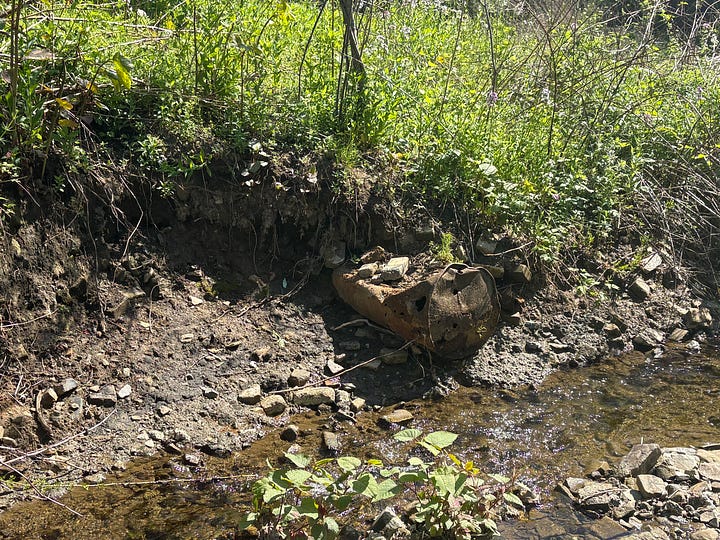

I wanted to know more. What went on here? When and why did it end? I took my questions to the internet, but for all their utility, search engines aren’t portals to infinite knowledge. When Google failed, I wondered if some hall of records contained the answers I sought. Didn’t need an archive, it turned out. What I needed was to find neighbors educated in local lore.
I met Tom during my first annual Big Trash Day in 2024, and I run into him from time to time down in the creek valley, always armed with his mechanical trash picker-upper, always ready with some history. From Tom I learned that the fields behind our house were once a dumping grounds for the byproduct of steel manufacture. When operations ceased sometime in the 1970s (presumably due to the decline of Pittsburgh’s steel industry), the grounds were covered with earth, and nature was allowed to take over. Though I shudder to think what might be buried not so far beneath the surface, the tall grasses and wildflowers have become habitat for Red-winged Blackbirds, Northern Yellow Warblers, Marsh Wrens, and more.


I also learned that this graffitied concrete slab is a remnant of a station where the Butler Short Line (BSL), an electric trolley service, made its Allison Park stop twice every hour as it traveled north from Pittsburgh en route to Butler.
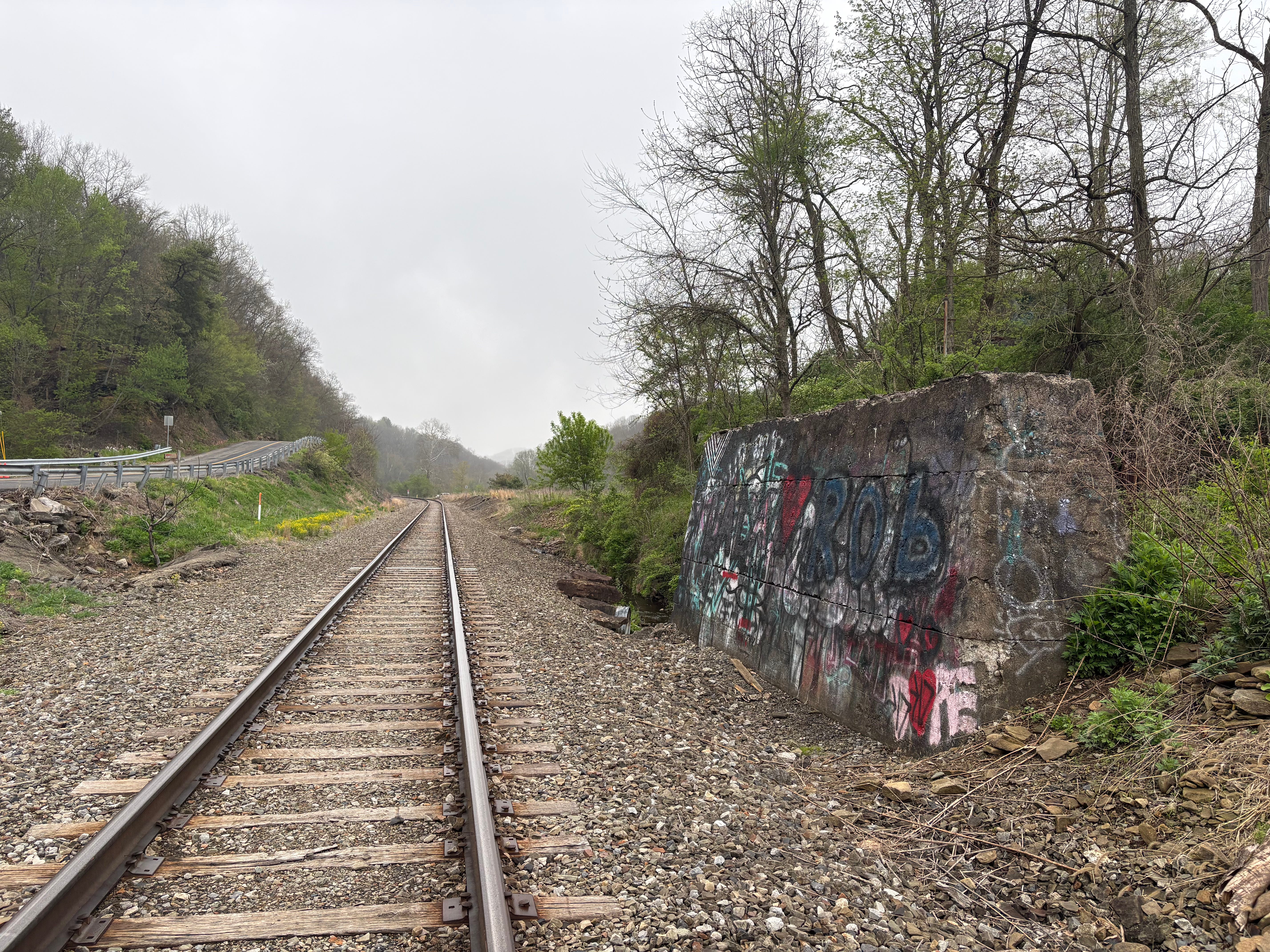
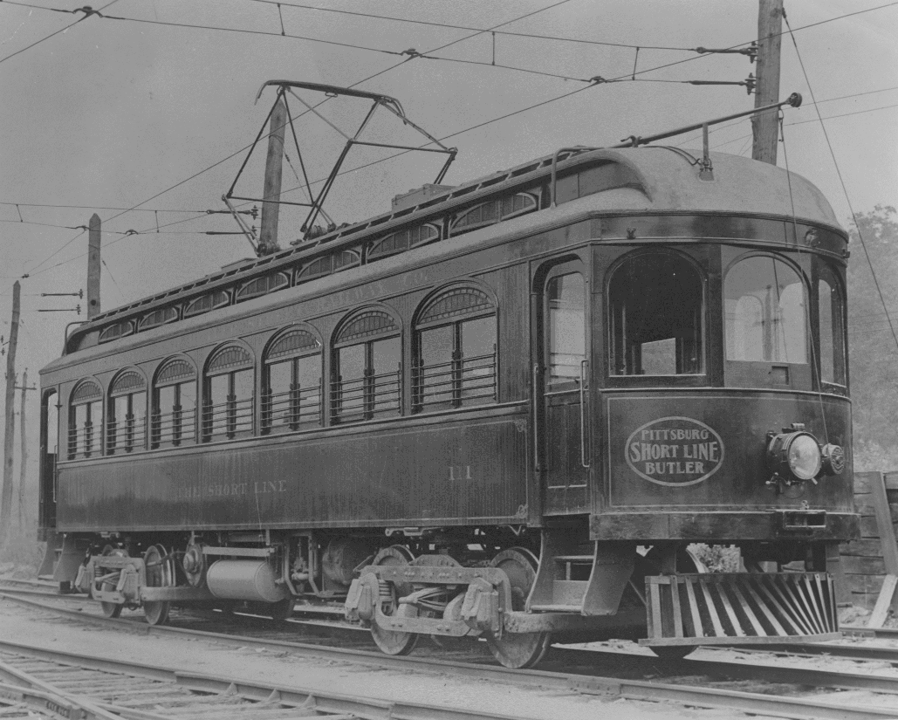
For a nickel, the BSL would pick you up at Allison Park and carry you to its next stop at Wildwood, and that’s where things get spicy 🌶️🌶️🌶️
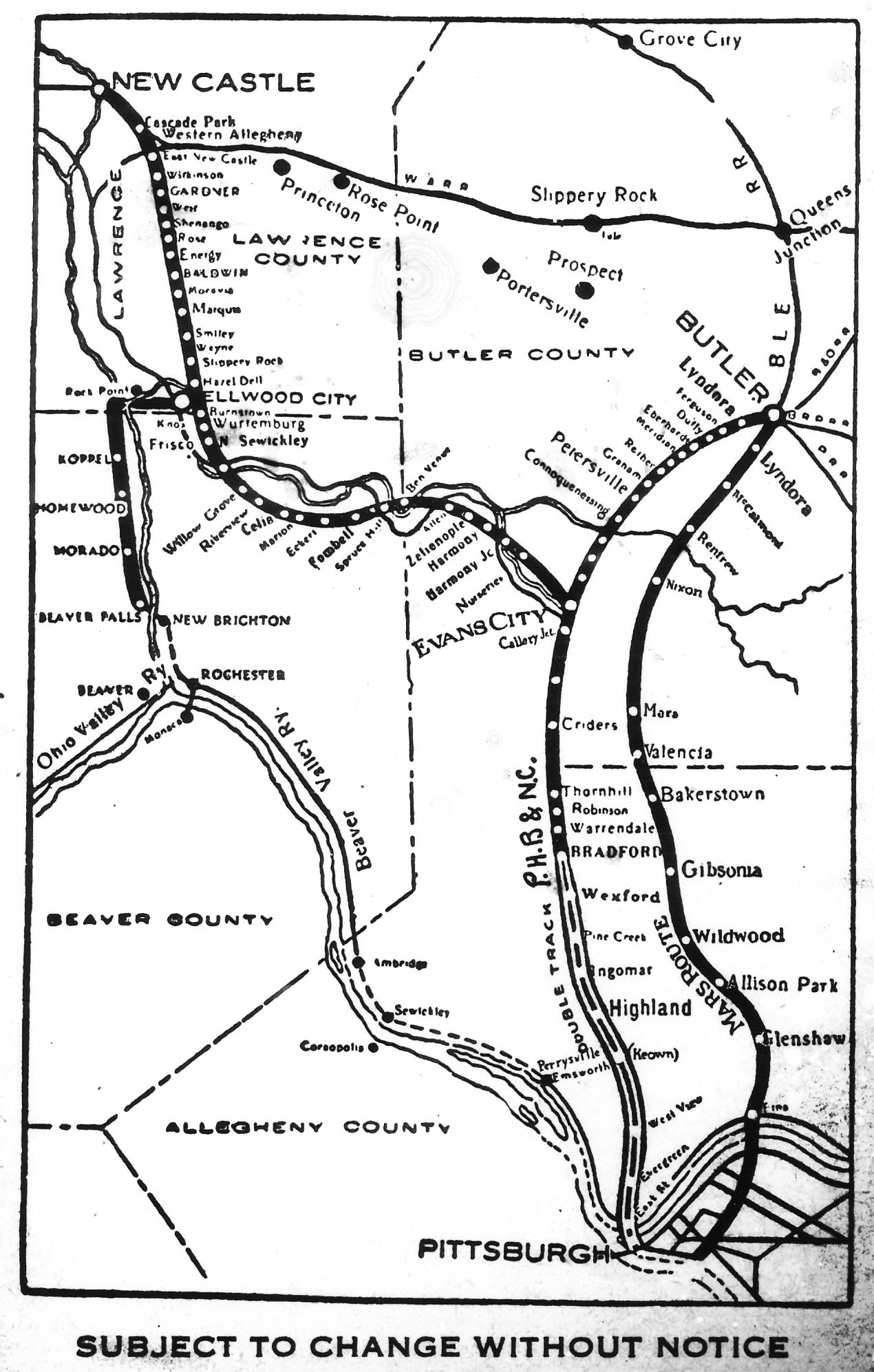
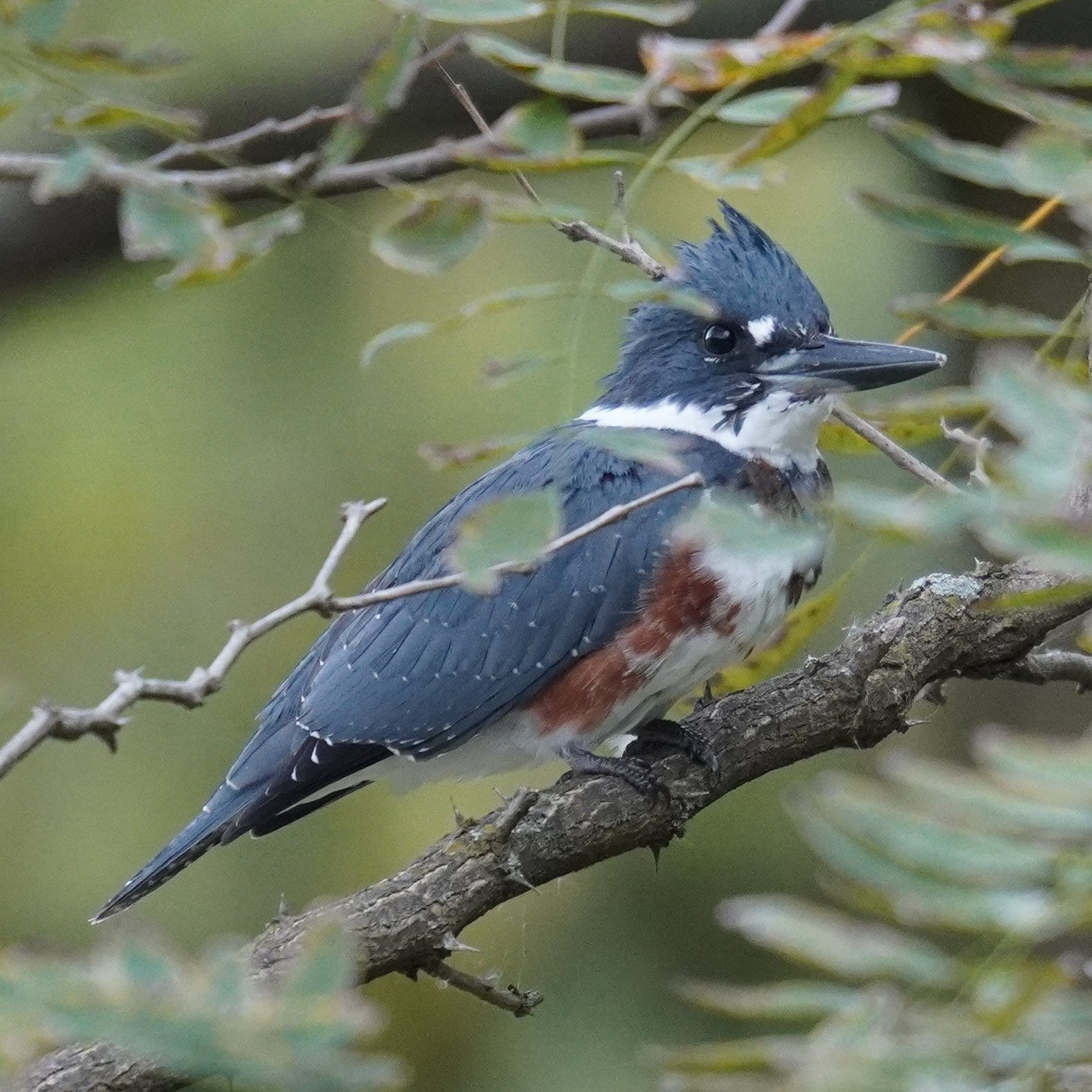
There’s no trolley to catch from Allison Park to Wildwood today. I suppose the proliferation of the horseless carriage spelled doom for the BSL and others like it. A ten-minute car ride will get you there, but since we’re birders, let’s go on foot instead. Walk the train tracks north until they intersect with Sample Road, a twenty minute hike if you’re not pausing to observe Great Blue Herons, Osprey, or others who scour the creek for aquatic life.
A short distance along busy Sample Road leads to a tiny pulloff and a nondescript trailhead, marked only by a pair of rectangular yellow blazes that will figure big in the second post in this series.
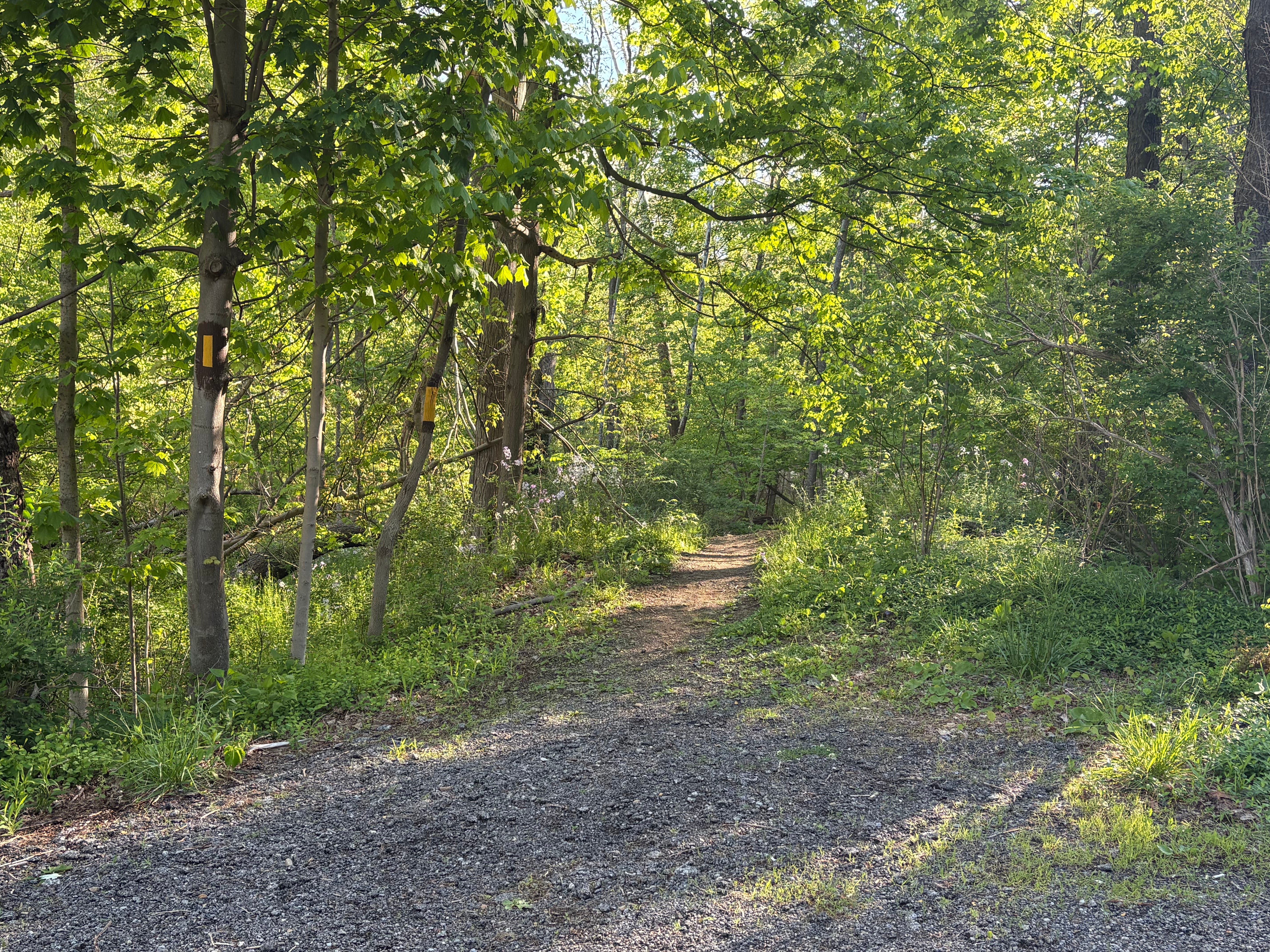
Here, along the last stretch of the former trolley route between Allison Park and Wildwood, things get woodsy. Gone are the fields of goldenrod and ironweed, swapped out for stands of sycamore, hemlock, basswood, and dripping shale walls through which Pine Creek cuts its path. This natural area, I came to learn, is Crouse Run Nature Reserve, 17 protected acres that are spectacular year round, but more so when breeding birds return each spring. Eastern Phoebes nest all along the stream. So do Acadian Flycatchers, Wood Thrushes, and my favorite warbler—Louisiana Waterthrush, here doing its signature waggle as it forages along the shore of the creek.
Crouse Run isn’t particularly challenging terrain. The old trolley path crosses Pine Creek in various places, and after a heavy rain, it can be difficult to keep your feet dry. But for the most part the trail is flat and well maintained, and a half hour gets you to where the BSL would have made its Wildwood stop at Wildwood Road.
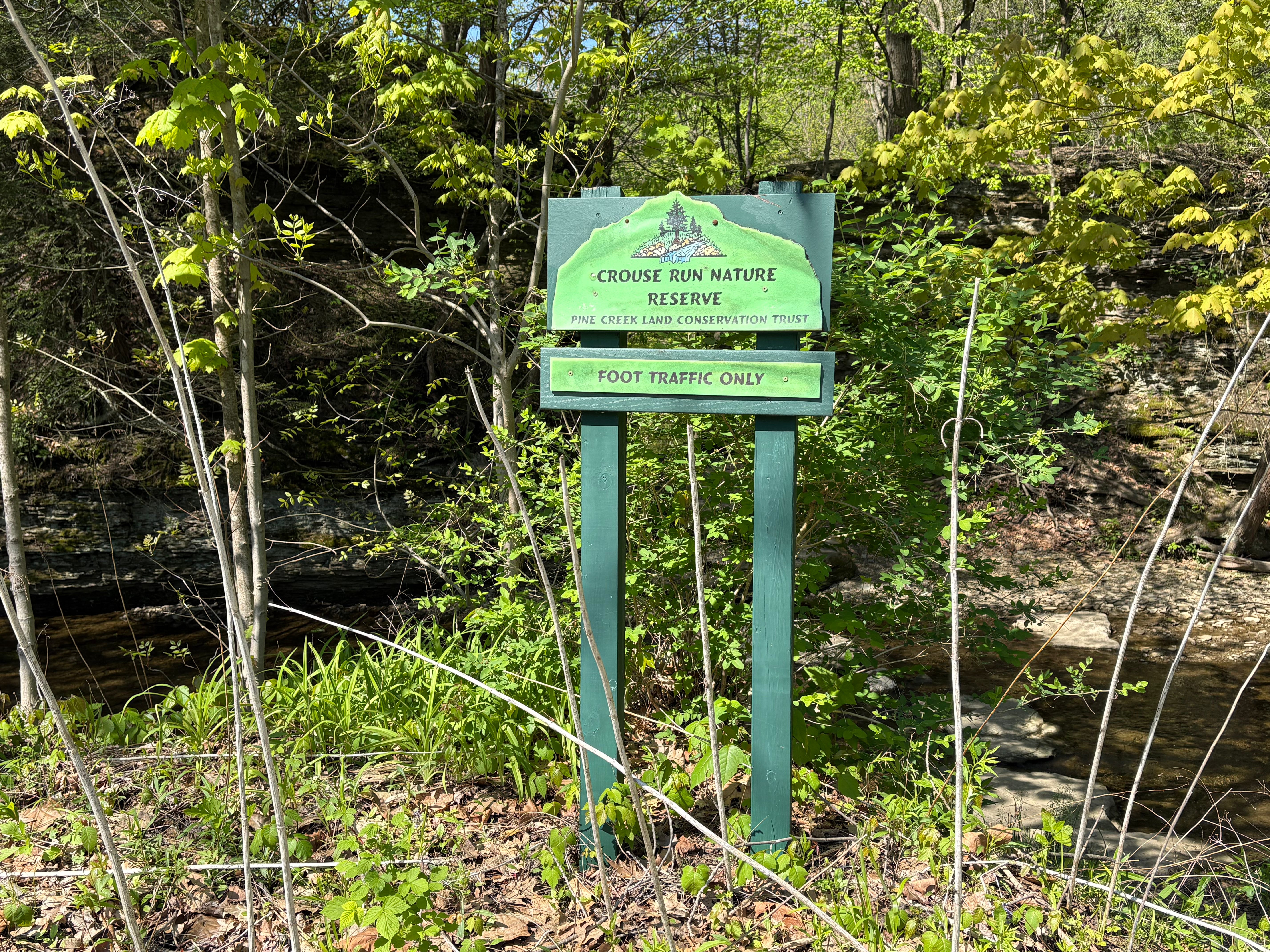
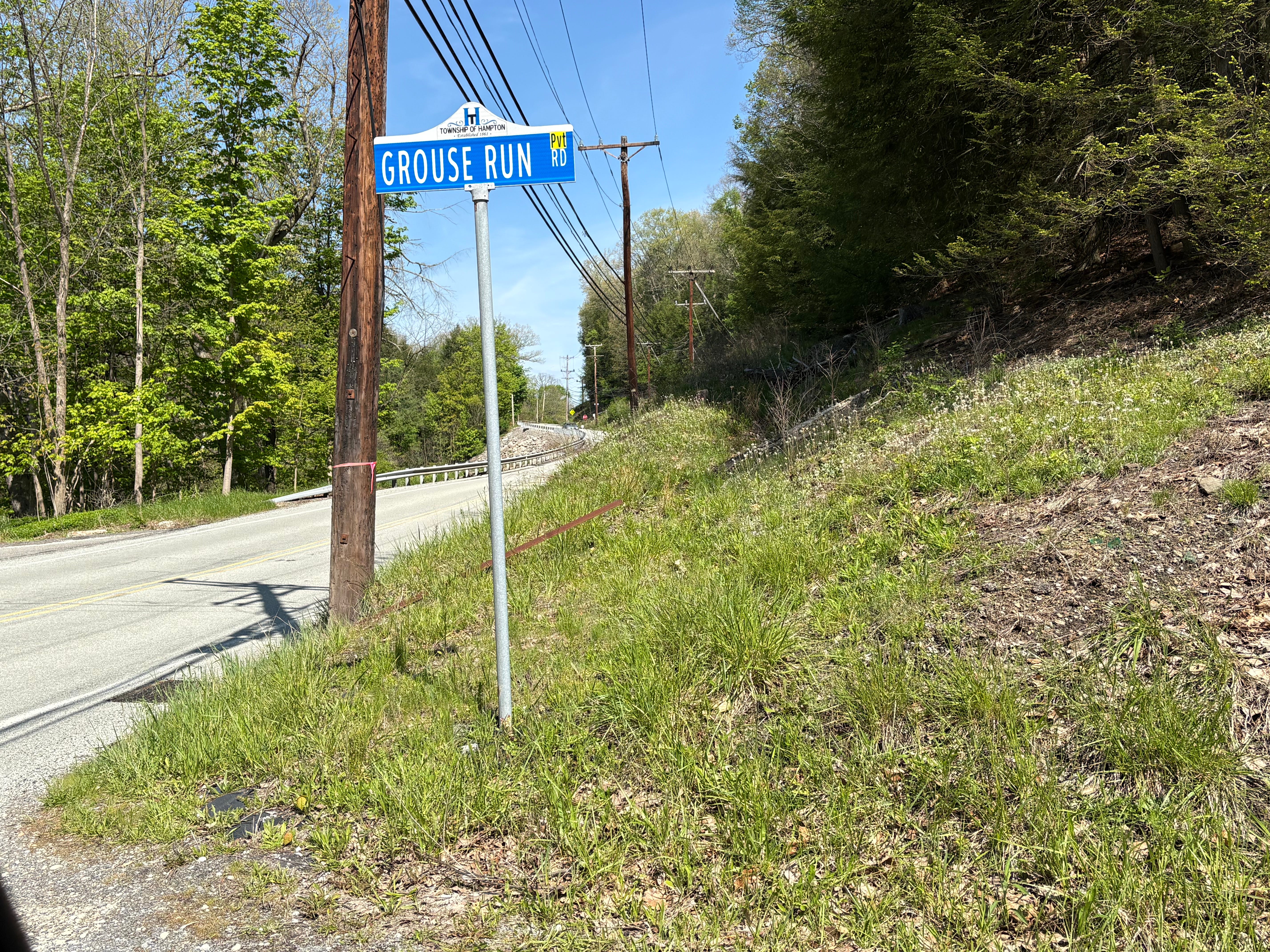
Who was this Crouse to whom the reserve is apparently dedicated? Legend has it the name evolved from Grouse Run, a claim not entirely unfounded, if the local signage has anything to say about it—just across the street from the Crouse Run parking lot is Grouse Run Road, presumably a reference to Pennsylvania’s state bird, the Ruffed Grouse. Considering Ruffed Grouse are essentially extinct in western Pennsylvania (though Wild Turkeys are a common sight), it is perhaps fitting that the name evolved along with the local fauna.
The dearth of Grouse doesn’t stop me from birding there several times a week. I was doing just that one morning a couple of years ago when I was approached by another local well versed in Hampton lore. Liz, a member of the Pine Creek Land Conservation Trust, was investigating damage to a sign instructing hikers to remain on the path in one of Crouse Run’s sensitive areas. When she learned I was a recent transplant, she let me in on a little history—a nearby ruin was the site of what was once the largest dance hall in the eastern United States.
That shook me. The largest dance hall? Here? In quiet Hampton Township? That was a fascinating morsel to take home to my wife Alex, who loves to dance and had recently adopted Crouse Run as her favorite place to take her daily hike.
We didn’t do much with that knowledge aside from enjoy it and imagine the nightly festivities that brought this hidden nook in Hampton to life.
But there was more. So much more. Last month my curiosity had me back at the search engines. This time, Google didn’t let me down.
According to his obituary in the September 26, 1925 edition of the Pittsburgh Post-Gazette, Francesco “Frank” Bongiovanni was born in Forsano, Italy on Christmas day, 1875. As no such place exists according to Google, I suspect (with no hard evidence) the Post-Gazette simply misspelled Fasano, a town located at the top of Italy’s boot heel. Whatever the actual location, Bongiovanni’s ambitions were too big for his birthplace. When he turned 20, young Francesco, by then a baritone opera singer, packed up his million-lira voice and set off for London, then New York, then Washington DC.
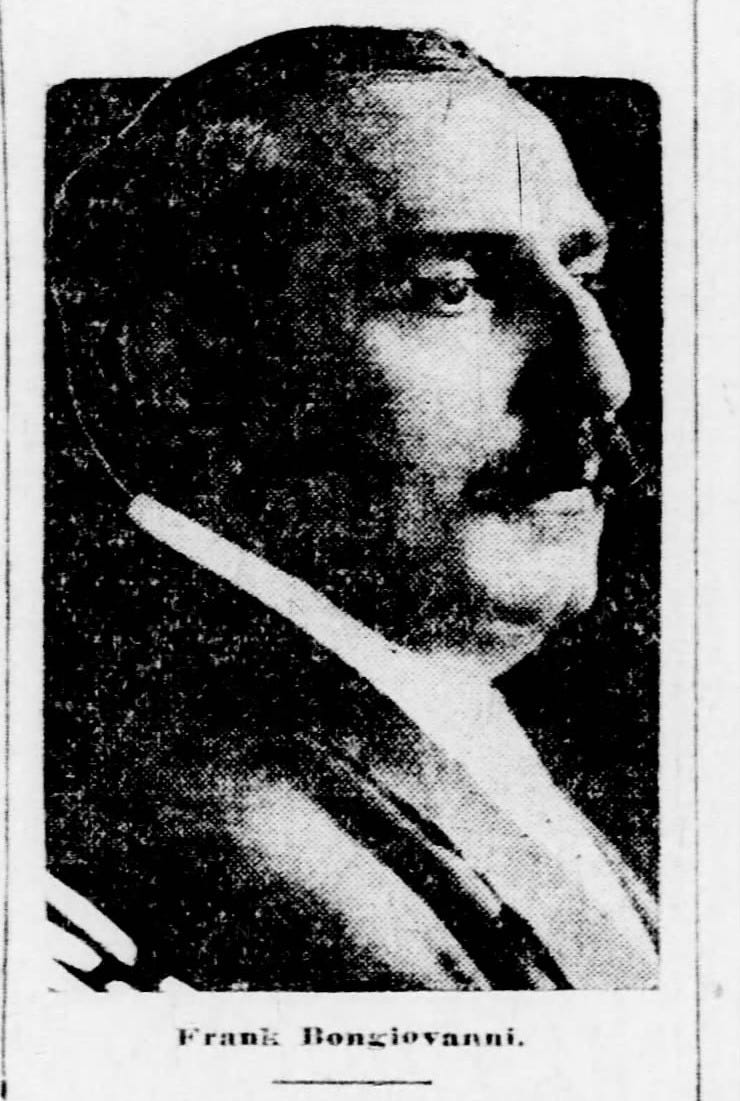
Along the way, as he learned the ins and outs of entertainment and hospitality, Bongiovanni must have discovered a flair for entrepreneurship. By the time his peregrinations landed him in Pittsburgh around 1904, he was just the man to fill a gaping hole in the entertainment scene. In 1913, Bongiovanni bought his place of employment, the Nixon Café on 6th Avenue, which he transformed into the place for Pittsburghers to drink, dine, dance, and watch a show. Soon Bongiovanni was the toast of the town, hailed as the father of Pittsburgh’s cabaret industry and one of the first to introduce Italian food to western Pennsylvania’s culinary landscape.
What a time that must have been for Bongiovanni, an immigrant getting rich in an industrial boomtown, and his café, packed nightly with Pittsburgh’s high society.
All was well… until it wasn’t.
Seven years later, when tongue-clucking moralists were celebrating the passage of the 18th amendment, saloon keepers everywhere found themselves staring ruination dead in the face. Not Frank Bongiovanni, who proved not only innovative but also nimble as the regulatory noose was tightening around the production and sale of spirituous beverages. Doubtless seeking to elude the long arm of municipal law enforcement, Bongiovanni crossed the Allegheny River and found refuge in Pittsburgh’s rural surrounds, known today as the North Hills. In the borough of Wildwood, a welcoming, secluded ravine had been carved over thousands of years by Pine Creek. Also awaiting him was the Butler Short Line, whose tracks had been laid down in 1907.
In that quiet water and transportation corridor in the rural outskirts of Pittsburgh, Frank Bongiovanni didn’t settle on building a discreet speakeasy. Ever the showman (and perhaps seeking to loudly flout the law), Bongiovanni built a grandiose pleasure palace. Bongiovanni’s Gardens was an all-purpose entertainment hub where Pittsburghers could escape the strictures of Prohibition and down bootleg liquor out of the shadow of a police crackdown.
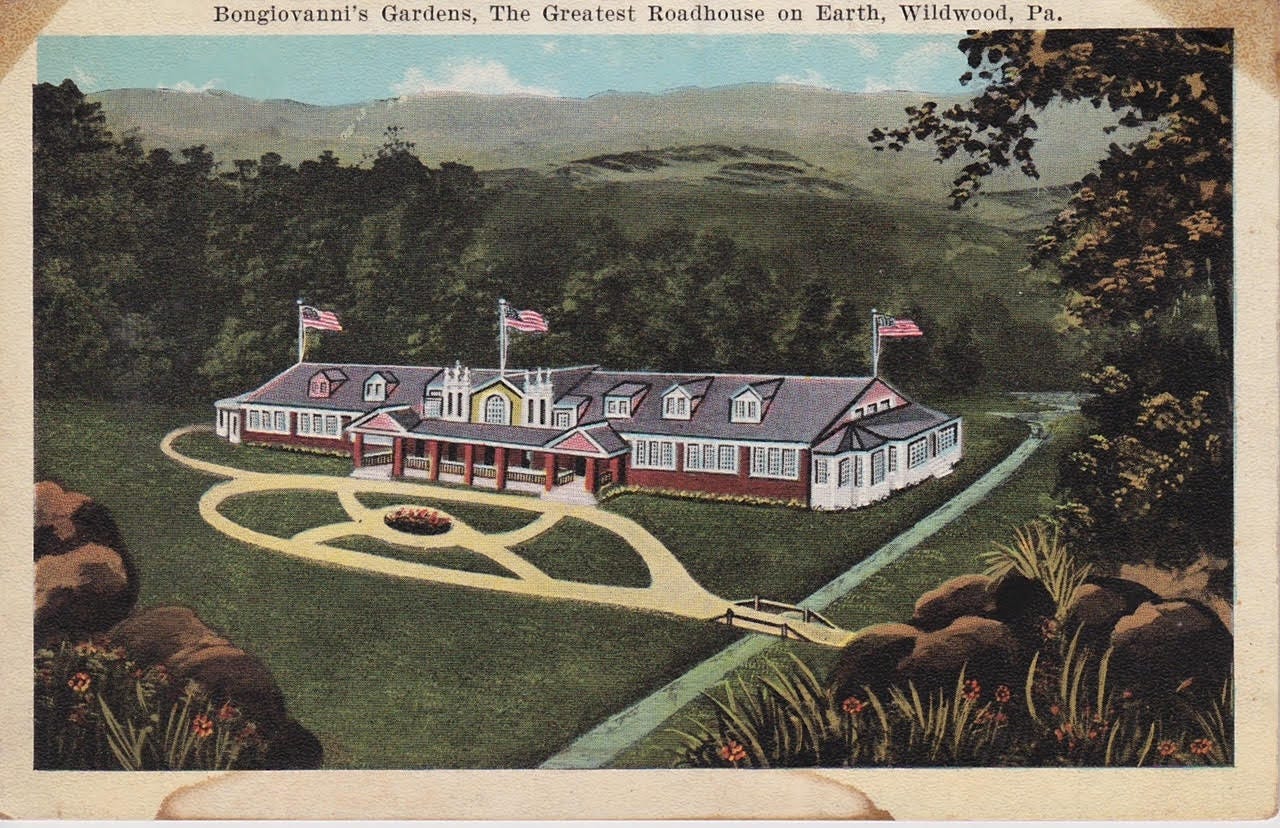
Some patrons arrived at the impressive roadhouse by car. Others left the driving to a (hopefully) sober conductor, riding the BSL practically to Bongiovanni’s Gardens’ front door, as depicted below.
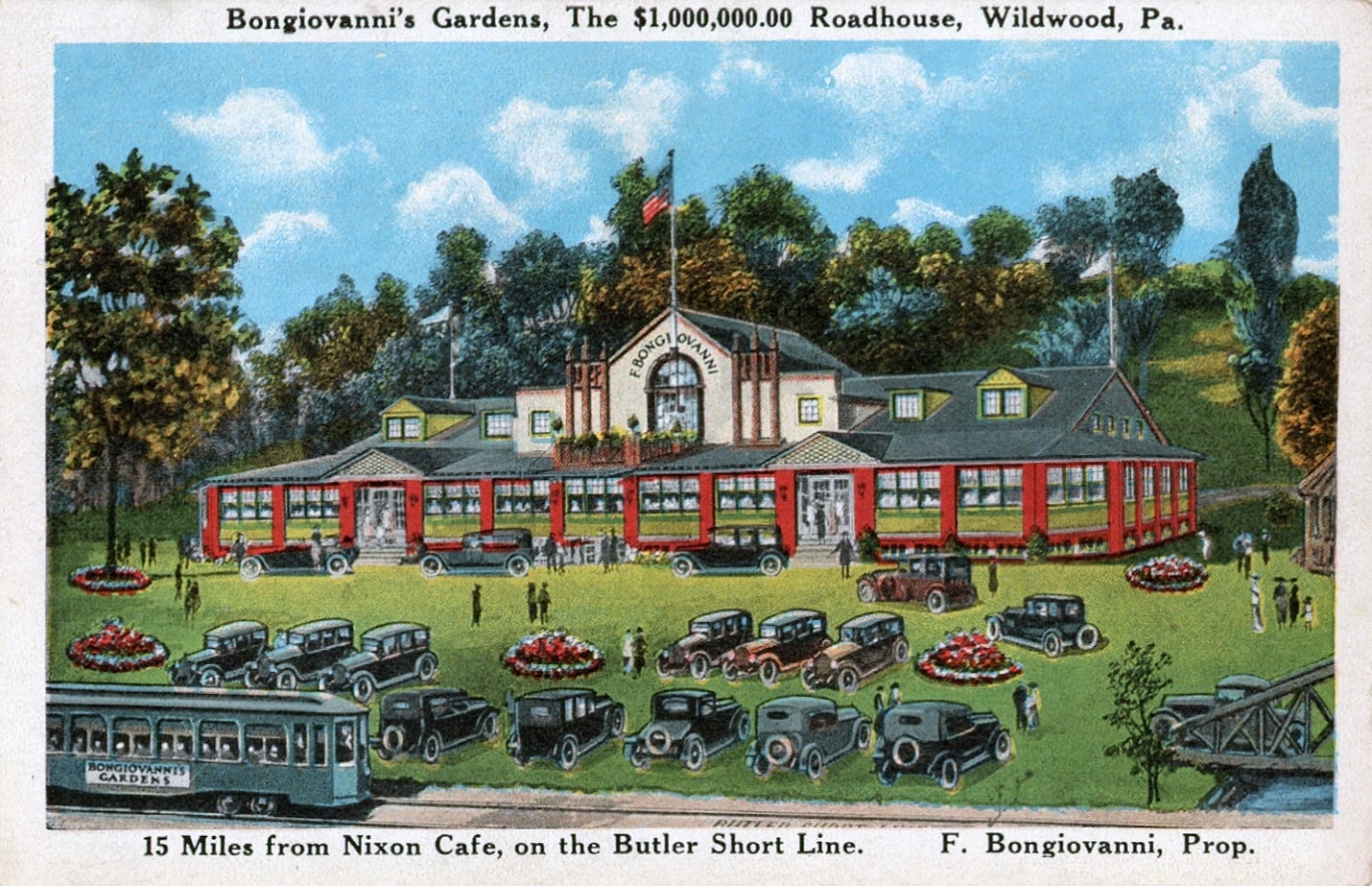
One must take some creative license when picturing the scene inside the walls of Bongiovanni’s Gardens. I like to imagine a mirthful vibe as Pittsburghers dined and drank in peace, resting assured in the knowledge the proprietor had lined the pockets of whatever uniformed officials had jurisdiction in the North Hills. I like to think of Bongiovanni, natty in a tailored suit, drifting from table to table, greeting his patrons as they attempted to eat heavily sauced Italian delicacies without defiling their own evening finery. I envision the diners calling for their host to take to the stage and regale them with his voice, Bongiovanni humbly refusing until the clamor rose to a din he could no longer fend off with a wave. From Bongiovanni’s grand stage, the visionary restaurateur would unleash his baritone, tapping Verdi, Puccini, Rossini… the full repertoire of his origins in the Italian opera.
And I’m taking entirely too much license picturing Bongiovanni arriving at his roadhouse early of a spring morning, before trucks and wagons pulled up with food supplies and barrels filled with illicit refreshment. Before chefs and cooks and waiters filed in to prep their crudités and lay white tablecloths. In the quiet morning hours, Bongiovanni would sit creekside, taking in the sounds of the birdlife (perhaps even the drumming display of the still-extant Ruffed Grouse) as he slurped the first of many espressos he would down in anticipation of the busy night ahead.
Prohibition lasted until 1933. Bongiovanni didn’t. The enterprising Italian died childless after a sudden illness in 1925 at the age of 51. By then he had opened other speakeasies around Pittsburgh, including Bongiovanni’s Floating Palace, a river scow that offered booze, gambling, and a house dance act—Bongiovanni’s Syncopators. His final enterprise was the Rendezvous on Penn Avenue. The home he shared with his wife Rose in Pittsburgh’s Knoxville neighborhood no longer stands, but is said to have housed brewing and distilling facilities, as well as a system of tunnels to help keep things clandestine.
Bongiovanni’s Gardens endured for another half dozen years before closing its doors in 1931. That same year, the Butler Short Line ceased operations. The building survived the 1930s as a restaurant and dance hall, the 40s and 50s as a gathering place for the German Beneficial Union, and the 60s as the Wildwood Lodge, a teenage dance hall. Finally, in 1971 or 72, fire consumed the edifice Frank Bongiovanni had constructed a half century earlier.
In 2026, near the northern terminus of Crouse Run, one can find remnants of Bongiovanni’s magnificent roadhouse, including its foundations, a boiler, and one of its two front stairways.

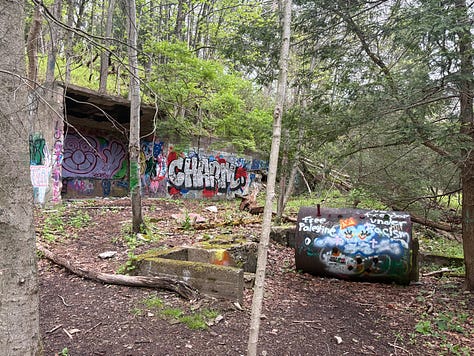

And here we pan from the remains of the bridge that motorists would have used in crossing Pine Creek to roughly the perspective offered by the postcards.
Walking Crouse Run today, it’s difficult to imagine it was once a beating heart of Pittsburgh’s nightlife. Not everyone who journeyed to the North Hills via the Butler Short Line in the 1920s was seeking out cabaret entertainment. Some were drawn to the abundant animal and plant life, including one brilliant young biology student who was enchanted by a little red thrush and would one day have an outsized impact on the environmental movement. That student will be the subject of the second installments of this three-part series, Look for The Biologist and the Birds to land in your inbox soon!
That’s all for this week. Do you wonder about the history of where you love to bird? Are there vestiges of a bygone time that intrigue you? Have you already unearthed some juicy lore about your birding patch? Are colorful characters part of its past? I’m here for it, and there’s a whole comment section where you can share your stories.👇
Until next time, thanks for reading, and don’t forget to bird, dance, eat, and drink (in moderation!) your ass off!
In the researching of this post, I owe a debt of gratitude to:
Tom, who first told me about the BSL and who helps keep the valley clean.
Liz, who provided the first postcard image of Bongiovanni’s Gardens and the full history of the building. Thanks also for her stewardship of Crouse Run.
Kristen Fredriksen of the Trolley Museum, who provided the second postcard image, as well as the trolley route map.
Further reading
https://nextpittsburgh.com/pittsburgh-for-all/pittsburgh-area-roadhouses-and-resorts-served-black-travelers-off-the-beaten-path/
https://www.pghcitypaper.com/columns/floating-palaces-and-pleasure-scows-pittsburghs-colorful-history-of-raucous-riverboats-26099464/
https://www.pghcitypaper.com/news-2/before-bloomfield-pittsburgh-had-multiple-little-italys-now-lost-to-history-28502130/
nwb
Enjoy this post? Birding with BillBow’s weekly content will always be free, but you can help support my writerly dreams in the form of a paid subscription (save $10/year by choosing the yearly plan). Either way, I’m so glad you’re here!
Or buy me an espresso. I’m sure Frank Bongiovanni drank gallons of espresso every day.
Paid or not, every bit of engagement, every like and comment, is truly appreciated. Please consider sharing this post, a wonderfully free way to help spread the bird joy.
This post was human-generated. All media by Nathaniel Bowler, except where noted.
No posts
Comments
Nothing yet. Say the first thing.
Sign in to join the conversation.