
When the American Ornithological Society announced in late 2023 that there would be sweeping changes to honorific bird names (birds named after people), boy was there much ado. Not surprising. The AOS wasn’t just going to change the common names (the decision excludes scientific names) of North American birds honoring persons of dubious character, like Audubon’s Oriole, named for slave owner John James Audubon, and Scott’s Oriole, dedicated to Winfield Scott, the Trail of Tears villain who forcibly removed tens of thousands of Native Americans from the eastern United States. They were going to change every eponymous bird name, regardless of the character of the honoree. Were there a bird named for Mr. Rogers, that name was changing.
Made sense to me. Taking a piecemeal approach by picking out problematic people for whom a bird is named would mean making a value judgment about the life that historical person lived. One person’s hero may be another’s pariah. Instead of wading into those murky waters, the AOS announced they were changing ’em all. No biggie, right?
Wrong.
Welcome to Birding with BillBow, where I strive to entertain you with tales of birding adventures and podcast interviews with fascinating birders. If that sounds like your type of content, consider supporting my work with a paid subscription. Your financial contribution helps me dedicate more time to BWB as I strive to deliver passionate, (hopefully) funny, high-quality writing. As always, 5% of earnings donated to the American Birding Association.
When the news broke, many celebrated what was the culmination of the Bird Names for Birds movement spearheaded by Jordan Rutter and Gabriel Foley in 2020. The argument that birds should be named descriptively and not for (with few exceptions) dead white men had won out.
Others were less happy. Many birders agreed that bird names honoring genuinely lousy people should be changed, as had already been done with McCown’s Longspur, named for John McCown, who battled native tribes in the American Indian Wars and fought to preserve slavery as a Confederate General. McCown’s Longspur is now known as Thick-billed Longspur. Fine for this one isolated case, but to erase the honorifics attached to all birds was, in the view of some, to erase history, to forget those whose noble work in centuries past had laid the foundation for modern ornithology and the understanding we have of birds today.
Then there was a third kind of reaction. This is the 2020s, after all. The age of Trump and social media and the all-too-toxic blending of the two. Some believed the specter of wokeness 😱 had crept into birding and ornithology. Enter the online horde of trolls, bots, and MAGA types. The less time spent on that line of thinking the better, I think, but suffice to say a lot of people who aren’t birders and wouldn’t know a Wilson’s Warbler from a Wilson’s Snipe had a lot to say on the subject. That fire burned hot (consult the replies to the AOS’s original Tweet announcing the name change) but not long, which was predictable because, again, these people don’t care about birds and couldn’t tell a Wilson’s Phalarope from a Wilson’s Plover, or a Wilson’s Storm-Petrel, for that matter (yep, that’s five birds named for one Alexander Wilson, who was a fascinating man and deserves a post of his own someday).
Place me squarely in the first category. In my opinion, naming species after people is at best silly, offering little to assist in our shared mission of identifying birds in the field. At worst, it elevates some true scoundrels. Scoundrels should be remembered, but not by having birds named after them. Birds are wonderful. Scoundrels suck.
Well, not all scoundrels.
I do sympathize somewhat with those who object to the AOS’s decision in good faith. Dozens of honorees did brilliant work and deserve to be remembered fondly. But again, the naming tilts heavily white and male, and the worthiness of a given nominee is hopelessly subjective. And I do wonder how many of us see a, say, Baird’s Sparrow and feel compelled to look into the life and work of Spencer Baird. Not many, I’d wager. And birders with a nose for history are going to dig, whether or not the birds are named for people, and they’re going to learn about Baird, Wilson, and Harris, and hundreds of other ornithologists who did equally meaningful work in the field and never had a bird named after them.
The bottom line, some 150+ bird names are going to change, including a large sparrow of the central United States and Canada.
Harris’s Sparrow.
Who was this Harris, and why is a sparrow named after him? Great questions! I sure didn’t know, so I did some light research. Edward Harris (1799-1863) was an American ornithologist, naturalist, farmer, and contemporary of Audubon who accompanied the famed painter on a pair of expeditions and also provided some financing to assist in the publication of Audubon’s groundbreaking The Birds of America. No wonder Audubon saw fit to name not one but two birds after Harris, including the magnificent Harris’s Hawk.
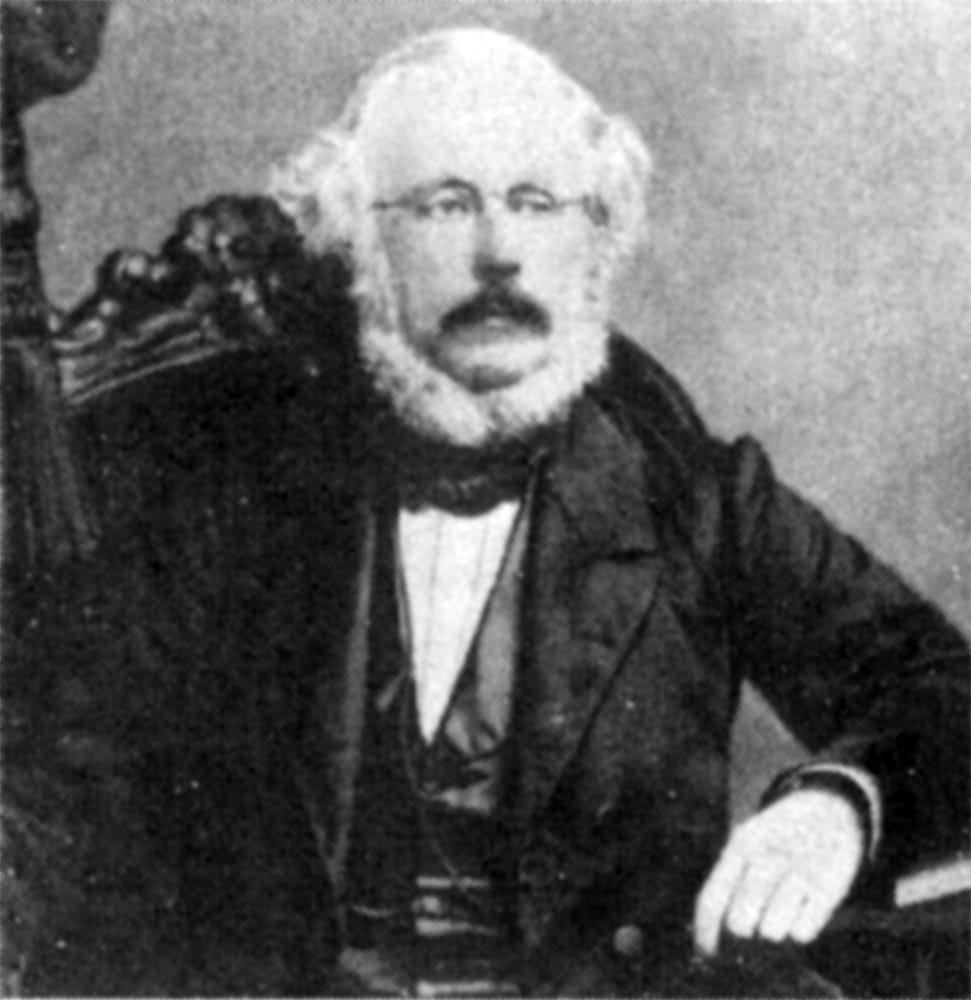
Though I question the choice of befriending a slaver, Edward Harris undeniably did good work in advancing ornithology, if only for his role in making the monumental The Birds of America a reality (yes, I am simultaneously denouncing and praising Audubon—see how sticky this is?). But Harris was more than a wealthy enthusiast. A member of the National Academy of Sciences, Audubon himself praised Harris’s avian expertise, which he cited as invaluable in his own work.
Does Edward Harris deserve remembering? Certainly. Does he deserve to have a hawk and a sparrow named after him? In my opinion, absolutely not. That’s not a knock on Harris. As stated above, I just think birds should have bird names.
Now, about that sparrow.
The only region I’ve birded within the Harris’s Sparrow’s rather limited range is central Iowa, which lies along the bird’s migration path. Sadly, I didn’t travel to Iowa during migration, so when the Rare Bird Alert for Allegheny County lit up on May 11th announcing a confirmed adult Harris’s Sparrow had been found hanging out in Pittsburgh’s Southside Riverfront Park, naturally my first thought was—Huh. I wonder what they’re going to change its name to?
Ha. Just kidding. My real first thought was—Oh fuck, that would be an incredible life bird but here I am at home and it’s already too late to drive a half hour into Pittsburgh and where even is that park I’ve neverheardofitandgoddamitI’mgonnamissthebird…
After I snapped out of the spiraling, bird-induced panic, I resumed making dinner and resolved to discuss my fit of FOMO hysteria with this month’s podcast guest, , whom I would be interviewing two days later about, among other things, birding for your mental health. What else was there to do, aside from go to bed appealing to whatever power in the universe holds dominion over when vagrant birds decide to pack up and move on?
When I awoke to a notification from my birding neighbor Ed (who takes beautiful photos and posts them on Instagram) that the Harris’s Sparrow was continuing to show in the same location, I knew I had a better than decent chance of getting my lifer.
Various things waylaid me until mid-afternoon. When I was finally heading down to the site, I reviewed what I knew about the Harris’s Sparrow. Admittedly little. I knew the adult had a distinctive black streak that extends from the crown of the head down to the center of the breast. I knew it was a big, chunky sparrow. I knew it was not a secretive bird (it willing visits feeders). I knew it was prone to vagrancy. I knew it could be overlooked as a House Sparrow at a casual glance. Big shoutout to the Allegheny County birder who didn’t overlook the Harris’s.
That was the extent of my knowledge. I listened to its song on the way—long whistles that come in series of two or three, usually changing pitch with each new series. Another shoutout to vagrant birds who vocalize. You make life so much easier!
Not surprisingly, two birders were already on the scene, including Michelle, whom I’d met before, as I recall chasing another rarity (for Pittsburgh), an American Avocet. Michelle sat at a park bench, admirably calm. The bird was not vocalizing at the moment and had not been seen in the half hour since she had arrived. Another birder showed up moments after I did, and that was good. By my reckoning, four pairs of eyeballs and ears had a better than average chance of finding the sparrow.
Thirty minutes later, the bird still hadn’t shown. I’m not saying I was getting antsy at this point, but the idea that I’d be driving home feeling like a total loser did flit across my mind.
Finally, after the four of us had split up, the bird reappeared. It’s over here! Michelle called. She had seen the sparrow moving around in some brush beside the path. After several fruitless, frenzied minutes of searching, a chunky songbird burst out of nowhere and zipped into a mulberry tree that was laden with fruit.
Lifer achieved. Cue dopamine.
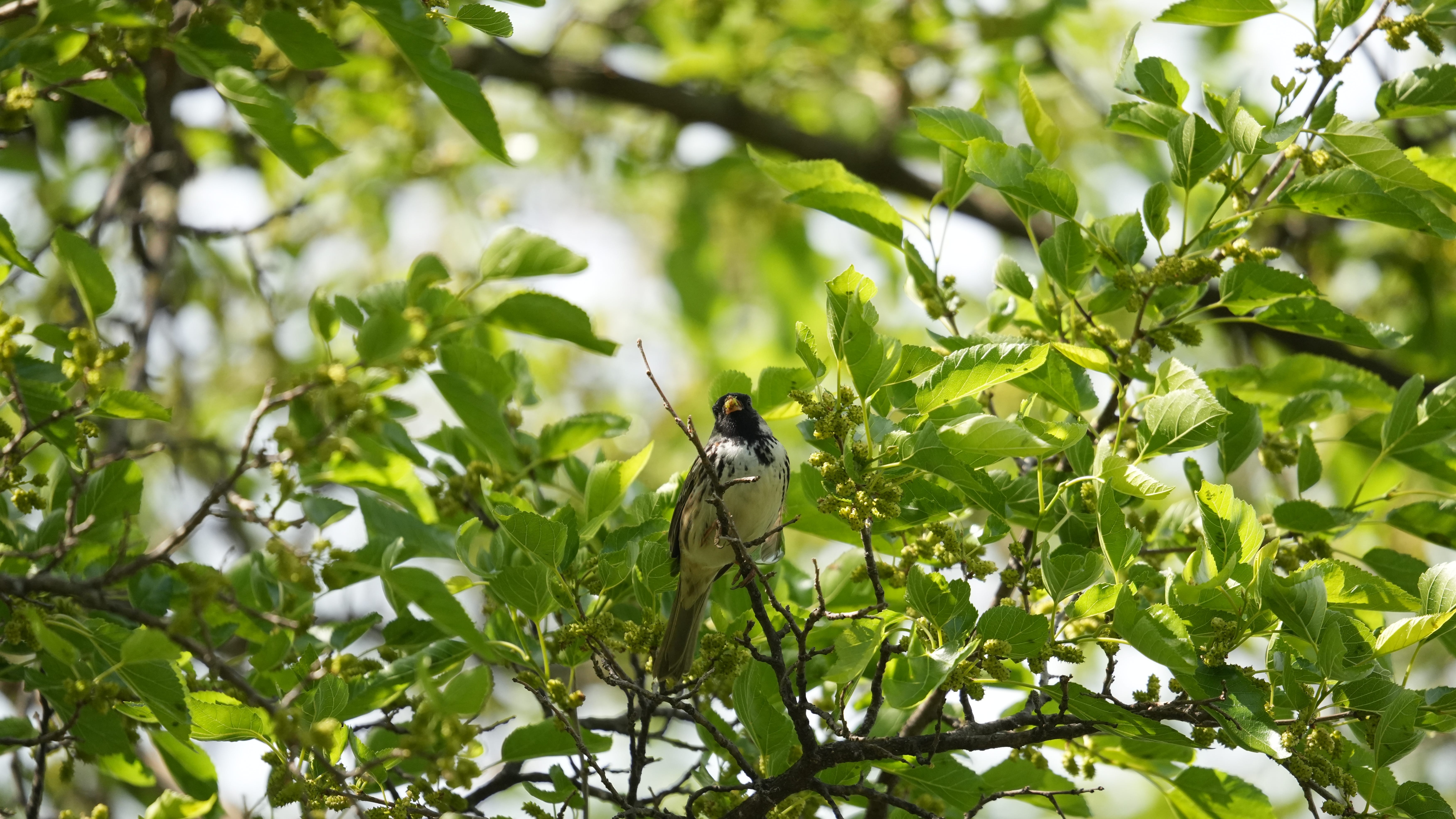
The sparrow moved around the tree as it feasted, offering splendid looks through binoculars and fairly good photo ops for the gathered admirers, a half dozen by now and more coming. No wonder. When a bird is making its second known appearance in a county, birders don’t mess around.
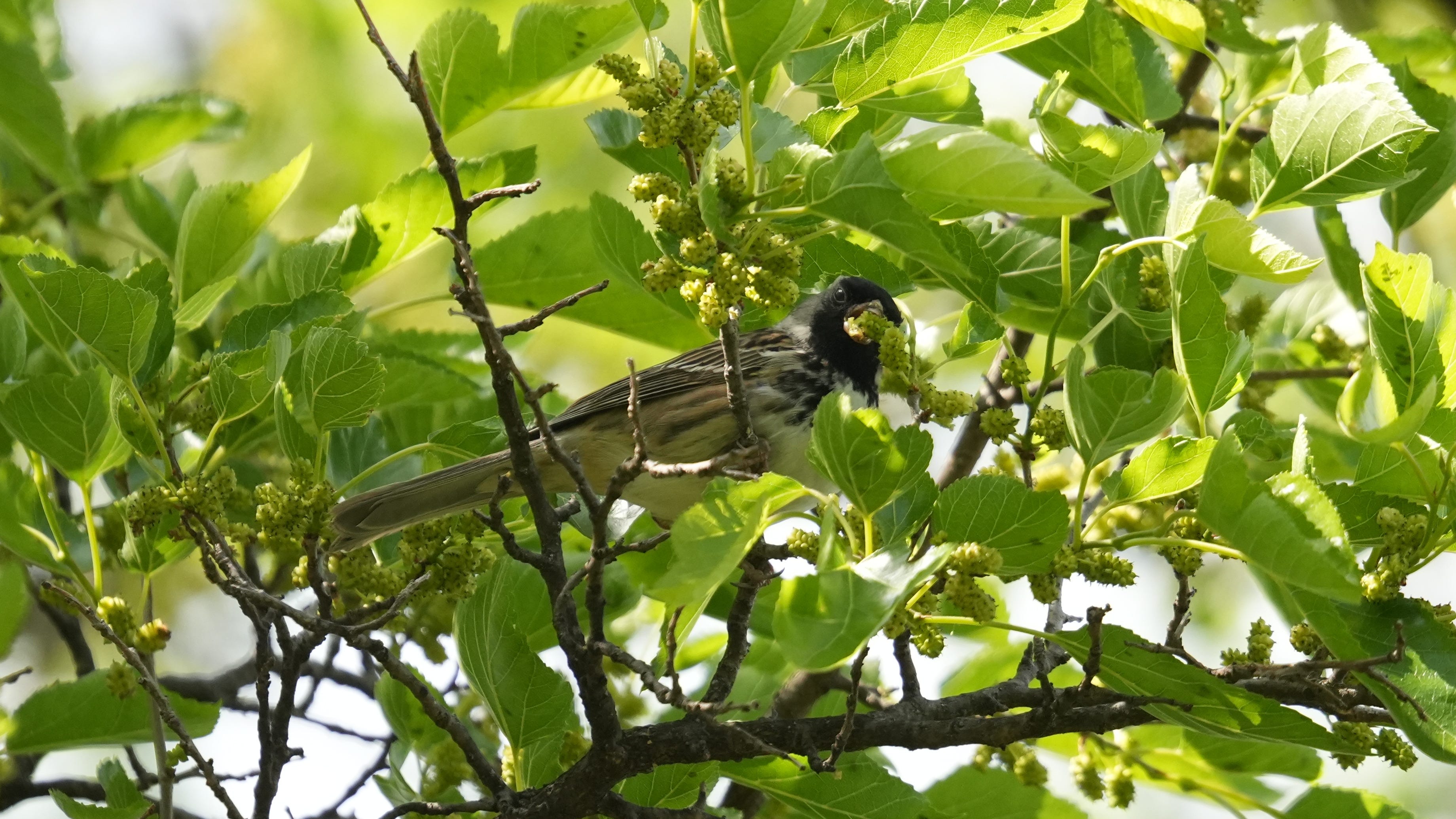
After a hardy mulberry repast, it took off again, and we were unable to locate it for long enough that I wondered if I’d already had the best look I was going to get. As we waited, I got to talking to the assorted admirers. One of them, Bill, I suspected I had met before. He suspected the same. When we figured out we had crossed paths at local waterfowl hotspot Duck Hollow, he remembered I was from Ohio. He gave me his number and his card and invited me to check out his website, which I did later that day, and I can say with total sincerity that what I learned about Bill blew my mind every bit as much as the sparrow we saw together. More on Bill below.
It’s over here!, Michelle announced again. The Harris’s was even more accommodating this time, foraging on the ground, unbothered by the gaggle of admirers inching closer for better photographs. As I captured it, it occurred to me that this was one of the handsomest sparrows I had ever seen. Handsome, but not in a straightforward, Cary Grant kind of way. There’s something messy about a Harris’s Sparrow and its scattershot streaks. They’re a bit disheveled. Ruggedly unkempt. Benicio del Toro, but a bird.
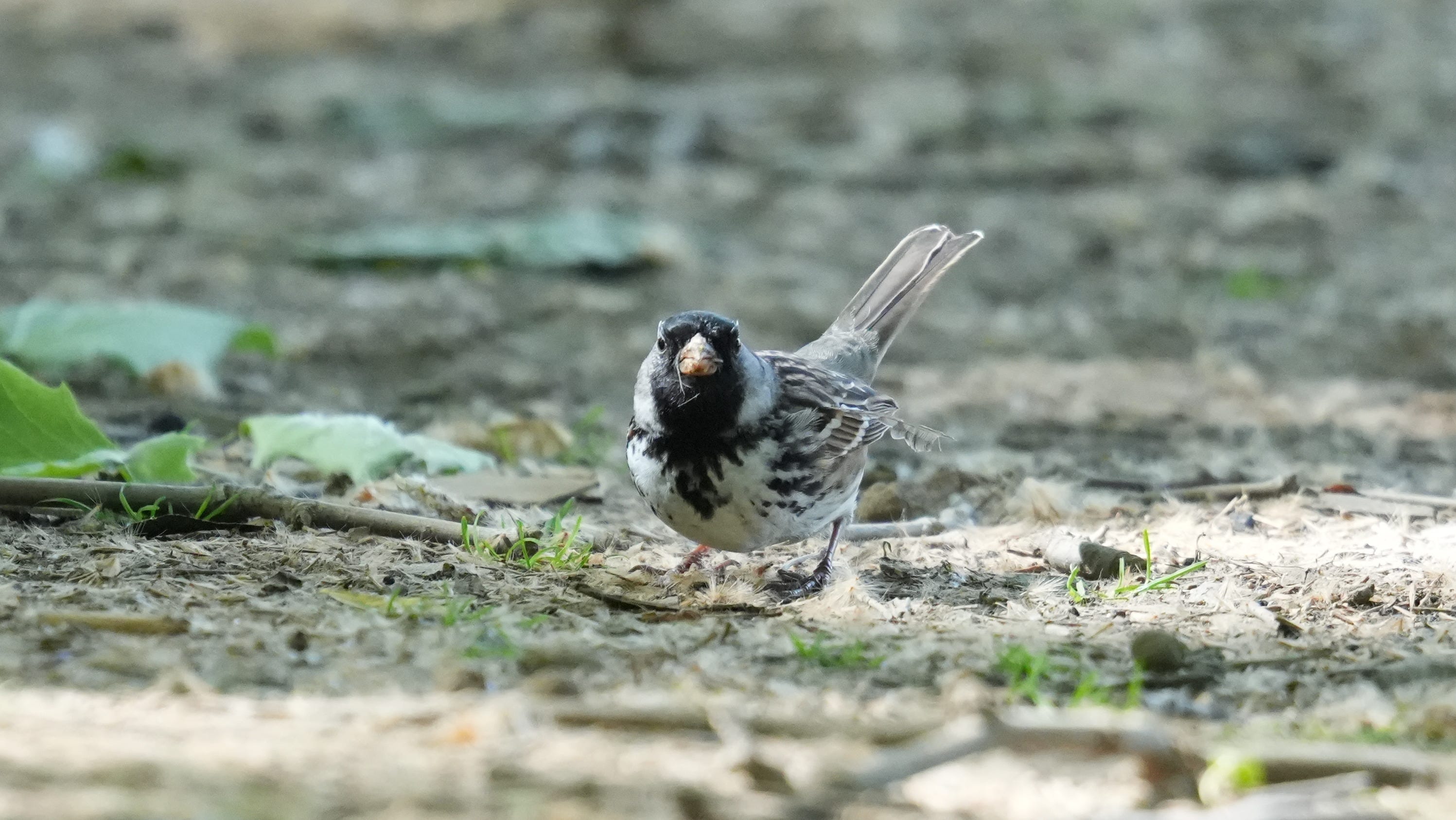
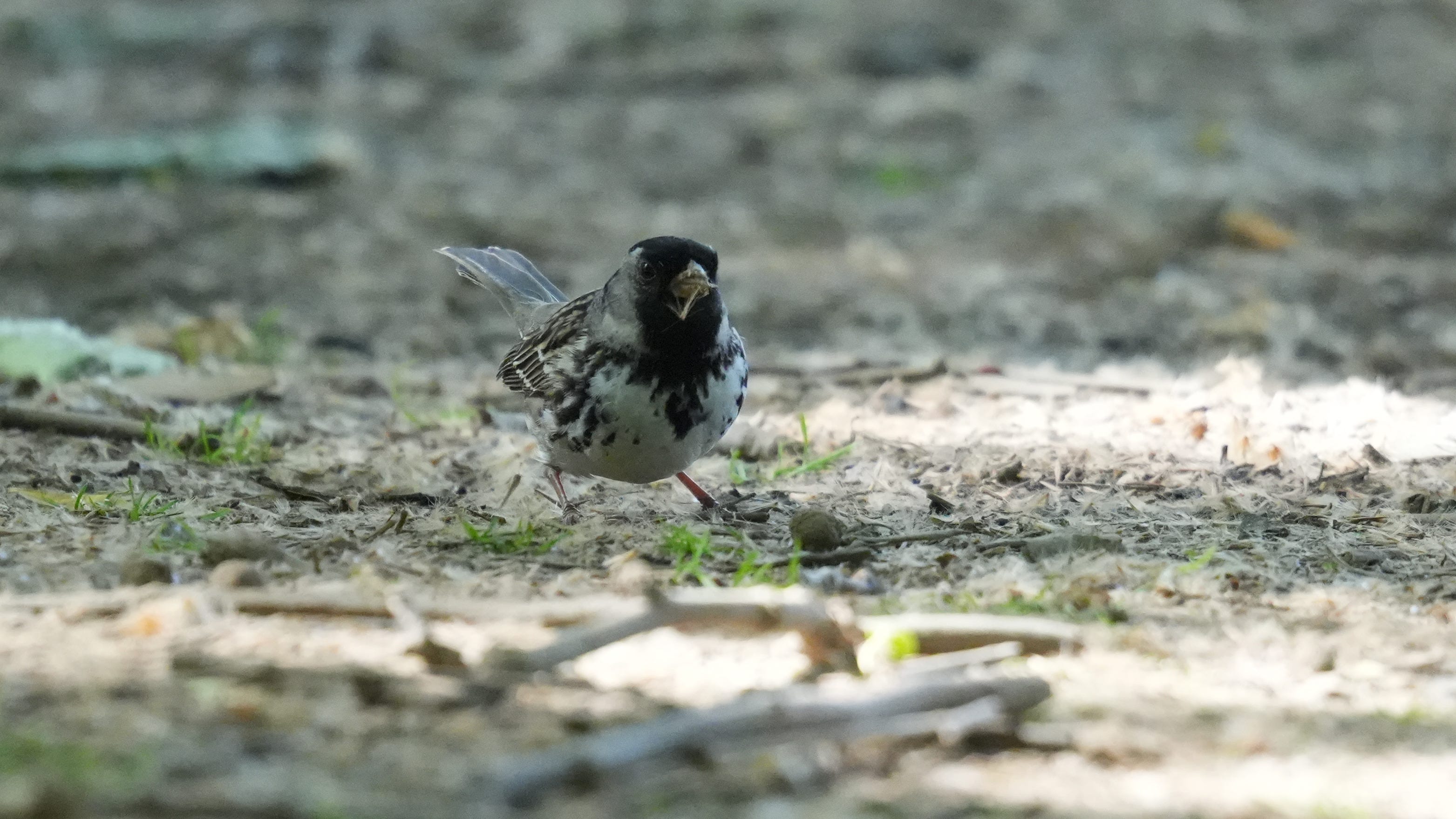
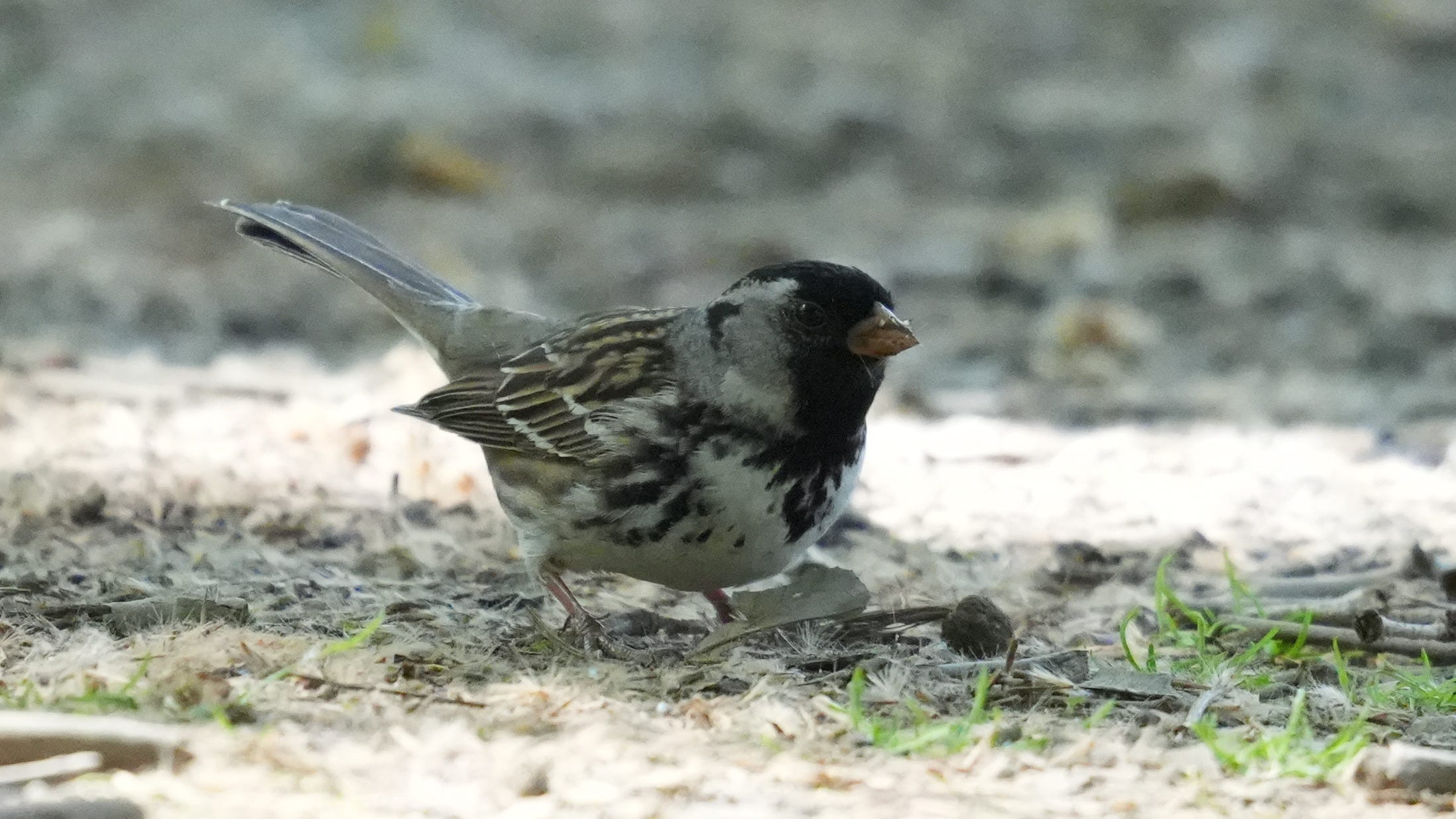
Funny thing—we didn’t spend a single moment reflecting on Edward Harris. Who he was and why this beautiful creature was named after him didn’t come up. What we did reflect on was how far out of range it was. How tame it was. Mostly how striking it was, with its black cap, mask, and bib. How long its tail was. How pink its bill. How lovely the light buff coloring offset the streaky blacks, whites, and grays.
Only later, after my euphoria began to subside, did I reflect on Harris and the AOS and what the Harris’s Sparrow’s new name should be. Perhaps an out-of-use former name? Perhaps not. I think we can eliminate what was chosen prior to Audubon by naturalist Thomas Nuttall, who referred to the bird as the Mourning Finch. A sparrow is not a finch, so let’s go with something novel. The bird breeds only in northern Canada, so Canada Sparrow or Tundra Sparrow could be appropriate, though I have reservations about choosing a geographical name when the bird spends half its life outside of its breeding range. A reference to the field marks is usually a good bet. Black-masked Sparrow? Long-tailed Sparrow? Great White-bellied Sparrow? I concede my imagination isn’t running away with this one, so I leave it to you, dear birders👇
Featured Photo—Harris’s Sparrow
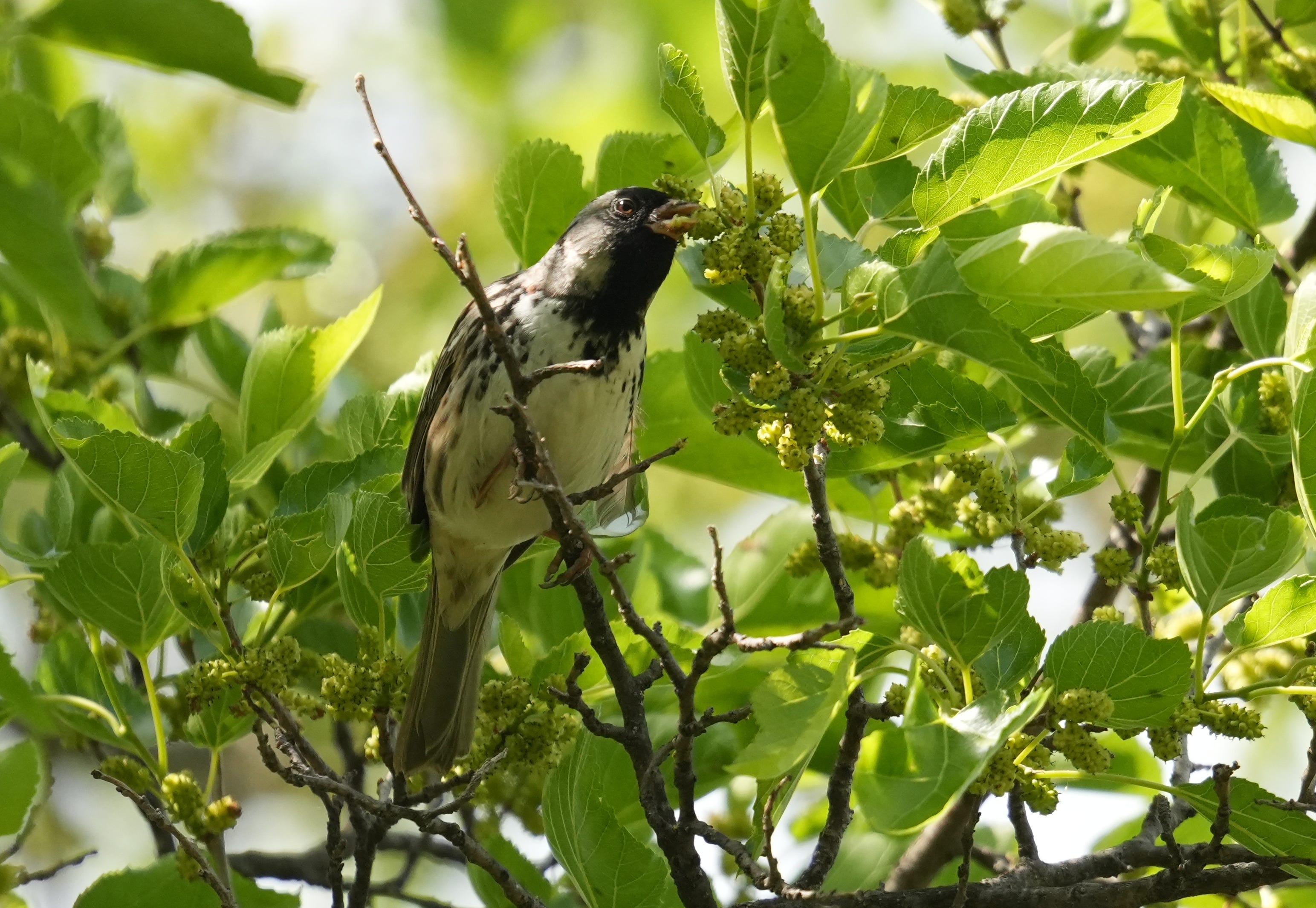
This is my favorite shot from the series. I love how the sun illumines the bird’s eye as it reaches for an underripe mulberry. I don’t know what this bird will be called when I see it next, but I’ll never forget the afternoon half-hour I got to spend with Harris’s Sparrow in a Pittsburgh metro park.
10/10 Recommends
That evening, after perusing my photos, I pulled out Bill’s card and visited his website. What I found floored me. Bill Pfahl is a painter. A damned talented one too. I can’t get enough of his Pittsburgh cityscapes, particularly his depictions of the borough of Sharpsburg, one of my favorite places to bird in the Pittsburgh metro area. Sharpsburg was once a bustling manufacturing hub where Heinz got its start. That heyday is long gone, but Bill captures the ghosts of the past in his hazy portrayals of modern Sharpsburg.
That’s all for this week. Have you ever seen a Harris’s Sparrow? Have you thought up a suitable new name for it? What’s your opinion of the decision to change honorific bird names in general? Please use this handy button if you’d like to opine👇
Until next time, thanks for reading, and don’t forget to bird your ass off!
nwb
Like what you read but aren’t ready for a subscription? My camera kicked the bucket recently. Consider a one-time gratuity to help offset the cost of a new (used) one.
Paid or not, every bit of engagement, every like and comment, is truly appreciated. Please consider sharing this post, a wonderfully free way to help spread the bird joy.
This post was human-generated. All media by Nathaniel Bowler, except where noted.
Comments
Nothing yet. Say the first thing.
Sign in to join the conversation.