
If you’ve spent any time running the Atlanta BeltLine this season, lining up for group runs, or browsing the latest releases at Big Peach Running Co., you’ve likely noticed one trend dominating the conversation: carbon plate shoes.

They’re sleek. They’re fast. They’re often called “super shoes.” And with the Publix Atlanta Marathon, Half Marathon & 5K happening this weekend, plenty of runners are wondering the same thing:
Do I actually need carbon plate shoes to run my best?
The answer isn’t as simple as yes or no — and that’s exactly why it’s worth discussing.
Carbon plated shoes typically combine three primary elements: a rigid carbon fiber plate embedded in the midsole, highly responsive, lightweight foam, and a rocker-shaped geometry designed to promote forward propulsion. Together, these components aim to improve running economy — meaning you use slightly less energy to maintain a given pace.
The keyword there is slightly. For elite athletes chasing marginal gains, those percentages matter tremendously. For everyday runners, the benefits are still real — but they’re not magical. A carbon shoe won’t replace smart training, consistency, or proper recovery. What it can do is complement them.
When used appropriately, carbon shoes can help you feel more efficient at race pace. They tend to feel snappy underfoot, encouraging a quicker turnover and smoother transition from heel to toe. Many runners describe the sensation as being gently “rocked” forward with each stride.
But they also feel different. The plate creates stiffness that your calves and Achilles will absolutely notice if you’re not accustomed to it.
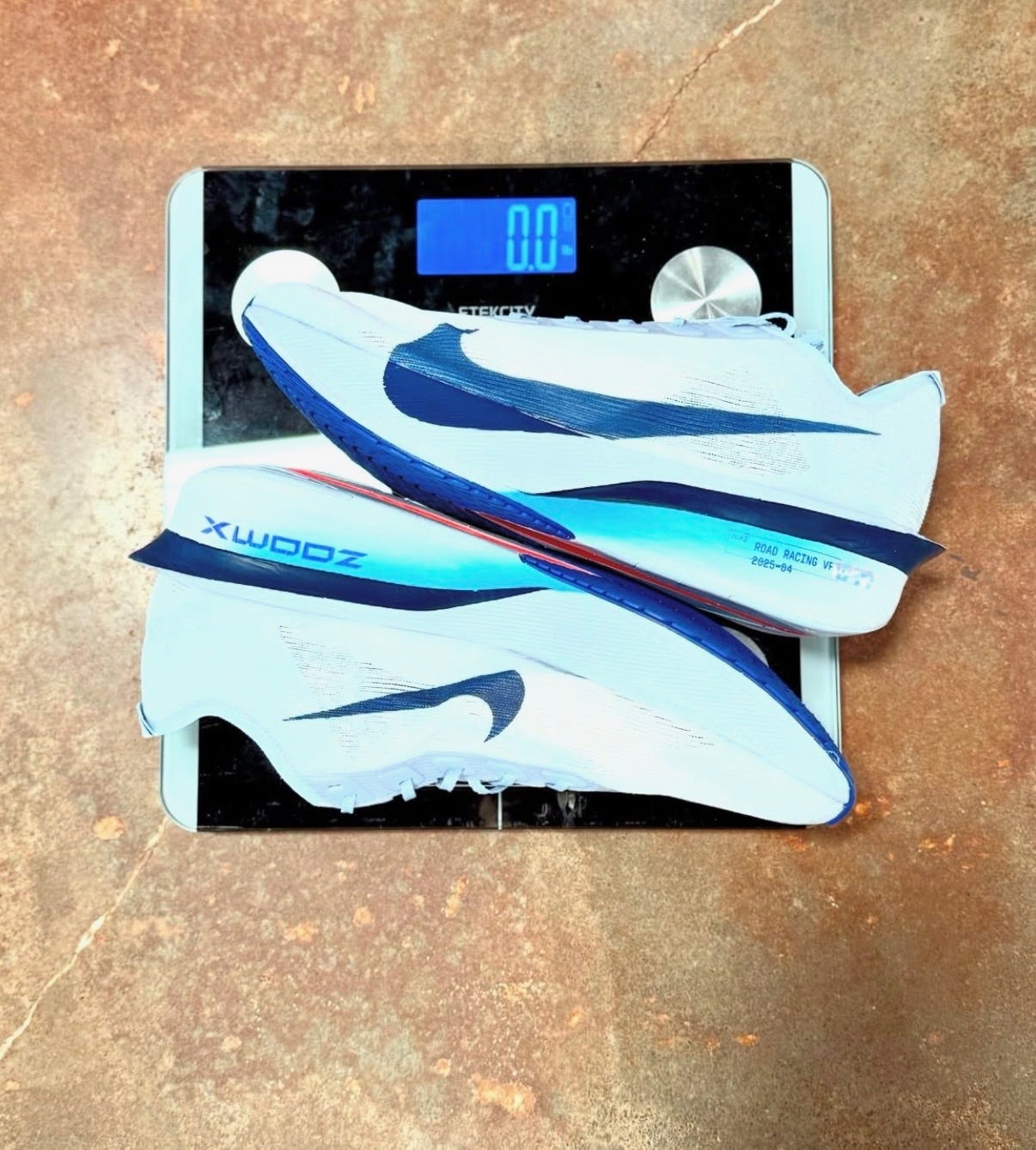
Nike Vaporfly pictured above.
Race week often brings last-minute gear decisions, and we’ve had many runners stop in asking whether switching to a super shoe now will give them an edge on Sunday.
Here’s the honest advice: if you haven’t trained in a carbon plate shoe, race day is not the time to experiment.
Super shoes change how your lower legs load and unload energy. If you’ve incorporated them into your long runs or tempo efforts and your body feels good, then they can absolutely be a smart race-day choice. If not, trust the shoe you’ve trained in consistently.
There is no performance gain worth risking discomfort at mile 18.
That said, for runners who have prepared in them, carbon shoes can provide a subtle but meaningful boost in the later miles of a marathon — when efficiency matters most.
For runners exploring race-day options, we carry several high-performance super shoes that each offer a distinct feel.
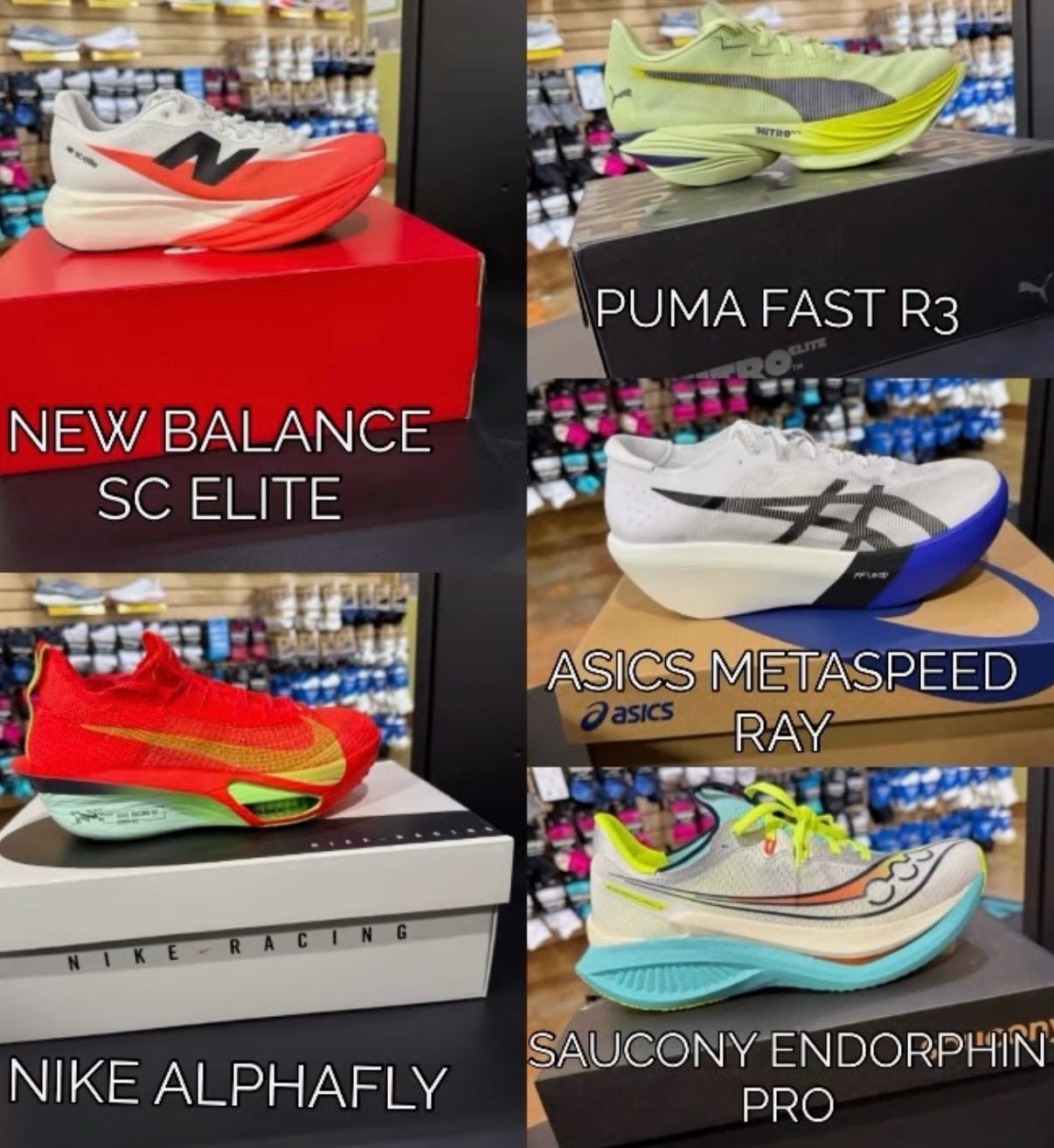
Shop the Puma Fast-R Nitro Elite
Shop the New Balance Supercomp Elite
Shop the ASICS Metaspeed Sky Tokyo
Shop the Saucony Endorphin Pro
Each of these shoes feels different, which is why an in-store fitting matters. Carbon plate geometry, stack height, and foam density vary significantly between brands.
If there’s one concept we emphasize with runners of all levels, it’s this: performance and injury prevention don’t come from one perfect shoe — they come from smart rotation.
Rotating shoes throughout the week reduces repetitive stress on the same tissues and joints. Different shoes load your muscles in slightly different ways. Over time, that variation can help reduce overuse injuries and extend the life of your footwear.
Research increasingly supports what we’ve seen for years in-store: runners who rotate shoes tend to experience fewer injuries than those who wear the same pair for every run.
Carbon shoes, in particular, are not designed to be daily trainers. Their foams are softer and more performance-oriented, meaning they break down faster under high mileage. They’re best used strategically.
If your goal is to finish strong, enjoy the Publix Atlanta Marathon atmosphere, and continue running for years to come, you do not need a carbon shoe.
If your goal is to shave minutes off your PR and you’ve trained accordingly, a super shoe may provide a worthwhile edge.
But no shoe replaces consistency. No plate substitutes for strength training. And no foam compensates for poor recovery habits.
At Big Peach Running Co., we believe the best shoe is the one that fits your stride, your goals, and your training reality — not just the one trending on social media. Whether you’re lining up this weekend or building toward your next race, we’re here to help you build a rotation that supports you mile after mile. And bottom line, no matter what your pace or your distance — if you enjoy trying new things, carbon fiber shoes are fun and absolutely worth exploring. Sometimes performance gains are measurable, and sometimes they’re simply about the excitement of lacing up something new and seeing what it feels like.
No posts
Comments
Nothing yet. Say the first thing.
Sign in to join the conversation.