
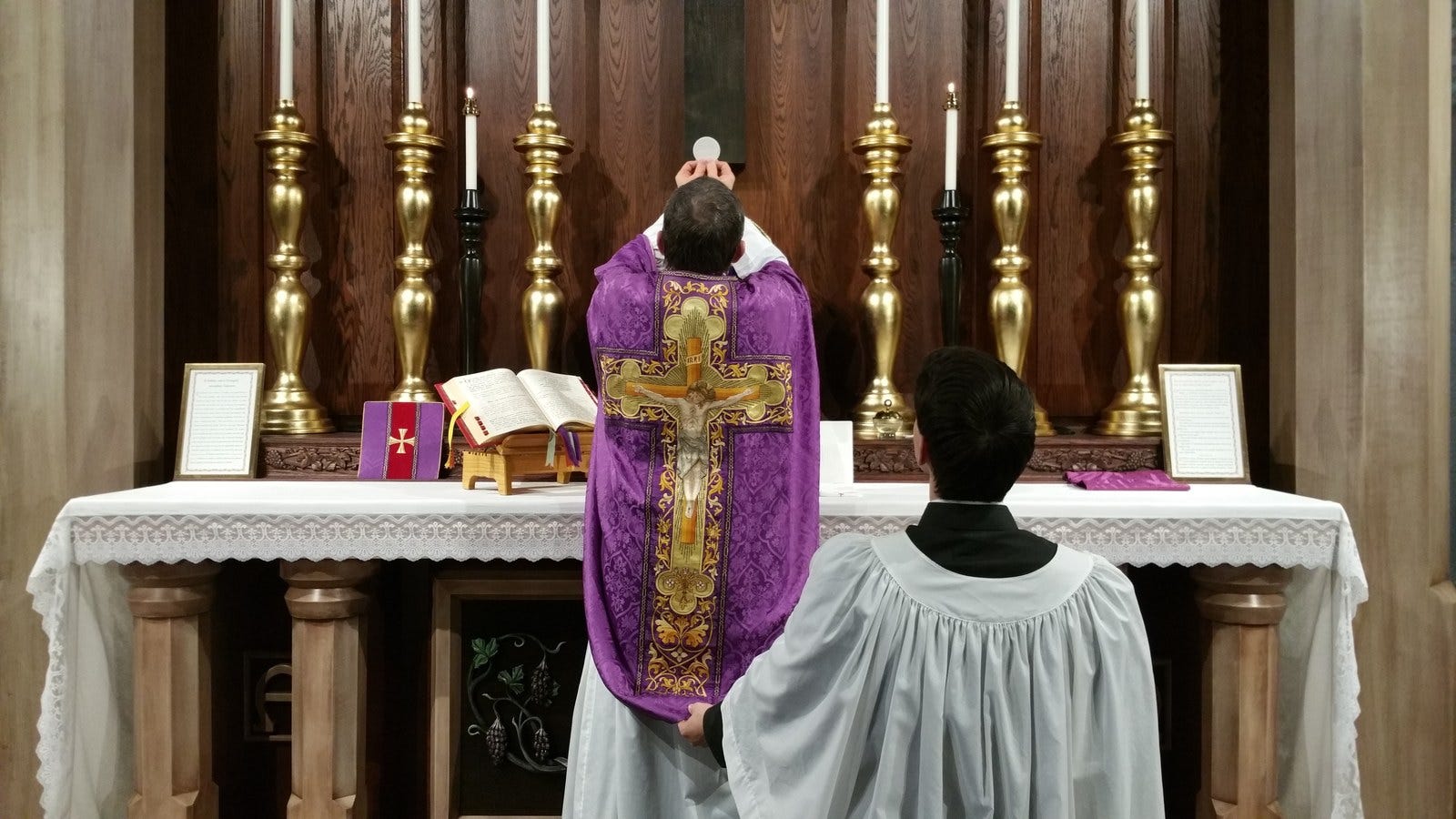
A Catholic father walks into a chancery with a petition.
He has gathered signatures from thirty-seven families. They are willing to drive. They will raise money. They have found a priest who knows the rite. They ask for an early Sunday Mass in a church that otherwise sits empty until eleven.
Hiraeth In Exile is a reader-supported publication. To receive new posts and support my work, consider becoming a paid subscriber.
The diocesan official receives them politely.
Their request requires study.
The bishop must consider parish unity. The priest’s suitability must be confirmed. Rome may need to be consulted. The group must demonstrate acceptance of Vatican II and the legitimacy of the reformed liturgy. The Mass may have to be celebrated outside a parish church. New groups are discouraged. Existing permissions remain subject to review.
The families leave with no answer.
Across town, another parish advertises a Pride Mass. A woman delivers a “reflection” after the Gospel. Liturgical dancers circle the altar. Extraordinary ministers crowd the sanctuary. The bulletin carries an invitation to an interreligious prayer service.
Nobody asks whether these people accept the Council of Trent. Nobody demands written proof that they recognize the traditional doctrine of the Eucharistic sacrifice. Nobody sends a questionnaire to Rome.
The old Mass requires permission. Everything that replaced it requires patience. That is the ecclesiastical order created after the Council: Catholic tradition survives as an exception administered by the men committed to superseding it.
The permit can be granted. The permit can be narrowed. The permit can be transferred to a gymnasium. The permit can expire.
Rome then condemns the Society of Saint Pius X because Archbishop Marcel Lefebvre refused to entrust the survival of Catholic worship and priesthood to that permit.
From Inheritance to Indult
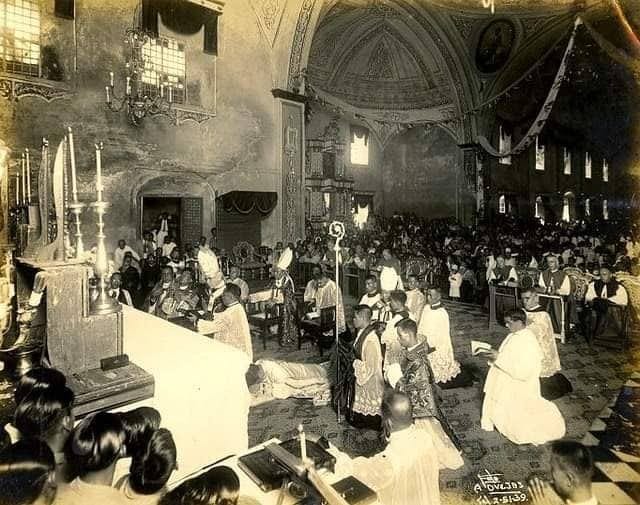
The Roman Mass existed before every chancery official now deciding whether Catholics may attend it.
Its essential Canon reaches into Christian antiquity. Its prayers, gestures, silence, orientation, calendar, offertory, and sacrificial structure developed across centuries. Saint Gregory the Great received and ordered a tradition already ancient in his time. Saint Pius V codified the Roman Missal after Trent and protected rites possessing a history of at least two hundred years.
No Catholic in 1950 imagined that the Roman Mass depended upon a special pastoral concession.
It was the Mass.
A priest received the missal with his ordination. A bishop guarded its discipline. The faithful inherited it from their parents, who had inherited it from theirs.
Then came the reform.
Paul VI promulgated the new missal in 1969. Within a few years, the traditional rite had practically disappeared from ordinary parish life. Altars were demolished or abandoned. Sanctuaries were rearranged. Latin vanished. Communion rails came out. Priests who continued celebrating the old rite faced discipline, isolation, and pressure.
The inherited Mass acquired a new name: the “Tridentine” Mass.
The label made it sound like a sixteenth-century construction recently overtaken by a newer model. The Roman rite became an artifact from a particular council rather than the mature worship of the Latin Church.
Catholics who wanted it were expected to request an indult.
An indult is a concession from authority relaxing the operation of a law in a particular case. The word itself established the new relationship. The faithful no longer approached the altar as heirs. They approached the chancery as applicants.
Rome had converted liturgical patrimony into paperwork.
The 1984 Arrangement
In 1984, the Congregation for Divine Worship issued Quattuor abhinc annos, permitting bishops to authorize celebrations according to the 1962 Missal under restrictive conditions.
The permission was framed around Catholics attached to the earlier rite who accepted the legitimacy and doctrinal exactness of the missal promulgated by Paul VI. Celebrations generally had to take place away from parish churches and on terms determined by the local bishop.
The arrangement offered relief to some Catholics.
It also established the architecture of containment.
The traditional Mass could survive in designated pockets so long as its adherents presented no challenge to the reformed settlement. They could love the old rite as a preference. They could value Latin, silence, chant, and ceremony. They could speak of beauty and personal spirituality.
They could never ask too loudly why the Church had stripped ordinary Catholics of something sacred.
The permit depended upon avoiding the question that gave rise to the request. If the old Mass embodied Catholic doctrine with exceptional clarity, why had it been displaced? If it remained holy, why was its celebration treated as a dangerous concession? If the reform represented organic development, why did the previous rite require quarantine? If the old and new forms expressed the same faith, why did the hierarchy fear the old one?
The indult answered none of this.
It offered access in exchange for silence.
Archbishop Lefebvre Refused the Cage
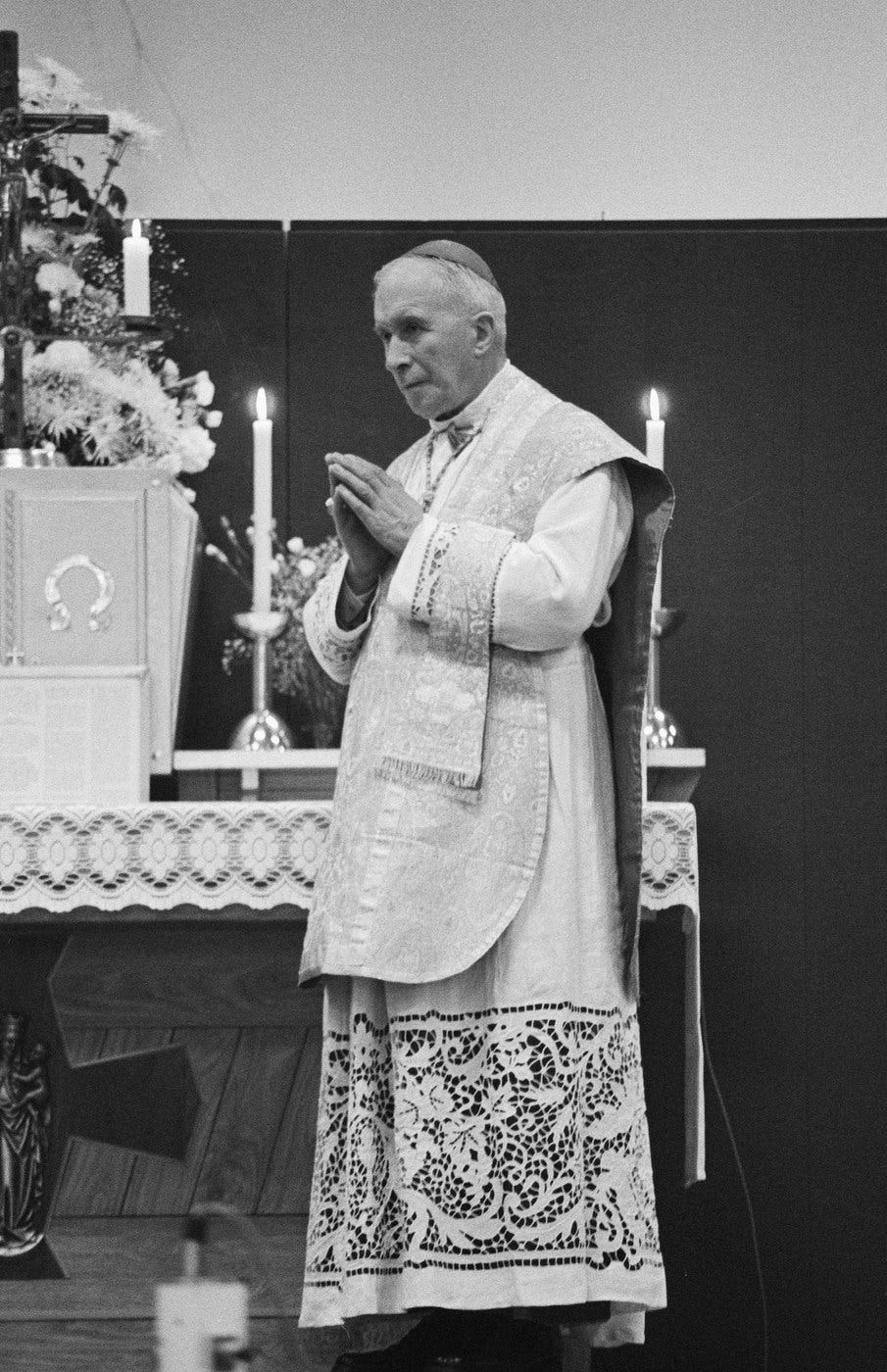
Archbishop Marcel Lefebvre understood the significance of the permit system.
His dispute with Rome involved the Mass, though it reached far beyond liturgy. He objected to the doctrinal revolution surrounding religious liberty, ecumenism, collegiality, the social kingship of Christ, and the new relationship between the Church and the modern world.
The reformed liturgy made that revolution visible every Sunday. The priest turned toward the people. The ancient offertory disappeared. The sanctuary opened to an expanding cast of lay participants. The language of sacrifice receded behind the language of assembly and meal. Options multiplied. The new rite could be celebrated reverently. Its governing architecture still expressed a changed theological atmosphere.
Lefebvre founded the Society of Saint Pius X to preserve Catholic priesthood as he had received it. That choice eventually forced the central practical question. Would the traditional priesthood survive by right, through seminaries and bishops dedicated to its preservation? Or would it survive as a tolerated enclave dependent upon permission from men who regarded its disappearance as desirable?
Rome offered canonical solutions containing varying degrees of protection.
Lefebvre distrusted their durability.
The history since his death has been remarkably effective at proving his point.
Ecclesia Dei: Generosity Without Security
After the 1988 episcopal consecrations, John Paul II issued Ecclesia Dei adflicta. He condemned Lefebvre’s act while asking bishops to show respect for Catholics attached to the older liturgical tradition and to apply the prior permissions broadly and generously.
The document helped create space for communities that wished to retain the traditional liturgy while remaining canonically regular.
The Priestly Fraternity of Saint Peter was founded in this context. Other institutes followed. Diocesan communities grew. Families discovered the old Mass. Vocations appeared.
The arrangement produced real fruit. Its weakness remained embedded in its legal foundation. Generosity is a quality of the grantor. It creates gratitude in the recipient. It establishes no permanent protection against a less generous successor. A favorable bishop could welcome a traditional community. His replacement could restrict it. A parish priest could build a thriving apostolate. A chancery could move it. A religious institute could flourish under one Roman administration and face visitation under another.
The faithful learned to celebrate each permission as a victory because they understood that every permission could be lost.
Their Catholic life depended upon personnel.
This was precisely the dependency Lefebvre had rejected.
Benedict XVI Recognized the Central Truth
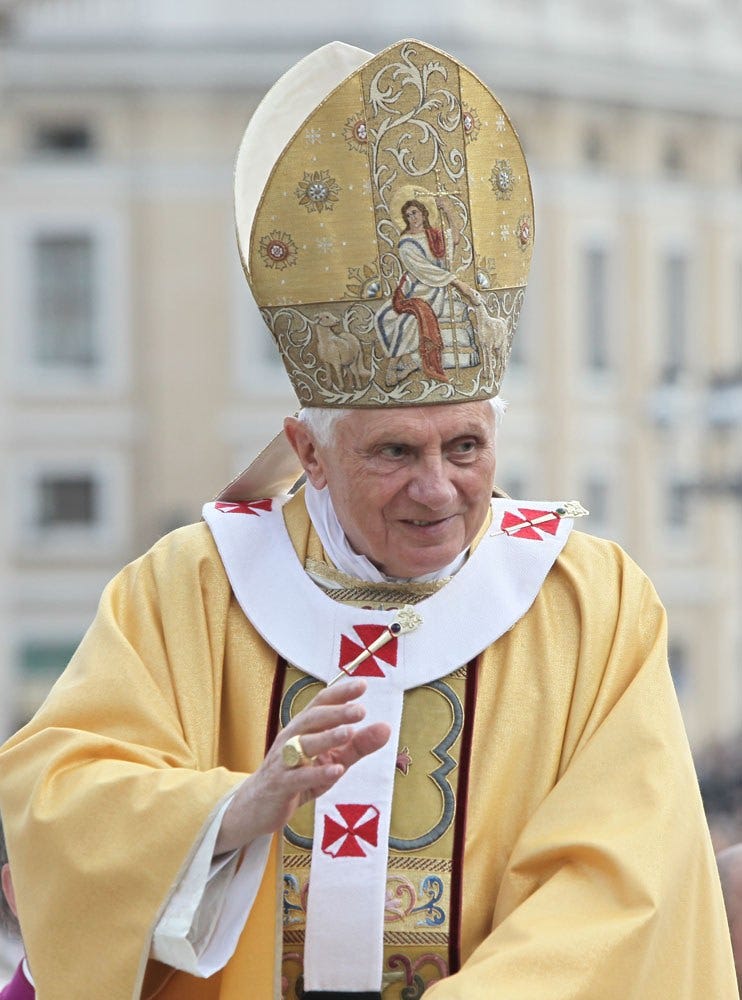
Benedict XVI changed the juridical argument in 2007.
Summorum Pontificum declared that the 1962 Missal had never been juridically abrogated and consequently remained permitted in principle. A priest of the Latin rite could celebrate it privately without obtaining permission from the Apostolic See or his ordinary. Pastors were instructed to respond willingly to stable groups seeking the older liturgy.
The accompanying letter contained the sentence that exposed the injustice of the permit regime:
“What earlier generations held as sacred, remains sacred and great for us too.”
That principle reaches beyond nostalgia.
A sacred inheritance cannot become spiritually harmful because an ecclesiastical committee has produced a replacement.
Authority may regulate liturgy. Authority receives liturgy before regulating it. A bishop is a custodian before he is an administrator. He inherits a treasury he did not create. The power to govern sacred things differs from ownership of them.
Benedict never followed the traditional critique to its conclusion. He defended Vatican II and the reformed liturgy. His “two forms” solution attempted to reconcile rites embodying visibly different conceptions of Catholic worship. Yet he recognized the fatal fact the indult system had obscured.
The old Mass had never ceased to belong to the Church.
A priest did not need a favor to celebrate it.
Francis Restored the Permit
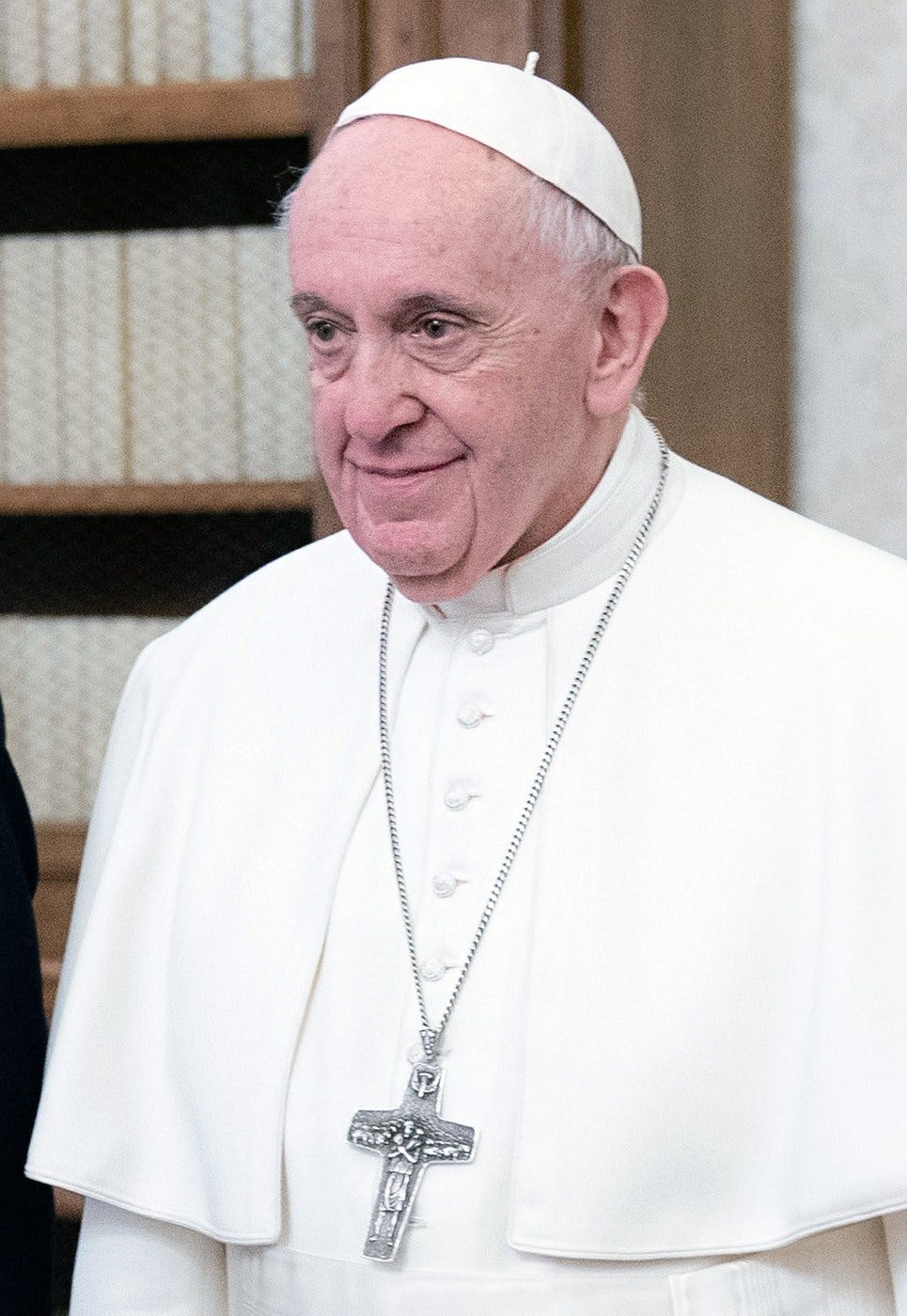
Traditionis Custodes reversed Benedict’s governing principle.
Francis declared the liturgical books promulgated by Paul VI and John Paul II the unique expression of the Roman rite’s lex orandi. Bishops received authority to regulate the old Mass under conditions directed toward containment. New groups were barred. Parish churches were generally closed to traditional celebrations. Priests ordained after the decree required special authorization. Bishops were instructed to determine whether existing groups should continue. (bigmodernism.substack.com)
The old logic returned with sharper teeth. The traditional Mass could exist only as a concession. Its adherents required supervision. Their attachment raised suspicion. Their children presented a problem, because young families demonstrated that the rite had a future.
Francis claimed the reform was necessary for unity. The unity demanded was liturgical submission to the postconciliar settlement. Catholics could remain attached to the old Mass only while moving toward the new one.
A permission aimed at eventual extinction is a waiting room for abolition.
Roche Says the Quiet Part Clearly
Arthur Roche’s January 2026 paper reduced the entire history from John Paul II through Francis to a series of concessions. The description flattened three distinct positions. John Paul II granted an indult. Benedict XVI stated that the older Missal had never been abrogated. Francis reinstated restriction.
Calling all three arrangements concessions erases Benedict’s central judgment. Roche needs that erasure. If Benedict was right, Traditionis Custodes appears as an unprecedented attack upon a legitimate Roman rite. If Roche is right, Francis merely adjusted a pastoral favor.
The disagreement concerns who owns tradition. Roche’s answer places ownership in the governing authority of the moment. The rite survives because Rome allows it to survive. The traditional answer places authority beneath the received deposit. Rome governs a liturgical inheritance that carries its own claims upon Rome.
Roche calls the first arrangement unity.
Traditional Catholics recognize it as custody turned into control.
The Permit Shapes the Catholic
A permit system does more than regulate events.
It forms the people living under it.
Catholics begin speaking the language of privilege.
“We are fortunate to have this Mass.” “Our bishop has been generous.” “We should avoid causing trouble.” “We cannot risk losing what we have.” “Now is the wrong time to criticize.” “Please remain quiet while negotiations continue.”
Every sentence may be prudent in a particular circumstance. Together they create a spirituality of managed fear. The faithful learn that open defense of tradition could endanger their access to tradition. Their silence becomes a condition of the permit.
Priests feel the pressure more acutely. A priest considering the old Mass knows that learning it could affect his assignments, reputation, or advancement. He may be required to affirm the reformed liturgy’s legitimacy before being permitted to celebrate the rite of his ancestors. A liturgy once placed into every priest’s hands becomes a sign of ideological suspicion.
The system filters clergy. Ambitious men avoid the dangerous Mass. Cautious men wait for permission. Courageous men risk discipline. The Church then points to the small number of celebrations as evidence of limited demand. Suppression creates scarcity. Scarcity becomes the justification for further suppression.
Why Families Go to the SSPX
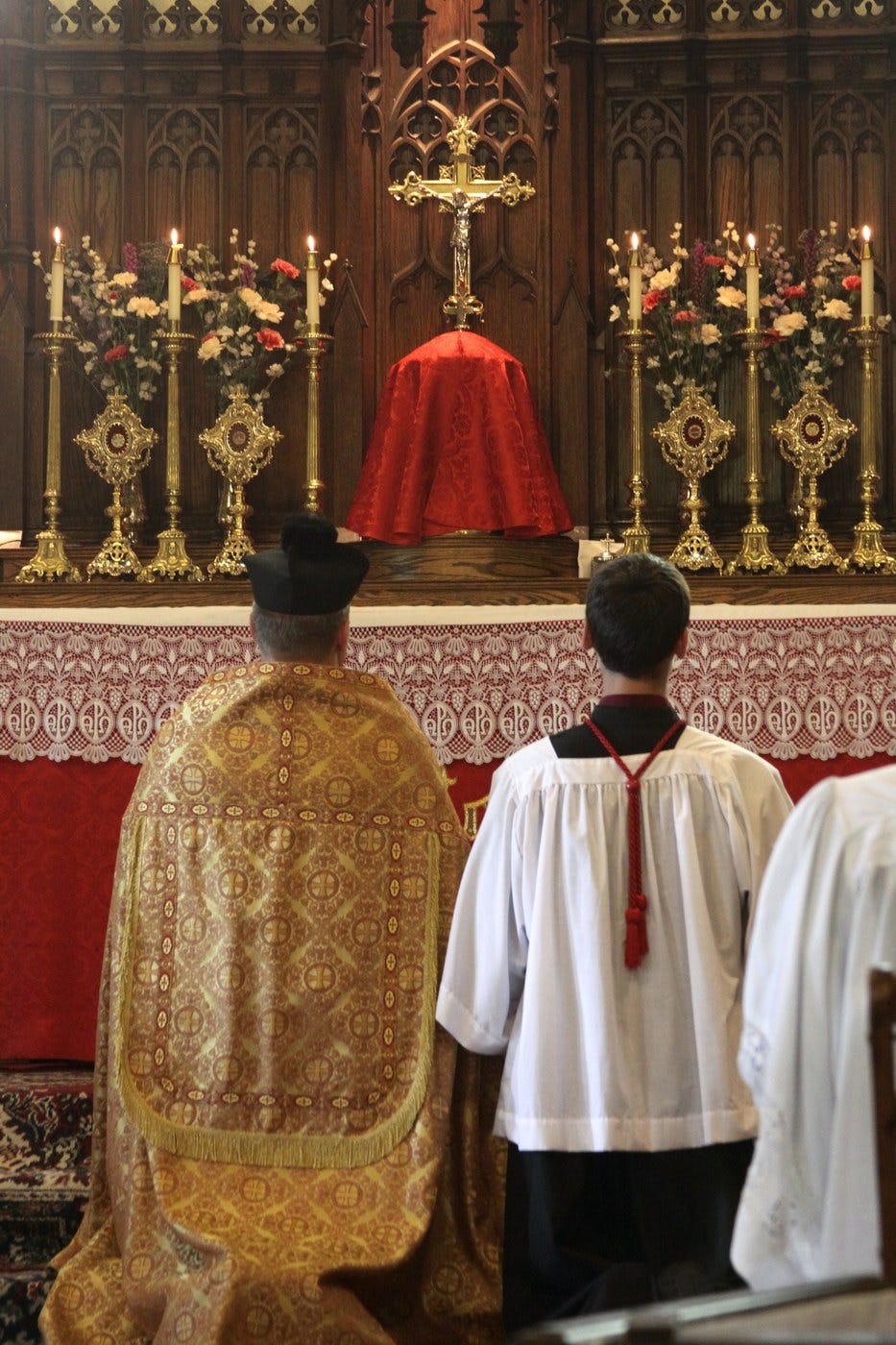
A Catholic family rarely begins with a canonical thesis.
It begins with Sunday.
The parents want a Mass where their children encounter silence, sacrifice, reverence, doctrinal preaching, and a sanctuary ordered around God. They find a diocesan traditional Mass forty minutes away. The community grows. Then the bishop moves it. The new location is farther away and less suitable. A priest retires. A replacement arrives who dislikes the arrangement. Permissions change. Schedules shrink. The children grow older while the parents keep waiting for stability.
An SSPX chapel offers the same Mass every Sunday. Its priests hear confessions. Its school teaches the catechism. Its calendar follows the traditional feasts. Its families know the chapel will remain after the next diocesan appointment.
Rome asks why Catholics go. They go because permanence attracts people living under permanent vows. Families build their lives around stable things. They cannot raise children inside an ecclesiastical pilot program.
Rome Manufactures the “Schism”
The SSPX’s canonical position involves serious questions. Episcopal consecration without a Roman mandate strikes directly at visible ecclesiastical government. The Society claims necessity. Rome claims schism.
The liturgical policy supplies evidence for the Society’s diagnosis. Rome demands trust while structuring traditional life around revocable concessions. It demands obedience while permitting doctrinal and liturgical disorder throughout regular structures. It condemns independent traditional institutions while repeatedly demonstrating the vulnerability of dependent ones. Then it treats the resulting migration as proof of separatism.
This resembles a landlord removing the roof, condemning the tenants who leave, and calling their new shelter an act of rebellion. The Society’s independence carries costs. The permit system made those costs rational.
The Strange Freedom of Everything Else
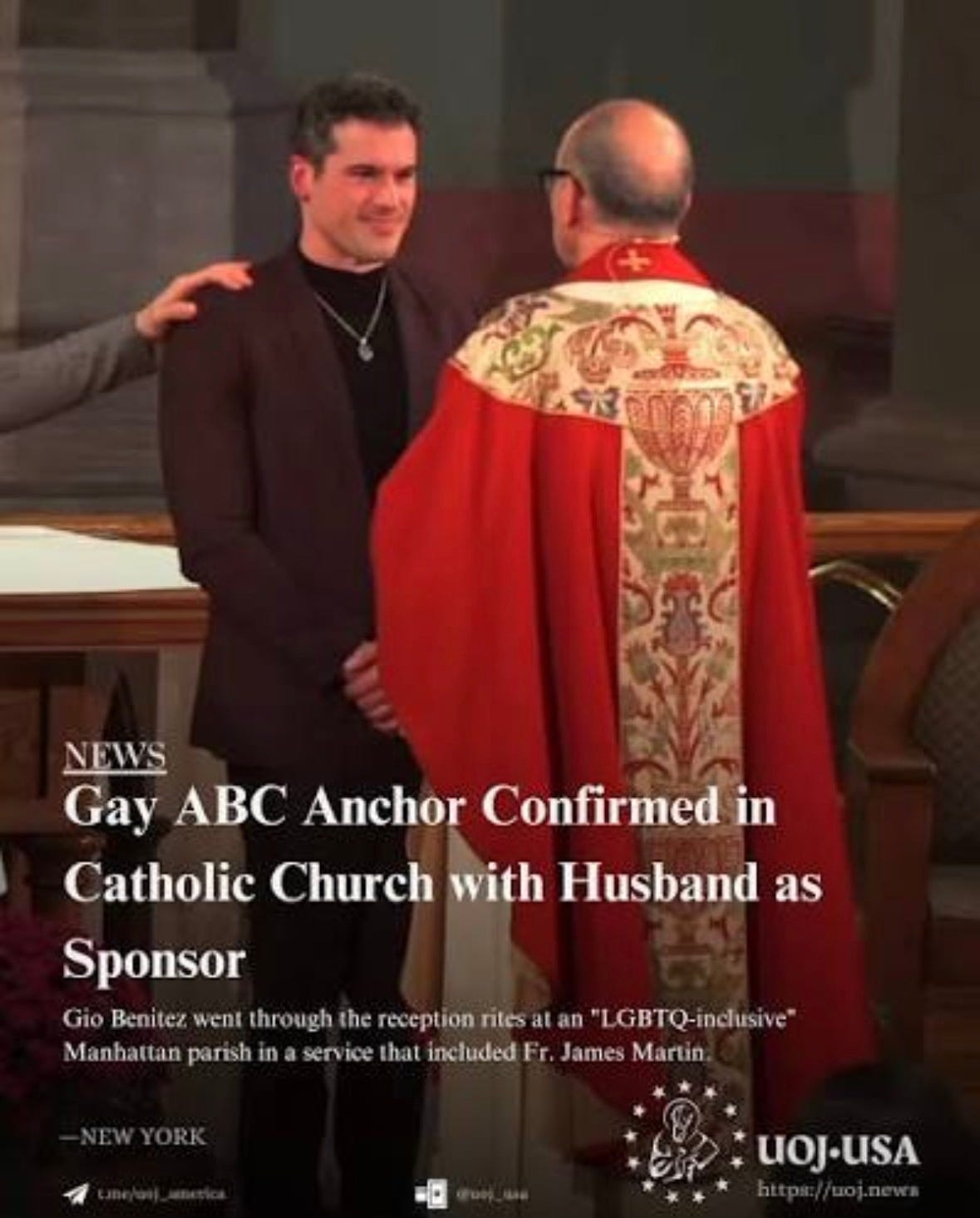
The harshness surrounding the traditional Mass appears even more revealing beside the practical freedom enjoyed elsewhere. German bishops devise blessings for same-sex couples. Laywomen assume leadership roles over parish life. Ecumenical services blur distinctions between the Catholic priesthood and Protestant ministry. Interreligious ceremonies use language that obscures the unique kingship of Christ. Liturgical improvisations appear publicly and circulate through official diocesan channels. Rome responds through dialogue, study, accompaniment, clarification, or silence.
Traditional Catholics receive decrees. This contrast shows that the central issue is larger than obedience. Progressive experiments move in the direction of the postconciliar project. Their excesses may be managed, slowed, or rhetorically corrected. They share the governing instincts of the regime.
The old Mass points backward. It preserves doctrines, gestures, and instincts that expose the novelty of the new order. Its silence condemns the chatter. Its priesthood condemns the assembly-centered performance. Its offertory condemns the weakened sacrificial vocabulary. Its saints condemn the pastoral cult of lowered expectations. Its continuity condemns the revolution’s claim to be organic development.
That is why the permit attaches to the Mass.
The danger lies in what it remembers.
The Respectable Traditionalist’s Bargain
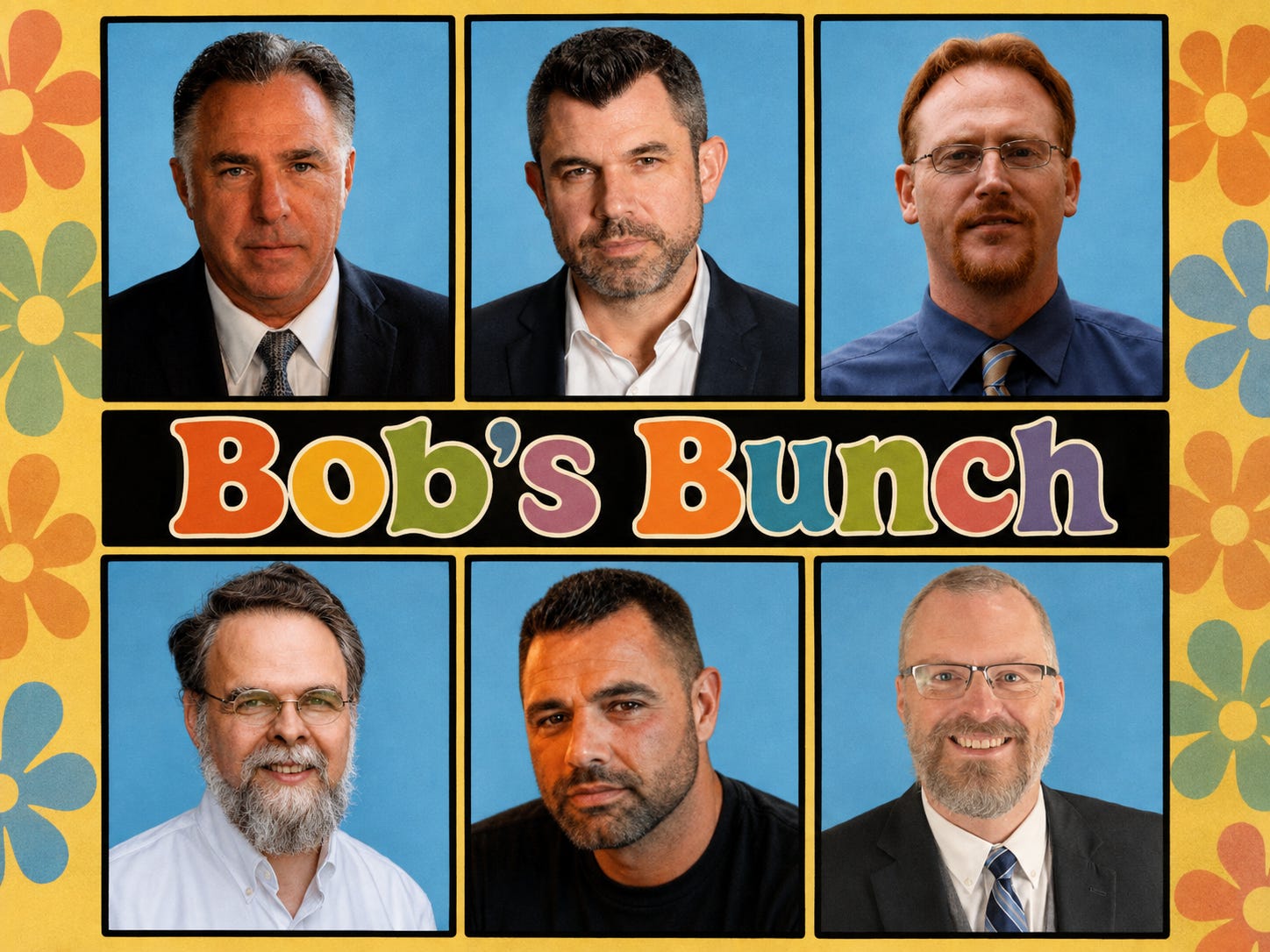
(Starring Robert F. Prevost as Bob)
Trad Inc. built much of its identity inside the permission system. Its leading personalities praise sympathetic bishops, monitor rumors from Rome, celebrate temporary extensions, and demand restraint whenever a new claimant appears capable of restarting the hope cycle.
The bargain began with understandable fears. Catholics love the Mass and dread losing it. Priests have obligations to communities that can be crushed by a single episcopal decree. Publications know that an angry chancery can close a chapel before the next newsletter arrives.
Prudence becomes ideological when every concession is marketed as evidence that the system works. A temporary extension becomes a restoration. A cordial audience becomes a change of direction. A Roman silence becomes secret sympathy. A restriction becomes the fault of an adviser, a prefect, a secretary, or a dying faction whose influence is always said to be fading.
The man occupying the Roman office remains protected from the meaning of his own government.
That is Bob’s Bunch.
They may attack Roche, grumble about Francis, condemn liturgical abuses, and publish devastating accounts of the revolution. Their role changes once Catholics begin asking whether the permission system itself is the fraud.
Then the SSPX becomes extreme.
Sedevacantism becomes psychological instability.
Institutional betrayal becomes another test of patience.
The next audience, appointment, rumor, exemption, or ceremonial gesture is placed before the faithful like the next episode of a familiar television show. Bob is still learning. Bob needs time. Bob has bad advisers. Bob privately understands. Stay tuned.
The permission itself remains beyond criticism because Trad Inc. depends upon the possibility of another permission.
It may condemn the jailer.
It must keep describing the cell as home.
The Best Argument for Regulation
The strongest defense of Roman control deserves an answer.
The liturgy belongs to the Church rather than to private preference. Bishops possess authority over public worship in their dioceses. No priest has an unrestricted right to construct his own liturgical regime. Unity requires common discipline. Some traditional communities have used the Mass as a rallying point for rejection of Vatican II or the legitimacy of the hierarchy.
All of this contains truth. Catholic liturgy is public worship governed by ecclesiastical authority. A priest cannot invent rites. A bishop must preserve order. Liturgical communities can become ideological enclaves.
The argument fails when regulation becomes suppression of the received rite itself. The old Mass is no private construction. It arrived through the Church’s public tradition. Its adherents did not invent it as a protest. Many became critical of the postconciliar settlement after discovering how aggressively that settlement treated the old liturgy. Rome then cites their criticism as the reason for continued restriction. The policy creates the alienation used to defend the policy.
Unity also requires a true object. Catholics unite in the Faith, sacraments, sacrifice, and government established by Christ. Uniform submission to a manufactured liturgical settlement cannot substitute for Catholic unity. A hierarchy that tolerates doctrinal fragmentation while demanding liturgical conformity has confused unity with control.
The Old Mass Needs No Apology
Traditional Catholics often defend the Mass by citing its pastoral results. Young families attend. Children appear. Vocations grow. Converts arrive. Confession lines lengthen. These facts are important, but they remain secondary.
The Mass deserves freedom because it is the Roman Church’s sacred inheritance. Its claim does not depend upon demographic performance. A rite sanctified by centuries of use, offered by saints, carried by missionaries, and whispered by priests under persecution requires no market study. The hierarchy had no moral right to treat it as contaminated material. The faithful have no moral duty to apologize for loving it.
The priest should never have been placed in the position of requesting permission to offer the sacrifice in the rite for which generations of priests were formed. Benedict’s language came close to recognizing this. Francis closed the door again. Leo has left it closed.
Permission Is the Policy
Catholics keep waiting for the favorable administrator. A new bishop may be generous. A new prefect may loosen enforcement. Leo may replace Roche. A future Roman claimant may restore something resembling Summorum Pontificum. Another may revoke it.
That is the problem.
A sacred inheritance cannot remain safe while its existence depends upon the disposition of the next officeholder. The permit system guarantees recurring crisis because it leaves the underlying claim unresolved. Does the Roman Mass belong to the Church? Or does it belong to the men currently controlling access to it?
Rome has governed as though it owns the rite. The SSPX organized as though Rome must answer to the tradition it received. That is why the conflict endures.
Leave the Church of Permission
Leaving the Church of Permission does not require leaving the Catholic Faith.
It means rejecting the mentality that treats Catholic tradition as a favor. It means refusing gratitude for crumbs returned by the men who confiscated the loaf. It means judging concessions by their durability rather than their publicity. It means recognizing that temporary access can never replace rightful inheritance. It means supporting priests and institutions capable of preserving the Faith through hostile pontificates, hostile bishops, and hostile decrees.
For some Catholics, that road leads to the SSPX. Rome created much of that traffic. Every canceled Mass directs another family toward an independent chapel. Every restrictive decree confirms the weakness of diocesan dependence. Every Trad Inc. appeal for patience reminds Catholics how long they have already waited.
The question is no longer why the SSPX refused the permit system. The question is how any serious Catholic can still trust it.
A father should never have to beg a chancery for the Mass of his ancestors. A priest should never have to prove ideological reliability before opening the Roman Missal. A bishop should never treat Catholic tradition as a nuisance requiring containment.
The Church handed down the Mass.
The Church of Permission placed it behind glass and kept the key.
If you value independent Catholic analysis and want to help keep this work going, you can make a contribution or subscribe below. Every donation and subscription directly supports the writing, research, and production of Hiraeth in Exile.
Thank you for helping preserve independent Catholic journalism rooted in truth and tradition.
Hiraeth In Exile is a reader-supported publication. To receive new posts and support my work, consider becoming a paid subscriber.
Comments
Nothing yet. Say the first thing.
Sign in to join the conversation.