
If you meet a philosopher who posted last year, don’t walk past them: thank them for their service. You’re in the presence of a veteran of the Clarity Wars of 2025—a grisly contretemps that nearly tore Substack apart.
My own salvo—a critique of Judith Butler and Ellie Anderson—turned out all right, I thought. Even better, it gave rise to the matchless hit piece “What Ellie Anderson Actually Did and What Daniel Muñoz Cannot See,” in which J. Edward Hackett accuses me of being “methodologically blind”—a “self-appointed graduate of MIT” repeating “the sins of his origin.” I don’t think any essay has ever brought me such joy.
Until now.
I’ll skip to the best part, because it’s just that good. Here is the ultimate paragraph of Dr. Ana Vieyra’s “On a recent controversy regarding clarity in philosophical writing,” published last January in Epoché.
Allow me to end in a rather dramatic and perhaps hyperbolic tone. I believe it is the tone that the severity of the topic merits. Philosophy, along with religion, is among the last corners where logos is allowed to thrive. While Butler might not be the best example of what the philosophical craft has to offer, Muñoz, consciously or unconsciously, perhaps of no fault of his own but as a result of institutional mechanisms, is an agent of the death of philosophy itself.

At least it’s not my fault (perhaps). Vieyra concludes:
The poison of efficiency-based thinking is the death of meaning itself. What passes off as a sober defense of clarity is further evidence that we live in times of logocide.
Maybe it’s the methodological blindness talking, but I’ll be honest: I didn’t see this coming. I thought I was just making banal points about why it’s good to write clearly. I didn’t expect to become walking proof that ours is an era of conceptual murder—specifically, that of logos (Greek for reason), not to mention meaning itself.
How did we get from “clarity good” to “philosophy dead”?
Vieyra opens the murder trial with some low-drama background:
Philosophical writing aims at communicating something, and how ‘good’ or ‘bad’ the writing is shall depend on how well it fulfills the purpose of communicating that which the activity aims at communicating.
Well said. What makes a piece of writing clear, elegant, or otherwise excellent depends on its purpose. Even I saw this point dimly at the start of my post. Instead of saying that clarity is absolutely good, I said it’s good for “analytical writing,” whose purpose is to convince the audience with arguments.
Vieyra also notes that I never provide a “criterion” of clarity—“thus, what he takes clarity to be is itself unclear.” I didn’t think I needed a criterion, but at any rate, happy to clarify!
Writing is unclear when it defies easy understanding, not because of how difficult the ideas are, but purely because of how they’re expressed. Clunky sentences, ill-defined jargon, pointless ambiguity, a zig-zagging flow, unresolved contradictions—these are the hallmarks of obscurity. Clear writing is whatever liberates the reader from such frustrations, so that they can more easily see what each sentence means and how the ideas fit together.
Next, the murder weapon is submitted into evidence. Vieyra lays out a passage I quote from Butler:
neither grammar nor style are politically neutral. Learning the rules that govern intelligible speech is an inculcation into normalized language, where the price of not conforming is the loss of intelligibility itself.
Then my critique:
This non sequitur is so brazen as to be insulting. Yes, you have to follow the rules of a language in order to make yourself understood. You can’t expect other people to follow you if you’re speaking pure gibberish or secret codewords. But Butler says almost nothing to connect this banal linguistic truth to politics.
I just remembered how fun that paragraph was to write—God, I love Substack. Anyway, Dr. Vieyra isn’t amused. Here’s what she says:
We might blink several times, squint our eyes, attempting to discern how the refutation is supposed to take place, how Muñoz’s critique relates to anything Butler has claimed. After a few moments of disbelief, one might even make the effort to reconstruct Muñoz’s understanding of Butler, upon which the very possibility of understanding anything he is claiming as a refutation of Butler is predicated. …
P1: Something something politics
P2: One must follow language rules to be understood
P3: Thus, writing clearly is following rules
P4: But to follow rules is to be a conformist, which is bad
C: Thus, clarity is bad
I got a chuckle out of “Something something politics.” But this four-premise argument isn’t quite what I was driving at. Look at Butler’s passage. The conclusion, which comes at the start (as often happens), is that grammar and style aren’t politically neutral. The justification given is that, when you learn a language, you have to conform to certain rules on pain of being unintelligible. I’m just making the simple point that “you have to learn grammar to be understood” is a far cry from “the rules of grammar are political.” Is that so uncharitable?
Vieyra addresses the jury:
No matter what one thinks of Butler’s original argument, Muñoz’s reconstruction is clearly not what Butler means. To identify if Butler is, in fact, a clear writer or not, as per our shared definition of the capacity or virtue of clear philosophical writing, one would have to at least attempt to understand what is meant. Does Muñoz seriously, honestly consider that he has provided anything like an attempt to understand Butler’s meaning, such that he would be able to say it does not meet a relatively neutral standard for philosophical clarity?
Where was I trying to identify whether Butler is a clear writer? I do preface a section by saying Nussbaum calls Butler obscure, but that’s just setup for the real discussion, which is about Butler’s arguments. I didn’t like those arguments, of course: I called them “implausible,” “woefully incomplete,” etc.—but I never called them obscure. They’re not obscure. They’re just bad!
The prosecution then attacks the defendant’s character:
Well, maybe this ‘interpretation’ is an exception to Muñoz’s otherwise perfectly capable philosophical reading skills, a momentary lapse into intellectual laziness on the part of Muñoz, or his rhetorical attempt at writing for a more popular audience so that his Substack can grow and provide further units of social approval, thus deserving momentarily sacrificing anything like the minimal attention and epistemic humility required from any reader of philosophy. He is a busy person, after all. Of course, a Professor of Philosophy at UC Chapel Hill can apply the minimal effort to understand, in good faith, a philosophical claim! Silly of me to think otherwise, even for a second. Indeed, to conceive the contrary would be simply outrageous. We can surely forgive this slip –maybe Muñoz had to attend to some urgent matter, maybe there was a Call for Papers deadline, and he had no time for putting any effort into the activity he claims to dedicate his life to. Perfectly understandable, if a one-time occurrence.
Not to nitpick, but my title is Associate Professor of Philosophy at UNC Chapel Hill, and I’ve never claimed to “dedicate my life” to posting about Judith Butler. (Until now.)
More importantly, what’s with all the animus? This is an article in a philosophy magazine, and here the author is sarcastically fantasizing at length about my lust for Substack metrics.
I am offended. Deeply offended. More importantly: so are my 2,418 subscribers.
After another reconstruction, another barrage for the jury:
The obvious question here is: Does Muñoz seriously think Butler, who at least deserves the credit of being among the most influential living intellectuals, is that stupid? Is he honestly convinced he has done anything close to a good job in rendering Butler’s meaning? Can he look in the mirror and affirm: “I have legitimately tried to understand Butler”? I am myself no friend of Butler’s conclusions nor argumentative method, and yet I cannot help but feel somehow moved by the level of interpretative violence committed here.
You’re going to have to take my word for it, but—as someone who has just recently dedicated his life to Substack posts about Judith Butler—I did sit up from my desk, walk to the nearest mirror, and affirm, “I have legitimately tried to understand Butler.” I won’t pretend it was easy, but it felt good to clear the air.
(Okay, I can’t resist. Did you notice what was missing from these long, bilious paragraphs about how I’m too lazy to attempt to interpret Butler? An attempt to interpret Butler.)
Eventually, Vieyra gets the sarcasm out of her system and makes an argument. Unlike me, Anderson and Butler recognize that some writing has to be difficult to understand. Why? Because:
some ideas cannot be expressed differently without the loss of semantic content, i.e., the form of expression that the philosopher finds truest to his or her intended meaning.
And—as is tradition—Vieyra also gets in a jab at my beleaguered alma mater:
we ought not butcher and simplify our intended ideas simply because MIT or Standford [sic burn] undergraduates (or graduates) might have a hard time with them
What to make of all this?
I do think there’s some truth to Vieyra’s point. Sometimes a piece of writing only seems obscure to its readers because they haven’t acquired the relevant background. In some such cases, it’s the readers’ fault. (In economic terms, the “optimal solution” may be for the reader to smart up, rather than for the writer to dumb down.)
But the obvious reply is that authors have some responsibility, too. This is, when you think about it, the entire rationale behind “clarity good.” If Butler had just acknowledged as much, that would’ve made a huge difference.
So I’m not bothered by Vieyra’s objection:
Here we find the true revelation: Muñoz does not actually care about the possibility of a loss of semantic content. Muñoz does not actually want to fathom the possibility that some apparently unclear writing is, in fact, the best way for a writer to communicate his or her ideas without the loss of content –i.e., without saying something ‘less’ or different from he or she intends to say.
Of course I care about the possible loss of semantic content: I’m just not convinced that Gender Trouble—or for that matter, The Foundations of Statistics, or Reasons and Persons—is written so masterfully that any change to the writing would damage its precious semantic cargo.1
Just as some readers should have to do their homework, some authors should have to clarify their writing. You can’t get away with dismissing all readers’ complaints as unjust attacks on “semantic richness.” Some philosophical texts—frankly, many—aren’t even passably written: they could be much, much more accessible without any loss of content.
(Vieyra gives only one example of a text that shouldn’t have been written more clearly—Kant’s Critique of Pure Reason. Not my first pick!)
Where does Vieyra think I got off on the wrong foot? In my belief that:
good philosophy is the philosophy that can get to ‘the point’ and transmit the data quickly. Philosophy is here thought of as, well, just another process of information transfer that can be optimized. This conception of philosophy is what Heidegger (another one of those annoying philosophers that no busy, productivity-maximizing, job-having, top-journal paper-publishing, grant-obtaining, monograph-in-Oxford-University-Press-forthcoming academic should waste her precious time trying to understand) calls ‘cybernetics’. This last point, alongside the fact that Muñoz is the paradigm of a successful young professional philosopher in today’s academia, reveals more about the current state of philosophy than any essay I could have written. I am thankful for that.
You’re welcome, I guess.
To respond to the substance: I don’t think of philosophy as “transmitting data.” Data are like answers to questions, and much of philosophy is a struggle to ask the right questions. It’s foolish to expect perfectly clear answers while we’re still fumbling in the dark, and inevitably some debates will become more abstruse as the arguments and positions and interpretations proliferate.
But shouldn’t we at least try to write clearly? And if someone does manage to write a “semantically rich” book—a book than which no clearer equivalent can be conceived—doesn’t that mean they maximized clarity, given the constraint of saying what they wanted to say? Isn’t that a good thing?
Maybe we can dredge a little philosophy out of all this mess.
Suppose I come to you with a new idea, but you can’t figure out what I mean, because, to you, my writing is obscure. You ask me to explain myself clearly. I say: It can’t be done—not without butchering the idea!
Who’s being unreasonable here: me, or you?2
Probably me. But it depends on the details. Why is the writing obscure to you? If it’s because of jargon, then I should be able to explain my jargon. If it’s formalism, I should be able to explain the formalism. But if the writing is obscure because it presupposes a ton of inarticulate background knowledge, maybe it’s not reasonable to expect me to explain all of that. Maybe you should spend a little time acquiring the relevant background if you want to get my point.3
Even then, you shouldn’t have to take my word for it. If I’m not just scribbling nonsense, won’t there be something I can do to prove it? Middle schoolers aren’t ready for advanced science, but a physicist could give them a flavor of what the field is like using metaphors, demonstrations, simplifications—rarely do you hear abject surrender. “Sorry, kid: Einstein’s too semantically rich for you!”
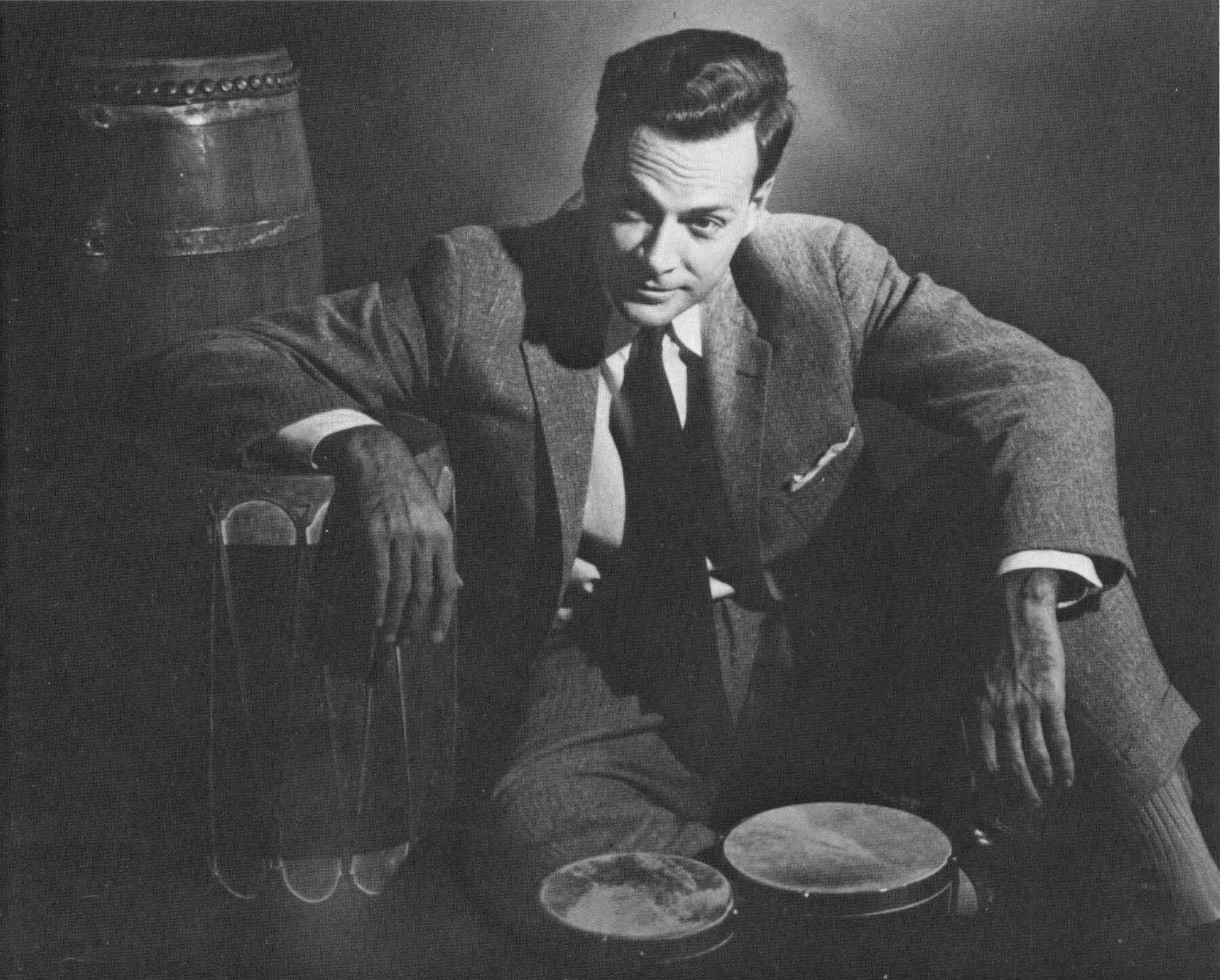
This is the truth in physics legend (and noted bongo-enthusiast) Richard Feynman’s maxim that you only understand what you can explain to a freshman. When you truly understand something, you know how to approximate it, how to abstract away from it. If you don’t believe me, here’s Jacob Collier explaining music theory to a child, a teen, and eventually jazz legend (and noted YouTube-rabbit-hole-enthusiast) Herbie Hancock.
If someone claims to have essentially private ideas, which can only ever remain obscure to outsiders, you have to wonder: why trust them? You don’t want to end up like Plato’s benighted cave-dwellers, who turn the messenger of enlightenment into a “laughing-stock.” But you also don’t want to be a blind follower—or worse, a mark.
Time for the defense’s closing statement. I insist that clarity is worth striving for even if it’s not the sole virtue of philosophical writing. But—at the risk of ending on a rather dramatic and perhaps hyperbolic tone—if I have to read one more reply to that clarity post, I’m committing triple-logocide.
My first time struggling through Savage’s Foundations, I asked an Australian decision theorist what he thought of the book. He said he admired the ideas, paused, and made a remark about “the notation” far too filthy to be repeated here.
In econ terms, this is an information asymmetry: only I know whether my idea is any good, and you have to figure out what my idea is worth to you. A kind of “market failure” arises if the idea is good but I can’t convince you. Sure, I might say “I promise it’s good!”—but that’s exactly the sort of cheap talk you’d hear from a phony with bad ideas. It’s a market for philosophical lemons.
The problem is also interestingly related to cryptography, where one of the big questions is how to convince someone you have the answer without giving it away.
Reminds me of the time when I was taken to a traditional Nō (能) theater as a 15-year-old exchange student in Osaka. Never before had my lack of background knowledge been more painfully evident—though I did sense that everything happening almost certainly had a clear point, which in principle could have been explained to me.

No posts
Comments
Nothing yet. Say the first thing.
Sign in to join the conversation.