
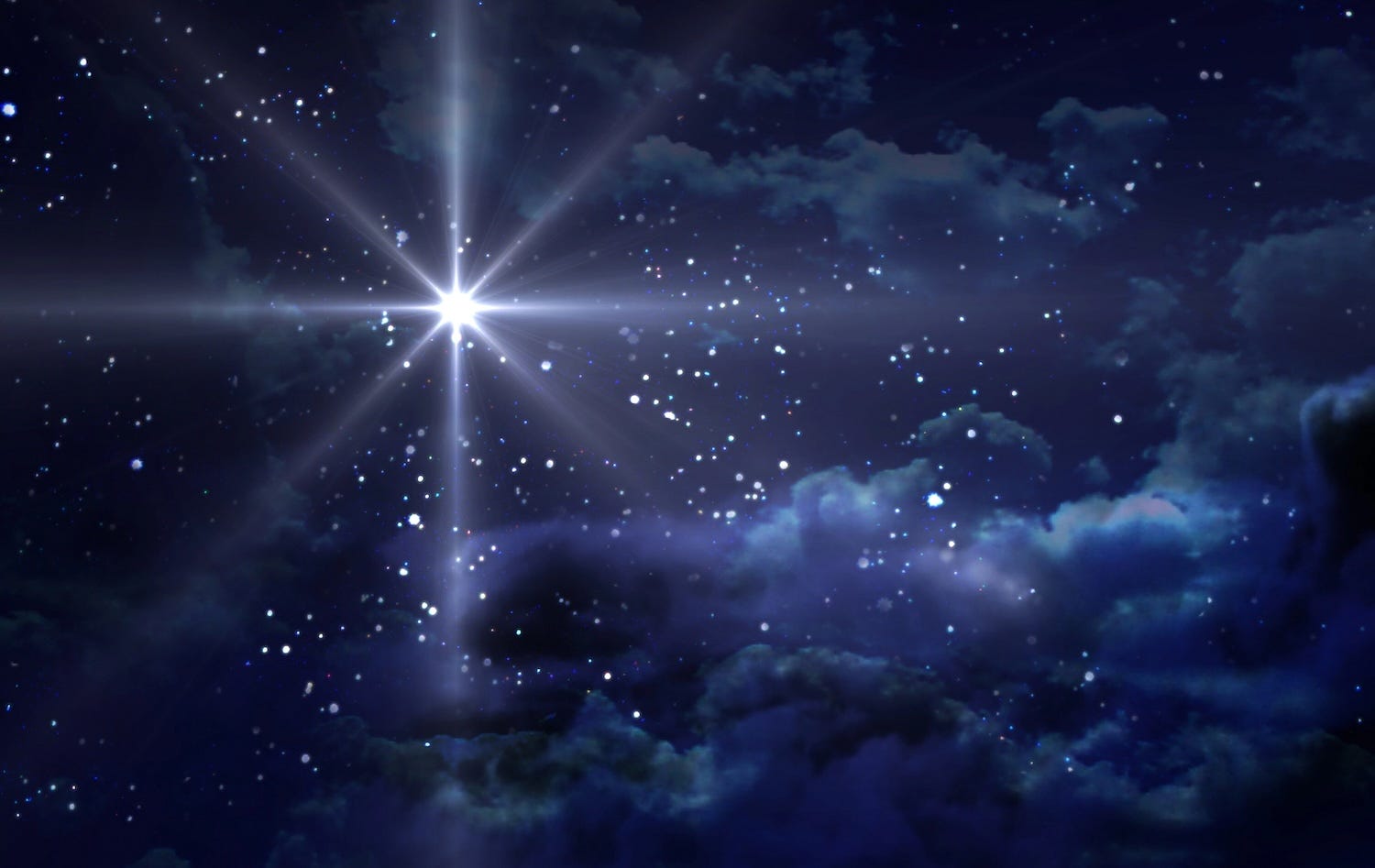
On a crystal clear night, if you stare at the sky long enough, you’ll notice the stars are not still.
They dance. They promenade from one horizon to the other, all the while dazzling us with their tiny flashes. They twinkle, as the children’s song reminds us.
But here’s something you may not know. When you travel to space, you leave the twinkle behind on Earth. It disappears. Outside our planet’s atmosphere, the stars look like steady, sharp points of light. No twinkle.
It’s not complicated science. The twinkle is basically the result of the star’s light fighting its way through our atmosphere’s turbulence. The technical term is scintillation.
As the fragile light from a star passes through the various layers of the atmosphere, with different temperatures and different densities, it bends. This refraction creates a sort of optical illusion. To us, the star is twinkling.
As it turns out, the atmosphere is not the only thing with complex layers. You’ve had turbulence in your life. We all have. Life is never smooth. It fluctuates, and it has its own layers of density in the form of personal and professional challenges. One day, everything is quiet and orderly. The next, it’s chaos.
Don’t you find it interesting that the turbulence in our lives is often the catalyst for our finest moments? When faced with the greatest difficulties, that’s the moment we reach down for a little extra.
We fight through the turbulence and we shine.
That’s not to say the experience isn’t painful. Often it is. But as the old sayings go, anyone can pilot a ship through calm seas. The savviest captains are the ones who shine when the waves get choppy.
Some might long for a life with no turbulence. It certainly doesn’t feel like a gift while you’re in it.
But then, the star has no idea it’s twinkling.
Dom Testa writes fiction and nonfiction, and he stares at the night sky a lot. His neighbors have questions.
Find more of his work here.
Comments
Nothing yet. Say the first thing.
Sign in to join the conversation.