
Imagine you have a brilliant idea for a book. Not an article, not a short essay, but a book that likely will run more than 400 pages. The idea has captivated you and it must be born.
So you sit down to write.
But you have no laptop. No desktop computer. Not even a typewriter.
And before you get comfortable thinking you’ll just use a pen, forget it. You don’t have one of those, either.
On your desk—which is lit by candlelight, I should add—sits a feather, a small jar of ink, and a stack of paper. Your 400 pages are calling. Ready? Go.
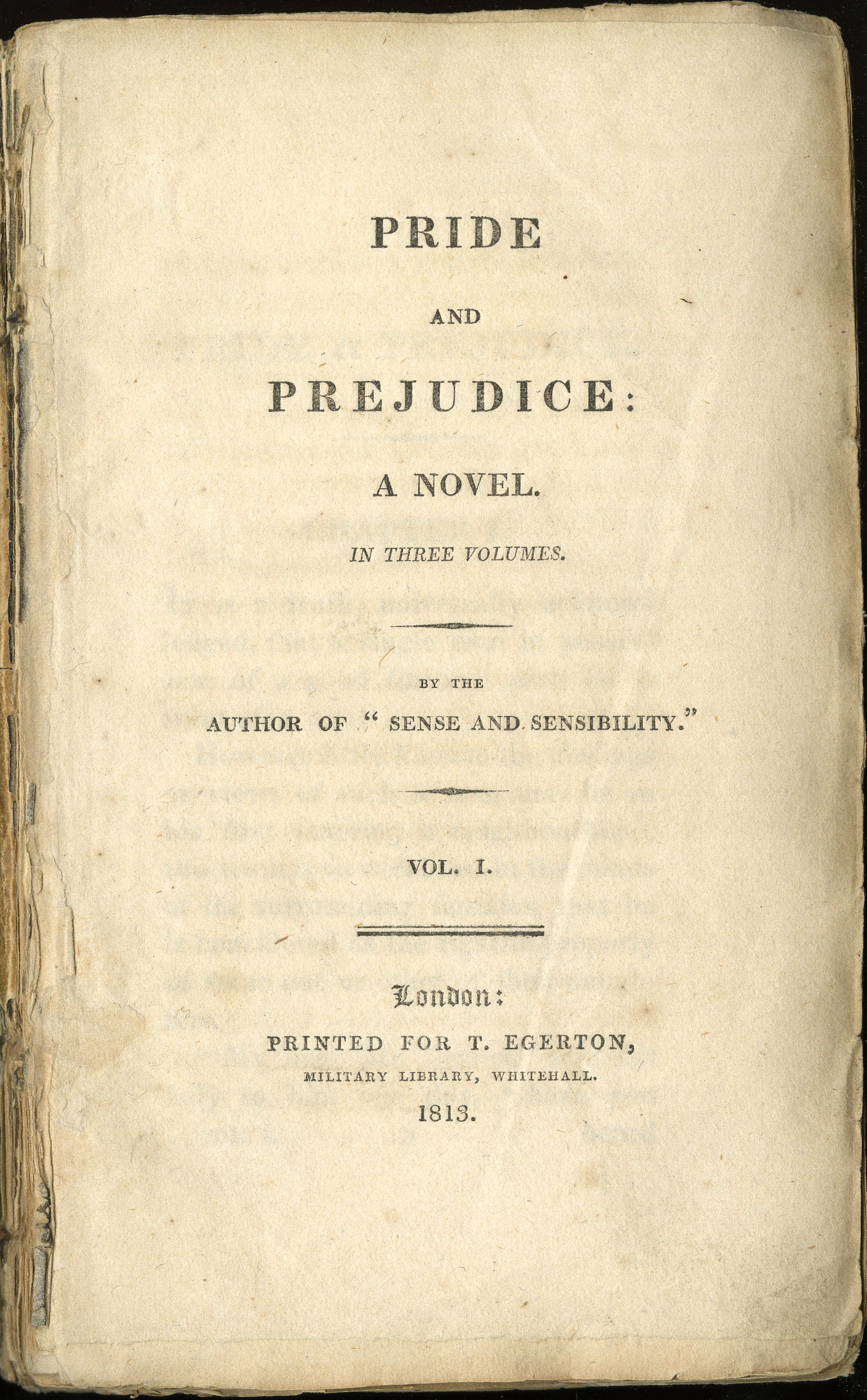
This imagery came to mind because I just finished reading Jane Austen’s “Pride and Prejudice.” While countless volumes have been written about the story itself and the strength of her writing, I had an entirely different thought.
How the hell did she physically manage to create a draft of this length—more than 120,000 words—with the incredibly archaic tools at her disposal?
The writing instrument itself boggles the mind. We’ve all seen old-fashioned quills that one dipped into the jar of ink. But are you aware of how much labor went into that practice? You didn’t just run down to the store and buy a box of quills. You often made one yourself, and then had to maintain it, which was no easy task.
So you grab a feather and your penknife. Yeah, that’s where the term for that device comes from; it was a knife used to actually produce a pen out of a feather. And after using it for a few pages, it was not in the best shape. That meant busting out the knife again and doing a little trimming and shaping to get it back into writing condition.
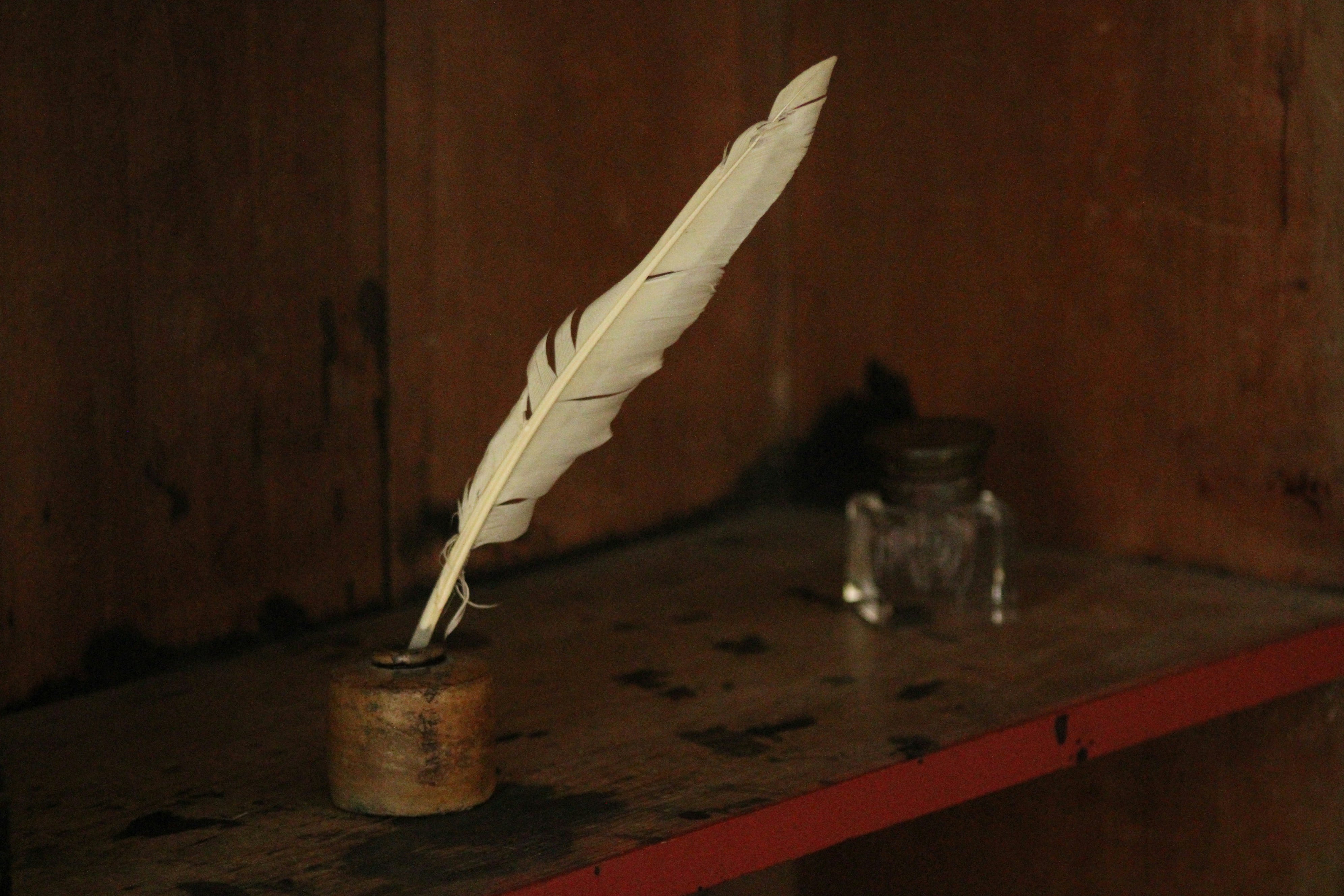
It’s not as if the ink cooperated. It ran or it blotted, and it was necessary to employ powder to keep it from ruining an entire page. The pressure you used had a lot to do with that, also, so you were mindful of the exact force you exerted on the quill. You certainly didn’t want to scratch through a page.
And you were mindful of this for hundreds of pages.
Think of your own writing today. What do you do when you screw up?
Jane had no backspace key, no Command-Z. Her option was to make little character changes in the space above or below a line. In more extreme cases, she might have to cross out a line or—God forbid—an entire paragraph or page.
Complicating this matter was the price. Paper was not plentiful, nor was it cheap. Mistakes in the early 19th century were expensive.
Jane Austen had to forge a different relationship with her prose than you and I might. There had to be an intentionality behind every phrase, every paragraph. It’s easy for us to go back and rewrite a section of our work. We can do it in mere moments. For Jane, a psychological weight accompanied each word, something we could never understand.
Although she lived more than 200 years ago, we’re fortunate that her actual manuscripts have survived. We can see her revisions, how sometimes she’d rewrite entire pages, spilling more ink across more pages. We can study her actual handwriting, which was small and dense, an efficiency choice, no doubt, to accommodate the cost.
Add to this the fact that her 400-page novel wasn’t written once. It was written at least twice.
In those days, authors completed a first draft that was downright messy, like a battlefield of words. In their day, they had a charming name for this. They called it the foul copy.
That meant sharpening your quill and writing it all again in what was known as the fair copy. If you were fortunate enough to be able to afford it, you might pay a copyist to produce this legible version. Often, though, it fell upon the writer.
So Jane labored through 120,000 words, constantly maintaining the delicate quill needed to scratch words onto a page, careful to not damage the paper.
And then she did all 120,000 words over again.
I think about her picking up that quill, after months of what had to be torture to produce a novel the length of “Pride and Prejudice.” The cramping she must’ve felt in her hands!
What if she’d had another option?
Well, pencils actually did exist at the time, but they weren’t anything like the trusty yellow number-two we grew up with. These were scratch tools, used almost exclusively for notes and sketches, but certainly not for writing novels. For serious written work, whether it was correspondence or manuscript pages, ink was the expected and respectable medium. To use a pencil for important work would’ve been like submitting a manuscript today in Comic Sans.
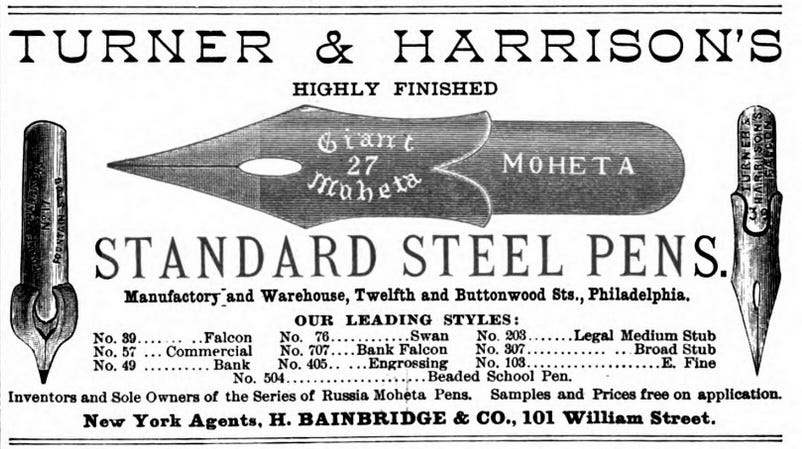
And perhaps most heartbreaking of all was how close Jane was to the age of the steel-nibbed pen. In mass-produced form, these didn’t exist until the 1820s; Jane died in 1817. She missed this revolution—no more trimming and maintaining quills—by about ten years. It boggles my mind to think what this remarkable writer could’ve created with that boost.
Instead, she produced all her masterpieces the hard way.
As writers, we’re prone to crabbing about the process. We give a heavy sigh when we sit down at our shiny laptop to knock out 500 words. The term “writer’s block” didn’t exist until the mid-20th century, perhaps the first of many excuses we dream up to explain our sometimes-lazy minds.
I think of the hardships Jane Austen endured to deliver some of the greatest writing of all time. I reflect on the friction she faced compared to our cushy experience.
Did the hard labor it took to produce “Pride and Prejudice” or “Mansfield Park” or “Emma” force a different relationship with the work? Did the constraints she felt result in better writing? Or just an anxious writer?
None of this was lost on me as I finished reading the book and then sat down at my laptop. The contrast of it all—her reality versus mine—struck in one single concrete moment:
In my very first sentence, I used the delete key.
Dom Testa writes fiction and nonfiction, and he would not have survived 1813.
Find most of his work at DomTestaBooks.com, and his other work here.
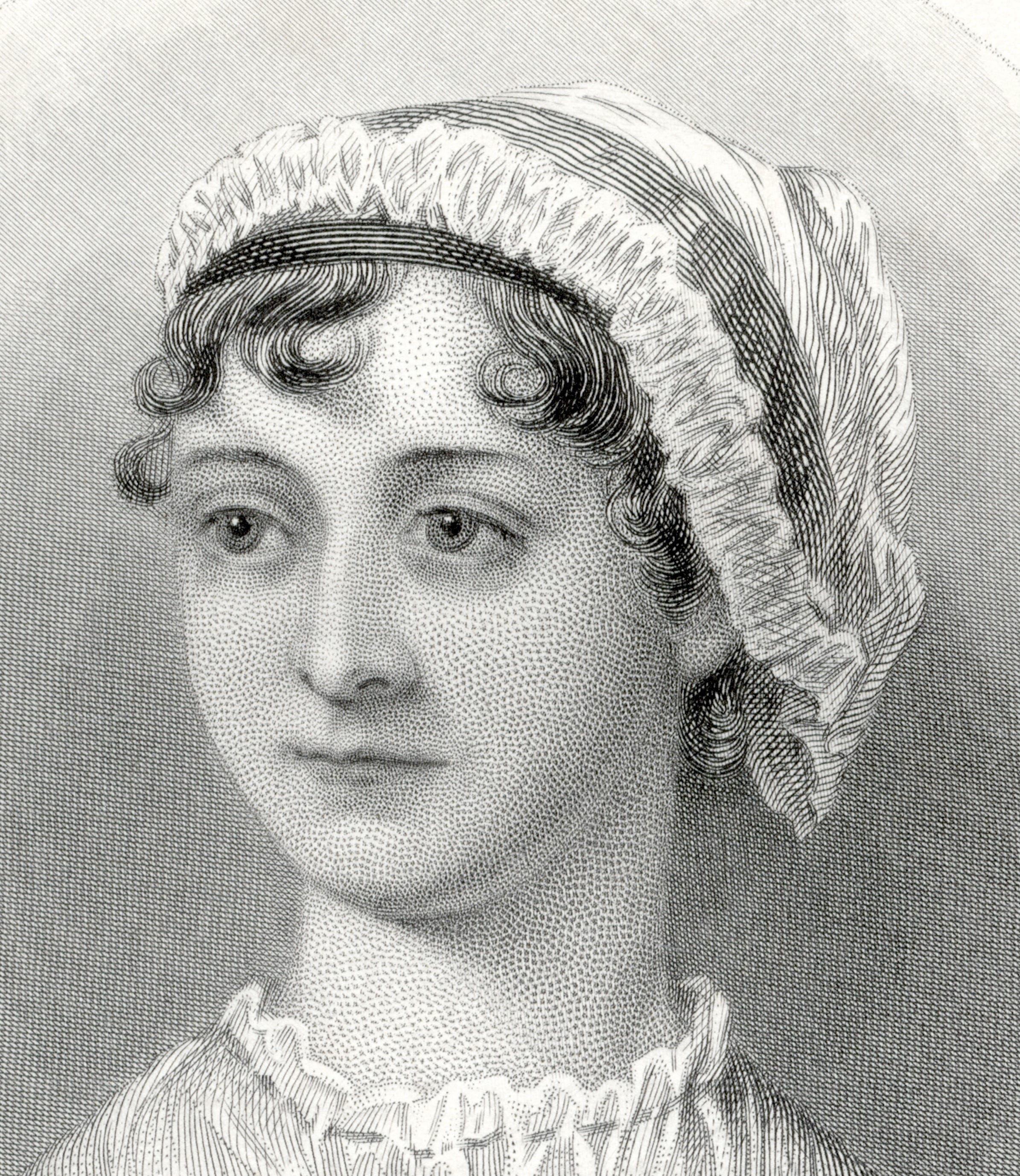
Jane Austen image from a watercolor by James Andrews of Maidenhead based on an unfinished work by Cassandra Austen. Engraving by Lizars.derivative work: Archibald Tuttle, Public domain, via Wikimedia Commons
Book title page image: Jane Austen (1775-1817), Public domain, via Wikimedia Commons
1800s pen image: GlucinumMaster, CC BY-SA 4.0 <https://creativecommons.org/licenses/by-sa/4.0>, via Wikimedia Commons
Quill and ink image by Robin Trim on Unsplash
Comments
Nothing yet. Say the first thing.
Sign in to join the conversation.