
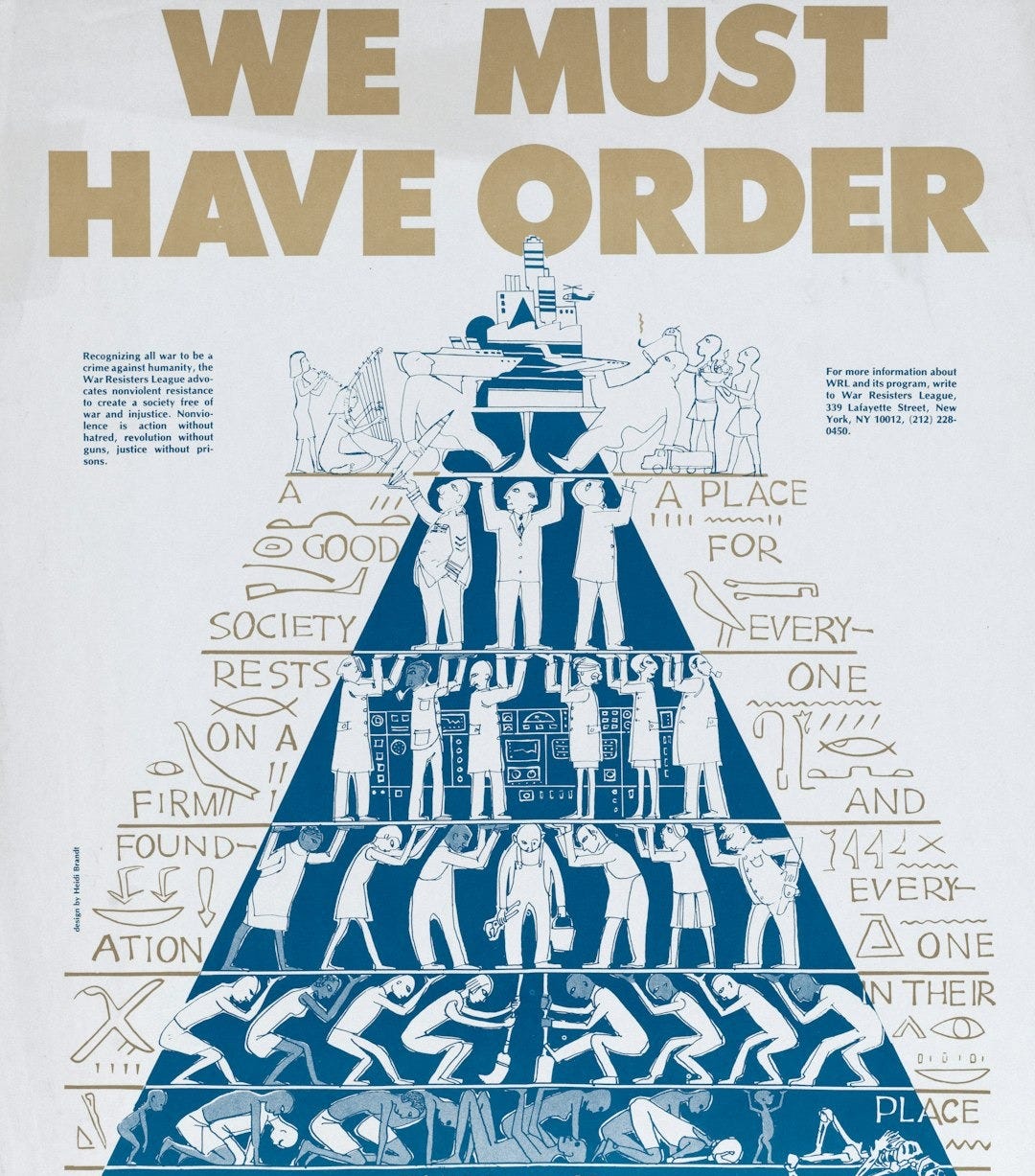
When political debates grow heated, there is the ever-present temptation to quote scripture as a debate-ender. One debater justifies their action, the other condemns their hypocrisy. One verse to justify enforcement, another to excuse severity. Another to silence discomfort,
But the Bible does not speak in slogans. It speaks in categories.
Before Christians can argue about borders, policing, deportation, or authority at all, we must recover Scripture’s moral grammar: what kind of authority God authorizes, what He restrains, and what He judges—regardless of whether it is legal, efficient, or popular.
This matters because the Church’s most dangerous political errors rarely begin with wicked intentions (they always end that way, though). They begin with category mistakes.
Authority Is Real, and Limited
Scripture is clear: authority is not an illusion.
From Genesis onward, God orders the world through delegated power. Parents, elders, judges, kings, magistrates—these are not accidents of history. Paul’s words in Romans 13 are unambiguous: governing authorities exist by God’s permission, and their task is to restrain evil and promote good.
Christians who deny this observation drift toward romantic anarchism or moral posturing (although I am not without sympathy). Someone must decide, and not every man can get what he wants.
But neither does Scripture grant authority moral immunity.
The same Bible that affirms rulers relentlessly interrogates them. Authority is always instrumental, never ultimate. Always delegated, never possessed. And because it is delegated, it is judged.
This is where modern Christian discourse collapses distinctions. We assume:
If authority exists, its use is presumptively righteous.
If a policy is legal, it is morally sufficient.
If enforcement is necessary, its consequences are regrettable but excusable.
Scripture simply, and absolutely, does not permit this shortcut.
Beware the Book of Judges
Most Christians fail even basic tests of comprehension about the Bible (to say nothing of the deeper kind), and the more obscure books of the Bible are uniquely helpful for clarifying our particular moment. The Book of Judges’ famous diagnosis—“everyone did what was right in his own eyes” (Judg. 21:25)—is often misread as a simple argument for centralized authority, as if Israel’s problem were merely the absence of a king.
But the narrative itself refuses that simplification. And, indeed, for those who know the future of the story, God denounces Israel’s desire to have a king like their neighbors.
This was not merely a political shift—it was a spiritual act of rebellion against God’s sovereignty.
“They have not rejected you,” God tells Samuel, “but they have rejected me from being king over them.” (1 Samuel 8:7)
But in the present setting of Judges, Israel had the divine Law. It had its leaders—judges, warlords, deliverers—divinely provided. It had borders, enemies, victories. Battles were fought and won. Order existed.
And yet Israel descends into ritualized violence, sexual exploitation, tribal vengeance, and finally civil war, justified. The most horrifying episode—the Levite who dismembers his concubine and distributes her body as a summons to “righteous” retaliation (Judg. 19)—is not portrayed as lawlessness but as moral catastrophe cloaked in procedural legitimacy.
No character in Judges believes they are fundamentally evil in their leadership. Everyone appeals to tradition, necessity, collective survival, and inherited norms. Responsibility diffuses across tribes. Violence becomes normalized because it is legal, tribal, and justified.
Judges is not chaos-as-anarchy. It is order without judgment.
God’s indictment is not that Israel failed to enforce law. It is that leaders exercised authority without restraint, accountability, or fear of Him. Coercion remained, but conscience vanished.
That pattern should unsettle us. It mirrors how systems today can function smoothly, efficiently, even righteously—while quietly training their participants to stop seeing what they are doing.
The Prophetic Pattern: Judgment From Within the System
One of the most important features of Old Testament prophecy is how God confronts injustice.
The prophets do not reject law, borders, courts, or kingship. They assume them. They confront rulers as rulers: not as rebels or illegitimate outsiders, but as accountable stewards who have violated the terms of their authority.
Again and again, the indictment is not chaos but corruption: laws that favor the powerful, courts that crush the poor, borders that protect elites while dispossessing the vulnerable, peace preserved at the cost of truth.
“Woe to those who make unjust laws,” Isaiah declares, “to those who issue oppressive decrees, to deprive the poor of their rights” (Isaiah 10:1–2).
The sin is not order. The sin is order without justice.
And crucially, the prophets do not excuse this because it is legal, traditional, or stabilizing. They judge it precisely because it hides behind those justifications.
Jesus and the Final Evaluation of Power
Jesus does not abolish authority. He relativizes it.
When he stands before Pilate, he does not deny the legitimacy of Roman power. He tells Pilate that his authority exists, but only because it was given “from above” (John 19:11).
This is not flattery. It is especially not a recognition of a divine political immunity for Pilate’s governorship nor an exoneration of Rome’s role in delegating the state-sanctioned murder of the Son of God. It is a warning.
In Matthew 25, Jesus describes the final judgment not in terms of sovereignty, borders, or enforcement success, but in terms of encounter:
“I was hungry.”
“I was a stranger.”
“I was imprisoned.”
The shock of the passage is not that some fail. It is that a great many who believed themselves righteous never recognized him at all.
They had policies. They had procedures. They had reasons.
And they did not have mercy.
Christ does not accept appeals to necessity, legality, or abstraction. He evaluates authority by what it does to the least powerful people it touches.
That should terrify us in the right way.
When Prudence Becomes an Escape Hatch
Christians often invoke prudence to defend, let’s say, troublesome policies. Prudence matters. Consequences matter. Tradeoffs are real.
But prudence is not a license to suspend moral judgment.
In Scripture, prudence operates within moral limits; it does not erase them. Wisdom never functions as permission to abandon restraint.
Modern systems introduce a unique danger here. Today, authority rarely looks like a king issuing unilateral decrees (less rare nowadays). It looks like workflows, enforcement pipelines, eligibility criteria, risk scores, automated decisions. The establishment of mens rea becomes unnecessary or impossible. Responsibility is dispersed. Harm becomes procedural. Violence is no longer personal but administrative and abstract in the classic totalitarian sense, like the Soviet Union’s Great Purge or a la Terry Gilliam’s dystopian black comedy Brazil.
No single actor feels the total weight of cruelty. Every action feels necessary.
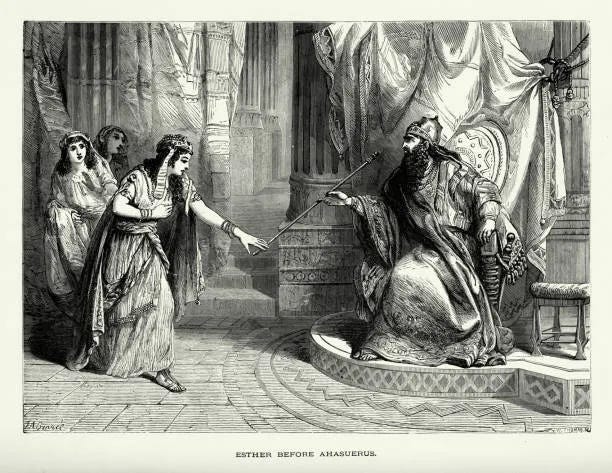
Several contemporary political theorists have noticed this pattern from different angles. Hannah Arendt saw it in Eichmann: not a monster but a bureaucrat, a man who had simply stopped thinking, given in to the world, the machine. What she described as the “banality of evil”—the capacity of ordinary functionaries to administer atrocity without malice—Scripture had already diagnosed: Judgment deferred, and ethical blindness.
When power is fragmented across institutions, shielded by procedure, and justified by necessity, it becomes harder to see—and easier to bless—what would once have been recognized as injustice. This is not a problem unique to any one nation or party. It is a recurring temptation wherever order is preserved by systems that no longer expect to be judged.
This is precisely why enforcement bureaucracies function as theological test cases. They force Christians to answer uncomfortable questions:
Do we ignore our share of guilt in the sins of our countrymen?
Are we complicit when we avert our eyes from the circumstances of others?
Can “the system” commit injustice even when no individual specifically intends it?
Scripture’s answer is yes.
What God Judges Even When It Works
Throughout the Bible, God judges rulers not only for overt wickedness but for what they justify in His name: stability purchased through oppression, peace maintained by fear, order preserved by rendering suffering invisible.
Augustine warned that kingdoms without justice are merely “great robberies.” Aquinas argued that unjust laws fail to bind the conscience at all. Bonhoeffer saw clearly that obedience divorced from responsibility is not faithfulness but moral abdication.
These are not radical ideas. They are the mainstream of Christian moral tradition.
And they leave us with a sobering conclusion: A policy can be shallowly effective and still be sinful. An institution can be necessary and still be judged. An authority can be real and still have its efforts completely, righteously frustrated.
Because authority matters. And so does judgment.
And Scripture refuses to let us keep one without the other.
Next step:
In the next piece, Law and Order (III), I’ll turn from moral grammar to moral consequence—examining enforcement itself, and how it actually operates in modern bureaucratic states. This is where the convenient abstractions collapse, and where Christian witness is most easily lost.
Comments
Nothing yet. Say the first thing.
Sign in to join the conversation.