
There is a particular kind of exhaustion that settles in when you no longer recognize yourself in the political arguments made in God’s name.
You don’t feel at home with the slogans. You flinch when Scripture is reduced to talking points. You suspect something is wrong, but you can’t quite name it without being accused by one side of softness, or by the other of bad faith. You may even wonder whether disengagement is the only honest option left.
This series of articles is for you.
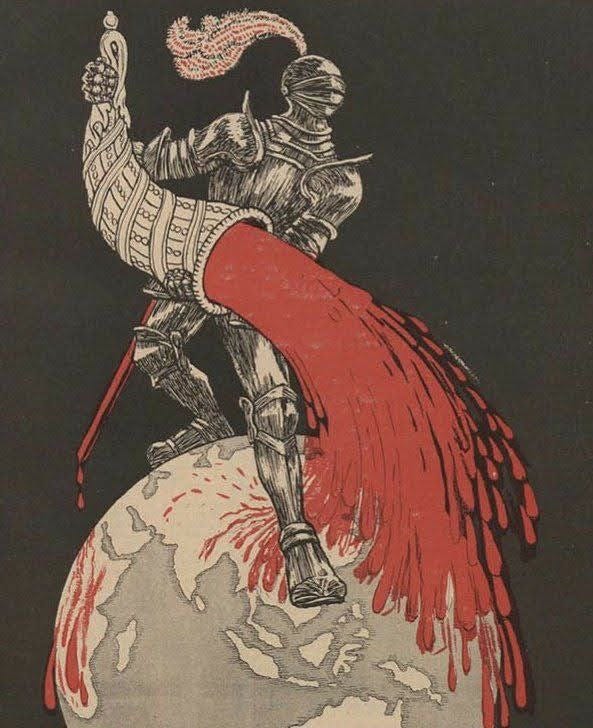
I want to argue something simple but uncomfortable: the modern Church keeps repeating its most dangerous political error—not by rejecting order, but by sanctifying coercion. Again and again, Christians confuse authority with righteousness, sovereignty with moral immunity, and enforcement with justice. When fear rises and social trust erodes, we reach instinctively for power and baptize it with religious language. Scripture does not permit this.
This series is an attempt to slow down, recover categories, and re-learn the limits God places on political authority, especially when that authority claims to act in the name of the church, of the people, or of Him.
Christians do not need to be convinced that order matters.
The Bible is unambiguous that authority exists for a reason. The first verses of Genesis describe a Creator designing order out of elemental chaos. Disorder—interior and exterior—destroys lives. Law restrains evil. Governments are not accidents of history but part of God’s providential ordering of the world. “There is no authority except from God,” Paul writes, and rulers exist “to punish wrongdoers and praise those who do good” (Romans 13).
The problem is not that Christians affirm order.
The problem is what we are willing to excuse to preserve it.
Throughout Scripture, the gravest indictments are not reserved for rebels or outsiders, but for rulers—kings, priests, and elites—who maintain order while crushing the vulnerable. Israel had borders, courts, armies, and laws. It was still judged when those instruments were turned into tools of domination rather than justice.
Order, in the biblical imagination, is never self-justifying. It is always evaluated.
One of the most persistent errors in Christian political reasoning is treating authority as a moral trump card (pun intended).
Because the state has authority, we assume its actions are presumptively righteous. Because a policy is legal, we treat it as morally sufficient. Because enforcement is “necessary,” we avert our eyes from its human costs. But Scripture does not grant rulers that kind of deference.
The prophets do not confront Israel by denying the legitimacy of kingship. They confront kings as kings. They assume authority and then place it under judgment.
Again and again, the accusation is the same:
you have used law to protect yourselves and violence to discipline the poor
you have arrogantly preserved order while abandoning justice
you have betrayed your God and corrupted my words
you have loved yourself and hated love
This is why Jesus’ most sobering political words do not concern tax rates or borders, but judgment. In Matthew 25, he does not ask rulers whether they maintained sovereignty. He asks what they did when confronted with hunger, displacement, nakedness, and imprisonment. The surprise is not that some failed, but that many who believed themselves righteous never recognized him at all.
“Lord, Lord,” they say—and he responds, “I never knew you.”
That warning is not aimed at pagans. Unbelievers may act in ignorance—and God will judge us all fairly according to our circumstances. That warning is for those who speak the right, religious words while practicing lawlessness.
In moments of fear—crime, migration, cultural fragmentation—Christians often retreat to abstraction. We speak of “law and order” as if the phrase itself resolved moral questions. We reassure ourselves that enforcement is regrettable but necessary, unfortunate but unavoidable.
What disappears in this framing is moral agency.
Bureaucracy is especially dangerous here. When coercion is dispersed across systems, paperwork, and procedures, no one feels responsible. Harm becomes administrative. Violence becomes routine. The Overton window moves further and faster than humans expect or adapt. And Christians, relieved that they are not personally wielding force, lend moral cover to systems they would never enact face-to-face.
This is not a hypothetical concern. It is why enforcement bureaucracies—immigration, policing, incarceration—function as theological stress tests. They reveal what we believe about dignity, restraint, and accountability when fear and distance intervene.
The question is not whether law may be enforced.
The question is what we are willing to tolerate once enforcement is underway.
This pattern is not new.
Church history is filled with moments when Christians aligned themselves with coercive power in the name of realism, stability, or national survival—only to discover later that they had baptized injustice. Rarely did these authorities, or laymen, imagine themselves as villains. More often, they saw themselves as prudent, moderate, and responsible.
They feared chaos more than cruelty.
They feared disorder more than falsehood.
They trusted elites who promised stability—and learned too late what that stability required.
The lesson is not that every assertion of authority leads to tyranny. The lesson is that authority untethered from moral limits inevitably turns predatory, and the Church is especially vulnerable to blessing it when power speaks in the language of order.
If you are weary of politics, you are not faithless.
If you feel homeless in the culture wars, you are not alone.
If you sense that something fundamental has gone wrong in ‘the culture’ but don’t know where to stand, that may be wisdom, not weakness.
Christian faith does not require you to cheer for power. It does not demand that you confuse survival with righteousness or fear with obedience. Our primary citizenship is not fragile. It does not depend on who controls the border, the courts, or the narrative.
We are, Scripture says, foreigners and exiles ourselves—ambassadors of a kingdom that does not need coercion to endure. That position gives us unusual freedom: the freedom to say no when authority overreaches, the freedom to refuse cruelty even when it is legal, and the freedom to fear God more than instability.
In the essays that follow, I want to examine what that freedom requires—historically, theologically, and practically. Not to offer easy answers, but to recover moral limits the Church cannot afford to lose.
Because order matters.
And so do its limits.
Next step:
In the next piece, Law and Order (II): When Legality Becomes a Moral Alibi, I’ll slow down further and look carefully at Scripture’s own moral grammar: how authority is affirmed, constrained, and finally evaluated.
No posts
Comments
Nothing yet. Say the first thing.
Sign in to join the conversation.