
In the final chapter of the Bhagavad Gita, Arjuna seeks to unravel the essence of renunciation and the distinction between renouncing actions and renouncing desires. He turns to Krishna, the mighty-armed one, to shed light on these spiritual concepts.
❀ The Three Types of Intellect
1. Sattvic Intellect (Clarity in Righteous Action):
The Sattvic intellect, characterized by clarity and discernment, enables the individual to distinguish between right and wrong, fear and liberation, and bondage and freedom.
2. Rajasic Intellect (Confusion in Right and Wrong):
The Rajasic intellect, clouded by passion and desire, leads to confusion and misconceptions about right and wrong actions, often resulting in misguided choices.
3. Tamasic Intellect (Darkness and Perversion):
The Tamasic intellect, shrouded in darkness and ignorance, distorts reality, causing the individual to mistake unrighteousness for righteousness, further perpetuating their entanglement in the cycle of samsara.
❀ The Three Types of Firmness:
1. Sattvic Firmness (Steadfastness through Yoga):
Sattvic firmness, cultivated through spiritual practices like Yoga, instills unwavering resolve and control over the mind, breath, and body, enabling the individual to remain steadfast in their pursuit of righteousness.
2. Rajasic Firmness (Attachment to Fruits of Action):
Rajasic firmness, driven by attachment to the outcomes of actions, leads to restlessness and dissatisfaction, as the individual's focus is solely on the rewards rather than the inherent nature of the action itself.
3. Tamasic Firmness (Stagnation and Ignorance):
Tamasic firmness, rooted in inertia and ignorance, manifests as attachment to sleep, fear, grief, and pride, hindering spiritual growth and perpetuating a state of stagnation and delusion.
❀ The Three-Fold Pleasure and Duty According to Nature:
1. Sattvic pleasure, initially challenging but ultimately liberating, arises from self-discipline, knowledge, and spiritual contentment.
2. Rajasic pleasure, initially enticing but ultimately distressing, stems from indulgence in material pursuits and sensory gratification.
3. Tamasic pleasure, rooted in ignorance and delusion, leads to a state of inertia, confusion, and suffering.
❀ Three Kinds of Happiness:
The embodied soul experiences three types of happiness -
1. Sattvic, like nectar in the end;
2. Rajasic, initially sweet but ending in poison; and
3. Tamasic, deluding and covering the self.
❀ Duties Aligned with Nature:
The duties of Brahmins, Kshatriyas, Vaishyas, and Shudras are assigned based on their qualities, following their characteristics (guṇas), not determined by birth.
✿ Arjuna's Transformation:
Arjuna acknowledges the dispelling of his illusions, expressing gratitude for Krishna's guidance. He declares his readiness to act according to Krishna's instructions.
᪥ 𝑪𝒐𝒏𝒄𝒍𝒖𝒔𝒊𝒐𝒏:
In this chapter, Arjun inquires from Lord Krishna about sanyās and renunciation. Krishna explains that a sanyāsī sacrifices family and social life for spiritual discipline, while a tyāgī performs actions without selfish desires for results.
✎﹏﹏𝐊𝐞𝐲 𝐇𝐢𝐠𝐡𝐥𝐢𝐠𝐡𝐭𝐬:
1-12: Discusses the theme of Tyåga (Relinquishment).
13-18: Explains the causes of Karma according to the Sånkhya system.
19-40: Classifies knowledge, action, doer, reason, firmness, and joy according to the three Gunas (Sattva, Rajas, and Tamas).
41-48: Describes the duties of the four castes.
49-55: The path of Knowledge.
56-66: The path of Karmayoga(selfless action) along with Devotion.
67-78: Describes the glory of the Gitå.
═════༺❀༻═════
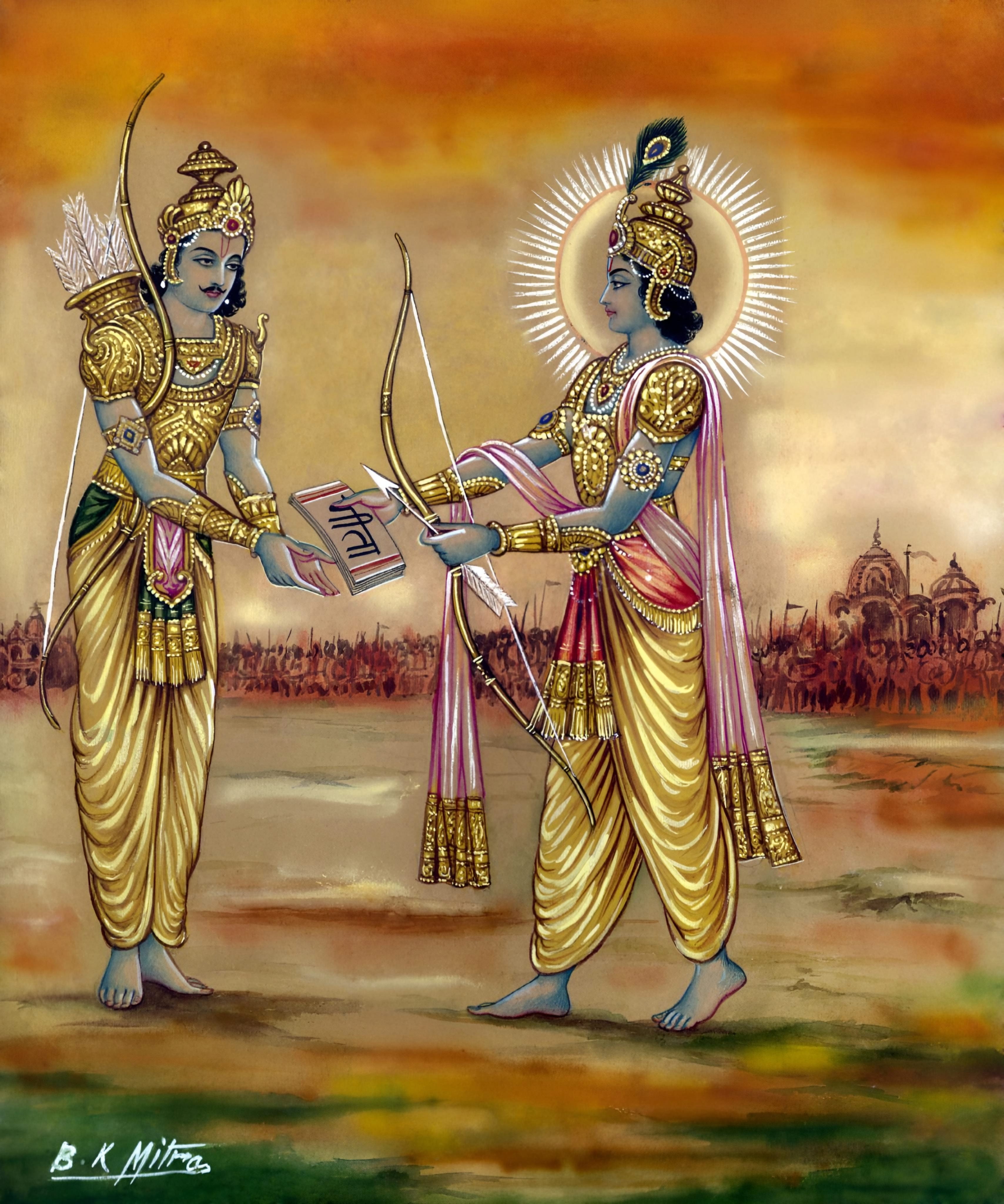
Wrapping up this series.
Grateful for the opportunity to share these summaries with you. Hope you loved this series of summaries!
Jai Shree Krishna! ❤️
Comments
Nothing yet. Say the first thing.
Sign in to join the conversation.