
Thanks for reading Bob Galen's Caregiving Journey! Subscribe for free to receive new posts and support my work.
This is the first post in my series on “The Caregivers’ Dilemma.” It’s that moment in time when you are confronted with whether to continue as the sole or primary caregiver for your loved one, or that you’ve run your race and you need either another primary caregiver, full-time help in your home (if you can afford it), or you need to place your loved one in a senior care facility.
It’s a dilemma that’s fraught with self-doubt, questioning, and guilt. It’s also one that many put off, sacrificing themselves for their loved ones.
In this series, I’m exploring aspects of it because I’m living it at the moment…
In a word, Holly Larson nails it again in her article—The Moral Courage of Staying
I can’t tell you how often I’ve been tempted to put Diane into a care facility or, in the extreme case, pack up my bags and move to Florida or Wisconsin. Why Tampa or Wisconsin? No real reason. Just an escape from the day-to-day craziness.
Here’s just a snippet from her article—
The temptation to leave
Over the past nine years, there have been many times I have fantasized about packing up my car and hitting the highway.
Running away from care.
Starting over – anywhere.
It’s not that any one day is too much.
It’s that the road twists on and on, and there is no vanishing point in sight.
Sometimes I can’t say where care ends, and I begin.
And I know that’s part of what I’ve agreed to carry.
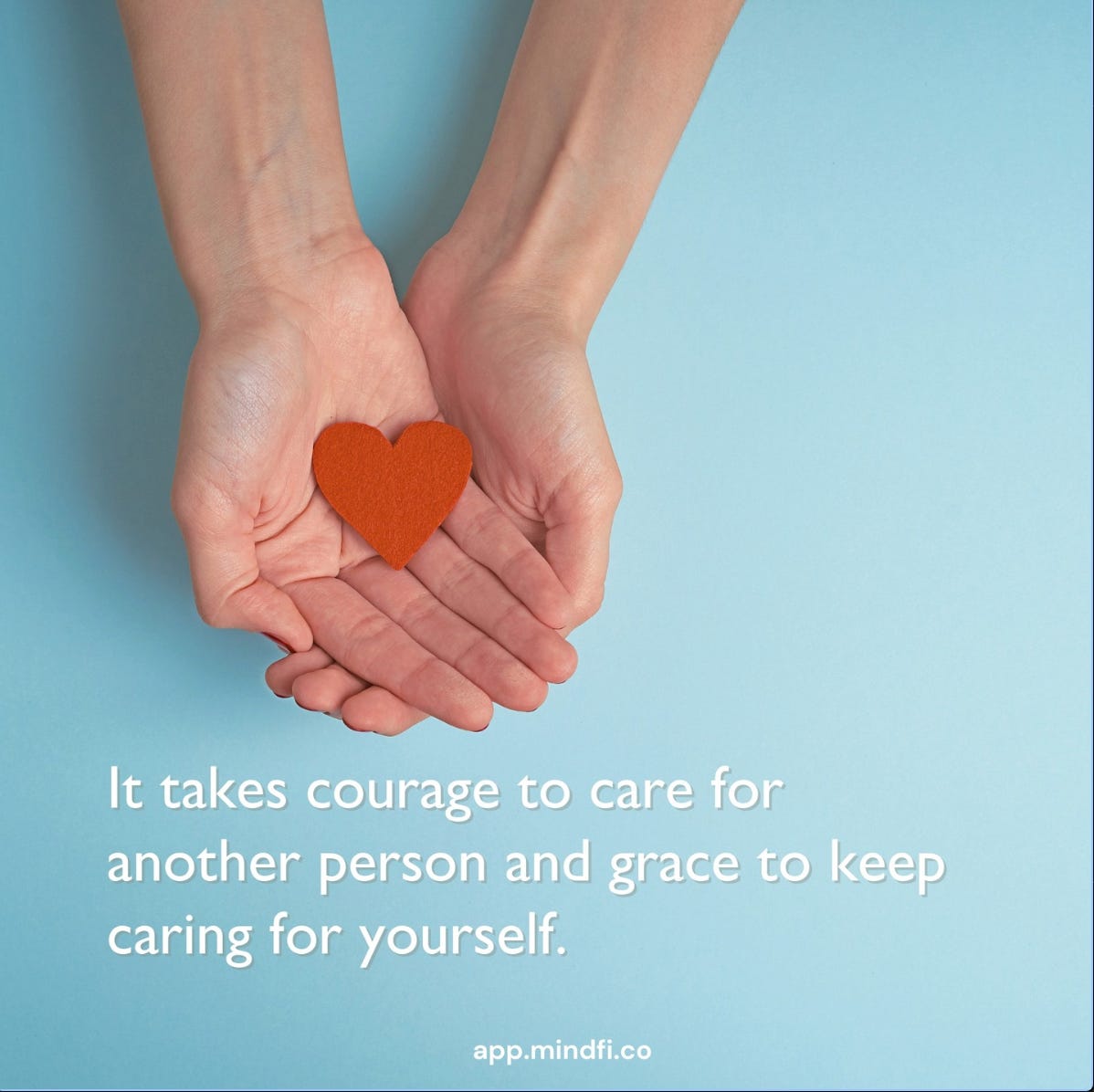
It takes courage to lean in.
To not turn away.
To defer some dreams — without letting care erase them.
My Thoughts
On a related note, here’s a post from Neal Shah. He says—
Dementia doesn’t destroy the patient first. It’s really the Caregiver that breaks.
And I couldn’t agree more.
But back to courage…and what I’ve agreed to carry for as long as I can carry it. The key to me is—as long as I can carry it.
And there’s an implication that you lack courage, or persistence, or longevity if you stop. I would argue that this is judgmental. Every caregiver has their own situation, their own strength, and their own courage. We need to honor individual caregiving tolerances and decision-making. For example, it might take even more courage to shift a loved one’s caregiving to someone else.
Remembering that it’s not our journey, it’s theirs.
Take care of yourself,
Bob.
Comments
Nothing yet. Say the first thing.
Sign in to join the conversation.