
When people try to break into Regulatory Affairs, the problem is rarely motivation.
It is the big picture.
There is a lot of information available. Regulations, guidance documents, videos, posts, discussions. But without context, it often feels like pieces that don’t fully connect. You can learn what exists, without really understanding how it fits together in practice.
Therefore I often suggest starting with a free course.
It does not replace courses provided by experienced professionals, but it gives structure before depth. It helps you build a mental map of the field: what RA actually does, how it connects to QA, R&D, and operations, and where different types of tasks sit in the bigger system.
Once that structure exists, learning becomes easier. You stop trying to memorize isolated facts and start seeing relationships between decisions, documents, and responsibilities.
A free course is not the destination. It is a way to reduce confusion early, so you can focus your energy on understanding how things actually work.
Check out the “Course worth doing” for this week´s free resource!
Today you will read in this issue:
a quote worth reflecting on
a recall worth learning from
a course worth doing
Compliance is not the goal.
Safety is.
This becomes very clear when we talk about user error.
A device works as intended. Instructions are in place.
An incident happens and is labeled as user error.
From a compliance perspective, that can be enough.
But is it?
Because if a user can make that mistake in real conditions, the question shifts:
Not “did they follow the instructions?”
But “was the system designed to prevent that mistake?”
This is where compliance and safety diverge.
Compliance asks: Did we meet the requirements?
Safety asks: Did we reduce the risk as much as possible?
User error is not always the end of the story.
Sometimes, it is the first signal.
I explore a specific case in the next section “Recall worth learning from.”
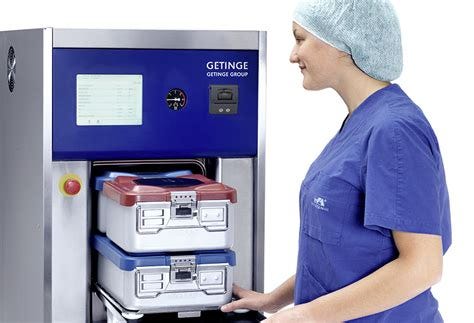
This was not a recall, but it is defientely worth learning from.
The focus of a field safety notice was not a device failure, it was a user error that led to a serious injury.
A steam sterilizer (an autoclave) from Getinge was involved when a technician:
Activated the door while it was obstructed
Reached in while the door was closing
Did not use the emergency stop
The result was a crushing hand injury. This was not a one off event. Also another similar case was reported.
The device worked as intended.
The risk came from unsafe interaction during operation.
But this raises the real question:
Can this kind of user error be prevented?
Right now, the response is training and reminders.
But if these cases increase, it may no longer be enough.
At that point, you start asking:
Should the door detect obstructions and stop automatically?
Should there be stronger interlocks to prevent access during movement?
Because repeated “user errors” often signal something else:
a design that doesn’t sufficiently account for real-world behavior.
I came across a great resource this week: a free training video on youtube that walks through ISO 13485 requirements in two parts.
If you’re exploring a career in MedTech Regulatory Affairs, this is a must-watch. You can even add it to your CV (no certification required!) and use it to get familiar with the requirements, perfect prep for those interview questions.
Click below to start watching!
Before you go, tell me:
That is it for this week! :)
Have a great week and see you in the next issue!
No posts
Comments
Nothing yet. Say the first thing.
Sign in to join the conversation.