
To this day, I’ve had one major and one minor career pivot.
The major one was from academia to Regulatory Affairs. At first, I struggled to imagine what daily life in RA would look like, even though I had talked to a friend who was already working in the field. Once I started, I realized why it’s so hard to explain the day-to-day work we do. To really understand it, you need to know how drug commercialization works in a company. Only then do the actual to-dos make sense. That’s why I’ve recommended Drug Development and Product Management Specialization course from UC San Diego on Coursera at my first Issue; it teaches exactly that!
During my years in a generic drug manufacturer, I learned an immense amount thanks to the fast-paced environment and big number of projects, but I also struggled a lot. That initial experience is what drove me to start sharing insights about Regulatory Affairs with people who, like me once, had no idea what the job entailed. I wanted to pass knowledge forward and hope my words help others navigate the field more easily.
The minor pivot was from Pharma RA to MedTech RA. Of course, it wasn’t as dramatic as going from academia to RA, but there were still many new concepts to understand, not just regulatory differences. As I’ve grown in MedTech RA, I’ve started supporting others interested in this field, mostly through coffee chats, DMs, comments, and interactions on LinkedIn. With this newsletter, I want to give MedTech its share of focus, alongside Regulatory Affairs in general.
These two career pivots, combined with my natural drive to encourage others, are what inspired me to create this newsletter. It also gives me a way to connect with readers without the restrictions of LinkedIn.
So, without further ado, enjoy the second issue. If you have questions or just want to connect, reach out here on Substack or send me a DM on LinkedIn.
There is a lot to unpack here.
Co-workers who has not internalize the patient safety and see regulations as only obstacles or formalities in their work might pop this question in a meeting. What I think is very simple and it is “common sense” and inherently not even only regulatory relevant.
It is about ethical work.
Similar to the fact that when a doctor writes a prescription, they double-check the dosage, the interactions, and the patient’s history, even if no one else is immediately reviewing it (maybe a critical pharmacist!?). The doctor knows that a small oversight could cause serious harm, and that responsibility cannot be delegated or ignored. In the same way, even if it seems more indirect, in Regulatory Affairs we review documents, labels, and reports with the same mindset. Every detail we check is a reassurance for the people who will ultimately rely on our work.
So, the root of the question is about mindset, and that is why it is harder to change. Changing someone’s mind starts with understanding why they think the way they do and helping them see the bigger picture.
Maybe asking “what could go wrong if we skip this?” or “who depends on this step?” shifts the conversation from compliance to care. Mindset changes slowly, but with consistency, clear explanations, and real-life context, it becomes possible to help others internalize why checking matters.
What do you think about this quote? Write me a DM in Substack or Linkedin.
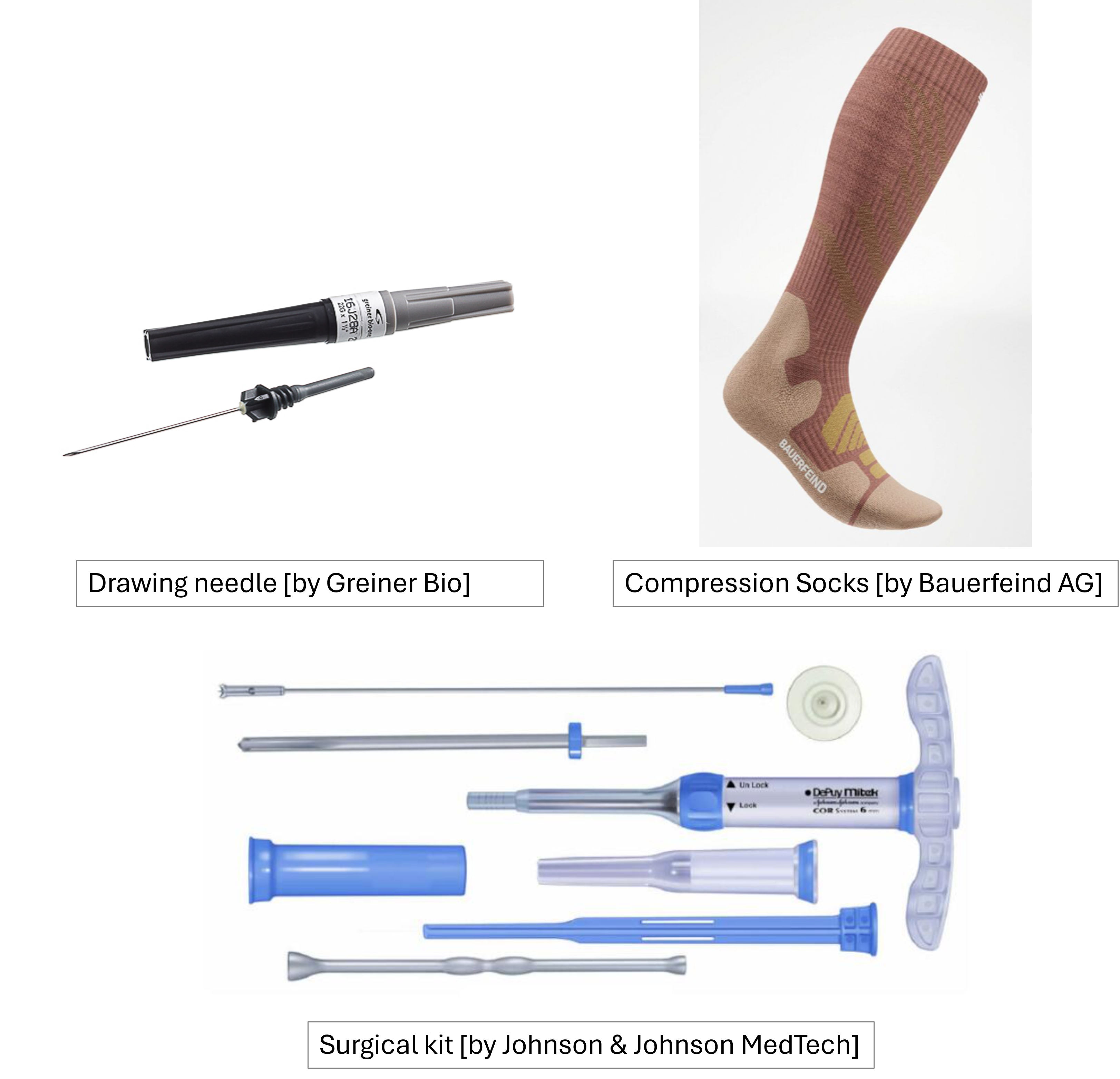
Not all recalls are driven by dramatic safety failures. Sometimes, the issue is much simpler and just as important: labelling and information errors.
In one case, a blood drawing needle (by Greiner-Bio) was incorrectly labelled as “reusable” in several language translations, even though it was intended for single use. In another example, medical compression socks (by Bauerfeind AG) were placed on the market without an expiration date, despite being shelf-life-limited devices.
And in a third case, a surgical kit (by Johnson & Johnson MedTech) was recalled because a critical guide component was missing, which is part of the information and functionality defined by the manufacturer. This guide is essential for correctly transferring grafts during surgery. Without it, procedures may be interrupted or performed with alternative methods, increasing the risk of complications.
Without correct labelling and complete product information:
Healthcare professionals may misuse devices (for example, reusing single-use products)
Users may be unable to verify safe usage conditions, such as shelf life
Clinical procedures may be disrupted due to missing or unclear information/components
Regulatory compliance and traceability are compromised
Interestingly, these cases did not involve immediate patient harm. Yet, they still led to product recalls.
Why?
Because labelling and manufacturer-provided information are a core part of risk management. They define how a device is used, how long it remains safe, and whether it performs as intended.
This is also reflected in MDCG 2023-3 (Q&A on vigilance) in EU regulations, where incorrect labelling is explicitly recognised as a trigger for vigilance activities, even in the absence of direct harm.
What if every patient went home after surgery with an AI companion prescribed by their doctor? That is the idea behind RecovryAI’s new approach to healthcare. Instead of building tools for clinicians or general wellness apps, they have created a physician-prescribed assistant that supports patients directly during recovery, sitting right inside the clinical care pathway.
RecovryAI’s Virtual Care Assistant (VCA), received Breakthrough Device Designation from the U.S. FDA, signaling strong potential to improve care. This status allows closer interaction with regulators but still requires full proof of safety and reliability.
The need is clear. Over 80% of surgeries in the U.S. are now same-day, meaning patients recover at home, especially during the critical first 72 hours when most complications happen. Doctors have limited visibility, and patients often do not know when something is wrong.
The VCA fills that gap. It follows clinical protocols, checks patient-reported symptoms, and compares them to expected recovery patterns. If things are normal, it gives guidance. If not, it alerts the care team with full context.
What is novel is the regulatory path. RecovryAI is pursuing a novelClass II FDA pathway for patient-facing clinical AI. Submission is expected this year.
The long-term vision is to make AI recovery assistants standard for every discharged patient.
This week, I have a few questions for you.
Questions to help you start exploring Regulatory Affairs if you have not yet, or to check your progress if this is already a path you are considering.
Because “being interested in RA” is one thing.
Actively moving toward it is something else.
So let me ask you:
What did you actually do for this goal last year?
And more importantly, what are you willing to do in 2026 to get closer to it?
Breaking into Regulatory Affairs rarely happens by accident.
It tends to come from a series of deliberate decisions, taken consistently over time.
Here are a few areas worth reflecting on.
Regulatory Affairs is not one single path.
Pharmaceuticals, medical devices, IVDs, cosmetics, food, supplements… each comes with its own regulatory framework, expectations, and language.
Which one aligns with your background?
And if it does not align perfectly, how are you positioning your experience so that it still makes sense to a hiring manager?
Clarity here changes everything.
Not just sending applications anywhere, but focusing on companies that are realistic for you.
Those in your area, or remote roles you could genuinely access.
Do you know what they produce?
Do you understand their product portfolio well enough to talk about it?
This is often where a generic application becomes a targeted one.
Spend time on LinkedIn.
Look at current RA professionals in the companies you are interested in.
What do their profiles look like?
Do you see patterns in education, certifications, or previous roles?
You do not need to copy their journey.
But understanding the pattern helps you position your own story more strategically.
Not summaries. Not short posts.
The real regulation that governs your target sector.
Whether that is EU pharmaceutical legislation, the FDA regulation/guidance, or the MDR/IVDR.
This step is often skipped, but it is one of the clearest differentiators in interviews.
It shows initiative, curiosity, and a mindset that already leans toward Regulatory Affairs.
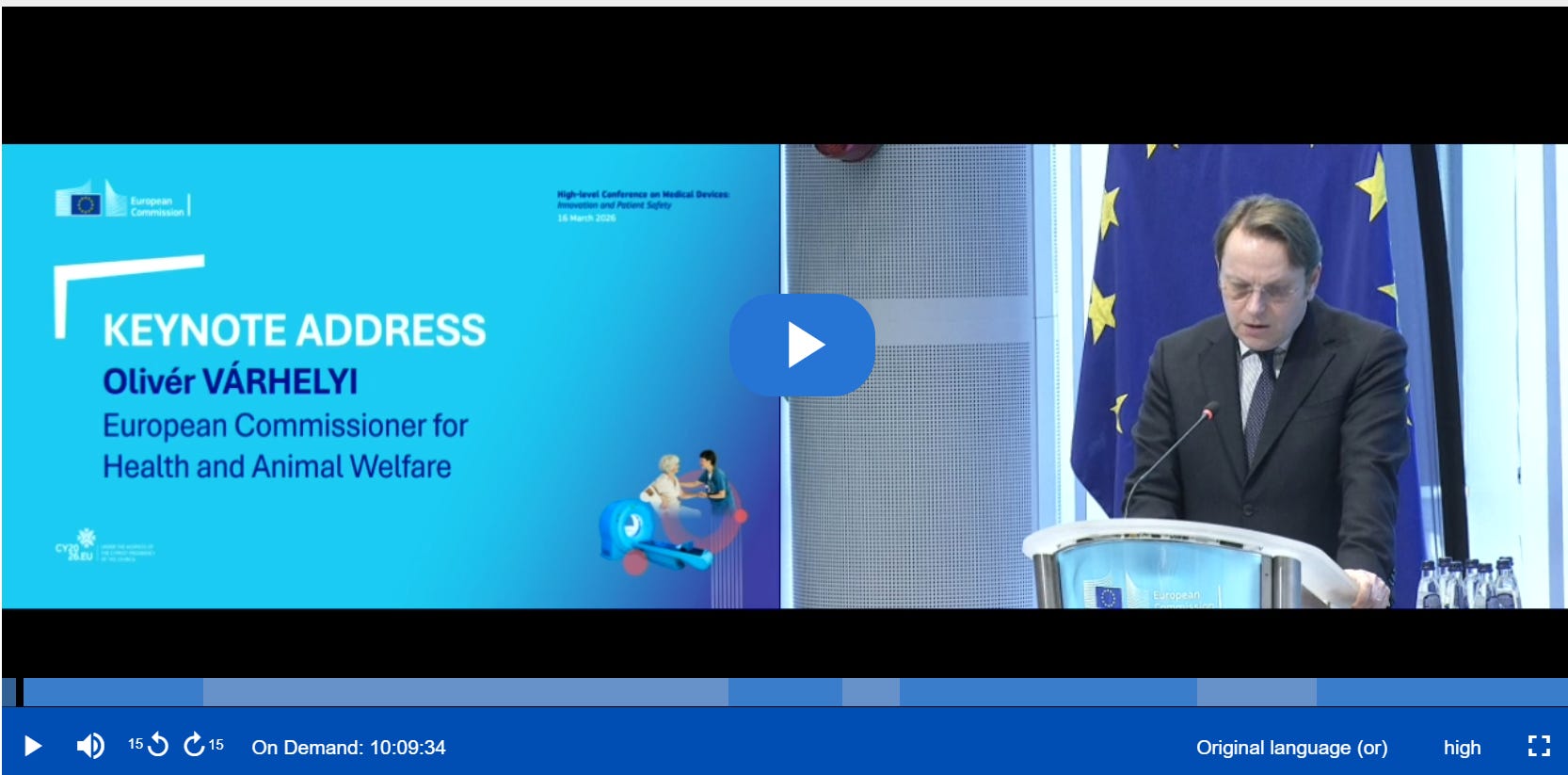
1- For beginners, here’s a quick reminder: informational videos from Competent Authorities on MDR and IVDR are excellent resources. I personally find the HPRA’s (Irish Competent Authority) videos especially informative. The following video presents the HPRA’s perspective with healthcare workers as the audience. What I find most interesting is that the focus here is more on patient safety and practical healthcare practice than anywhere else. Click below and start watching it immediately!
2- For seniors, if you have missed the conference entitled “Medical Devices: Innovation and patient safety” organized by European Commission, here is the link. Please do not be intimitated by 10 hours of recording, they recorded also the coffee breaks, just check the agenda and jump to the relevant section. My favourire session was the “Voices From te Field-How innovation can improve patient safety” at 14:45 – 15:30”.
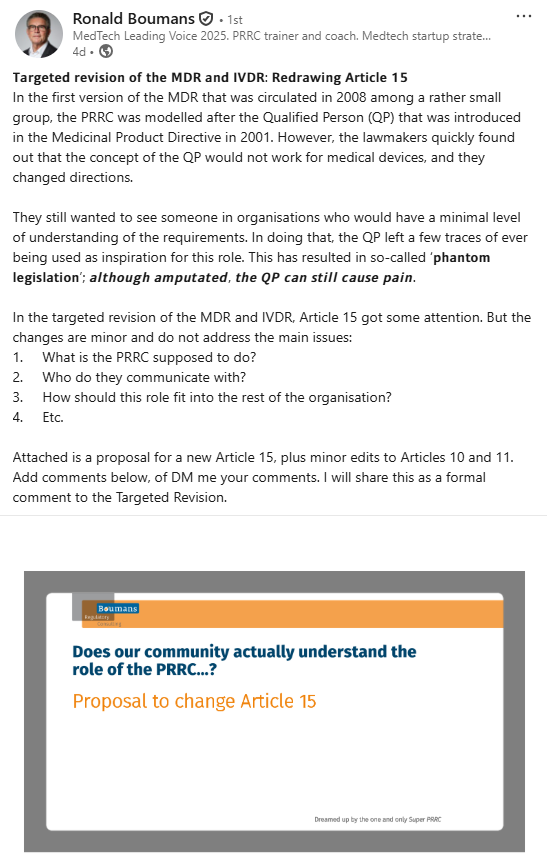
If you work in MedTech, you know the weight that comes with the title PRRC (Person Responsible for Regulatory Compliance). In the midst of discussions around the new IVDR/MDR proposals, Ronald Boumans, PRRC trainer and experienced MedTech leader, suggests a change to Article 15, noting that it could be clearer. Here’s his post and carousel for you to read and reflect on.
In short, he suggests the following points to address the ambiguity of Article 15:
Clearly define that the PRRC’s role is limited to providing an opinion.
Ensure the PRRC has access to all relevant information to form that opinion.
Clarify that the PRRC is not a whistleblower and that communication remains internal.
Allow PRRCs to demonstrate they fulfilled their duties, including after leaving the organisation (for example, by retaining records).
Introduce a new recital explaining the rationale for restructuring Article 15.
Amend Article 10(17) and Article 11(6a) to require manufacturers and authorised representatives to consider the PRRC’s documented opinions.
Therefore, rewrite Article 15 to clearly define:
designation requirements
independence from commercial pressure
protection from disadvantage or personal liability
access to information
obligation to issue documented opinions
distinct responsibilities for manufacturers and authorised representatives
record-keeping rights after leaving the role
That was it for this week. If you have any topic in my mind for me to discuss, send me DM on substack or Linkedin.
Until next week,
Ceren
No posts
Comments
Nothing yet. Say the first thing.
Sign in to join the conversation.