
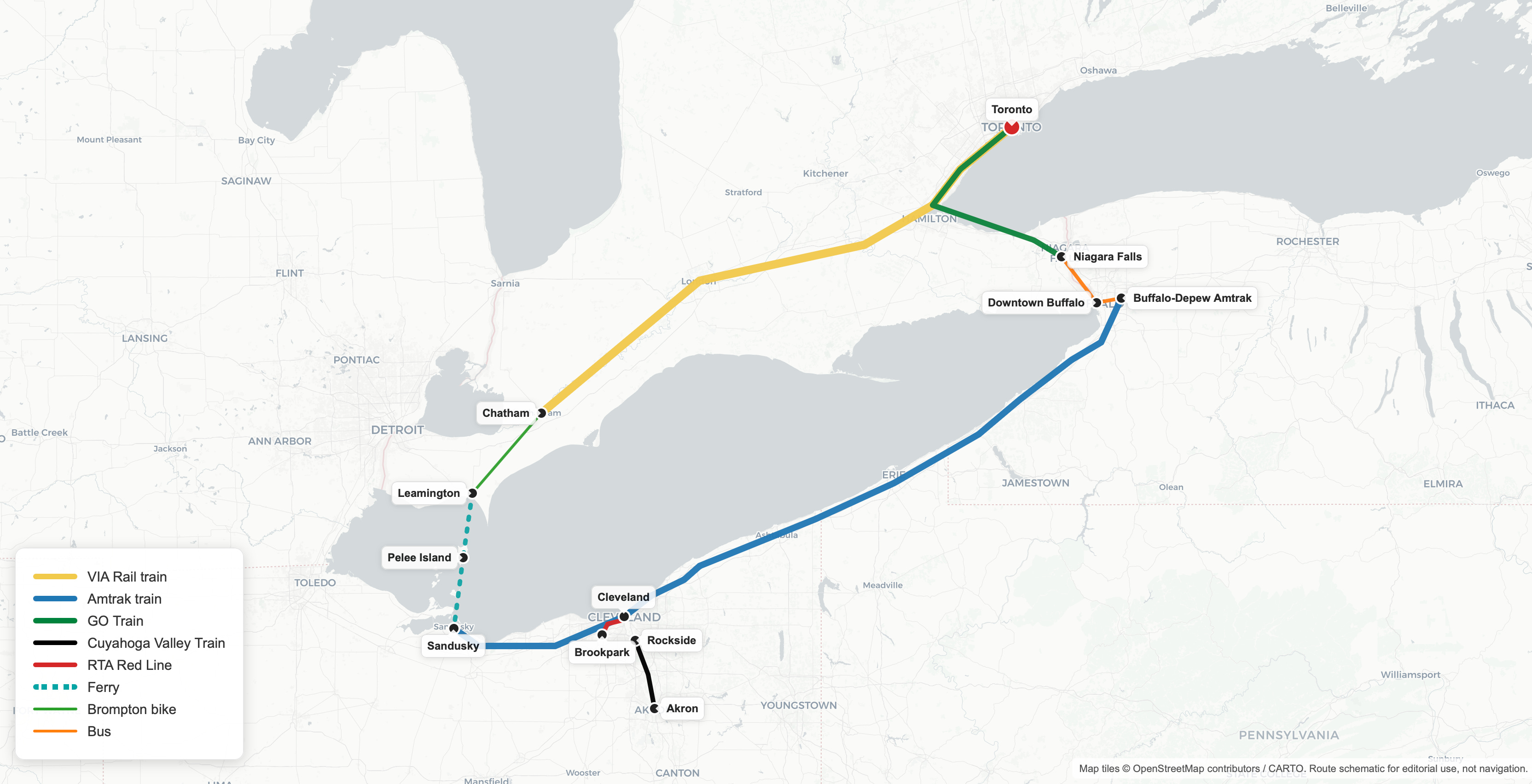
The idea of circling Lake Erie by train and ferry had been brewing in my mind for quite some time. The itinerary involved a train from Toronto to Windsor, a bus to Leamington, a ferry to Pelee Island, another boat to Sandusky, a train to Cleveland, another train to Buffalo, several buses to Niagara Falls, a walk across the Rainbow Bridge, and finally a train back to Toronto. Sounds like a perfect itinerary to me, doesn’t it? There was only one small problem. As of May 1, 2026, the bus I needed between Windsor and Leamington no longer existed.
Apparently, the municipality of Leamington didn’t approve a budget for a heavily subsidized bus when the provincial funding ran out of cash. I don’t judge them, I completely understand. But I still had to solve a major transportation gap in my route, of approximately 65 km / 40 miles from the nearest VIA Rail station in either Windsor or Chatham to a ferry crossing in Leamington.
A few options I considered:
Taxi: nope, sorry, prohibitively expensive
Mini-bus from Chatham to Tilbury and then walking the rest of the route: too far and I would not be able to catch a morning ferry on time since the first mini-bus to Tilbury would not leave until 6 am.
Hitchhiking: sounds adventurous, but too unreliable given my tight schedule.
But what about cycling this considerable gap? Sure, it would not be easy, but certainly doable with enough motivation. However, the problem was that VIA Rail does not allow bikes on board its trains in the Quebec-Windsor corridor, except on two round-trip routes between Ottawa and Quebec City. But nothing south of Toronto. The reason is that older LRV and Budd train cars still in operation, are not equipped with bike racks, and there is no room to store them inside coaches. The new Siemens Venture cars do have two bike racks available, but VIA Rail does not know in advance what type of train will be used, so they basically just banned bikes altogether.
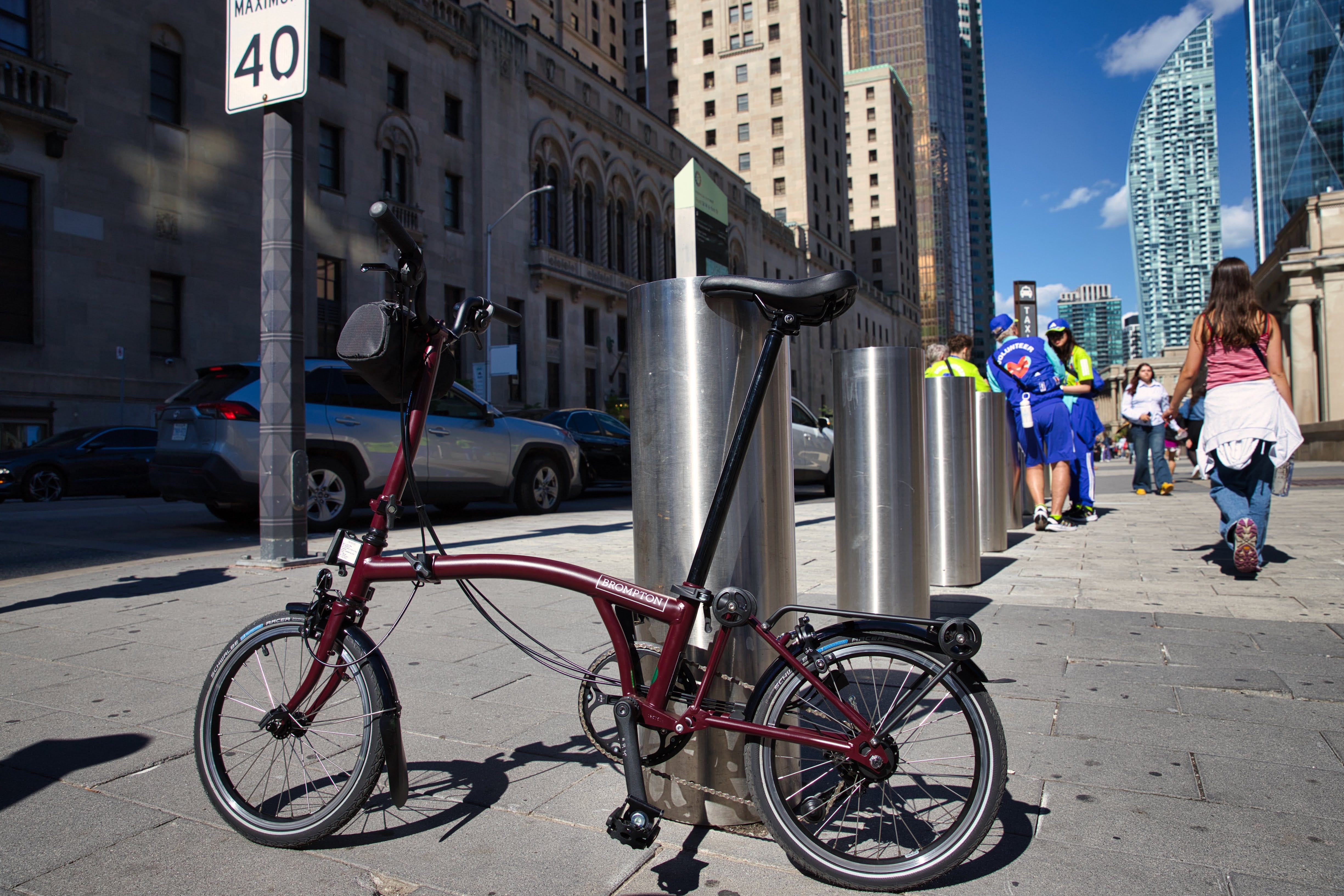
The only exception is that you can take a foldable bike on board. That might work actually! So I explored more of this option and decided to give it a try. I bought not just any folding bike, but a Brompton, a remarkably compact machine with 16-inch wheels. When folded, it comes within the allowable dimensions and can be stowed on a regular baggage rack, saving me $25 that I would otherwise have paid to bring a folding bike aboard the train.
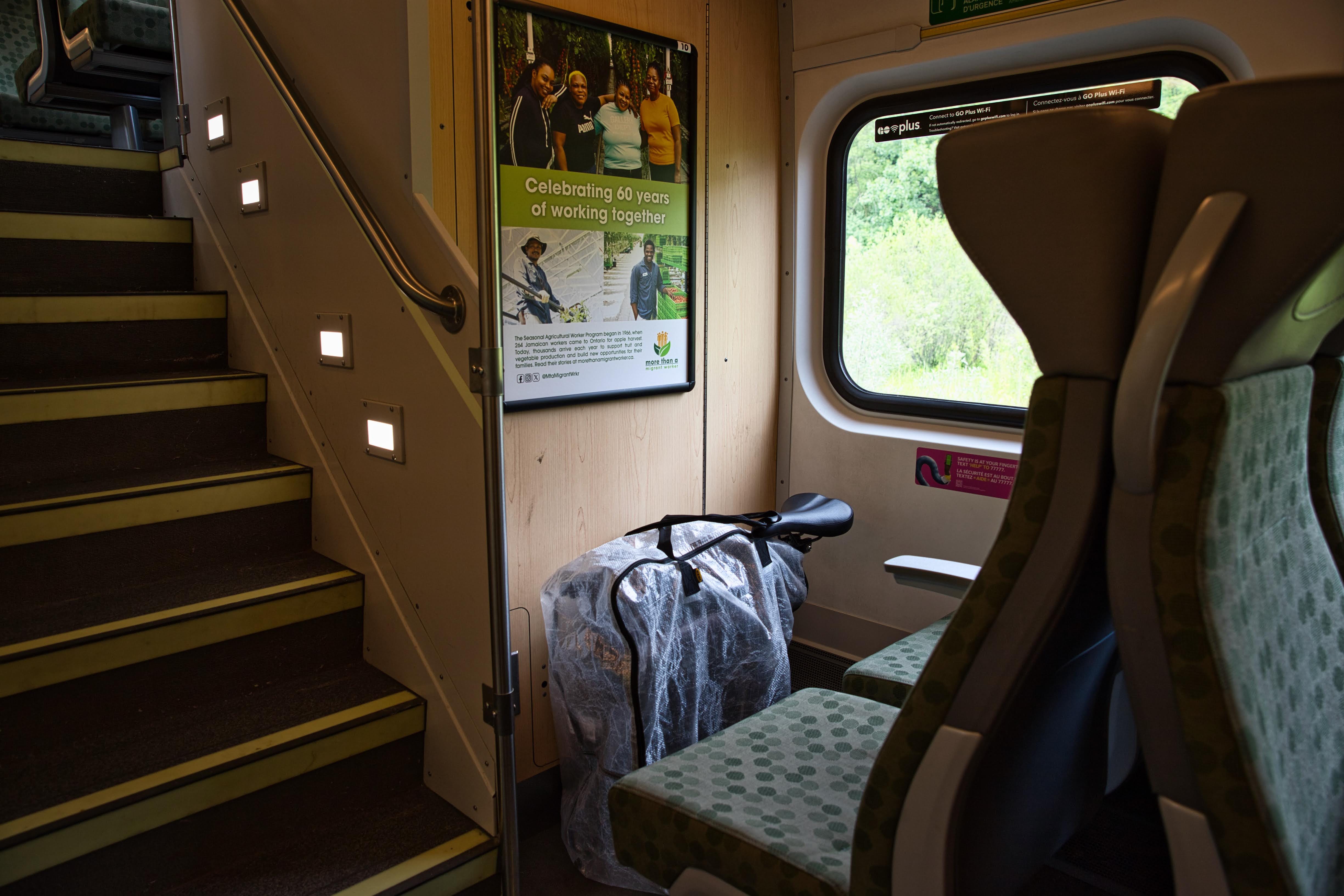
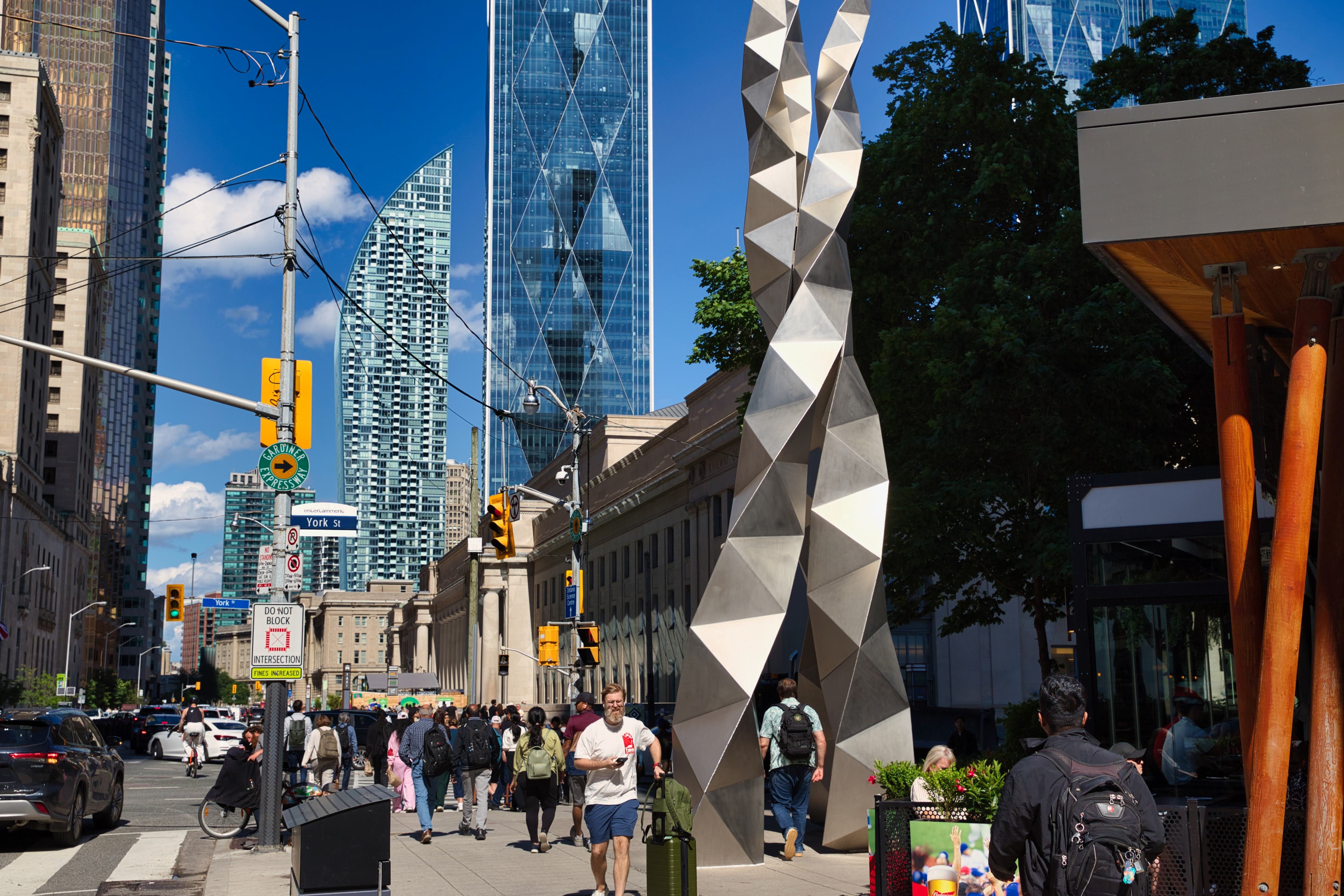
Once the missing link in my journey had been successfully addressed, I headed out to Toronto Union Station, stopping at IKEA to buy a $7.99 Dimpa bag that many people on Reddit said fit my new two-wheeled friend perfectly. I tried it, and it indeed worked like magic: at Union Station, my Brompton disappeared into a bag.
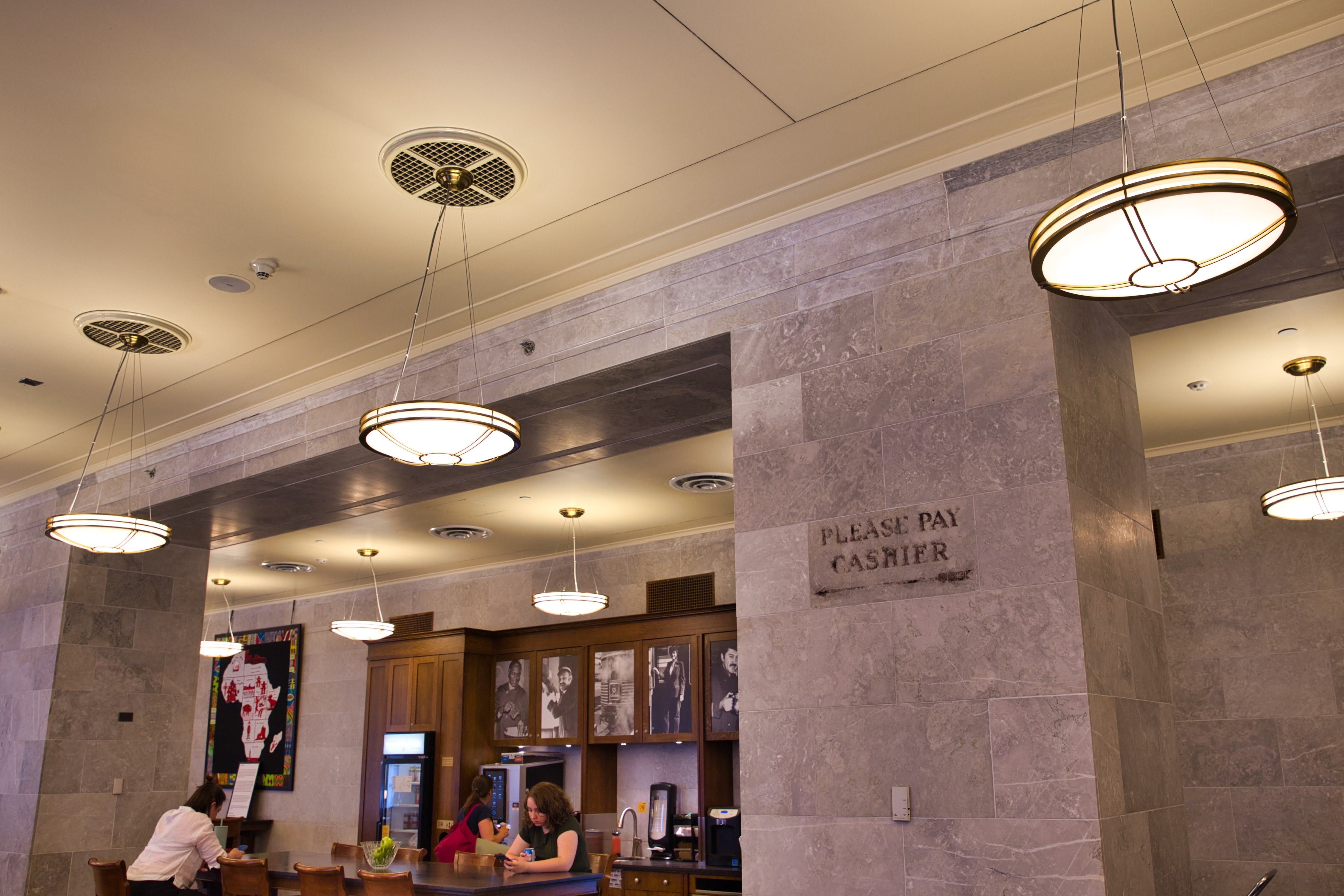
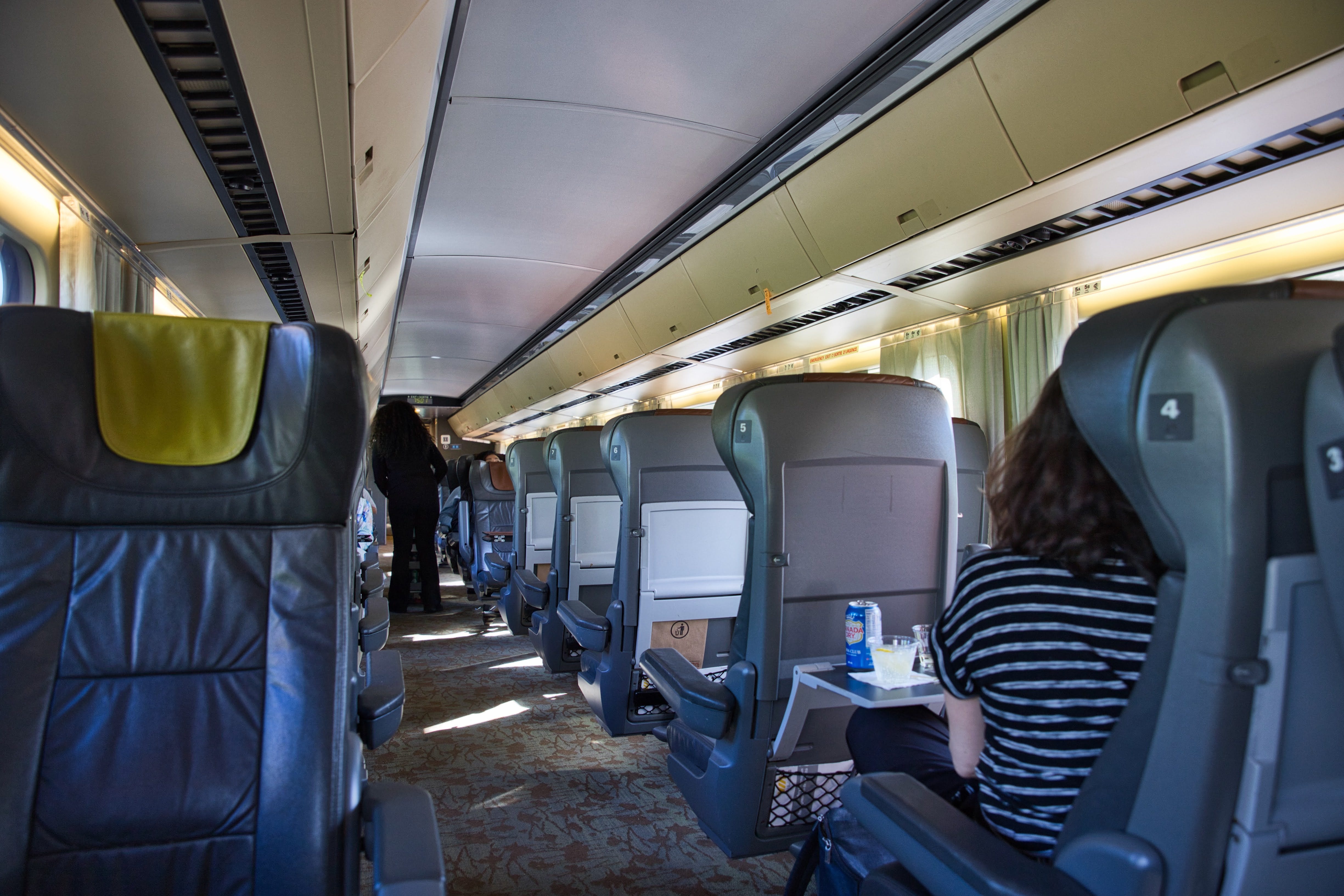
I never buy a business class ticket from VIA Rail unless I travel for work, but this time I decided to do so. One thing I particularly enjoy about business class tickets is that you can access VIA Rail lounges wherever they exist. The one in Toronto, while small, offers free coffee and tea, green apples, and a large variety of soft drinks. I took four juice bottles that fit perfectly into a small bag attached to my handlebars. Turned out, I was able to refill these bottles with water many times along my journey. Another perk of a business class is food and drinks are included. Having a nice dinner aboard a train was exactly what I needed after a day of office work.
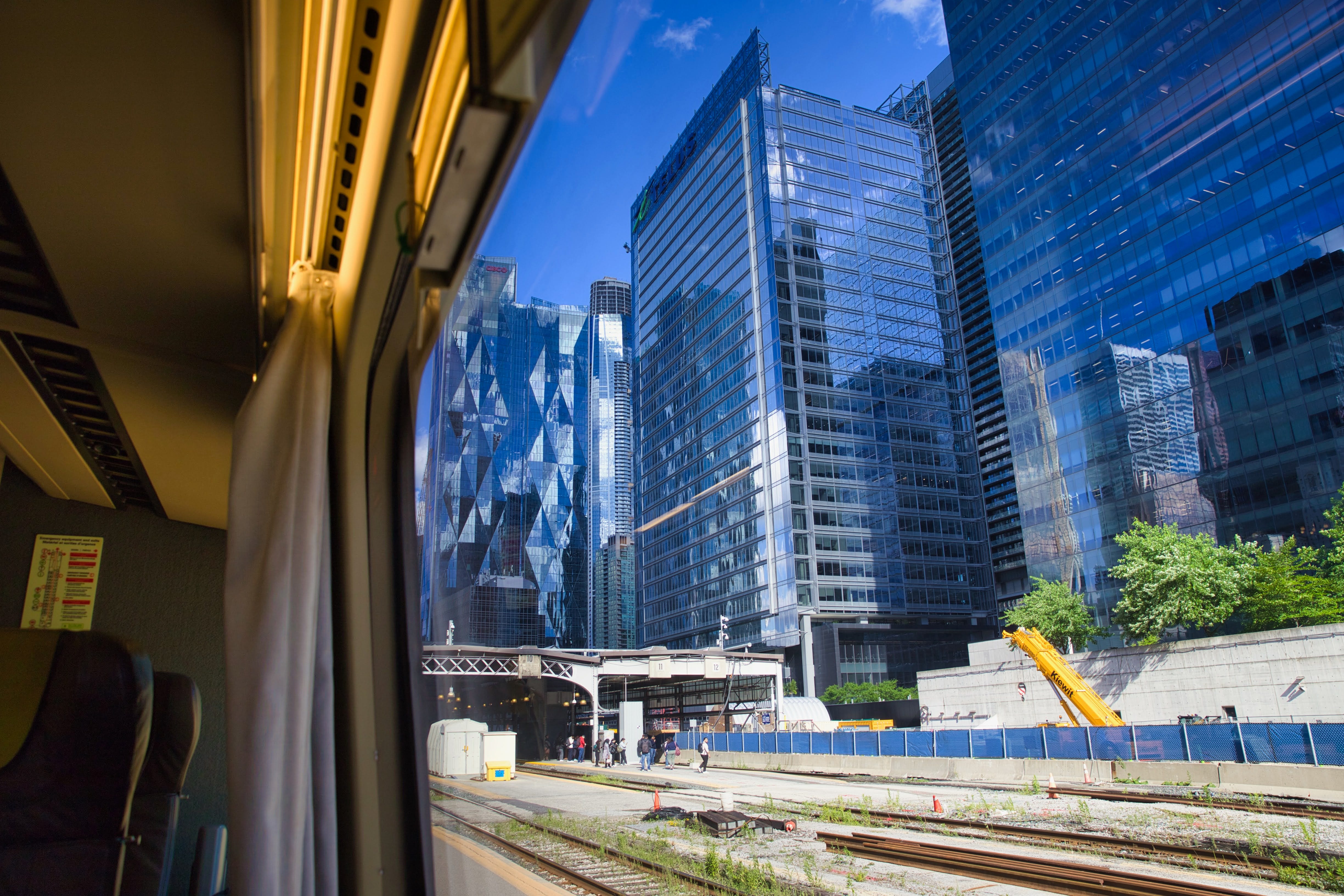
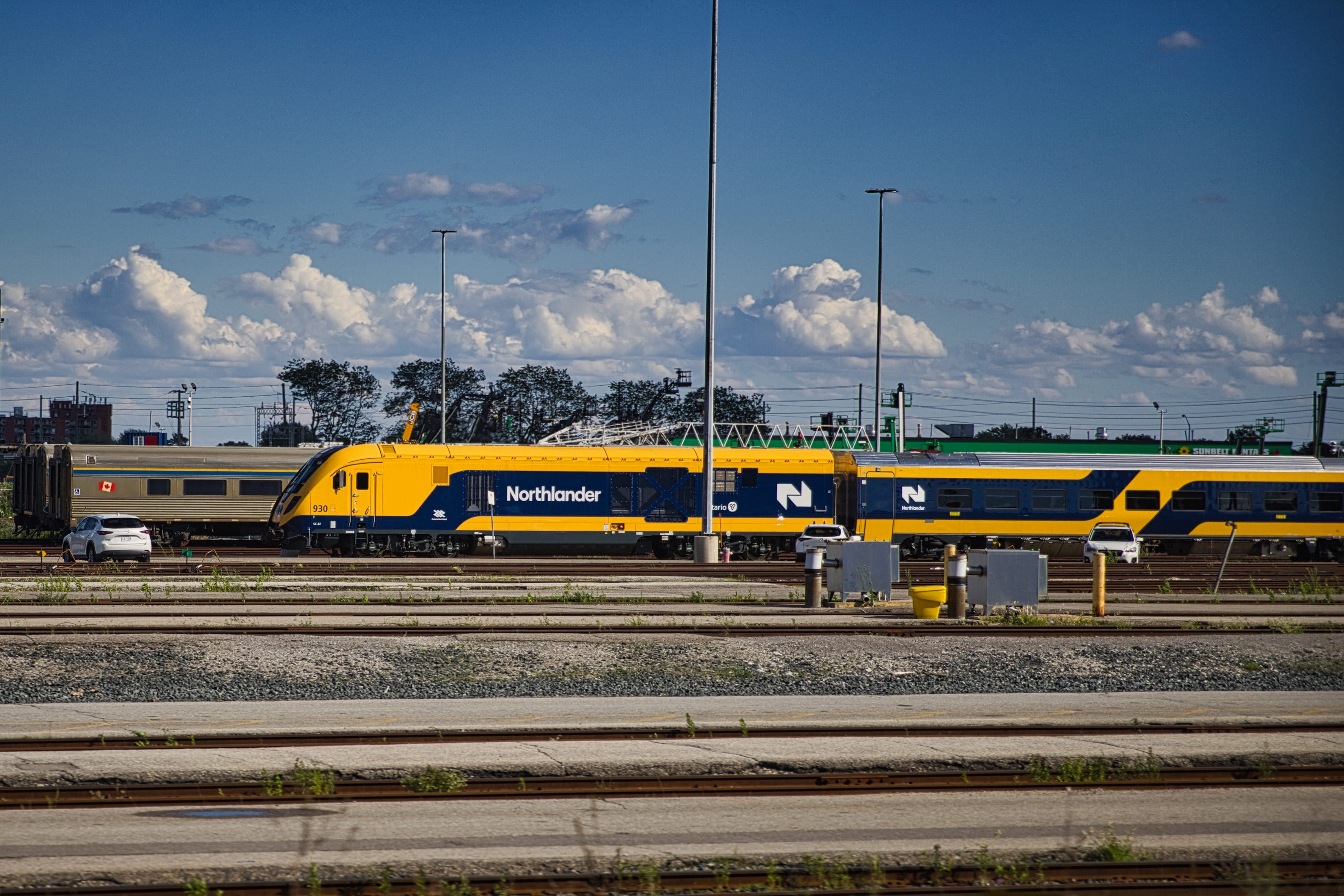
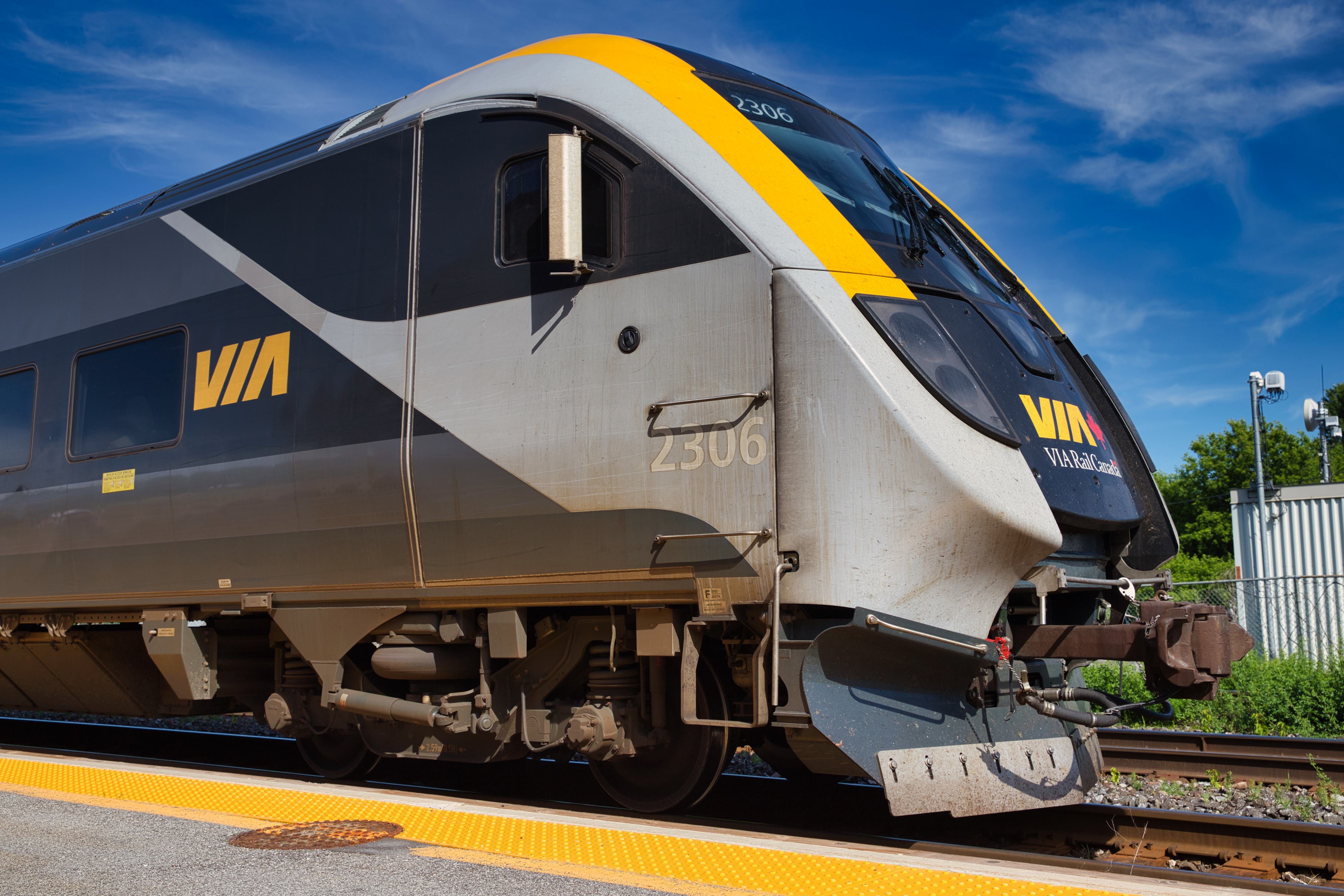
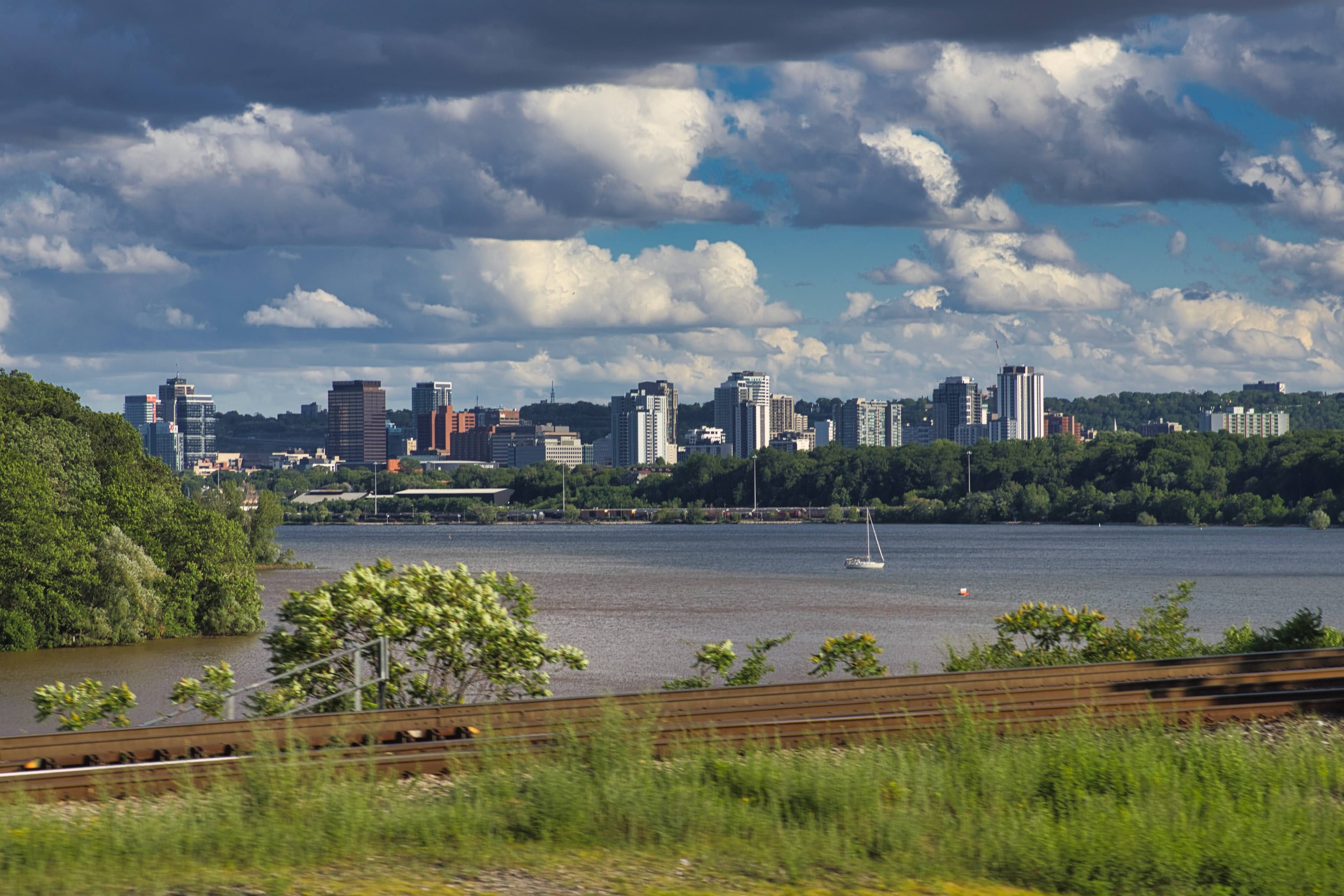
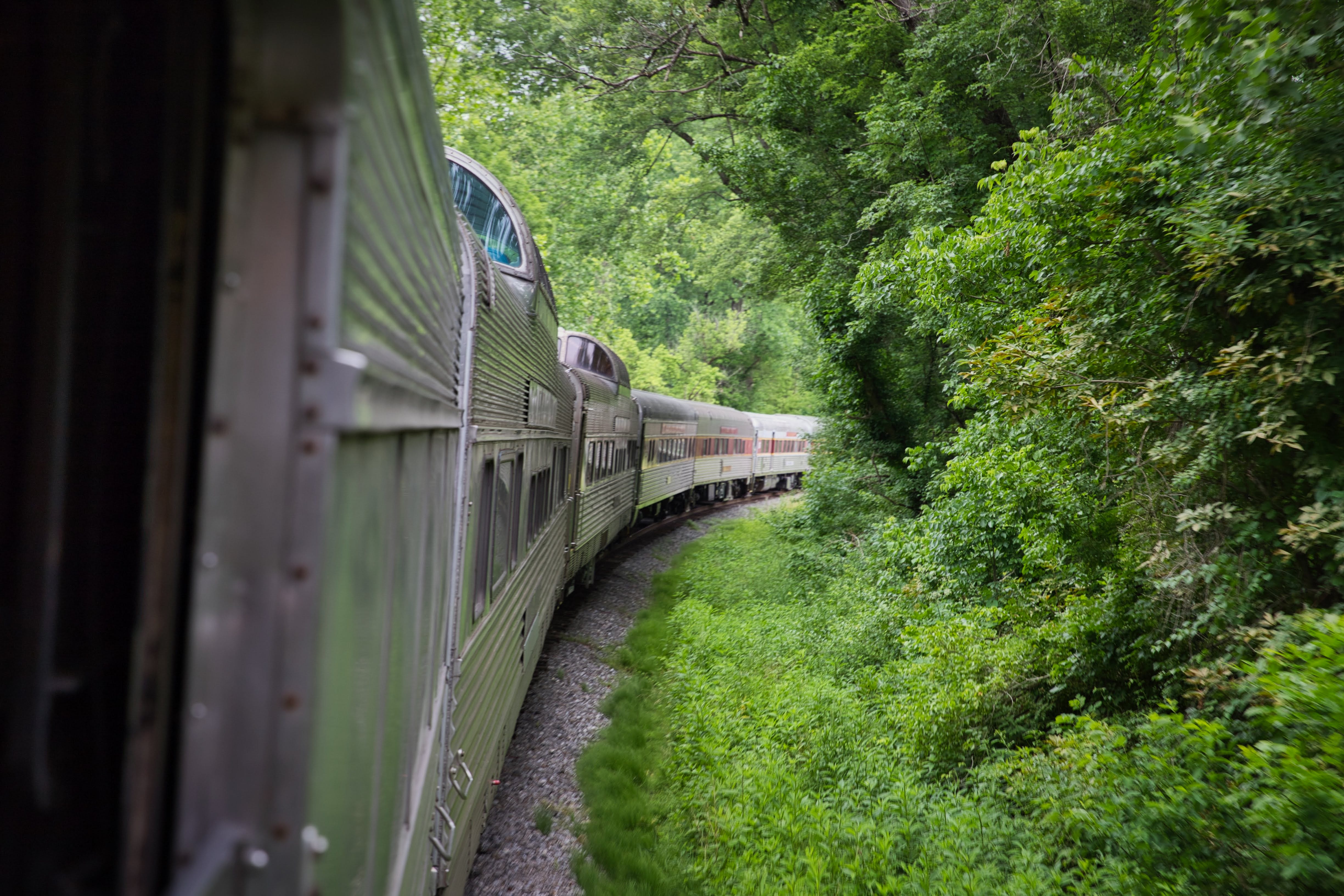
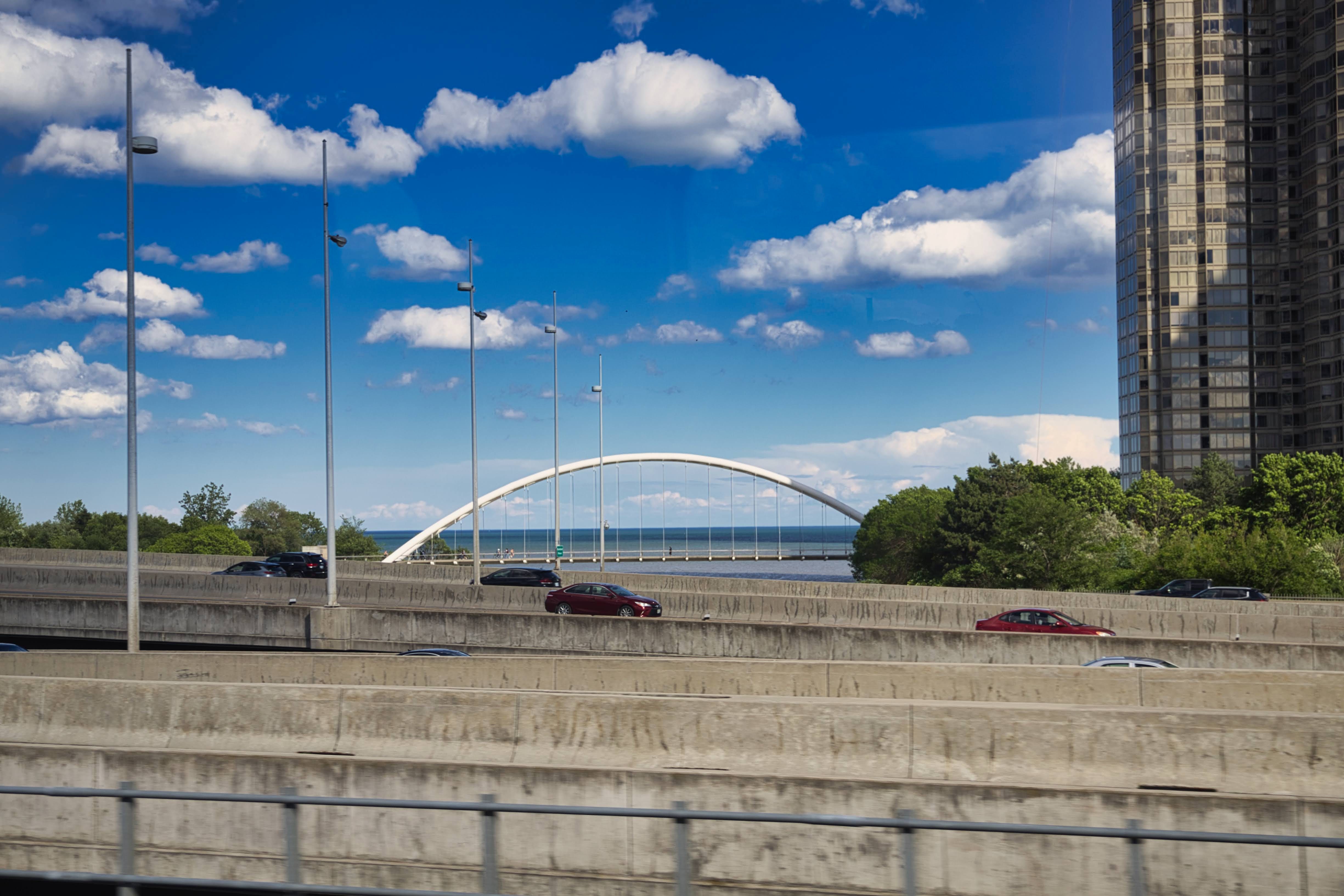
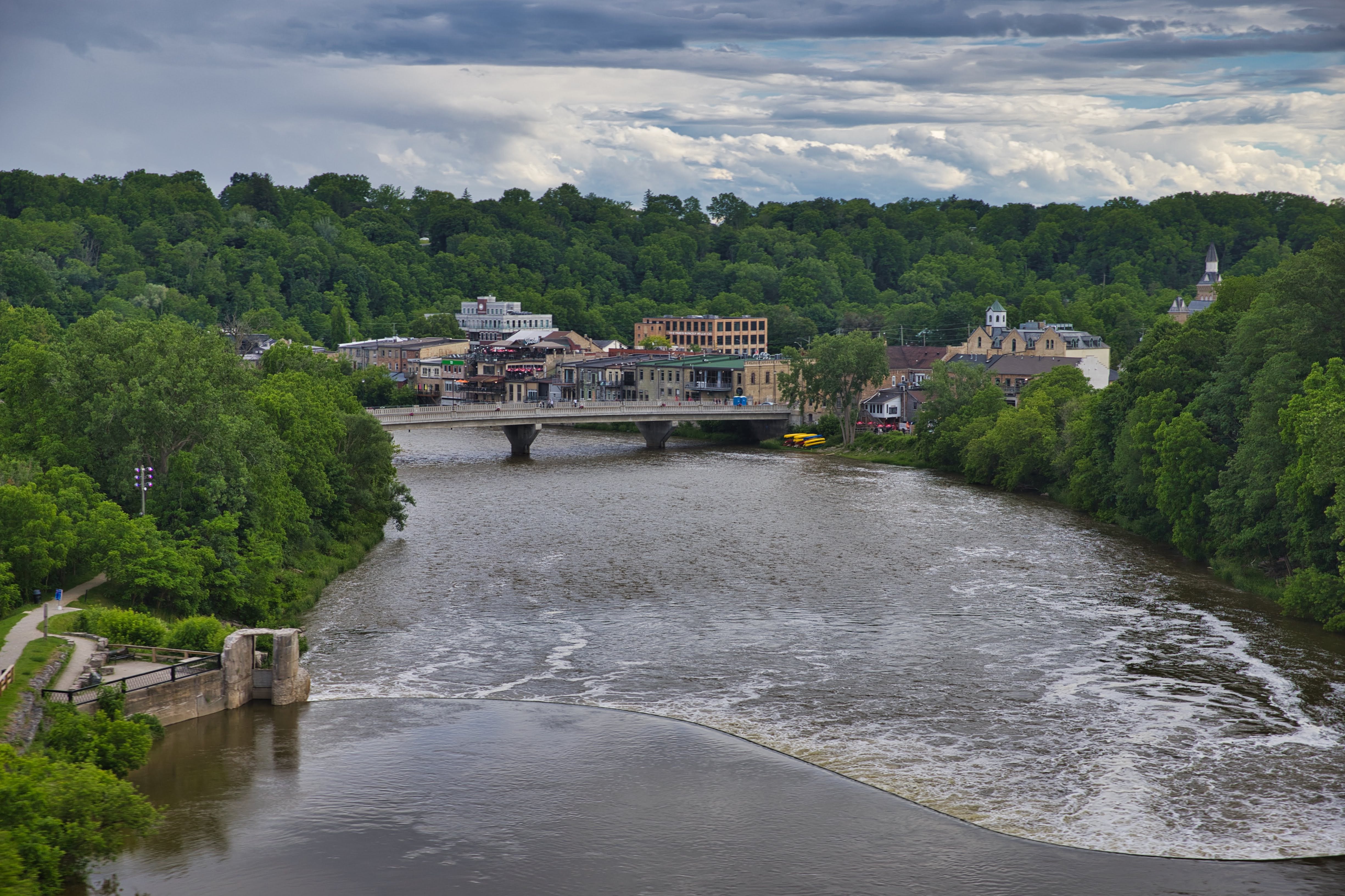
The ride from Toronto to Chatham was delightful and relaxing. The views outside my window were spectacular, especially near Hamilton and Brantford. This was my second trip along this section of the Quebec-Windsor corridor, and this time I was able to snap a great picture atop a bridge in Paris. I’ve been to Paris once already, and it’s a nice, charming little town with a few fancy restaurants and stores. Once in Chatham, I unfolded my bike and headed to my Airbnb for the night. It was such a nice feeling of freedom: a folding bike and a train make a perfect combination.
There are a few ferries per day that connect Leamington and Pelee Island, but there is only one per day between Pelee Island and Sandusky, Ohio, which I could not afford to miss. Therefore, I woke up at 4 in the morning, quietly packed everything not to wake my Airbnb hosts, and headed to Leamington entirely on Google Maps. What I realized a few minutes into my ride was that a flashlight would have been helpful, as at 4 a.m., it was still pitch dark. I ended up holding my phone with one hand for about an hour so I could at least see some potholes if there were any. The good thing was that it was Saturday morning, and Google Maps took me through some sleepy gravel roads in the middle of farm fields, so I think I saw my first car at around 6 am when the sun was already well above the horizon.
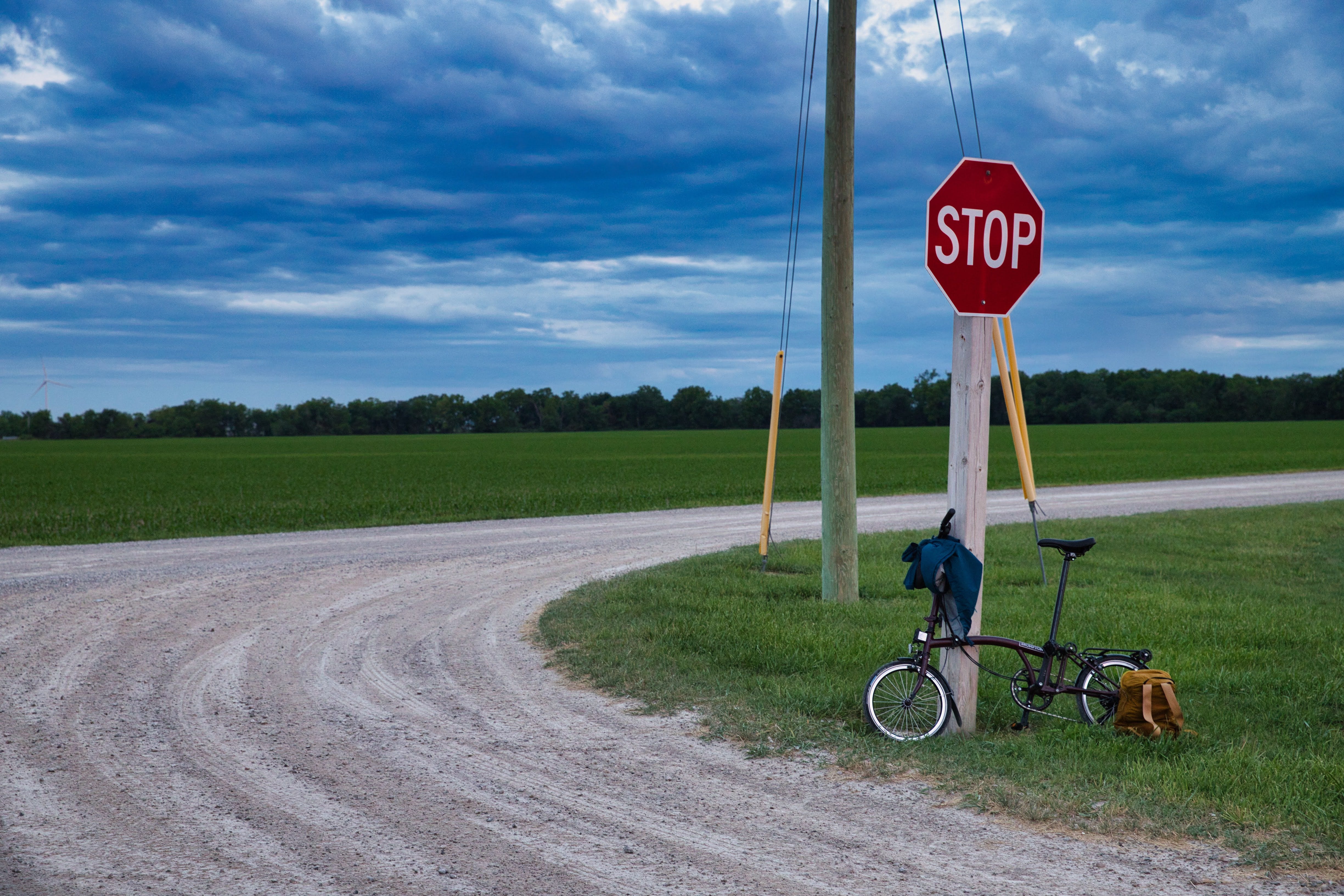
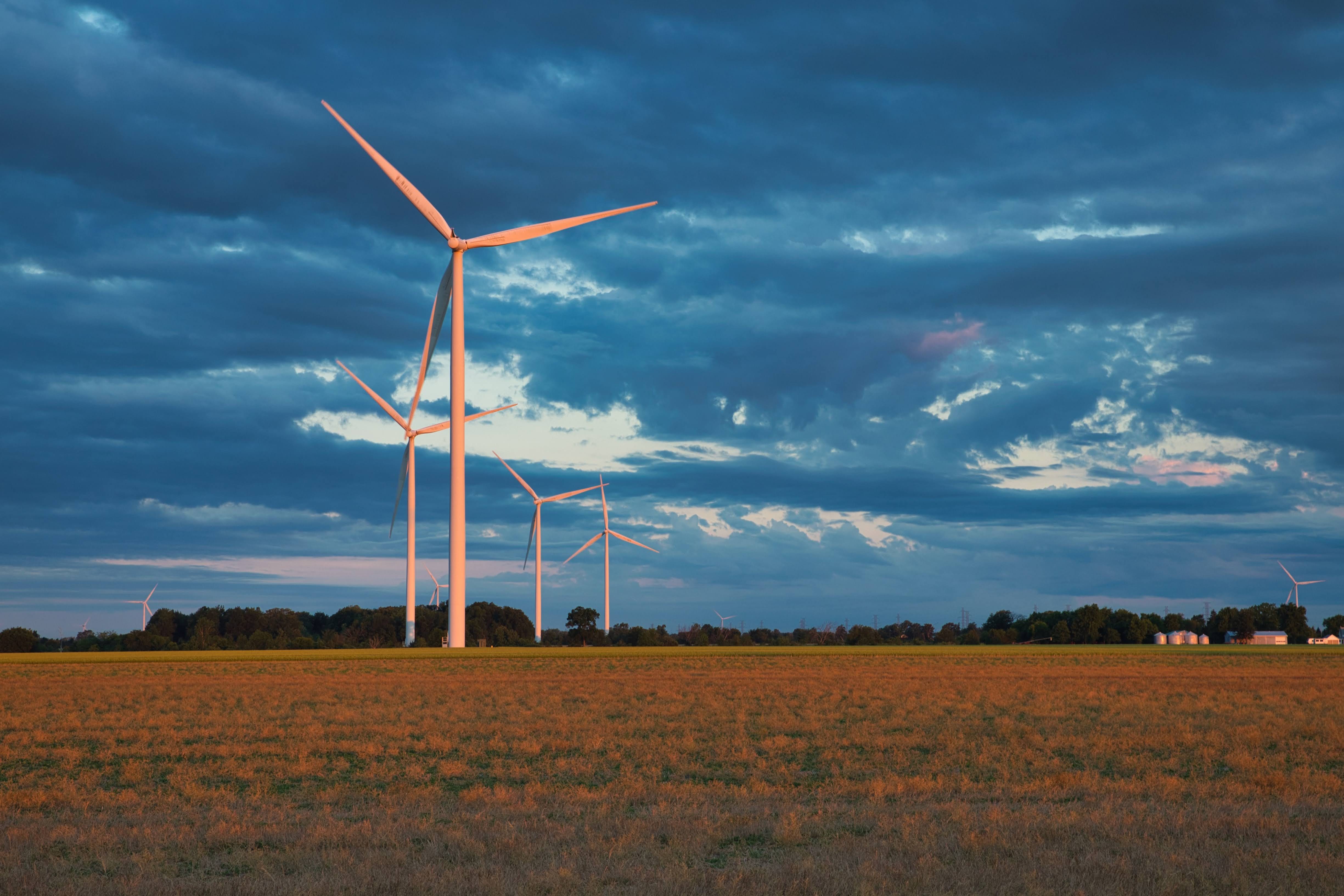
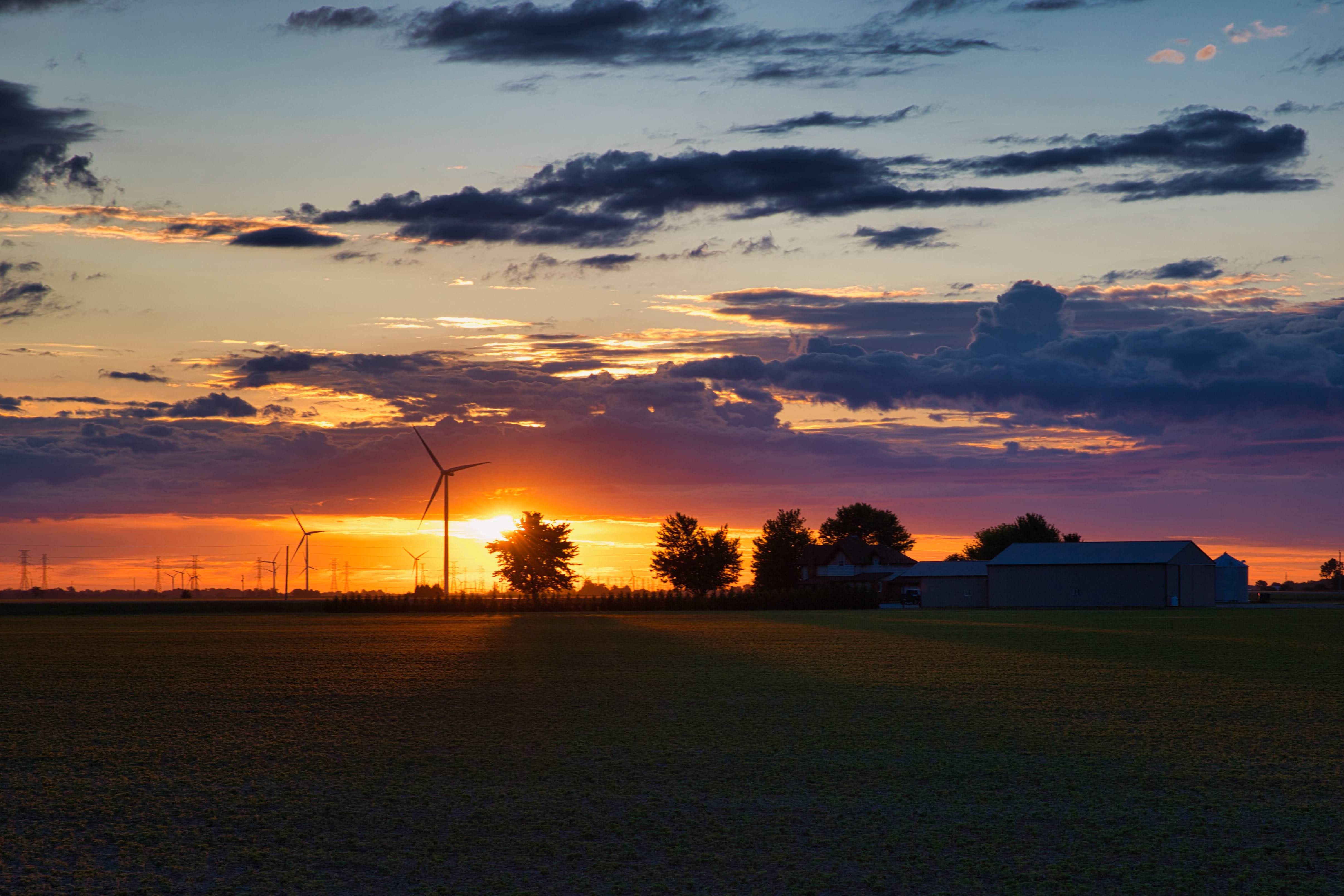
Did I mention the sunrise? It was magnificent, the best one I had seen in a very long time. Every 30 seconds, the colours changed, and the next picture somehow topped the previous one. I spent about 15 minutes just standing there, watching the sky put on a show.
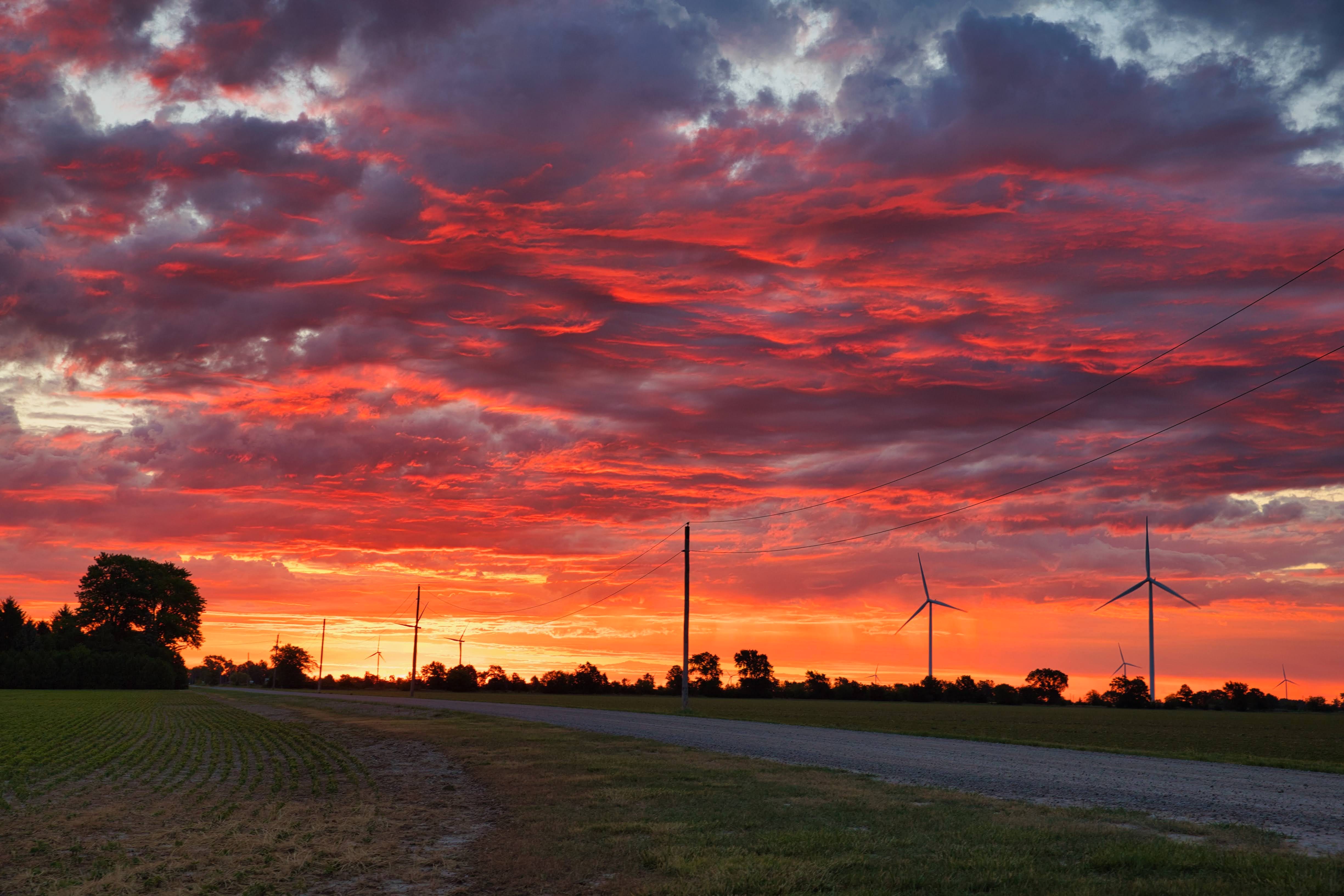
What added to the drama was the numerous wind turbines that litter the landscape of an almost perfectly flat and often windy southwestern Ontario. I don’t understand why so many people hate wind turbines. They looked almost majestic in that sunrise, though I suspect I may not be the target audience for anti-wind-turbine bumper stickers.
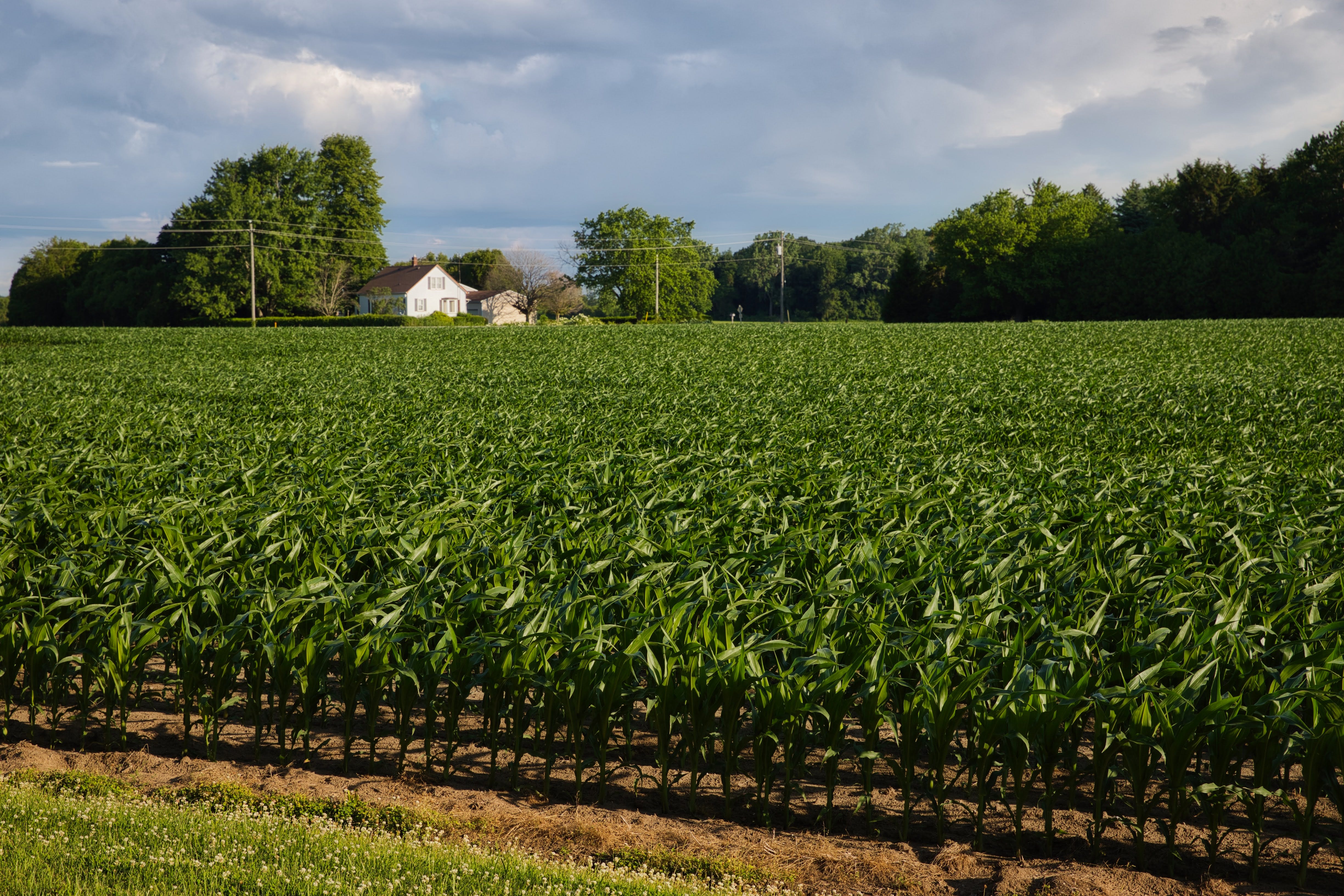
I’ll just say it: pedalling such a long distance of 65 km / 40 miles without any preparation was miserable. I generally consider myself fit, but I had not cycled in a long time, plus it takes about a week for your bottom part to get used to a firm saddle. Until then, it hurts like crazy! It took me slightly over four hours to get to Leamington, and I have to tell you the last 30 minutes were the most brutal. Thankfully, the ride was mostly level, and the pavement was decent for the most part.
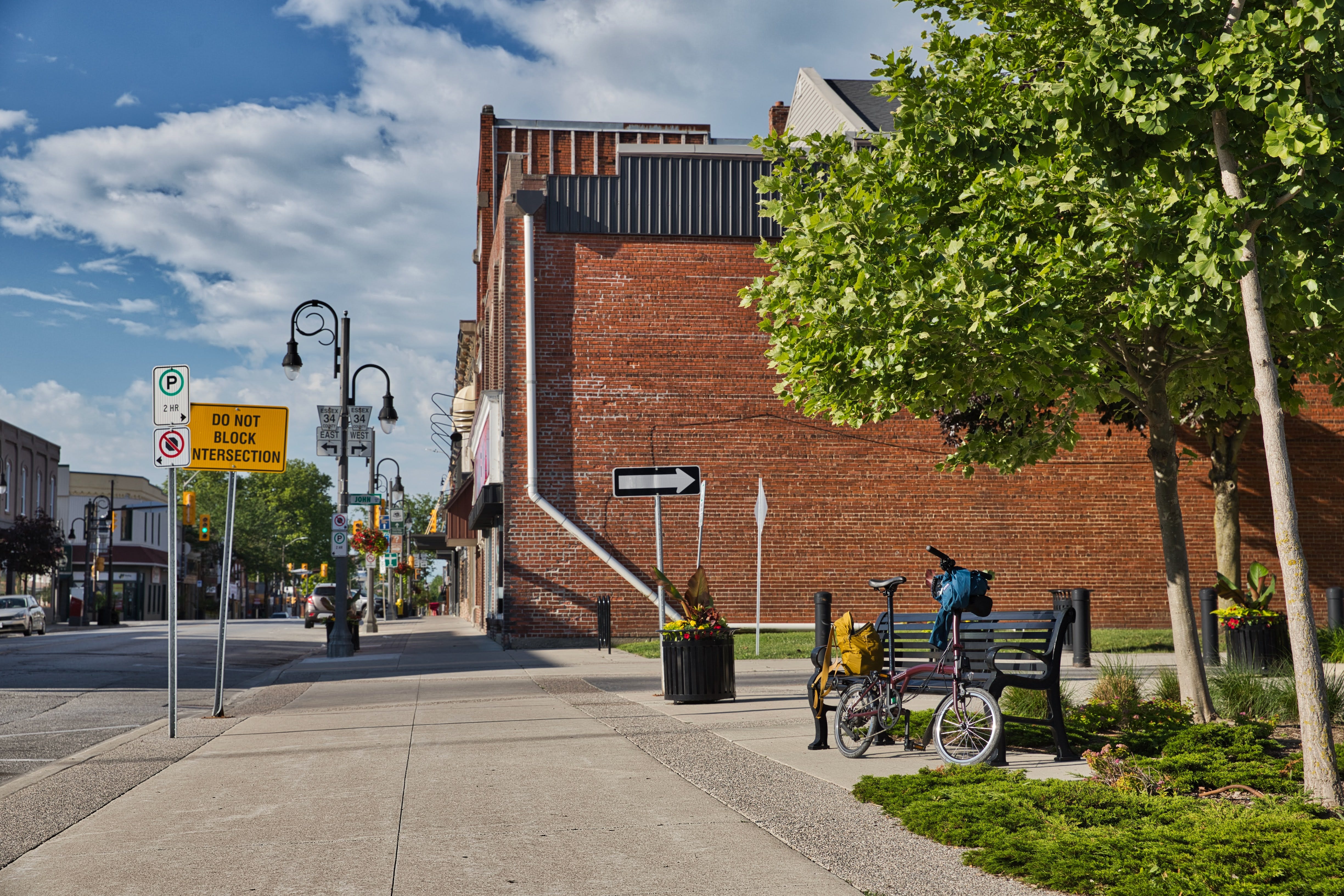
Leamington is the kind of town that makes you understand why so many Canadians choose to retire there. Lake Erie is the shallowest of all the Great Lakes, so the water warms up quickly which makes it perfect for swimming.
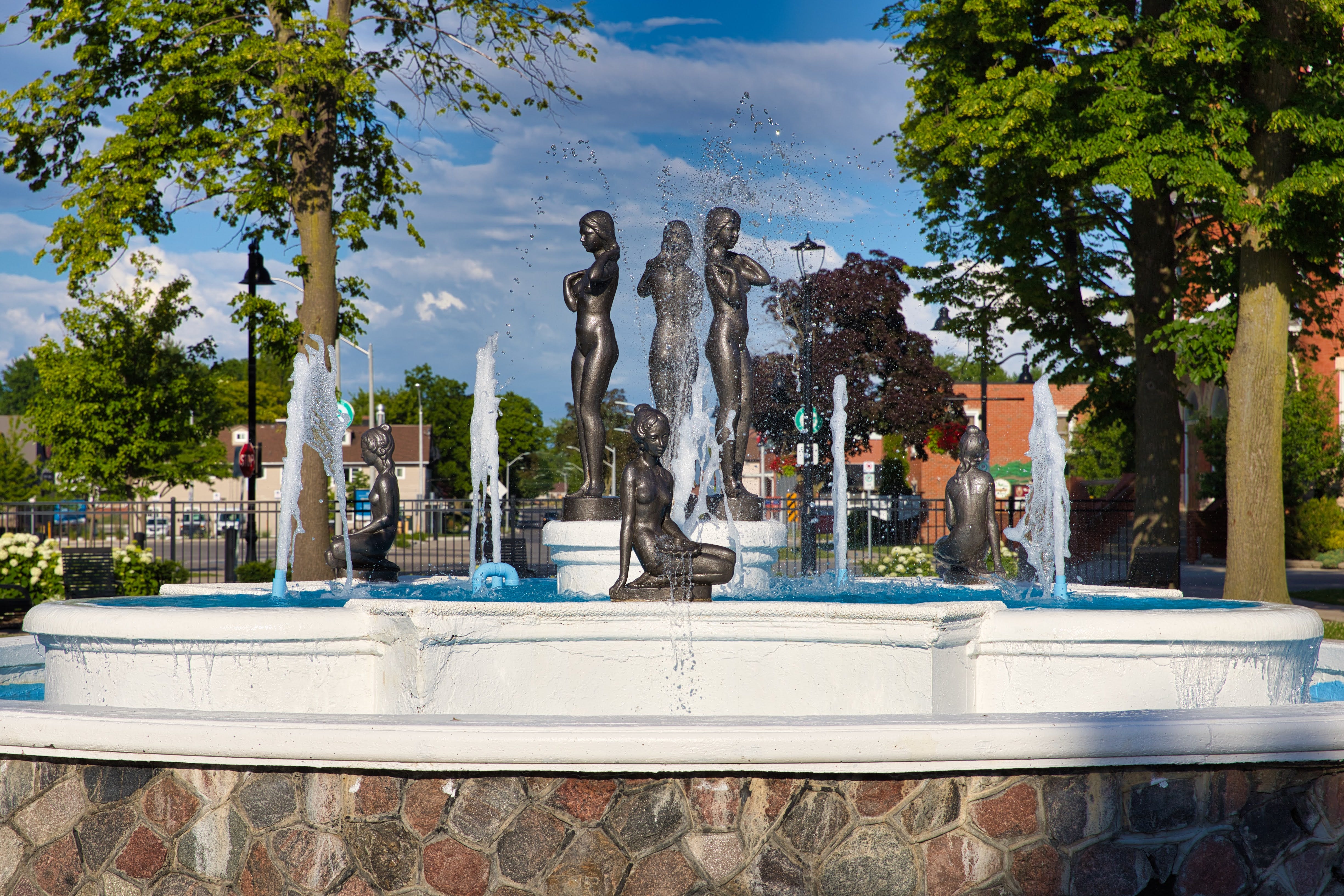
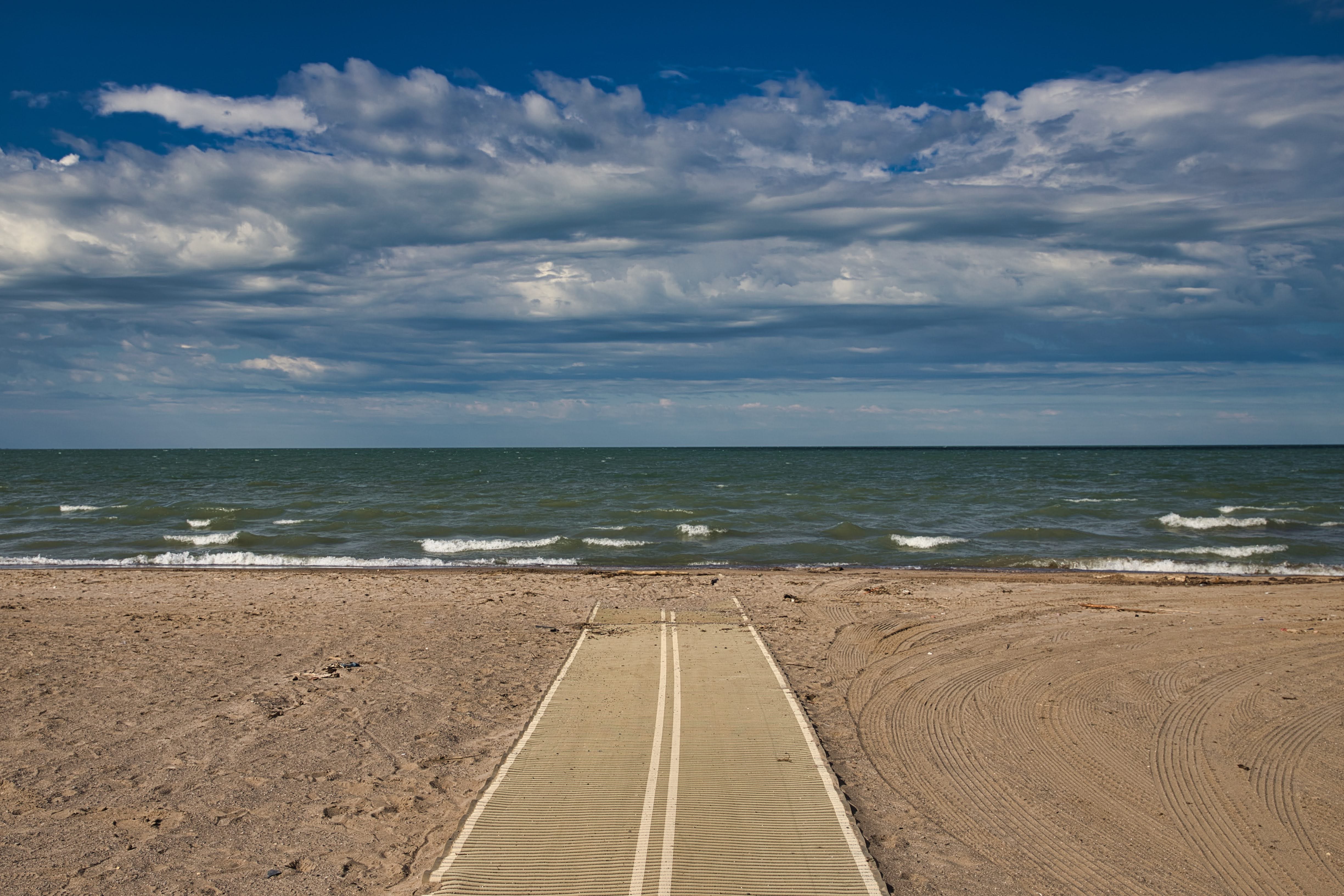
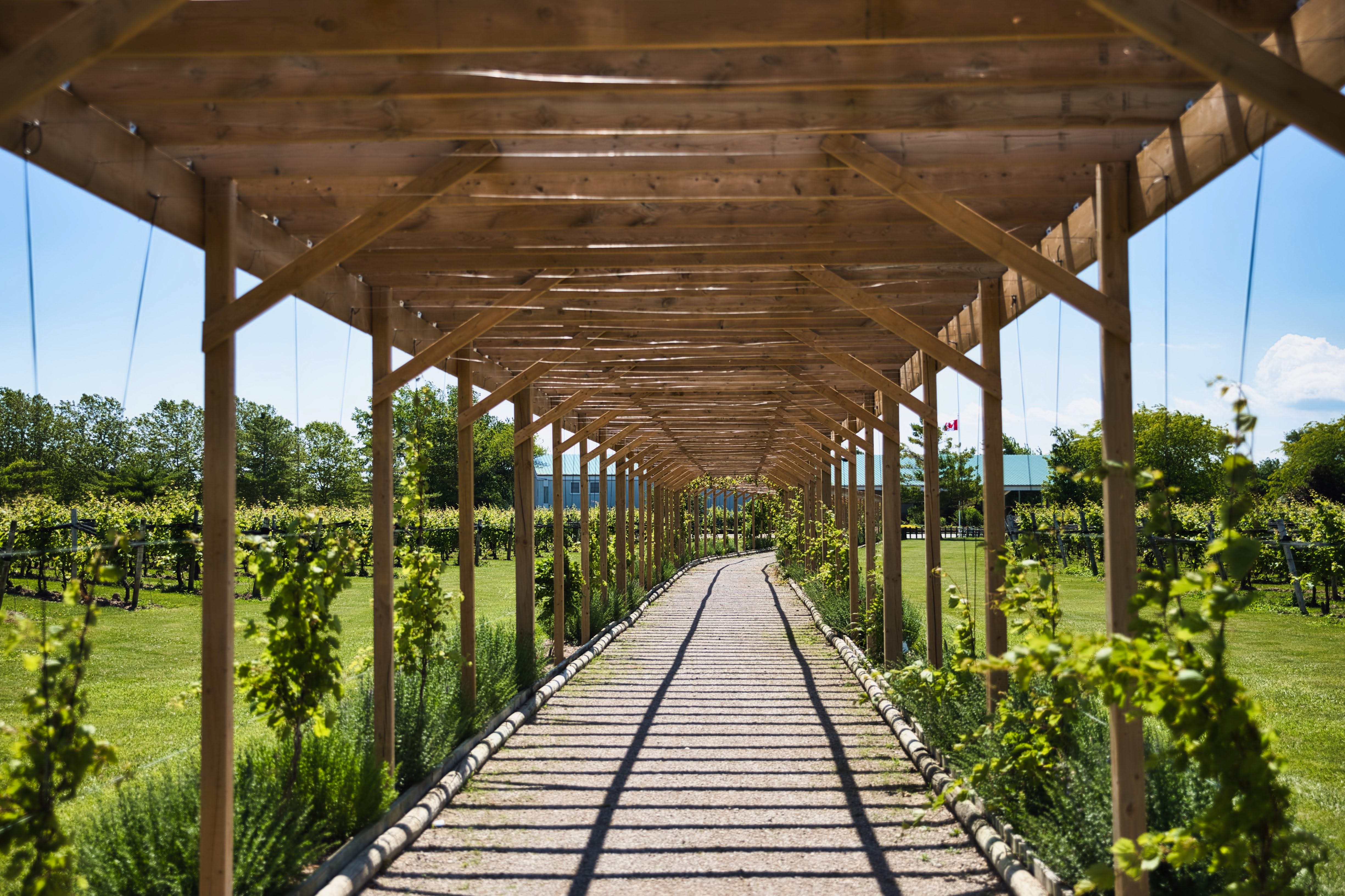
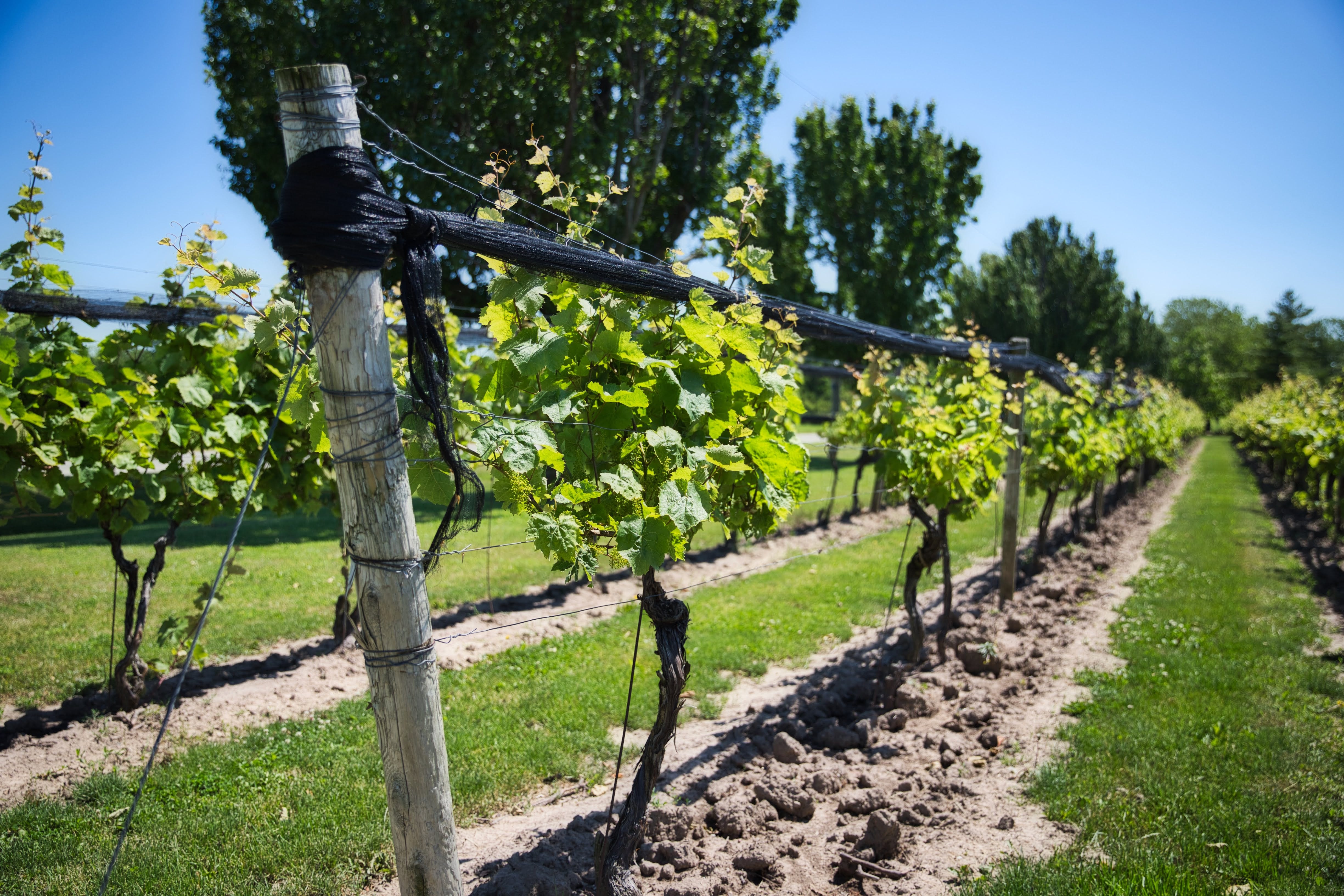
Pelee Island, where I was headed next, is famous for its Carolinian forests and laid-back summer atmosphere. It’s also one of Ontario’s three wine regions, along with Niagara and Prince Edward Peninsula. Pelee Island is home to Canada’s first commercial estate winery, which was established in 1866.
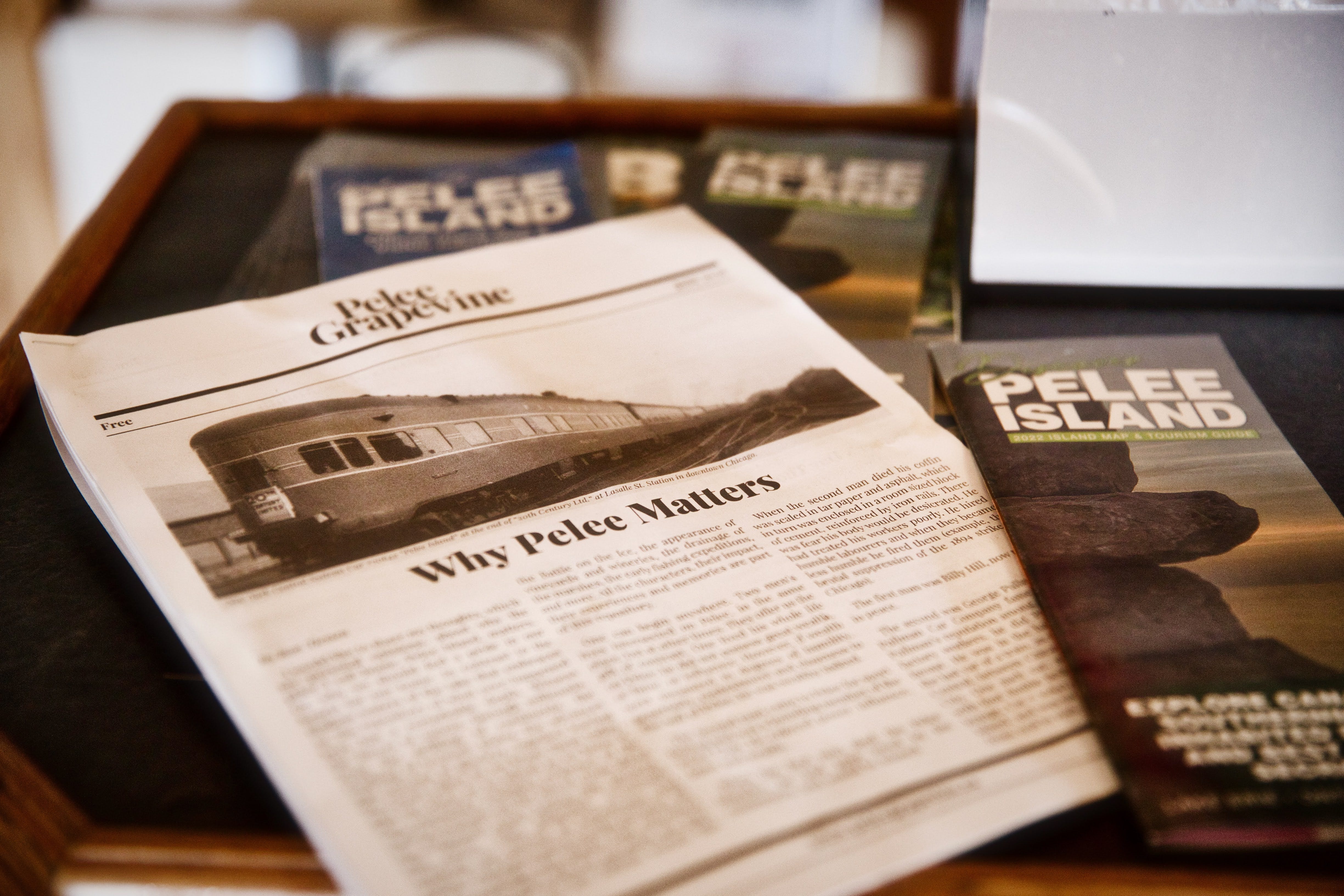
The ferry M.V. Pelee Islander II was spacious, with large, comfortable seats. There is no need to make a reservation for foot or bike passengers in advance, but if you want to bring your car, you’d better reserve well ahead of time. It had everything I needed for a comfortable crossing. My only complaint is that the ferry staff allows cars and motorcycles to exit first while pedestrians and cyclists wait. Also, if you’re planning this trip in full or a part that involves a ferry ride, check the Ontario Ferries website as sometimes ferries depart from Kingsville, not Leamington.
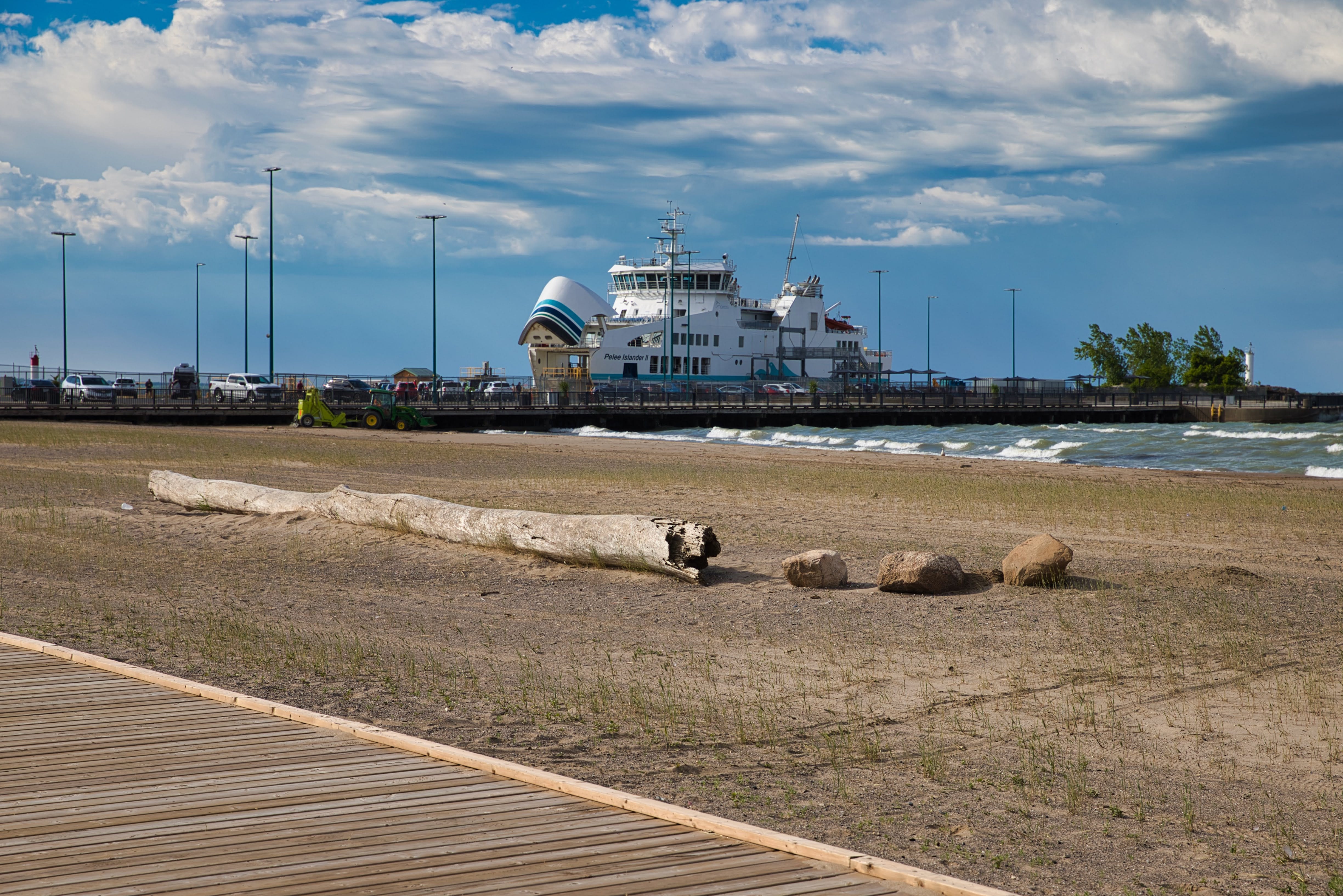
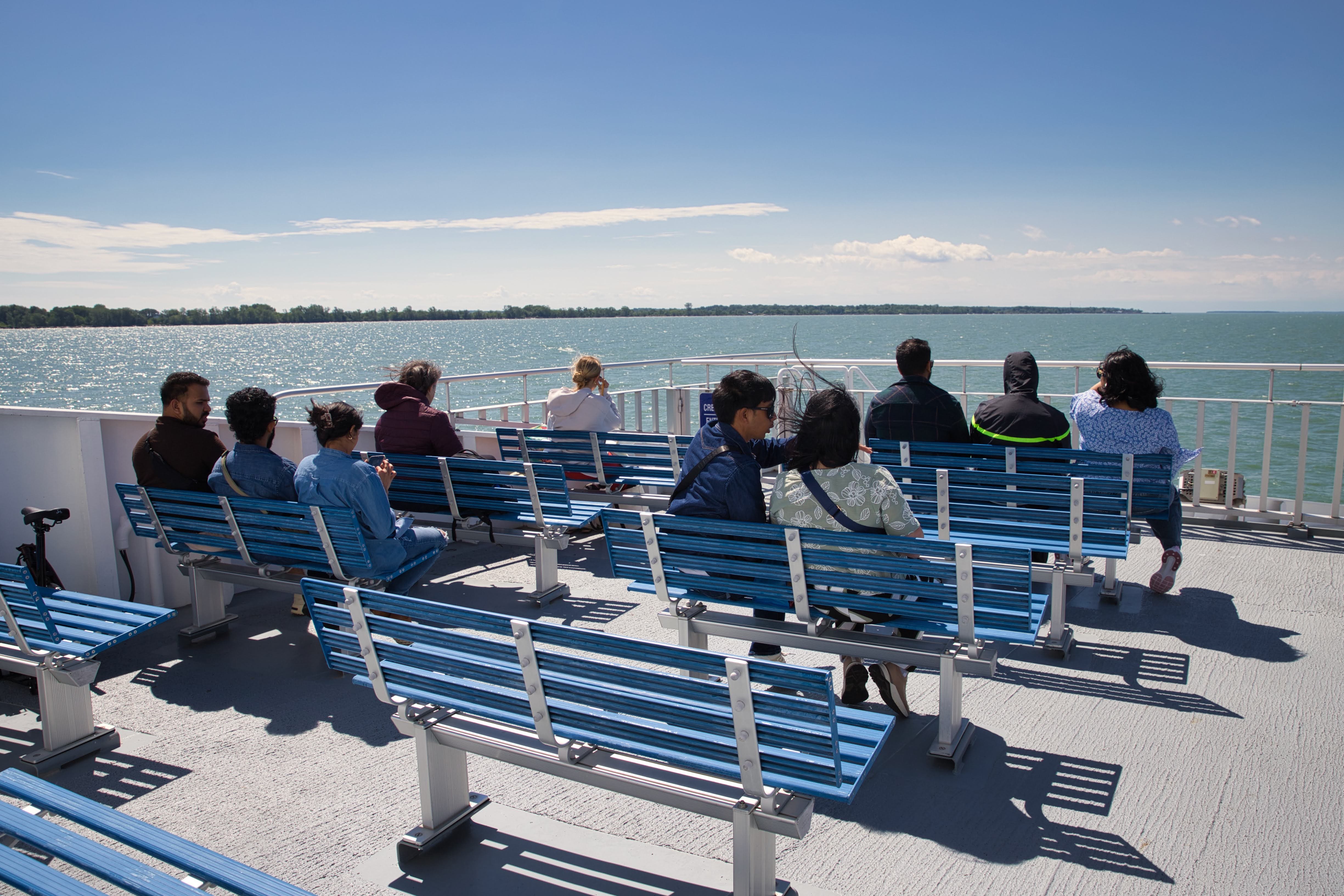
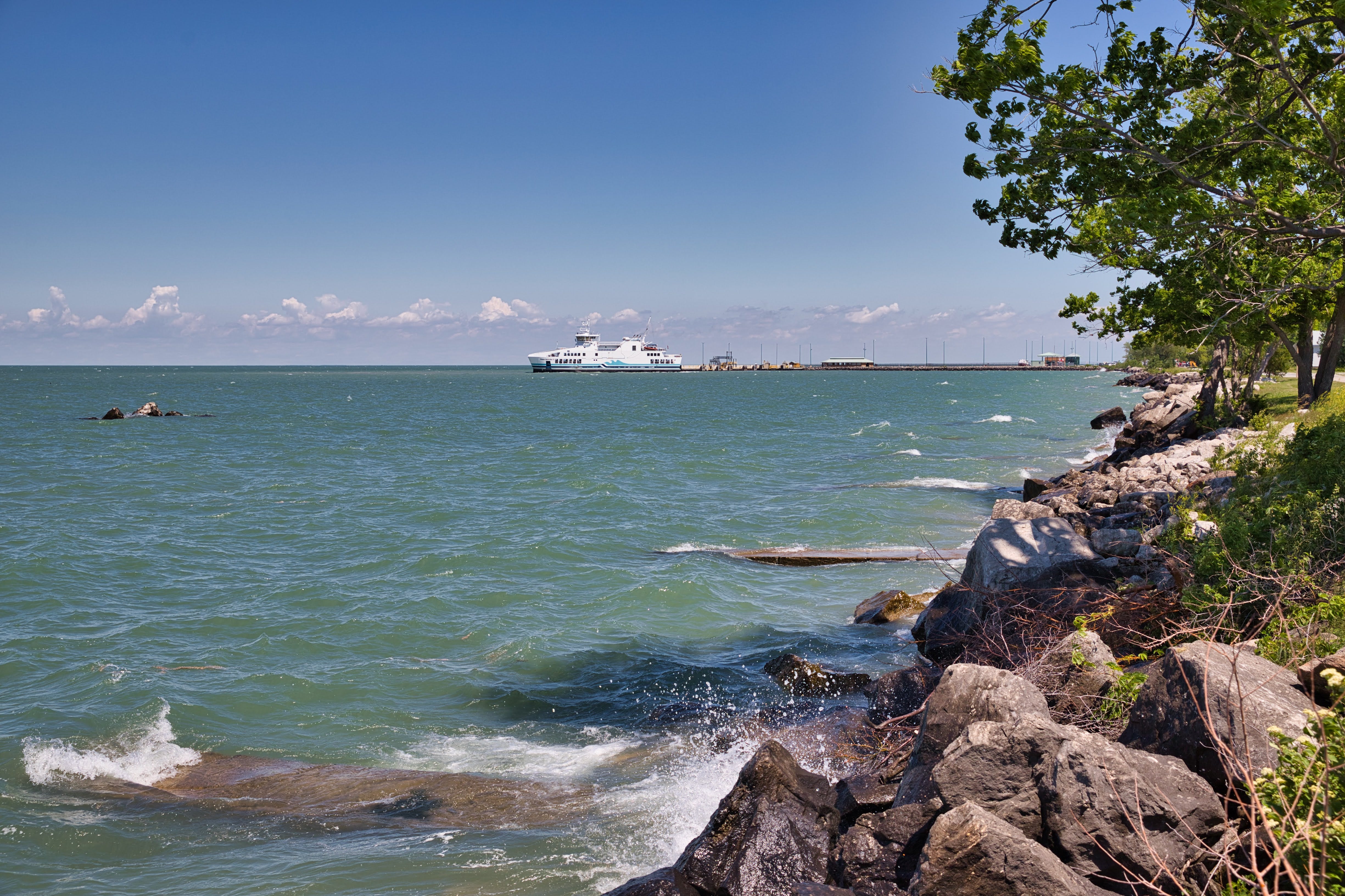
Pelee Island deserved more than the 45 minutes I gave it. There is a 32 km / 20 miles coastal route around the island, with lookouts, an old lighthouse, and nature reserves, but my ferry to Sandusky was not going to wait. So instead of a leisurely island ride, I managed a quick bite, a short venture into a thick forest where I was immediately swarmed by mosquitos, and a stop at the famous winery with the bird on the bottle.
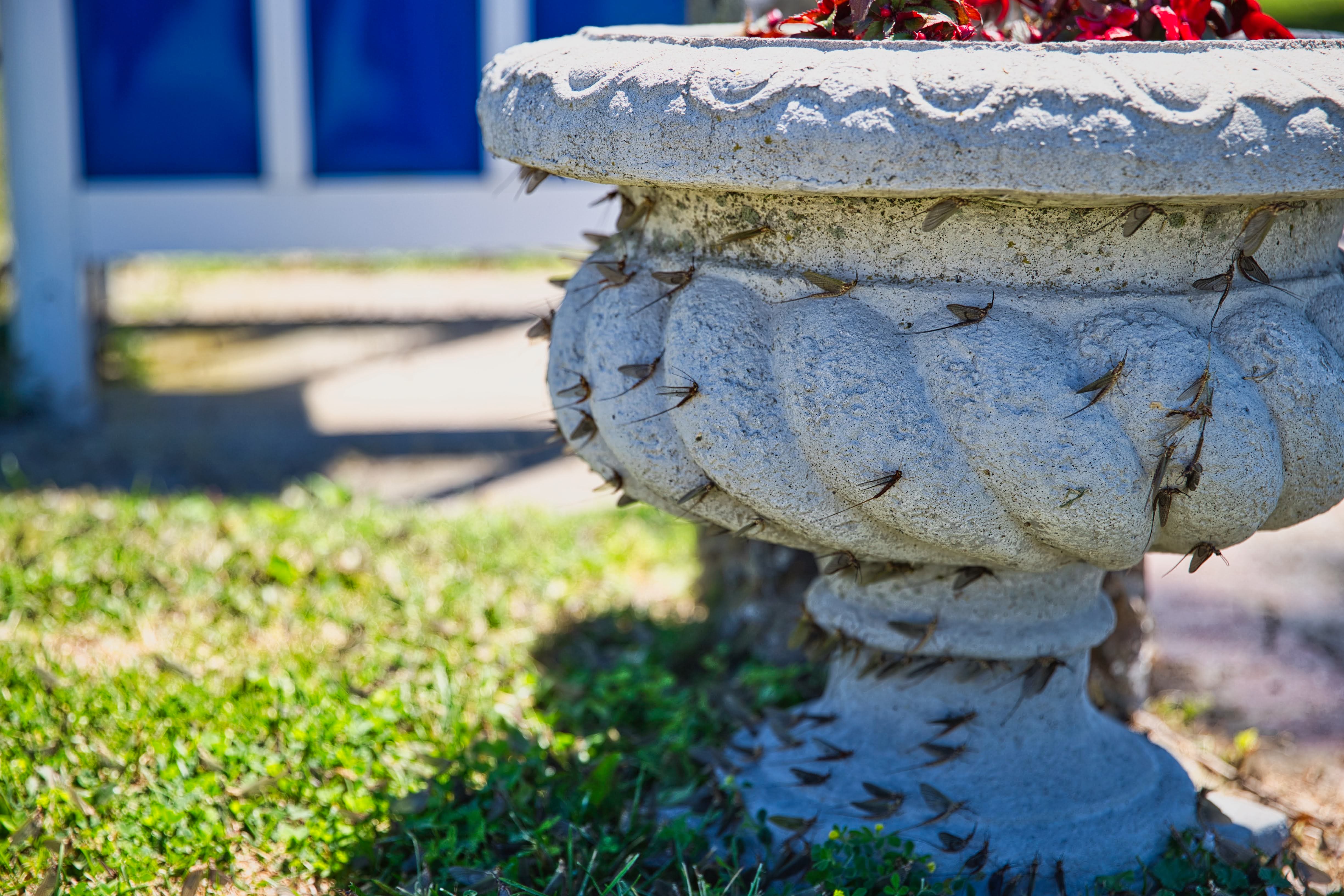
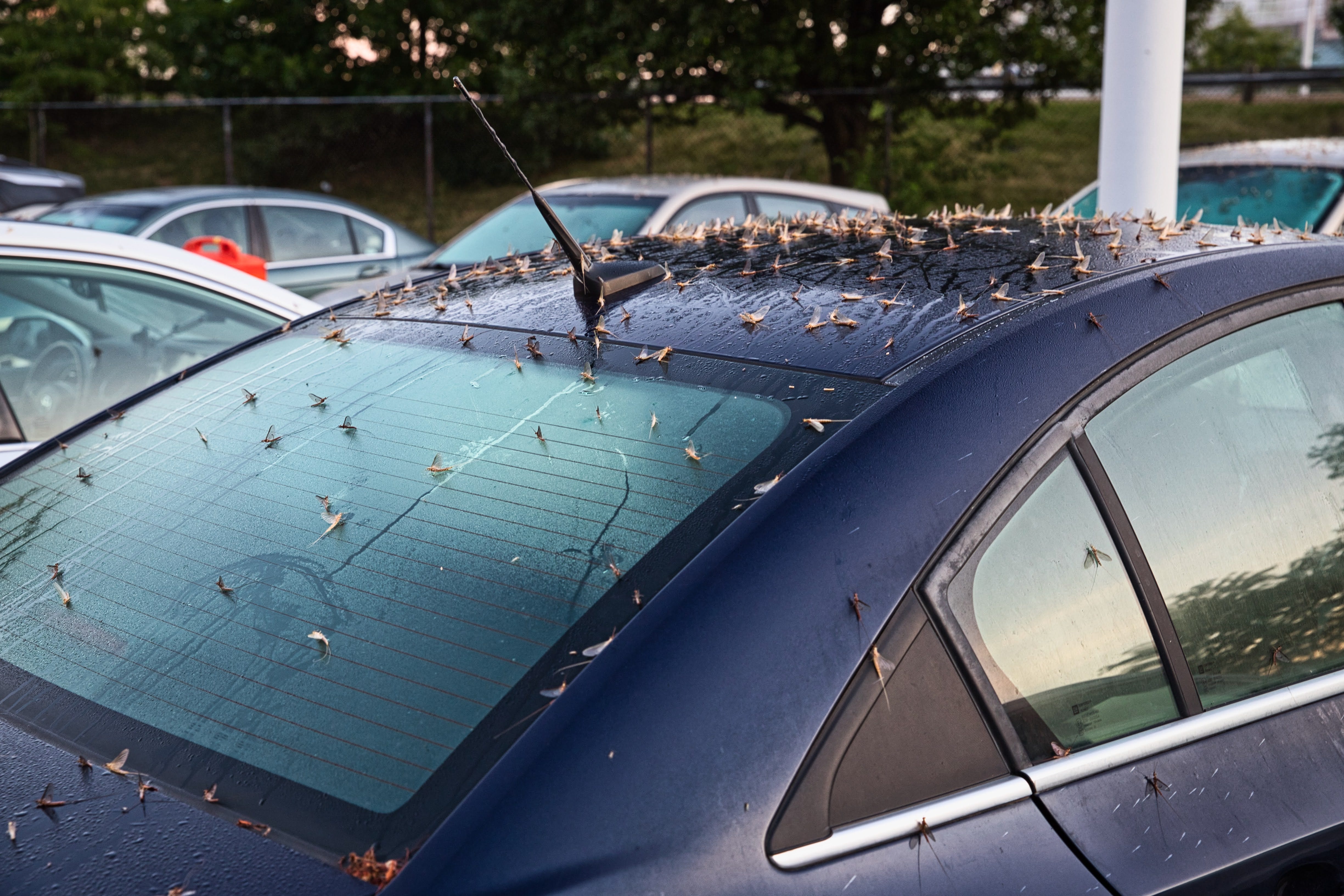
Mayflies were everywhere. Thankfully, unlike mosquitoes, they don’t bite.
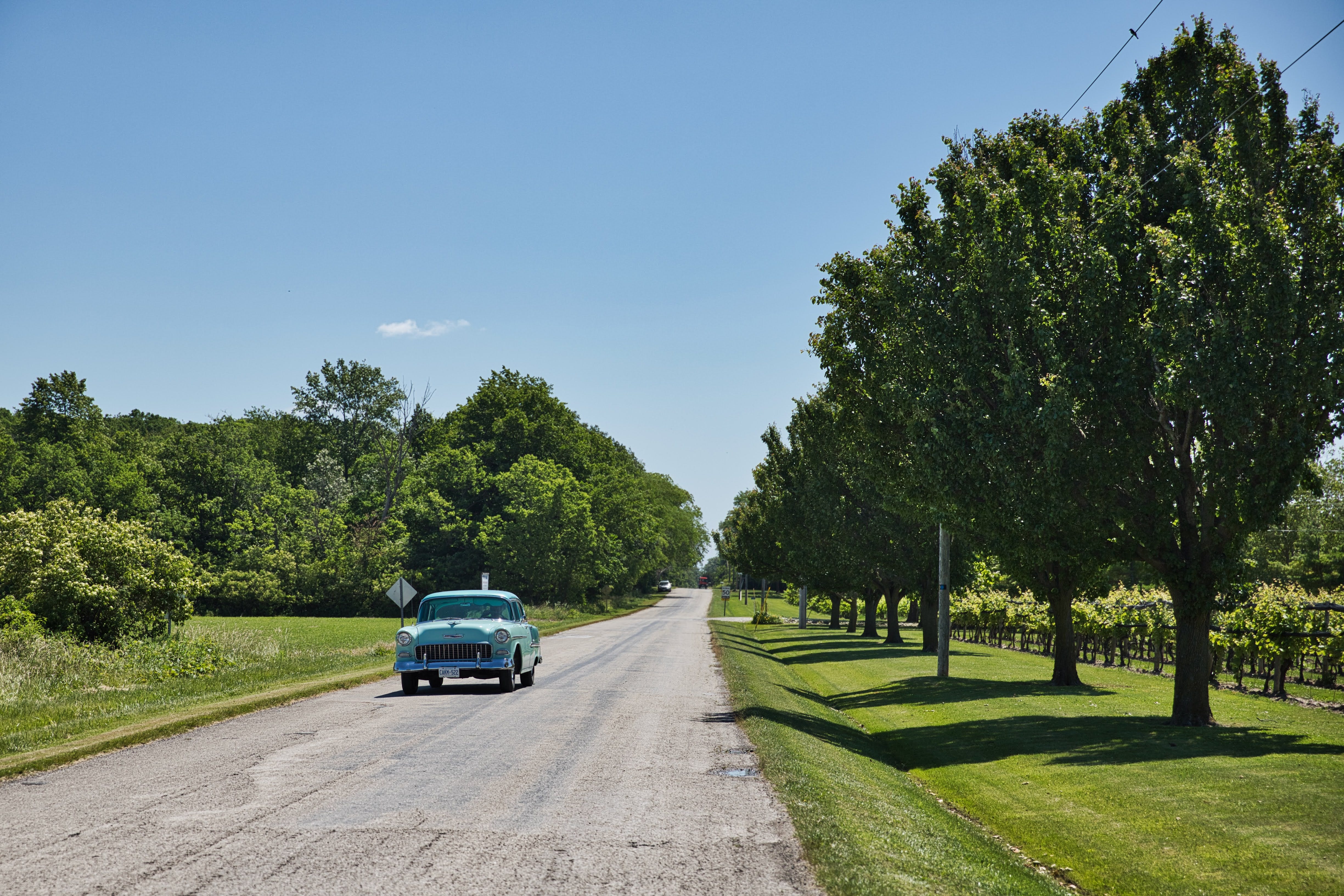
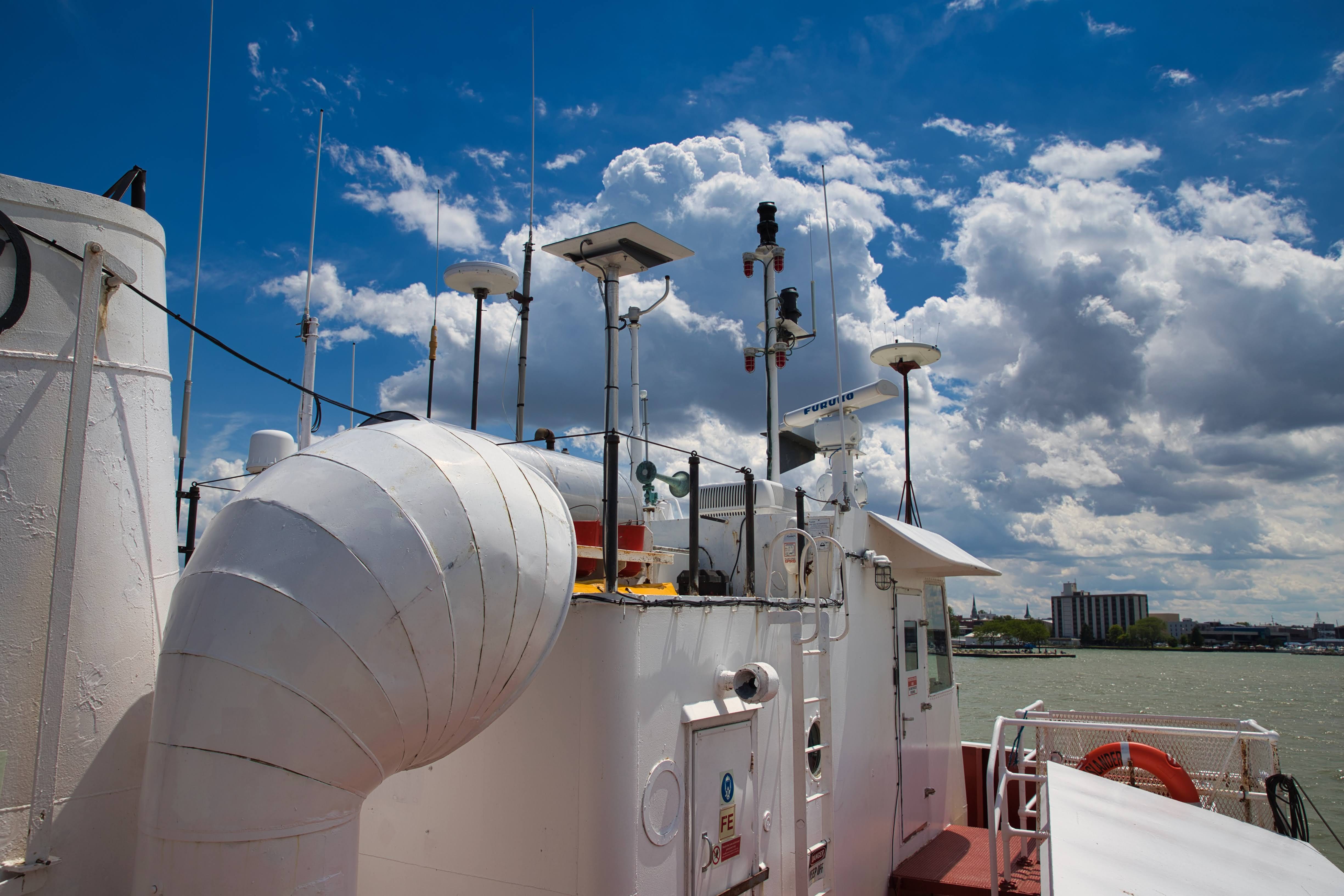
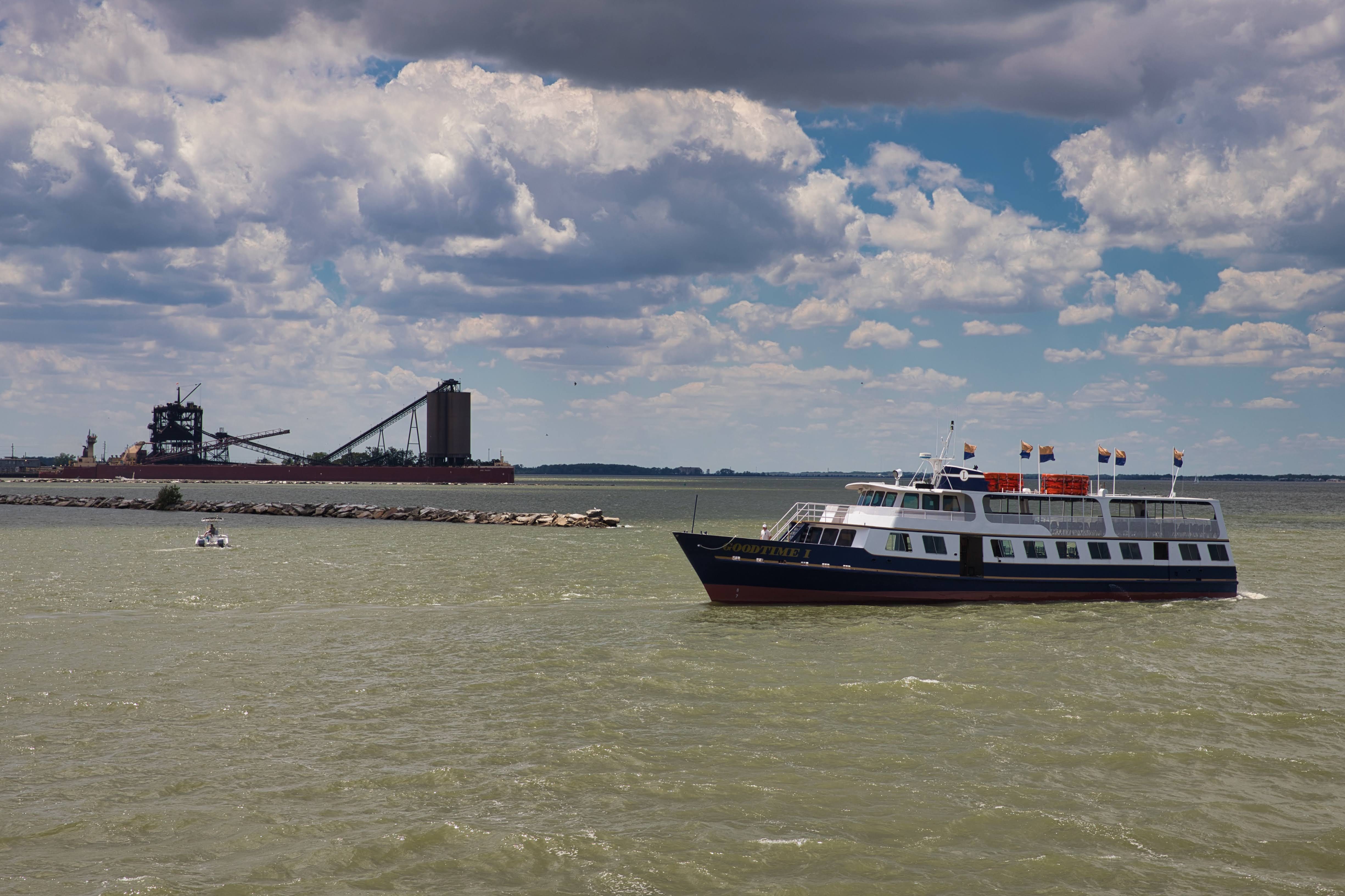
My second ferry bound to Ohio, M.V. Pelee Islander was small and only fit a handful of cars. Despite this being a high season, the boat was mostly empty, with about 10 passengers and 2 or 3 cars onboard. One thing you need to know is that the service between Pelee Island and Sandusky, OH, only runs in the summer months, so my full itinerary would not be possible in any other season except summer.
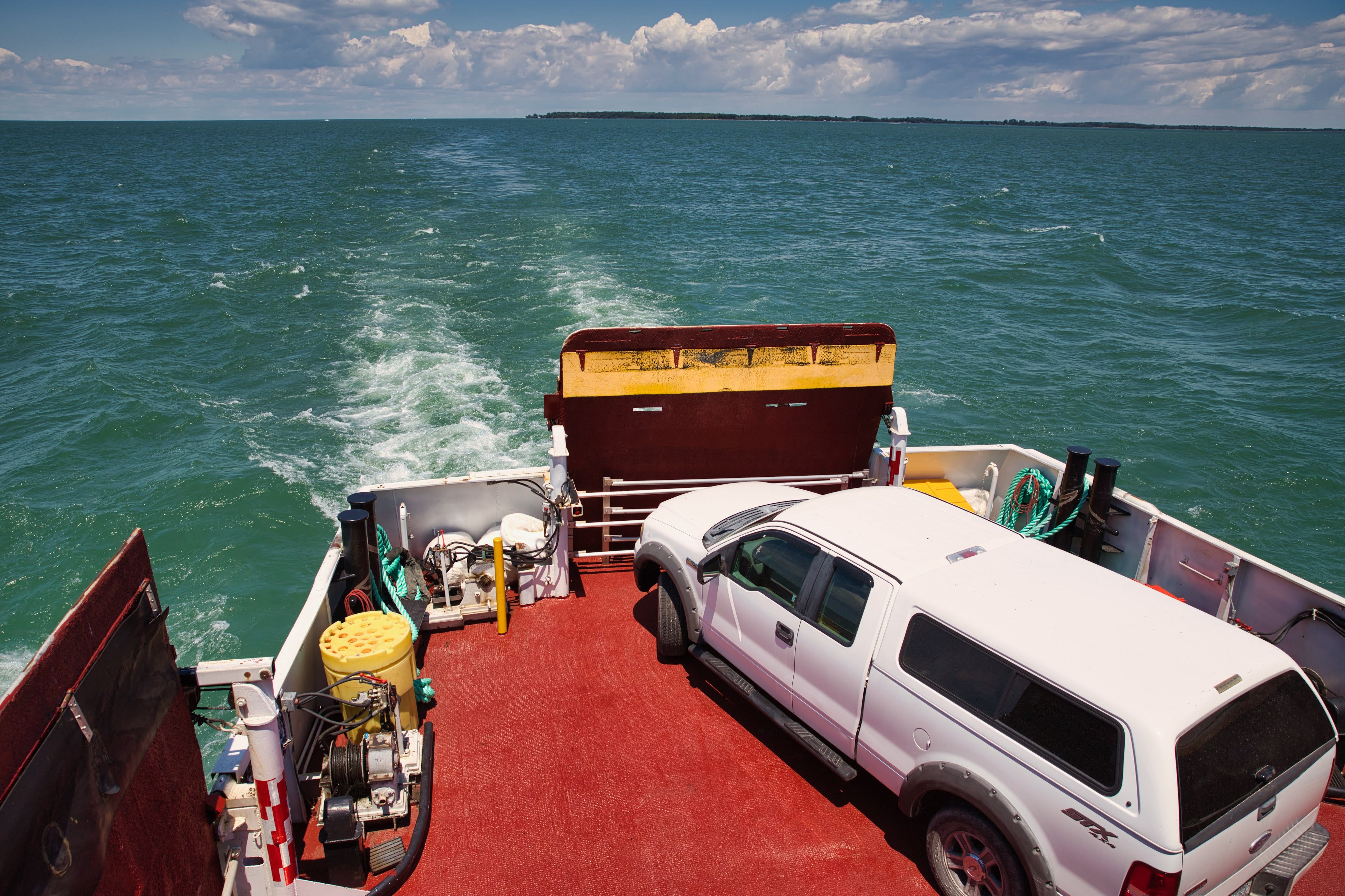
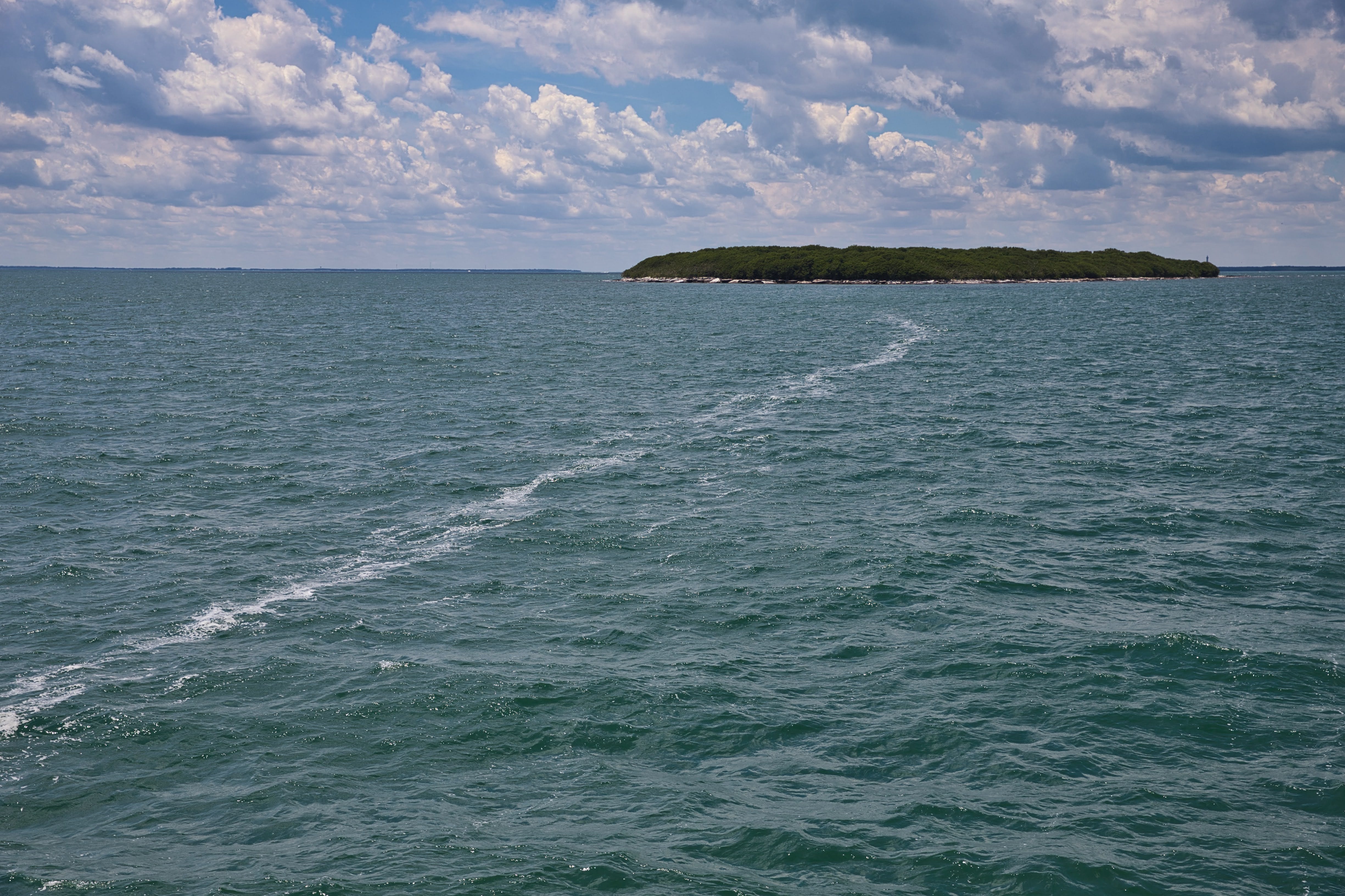
There are two highlights on this second two-hour ferry ride between Pelee Island and Sandusky: first, you’ll catch a view of Middle Island, the absolute southernmost point of land in Canada. Situated at 41 41’ N latitude, this uninhabited Lake Erie island sits just 150 meters from the US-Canada maritime border. Most people don’t realize that this latitude means it is actually further south than the northern tip of California.
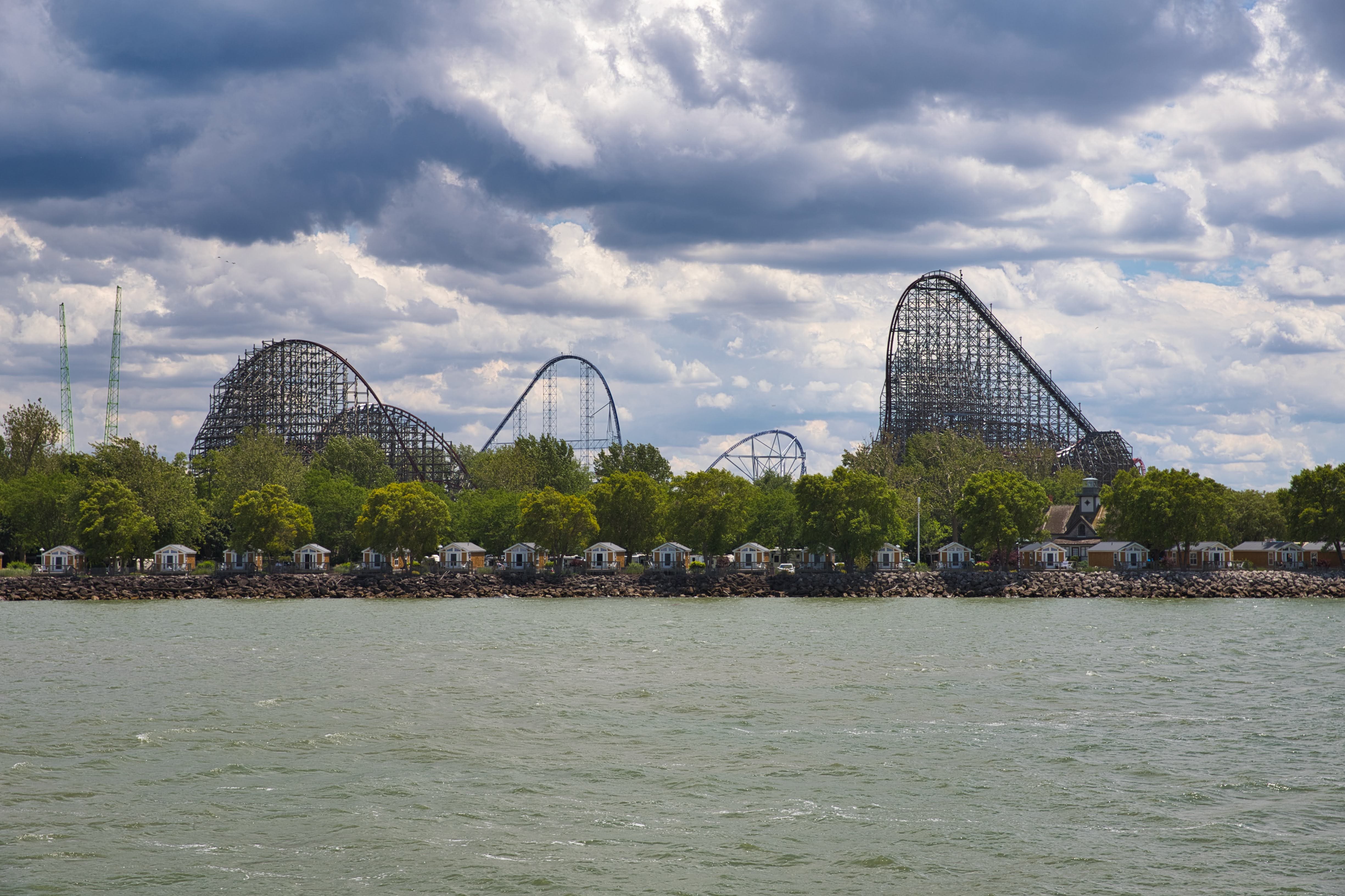
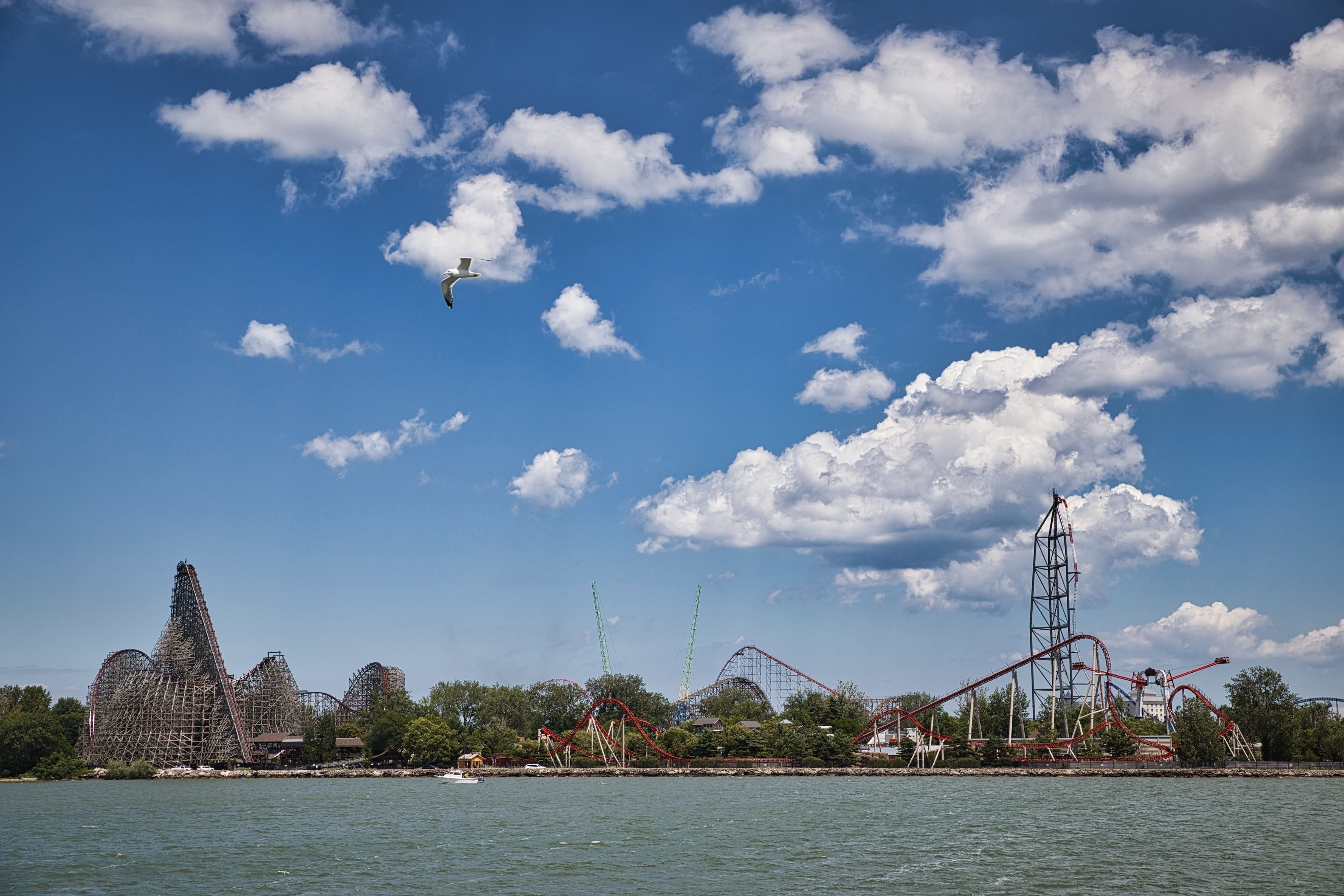
Second, you’ll pass Cedar Point, known as “America’s Roller Coast”. Established in 1870, it’s the second-oldest amusement park in the US that set a height record: it is the only park in the world with five coasters exceeding 60 m / 200 feet in height. The day I was riding a ferry was windy, so all the coasters stopped running for half an hour or so before they resumed.
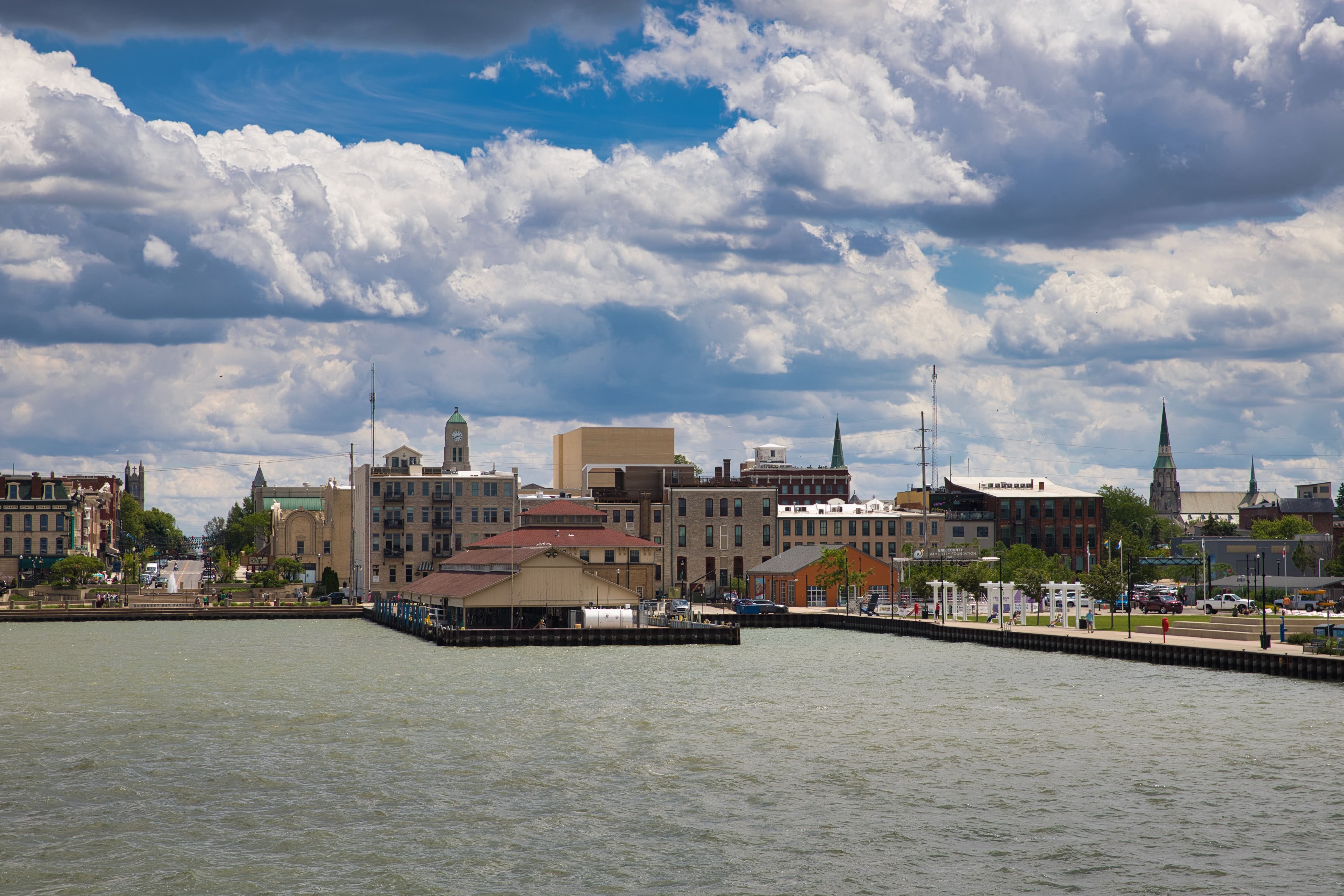
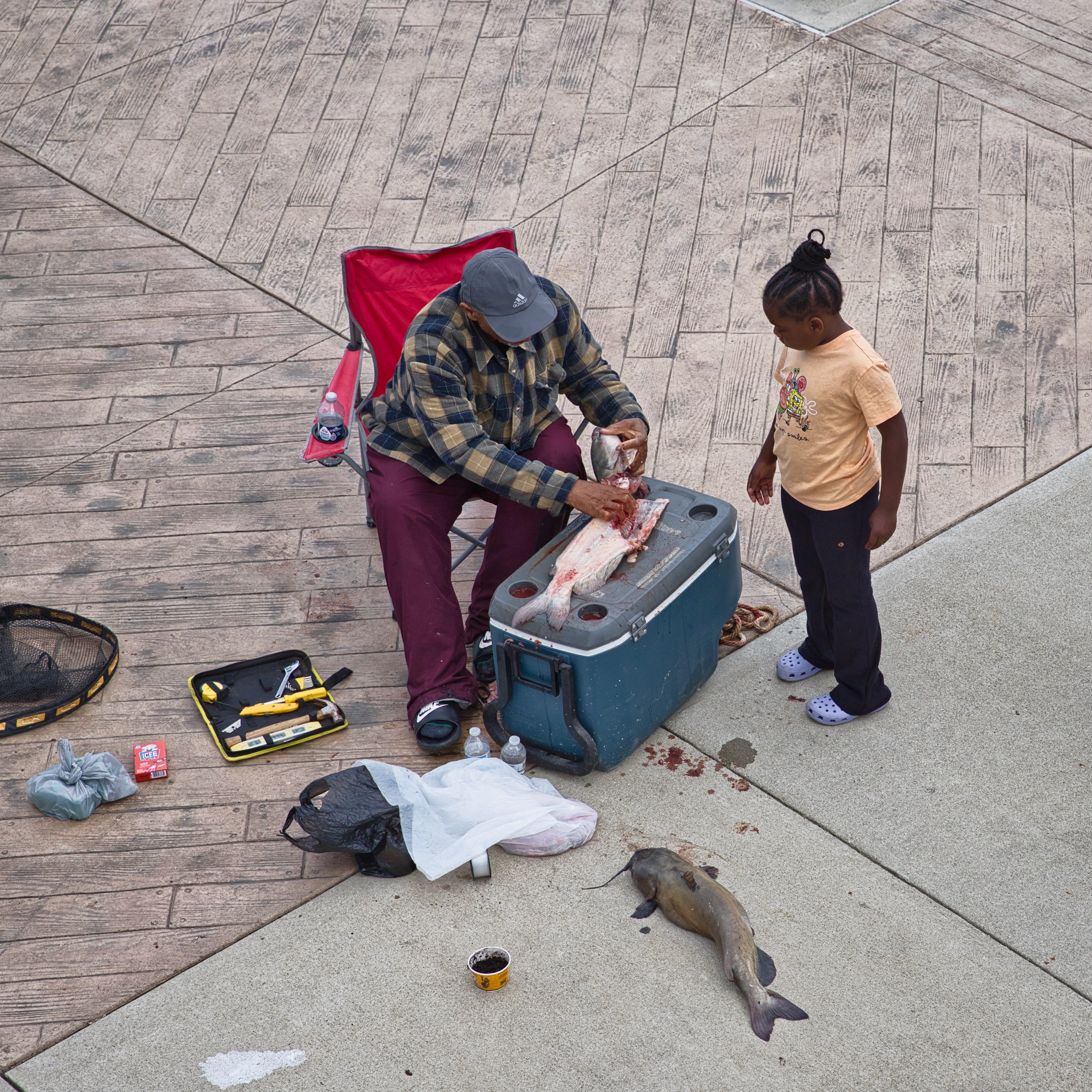
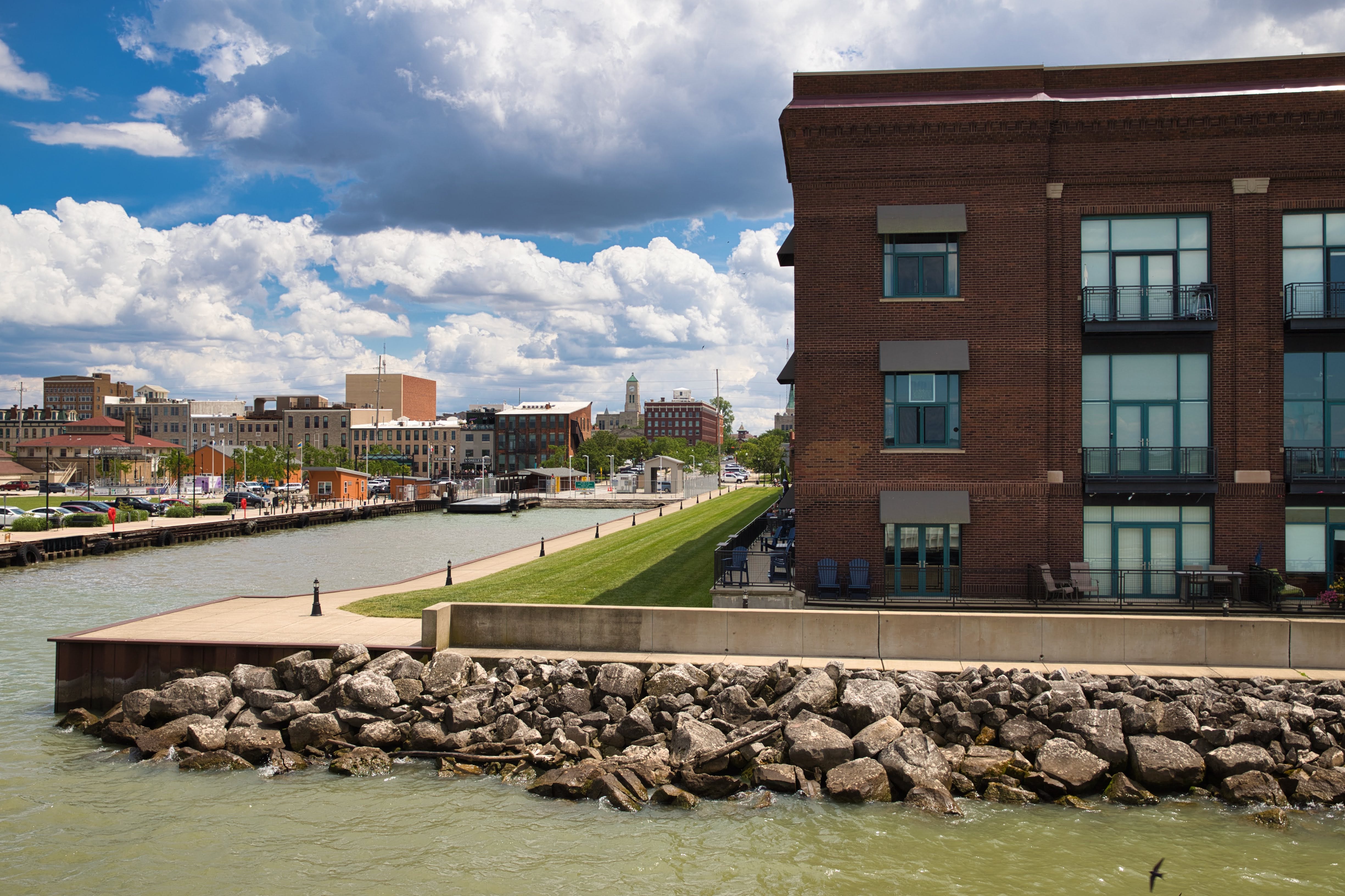
Sandusky is a nice little town that has transformed from a sleepy beach and fishing village to a resort town thanks to the amusement park. Exactly where our ferry was docking, an old man was slaughtering two huge catfish, a show not for the faint-hearted.
The border crossing was not stressful at all. I normally avoid making jokes with the US Border Patrol, but an officer in Sandusky was a very funny guy. When he heard my story that I’m circling Lake Erie by trains, ferries, and a bike, apparently he missed the word “trains”, so he cheerfully concluded that I’m a crazy Canadian, with a B2 visa, when taking a photo of my passport. I really hope he didn’t write anything like that in my official file.
Having been exhausted from a long bike ride and two ferry crossings, I headed straight to my motel. The only thing you need to know about that place is that it had a clean bed and a warm shower.
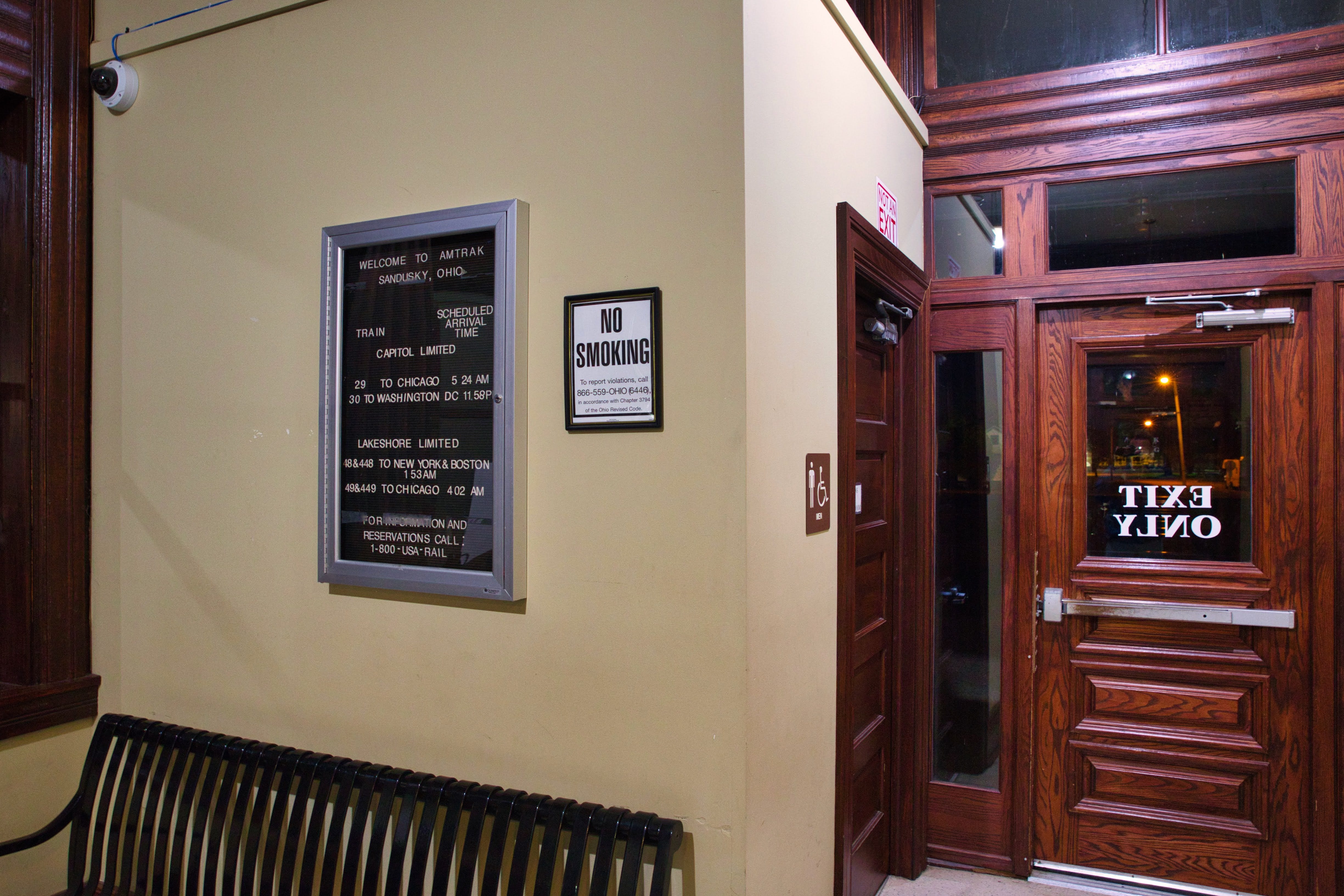
I didn’t want to spend any more time than required in this motel, so exactly at 4 am, I headed out to the Amtrak train station located just a bit off downtown to catch a train at 4:23 am. For a state sitting between several major cities, Ohio’s train service is sadly limited. Being in a prime location between large cities, both Sandusky and Cleveland, where I was going next, only sees one train per day per direction between Chicago and New York / Boston (the Lakeshore Limited), and one between Chicago and Washington DC, with a service farther south to Florida (the Floridian). All four of these trains arrive very early in the morning, and the timetable could not even reflect it accurately. And there is no train connection to Columbus, Ohio at all, the largest American city without an intercity train.
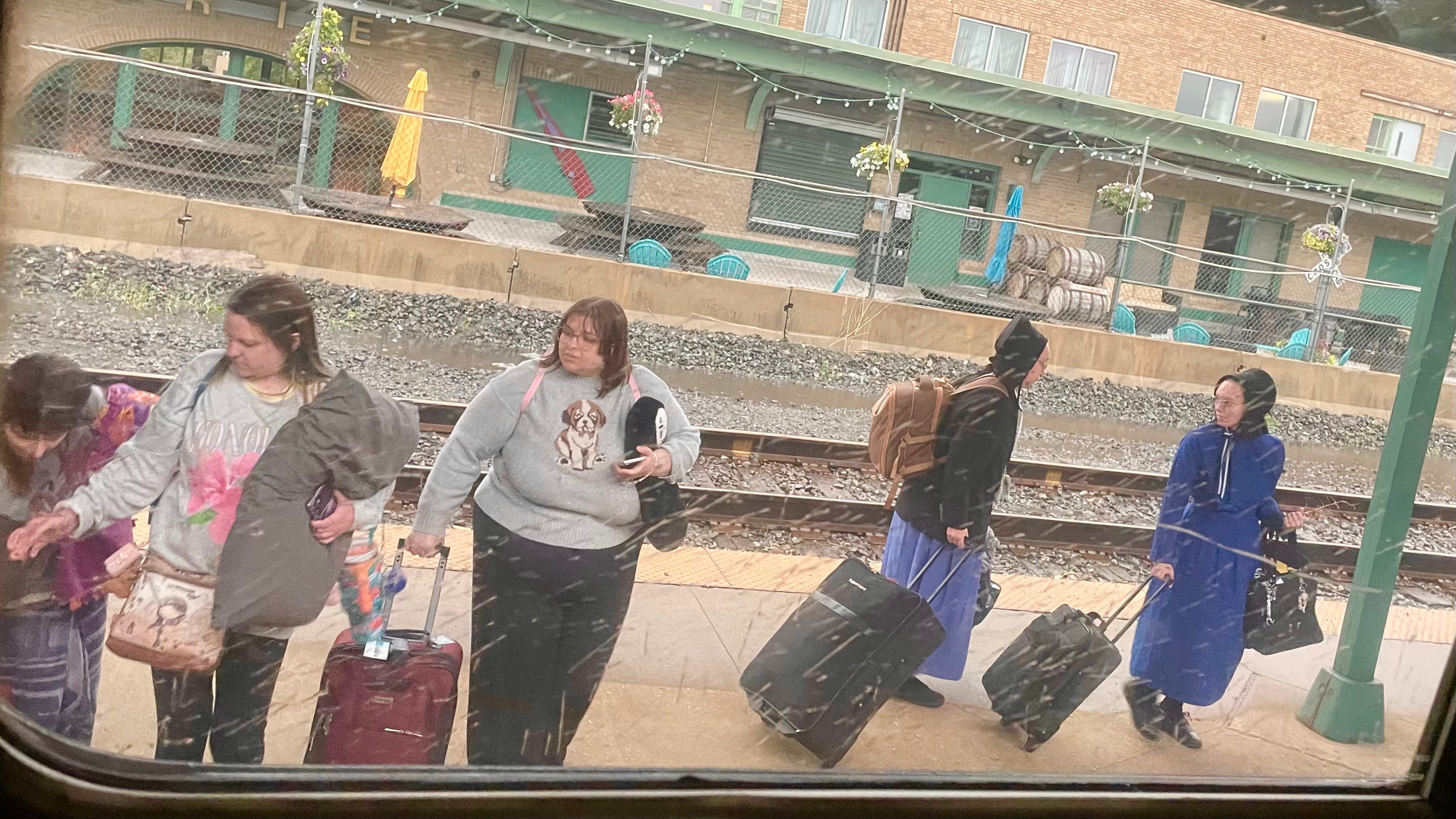
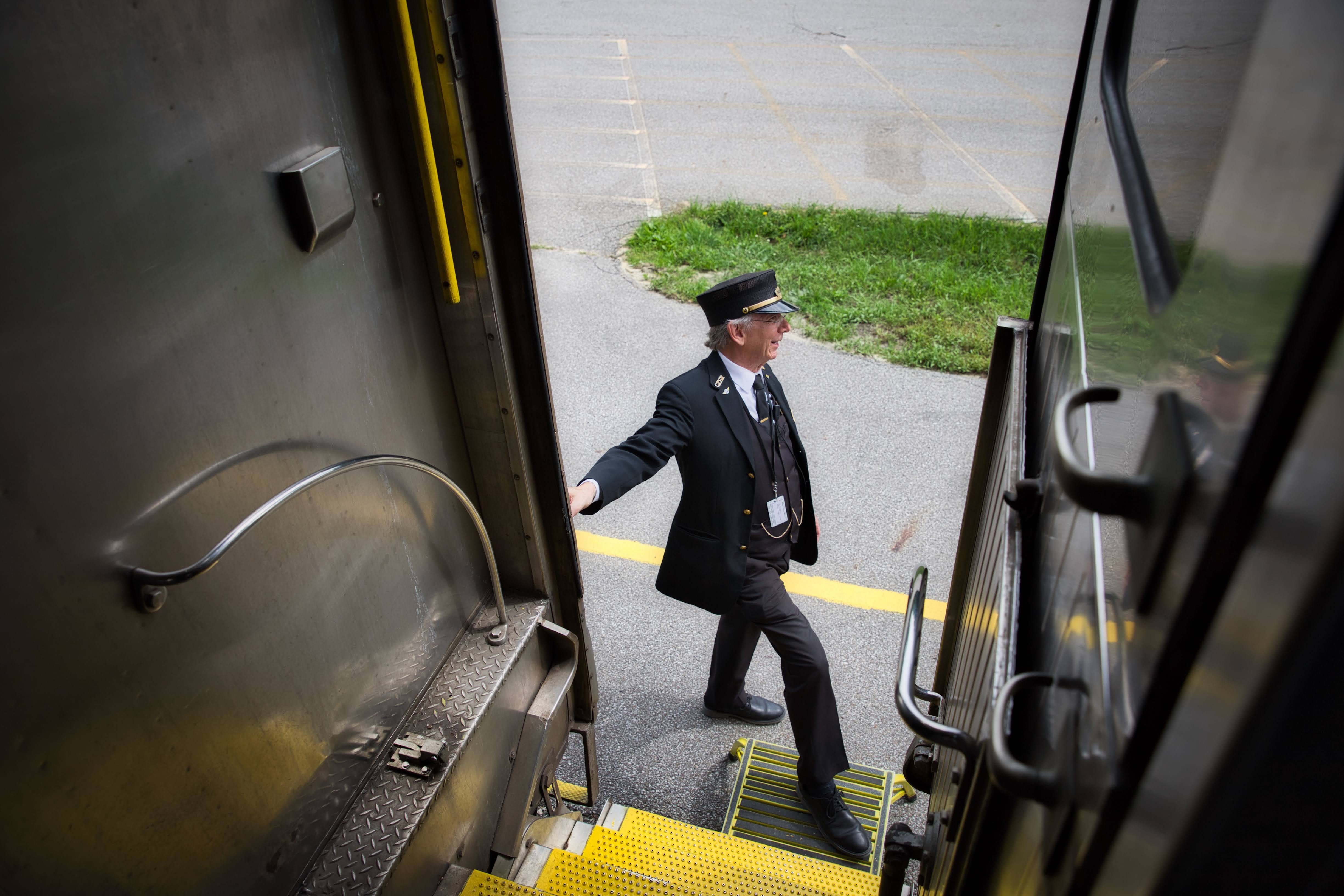
The crowds on Amtrak are quite different from the crowds on VIA Rail. In Canada, you often have to pay a premium to take a train, with buses often being up to 2-3 times cheaper for the same route. And while Amtrak is far from cheap, people from all walks of life take it. I saw many students, seniors, those who don’t drive for religious or other reasons, and those who can’t afford a car. A train conductor reminded the passengers about some of the rules that tell you something about life onboard this train. Here is what he said: “ Don’t put your legs on tray tables, it can damage equipment. No smoking or vaping allowed. The other night, an individual lost his privileges to ride the train and was forced to leave the train at the nearest station. Shoes are required for walking, in a cafe, and highly recommended in the bathroom as the floor might be wet.” The only big advantage of Amtrak coach cars over similar classes on VIA Rail is that seats are larger, more cushiony, and have more leg room.
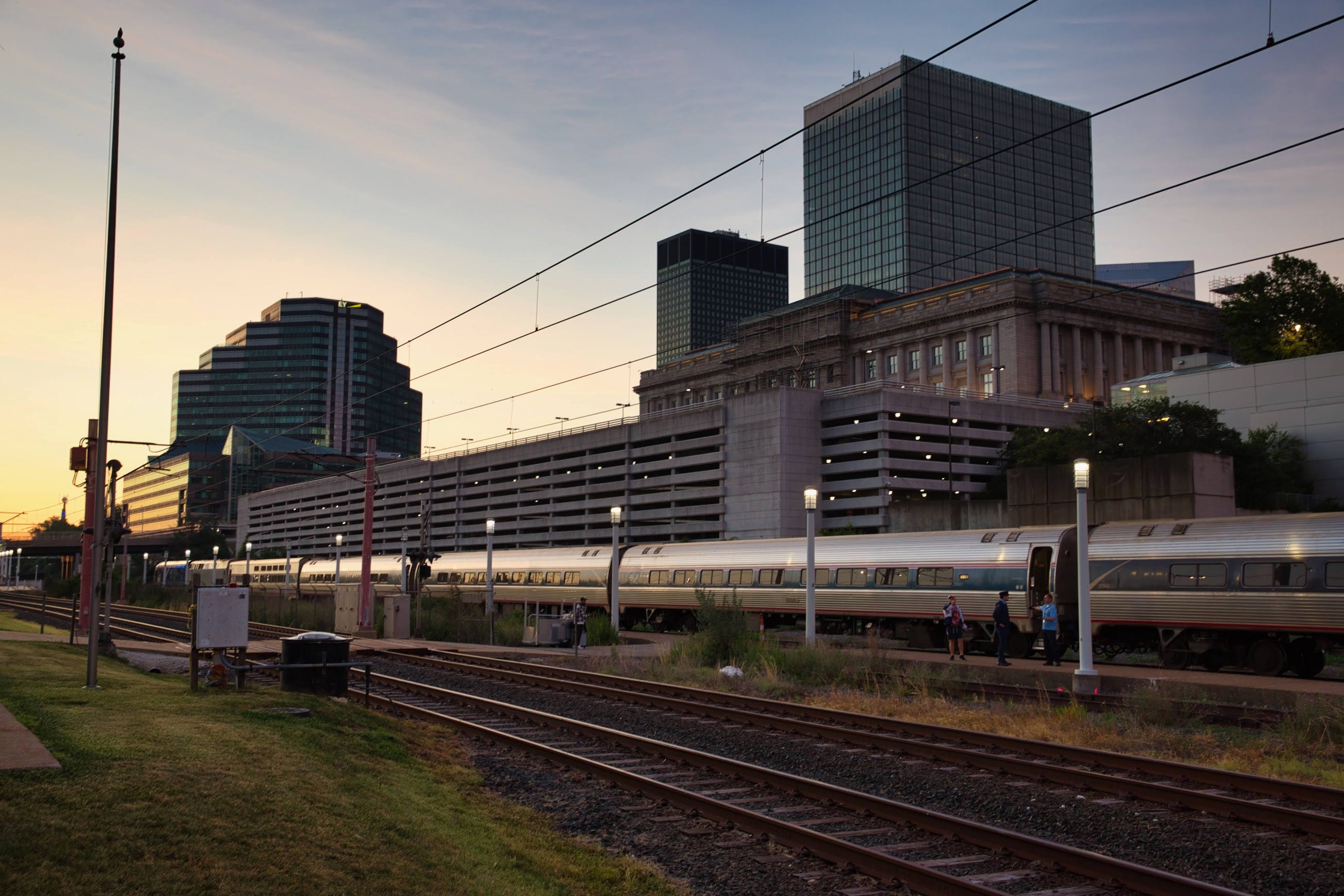
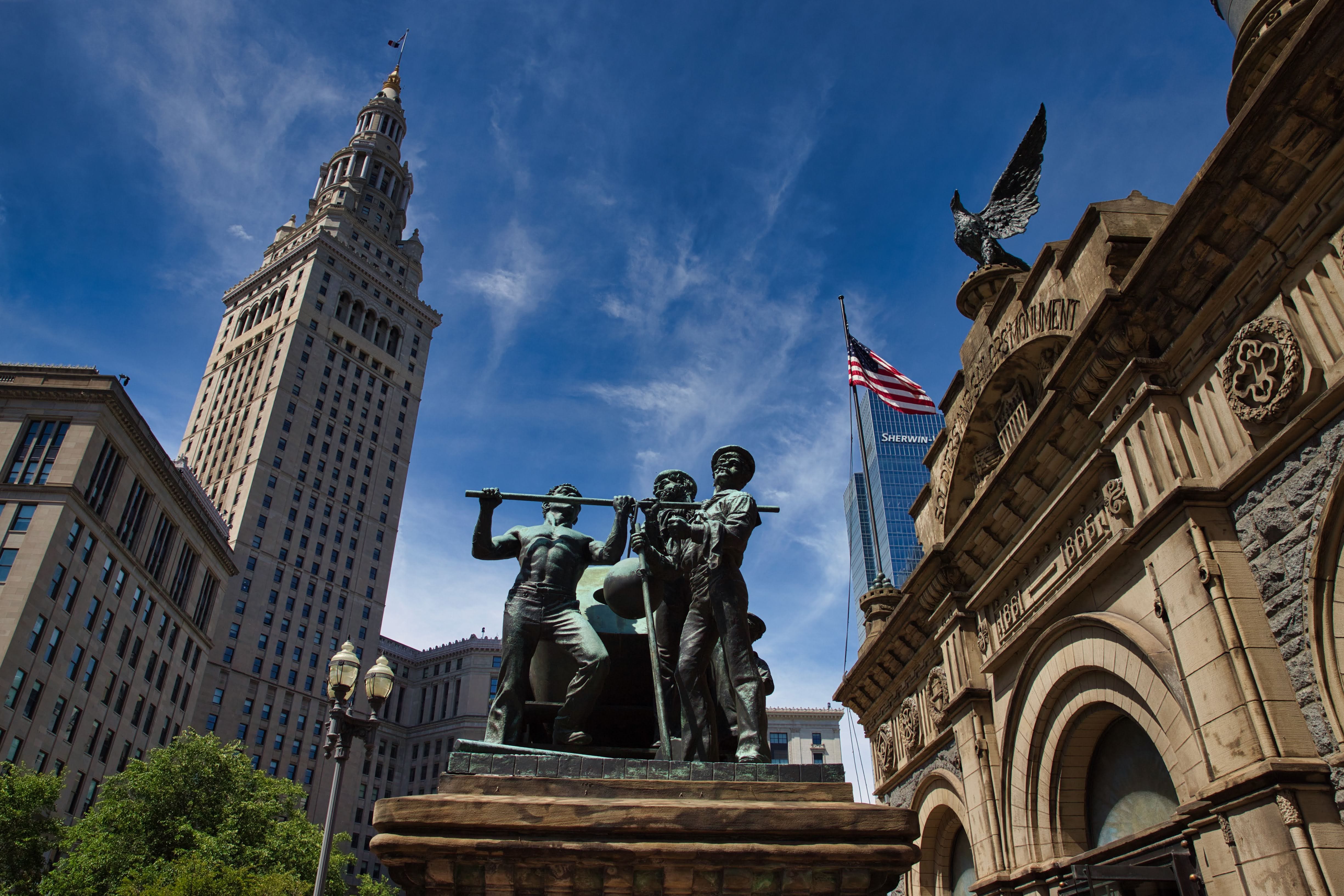
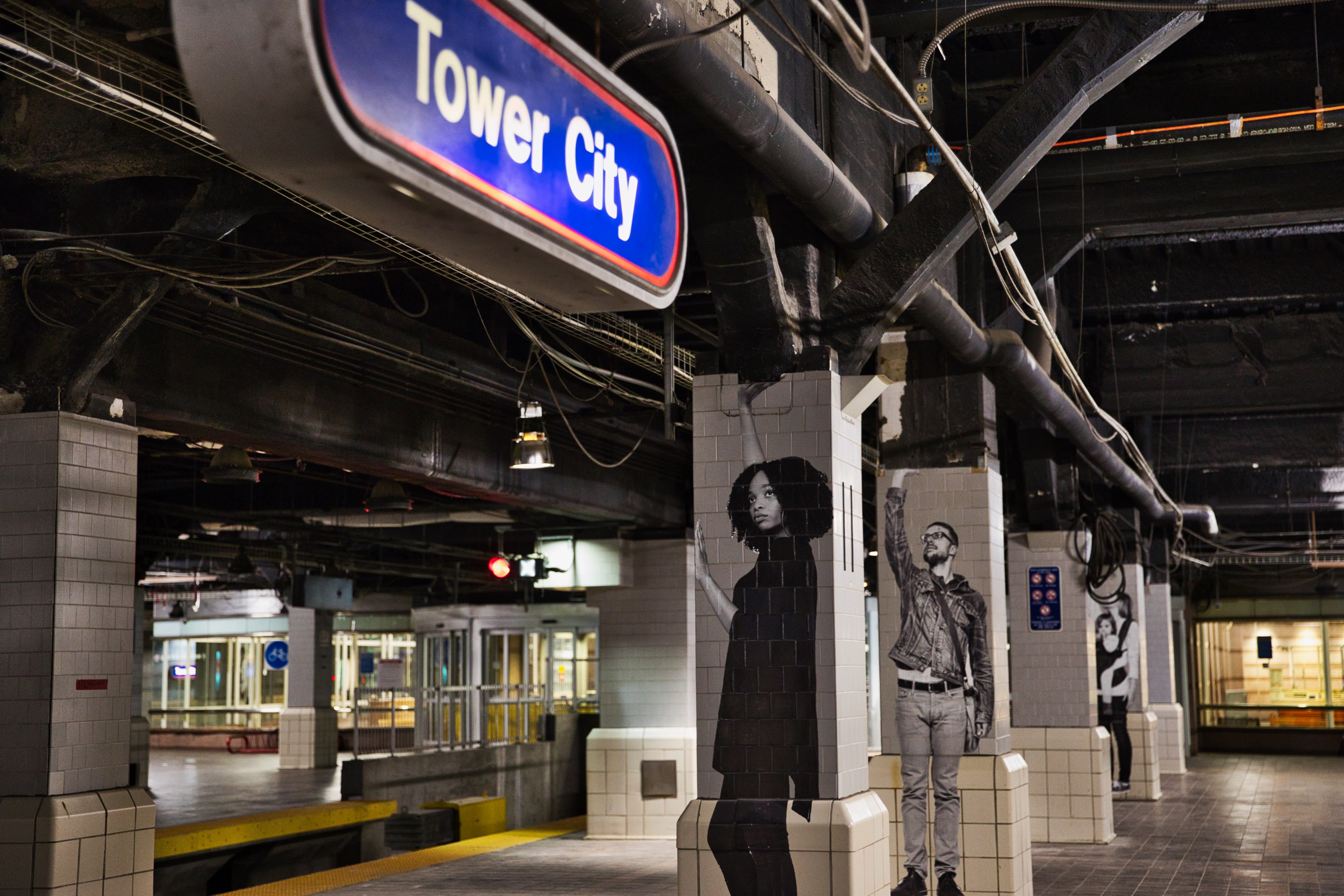
Cleveland is beautiful at sunrise, and the train station is near the city center, about a 15-minute walk from Tower City Center. Cleveland reached its peak as one of the world’s wealthiest cities during the Gilded Age, from the late 1870s through the early 1900s. Fueled by rapid industrial expansion, oil refining, and steel manufacturing, the city accumulated massive private wealth. The Tower City Center building occupies Cleveland’s former Union Station, probably the largest Union Station ever built. It is truly magnificent, with beautiful murals, ceilings and architectural details.
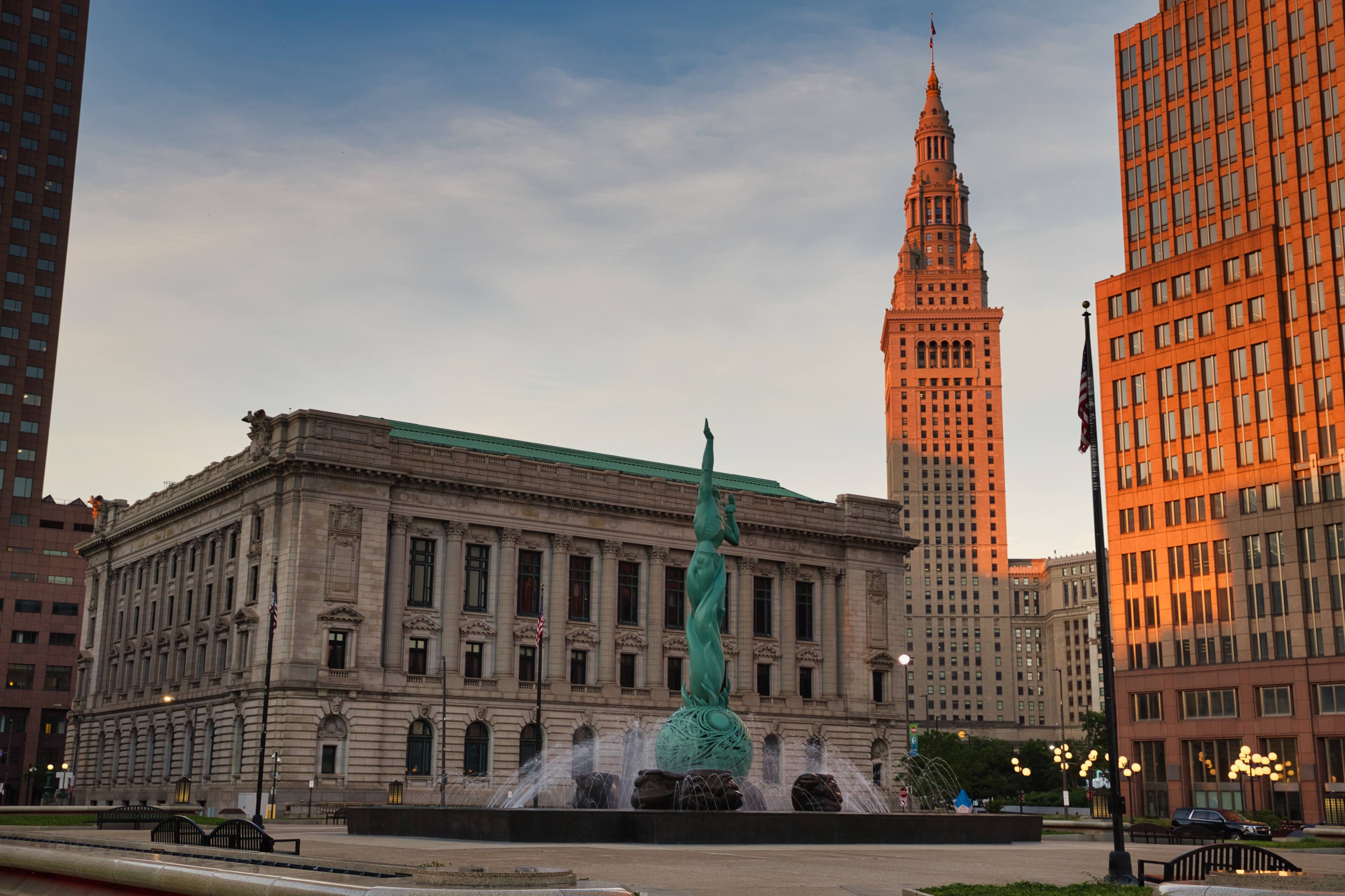
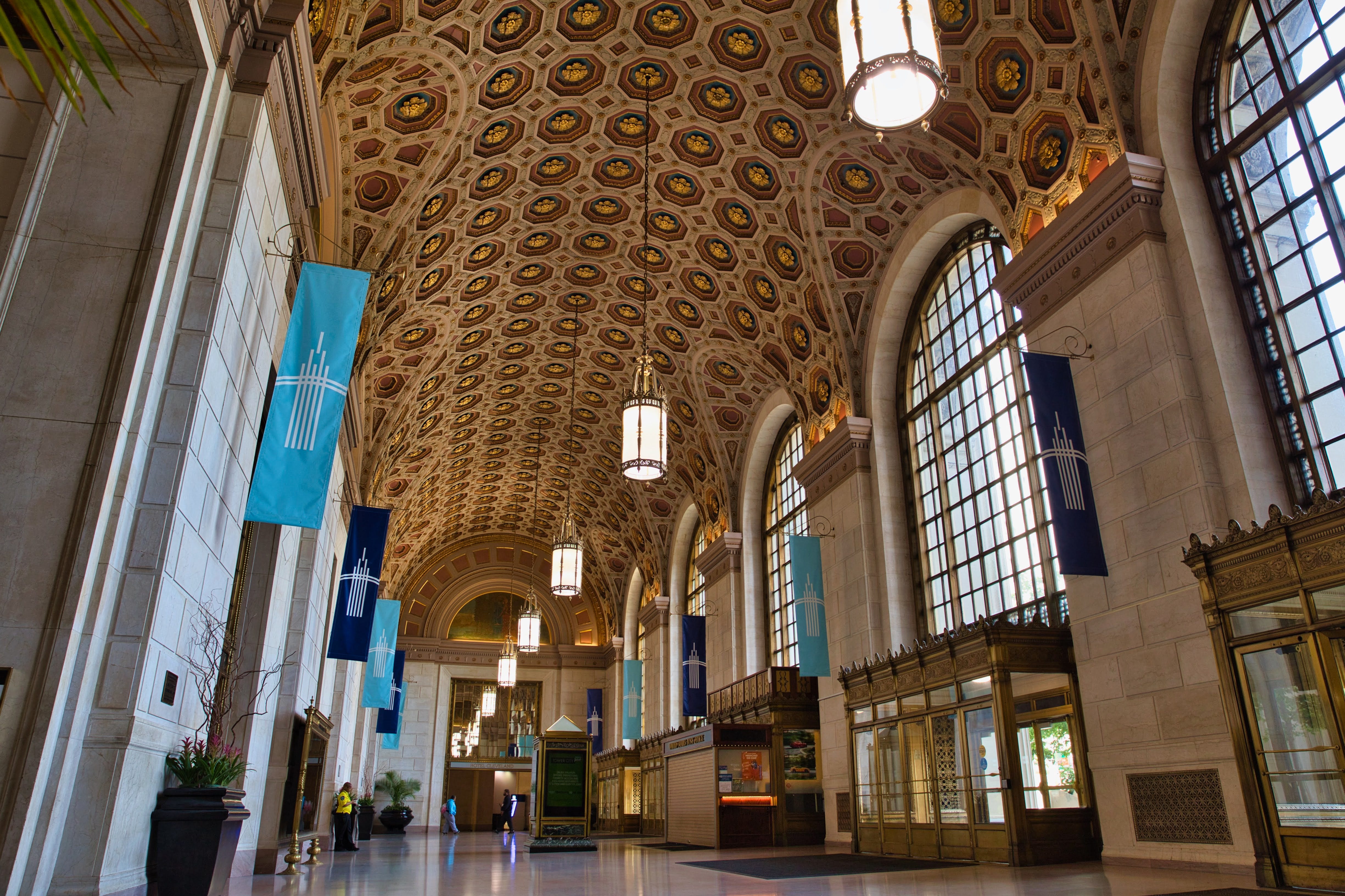
Cleveland’s metro system deserves its own story. For now, I’ll just say that it gave me a real urban experience of a city that still carries the shadows of its former grandeur.
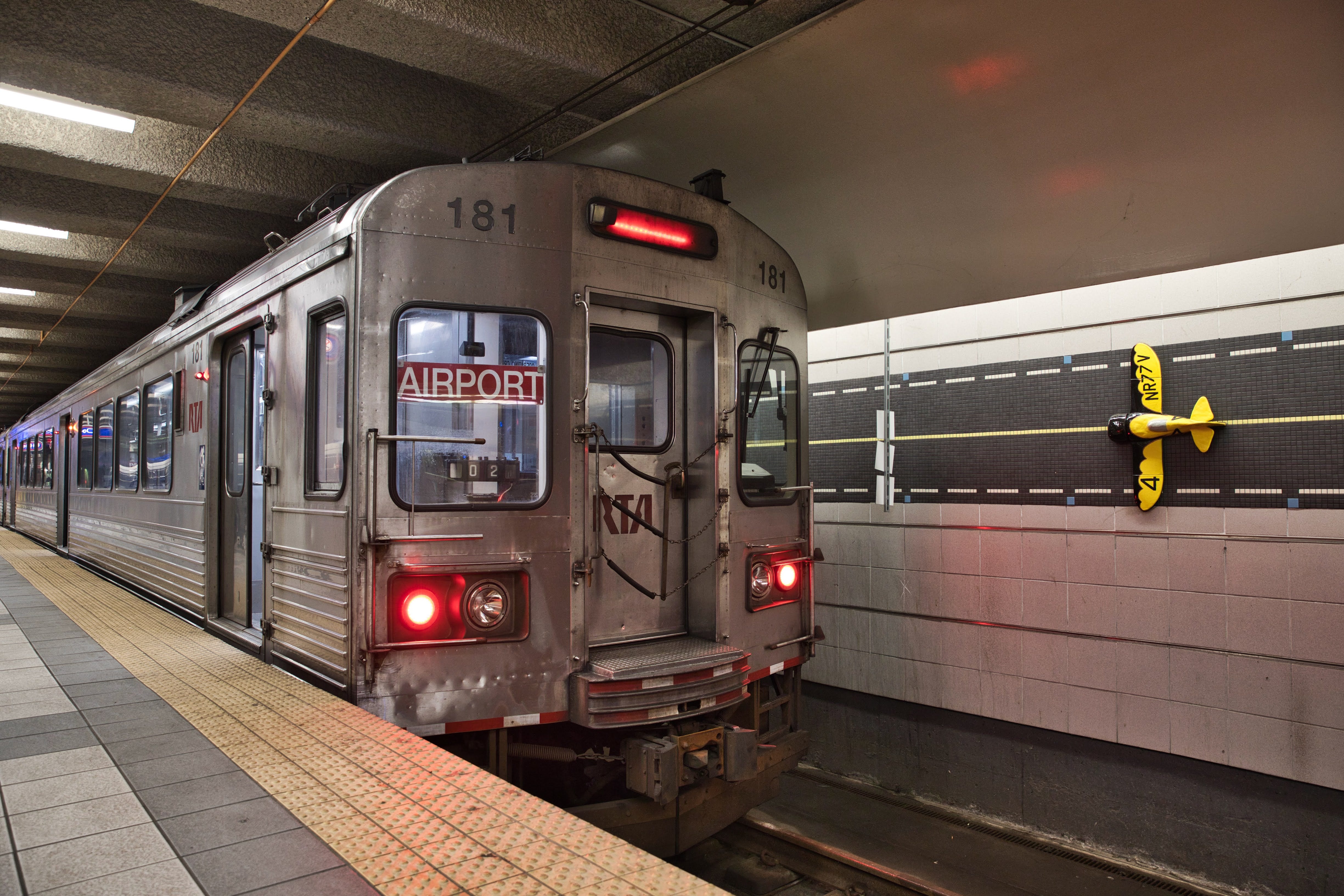
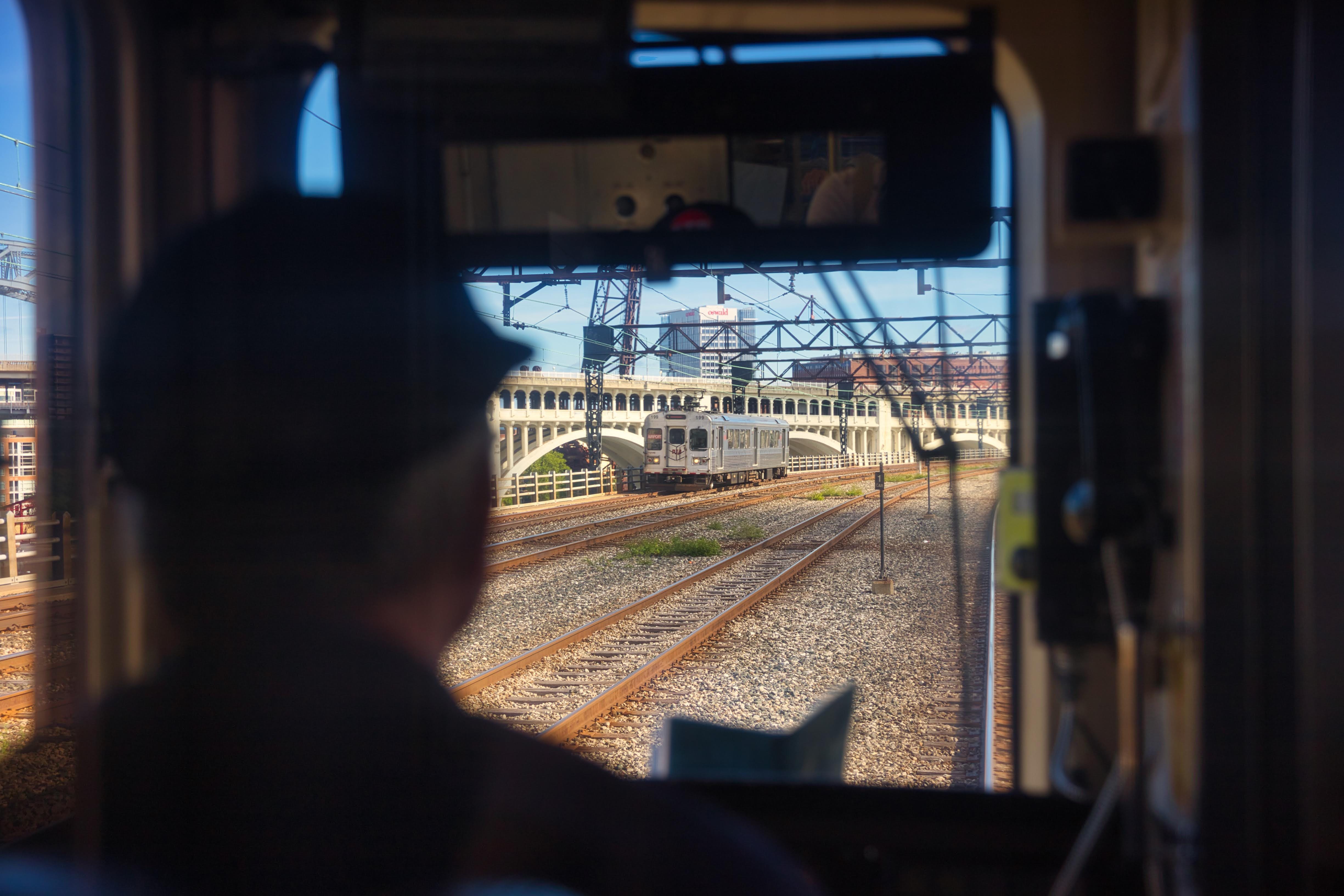
Mayflies came to Cleveland too: while I was taking the following picture, one got on my bike helmet, and I didn’t notice it until I took off my helmet in my hotel room.
After I checked in at a hotel at 7 in the morning, and left my bike there, I set out on a day trip to explore Cleveland, its metro system and riding and the scenic railroad through Cuyahoga Valley National Park.
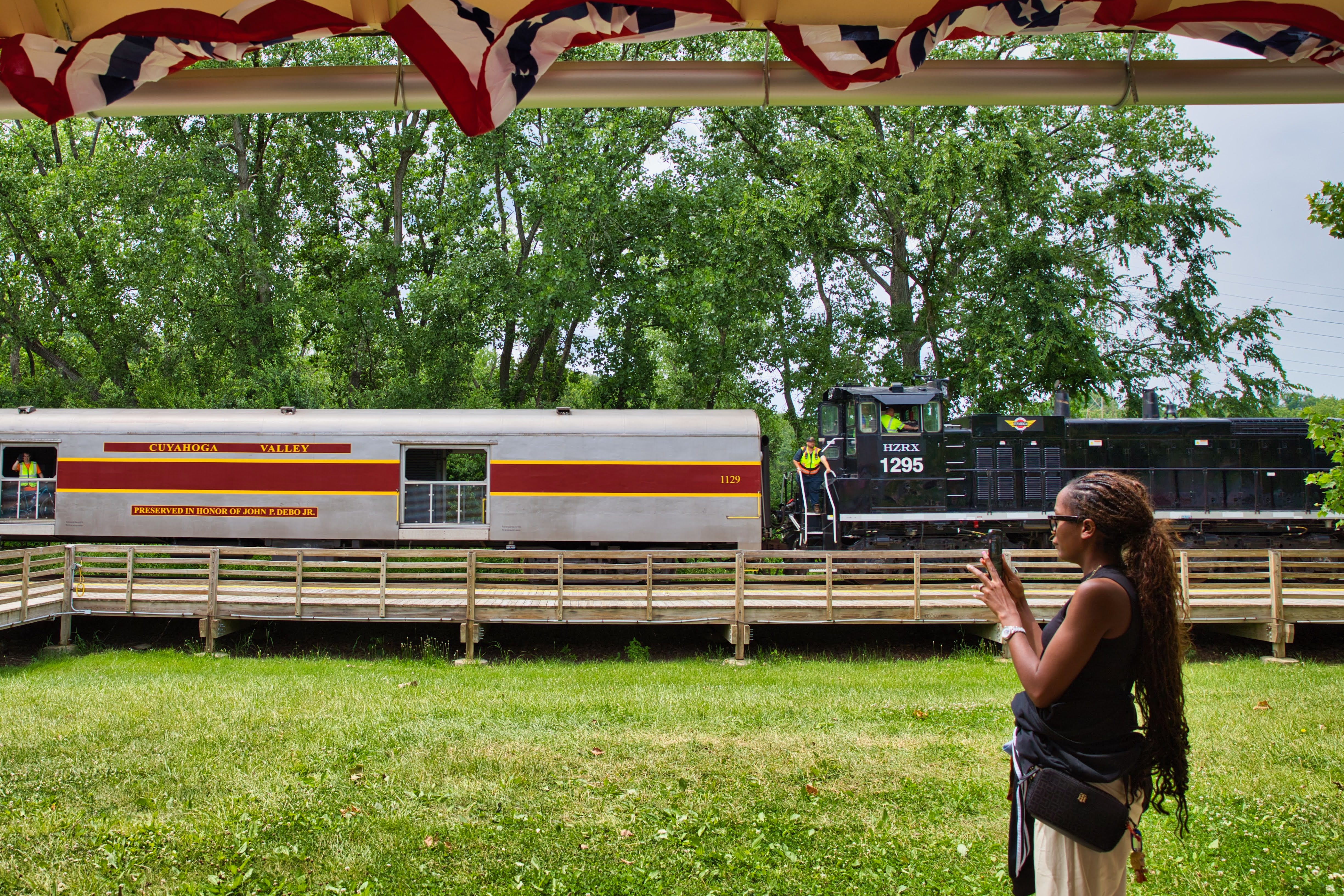
The final day was the kind of itinerary that looks fine on paper and ridiculous in real life. If everything worked, I would make it from Cleveland to Ottawa by way of Buffalo, Niagara Falls, Toronto, and a very unforgiving eight-minute connection at Union Station. If anything went wrong, I would be toast.
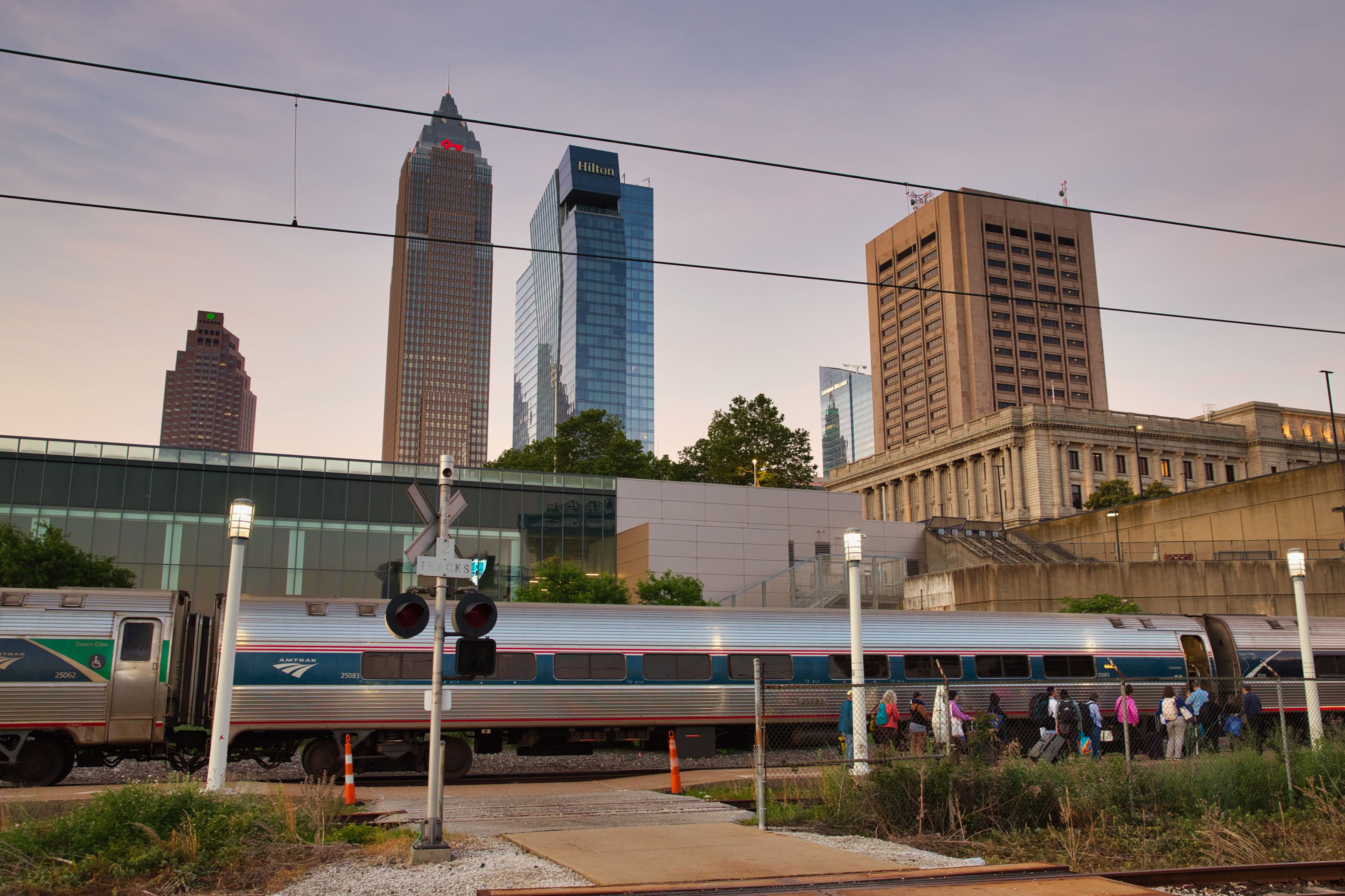
What complicated things a bit was pouring rain in Cleveland when I woke up, so instead of riding my bike to the metro for about 5 km / 3 miles, I called an Uber. A good decision as it kept my bike dry in the IKEA Dimpa bag. The Red Line runs a remarkable 22 hours a day, so catching a 4:50 am train was not a problem. Walking from Tower City to the Amtrak station was miserable under the pouring rain, but rather quick. I made it just in time for the 5:50 am Lakeshore Limited train arriving to the Cleveland Amtrak platform. Once aboard and after changing my soaking wet socks, the rest of the journey immediately became more enjoyable.
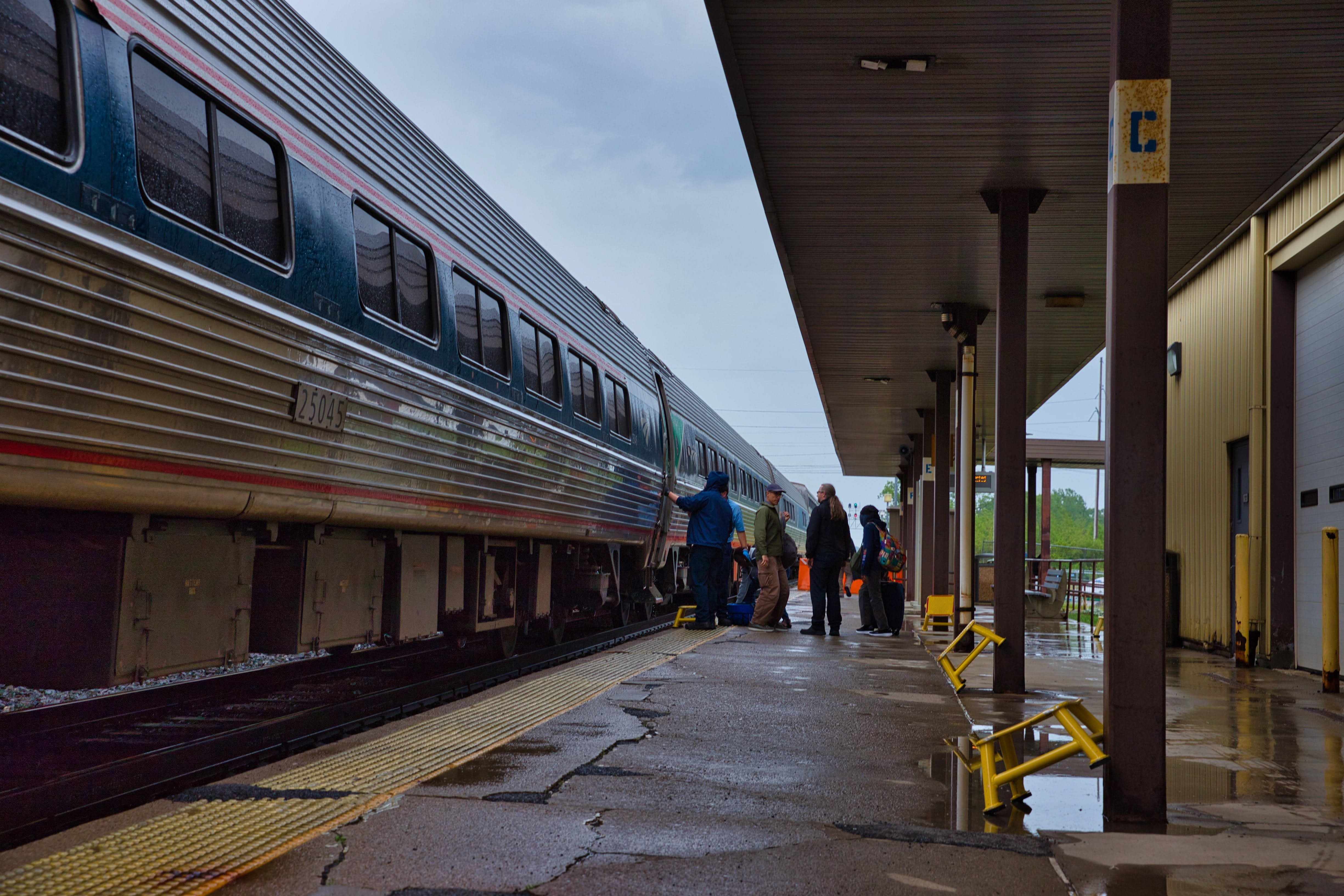
I decided I would not ride my bike from the train station in Buffalo to Niagara Falls as it was still supposed to rain. At around 8 am, I went to a cafe car to break my $5 bill so I could pay on a bus in Buffalo.
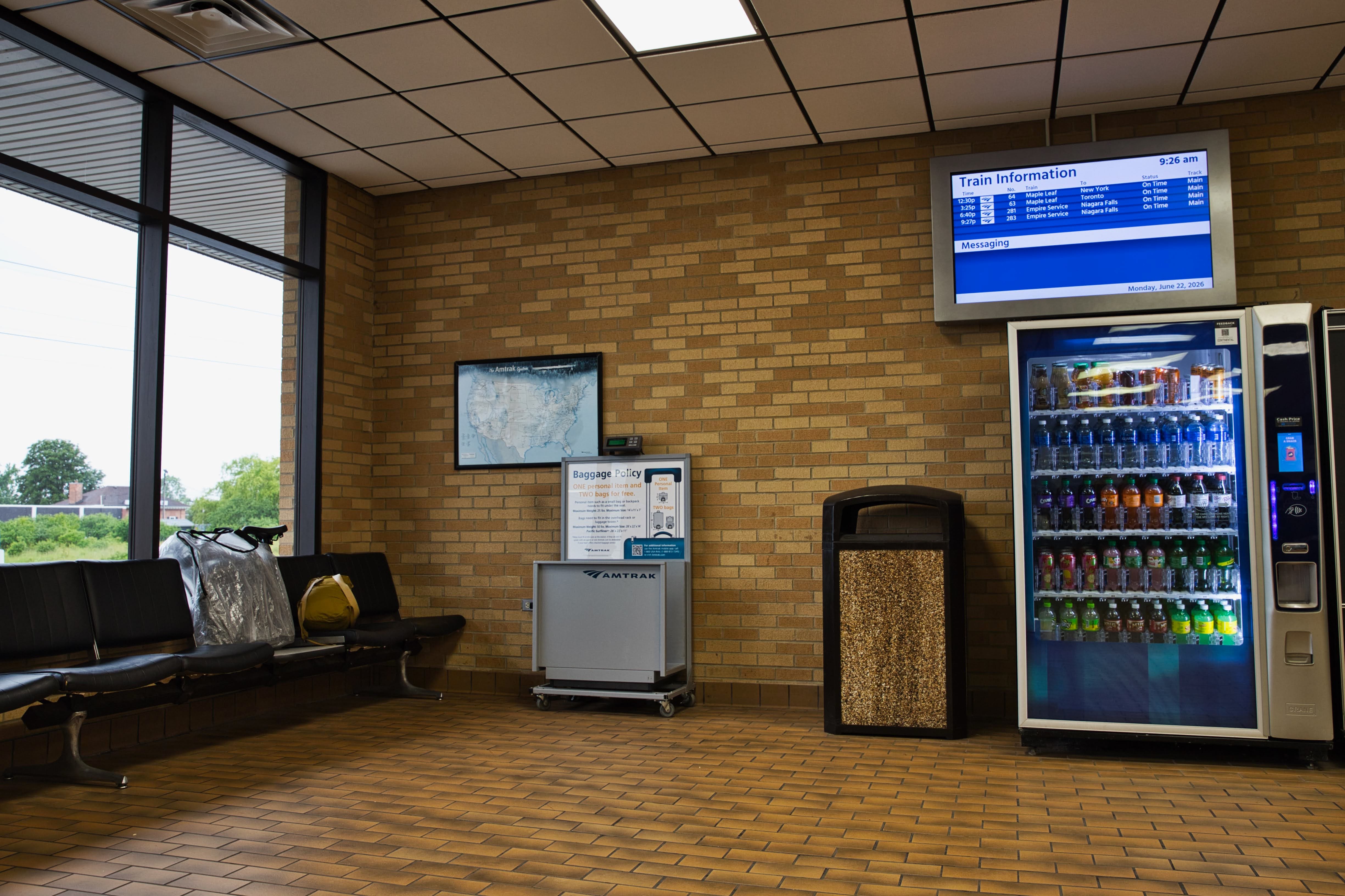
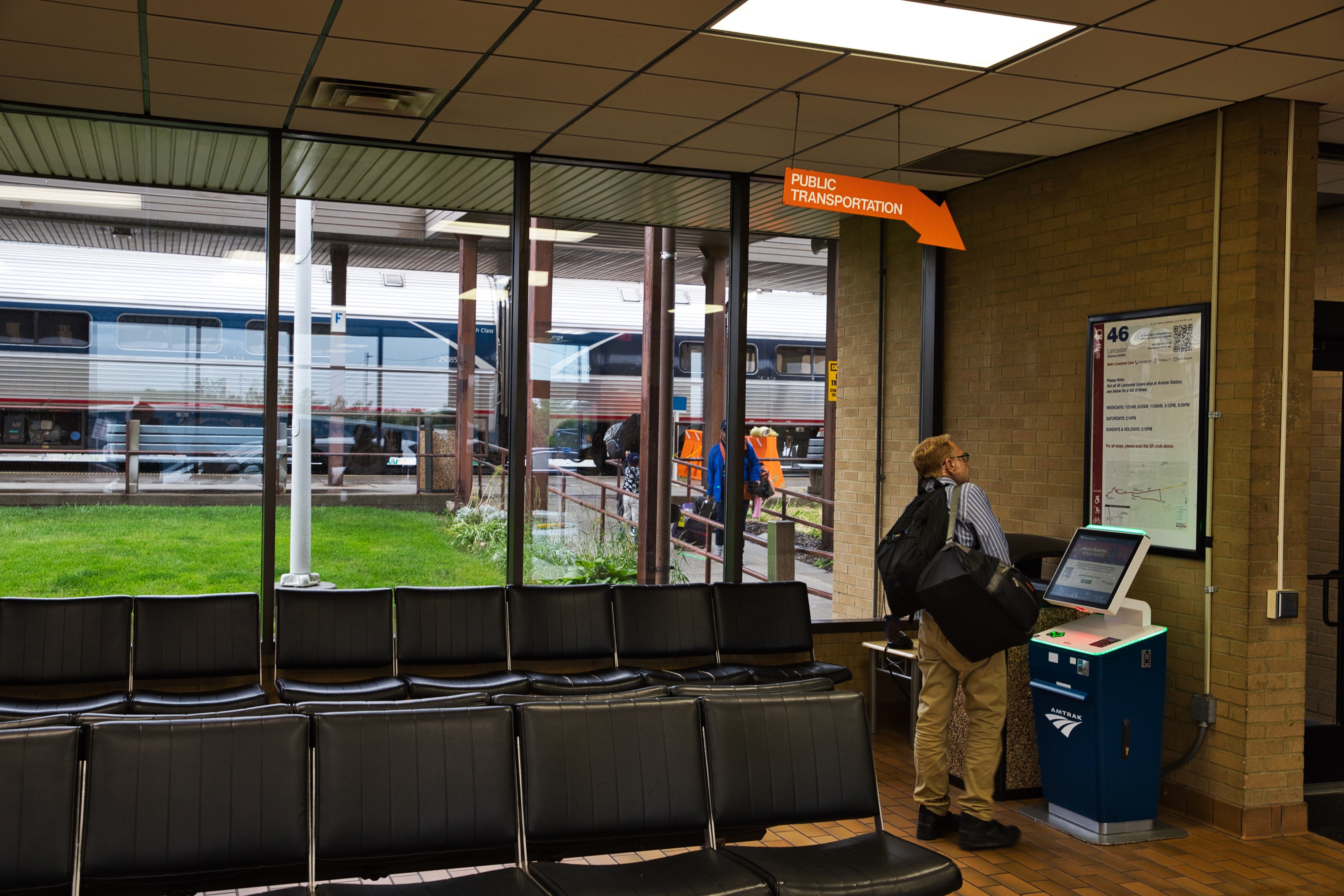
Taking three different buses across Buffalo was the most stressful part of the trip. Maybe it was the rain, maybe it was the lack of sleep, maybe it was the fact that I was dragging a folding bike through unfamiliar transfers, but I never fully relaxed. It’s sad, because Buffalo has so much potential as a visitor destination, and yet I felt a real sense of relief once I crossed back into Canada.
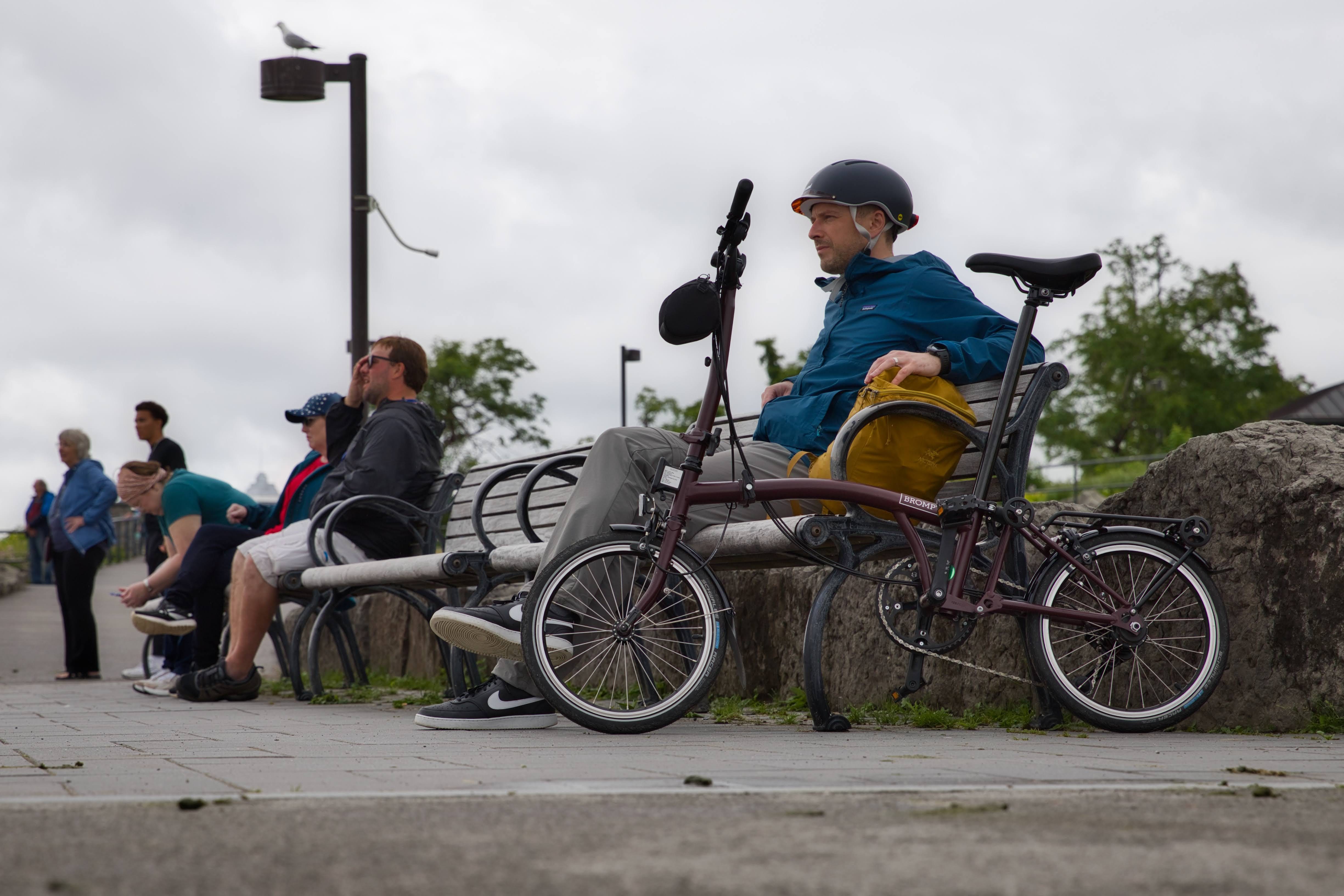
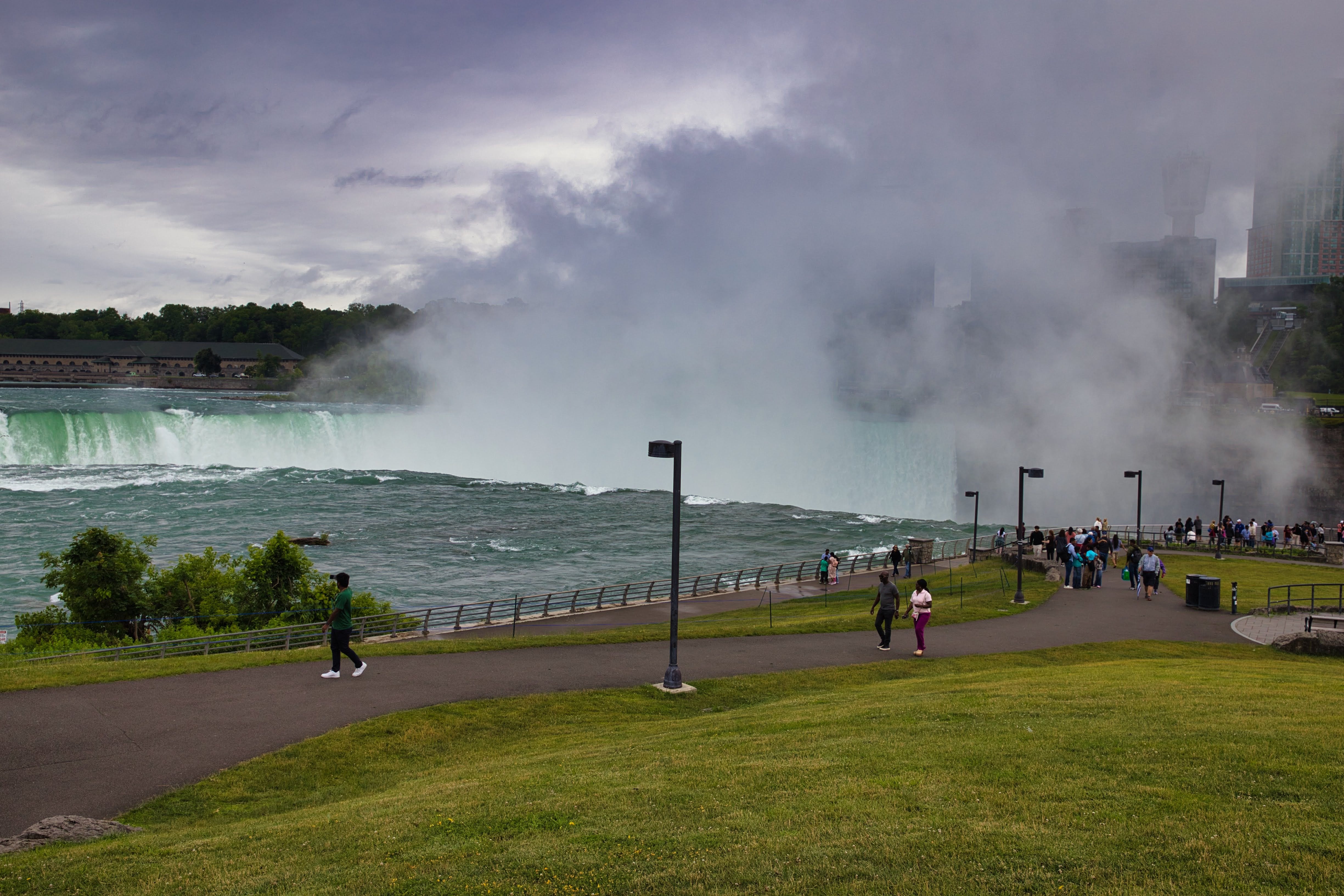
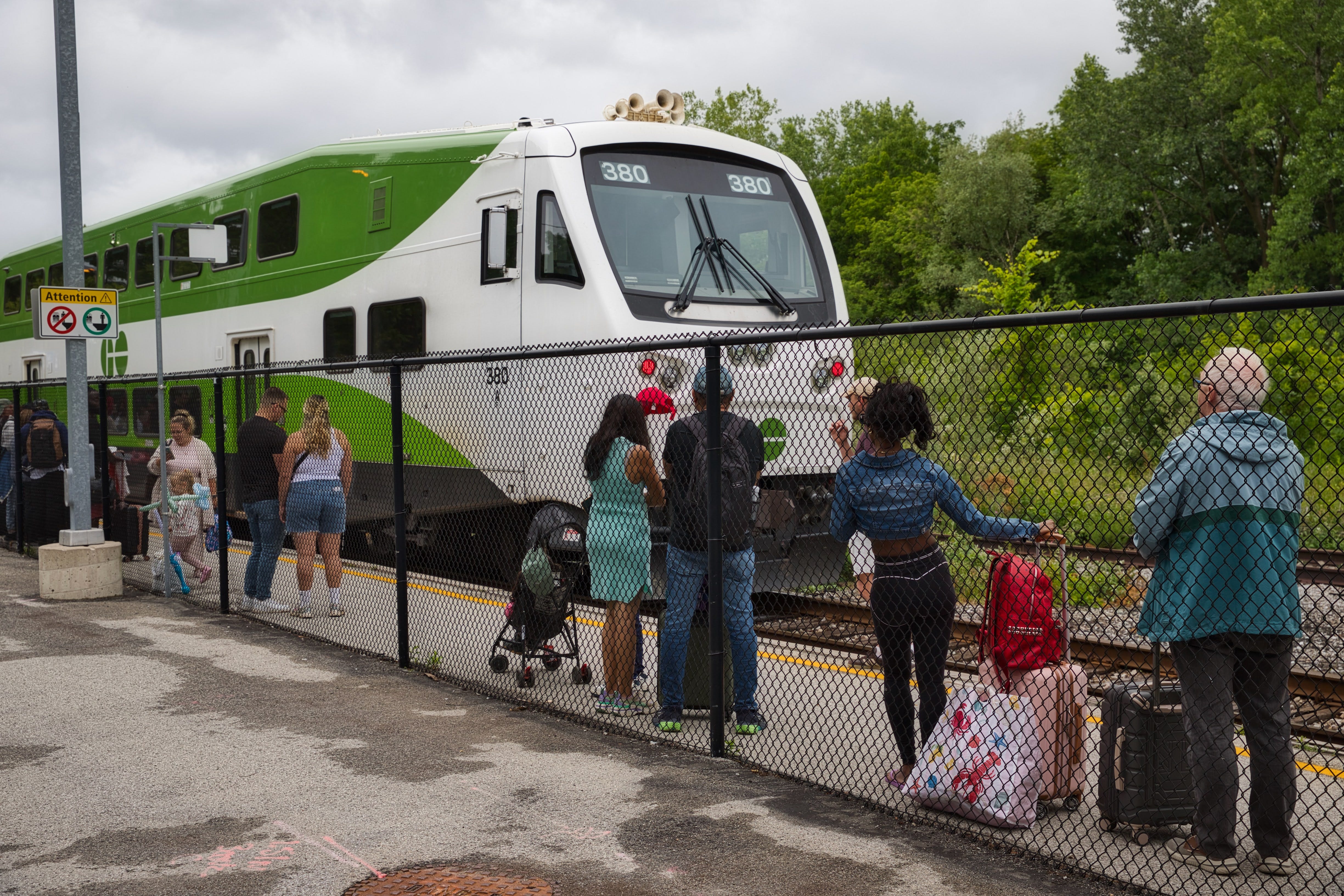
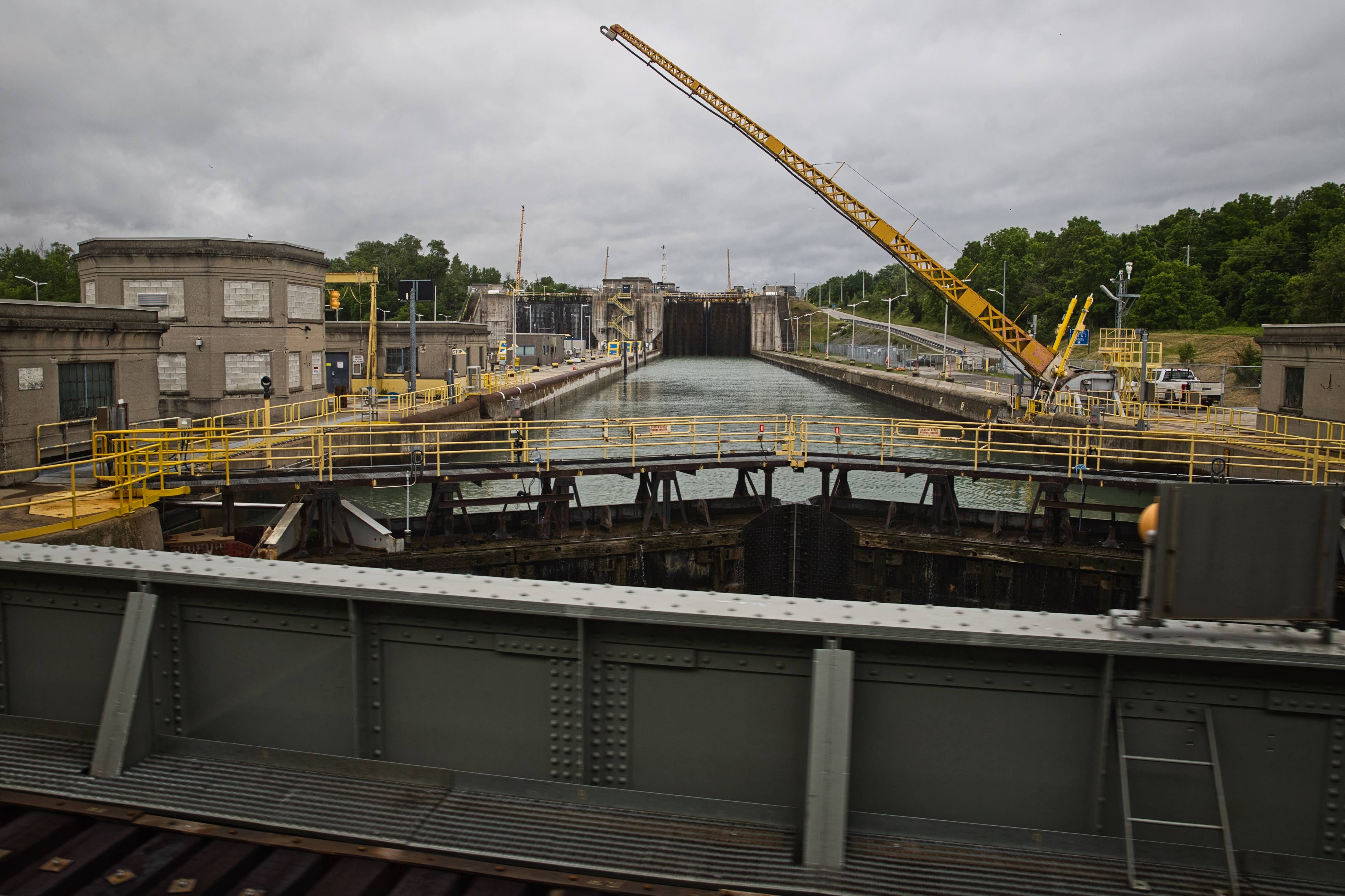
I made it on time to take the GO Train from Niagara Falls, Ontario to Toronto. In my opinion, it’s the most picturesque route in the whole GO network. About 30 minutes into the ride, we slowly crossed the Welland Canal, the engineering marvel that allows ships to bypass Niagara Falls.
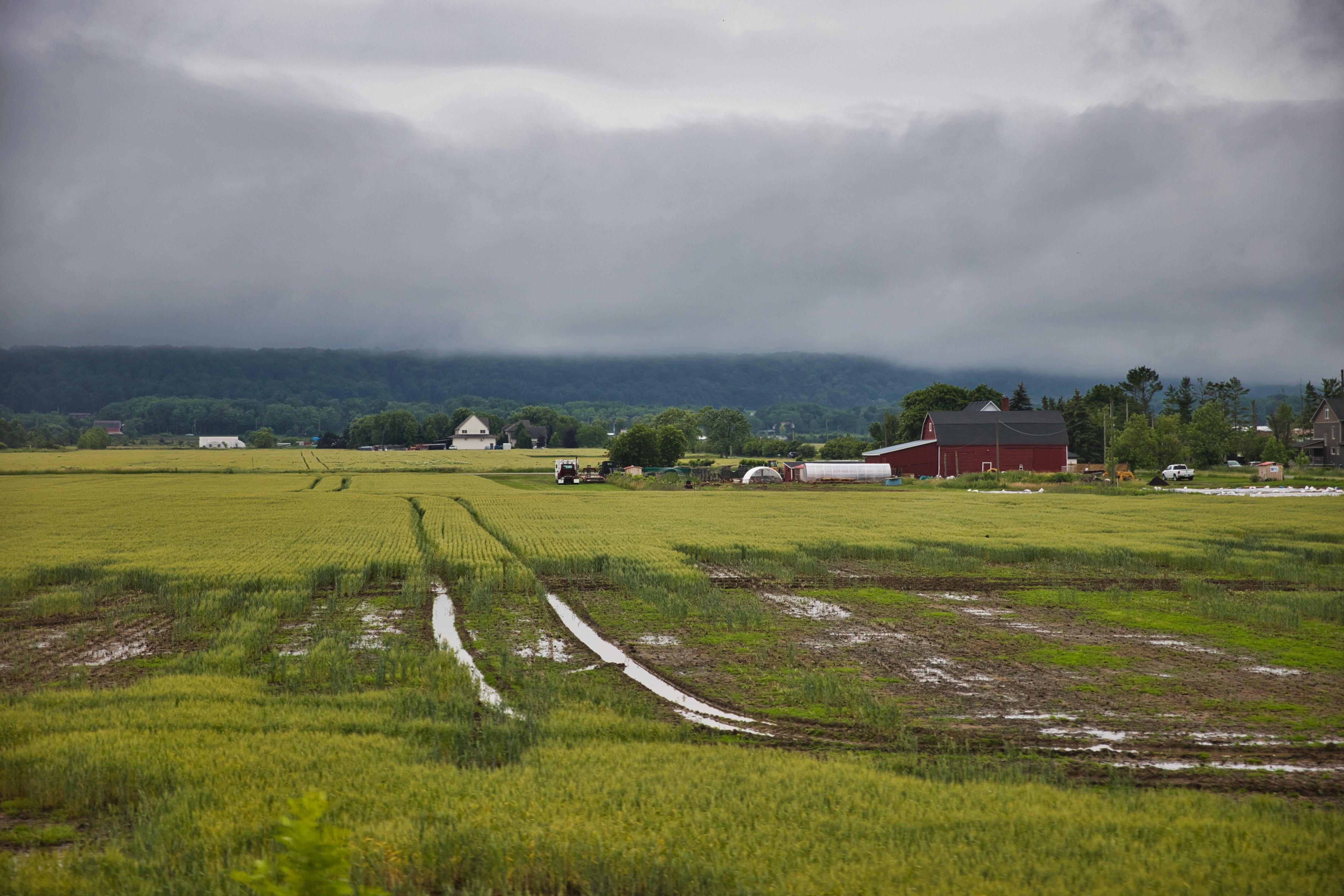
After crossing the canal, we were zooming through farmlands, some of the most fertile in the country. With warm, moist summers and snowy but not too cold winters, the climate here is ideal for growing fruits and vegetables, including grapes for the world-famous and award-winning ice wine. Sadly, there is quite a bit of suburban sprawl in the area built on these rich lands. While offering slightly cheaper housing compared to the Greater Toronto Area, it handicaps the Canadian agricultural sector. There is nothing better than seasonal cherries, peaches and apricots from the Niagara region.
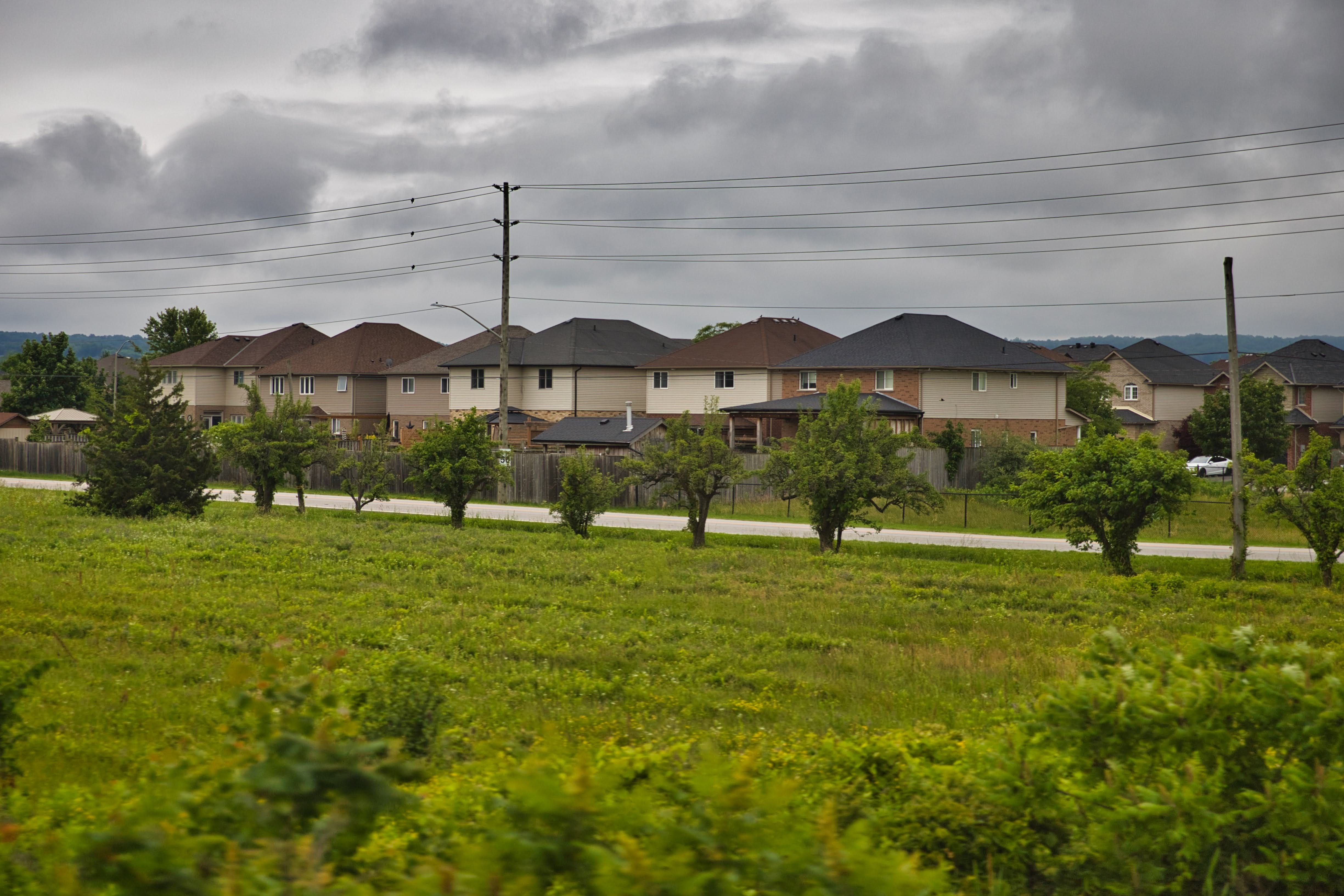
Despite my fears, the GO Train arrived about five minutes early, giving me plenty of time to transfer to my VIA Rail train to Ottawa without any crazy running through Union Station. GO is such a great train system: fast, reliable, and getting better year over year, even with its now-trimmed electrification plans. Exhausted but happy, I continued my journey home, thinking about everything I had seen over those three days. All in all, the loop around Lake Erie, while physically demanding and logistically challenging, did work, thanks to the trains, ferries, a bit of my stubbornness, and of course, my new friend: a Brompton bike ∎.
No posts
Comments
Nothing yet. Say the first thing.
Sign in to join the conversation.