
🎧 Beyond the Pass — Operator Podcast (1:49)
Cutting labour reduced costs but it also reduced capacity.
0:00
-1:49
Prefer reading? The full breakdown is below.
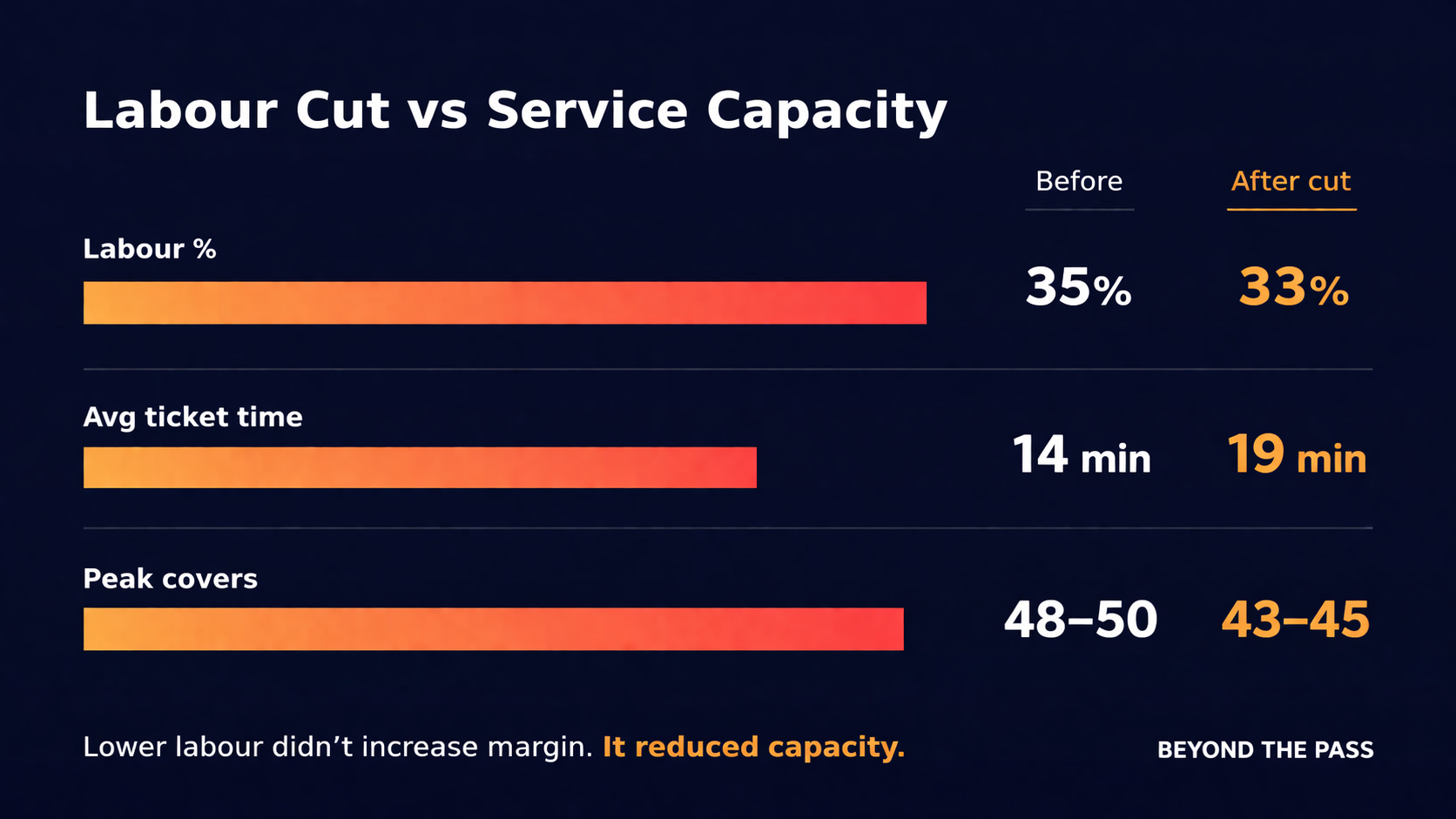
Labour had reached 35%.
Not dramatically high, but high enough to make ownership uncomfortable.
The restaurant was a 48-cover neighbourhood site, busy on weekends, steady midweek, with a small but experienced kitchen team.
Nothing looked broken.
Service ran well.
Guests were happy.
The kitchen felt controlled.
But the numbers suggested pressure.
So the discussion moved quickly to labour.
If we remove one chef, the thinking went, we reduce cost without touching the guest experience.
The role wasn’t senior.
Not leading a section.
Mostly supporting prep and helping during peak.
It looked like the easiest place to trim.
The saving was around £28,000 annually.
The change was made.
The first week felt manageable.
Prep ran slightly tighter.
The team moved faster.
Stations absorbed a bit more responsibility.
The second week felt heavier.
Vegetable prep started creeping closer to service.
Sauces were finished later than usual.
The pass began to slow around the same time each evening.
By week three, the pattern was clear.
The pressure appeared between 7:15 and 8:15.
The same window every night.
Three dishes were responsible.
A braised lamb dish requiring last-minute garnish and sauce finishing.
A fish special needing separate vegetable prep.
A steak dish with multiple sides assembled during peak.
Previously, the removed chef had handled part of this flow.
Finishing components.
Restocking the pass.
Helping reset stations.
Without that role, those tasks shifted across the rest of the team.
No single task was overwhelming.
But together, they slowed the kitchen.
Ticket times stretched from 14 minutes to 19 minutes at peak.
Tables stayed longer.
The second seating started later.
On paper, labour improved.
But covers dropped slightly.
From 48–50 peak covers
to 43–45 on average.
After four weeks, the numbers told the full story.
Labour reduced by roughly £540 per week.
But the restaurant was losing 4 to 6 covers per evening at peak.
Average spend £38.
That meant roughly:
£150–£220 revenue lost per night
£750–£1,000 per week
The labour cut saved money. But the reduced capacity cost more.
Instead of cutting further, they reviewed the peak window.
Between 7pm and 8pm:
Too many dishes required finishing simultaneously.
Too many separate components landed at the pass.
Too much movement in a small space.
The adjustments were small but specific.
The lamb garnish was prepped and portioned before service.
The fish special shared the same vegetable base as another dish.
The steak side was simplified from three components to two.
Nothing changed visually on the plate.
But the number of finishing steps dropped.
Within two weeks:
Ticket times returned to 14–15 minutes.
The pass recovered faster after the first rush.
Second seating stabilised.
Covers returned to 48–50.
Same team.
Same menu style.
Different service flow.
Cutting labour works when there is genuine overstaffing.
When a kitchen is already running close to capacity, removing one role often removes flexibility.
And flexibility is what keeps service moving during peak.
Because in many kitchens, the problem isn’t too many staff.
It’s too many things happening at the same time.
When that happens, cutting labour doesn’t fix the system.
It just makes the pressure visible.
If you’re unsure whether your labour is too high, or whether your service flow is the issue, you can run the free structural diagnostic here :
It helps identify whether the constraint is staffing, or the structure behind the pass.
The next step: The Full Kitchen Viability Checklist : five structural checks before your next operational decision. Available here.
Thanks for reading Beyond the Pass! This post is public so feel free to share it.
No posts
Comments
Nothing yet. Say the first thing.
Sign in to join the conversation.