

With the Trump administration continuing to pressure the Fed to lower rates, “fiscal dominance” has become the buzz word in markets. The idea that monetary policy will be directed at debt sustainability rather than inflation is no longer theoretical; investors are now pricing it in for the US, UK and Japan.
The first-order market implications are already visible: a steeper US yield curve, a higher risk premium in long-term bonds, and a rally in gold. But the deeper significance of a fiscal dominance regime is not just about bonds or bullion, but instead credibility.
Central bank independence and inflation targeting were key to the achievement of the Great Moderation, the era of low inflation and stable growth from the late 1990s to the mid-2000s. The belief in the importance of independence stemmed from the Great Inflation of the 1970s, when it became clear that only central banks free from political pressure could deliver price stability.
If that credibility is now eroded, the risk is a shift from moderation to a new era of macro volatility. For investors, relying on passive beta to equities and bonds, which worked in the era of low inflation and stable growth, may no longer hold. Instead, inflation protection and allocations to dynamic adaptive strategies may now be the order of the day.

The rise and fall of monetary dominance
The Global Financial Crisis thrust central banks into the spotlight. Extraordinary tools were deployed to stabilise markets, and when politicians failed to agree on sustained fiscal measures, monetary policy was called “the only game in town.”
Reinhart and Rogoff’s This Time is Different in 2009 captured the mood of that period: excessive debt often precedes crises, sovereign defaults are more common than imagined, and growth slows once debt-to-GDP passes critical thresholds. Fiscal conservatism and austerity followed, reinforcing reliance on monetary support.
Although central banks cut rates to zero and engaged in large-scale asset purchases, the headwinds of deleveraging meant the result was a decade of secular stagnation and ultra-low interest rates.
By the mid-2010s, the mood was shifting. Populist movements such as Brexit and MAGA reflected the dissatisfaction with weak growth and neoliberal thinking. Economic thought also evolved: Modern Monetary Theory, once fringe, gained surprising traction.
The real catalyst came with COVID and then the war in Ukraine. Governments turned to aggressive fiscal measures to shield households, fund defence, and support economies. Since then, deficits have widened almost everywhere, and the warnings of Reinhart and Rogoff have faded from memory.

The allure of financial repression
During COVID, fiscal packages could be financed cheaply with bond yields at historic lows. But the fiscal splurge has not gone unnoticed by bond markets. Today, however, with spending needs rising and global yields climbing, debt sustainability has become a pressing concern.
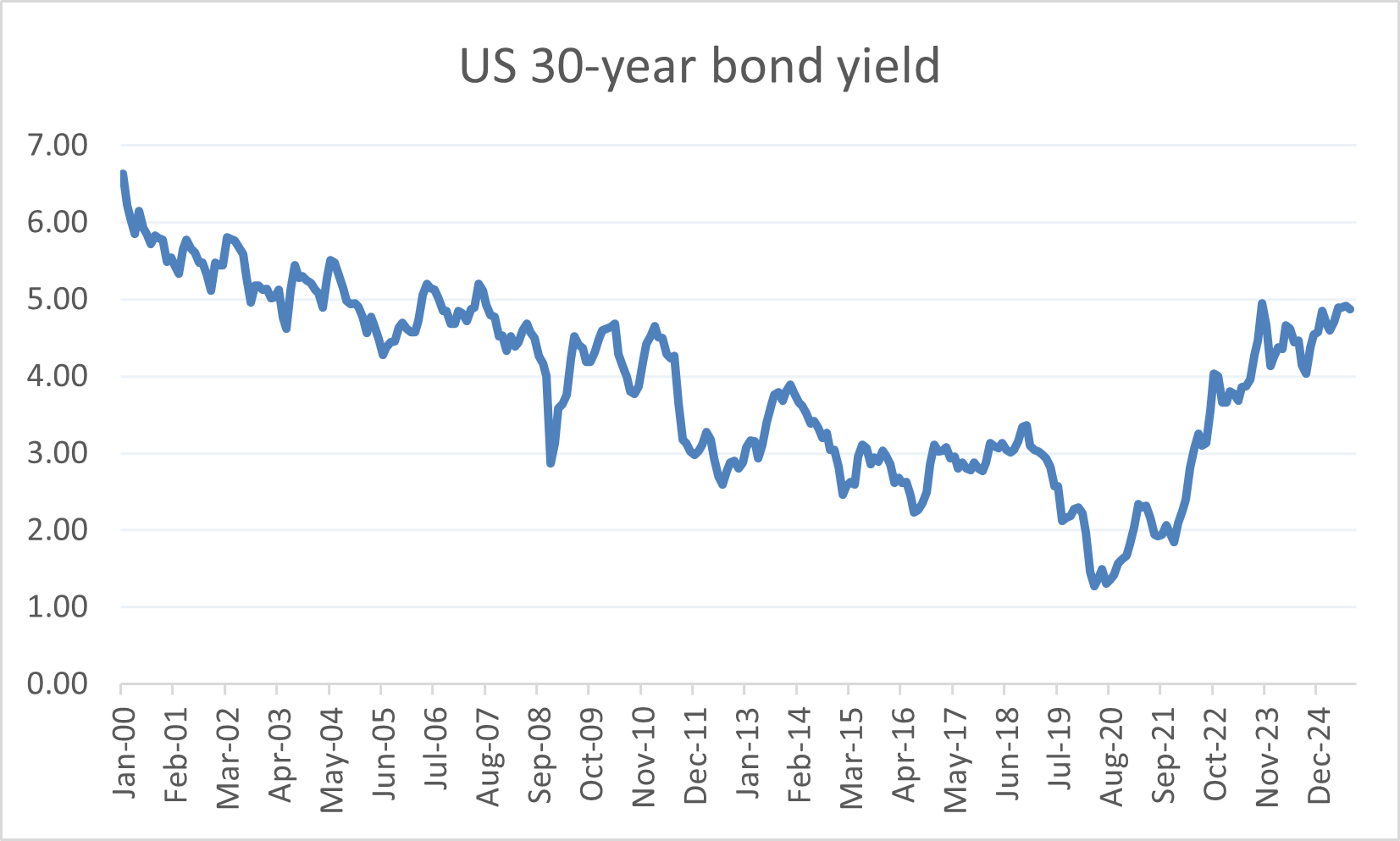
If all US debt was financed at the current 30-year yield, US debt service costs would be higher than at any time in five decades. That’s why the Treasury has shifted to issuing more T Bills and why the Fed is under such intense pressure to reduce interest rates.
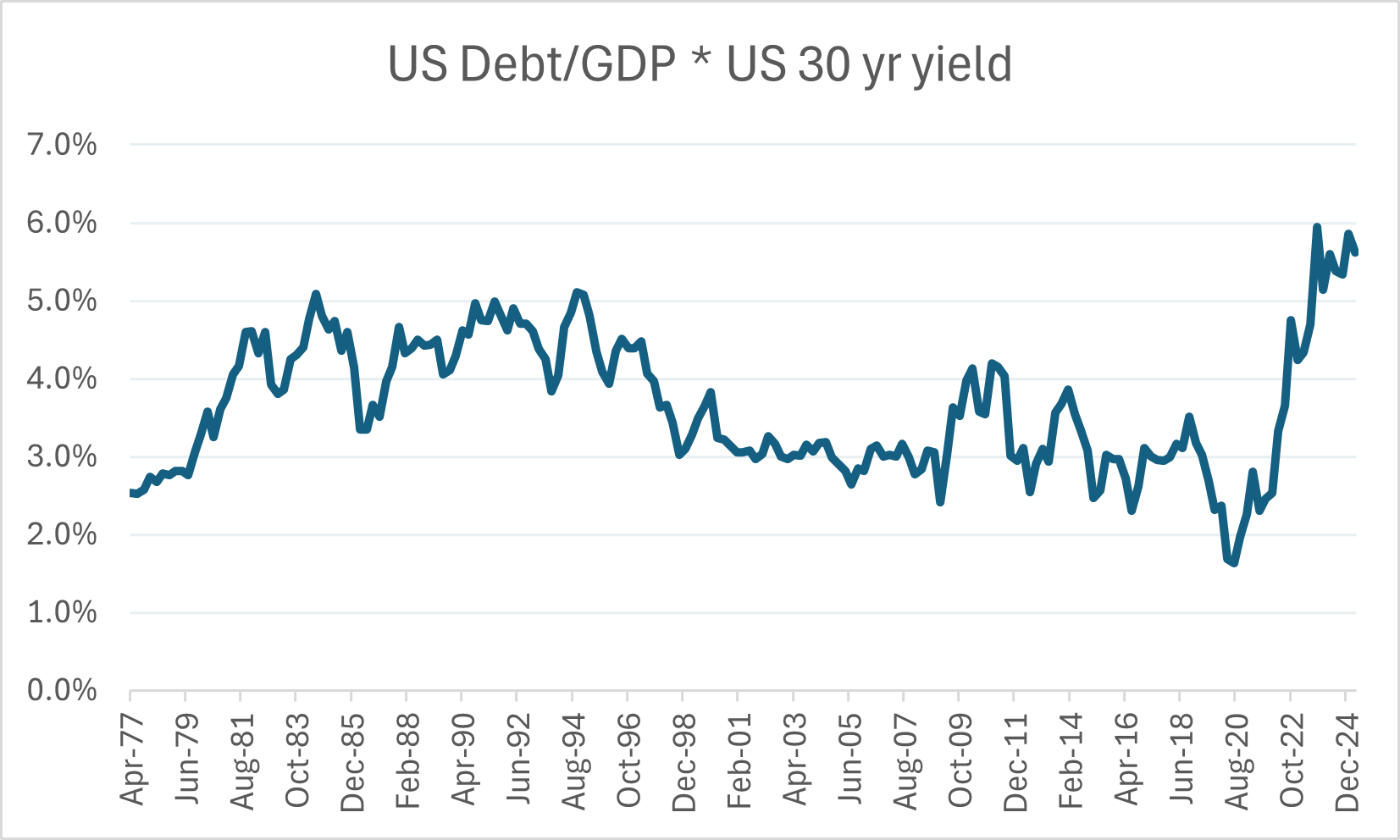
Higher borrowing costs push debt-service burdens up, making fiscal trajectories look less sustainable. Yet demands for spending — on defence, ageing populations, and cost-of-living support — continue to grow. Attempts to impose austerity have been met with swift political backlash.
As a result, policymakers are turning to more subtle tools. Austerity is out; financial repression and debt monetisation are in.
Financial repression works by holding interest rates below the rate of inflation, quietly transferring wealth from savers to the state. Debt monetisation goes a step further: central banks purchase government bonds with newly created money, directly funding deficits. Both approaches avoid immediate spending cuts or tax hikes. But their cost shows up later, in the erosion of purchasing power and the slow bleed of negative real returns for investors.

Historical parallels
We have seen this before. During World War II, military spending pushed up inflation and the US debt/GDP ratio. The Fed suppressed its price stability objective, capping 10-year yields at 2.5% by buying government bonds. By the end of the decade inflation averaged 5.5%, delivering negative real returns for bond investors. Because yields were held down in the 1940s, bondholders suffered four straight decades of negative real returns between 1940 and 1979.
The onset of COVID-19 ushered in a similar sense of wartime. Formal yield-curve control did not happen in the US (though it did in Australia), but the Fed massively expanded its asset purchases to accommodate record Treasury issuance. Although it was presented as quantitative easing, it felt like debt monetisation in everything but name. The ultimate result was a significant rise in inflation and wealth erosion for bond holders.
The broader impact
The focus has now shifted back to interest rate policy. The attacks the Fed has endured from President Trump have been unprecedented. Even Treasury Secretary Bessent appeared to shift the goalposts in a recent WSJ op-ed by adding “stable interest rates” to the Fed’s traditional mandate of maximum employment and price stability.
Much will depend on Trump’s choice of Jerome Powell’s successor as Fed Chair. That appointment could prove decisive in determining whether the Fed continues to resist fiscal dominance or bends fully to it.
The extent to which countries go down the road of repression and monetisation will shape asset markets. FX markets are likely to be increasingly driven by fiscal considerations, as economies differ in the degree to which central banks remain independent. The Maastricht Treaty embedded ECB independence and fiscal constraints for precisely this reason. Switzerland has also maintained strict anti-inflation credentials.
There will also be spill overs. Easier policy in the US, for example, could strengthen the euro, which would be a deflationary force in Europe and create pressure on the ECB to ease policy in response.
Opportunities in EM and equities
Emerging markets are another area to watch. Historically, the yield on EM debt was higher due to perceived credit and inflation risk. But many EM central banks have fought hard to establish inflation-fighting credibility and may be loath to give it up. In a world where US credibility is in doubt, EM assets could paradoxically be seen as more attractive, particularly if the dollar weakens structurally.
For equities, the picture is mixed. A less independent Fed feels negative for US assets. But against that, nominal GDP growth would likely be stronger. In the 1940s, US equities posted disappointing real returns of about 4% per annum. But as inflation averaged 5.5% over the decade, nominal returns of close to 10% looked normal. For investors, being attuned to the difference between nominal and real returns was key.
In practice, this argues for a more flexible approach to allocation — one that blends traditional assets with real assets and diversifying strategies. Static mixes that worked in the Great Moderation may be poorly suited to an era where fiscal considerations drive markets.

A coming era of macro volatility?
The irony is central banks spent decades building the credibility that underpinned ultra-low bond yields of the 2010s. But those same yields encouraged the fiscal expenditure which now threatens to unwind that credibility.
Keeping rates low to ease the debt burden risks squandering that credibility. If investors, employees and employers start to believe inflation has become embedded — if expectations become unanchored, in central bank language — the risks to the economy would be substantial.
If that loss of credibility meets a supply-side shock, such as an oil price surge, the danger is a re-run of the 1970s. The Great Inflation began with excess demand in the late 1960s, was accentuated by oil shocks, and once expectations became embedded, the cost of bringing inflation down rose higher and higher. It took a national crisis and Paul Volcker’s resolve to restore stability.
With all that is happening day to day, it is sometimes easy to forget how much the landscape has shifted since the end of the last decade. We have gone from secular stagnation, low interest rates and low bond yields to a world where fiscal dominance, financial repression and macro volatility are back on the table.
The lesson from the 1970s is not only that real returns, particularly in financial assets, can be eroded, but also that higher macro volatility can translate into huge swings in bonds, equities, currencies and commodities.
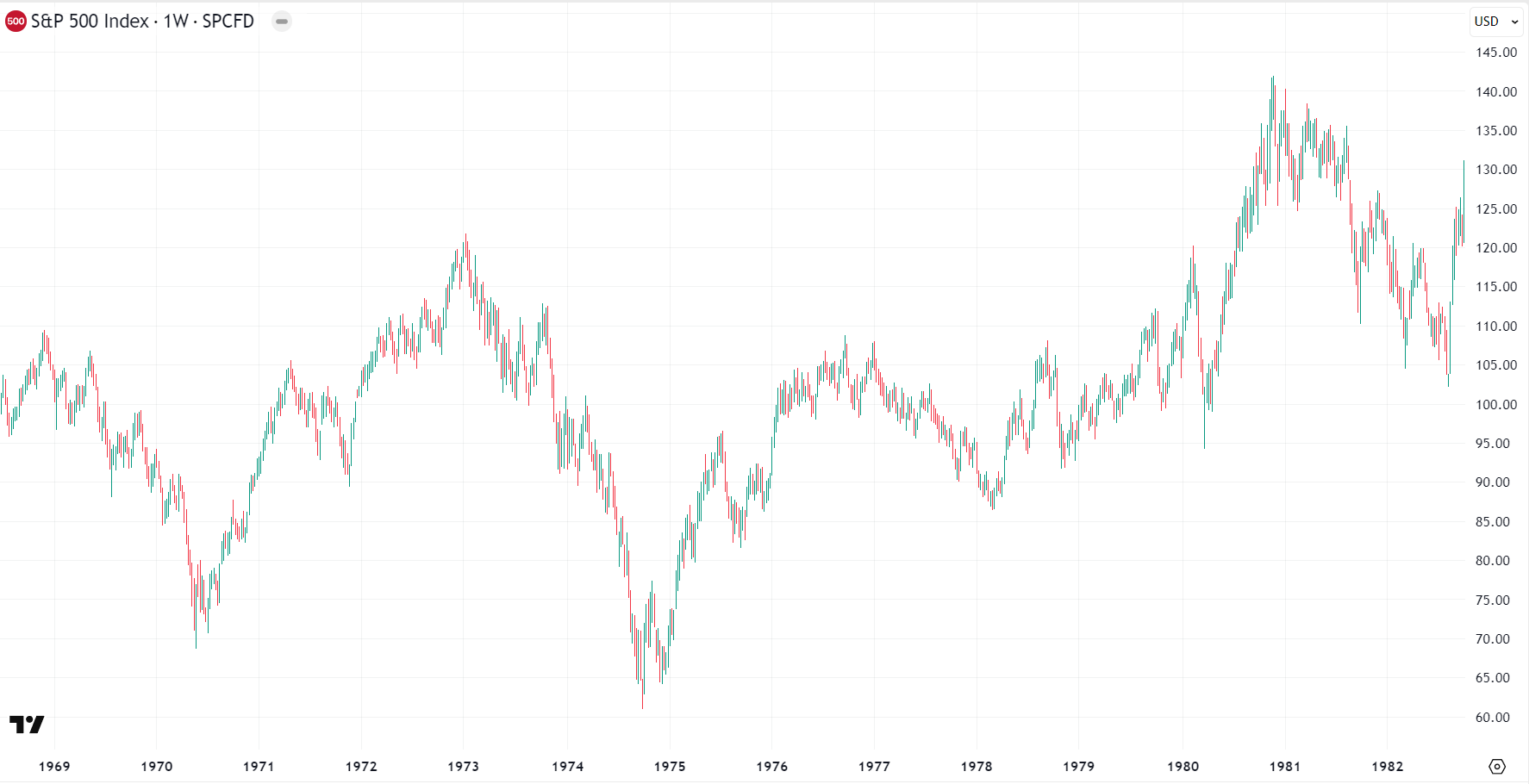
Bonds suffered most in real terms in the 1970s but equities also posted negative real returns. That said, equities had a huge rally between mid-1970 and 1972 and again in 1975, either side of the severe bear market of 1973.1974. The USD trended lower, gold rose and there were huge spikes in commodities at times. A return to that kind of volatility would favour divergent strategies like global macro and trend following.
For investors today, preparing for a more volatile inflation prone world means thinking in terms of adaptive allocation — building portfolios that can adjust across regimes, rather than relying on the stability that central bank independence once guaranteed.
Comments
Nothing yet. Say the first thing.
Sign in to join the conversation.