
TALAPRO-2 asks a clear and clinically relevant question in metastatic castration-resistant prostate cancer (mCRPC):
Does upfront treatment intensification with a PARP inhibitor improve overall survival in patients with HRR-deficient disease?
This discussion focuses exclusively on the HRR-deficient cohort (cohort 2) of TALAPRO-2. These data directly led to FDA approval of talazoparib in mCRPC in the HRR-deficient population. Expansion of the label for talazoparib/enzalutamide to non-HRR gene-mutated patients was declined.
TALAPRO-2 is a large, international, randomized, double-blind phase 3 trial with a two-stage design. Patients with first-line mCRPC were initially enrolled into an unselected cohort, followed by a prospectively defined HRR-deficient cohort.
Patients in the HRR-deficient cohort were randomized 1:1 to:
talazoparib + enzalutamide, or
placebo + enzalutamide,
with ongoing androgen deprivation therapy in both arms.
In this cohort:
Radiographic progression-free survival (rPFS) was the primary endpoint, and
Overall survival (OS) was a prespecified, alpha-protected key secondary endpoint.
This matters. The OS result was not exploratory and was not rescued by post-hoc subgroup analyses. It was embedded in the statistical framework from the start.
The choice of rPFS as the primary endpoint is standard in first-line mCRPC, and blinded independent central review strengthens internal validity. More importantly, OS testing was hierarchically incorporated into the design.
The control arm — enzalutamide alone — was appropriate at the time the trial was initiated and remains defensible. This was not a weakened comparator, and the enrolled population reflects routine first-line mCRPC practice.
The lack of mandated crossover in TALAPRO-2 should not be interpreted as a methodological weakness. Crossover is informative when a drug has already demonstrated efficacy in later-line therapy, and the scientific question is whether earlier use improves outcomes over sequencing. That was not the case here.
Talazoparib had never been shown to confer a survival benefit in later-line mCRPC, and there was therefore no validated downstream strategy to cross over to. Mandating crossover would have introduced an unproven intervention into the control arm.
In the HRR-deficient cohort, talazoparib plus enzalutamide produced a statistically significant and clinically meaningful improvement in overall survival, with a hazard ratio of approximately 0.62 and a median OS gain of more than one year.
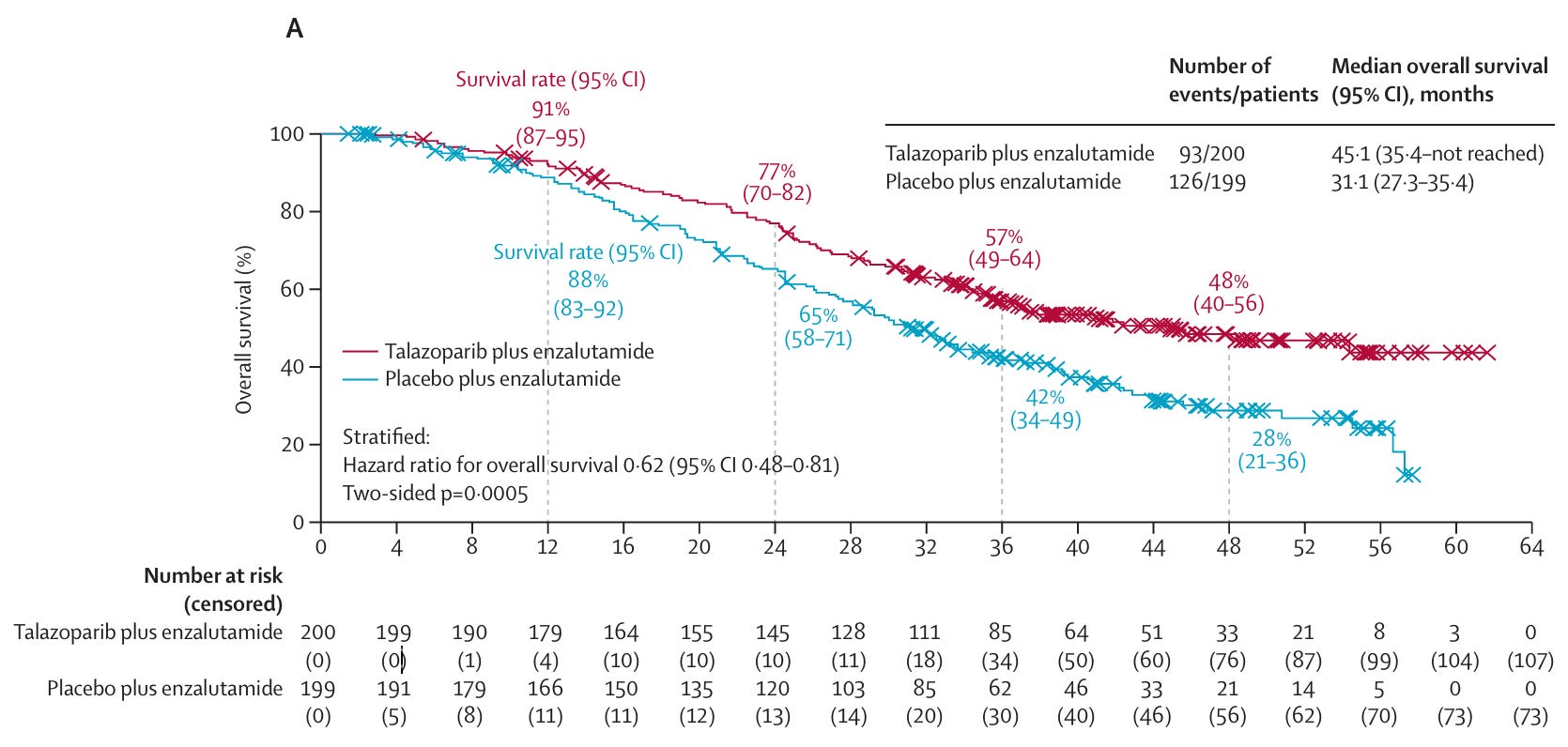
OS curve in patients with any HRR gene alteration - HR 0,62 - Median difference in OS of 14 months
This is not a marginal effect. It is the clearest OS benefit reported so far with a PARP–ARPI combination in mCRPC and provides a solid evidentiary basis for FDA approval.
There seems to be some additional early censoring in the control arm during the first year (probably disappointment-driven), however, not enough to change the outcome.
The survival benefit is not uniform across HRR alterations. The largest and most robust effect is seen in patients with BRCA1/2 alterations (HR ~0.50). In contrast, patients with non-BRCA HRR alterations show a smaller and statistically nonsignificant OS signal.
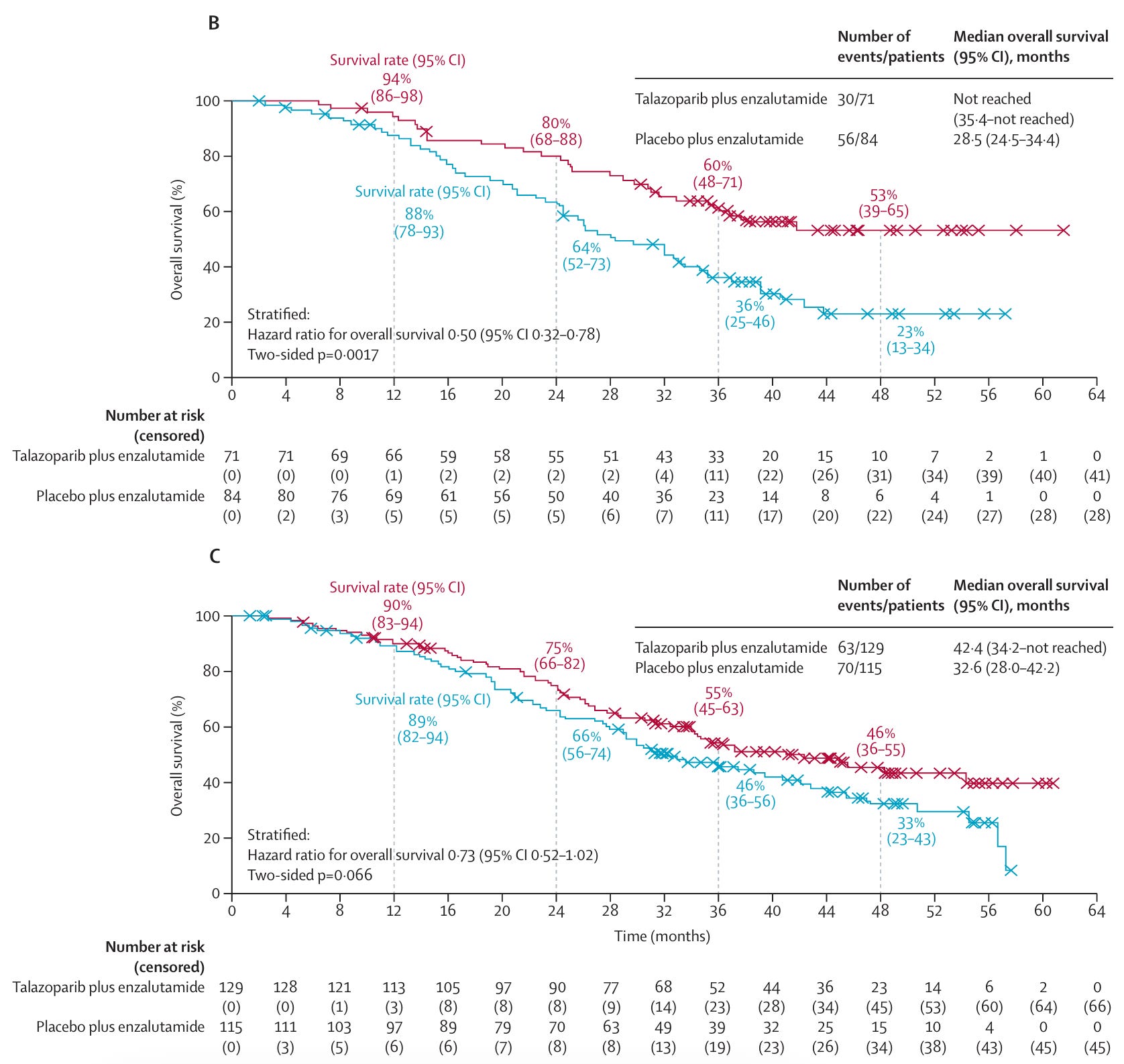
B: OS in patients with BRCA1/2 gene laterations - C: OS in patients with non-BRCA1/2 alterations
Upfront combination therapy comes with substantial haematological toxicity, particularly anaemia and neutropenia, leading to frequent dose interruptions, reductions, transfusions, and treatment modifications.
This is especially relevant in a first-line setting, where patients are often asymptomatic and functioning well at the time of treatment initiation. Intensification shifts a significant toxicity burden into an early disease phase, raising legitimate concerns about downstream treatment feasibility.
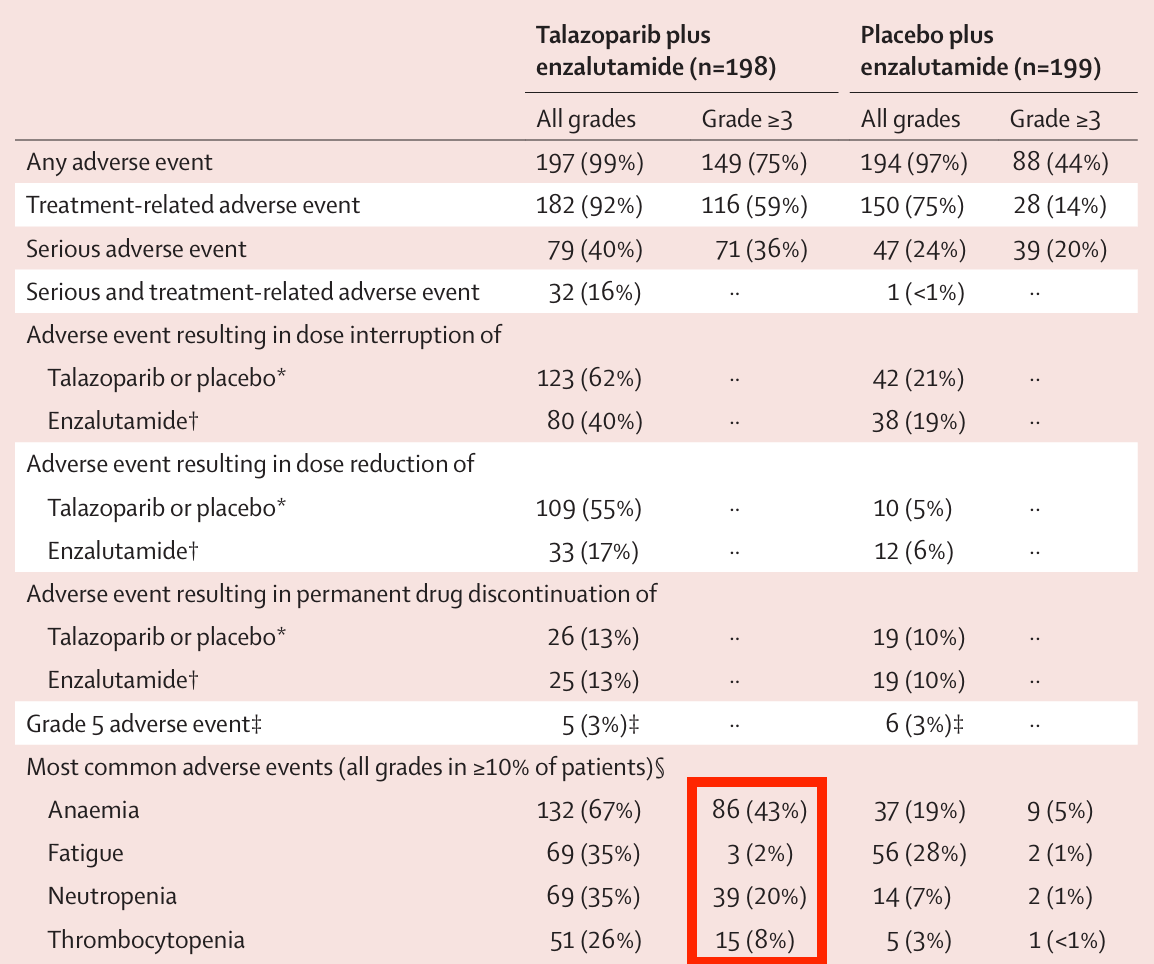
One strength of TALAPRO-2 is the availability of post-progression treatment data (supplementary appendix).
Despite early haematological toxicity, access to cytotoxic chemotherapy after progression appears similar between arms:
71% of patients receiving subsequent therapy in the talazoparib arm were treated with chemotherapy.
69% of patients in the placebo arm who received subsequent therapy received chemotherapy.
These data argue against the idea that upfront toxicity meaningfully compromised access to docetaxel or cabazitaxel and weaken a common alternative explanation for the OS benefit.
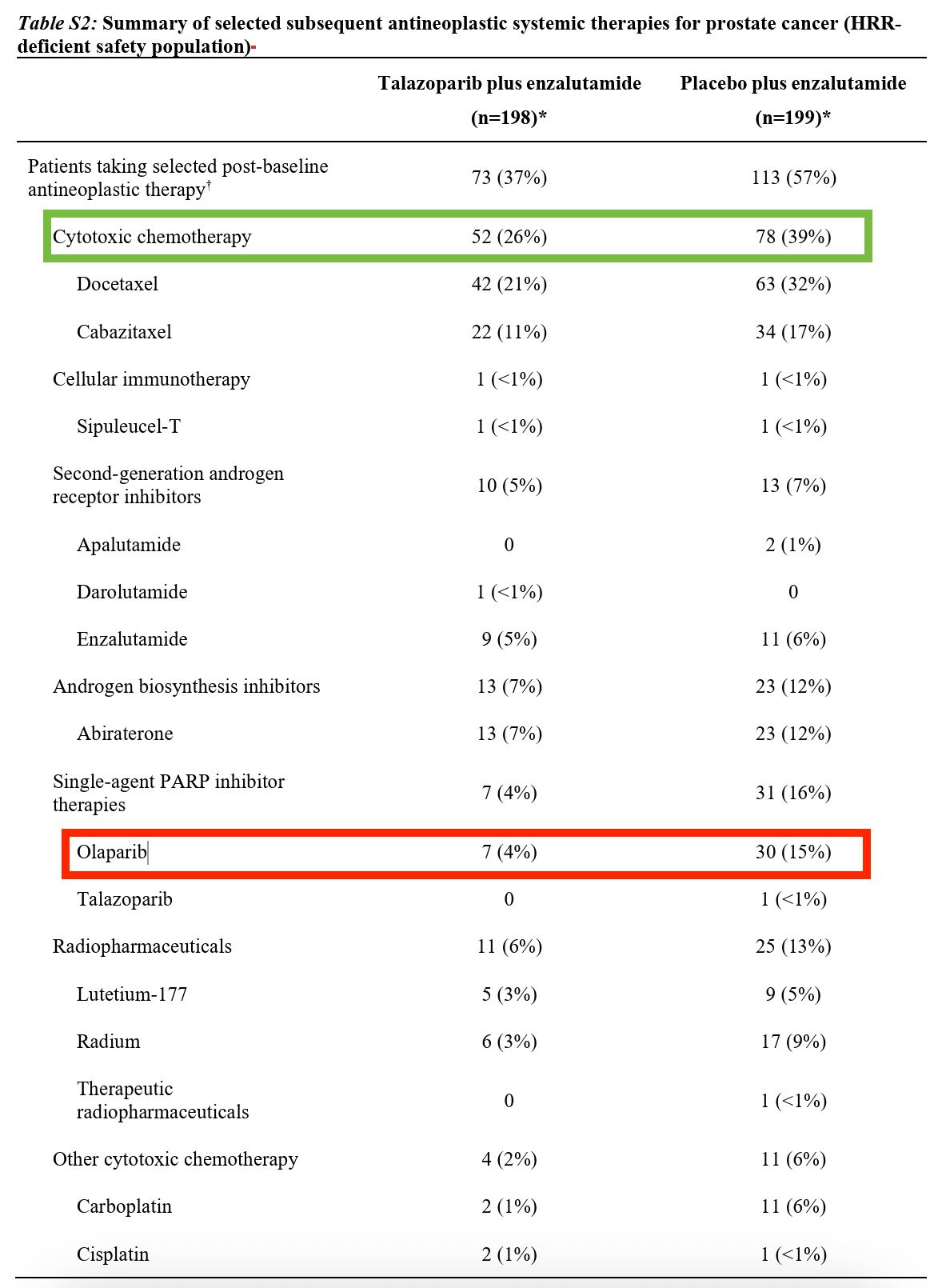
In contrast, exposure to PARP inhibitors after progression in the placebo arm was surprisingly low. Only 31 of 113 patients who received subsequent therapy received a PARP inhibitor, despite FDA approval of olaparib for HRR-altered mCRPC midway through trial accrual.
The most plausible explanation is limited access outside the United States, reflecting the trial's global nature. Nevertheless, this has important implications for interpretation.
Had a substantially larger proportion of patients in the control arm received a PARP inhibitor upon progression, TALAPRO-2 would have come much closer to answering a different — and clinically central — question: whether upfront treatment intensification is necessary, or whether sequencing therapies could achieve similar survival while sparing a subset of patients the added haematological toxicity of early combination treatment.
Because post-progression PARP exposure was limited, TALAPRO-2 convincingly establishes the benefit of early PARP use, but stops short of definitively resolving the intensification-versus-sequencing debate.
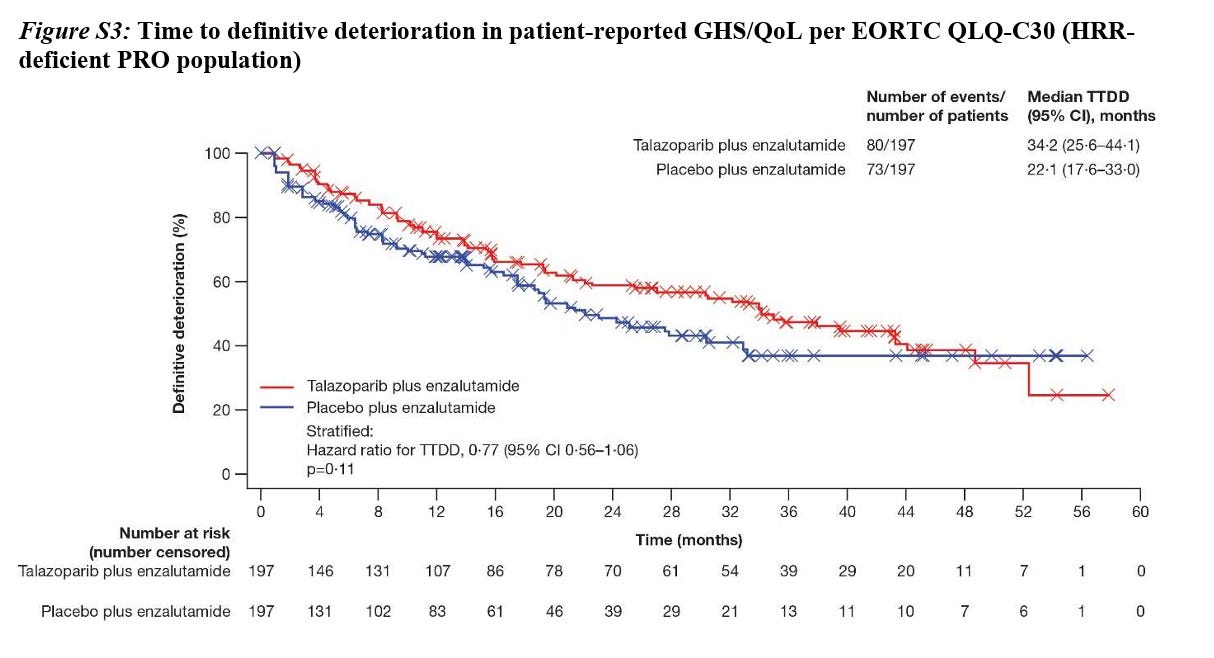
Quality-of-life analyses show no significant differences between arms, with numerically longer time to deterioration in the intervention arm.
Given the clear excess of adverse events and the absence of censoring data for the completion of the QoL questionnaires, this finding should be interpreted cautiously. Patients with the most significant toxicity are most likely to stop completing questionnaires, thus the information in the KM-plot may mainly harbor the data from patients who experienced the least side effects. This potentially inflates apparent QoL outcomes
As such, QoL data are best considered inconclusive.
Focusing on the HRR-deficient cohort — the basis for FDA approval — TALAPRO-2 is a well-designed trial that convincingly answers its primary question. Upfront talazoparib plus enzalutamide improves overall survival in HRR-deficient mCRPC compared to Enzalutamide alone.
However, toxicity is real and abundant; quality-of-life data are difficult to interpret, and the optimal timing of PARP inhibition remains unresolved (upfront versus delayed).
No posts
Comments
Nothing yet. Say the first thing.
Sign in to join the conversation.