
In a blog about reasonableness, it would behoove us to discuss just what reasonableness is.
Literally/archaically: someone able to reason, or who can be reasoned with.
and in the Bible, translated from the Greek word epieikēs, meaning “gentleness, kindness, an attitude of lenience, yielding.”
More modern: “based on good sense, or someone with sound judgment”
Colloquially: “as much as is appropriate, fair, moderate, average”
From the above, one sees how perhaps the loftiest (and archaic?) use of “reasonableness”, as referring to the use of reason, has given way over time to something more normative and instinctual. In particular, there seems to be a regression of expectations towards the local and the average, and I will call this modern, colloquial sense “mere reasonableness.”
I do want to note that in many places, “reasonableness” in the sense of a high standard of conduct is still alive and well.
In short: there is a tension between the aspirational and the average.
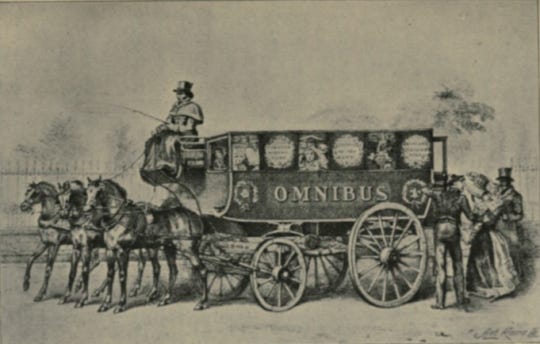
The law is one domain where a lot of thought has gone into defining what reasonableness means, and is still under much active discussion. In English common law, there is a concept of the “reasonable person” that is also called “The man on the Clapham Omnibus,” meant to illustrate the typical person, or more to the point how society expects the average upstanding person to behave.
Supreme Court justice Oliver Wendell Holmes described the necessity of the legal fiction of the “reasonable person” arises from the impossibility of "measuring a man's powers and limitations."
As described,
Individual, personal quirks inadvertently injuring the persons or property of others are no less damaging than intentional acts. For society to function, "a certain average of conduct, a sacrifice of individual peculiarities going beyond a certain point, is necessary to the general welfare."[18] Thus, a reasonable application of the law is sought, compatible with planning, working, or getting along with others. As such, "his neighbors accordingly require him, at his proper peril, to come up to their standard, and the courts which they establish decline to take his personal equation into account."[18]
Importantly, stemming from the 1932 case The TJ Hooper, the law recognizes that the “reasonable person” is distinct from the “average person,” who is not necessarily guaranteed to be always reasonable. It is sometimes said that, “most people are reasonable some of the time, and most people are not reasonable all the time.” Specifically,
The reasonable person will weigh all of the following factors before acting:
the foreseeable risk of harm his actions create versus the utility of his actions;
the extent of the risk so created;
the likelihood such risk will actually cause harm to others;
any alternatives of lesser risk, and the costs of those alternatives.
There is much more modern legal discussion of what constitutes a reasonable person, but we can already see the tension between what is average and what is reasonable. One could even pose the question: “in what ways is it reasonable to expect people to behave out of the average?” More broadly, there is a debate over whether reasonableness is a positive (in the philosophical sense) or a normative/normal standard.
In David Chapman’s metarationality (which he currently writes about at meaningness), he emphasizes the importance of an ethnographic approach to understanding how people employ concepts in real life. His observations of some of the salient points of reasonableness as activity are that it:
Orients to specific contexts and purposes, and in doing so is partly improvisational
Is usually “good enough” for the task immediately at hand
Is mostly informal, concrete, specific, inarticulable
Is normative and something that we are held accountable for, by dint of of its purposive orientation
Is negotiable because norms and contexts shift, and there are unenumerable potentially relevant considerations
In addition, following a developmental stages framework/ontology, David Chapman also tends to define reasonableness as “sensible but not employing systematic/formal methods.” While Chapman does not include systematic/formal thought as part of his definition of reasonableness, he reminds us not to underestimate reasonableness. Even “mere reasonableness”, Chapman points out, is highly effective at solving really hard problems. We often take reasonableness for granted, but it is the grounds for serious work, embedded in reality, solving real problems in a nebulous world that unshielded rational systems cannot hope to address by themselves.
A lot of digital ink has been spilled on the topic of how to think better, and what better thinking looks like. A lot of this has centered around enumerating cognitive biases, such that we may observe and hopefully address them. To help think more clearly, people also oftentimes introduce frameworks (like the Eisenhower matrix) to help them organize their thoughts more clearly. Ever so often, a particularly insightful analogy, like the “map-territory correspondence” helps to give life to the ideas in a visceral way that we can imbibe.
As insightfully pointed out by Chapman in Metarationality, the underappreciated, hardest part is not so much in identifying cognitive biases or applying particular frameworks, but rather in the context-crossing work of understanding when a bias or framework is appropriate. Ontology precedes epistemology. As Chapman argues, part of what makes this hard is the intrinsically fluid and nebulous nature of the world that we interact with.
This latter “metacognitive” work is much much harder to learn, and pretty much can only be acquired by experience (i.e. practice). It is, I suspect, the process by which “wisdom” and “intuition” are honed. The goal of Beyond Reasonable will ultimately be to draw on as many examples of people having done this work to accelerate and broaden the application of metacognitive thinking.
Some parallel questions we can ask are: why is metacognitive thinking so hard? What tools can we draw upon to make it easier? And what are the limits of those tools?
These are eminently pragmatic but important questions to ask, or else one risks postulating the perfect rational agent, or more recently the perfect bayesian agent. While conceptually useful (and tractable!) thought experiments, they fall short of reality and risk taking us down many unreasonable paths that expect people to behave in intractable ways.
Chapman’s metarationality (and meaningness blog) is currently laying out the foundations for solving (and more importantly, identifying and framing) big problems more effectively, particularly through the adept cross-contextual use of systems.
I am interested in if there is a somewhat parallel track of…:
How can we become more and more reasonable, even before relying on full-blown systems? This is important for the most abstract and nebulous pre-system problems, and also is more intuitive for most people who don’t routinely build systems.
Note: there is a spectrum of “systems”, from informal structures that people commonly leverage, to more formal, full-blown formal systems. However, one of the more stringent characteristics of rational systems that Chapman emphasizes is the notion of universality across a particular class. Additionally, Chapman makes a clear distinction that “metarationality is meaningless without rationality”. I am not as sure why that distinction is so, especially when he also writes that metarationality also involves applying reasonableness skillfully. But again, I think this hinges on what one considers to be a “system.”
To continue the previous point: is language considered a system? I certainly consider it a mode of thinking, just as visual and kinesthetic thinking are modes of thinking. I believe there is a way to practice meta-thinking without the formal systems that rationalists like to dwell on.
Make what is “beyond reasonable” seem… “beyond reasonable” as in “merely reasonable”, “very reasonable”, and “highly accessible.
The subtext is that we want to be “reasonably beyond reasonable”, with reasonable here meaning realistic: realistically realizable by real people, but also impactful enough.
The above point is motivated by my suspicion that the broadest impact will come from making everyone’s implicit-reasonableness more effective and reasonable. This has echoes of raising the sanity waterline, which in itself may be an unrealistic proposition (i.e. one could argue that there is no “typical mind” to meaningfully address).
Side note: it is not clear to me yet if this is some kind of discussion of “metareasonableness”, when that shades into what Chapman calls “metarationality,” and when it is simply metacognition. My hunch, though is that there might be an alternative, gentler path through “metareasonableness” and “metacognition” that detours past really rigorous formal systems thinking (which I love, but don’t find accessible to most people) towards better thinking, and ultimately back to systems and formalisms where appropriate.
Lastly: I suspect there will be a lot of overlap with the emerging field of wisdom research, which highlights the “perspectival aspects of metacognition and affect,” the three-dimensional wisdom scale, and the importance of decision making and problem solving.
No posts
Comments
Nothing yet. Say the first thing.
Sign in to join the conversation.