
There is a strange, insidious piece of armchair ‘analysis’ that has pervaded sporting discourse in recent decades. I’m sure you’ve heard it. Perhaps you’ve even been guilty of repeating it—few of us are innocent in this regard. It goes something like this:
‘Pfft, Kumar Sangakkara only scored his runs at home against minnows; he’s an overrated stat padder,’ as though those runs were simply a fait accompli.

Or this: ‘Kane Williamson? Decent batter, sure, but he couldn’t hack it against the Big Three. Stat padder!’
Or even this: ‘Yeah, Donald Bradman could hold a bat, no doubt, but he averaged 201 against South Africa and 178 against India—what a stat padder!’
Except…wait. You never hear that last one, do you? It would be frankly insane to call Donald Bradman a stat padder. Technically, though, the shoe fits. Why? Because, news flash, if you’re any good at cricket—hell, if you’re any good at whatever sport you’re playing—you’re supposed to be a stat padder. If you’re a half-decent batter, of course you’re going to score heavily against the weakest teams and bowling attacks.
Yet, in many corners of cricketing discourse, the term is used as though it’s a pejorative, as if to say, in your haughtiest MCC blazer, while looking squarely down your nose at whomever you’re lecturing, ‘oh, he only scored his Test runs against these teams, that doesn’t really count.’ Or: ‘sure, his record looks good on the surface, but with a little bit of creative RootMaths™, he’s actually incredibly overrated.’ Or even: ‘meh, he scored easy runs.’ If there has ever been a truly easy Test run, or a Test run that didn’t really matter that much while you’re out there representing your country, I’m yet to discover it. What utter nonsense and pure arrogance! Isn’t the whole point of batting to try to score as many runs as possible at the highest average possible? Have I been misunderstanding the aim of the game this entire time? Why shouldn’t I be selfish and ‘pad’ my stats into oblivion?
Somewhere along the way, the logic has been warped so far that it has almost become better not to score lots of runs against the worst teams, lest they be used as a cudgel against you. It almost feels like there’s a point where a player becomes ‘too good’ for their achievements against weaker opposition to be taken seriously, as if those runs were a mere inevitability. Of course, opposition strength matters when comparing players’ records, but the act of dominating weaker opposition is not, in itself, a flaw. Scoring runs against the best teams should be rewarded, but some critics seem to take this concept to its logical extreme and treat runs scored against weaker opposition as a negative, rather than recognising them as exactly what great players are supposed to do: exploiting mismatches and being insatiable run-scorers.
Increasingly, it seems that, unless your Test record is as pure as snow, so pristine I could eat off of it, utterly beyond reproach in all conditions, and you scored all of your runs against prime Marshall, Warne, or Steyn, someone, somewhere will find an excuse not to rate you. To me, it feels like an extension of the tiresome GOAT debates that have infiltrated sporting discourse, flattening any and all nuance into a frustrating binary, in which you’re either the outright Greatest, or just another also-ran who’s barely worth mentioning.
It’s well past time that this narrative flipped, and the so-called stat padders got their moment in the sun. This is a defence of stat padders.
Pick a legendary batter out of a hat, and the chances are high that they, too, were a (shock, horror) stat padder. In fact, the more legendary the batter, the higher those chances are. This might seem blindingly obvious, but it’s worth stating, just in case: average to poor Test batters don’t typically become stat padders, because they’re not good enough to pad their stats, nor do they stick around in the team long enough! This is the great irony of using the term as though it’s an insult—do you know how good you have to be to make Test cricket look so easy that people assume you’re not being challenged enough and are just padding your stats?
The reality is, the true stat padders—think of someone like Ollie Pope, who averages 205 against Ireland, 171 against Zimbabwe, 47 against the West Indies, and 30 against everyone else, or Martin Guptill, who averaged 75 against those same three teams combined, and 23 against everyone else—rarely get labelled as such, because either no one’s paying enough attention to them, or they naturally get filtered out of Test cricket before they have a chance to develop that reputation.
This is where the term has become bastardised: players like Sangakkara or Williamson, who still comfortably average above 50 even if you exclude their records against ‘weaker’ opposition, have no need to pad their stats—they’re excellent regardless, and then dominating lower-ranked sides pushes them into another stratosphere. Players like Pope and Guptill are different: their numbers are disproportionately built on dominating weaker opposition, thereby inflating their overall averages enough to keep them in the team—at least for a while, until the jig is finally up. In other words, ‘stat padding’ only really holds up as a criticism when the padding is foundational to the player’s career, not when it is an additional layer on top of already elite performances. For the greats, runs against minnows should be treated like the cherry on top. For players like Pope and Guptill, they are almost the entire cake.
Accordingly, the greatest batters are, almost exclusively, also the greatest stat padders. We’ve covered Bradman already, who averaged a comparatively meagre 75 and 89 against the West Indies and England, respectively, as opposed to an eye-popping 201 and 178 against South Africa, who still hadn’t found their footing at Test level, and India, the newest entrants to the Test arena at the time. If you were to exclude those two weaker sides from his record, Bradman ‘only’ averaged 88.3—an 11.36% decrease. Does that make him a stat padder? Or does it merely reveal the absurdity of the phrase?
But it doesn’t stop there. How about Herbert Sutcliffe, who padded his stats with an average of 83 against New Zealand? There’s also Wally Hammond, who averaged 112 against New Zealand, with both doing so long before we even came close to winning a Test.
You could also point the finger at Everton Weekes and his average of 107 against India, remembering that he debuted in 1948, and India didn’t win their first Test until 1952. In fact, you can make the same accusation against another of the Ws, too, as Frank Worrell averaged 60 against India and 116 against New Zealand, compared to just 32 against Australia.
But why stop there? Sachin Tendulkar, that rascal, averaged 136 against Bangladesh and 76 against Zimbabwe. One of his partners in crime, Rahul Dravid, is no more innocent, averaging 70 against Bangladesh and 98 against Zimbabwe. Jacques Kallis—the greatest cricketer ever, at least according to Ricky Ponting—is equally guilty, averaging 78 against Bangladesh and 170 against Zimbabwe.
Nor are the modern greats innocent. Steve Smith averages 90 against a steadily declining West Indies team. AB de Villiers also feasted against an increasingly weak West Indies team, averaging 84. As a quick aside, Joe Root might be the exception that proves the rule here, with his three lowest batting averages strangely coming against Bangladesh, Ireland, and Zimbabwe.
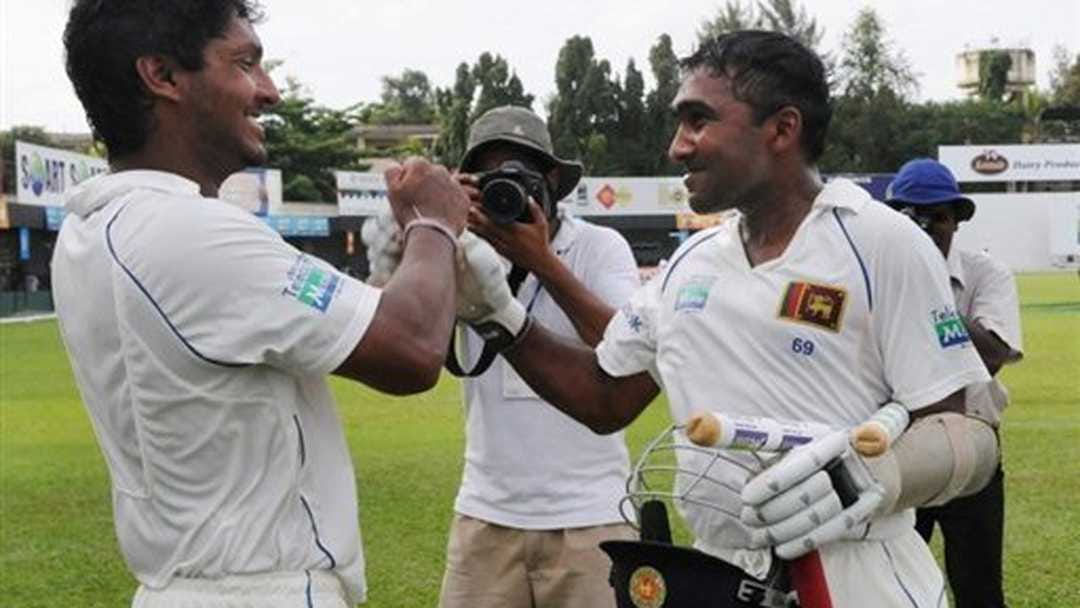
Like Sangakkara, Mahela Jayawardene also struggled to beat the stat padding allegations, averaging 76 against Bangladesh and 60 against Zimbabwe. Mohammad Yousuf might be the poster boy for this phenomenon, averaging a ridiculous 250 against Bangladesh to go with a 100+ average against the West Indies, too.
It pains me to say it, but not even Ross Taylor is innocent, averaging a frankly silly 319 against Zimbabwe and 63 against the West Indies.
I could quite happily sit here and quote old batting averages all day long—I’m never beating the ‘dudes can literally just sit around and name old sports players and just have the best time’ allegations—but hopefully, by now, you’re starting to get the picture: if you’re a great Test batter, you’re also overwhelmingly likely to be a so-called ‘stat padder’.
So, how do we reconcile these realities? Perhaps it would help to realise that Test batting has, quite literally, always been this way, right from the very outset. The best players have always ‘padded their stats’ (read: utterly dominated) against the worst opponents.
Let’s rewind all the way back to 1889, when South Africa were first admitted into Test cricket, and we officially had a relative ‘minnow’ against whom batters could theoretically stat pad (make your own jokes about Australia being the minnows for the first decade of Test cricket).
Between South Africa’s admission into Test cricket in 1889 and 1928, when the West Indies were admitted, the player who ‘padded their stats’ the most against South Africa was Jack Hobbs—you might have heard of him—filling his boots with 1,500 runs at 62.5 from 17 Tests. Of those to have scored at least 500 runs against South Africa in this period, the batter who did so at the highest average was Victor Trumper, another incredibly famous name, who belted 900 runs at 75. Others who cashed in against South Africa in this era include Clem Hill (752 runs at 62.6) and Herbert Sutcliffe (721 runs at 55.41). Four legendary names in cricketing circles. Were they all stat padders, too?
Even still, it took much longer for South Africa to actually get good at Test cricket, struggling throughout the 30s and 40s, despite the odd win. Throughout this period, Wally Hammond led the way against South Africa, scoring 1,867 runs at 69, with Len Hutton (1,186 runs at 51) and Denis Compton (1,159 runs at 72) not far behind him. Oh, and there was also this guy you might have come across, Don Bradman, who scored 806 runs at 201 against South Africa in this period. Pfft, easy runs.
Of course, it’s not just South Africa who have been on the receiving end of this phenomenon. Between 1928 and 1932, the number of Test-playing nations doubled, with New Zealand, the West Indies, and India all gaining entrance into the still-exclusive club. Compared to most new entrants to the game, the West Indies found relatively immediate success, drawing their second Test series. However, India and New Zealand would have to wait until 1952 and 1956, respectively, to notch their first wins, leaving plenty of opportunities for stat padding in between.
Between 1928, when the West Indies were admitted into Test cricket, and 1956, when New Zealand won their first Test, it was again Wally Hammond who cashed in the most against the so-called minnows, blasting 2,098 runs at 67 against New Zealand, India, and the West Indies in this period. Close behind Hammond, you’ll once again find Len Hutton, who made 1,370 runs at 57 against the weaker sides in this period, plus Les Ames, who took them for 1,229 runs at 51. Naturally, Bradman didn’t miss out either, scoring 1,162 runs at 116.2 against NZ, WI, and India in this period. Everton Weekes also averaged over 100 against these sides in this era, claiming 779 runs at 111.
In 1952, Pakistan were then admitted into Test cricket, though they bucked the trend somewhat and were never pure minnows, with both India and New Zealand having inferior W/L ratios throughout the 50s and 60s. Here are the top six run-scorers against India and New Zealand in the 50s and 60s (I have a sneaking inkling that you’ll recognise them): Ken Barrington (1,949 runs at 81.2), Colin Cowdrey (1,687 runs at 64.88), Hanif Mohammad (1,592 runs at 43), Gary Sobers (1474 runs at 59), Rohan Kanhai (1260 runs at 66.31), and Everton Weekes (1,194 runs at 80). Stat padders, to a man.
In the 70s, New Zealand won just 3 Tests and Pakistan just 9. Can you guess who cashed in the most against these teams in the 70s? I wonder if it’s going to be a list of all-time legends, yet again? Wouldn’t you know it, Sunil Gavaskar (1,247 runs at 56.68), Greg Chappell (1,246 runs at 59), and Geoffrey Boycott (1,220 runs at 64.2) filled their boots more than any other batters against the minnows of the 70s, while Javed Miandad also scored 801 runs at 114 against New Zealand that decade.
Is anyone starting to catch a pattern here? Sri Lanka were the next team to enter the Test arena in 1982, and across their first decade of Test cricket, Dilip Vengsarkar scored more runs against them than any other batter (655 at 60), perhaps not quite a legend, but still a very solid Test batter, followed closely by Martin Crowe (627 runs at 52), with other notable performers including Gavaskar (600 runs at 66) and Border (543 runs at 54.3).
Zimbabwe were next up in 1992, and between then and 2005, several legends took their opportunities to cash in. Marvan Atapattu led the way with 1,145 runs at 96, followed by Dravid (979 runs at 97.9) and Tendulkar (918 runs at 76.5), with Jacques Kallis (679 runs at 170) also having a particularly good time of it against his African neighbours.
Bangladesh’s turn came in 2000, and, for the first 15 years of their Test existence, we saw a similar pattern play out. Kumar Sangakkara led the way against Bangladesh between 2000 and 2015, scoring 1,816 runs at 96, followed by his partner in crime Mahela Jayawardene, who scored 1,146 runs at 76.4 against Bangladesh in this period. You also had Shivnarine Chanderpaul dominating the newbies with 897 runs at 149.5 and Tendulkar doing likewise with 820 runs at 136.6.
And the tradition continues even to this day, with Sri Lanka’s Dimuth Karunaratne and Kusal Mendis both averaging over 130 against Afghanistan and Ireland, the Test arena’s two latest entrants. Alternatively, in terms of teams who have played regular Test cricket since 2010, Bangladesh and the West Indies have the worst records. Since 2010, Williamson scored 1,977 runs at 65.9 against these two teams, with Root and Kohli also scoring 1,500+ runs at averages either side of 50, Sangakkara scoring 1,168 runs at 117, and Steve Smith 1,118 runs at 75.
As you can see, at every point throughout Test cricket history, the very best batters have filled their boots and ‘padded their stats’, as it were, against the very worst teams—exactly as they’re supposed to do.
Hobbs did it. Trumper did it. Hammond and Hutton did it. Bradman did it—perhaps better than anyone. Barrington did it. Sobers and Kanhai and Weekes all did it. Gavaskar did it. Miandad did it. Crowe did it. Border and Chappell both did it. Dravid and Tendulkar did it. Kallis did it. Kumar and Mahela did it. Chanderpaul did it. The Fab Four all did it.
So, why do we punish them for it?
And what are we padding them in relation to?
Part of the issue, from where I’m sitting, is that cricket is well overdue for a statistical revolution. Seemingly, all it takes these days to be branded a stat padder for life is scoring runs on a flat pitch against a weak attack merely one (1) time within recent memory. Scored a gritty fourth innings hundred a year ago? That’s nice, but what have you done for me lately, you stat padding lunatic.
We judge batters on their averages, but deep down, I think that most of us know that trying to compare batting averages across eras is a fool’s errand—it can even be tricky comparing them across the same era. How does one judge an opening batter who played most of their cricket in South Africa against a number five who played most of their cricket in Sri Lanka? How does one judge a player who played 25% of their Tests against Bangladesh and Zimbabwe against one who played 33% of their Tests against Australia and India? Is a batter who dominated in England and South Africa but struggled in the West Indies and India more valuable than one who dominated in New Zealand and Pakistan but struggled in Australia and Sri Lanka? Comparing batting averages is rarely comparing apples with apples.
These are all valid questions and concerns—particularly when attempting to split hairs and differentiate different classes of greatness. Where claims of ‘stat padding’ go wrong, in my opinion, is when they are used not to say ‘actually, I think this batter might be 2% better than this batter,’ but rather, ‘I’m not convinced this batter was very good at all.’
Perhaps it would help if we had a greater variety of batting stats and metrics at our disposal when having these discussions—from relatively basic things, like a batter’s median score, average entry point, and average balls faced, which we bafflingly still don’t officially measure, at least, not publicly, to more modern, advanced metrics like match factor and era factor. Surely you can’t pad all of the stats, right? For now, I’ll keep dreaming of the day when cricket stats advance far enough to make claims of stat padding redundant. Or better yet, maybe it’s time to just build that metric myself (stay tuned).
Far from being the insult that it has warped into these days, I believe it is high time that we, as fans, reclaim the term stat padder as one of the highest compliments you can pay to a cricketer. After all, what cricketer in their right mind wouldn’t want to be part of a club that includes Bradman and Tendulkar and Kallis and Sobers and Hammond and Hutton and Hobbs and many more greats? Who wouldn’t want to make scoring Test runs look so easy that people assume you’re not even being challenged?
So, starting now, I’m reclaiming the term stat padder.
‘He only scored big runs against the minnows, what a stat padder.’ Err, I think you meant: ‘his thirst for runs, professionalism, and desire to win were so high that they remained unquenchable regardless of the opponent.’
‘Pfft, he only scored easy runs.’ Err, I think you meant: ‘he was such a technically proficient, naturally talented batter that he made scoring those runs look easy.’
‘Eh, I’m not sure I really rate Sangakkara, he was a bit of a stat padder.’ Err, I think you meant ‘Wow, imagine how freakishly talented you must have to be to be able to pad your stats in professional international sport? I wouldn’t even be able to put up any stats to pad!’
‘*insert specific, great batter you personally dislike here* was a stat padder.’ Err, I think you meant: ‘Basically every great Test batter ever, maybe barring Joe Root, was a stat padder.’
You wouldn’t call a billionaire a moneypadder (although, perhaps we should?). You wouldn’t call a novelist who loves a florid sentence a wordpadder. You wouldn’t call The Rolling Stones albumpadders, or Shakespeare a playpadder. Hell, you wouldn’t look at Van Gogh’s work and call him a yellowpadder who couldn’t hack it with other colours.
So why, on earth, do we still insist on calling professional athletes, whom we actively judge and pay based on these very same stats, stat padders?
This is not a dirty word. Stat padders of the world, arise, and be proud of it.
Thanks for reading! Keen to keep reading about cricket? I know the feeling. If you liked this article, you might also enjoy:
Preview: Black Caps Set To Embark On Legacy-Defining 14-Test Run
Responding To The Telegraph’s 30 Greatest Fast Bowlers In Test History
Enjoy my writing? Please consider supporting me via a paid subscription or Buy Me A Coffee. For more information on how your support helps me produce this work and what your contributions go towards, see my About Page!
Like my work, but not that much? Fair enough! If you still want to support me, the best thing you can do is share this article far and wide.
Comments
Nothing yet. Say the first thing.
Sign in to join the conversation.