
This is not a new fallacy of course. All fallacies have been outlined probably.
In fact this is a fallacy with many names; seems daft to invent another.
Maybe less so when we look at all the current ones.
Affirming the consequent fallacy
Converse error fallacy
Fallacy of the converse
Affirmation of the consequent fallacy
Asserting the consequent fallacy
Fallacy of the consequent
Fallacy of modus ponens (incorrect modus ponens argument)
Confusion of necessity and sufficiency fallacy
Abductive fallacy (when treated as an incorrect leap in abductive reasoning.
All the above current terms sound clunkily opaque, like smart alec jargon to many. That is not being intellectually elitist. It’s just something it would be hard to deny.
Of course, each is comprehensible, with a tiny bit of examination. It’s not complicated, it’s just a barrier.
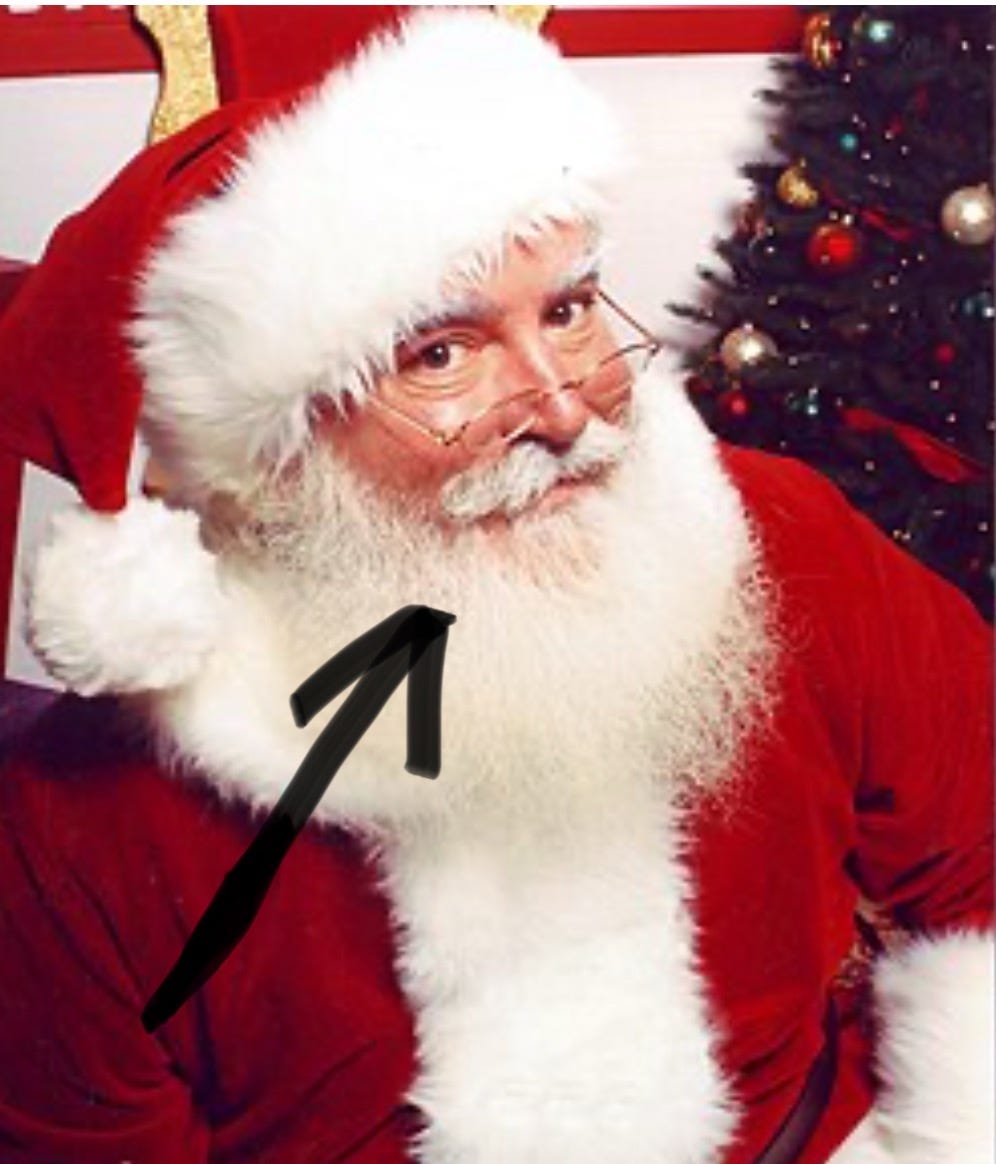
My suggestion is The Santa Fallacy.
It is short
Everyone knows about Santa
Most at one time believed in Santa
Precisely because of The Santa Fallacy!
Nearly all stop believing in Santa
Often with a degree of a jolt
(One of the pieces of “proof” had been a certainty that their parents wouldn’t lie)
In a flurry the mechanism of the fallacy gets a strong light shone on it.
Inferential “proof” founded on a presumed (indoctrinated) hypothesis is shredded.
We learn that, though things we experience seem to fit with a story, the story may be completely false and there may have been different explanations for all the things that seemed to fit with the story.
We believed in Santa because lots of pieces of evidence fitted the story we were told.
We often felt a degree of certainty which meant naysayers seemed upsetting.
It seemed proved in so many ways. And ALL the grown-ups insisted it was true. Television, books, films, teachers, relatives…
The notion that ALL these people might be mistaken or lying seemed too ridiculous to consider.
The presents arrived under the tree. The carrots or cookies went.
We even saw him in person at the school fetes.
The “evidence” seemed insurmountable.
EVERYTHING everywhere (except naughty cousin Colin) affirmed the results were “proving” the story.
But they weren’t. The story was pure fiction.
As Dr Mike Yeadon puts it
Just because evidence is compatible with a theory - this does not mean it is evidence for it.
*with a few words changed
We believed in viruses because lots of pieces of evidence fitted the story we were told.
We often felt a degree of certainty which meant naysayers seemed upsetting.
It seemed proved in so many ways. And ALL the experts insisted it was true. Television, books, films, teachers, relatives…
The notion that ALL these people might be mistaken or lying seemed too ridiculous to consider.
The cells died and broke down in the tissue culture experiments, the viruses could be invented assembled “sequenced” from the chopped up metagenomic mix-provenance soup
we even saw them in the electro micrograph on our screens and pages, and in great 3-d detailed pictures. You know, some with those spikes…
The “evidence” seemed insurmountable.
EVERYTHING everywhere (except conspiracy scientists) affirmed that the results were “proving” the story.
But they weren’t. The story was pure fiction.
As Dr Mike Yeadon puts it
Just because evidence is compatible with a theory - this does not mean it is evidence for it.
the safe pair of hands behind Dr Mike Yeadon s Telegram chat channel:
https://t.me/DrMikeYeadonsolochannelChat
And the rest of the team of admins.
She pointed out to me that even my supposedly simplest statements are largely incomprehensible to the people she tries to share them with - largely because of jargon
which through constant repetition have become casual to me.
All help welcome!
Warm thoughts
Tim
No posts
Comments
Nothing yet. Say the first thing.
Sign in to join the conversation.