
The matter is delicate: therefore the comments on this post are disabled this time. Valentina
THE RHYTHM IS OUR ROOT
THE MOVEMENT IS OUR PRAYER
THE MEMORY PULSES THROUGH OUR BODY
COMMITMENT LIVES IN OUR HANDS
AND LIGHT RISES WITH EVERY STEP
WE ARE THE FLAME THAT REMEMBERS
THE VOICE THAT CARRIES HEALING INTO
WE ARE HERE
WE ARE NOVA
WE ARE THE TRIBE OF NOVA
The dark history of the twentieth century binds Germany to Israel. But there’s also a brighter twenty-first century connection—between Berlin and Tel Aviv. A living bond, built on youth moving back and forth, on techno beats and trance rhythms, on clubbing, dancing, and a vibrant zest for life. Before the pandemic—and before October 7th—the Tel Aviv–Berlin route was almost a weekend ritual. Two or three days of minimal sleep and maximum living.
Many came to Berlin and stayed: some for a semester, others for years, a few for a lifetime. Berlin is home to one of the largest Israeli communities in the diaspora. At least ten thousand live here—some say closer to thirty. They’re mostly young, secular, educated, and often of European origin. They come to work in startups, to study, research, to make art, to open restaurants. Some come to escape Tel Aviv’s cost of living—or its politics. Back in 2015, when millions arrived in Germany from the Middle East, newspapers described Israelis in Berlin as part of a parallel exodus: quieter, less visible, but steady.
Berlin is also home to Europe’s largest Palestinian community. And though it may sound hard to believe today, Berlin was once seen as a greenhouse for peace—a city where Israelis and Palestinians could meet beyond their conflict. This is part of Berlin’s genius: its openness, its cultural courage—something the rest of Germany should perhaps admire more than judge.
It has fostered unexpected encounters, empathy, and new forms of identity.
You could see it at the Gorki Theater, where Israeli and Palestinian artists share the stage with Turkish, Armenian, Yazidi, and Syrian voices. At restaurants like Kanaan, an Israeli-Palestinian establishment that had become a proud landmark in my neighborhood, Prenzlauer Berg.
Then October 7th happened. Kanaan emptied, plunging into an ongoing crisis. Yet despite polarized thinking, we’ve witnessed Israelis and Palestinians continue to demonstrate together, create culture together, collectively remember while preparing for a possible future. That, too, is Berlin’s essence. A place of redemption and possibility—where memory is preserved like nowhere else in Europe.
It could only be Berlin, the sole European city hosting October 7, 06:29 AM – The Moment Music Stood Still from this week until November.
An exhibition commemorating the Nova music festival massacre, previously shown in Tel Aviv, New York, and other North American cities. It’s an exhibition about people—who resemble those we pass daily in Berlin—their trauma and loss, but also their healing journey. How they’ve transformed the spirit of a rave party into a movement for renewal.
From Tempelhof Airport to Re’im
The Tempelhof airport hosts the exhibition. It is also a place of multiple memories, as many in Berlin.
It was built a century ago, often considered a pure Nazi relic because of its architecture. But Tempelhof is actually a child of the Weimar Republic, inaugurated in 1923. In 1948–49, it became the lifeline of the Berlin Airlift, the place from which West Berlin was kept alive during the Soviet blockade. Today, the old runway is a vast urban park, while parts of the terminal house one of Europe’s largest refugee camps.
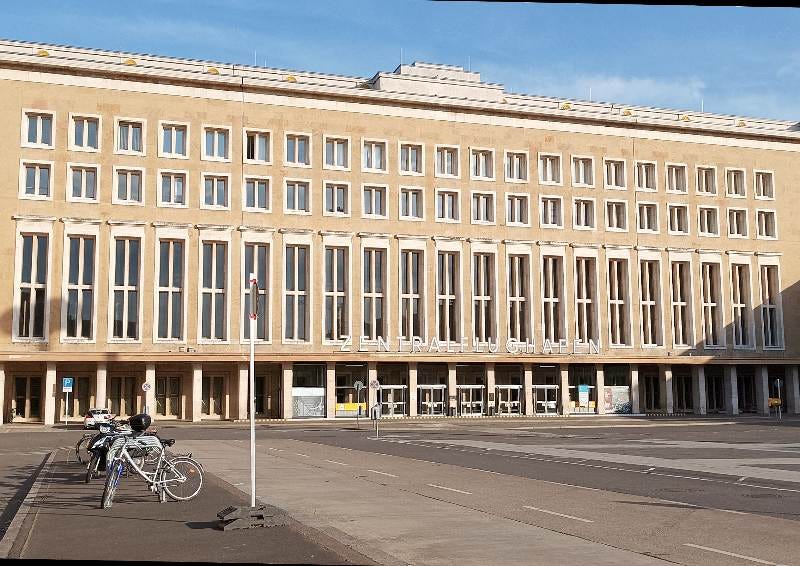
And then there’s the old departure hall—grand, dim, often used for conferences or art installations. A space I know well. Welcoming, though always a little shadowy.
When I enter this time, I barely recognize it.
The hall is darker than ever—like a techno club. Beams of light slice through haze and vapor. Once your eyes adjust, you see it: the reconstruction. Trees, tents, a bar counter, camping chairs, carpets, burnt-out cars. Clothes and glasses scattered on the ground.
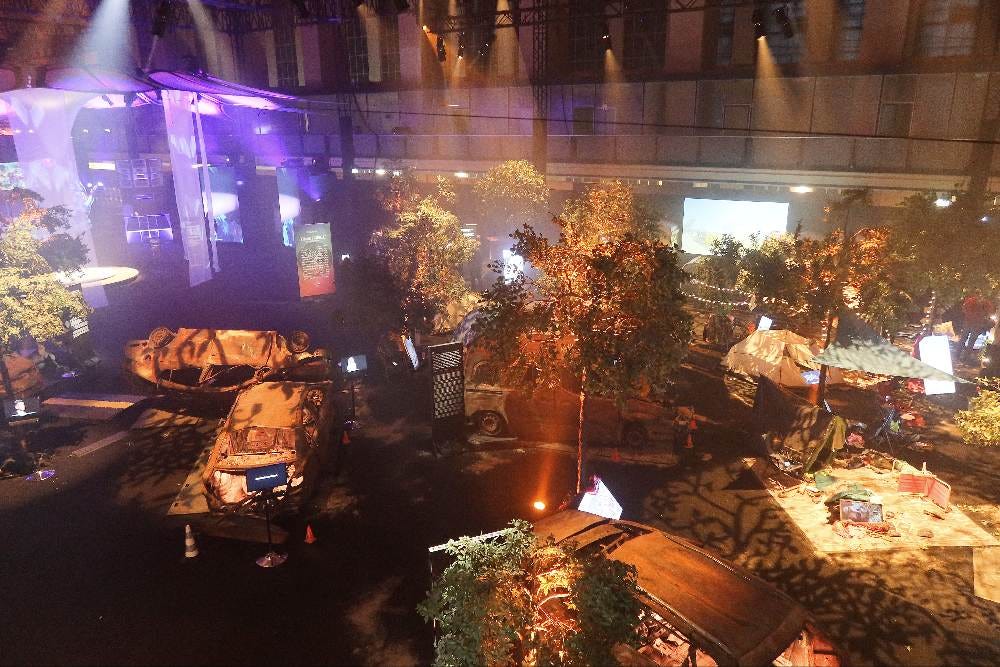
It’s a faithful recreation of the site near Kibbutz Re’im, where the Nova Music Festival took place. There’s no set path—only a first station with a short video about rave culture.
“The whole night you prepare yourself for that second when you’ll raise your head towards the sun and give thanks to creation. To Mother Earth... it’s impossible to put into words... You transmit all the energy you’ve built up within yourself... to whoever is next to you.” — Achiya Malul, Nova Festival survivor
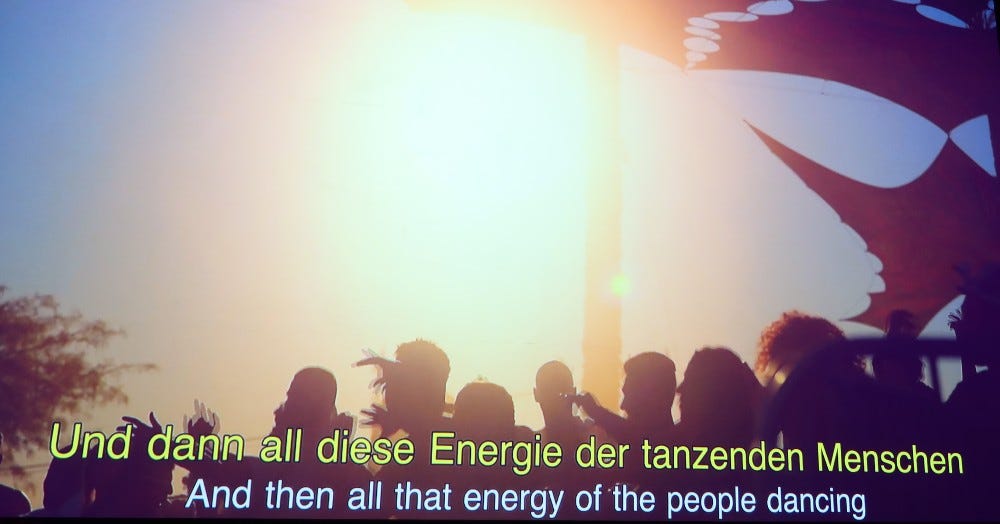
Perhaps Berlin is the one city that doesn’t need this introduction, but it’s worth remembering: rave culture celebrates life—ecstatic, collective, peaceful by nature.
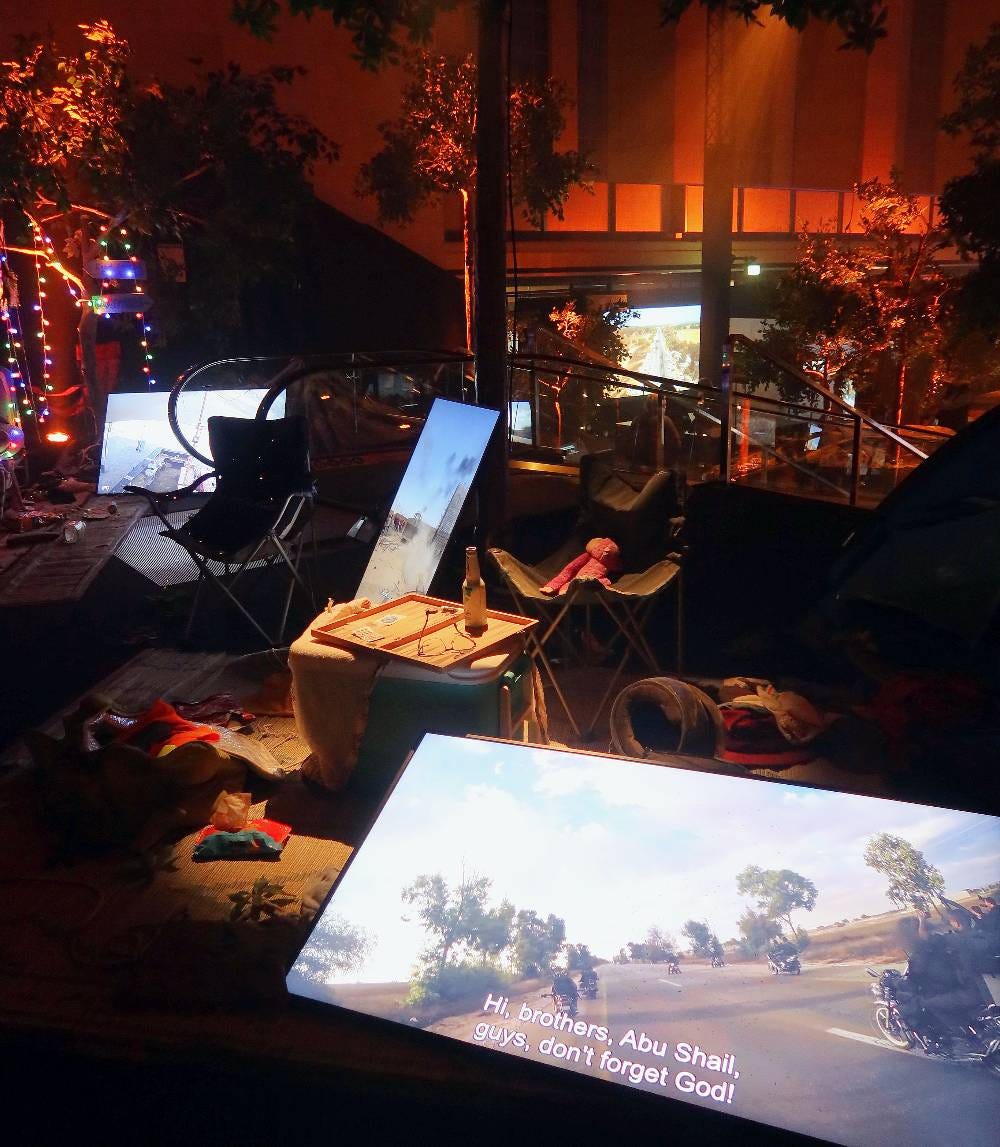
Beyond that point, you’re free to move as you wish, once your eyes adjust to the dark. Among trees, objects, photos, panels, videos—many of which we all saw in those first days, and too many of us have forgotten in the months and years since.
Then your ears begin to adjust. Every speaker, every screen, every station plays at once. Music, screams, prayers, gunshots. The sound of destruction, of panic, of people pleading for help—and others reassuring them.
The immersion is intense. At first, you want to isolate yourself and not listen. Then inevitably, as you walk among the installations—invited to touch them—you begin to listen with greater attention and focus.
Some phone calls are impossible to forget.
One captures a terrorist calling the parents of his victim—using the victim’s own phone. He boasts about killing ten Jews. “Look how many I killed with my own hands,” he says. “Mom, your son is a hero.” And his parents praise him. “I wish I was with you,” his mother replies.
You turn away, walk a few steps, and hear another call. A very different one. “They shot me, Mum, and I’m bleeding.” “I’m with you, sweetie. Everything will be fine. We’re going to the hospital. You’ll be fine.” “Mom?” Then silence.
Romi Gonen was captured moments later, her friends shot beside her. She was released in January 2025, together with Emily Damari and Doron Steinbrecher, as part of the hostage deal.
More voices follow. Some are from those who filmed themselves that morning—hiding, fleeing, whispering for help.
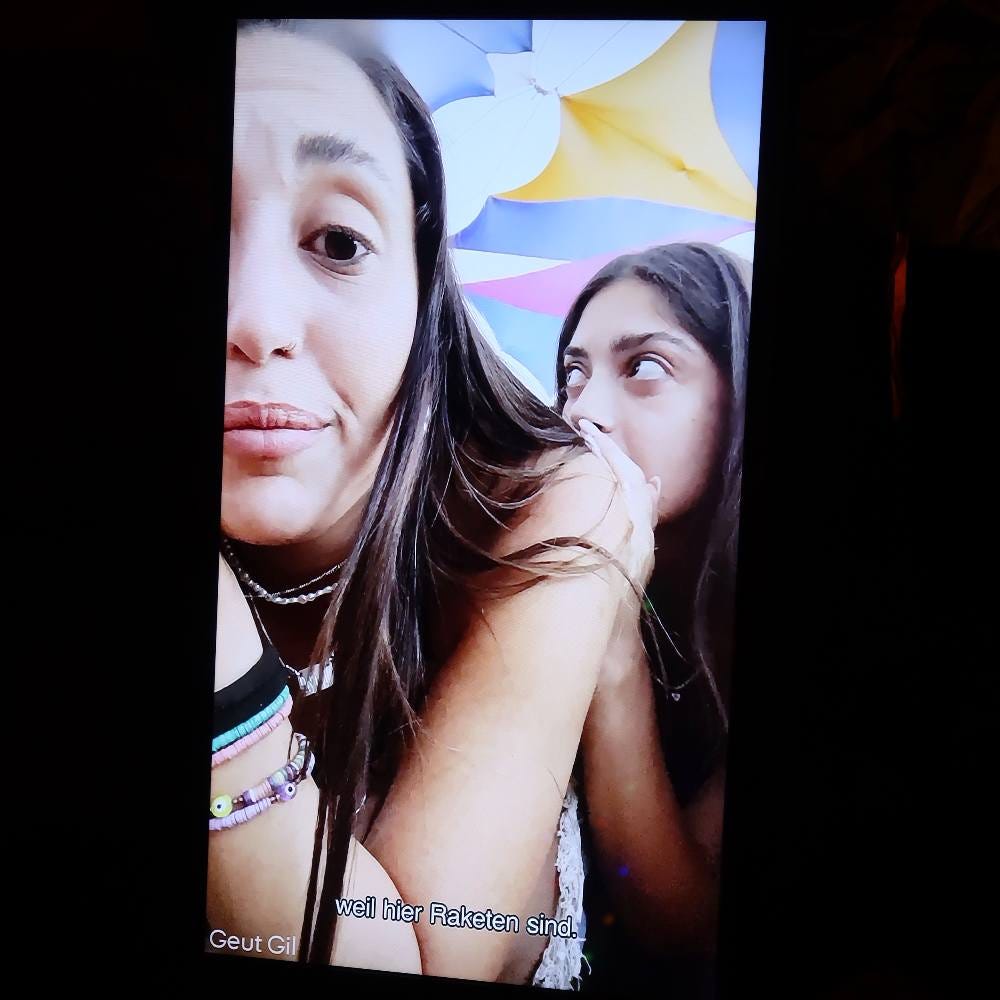
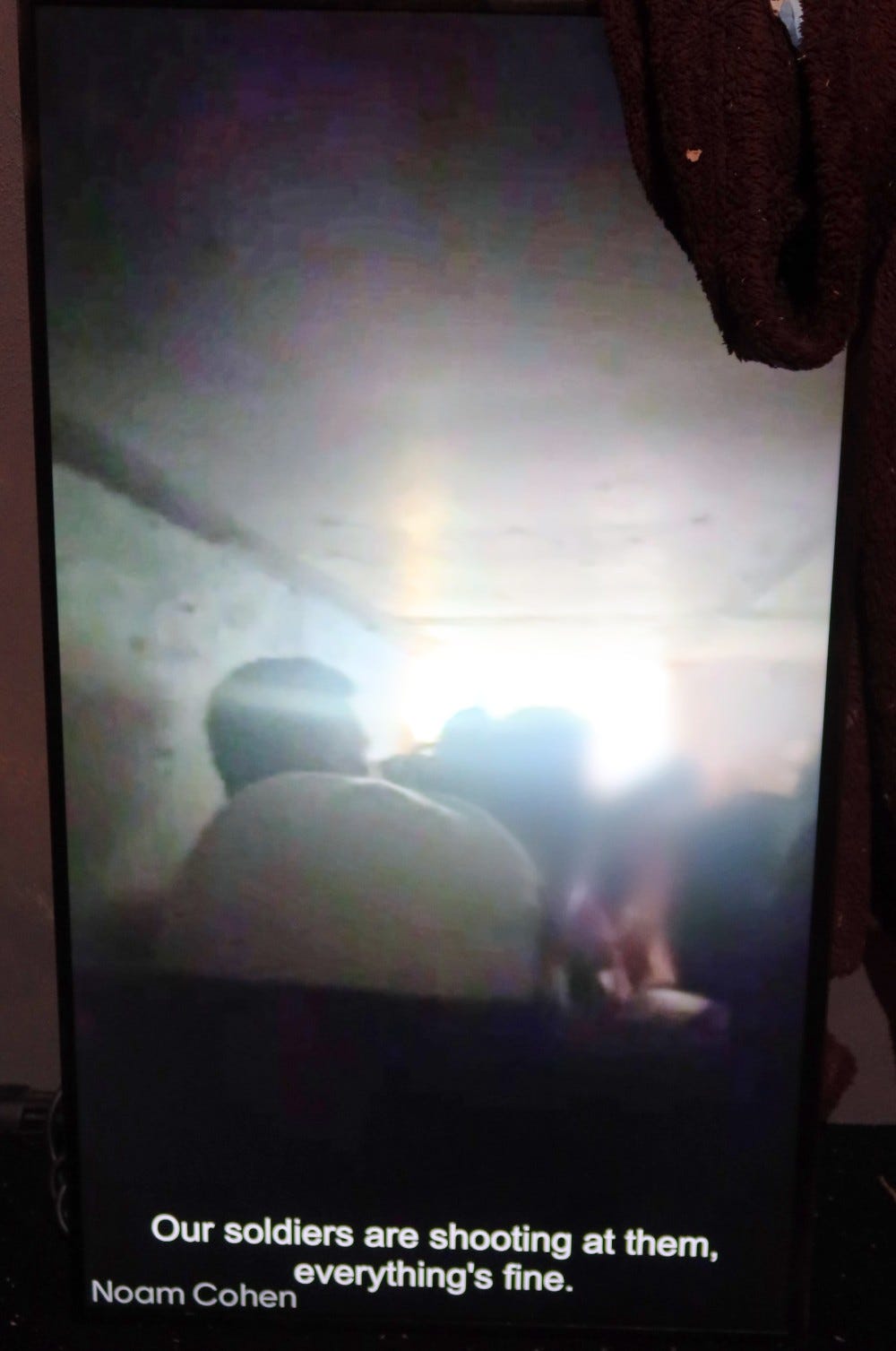
Some locked themselves in refrigerators behind the bar, waiting for hours in the dark. When they finally emerged, they walked on corpses. Under those corpses, someone was still alive—like the young woman who performed at Eurovision this year, only to be insulted and threatened again. Apparently, she had no right to survive.
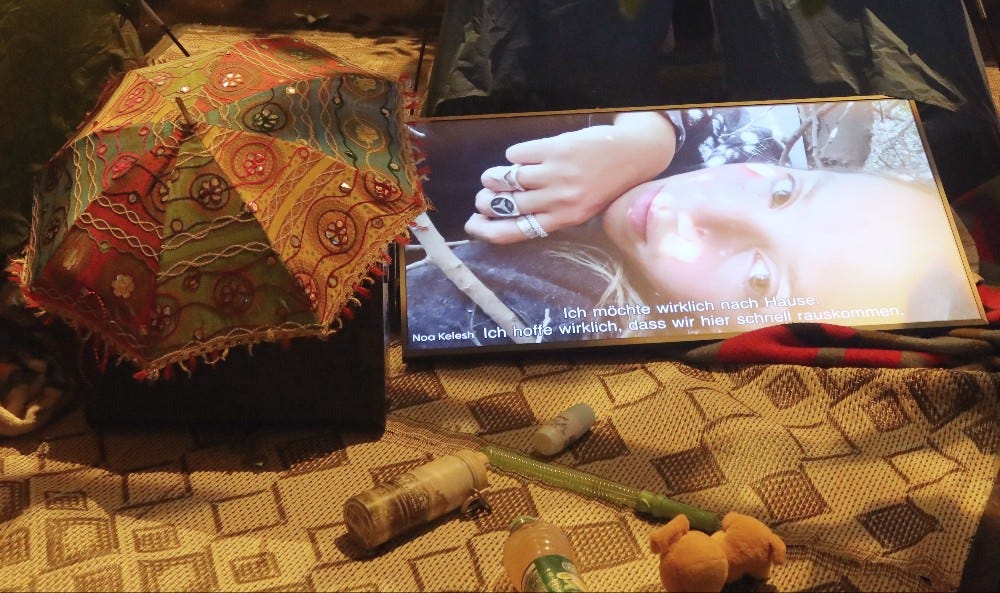
There are also testimonies from those who came later: the rescuers, the people who gathered the living and the dead.
“The images I saw there, I won’t get them out of my head for all eternity. Not every day do you see young people who are chained to trees. Young women lying naked with their legs spread. And I untie them and cover them. Cover these wonderful young women and say the Shema Yisrael for all of them.” — Rescuer
There is a full report documenting what was done to the girls and boys of the Festival and the nearby kibbutzim. I won’t quote a single line from it here. That document was eventually included—after unbearable delay—in the UN report. It’s available online, if you wish to read it. Two months later, on November 25th, the International Day for the Elimination of Violence against Women, women who tried to march in Paris and Milan for the victims of October 7th were stopped. Their signs confiscated. Their presence unwelcome. I wrote about that day. It was the day feminism died—its ideals suddenly conditional.
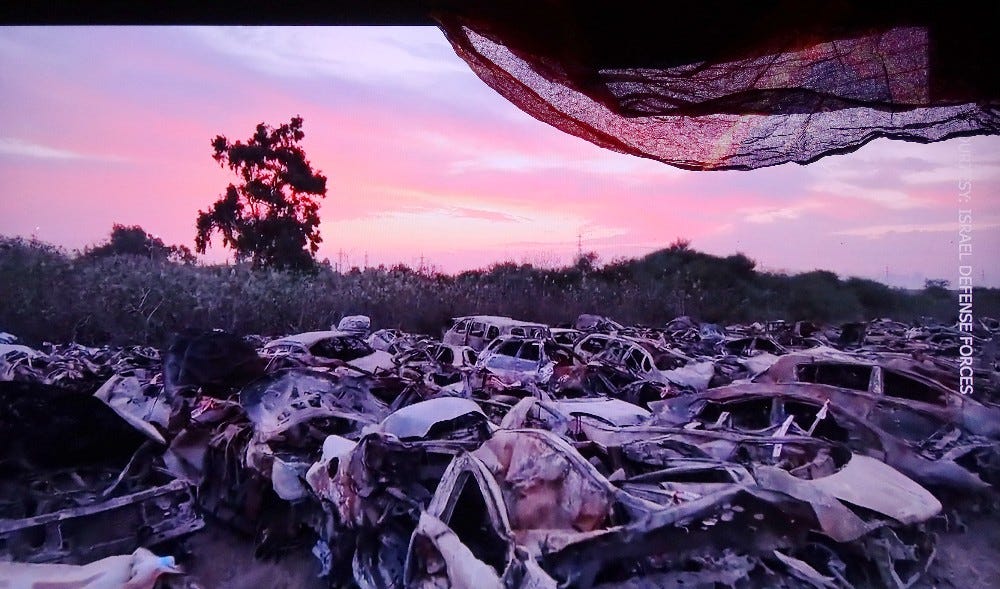
You keep walking through the hall. The darkness and the sounds no longer disturb you. You begin to see everything clearly, hear everything fully.
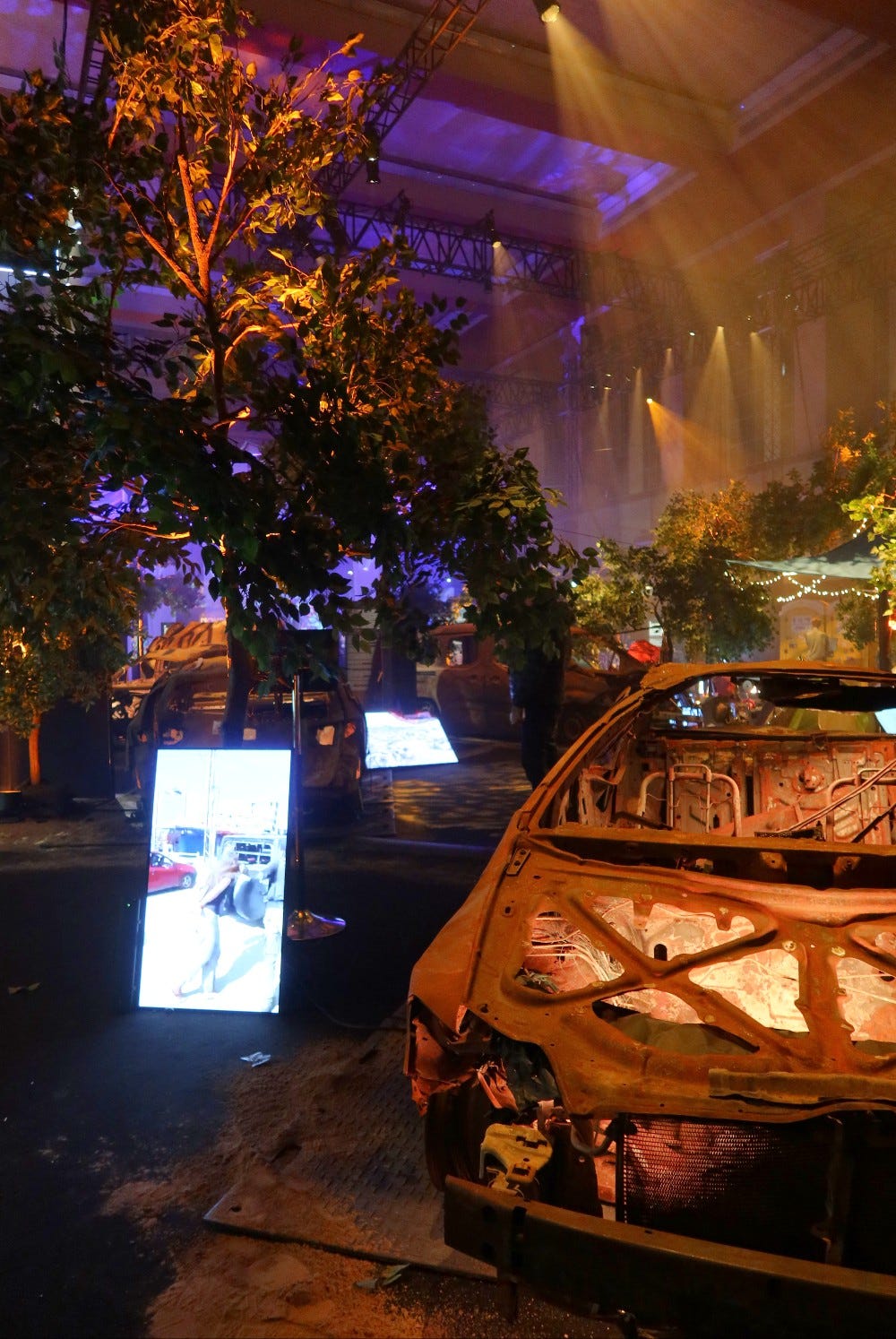
Panels list the names and faces of the murdered, and of those still held in Gaza. Many are young people who could be my team members, my friends, my children. And in a way, they are: as I read their names and look at their faces, I realize I know many of them, even by name. These two years have left their mark—at least in those who still have heart and memory.
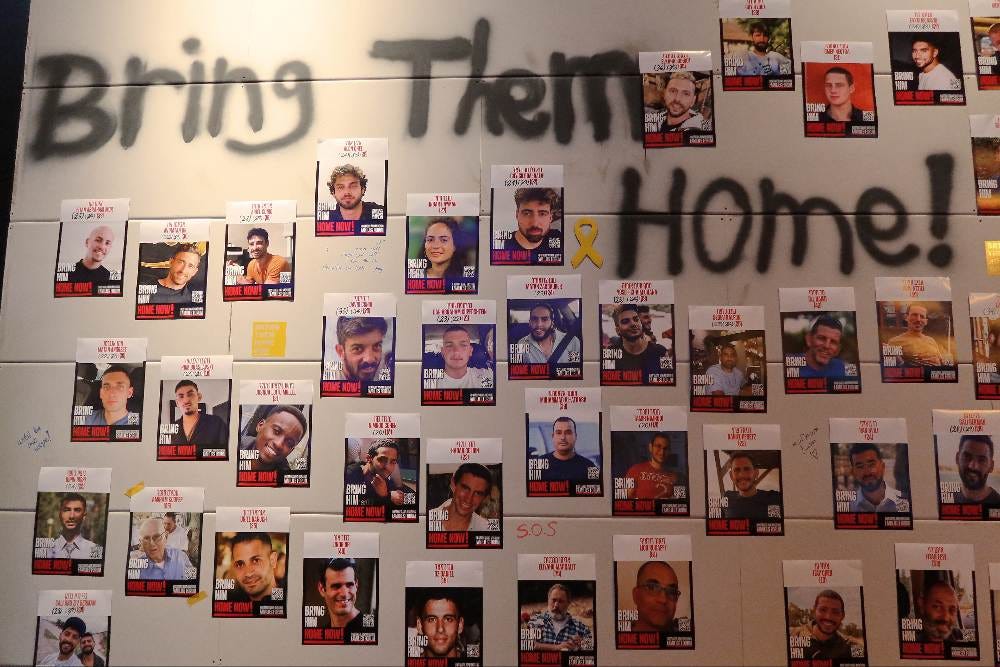
Then the last display: rows of recovered objects. Shoes, especially. It’s impossible not to think of other museums, other memorials.
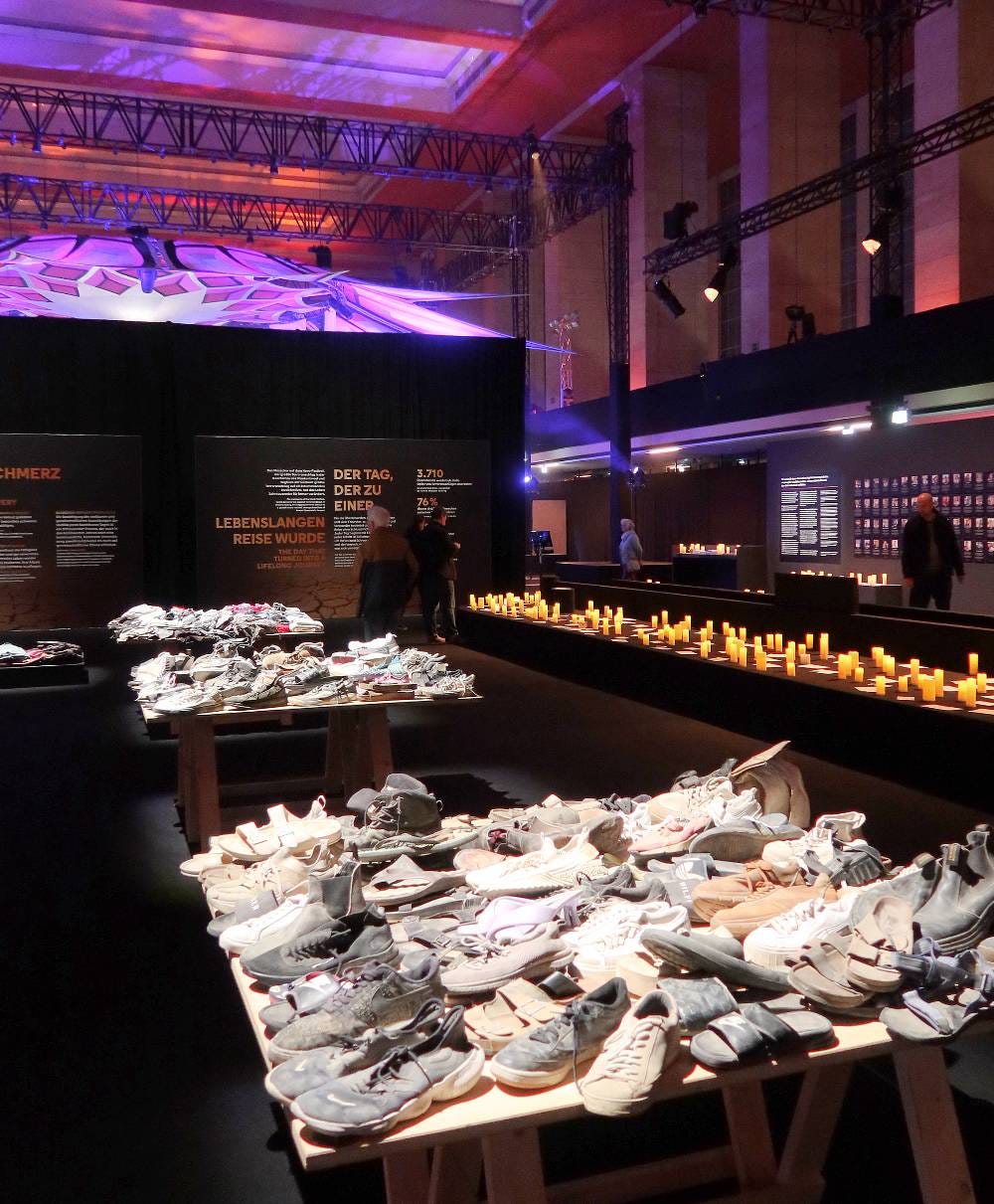
You lift your eyes and notice a clock—one of those from the airport days—stopped at 6:29 AM. The moment the massacre began.
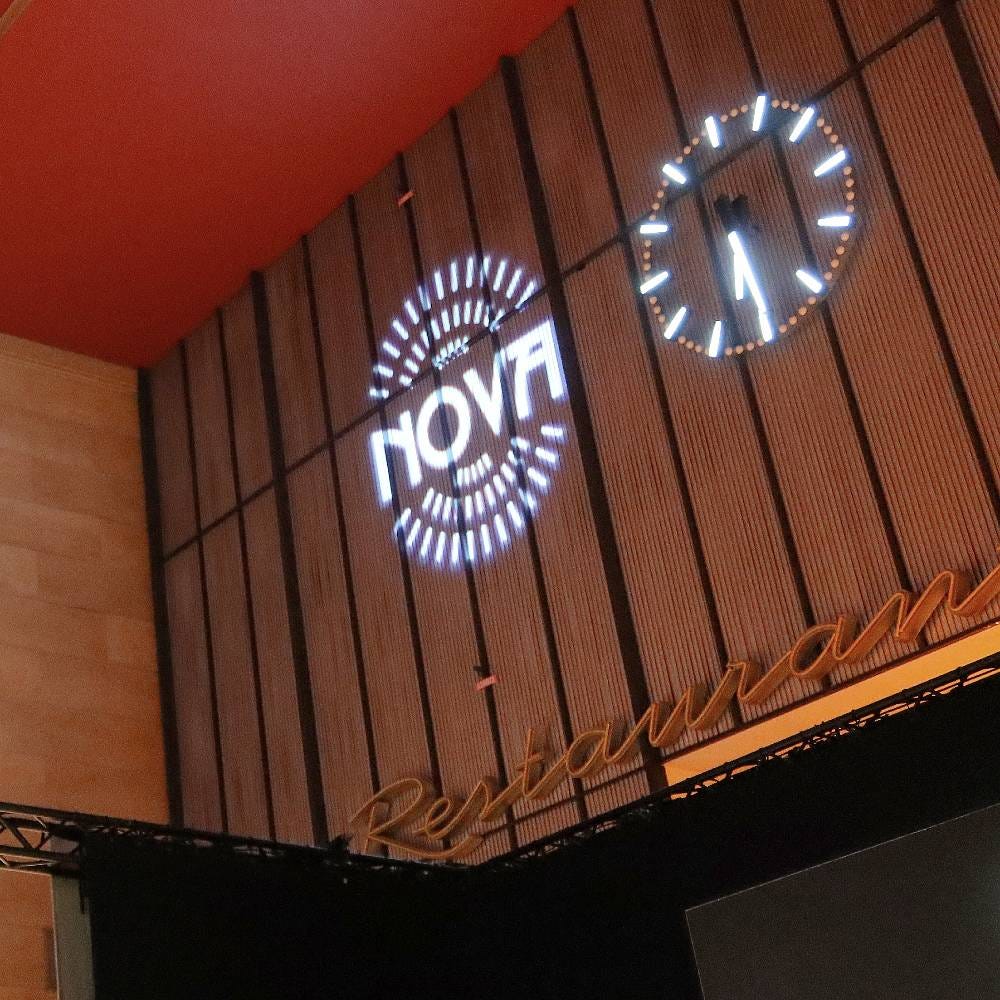
But time hasn’t stopped. It never does. You understand this near the end of the exhibition, where panels tell how the Nova tribe has transformed itself: a network for post-traumatic healing, a community, a foundation promoting a new kind of rave—ecological, respectful, communitarian.
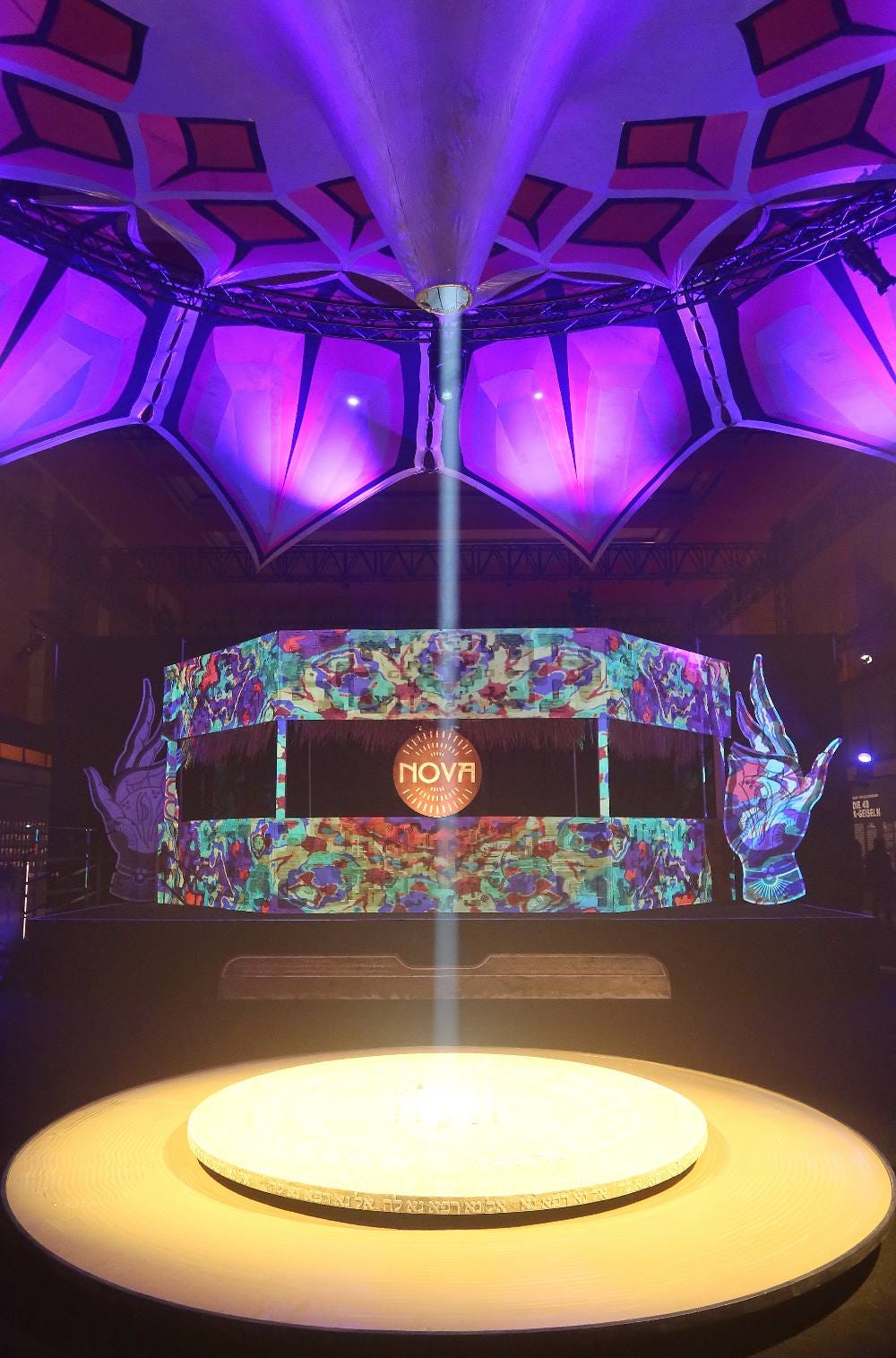
A project for the future. A future for those who love life and celebrate it through dance. A future open to everyone.
And as I write, that future begins to take shape: in Tel Aviv and Gaza, where both people rejoice.
Perhaps one day, they might learn to dance together. In mutual respect. In justice. Dancing together—as people once did here, in Berlin. And as it’s time to do again. Now, or never.
THE WORLD MUST KNOW:
NOVA IS NOT JUST A TRAGEDY.
IT IS A BEACON OF HOPE,
TESTAMENT TO RESILIENCE
& THE POWER OF COMMUNITY.
BOUND BY SHARED TRAUMA,
WE CARVE A PATH OF HEALING.
FROM THE CHARRED STUMP,
EVERGREEN BRANCHES RISE.
OUR ACTION IS AN ENDURING VOW.
OUR EXISTENCE IS THE FUTURE WE ALL SHARE.
STEP WITH US. LET OUR SPIRIT BE ONE.
Together
WE WILL DANCE AGAIN
The Exhibition Tickets are available now at novaexhibition.com. The exhibition is open from 7 October until 16 November 2025, Tuesday to Thursday from 11am-8pm, Friday from 10am-6pm, and Saturday and Sunday from 11am-8pm. Public conversations with survivors and family members take place daily at 1:30pm and 5:30pm. Location: The Nova Music Festival Exhibition Berlin; Entrance hall of the former Tempelhof Airport, Platz der Luftbrücke 5, 12101 Berlin.
“Between killing and dying there’s a third way: live”
― Christa Wolf, “Kassandra”
Comments
Nothing yet. Say the first thing.
Sign in to join the conversation.