
Suffering is one of the great themes of every human being’s life, and learning to cope with it is one of the great aspirations of virtually every philosophy known to man. No matter how much you make, where you live or who your friends are, it is inevitable: suffering will find you.
The Medieval philosopher Boethius knew a thing or two about suffering. And his masterpiece, The Consolation of Philosophy, addresses one of the fundamental questions of humanity: how should we respond in the face of suffering? And, even more specifically: how can philosophy help us cope in the face of great personal loss or tragedy?
I started Aquinas and Beyond to help everybody better understand Catholic philosophy. This is a free post, but premium subscribers are becoming thoughtful, well-formed Catholic intellectuals through:
A guided tour through the ENTIRETY of Thomas Aquinas’s Summa Theologiae, which you are reading right now! Don’t miss out on forming your mind according to the Universal Doctor of the Church!
Founding Members get a FREE copy of my Catholic Philosopher In A Year Reading Plan, my ultimate reading list to get up to speed in Catholic Philosophy.
Blogs on the philosophy of religion (God, evil, free will, etc.) like this one about art and the problem of evil.
Reader’s Guides on the great works of Catholic philosophy, like last month’s guide on Jacques Maritain’s Art and Scholasticism.
Further reading recommendations on many posts, including free posts.
Stop feeling confused in deep Catholic conversations and start thinking like a Catholic philosopher.
At one point in his life, Boethius was one of the most esteemed men of Western Europe. A descendant of Roman aristocrats and living during the time of the Ostrogothic kings of Rome, he used his learning to translate and teach Greek philosophy to the Western world. He was especially interested in logic, and gained a reputation as an incisive thinker and highly virtuous man.
This reputation led to what should have been the crowning achievement of his life. Boethius was promoted all the way up to the royal court of the Ostrogothic king, Theoderic. But it was not to last: soon after his appointment, Boethius was accused of treason and magic. Many suspect this accusation was actually a response by those who disliked Boethius’ criticisms of corruption in the royal court. But whether it was due to jealousy or truth, this accusation led to Boethius’ beheading.
It also helped create one of the greatest works of philosophical literature ever written.
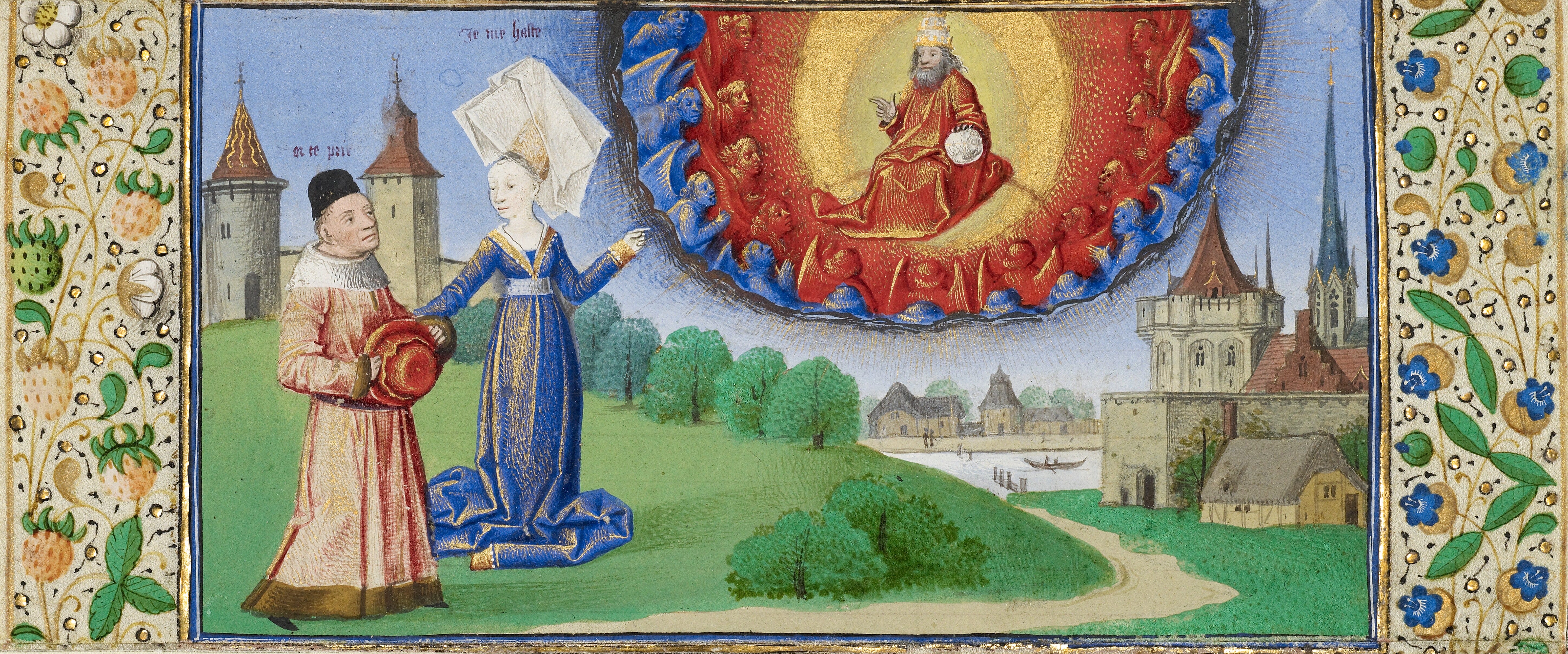
The setting of The Consolation of Philosophy is striking. Fresh off of the greatest loss of his entire career, Boethius is sitting in jail, weeping, when a beautiful woman appears. She is none other than Philosophy incarnate, and she has appeared to help Boethius. And so, as any trained Platonic philosopher would, Boethius embarks on a dialogue with Lady Philosophy on the topic of suffering.
Boethius has lost much: his job, his wealth, his reputation and, probably, his life are all in grave danger. But Lady Philosophy does not see this as reason to mourn. Instead, she points out that it is silly to base your happiness on things that can easily be taken away from you. While it is true that Boethius had lost many personal comforts he once had, Lady Philosophy argues that he never should have counted on them in the first place; physical possessions are definitionally fickle. After all, wealth, reputation and pleasure often come and go with little correlation to their possessor’s actual worthiness of those things. This makes worrying about them a foolish venture.
That may not seem to be a very good consolation to come from philosophy, but Lady Philosophy continues, and her suggestion for where to find true happiness constitutes the actual “consolation.” Far better than worrying about material goods, says Lady Philosophy, is to concern yourself with the things of real value: family, virtue and, ultimately, God.
Lady Philosophy points out that, through philosophy, we can identify what we can ultimately rest our trust in: God, and his care for us in both this life and the next. While depending on wealth, power and pleasure may feel good at times, Lady Philosophy argues that only a happiness that rests on God is truly secure, or genuinely valuable in the first place.
Lady Philosophy argues that Boethius really has no need to mourn at all; God directs all things according to his will, and if Boethius trusts in God and seeks relationship with him instead of pursuing worldly comforts, such things cannot be taken from him by anybody.
Introducing God allows Lady Philosophy to point out that God loves Boethius, and directs all things to the good. If God has seen fit to remove certain goods from Boethius’ life, why should he complain? Instead of mourning, Lady Philosophy thinks that Boethius should strive to dive deeper into a relationship with God, and trust that He knows what Boethius truly needs.
While much of Boethius’ argument may be consoling to some, there is a problem. As described by Boethius scholar John Marenbon, the issue is that this argument “fails to explain…how the individual human, such as Boethius, is supposed to relate to the perfect happiness which is God. Philosophy seems to speak as if, merely by knowing that God is perfect happiness, Boethius himself will be rendered happy.”
But such a description obviously does not work on its own, as evidenced by the very fact that this explanation does not seem to fully satisfy Boethius. Despite knowing that God is the only true good and the only foundation of true happiness, Boethius’ problems are not solved. After hearing Lady Philosophy’s argument, Boethius is still not persuaded that he has nothing to regret in his loss.
This is not the only gap; many scholars have pointed out that Boethius’ argument seems to have several holes, inconsistencies and outright incoherencies. In other words, they just do not seem to work like they are supposed to. So what gives? Why did an expert philosopher write a book where philosophy attempts to provide consolation but fails to give a completely satisfactory solution?
The answer lies in Boethius’ other profession.
Boethius clearly shows that philosophy has a few basic materials to help someone through suffering. But its solutions are not perfect. In fact, they are arguably downright hollow. But aside from being a philosopher, Boethius was a theologian, too. He knew that philosophy was not sufficient on its own. On Boethius’ own thinking, confidence in the face of suffering requires faith in God’s providence. But that faith must be grounded in an actual knowledge of and relationship to God.
Without that, philosophy’s arguments are just that: hollow arguments that fail to really convince. While it might be true that God is where happiness is found, by philosophy alone God is not something, or someone, who we can access. It is only through theology, and through Faith, that we can really come into contact with God. And from that relationship, we can rest confident that, no matter the depths of our suffering, we are loved and taken care of by someone who is far greater than wealth, power or fame. In fact, Boethius’ own work ends with Lady Philosophy and Boethius discoursing about the nature of God, seeming to move into the direction of theology because they are not content to stick with philosophical reflection on the nature of worldly comfort.
Thus Boethius’ book, while a fantastic text of philosophical argument, is also a demonstration of the limits of philosophy. Fortunately, as a theologian, Boethius knew that philosophy was not all that we had. Where philosophy helps us to know who the solution is, it is through Faith that we can truly attain that solution in knowing and seeking God.
I am writing these blogs between teaching theology classes and playing with my kids. So, to put it bluntly, my time is not cheap. Please consider becoming a paid subscriber to help support my work and make it possible for more people to learn Catholic philosophy:
Comments
Nothing yet. Say the first thing.
Sign in to join the conversation.