
Calmness is a buildable skill shaped by biology, context, and thought. This post covers the science behind how calm works and how to cultivate more of it in your work and life.
Where we left off
In Part 1, we explored how calm has been undervalued in Western wellbeing research and what global data reveals about who gets to experience calm, and why. The short version: calm is globally valued, but not equally accessible. Access depends less on personality or culture than on values, safety, security, and circumstance.

In this post, we cover why practicing calm matters, the key theories that explain how calm is built, and most practically, five evidence-based routes to calm (some of which might surprise you) that you can use with yourself, your people and your team, clients or students.
So, what actually is calm?
Calm is not a personality trait. It’s not something some people have and others don’t. It’s a buildable skill, and understanding what it actually is changes how we think about cultivating it.
Calmness is defined as peace of mind, tranquillity, and being free from agitation, excitation, and disturbance. It can be found through relaxation, but also in more alert, attentive states. Importantly, calmness isn’t merely the absence of anxiety and stress. It is a positive state in its own right, with both a psychological and a physiological dimension. In a state of calm, the body produces fewer stress hormones, emotions are stabilised, and our capacity for connection, clear thinking, and good decision-making is enhanced.
Calm has two distinct dimensions:
Our physiology: Calm lives in our parasympathetic (“rest and digest”) system - the counterpart to the sympathetic “fight, flight, freeze” response that activates when we face threats (real or imagined)when we’re driven to accomplish goals, or when we’re motivated and excited. Low-arousal positive states like calm become accessible when we’re safe, settled, and not striving.
Our psychology: The way we think about and interpret the world impacts our access to calm just as much as what’s happening around us.
Why it matters: what calm does for us
Our nervous system’s stress response is a necessary survival mechanism. We need it. It helps us perform, respond to emergencies, and face challenges. The problem isn’t stress itself; rather, it’s chronic activation without recovery.
The modern world is not kind to our nervous systems. Speed, constant information, and a culture that values hustle over rest create an enormous cumulative burden. Our systems activate in response to non-life-threatening situations that happen every day: traffic, relationship difficulties, financial pressure, workload, overwhelm. When our nervous system is repeatedly activated without relief, it takes a toll on us psychologically and physiologically. Research suggests that chronic stress can contribute to higher blood pressure, anxiety, depression, and addiction.
We become more reactive, more depleted, more prone to states like languishing and burnout.
On the other hand, a state of calm has been linked to reduced stress and anxiety, improved physiological health, enhanced cognitive function and focus, better sleep quality, resilience, and stronger relationships.
Our goal isn’t to eliminate stress, excitement or activation. It is to balance these states with recovery. By cultivating a calming practice, we can actively give ourselves what we need to restore, face challenges and bounce back, cope with stressful situations, and feel well and able.

How calm is built: the key theories
Understanding the mechanisms behind calm helps us choose the right tools and explains why some people find calm so much harder to access than others.
A useful framework for understanding calm
Professor Paul Gilbert, founder of Compassion Focused Therapy (CFT), proposes that we have three evolved emotion regulation systems:
A threat system to manage threats, protect, and survive: activated by fear, anger, and anxiety
A drive system to seek resources, achieve goals, consume, and accomplish tasks: activated by excitement, motivation, and striving
A soothing/contentment system to slow down, rest and digest, recover, and socially bond: activated by safety, grounding, kindness, validation, care (and where calm lives)
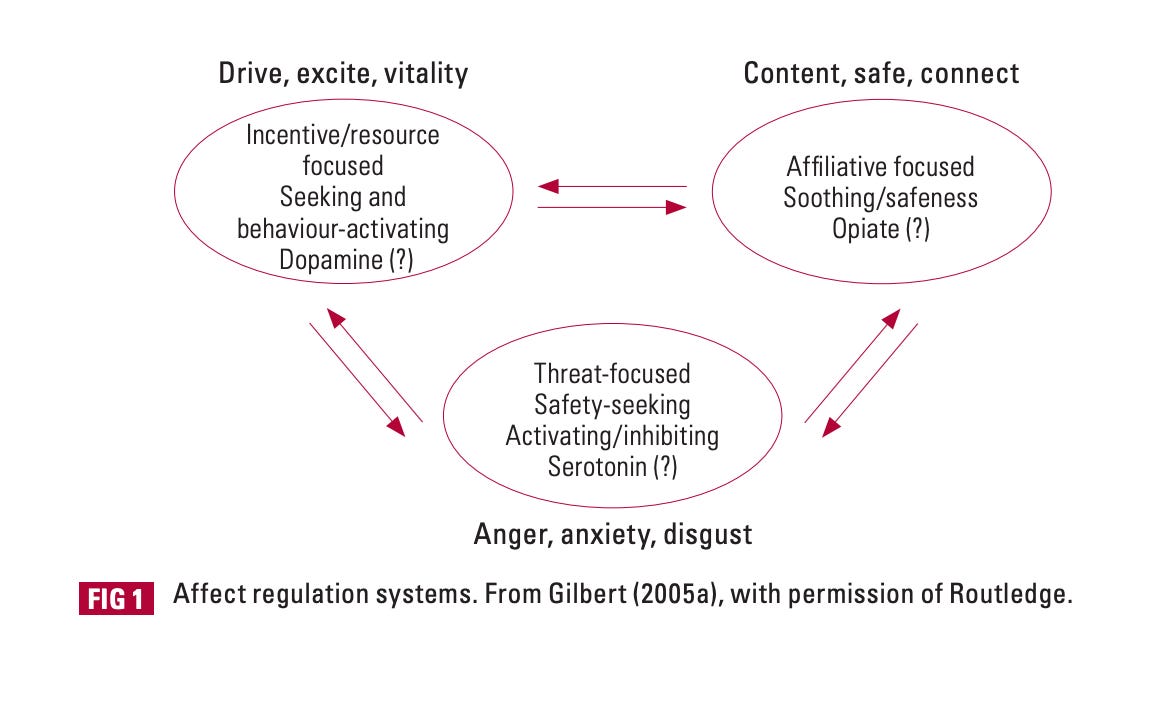
When we feel safe and are neither defending against threats nor striving to achieve, we can settle into the soothing system: experiencing calm, contentment, and connection. It is this system that signals safety and provides relief.
There’s something worth sitting with here. The way a parent soothes a child is thought to be the original template for what calm feels like in the body. Calm isn’t just an internal state. It’s fundamentally relational. (Gilbert, P 2005).
One important caveat: for people experiencing anxiety, burnout or chronic self-criticism – often as a result of trauma or neglect - accessing calm might not feel safe, and can actually feel destabilising. For these individuals, gently building a capacity for calm over time matters more than any specific technique.
Calm as perception
A reframe that can be quite impactful is that calm isn’t only a physiological state. It’s also perception. Lazarus and Folkman’s Stress & Coping Theory proposes that:
Calm arises when we appraise a situation as manageable and believe we have the resources to cope
Stress arises when we appraise a situation as exceeding those resources.
How we interpret a situation shapes how our body responds to it, which presents both a challenge and an opportunity. We can change our appraisals. We can build agency and resourcefulness. Relaxing the body isn’t the only pathway to calm.
Calm as regulation
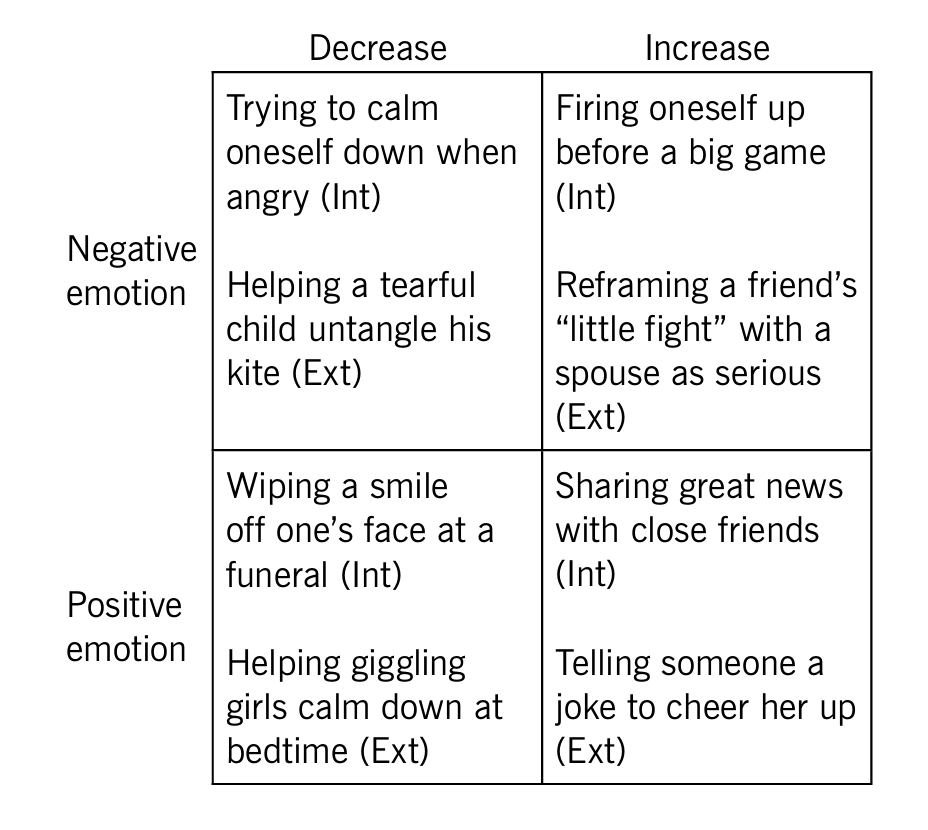
Building on this, emotional regulation – our ability to monitor and adjust our emotional responses – is another key piece of the puzzle. The evidence here is striking. Intervening before the stress response has fully fired is significantly more effective than trying to manage big emotions after they’ve taken hold. (James Gross’s Emotion Regulation Theory)
Cognitive reappraisal (changing how you interpret a situation rather than suppressing your response to it) is one of the most consistently supported strategies across research, tied to lower physiological arousal, better mood, and less rumination. Suppression tends to backfire as it reduces outward expression while maintaining or increasing internal stress. (Webb et al., 2012)
If we can intervene before the stress response has fully fired it is more effective and less effortful than trying to manage big emotions after they’ve hijacked us.
Calm as Mindfulness
(caveat mentioned in route 5 below)
Mindfulness-Based Stress Reduction (MBSR by Jon Kabat-Zinn) is one of the most well-researched pathways to calm, with strong evidence for reducing stress, anxiety, and emotional reactivity. Through sustained practice, mindfulness builds attention regulation, non-judgmental awareness, and the capacity to observe thoughts and feelings without being overtaken by them, and has been linked to increasing low-arousal positive states (feeling calm, relaxed, and content
With practice, mindfulness is a well-established way to access calm and peace of mind.
Across these theories, we can get a sense of the conditions for calm:
A functioning soothing system
A perception that a situation is manageable
The capacity to regulate intense emotions when they arise
The ability to let thoughts pass without excessive attachment or judgement.
A key takeaway: these aren’t automatic traits we’re born with, but are all buildable skills.
Evidence-based pathways to calm
There are broadly two directions of travel:
Bottom-up: calming the body calms the mind
Top-down: calming the mind calms the body
The most effective practice often combines both. Here are five well-supported routes to calm.
1. Breathwork
Bottom Up
Controlled breathing is one of the most accessible and direct ways to activate the parasympathetic nervous system and produce a calming effect. Extended exhale breathing (exhale longer than inhale) reliably reduces heart rate and physiological arousal. One particularly effective technique is the physiological sigh: a double inhale through the nose followed by a long, slow exhale through the mouth. Research by Zaccaro and colleagues found this rapidly offloads carbon dioxide, producing an almost immediate calming effect.
In practice:
Teach a simple extended exhale breath (e.g., 4 counts in, 6–8 counts out) as a go-to tool for individuals and teams
Use the physiological sigh as a quick reset before difficult conversations, presentations, or high-pressure moments
Build a brief breathing practice into the start of team meetings — even 60–90 seconds changes the room
2. Social connection and co-regulation
Top down
Drawing on Gilbert’s soothing system, calm is not just something we generate alone, it’s something we can receive from, and offer to, others. Co-regulation (one calm nervous system helping to regulate another) is one of the most powerful and underused tools in professional settings. It’s why a calm manager changes the tone of a team, why a warm check-in before a difficult meeting helps, and why being witnessed by another person can reduce physiological arousal and lead to feeling calmer.

In practice:
Model calm as a leader or practitioner: your nervous system state is contagious
Create space for connection before diving into content or tasks (even a short check-in shifts the relational temperature)
Normalise calm as a shared team value, not just individual responsibility: build it into the team’s language, pace, and culture
3. Self-compassion
Top down
Gilbert’s CFT work and Kristin Neff’s extensive self-compassion research converge on the same finding: treating yourself with warmth rather than criticism when facing difficulty activates the soothing system. Self-compassion has been associated with reduced cortisol, lower physiological arousal, and greater emotional resilience. People with higher self-compassion recover from stressful events faster and experience less rumination.
In practice:
When working with people who struggle to access calm (often those with high self-criticism or perfectionism), self-compassion practices may be more effective than relaxation techniques alone
Simple prompts: What would I say to a friend who felt this way? Can I offer that to myself?
Modelling compassion to oneself in the team and offering compassion to others helps normalise this practice
4. Cognitive reappraisal
Top down
Drawing on Gross, and Lazarus & Folkman, one of the strongest evidence-based strategies for cultivating calm is changing how we interpret a situation. Reappraisal has consistently outperformed suppression across outcomes including mood, physiological arousal, relationship quality, and long-term mental health. The key distinction: reappraisal changes the emotional meaning of an event; suppression just hides the response.
In practice:
In coaching or facilitation, help people identify their appraisal of a situation before jumping to solutions: What are you telling yourself about this?
Prompts like “Is there another way to see this?” or “What would I think about this in a week?” can create helpful reappraisals
Teaching people that stress is partly interpretive can itself reduce reactivity and help people regulate their automatic responses
5. Mindfulness practice
Top down AND bottom up
MBSR (Mindfulness based stress reduction) and other mindfulness-based practices have the strongest overall evidence base for reducing chronic stress and anxiety: the two states most opposing to calm. Regular practice builds the attentional and regulatory capacities that make calm more accessible over time.
But here’s something worth noting honestly: mindfulness doesn’t always feel calming, especially at first. As awareness grows, people often become more conscious of thoughts and feelings they’d previously been avoiding. That can feel more confonting, not less. Calm can be a byproduct of reduced reactivity over time, rather than something that arrives in the first few sessions. This isn’t a flaw in the practice, it’s just worth knowing so people don’t give up early, thinking they are doing something wrong.
In practice:
Even brief, consistent practice (10–15 minutes daily) builds regulatory capacity
Body scan practices, mindful breathing, and informal mindfulness (paying attention during routine activities) are all accessible entry points
Try framing mindfulness to clients and teams not as “relaxation” but as training attention; it lowers the bar for people who worry they’re doing it wrong because they don’t feel instantly calm
A note on nature
Exposure to nature and experiences of awe (even briefly) reliably reduce physiological arousal and induce low-arousal positive states. If you’re working in settings where formal mindfulness or breathwork feels inaccessible, this is a low-barrier entry point. A short walk, a moment of looking up, a pause at a window can make a huge difference.

Comments
Nothing yet. Say the first thing.
Sign in to join the conversation.